What Is the Difference Between Memory Chip Stocks and Enterprise Storage System Stocks? A Comparison of Business Models, Profit Sources, and Cyclical Characteristics





The core difference between memory chip stocks and enterprise storage system stocks is this: the former are closer to the upstream semiconductor cycle and mainly sell standardized memory components such as DRAM, NAND, and HBM; the latter are closer to enterprise IT infrastructure and mainly sell storage arrays, enterprise hardware, software subscriptions, and data management services. When comparing companies such as Micron, SK hynix, Samsung, SanDisk, Western Digital, Seagate, Dell, NetApp, and Pure Storage, you should not focus only on the word “storage.” Instead, first identify where the company sits in the value chain, where its profits come from, and whether its stock price is more sensitive to pricing cycles or order cycles.
Key Takeaways
- Memory chip stocks mainly depend on DRAM, NAND, and HBM pricing, inventory, and capacity cycles.
- Enterprise storage system stocks depend more on enterprise customer budgets, software services, channels, and renewal capability.
- Chip companies usually have higher profit elasticity, but also higher capex, inventory, and price-decline risks.
- System companies usually have more diversified revenue, while service and subscription income can reduce volatility.
- AI data centers can boost demand for HBM, SSDs, HDDs, all-flash arrays, and data management.
- Investors should first identify the company’s value-chain position, then compare financial indicators and risk tolerance.
First Clarify the Concept: What Are Memory Chip Stocks and Enterprise Storage System Stocks?
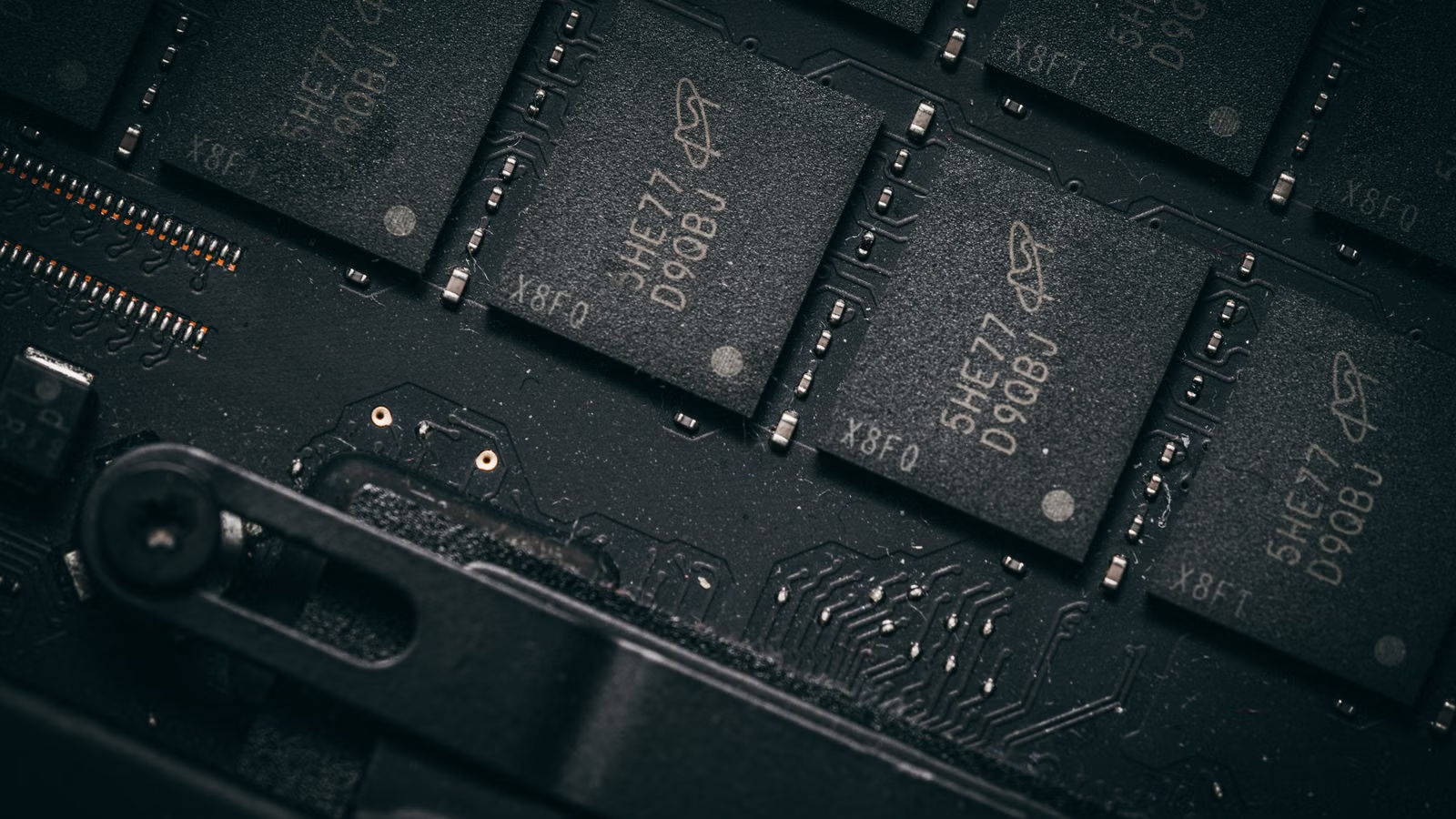
Memory chip stocks and enterprise storage system stocks are not the same type of asset. A simple way to understand the difference is this: memory chip companies sell “storage components,” while enterprise storage system companies sell complete solutions for how enterprises store, manage, and protect data. For the former, the key variables are chip pricing, supply and demand, capacity, and product mix. For the latter, the key variables are enterprise IT spending, data center construction, software service revenue, and customer renewal capability.
Memory chip stocks usually include companies related to DRAM, NAND Flash, HBM, advanced packaging, some NOR Flash, and controllers. Micron, SK hynix, and Samsung’s memory businesses are typical examples. For instance, Micron’s fiscal Q3 2026 results stated that the AI era has increased the strategic value of memory, while the company also emphasized that multi-year Strategic Customer Agreements can improve earnings visibility. Samsung also noted in its Q1 2026 results that its Memory Business benefited from high-value AI demand, higher ASPs, and mass production sales of HBM4.
Enterprise storage system stocks are closer to downstream customers. Dell, NetApp, Pure Storage, and HPE provide servers, storage arrays, all-flash arrays, hybrid cloud storage, data protection, backup and recovery, and data management platforms. Their products are not single chips, but infrastructure solutions that can be deployed in enterprise data centers, private clouds, or hybrid cloud environments. In NetApp’s fiscal Q4 2026 results, the company reported all-flash array net revenue of $1.2 billion, up 18% year over year, which better reflects demand changes for enterprise storage system companies.
There is also a middle layer that can easily be confused with both categories. Western Digital and Seagate are mainly tied to HDDs, enterprise capacity storage, and data center capacity demand. SanDisk, after its separation from Western Digital, is more focused on Flash, SSDs, and consumer and enterprise flash products. After Western Digital completed the separation of its Flash business, its business boundaries became clearer than before. The SanDisk separation FAQ also shows that Flash products and HDD products are now handled by separate companies.
| Comparison Dimension | Memory Chip Stocks | Enterprise Storage System Stocks |
|---|---|---|
| Core products | DRAM, NAND, HBM, Flash | Storage arrays, software, services, data management |
| Main customers | Cloud providers, server vendors, AI chip companies, smartphone/PC makers | Enterprises, cloud customers, finance, government, healthcare, manufacturing |
| Profit drivers | ASP, capacity utilization, product mix, yield | Hardware margin, subscriptions, maintenance revenue, customer renewals |
| Cycle source | Memory pricing cycle, inventory cycle, capex cycle | Enterprise IT budgets, data center construction, product upgrade cycles |
| Representative companies | Micron, SK hynix, Samsung, SanDisk | Dell, NetApp, Pure Storage, HPE |
Summary: When analyzing a “storage stock,” the first question is not whether it is an AI concept stock, but what it actually sells. Companies that sell DRAM, NAND, and HBM are more like upstream semiconductor cycle stocks, with profits more sensitive to pricing and capacity changes. Companies that sell storage arrays, data management software, and enterprise storage services are more like enterprise IT infrastructure companies, with profits more dependent on customer budgets, project delivery, software capability, and renewal rates. Companies such as Western Digital, Seagate, and SanDisk sit between these two groups and should be analyzed separately based on their exposure to HDDs, Flash, SSDs, or capacity storage. Once you clarify the value-chain position, it becomes much easier to compare business models, profit sources, and valuation logic.
Business Model Differences: Chip Companies Sell Standardized Components, System Companies Sell Integrated Solutions
The business model of memory chip stocks depends more on capacity, yield, pricing, and large-customer procurement. Enterprise storage system stocks depend more on solution design, channel delivery, software features, and service renewals. You can think of chip companies as “upstream core component suppliers,” while system companies combine hardware, software, and services into solutions delivered to customers. AI creates demand for both, but the transmission path is different.
Memory chip companies sell highly standardized products. DRAM, NAND, and HBM are used in servers, AI accelerators, SSDs, smartphones, PCs, automotive electronics, and industrial devices. Customers care about supply stability, performance, power consumption, pricing, and delivery schedules. Because these products are close to commodity semiconductors, prices are often affected by contract pricing, spot pricing, long-term supply agreements, and inventory levels. The Strategic Customer Agreements mentioned by Micron show that when AI demand rises and supply becomes tight, customers may be willing to lock in supply through longer-term arrangements.
The business model of enterprise storage system companies is more complex. They do not simply sell hardware. They integrate controllers, SSDs/HDDs, file systems, backup and recovery, snapshots, compression and deduplication, hybrid cloud connectivity, access control, monitoring tools, and support services. In Pure Storage’s fiscal Q1 2026 results, subscription services revenue rose 17% year over year, while Subscription ARR increased 18%. These indicators better reflect changes in the business model of system companies than hardware shipments alone.
You can use five questions to judge whether a company is closer to a chip stock or a system stock:
- Does it mainly sell standardized chips, or deployable enterprise systems?
- Are its customers component buyers, or IT departments and data center operators?
- Is its revenue highly affected by DRAM, NAND, or HBM pricing?
- Does it report software subscriptions, maintenance services, RPO, or ARR?
- Is inventory risk mainly borne by the company itself, or spread across channels and customer projects?
AI data centers benefit both types of companies, but in different ways. Chip companies benefit from demand growth in HBM, high-capacity DRAM, enterprise SSDs, and high-performance NAND. System companies benefit from enterprises managing larger training datasets, inference logs, vector databases, backup and archiving, and cross-cloud data. IBM’s explanation of AI data centers also emphasizes that AI infrastructure requires not only compute, but also networking, storage, power, and cooling.
| Business Model Question | More Like Memory Chip Stocks | More Like Enterprise Storage System Stocks |
|---|---|---|
| Who determines pricing? | Market supply-demand, contract prices, product generations | Project pricing, software bundles, service contracts |
| Is revenue renewable? | Usually weaker, unless there are long-term agreements | Usually stronger, especially subscriptions and maintenance |
| Customer procurement logic | Secure supply, control costs, improve performance | Reduce operational complexity, protect data security |
| AI demand transmission | Higher HBM/DRAM/NAND usage | Data management, backup, hybrid cloud, all-flash upgrades |
Summary: Memory chip companies earn upstream component value, and their business models revolve around capacity, yield, ASP, product generations, and large-customer agreements. Enterprise storage system companies earn solution value, and their business models revolve around customer use cases, software features, service delivery, and renewal capability. When a company says it benefits from AI storage demand, do not immediately place it under the same logic as every other storage stock. First check whether it sells HBM, DRAM, and NAND, or all-flash arrays, backup and recovery, object storage, and data management platforms. The former is more driven by pricing cycles; the latter is more driven by IT spending and solution capability.
Profit Source Differences: Chip Stocks Earn Pricing Elasticity, System Stocks Earn Product Mix and Services

The profit elasticity of memory chip stocks mainly comes from price increases, cost declines, and a higher share of premium products. The profits of enterprise storage system stocks come more from hardware margins, software licensing, subscription services, maintenance support, and customer expansion. If you only look at revenue growth, you may underestimate how different their profit structures are. Chip stocks may see sharp profit expansion in an upcycle, but profits can also contract quickly in a downturn. System stocks may have lower upside elasticity, but their revenue quality deserves a closer look.
For memory chip companies, ASPs for DRAM, NAND, and HBM are key variables. When prices rise, capacity utilization improves, and inventory digestion is completed, revenue and gross margin can improve at the same time. Micron’s fiscal Q3 2026 revenue, gross margin, and operating profit were all at high levels, showing that when supply and demand are tight and AI demand is strong, the profit elasticity of memory chip companies can be very significant. SK hynix’s Q1 2026 results also stated that strong AI demand and high-value product sales helped the company achieve record quarterly performance.
However, high profits for chip stocks do not mean low risk. DRAM and NAND both require massive capital expenditure. Fab construction, advanced process nodes, EUV, packaging, and yield improvement all require long-term investment. Once supply is released faster than demand, or customers enter an inventory correction phase, falling prices can directly compress gross margin. HBM has higher technical barriers and stronger customer stickiness, but as more companies expand capacity, long-term supply-demand rebalancing still needs attention.
Enterprise storage system companies have more diversified profit sources. Hardware sales generate one-time revenue, while software licensing, subscription services, maintenance support, and customer expansion generate recurring revenue. NetApp’s Public Cloud revenue and all-flash array revenue show that enterprise storage system stocks should not be viewed simply as hardware companies. Dell’s Infrastructure Solutions Group also observes servers, networking, storage, and AI-optimized servers within the same infrastructure framework. Its fourth-quarter Storage revenue was $4.8 billion, up 2% year over year.
| Profit Indicator | Chip Stock Focus | System Stock Focus |
|---|---|---|
| Gross margin | Strongly affected by ASP, yield, and capacity utilization | Affected by product mix, software share, and service revenue |
| Inventory | Inventory correction or restocking directly affects prices | Channel inventory and project timing matter more |
| Capital expenditure | Large investments in fabs, equipment, and packaging | Relatively lighter, but R&D and sales investment matter |
| Revenue quality | High elasticity, but large cyclical swings | Subscriptions, maintenance, RPO, and ARR can improve stability |
| Customer structure | Large-customer concentration may be high | Industry customers are more diversified, but project cycles are longer |
Summary: The profits of memory chip stocks are more like a spring. When prices rise, supply is tight, and premium products account for a larger share, revenue and gross margin can expand rapidly. But when supply increases, inventories rise, and prices weaken, profits may also decline quickly. The profits of enterprise storage system stocks are more like a portfolio return. Hardware provides the entry point, while software, subscriptions, maintenance, and customer expansion improve continuity. When comparing the two types of stocks, you should not only ask which company is growing revenue faster. You also need to know whether growth comes from price increases, shipment growth, or more stable software and service revenue. Profit quality matters more than single-quarter growth.
Cyclical Differences: Memory Chips Are More Cyclical, Enterprise Storage Is More Affected by IT Budgets
Memory chip stocks are usually more cyclical than enterprise storage system stocks because chip prices are more directly affected by supply-demand mismatches. Enterprise storage system stocks also have cycles, but these cycles are more reflected in enterprise procurement, cloud capital expenditure, server refresh cycles, and product upgrade cycles. If you can distinguish between “pricing cycles” and “budget cycles,” you can better understand why stocks exposed to the same AI data center theme may have very different volatility and valuation logic.
The memory chip cycle usually forms in three steps. First, demand recovers or new demand emerges, and customers begin restocking. Second, prices rise, capacity utilization improves, and gross margins expand. Third, manufacturers increase capital expenditure, future supply rises, and the cycle moves toward a new balance. DRAM and NAND have historically followed similar patterns. HBM has higher technical barriers, longer qualification cycles, and deeper customer binding, so its short-term cycle may be milder. But it still cannot avoid capacity expansion, changes in customer demand, and product generation transitions.
The enterprise storage system cycle is closer to the enterprise IT spending cycle. When finance, manufacturing, government, healthcare, and cloud customers expand data center budgets, demand for storage arrays, all-flash arrays, backup systems, and hybrid cloud data management improves. When customers delay projects, reduce budgets, or postpone hardware refreshes, order growth slows. The difference is that system companies can smooth some volatility through subscriptions, maintenance, and software services. This is why ARR, RPO, service revenue, and renewal rates matter.
HDD and enterprise capacity storage sit somewhere in the middle. In Seagate’s fiscal Q3 2026 results, the company reported revenue of $3.11 billion and GAAP gross margin of 46.5%, while emphasizing that AI applications amplify data creation and support long-term storage demand. HDDs are not DRAM or NAND, but they are affected by cloud customer capacity procurement, cost per TB, nearline HDD supply and demand, and long-term data center agreements. They also have clear hardware-cycle characteristics.
| Cycle Type | Impact on Chip Stocks | Impact on System Stocks |
|---|---|---|
| Pricing cycle | Directly affects revenue and gross margin | Indirectly affects hardware costs and procurement timing |
| Inventory cycle | Customer restocking/destocking has a clear impact | Channel inventory and project delivery matter more |
| Capex cycle | Expansion may change future supply | Cloud and enterprise CAPEX determine order strength |
| Product upgrade cycle | HBM, DDR, and NAND generation transitions | All-flash, hybrid cloud, and data protection upgrades |
| Customer budget cycle | Large customer order cuts affect shipments | Enterprise IT budgets directly affect project execution |
Summary: The core cycles of memory chip stocks are pricing, inventory, and capacity. The core cycles of enterprise storage system stocks are customer budgets, project delivery, and service renewals. When chip prices rise, you should focus on the gross margins and capital expenditure of DRAM, NAND, and HBM companies. When enterprise AI data platform construction accelerates, you should focus on the orders, all-flash array revenue, subscription services, and cash flow of storage system companies. Both types of companies may benefit from AI, but chip stocks are more like pricing-cycle assets, while system stocks are more like enterprise infrastructure-cycle assets. Breaking down the source of the cycle is more useful than simply judging whether the entire “storage sector” will rise or fall.
AI Data Center Impact: Both Types of Stocks Can Benefit, but in Different Parts of the Chain
AI affects memory chip stocks mainly through HBM, high-capacity DRAM, NAND, and enterprise SSDs. It affects enterprise storage system stocks mainly through training data, inference logs, unstructured data, backup and archiving, hybrid cloud, and data management platforms. You should not treat AI as the same valuation reason for all storage stocks, because profit elasticity, customer stickiness, and risks differ significantly across the value chain.
Upstream, HBM is an important memory component for AI accelerators. It has high value, strict qualification requirements, and limited supply elasticity. DRAM benefits from higher memory capacity in AI servers. NAND and enterprise SSDs benefit from high-speed reads and writes, caching, data pipelines, and model training datasets. Samsung’s statement that its Memory Business will continue to focus DRAM and NAND sales strategies around AI products shows that AI is not an abstract concept for memory chips. It is reflected in concrete changes in product mix and ASP.
Downstream, enterprise storage system companies benefit from expanding data scale. Enterprises training models need to manage large amounts of unstructured data. Inference workloads continuously generate logs and user interaction data. Compliance and security requirements also drive demand for backup, snapshots, disaster recovery, and archiving. NetApp emphasizes hybrid cloud and intelligent data infrastructure, while Pure Storage highlights FlashBlade, Portworx, and NVIDIA AI Data Platform capabilities in AI and high-performance storage scenarios. These businesses are more like “data lifecycle management,” not simply selling a few HDDs or SSDs.
The AI storage chain can be broken down this way:
- HBM: Close to GPUs and AI accelerators, with high technical barriers.
- DRAM: Increases server memory capacity and bandwidth.
- NAND/enterprise SSDs: Support high-speed caching, data pipelines, and hot data storage.
- HDD/nearline storage: Support low-cost large-capacity storage, archiving, and cloud storage.
- Storage arrays and object storage: Support enterprise data centers and cloud environments.
- Data management software: Solves access control, backup, recovery, cross-cloud, and compliance needs.
| AI Demand Scenario | More Relevant Company Type | Key Observation Points |
|---|---|---|
| AI training chip support | HBM/DRAM vendors | Qualification progress, supply agreements, product generations |
| High-speed enterprise data access | SSDs, all-flash arrays | Performance, capacity, customer deployment speed |
| Massive cloud data retention | HDDs, object storage | Cost per TB, cloud customer procurement |
| Enterprise AI data governance | Storage systems and software companies | Subscription revenue, renewals, data management capability |
Summary: AI is a common demand backdrop, but not a common business model. Memory chip stocks benefit from the unit value and tight supply of HBM, DRAM, and NAND, so their profit elasticity may be strong. Enterprise storage system stocks benefit from rising AI data management complexity, so their revenue depends more on customer projects, software subscriptions, and service capabilities. HDD and enterprise capacity storage benefit from long-term growth in data scale, but their stock logic is closer to cloud customer capacity procurement and cost improvements. When analyzing the AI storage theme, you should separate the chain into upstream chips, midstream hardware, downstream systems, and software, instead of putting all companies into the same “AI storage concept” basket.
How Ordinary Investors Can Decide: Use Value-Chain Position, Financial Metrics, and Risk Tolerance
You can first classify companies by value-chain position, then look at revenue structure, gross margin, inventory, capital expenditure, order visibility, and service revenue share. Finally, match the type of stock with your own risk tolerance. If you want higher elasticity, you will usually focus more on memory chip cycles and pricing inflection points. If you want relatively steadier exposure, you should focus more on enterprise storage system companies’ service revenue, cash flow, and customer stickiness.
The first step is to see where the company sits in the value chain. Upstream includes DRAM, NAND, HBM, and wafer manufacturing. Midstream includes SSDs, HDDs, controllers, and enterprise hardware. Downstream includes storage arrays, data management software, backup and recovery, and hybrid cloud platforms. Micron, SK hynix, and Samsung are more upstream. SanDisk is more focused on Flash and SSDs. Western Digital and Seagate are more focused on HDDs and capacity storage. Dell, NetApp, and Pure Storage are more focused on enterprise systems and infrastructure.
The second step is to look at key indicators. For chip stocks, focus on ASP, bit growth, inventory days, gross margin, capital expenditure, capacity utilization, and the share of high-end products. For system stocks, focus on ARR, RPO, service revenue, product gross margin, backlog, customer renewal rate, and free cash flow. For HDD and capacity storage, also look at nearline HDD demand, shipped capacity, cost per TB, and cloud customer procurement timing.
The third step is to match the stock type with your investment style. If you can tolerate high volatility and are willing to track pricing, inventory, and capex, chip stocks may be more suitable for cyclical analysis. If you care more about revenue continuity and enterprise customer stickiness, system stocks may be easier to study. If you want exposure to AI data growth but do not want to bet on a single link, you can separate HBM, enterprise SSDs, HDDs, all-flash arrays, and data management software into different watch baskets.
At the trading level, you also need to pay attention to actual costs, not just industry logic. U.S. stock trading costs usually do not only include commissions. They may also include platform fees, external institutional fees, transaction activity fees, and other charges shown on the order page. If the service is available in your region and you meet the relevant requirements, you can use Biya to track U.S. and Hong Kong stock-related names. When researching memory chip stocks and enterprise storage system stocks, you can also use U.S. stock information search to build a watchlist. Biya charges $0 commission for U.S. stock trading, while platform fees, external institutional fees, and other charges are subject to the U.S. stock trading fees and the order page. Availability of relevant services depends on your location, identity verification result, platform rules, and applicable laws and regulations.
| Investor Type | More Suitable Focus | Core Judgment |
|---|---|---|
| Cyclical trader | DRAM, NAND, HBM | Pricing inflection points, inventory, capacity utilization |
| Long-term growth investor | AI storage, all-flash, data management | Product penetration and demand sustainability |
| Stable cash-flow investor | System companies, higher service revenue | Renewals, cash flow, margin structure |
| AI infrastructure theme investor | HBM, SSDs, HDDs, storage system basket | Diversified value-chain exposure and risk separation |
Summary: When ordinary investors compare memory chip stocks and enterprise storage system stocks, they do not need to decide from the start which category is definitely better. They should first decide which variables they understand better. For chip stocks, the key variables are pricing cycles, inventory cycles, and capex cycles. They are more suitable for investors who can track supply-demand changes and tolerate higher volatility. For system stocks, the key variables are enterprise budgets, project delivery, software subscriptions, and customer renewals. They are more suitable for investors who value revenue continuity. AI may increase the long-term importance of the storage value chain, but it will not give every company the same valuation logic. Classifying companies by value-chain position and then verifying the thesis with financial indicators is a more disciplined approach.
If you are tracking memory chip stocks and enterprise storage system stocks in international markets, you can break the research process into three steps: first build a company list, then classify companies into upstream chips, midstream hardware, and downstream systems, and finally continuously monitor revenue structure, gross margin, inventory, capital expenditure, ARR, RPO, and free cash flow in earnings reports. Biya is a global multi-asset trading wallet that supports trading in U.S. stocks, Hong Kong stocks, and digital assets, and also supports converting USDT into major fiat currencies such as U.S. dollars or Hong Kong dollars. For users following companies such as Micron, Western Digital, Seagate, Dell, NetApp, and Pure Storage, Biya is more suitable as a tool for market tracking, fee comparison, and watchlist management, rather than a reason to trade any single market theme. Opportunities and risks coexist across the storage value chain, so before trading, you should fully understand company fundamentals, order types, fee structures, and the applicable rules in your own location.
FAQ
Which is more cyclical: memory chip stocks or enterprise storage system stocks?
Memory chip stocks are usually more cyclical. DRAM, NAND, and HBM pricing, inventory, and capacity changes directly affect revenue and gross margin, making stock prices more sensitive to supply-demand inflection points. Enterprise storage system stocks are also cyclical, but they are more affected by enterprise IT budgets, cloud capex, and project delivery cycles. Service revenue and subscription models may reduce part of that volatility.
Do AI data centers benefit memory chip stocks or enterprise storage system stocks more?
AI data centers can benefit both categories, but in different parts of the chain. Memory chip stocks benefit more from HBM, high-capacity DRAM, NAND, and enterprise SSD demand. Enterprise storage system stocks benefit more from training data, inference logs, backup and recovery, unstructured data management, and hybrid cloud storage demand. The actual impact still depends on each company’s product mix and customer orders.
How should ordinary investors compare the investment logic of Micron and NetApp?
Micron is closer to a memory chip stock, so the focus should be on DRAM, NAND, HBM pricing, inventory, capacity, and capital expenditure. NetApp is closer to an enterprise storage system stock, so the focus should be on all-flash arrays, hybrid cloud, Public Cloud revenue, customer renewals, and cash flow. Both may benefit from AI, but one depends more on chip supply and demand, while the other depends more on enterprise data infrastructure demand.
Are enterprise SSD companies memory chip stocks or enterprise storage system stocks?
Enterprise SSD companies usually sit in the midstream and should not be placed into one category too quickly. If a company mainly produces NAND, controllers, or SSD hardware, it is closer to the memory chip and hardware cycle. If it integrates SSDs into arrays, software, data protection, and enterprise services, it is closer to enterprise storage system logic. The key is revenue source, not product name alone.
Does rising memory chip pricing always increase profits for related stocks?
Rising memory chip pricing is usually positive for revenue and gross margin, but it does not guarantee higher profits. You still need to check shipment volume, product mix, cost pressure, customer contract pricing, capital expenditure, and inventory write-down risks. Price increases are an important condition, but not the only condition.
Which financial indicators matter most when comparing storage stocks?
The most important indicators depend on company type. For chip stocks, prioritize ASP, inventory, gross margin, capital expenditure, capacity utilization, and premium product mix. For system stocks, prioritize ARR, RPO, service revenue, product margin, backlog, renewal rate, and free cash flow. Trading costs, fee structures, and account rules should be checked against platform disclosures and local regulatory requirements.
*This article is provided for general information purposes and does not constitute legal, tax or other professional advice from BiyaPay or its subsidiaries and its affiliates, and it is not intended as a substitute for obtaining advice from a financial advisor or any other professional.
We make no representations, warranties or warranties, express or implied, as to the accuracy, completeness or timeliness of the contents of this publication.
Related Blogs of

Is Micron a Cyclical Stock or an AI Growth Stock? Valuation Logic and Risk Breakdown


How Should You View Seagate’s HAMR Technology? Nearline HDD Capacity Upgrades and the Supply-Demand Cycle


How Should You View Shanghai Fudan’s Non-Volatile Memory Business? Application Scenarios, Competition, and Risks


Shanghai Fudan, ASMPT, SMIC, and Hua Hong Semiconductor Compared: Which Is More Closely Related to AI Memory?

Choose Country or Region to Read Local Blog
 Australia
 Austria
 Belgium
 Canada
 Cyprus
 Czech Republic
 Denmark
 Estonia
 Finland
 France
 Germany
 Greece
 Hong Kong
 India
India Indonesia
 Ireland
 Italy
Italy Japan
Japan Latvia
 Lithuania
 Luxembourg
 Malaysia
 Malta
Malta Morocco
 Nepal
Nepal Netherlands
 New Zealand
 Norway
 Pakistan
 Philippines
 Poland
 Portugal
 Romania
 Singapore
 Slovakia
 Slovenia
 South Africa
 South Korea
 Spain
Spain Sweden
 Thailand
 The United States
 Turkey
 United Arab Emirates
 United Kingdom
 Vietnam
Contact Us




BIYA GLOBAL LLC is registered with the Financial Crimes Enforcement Network (FinCEN), an agency under the U.S. Department of the Treasury, as a Money Services Business (MSB), with registration number 31000218637349, and regulated by the Financial Crimes Enforcement Network (FinCEN).
BIYA GLOBAL LIMITED is a registered Financial Service Provider (FSP) in New Zealand, with registration number FSP1007221, and is also a registered member of the Financial Services Complaints Limited (FSCL), an independent dispute resolution scheme in New Zealand.