
Shanghai Fudan, ASMPT, SMIC, and Hua Hong Semiconductor Compared: Which Is More Closely Related to AI Memory?




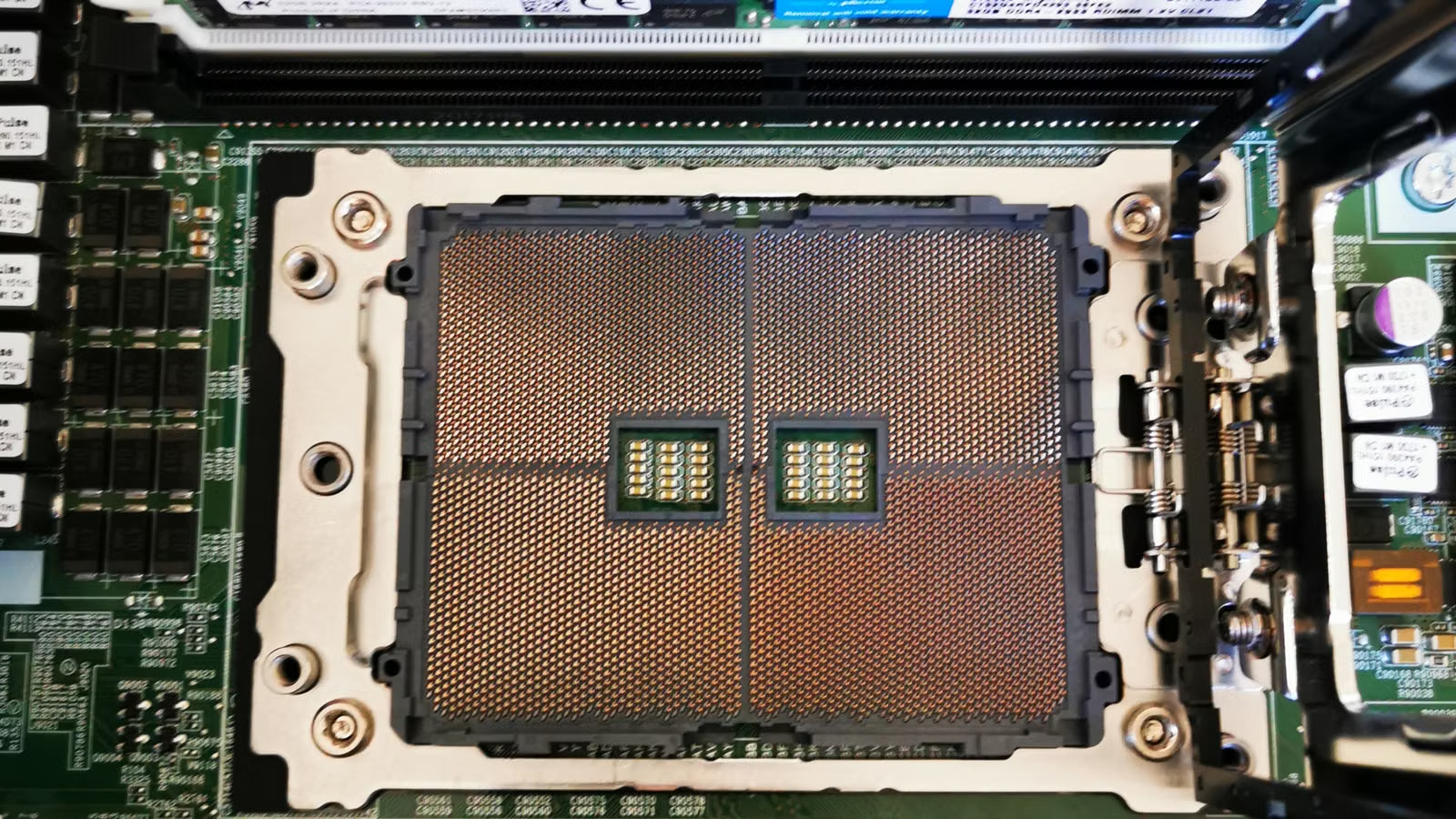
If you want to understand which company is more closely related to AI memory among Shanghai Fudan, ASMPT, SMIC, and Hua Hong Semiconductor, you should not simply look at the broad “semiconductor” label. A more reasonable conclusion is that ASMPT is closer to HBM and advanced packaging equipment; Shanghai Fudan is closer to non-volatile memory such as NOR Flash, SLC NAND, and EEPROM; Hua Hong Semiconductor is more related to eNVM and mature-node foundry services; while SMIC is mainly an AI chip manufacturing and domestic wafer foundry platform, with a more indirect link to AI memory.
Key Takeaways
- ASMPT’s most direct connection to AI memory is HBM advanced packaging equipment.
- Shanghai Fudan has memory chip products, but it is not a DRAM or HBM manufacturer.
- Hua Hong Semiconductor is more like an eNVM, MCU, and mature-node foundry platform.
- SMIC has strong AI exposure, but its AI memory exposure is mostly indirect.
- To assess AI memory stocks, you need to distinguish products, equipment, foundry services, and applications.
- Investment comparisons should consider not only themes, but also revenue structure, orders, and cyclical risks.
Start With Search Intent: Users Are Not Really Asking “Who Is Bigger,” but Who Is Closer to AI Memory
When you search for a comparison of Shanghai Fudan, ASMPT, SMIC, and Hua Hong Semiconductor, the real question is usually not which company is larger, but which company is closer to the core growth driver of AI memory demand. AI memory may refer to HBM, but it can also involve NAND, NOR Flash, eNVM, server storage, advanced packaging, and wafer foundry services. Under different definitions, the ranking can change significantly.
International market users often search around these keyword combinations:
| Search Intent | Common Search Term | What Users Actually Want to Know |
|---|---|---|
| AI memory stocks | AI memory stocks China | Which companies are truly affected by AI memory demand |
| HBM supply chain | ASMPT HBM advanced packaging | Whether ASMPT belongs to the HBM equipment chain |
| Memory chip company | Shanghai Fudan memory chip | Whether Shanghai Fudan is a memory stock |
| Wafer foundry | SMIC AI chip foundry | Whether SMIC benefits from AI chip demand |
| Specialty process | Hua Hong eNVM semiconductor | How Hua Hong is related to memory processes |
The most common mistake is to equate “AI semiconductor-related” with “AI memory-related.” For example, SMIC is indeed a leading wafer foundry in mainland China, but it is not an HBM, DRAM, or NAND manufacturer. ASMPT does not produce memory chips, yet it may be closer to HBM capacity expansion because of advanced packaging equipment such as TCB, chiplet, hybrid bonding, C2S, and C2W.
You can use a four-layer framework to evaluate these four companies:
- Memory chip product layer: Whether the company directly produces EEPROM, NOR Flash, SLC NAND, DRAM, NAND, or HBM.
- Advanced packaging equipment layer: Whether the company serves HBM, GPU, AI ASIC, CoWoS, TSV, TCB, or hybrid bonding.
- Wafer foundry process layer: Whether the company provides eNVM, MCU, analog, power devices, mature-node processes, or 12-inch capacity.
- AI cycle spillover layer: Whether the company is affected by AI servers, domestic substitution, semiconductor capex, and market sentiment.
This framework also explains why TSMC CoWoS®-S is an important reference point for understanding AI memory. It integrates logic chips, chiplets, and HBM stacks into a high-density packaging system, showing that the AI memory bottleneck is not only about memory dies, but also about packaging, interconnects, and coordinated capacity.
If your question is “which company looks most like a memory chip company,” Shanghai Fudan ranks higher. If your question is “which company is closest to HBM advanced packaging growth,” ASMPT ranks higher. If your question is “which company represents domestic wafer foundry capability,” SMIC and Hua Hong Semiconductor matter more. Before comparing them, you need to define the criteria first. Otherwise, it is easy to group all four companies under the same “AI memory concept stock” label.
Summary: AI memory relevance cannot be judged only by whether a company belongs to the semiconductor sector. It should be broken down into four layers: memory products, advanced packaging equipment, wafer foundry processes, and AI supply-chain spillover. ASMPT’s core role is equipment. Shanghai Fudan’s core role is non-volatile memory products. Hua Hong Semiconductor’s core role is eNVM and specialty processes. SMIC’s core role is as a comprehensive wafer foundry platform. The earlier you separate these layers, the less likely you are to confuse HBM, NOR Flash, eNVM, mature-node processes, and the AI computing supply chain.
Shanghai Fudan: More Like a “Non-Volatile Memory + FPGA” Chip Company, Not an HBM or DRAM Manufacturer
Shanghai Fudan is related to memory, but its relevance mainly comes from non-volatile memory products such as EEPROM, NOR Flash, and SLC NAND, rather than HBM, which is the most sought-after memory component in AI training servers. You can understand it as a “domestic NVM chip + FPGA + security identification chip” company, not a DRAM/HBM manufacturer like Samsung, SK hynix, or Micron.
Shanghai Fudan’s non-volatile memory product line includes EEPROM, NOR Flash, and SLC NAND Flash. Its applications cover communications, IoT modules, displays, smart meters, security systems, automotive electronics, industrial control, and medical instruments. The relationship between these products and AI is more about edge devices, control systems, and embedded storage, rather than the high-bandwidth memory used in large-model training clusters.
From a financial perspective, Shanghai Fudan’s 2026 first-quarter report shows that revenue from non-volatile memory reached about RMB 293 million, up approximately 23.39% year over year. Revenue from FPGA and other products reached about RMB 347 million, up approximately 10.67% year over year. This shows that both NVM and FPGA are important businesses, but it does not mean the company is a direct HBM beneficiary.
| Shanghai Fudan Business Area | Memory-Related? | Link to AI Memory | More Accurate Positioning |
|---|---|---|---|
| EEPROM | Yes | Indirect | Embedded non-volatile memory |
| NOR Flash | Yes | Medium | Code storage, device boot, IoT |
| SLC NAND | Yes | Medium | Industrial, security, automotive, embedded devices |
| FPGA | No | Indirect | Reconfigurable computing and specialized applications |
| Security identification chips | No | Low | Finance, identity, security authentication |
FPGA is also easy to misread. FPGA can be used in specialized computing acceleration, communications, industrial control, and data center scenarios. Some high-end FPGAs may also be paired with HBM. However, Shanghai Fudan’s disclosed business structure does not mean that it directly enters the main AI GPU/HBM supply chain. A more prudent interpretation is that Shanghai Fudan may benefit from spillover in the AI semiconductor theme and has a foundation in non-volatile memory products, but its core AI memory exposure is less direct than that of HBM manufacturers or HBM packaging equipment suppliers.
If you follow this company, you should focus on three types of indicators:
- Whether revenue from non-volatile memory products continues to recover;
- Whether NOR Flash, EEPROM, and SLC NAND benefit from industrial, automotive, and IoT demand;
- Whether FPGA R&D investment, inventory impairment, gross margin, and new product ramp-up improve.
From an investment perspective, Shanghai Fudan is better placed under the themes of domestic memory chips, embedded storage, NOR Flash, FPGA, and self-controlled chips, rather than the main HBM theme in AI data centers. It is related to AI memory, but more at the middle and edge layers.
Summary: Shanghai Fudan’s memory exposure is real, especially through EEPROM, NOR Flash, and SLC NAND. The key issue is that these types of memory are not the same as HBM, which is currently the most closely watched memory product in AI data centers. You can view Shanghai Fudan as a domestic IC company with direct memory chip products, but you should not simply equate it with an HBM, DRAM, or NAND leader. Its opportunity depends more on product mix, domestic substitution, industrial and automotive demand, and FPGA progress than on AI server HBM expansion alone.
ASMPT: The Most Directly Related to the HBM Advanced Packaging Chain Among the Four
If you define AI memory as HBM, AI GPUs, chiplets, CoWoS, TSV, and high-density packaging, then ASMPT is the most directly related company among the four. It is not a memory chip company, but it sits in the HBM advanced packaging equipment chain. Its benefit logic comes from demand for TCB, C2S, C2W, and hybrid bonding equipment.
The core value of HBM is to vertically stack multiple DRAM layers and connect them to GPUs, AI ASICs, and other compute chips through TSV and advanced packaging. Samsung’s HBM4 emphasizes high bandwidth, I/O count, and AI system efficiency. Micron’s HBM portfolio is also directly aimed at AI, professional visualization, and high-performance computing. In other words, the AI memory bottleneck is not only about whether memory dies are available, but also whether they can be packaged into AI accelerators with precision, stability, and high yield.
ASMPT’s 2025 annual results show that revenue from advanced packaging reached USD 532.1 million, up 30.2% year over year. TCB solutions made a major contribution, with TCB revenue increasing by about 146% year over year. The company also mentioned that its HBM4 12H TCB solution had received orders from multiple customers and that it was participating in the development of HBM4 16H technology. This is highly important because it directly connects ASMPT to equipment demand during the HBM4 transition.
| ASMPT Dimension | Related Segment | Link to AI Memory | Risk Factor |
|---|---|---|---|
| TCB | Thermo-compression bonding | High | Equipment order cycle volatility |
| C2S | Chip-to-substrate | High | Customer expansion schedule |
| C2W | Chip-to-wafer | High | Technology transition uncertainty |
| Hybrid bonding | Hybrid bonding | Medium to high | Pace of mass-production adoption |
| SMT / SiP | System-in-package | Medium | Non-HBM demand volatility |
ASMPT’s LITHOBOLT™ is designed for die-to-wafer hybrid bonding and serves advanced packaging scenarios such as AI, high-performance computing, and 5G. At the same time, ASMPT’s chiplet packaging technology cooperation with IBM also shows that advanced packaging equipment suppliers are moving into higher-value areas around chiplets, TCB, and hybrid bonding.
However, ASMPT’s risks are different from Shanghai Fudan’s. Shanghai Fudan depends on memory product prices, inventory, and new product ramp-up. ASMPT depends on equipment orders, customer capex, advanced packaging routes, HBM generation transitions, and delivery schedules. Equipment stocks often have faster upside elasticity, but drawdowns may also come quickly because orders can price in the cycle early and may fluctuate if customer expansion plans are delayed.
If you are trying to identify which of the four companies is closest to the main AI memory theme, ASMPT has the clearest answer. It is not an HBM manufacturer, but it is closer to the key equipment segment in HBM capacity expansion.
Summary: ASMPT is the most directly related to HBM advanced packaging among the four companies. It does not produce DRAM, NAND, or HBM, but it connects AI GPUs, AI ASICs, and high-bandwidth memory through TCB, C2S, C2W, and hybrid bonding equipment. When evaluating ASMPT, the key focus should not be memory chip prices, but advanced packaging capex, HBM4 technology transitions, order visibility, and equipment delivery schedules. If the question is “which company is closer to the growth bottleneck in AI memory,” ASMPT usually ranks first.
SMIC: Strongly Related to AI, but Its “AI Memory” Exposure Is Indirect
SMIC has strong exposure to AI semiconductors, but its relationship with AI memory is indirect. You should understand it as a leading wafer foundry platform in mainland China, not as a memory chip manufacturer or an HBM advanced packaging equipment supplier. It is more affected by domestic AI chip development, mature-node demand, 12-inch capacity, capex, and geopolitical policies.
SMIC’s 2025 annual report shows that the company provides 8-inch and 12-inch wafer foundry and technology services. By end-market revenue, consumer electronics accounted for 43.2%, smartphones for 23.1%, computers and tablets for 14.8%, connectivity and IoT for 7.9%, and industrial and automotive for 11.0%. These figures show that SMIC is a comprehensive wafer foundry platform, not a memory company directly dependent on HBM or DRAM sales.
| SMIC Dimension | Link to AI Semiconductors | Link to AI Memory |
|---|---|---|
| Wafer foundry scale | High | Indirect |
| 12-inch capacity | Medium to high | Indirect |
| Mature-node platform | High | Indirect |
| HBM / DRAM / NAND | Low | Non-core |
| Domestic substitution | High | Affects valuation expectations |
| Export controls and equipment restrictions | High | Affects capacity expansion and technology path |
SMIC still appears in AI memory comparisons because AI server demand affects the broader semiconductor production schedule and supply-chain expectations. A Reuters report on memory shortages affecting SMIC customer orders noted that tight memory chip supply led some customers to be more cautious about next-quarter orders, because smartphones, cars, and other end products all need enough memory supply to match production. This shows that the memory cycle can spill over into wafer foundry demand, but it does not mean SMIC directly sells HBM.
You can understand SMIC from three angles:
- AI chip manufacturing platform: Affected by domestic AI chips, edge AI, and consumer electronics recovery.
- Mature-node supply platform: Related to PMICs, MCUs, sensors, connectivity chips, and some memory controller chips.
- Capex-cycle platform: Capacity expansion, depreciation, utilization, and gross margin all affect earnings elasticity.
Therefore, SMIC is better placed under the framework of domestic AI semiconductor manufacturing, rather than direct AI memory beneficiaries. Its valuation can also be affected by policy, export controls, equipment supply, capex, utilization, and market sentiment.
Summary: SMIC has strong AI semiconductor exposure, but its AI memory exposure is relatively indirect. It is not an HBM, DRAM, or NAND manufacturer, nor is it an advanced packaging equipment supplier. It is a comprehensive wafer foundry platform. When assessing SMIC, you should focus on its wafer foundry revenue structure, capacity utilization, capex, gross margin, mature-node demand, and domestic substitution progress. AI memory shortages may affect customer production schedules and market expectations, but that is supply-chain spillover rather than direct benefit from HBM sales.
Hua Hong Semiconductor: Closer to eNVM, MCUs, Mature Nodes, and Specialty Processes, Not a Pure AI Memory Company
Hua Hong Semiconductor’s memory relationship mainly comes from embedded NVM and standalone NVM process platforms, rather than from being a DRAM, NAND, or HBM manufacturer. You can view it as a platform company focused on specialty foundry services, eNVM, MCUs, power devices, and analog power management. Its AI memory relevance sits in the middle layer.
Hua Hong Semiconductor’s 2025 second-quarter results show that second-quarter revenue reached USD 566.1 million, gross margin was 10.9%, and capacity utilization reached 108.3%. By technology platform, Embedded NVM revenue reached USD 141.158 million, accounting for 24.9% of revenue. Standalone NVM revenue reached USD 27.603 million, accounting for 4.9%. This shows that Hua Hong does have memory-related process revenue, but its core remains specialty foundry services rather than pure memory chip production.
| Hua Hong Technology Platform | Typical Products | Memory Relationship | Link to AI Memory |
|---|---|---|---|
| Embedded NVM | MCUs, smart card ICs | High | Medium |
| Standalone NVM | Flash | High | Medium |
| Analog & PM | PMICs, power management | Low to medium | Indirect |
| Power Discrete | MOSFETs, power devices | Low | Indirect via AI power chain |
| Logic & RF | Logic, RF | Low to medium | Non-core |
Hua Hong’s eNVM is more suitable for MCUs, smart cards, embedded control, and low-power devices. Standalone NVM is related to Flash product demand. Both can be classified as memory-related, but they are not at the same level as HBM, HBM3E, or HBM4 used in AI data centers. AI servers require large amounts of GPUs, HBM, high-speed interconnects, advanced packaging, and power management. Hua Hong is more likely to benefit indirectly through mature-node processes, PMICs, MCUs, power devices, and domestic substitution.
Another important point is end-market structure. In the same earnings disclosure, consumer electronics accounted for a relatively high share of Hua Hong’s revenue, while industrial and automotive also remained important. Computing revenue was not a large share. This means you should not define Hua Hong as a core AI memory stock simply because it has eNVM. A more accurate positioning is that Hua Hong is a specialty foundry with memory process exposure and some connection to AI memory, but it is not one of the most direct links.
For investment analysis, Hua Hong’s key variables include:
- Demand for eNVM, standalone NVM, PMICs, and power devices;
- Ramp-up and depreciation pressure at its Wuxi 12-inch line;
- Pricing competition in mature-node processes;
- Whether utilization and gross margin can keep improving;
- Whether the customer mix can extend further from consumer electronics into industrial, automotive, and data-center-related chains.
Summary: Hua Hong Semiconductor is memory-related, but mainly through eNVM, standalone NVM, and mature-node process platforms, not through HBM, DRAM, or NAND manufacturing. Its connection to AI memory is more specific than SMIC’s, but less direct than ASMPT’s, and different from Shanghai Fudan’s chip product exposure. When analyzing Hua Hong, you should focus on technology-platform revenue structure, utilization, gross margin, and the mature-node cycle, instead of simply labeling it an “AI memory stock.”
Overall Ranking: The Conclusion Changes Under Different Criteria
If the only question is “which company is most related to AI memory,” ASMPT ranks first. If the question is “which company has direct memory chip products,” Shanghai Fudan ranks higher. If the question is “which company represents domestic wafer foundry platforms,” SMIC and Hua Hong Semiconductor are more important. You must define the comparison criteria first. Otherwise, it is easy to mix product companies, equipment companies, and foundry companies into one category.
By direct AI memory relevance, the ranking can be:
| Rank | Company | Main Reason |
|---|---|---|
| 1 | ASMPT | Connected to HBM, TCB, advanced packaging, and HBM4 equipment demand |
| 2 | Shanghai Fudan | Has memory products such as EEPROM, NOR Flash, and SLC NAND |
| 3 | Hua Hong Semiconductor | Has eNVM and standalone NVM process platforms |
| 4 | SMIC | Strong AI semiconductor exposure, but AI memory exposure is indirect |
By domestic AI semiconductor relevance, the ranking changes:
| Rank | Company | Main Reason |
|---|---|---|
| 1 | SMIC | Comprehensive wafer foundry platform and core domestic chip manufacturing link |
| 2 | Hua Hong Semiconductor | Specialty processes, mature nodes, eNVM, PMICs, and power devices |
| 3 | ASMPT | Advanced packaging equipment related to AI/HBM expansion |
| 4 | Shanghai Fudan | NVM, FPGA, security identification, and specific chip products |
If you care about investment risk, you should also classify each company by business type:
- ASMPT: Watch advanced packaging orders, customer capex, HBM4 transitions, and equipment delivery.
- Shanghai Fudan: Watch NVM pricing, inventory impairment, FPGA R&D investment, and new product ramp-up.
- SMIC: Watch capex, depreciation, utilization, export controls, and mature-node competition.
- Hua Hong Semiconductor: Watch demand for eNVM, PMICs, and power devices, as well as gross margin and production-line ramp-up.
Trading costs should also be part of your decision-making. Semiconductor and AI memory-related stocks can be highly volatile, especially around earnings releases, order rumors, capex adjustments, geopolitical policy changes, and industry price cycles. Trading frequency may rise during these periods. If you follow U.S. and Hong Kong semiconductor stocks, it is useful to compare quotes, order types, and fee structures at the same time. Biya supports multi-asset trading across U.S. stocks, Hong Kong stocks, and digital assets. Under U.S. stock trading fees, Biya charges USD 0 commission for U.S. stock trades, while platform fees, external institution fees, and other charges are subject to the fee center and order-page display. Before trading, you should also consider your location, identity verification result, platform rules, and applicable laws and regulations to determine whether the relevant services are available.
A more practical approach is to separate “relevance” from “earnings elasticity”:
| Company | AI Memory Relevance | Direct Memory Exposure | AI Semiconductor Exposure | Core Risk |
|---|---|---|---|---|
| ASMPT | High | Low | High | Equipment order cycle |
| Shanghai Fudan | Medium to high | High | Medium | Product pricing, inventory, R&D |
| Hua Hong Semiconductor | Medium | Medium | Medium | Mature-node cycle |
| SMIC | Medium | Low | High | Capex, depreciation, external restrictions |
If you are a beginner, it is better to first ask three questions: Does the company directly sell memory chips? Is it positioned in the HBM or advanced packaging bottleneck? How much of its revenue comes from related businesses? Only after these questions are answered clearly does AI memory relevance become analytically useful.
Summary: The four companies should not be compared with the same yardstick. ASMPT is related to HBM advanced packaging equipment. Shanghai Fudan is related to non-volatile memory products. Hua Hong Semiconductor is related to eNVM and specialty foundry processes. SMIC is related to AI chip manufacturing and domestic wafer foundry platforms. If you focus only on the direct AI memory chain, ASMPT ranks higher. If you focus on direct memory products, Shanghai Fudan ranks higher. If you focus on domestic wafer foundry platforms, SMIC and Hua Hong matter more. The ranking is not fixed; it depends on the supply-chain criteria you use.
If you want to continue tracking Shanghai Fudan, ASMPT, SMIC, Hua Hong Semiconductor, as well as AI memory supply-chain companies such as Micron, Samsung, SK hynix, TSMC, and Nvidia, you can put company announcements, earnings reports, orders, utilization, gross margin, capex, and valuation volatility into one tracking table. Through U.S. stock information search, you can first check basic information on related U.S.-listed stocks, then cross-check it with Hong Kong-listed company announcements and industry data. If the relevant services are available in your region, you can also download App to further review tradable assets, order displays, and fee details. The analysis above only introduces public market information, supply-chain relationships, and fee structures. It does not constitute investment advice. Semiconductor stocks can be highly volatile, and before trading, you should fully understand company fundamentals, order types, fee structures, and risks.
FAQ
Is Shanghai Fudan an AI memory chip stock?
Shanghai Fudan is a memory-related chip company, but it should not be directly equated with an AI HBM memory stock. Its memory exposure mainly comes from non-volatile memory products such as EEPROM, NOR Flash, and SLC NAND, which are more widely used in industrial, IoT, security, automotive, and embedded devices. If the discussion is about HBM, DRAM, or AI training server memory, its direct relevance is lower than that of HBM manufacturers and advanced packaging equipment companies.
Why is ASMPT related to HBM advanced packaging?
ASMPT is related to HBM advanced packaging because it provides advanced packaging equipment such as TCB, C2S, C2W, and hybrid bonding. HBM requires multiple layers of DRAM to be connected with AI GPUs or AI ASICs through high-density packaging. Equipment precision, yield, and capacity all affect the pace of expansion. Therefore, ASMPT is not a memory chip company, but it may benefit from demand for HBM4 and AI accelerator packaging.
Does SMIC directly benefit from AI memory demand?
SMIC benefits more indirectly from AI memory demand. Its core positioning is as a wafer foundry platform serving applications such as smartphones, consumer electronics, computers, IoT, industrial, and automotive chips. AI memory shortages may affect customer production schedules and semiconductor cycle expectations, but SMIC is not an HBM, DRAM, or NAND manufacturer. It should not be simply defined as a direct AI memory stock.
Is Hua Hong Semiconductor’s eNVM a memory business?
Hua Hong Semiconductor’s eNVM is a memory-related process platform, but it is not a pure memory chip business. eNVM is commonly used in MCUs, smart cards, embedded control, and low-power devices, while standalone NVM is related to Flash products. This is different from the HBM mainline in AI data centers. Hua Hong is better analyzed under mature nodes, specialty processes, MCUs, PMICs, and domestic substitution.
How can ordinary investors distinguish AI memory concept stocks?
Ordinary investors should first determine whether a company is in the product, equipment, foundry, or application layer. Companies that directly produce HBM, DRAM, or NAND belong to the memory product layer. Companies that provide TCB, CoWoS, or hybrid bonding equipment belong to the advanced packaging equipment layer. Companies such as SMIC and Hua Hong are more closely related to wafer foundry or specialty process platforms. Revenue structure, orders, gross margin, and risk disclosures should all be reviewed.
Is the AI memory concept the same as DRAM and NAND?
The AI memory concept is not exactly the same as DRAM and NAND. AI training and inference require HBM, DRAM, NAND, SSDs, CXL memory, NOR Flash, eNVM, advanced packaging, and high-speed interconnects. HBM is currently the most closely watched high-bandwidth memory for AI accelerators, but it does not represent the entire memory supply chain. Different companies benefit through different routes, so they should not be judged under one single concept.
*This article is provided for general information purposes and does not constitute legal, tax or other professional advice from BiyaPay or its subsidiaries and its affiliates, and it is not intended as a substitute for obtaining advice from a financial advisor or any other professional.
We make no representations, warranties or warranties, express or implied, as to the accuracy, completeness or timeliness of the contents of this publication.
Related Blogs of

Choosing a Stock Trading App: Beginner Checklist


Crypto-Related Stocks vs Digital Assets: What Investors Actually Own


Wire Transfer Requirements: Sender and Beneficiary Details Checklist


Choose Country or Region to Read Local Blog
 Australia
 Austria
 Belgium
 Canada
 Cyprus
 Czech Republic
 Denmark
 Estonia
 Finland
 France
 Germany
 Greece
 Hong Kong
 India
India Indonesia
 Ireland
 Italy
Italy Japan
Japan Latvia
 Lithuania
 Luxembourg
 Malaysia
 Malta
Malta Morocco
 Nepal
Nepal Netherlands
 New Zealand
 Norway
 Pakistan
 Philippines
 Poland
 Portugal
 Romania
 Singapore
 Slovakia
 Slovenia
 South Africa
 South Korea
 Spain
Spain Sweden
 Thailand
 United States
 Turkey
 United Arab Emirates
 United Kingdom
 Vietnam