
How to Read Pure Storage and NetApp Earnings? ARR, Cloud Revenue, Gross Margin, and Cash Flow Metrics





When reading Pure Storage and NetApp earnings, you should not only look at whether revenue and EPS beat expectations. You first need to understand which storage business model each company represents. Pure Storage is more of a high-growth, subscription-oriented, all-flash, AI data platform company, so the key metrics are ARR, RPO, subscription services revenue, and product revenue growth. NetApp is more of a mature hybrid cloud, stable gross margin, free cash flow, and shareholder return story, so the key metrics are Hybrid Cloud, Public Cloud, all-flash, FCF, share repurchases, and dividends. Both companies benefit from AI data management demand, but their earnings validation paths are different.
Key Takeaways
- Pure Storage focuses more on ARR, RPO, subscription services, and product revenue growth.
- NetApp focuses more on Hybrid Cloud, Public Cloud, and cash flow quality.
- Gross margin reflects differences in hardware, software, subscription, and cloud service mix.
- Free cash flow helps verify the real operating quality of enterprise storage companies.
- AI data platforms are a shared narrative, but the monetization paths differ.
- Investment analysis should consider growth, margins, valuation, and shareholder returns together.
What Should You Look at First in Pure Storage and NetApp Earnings?
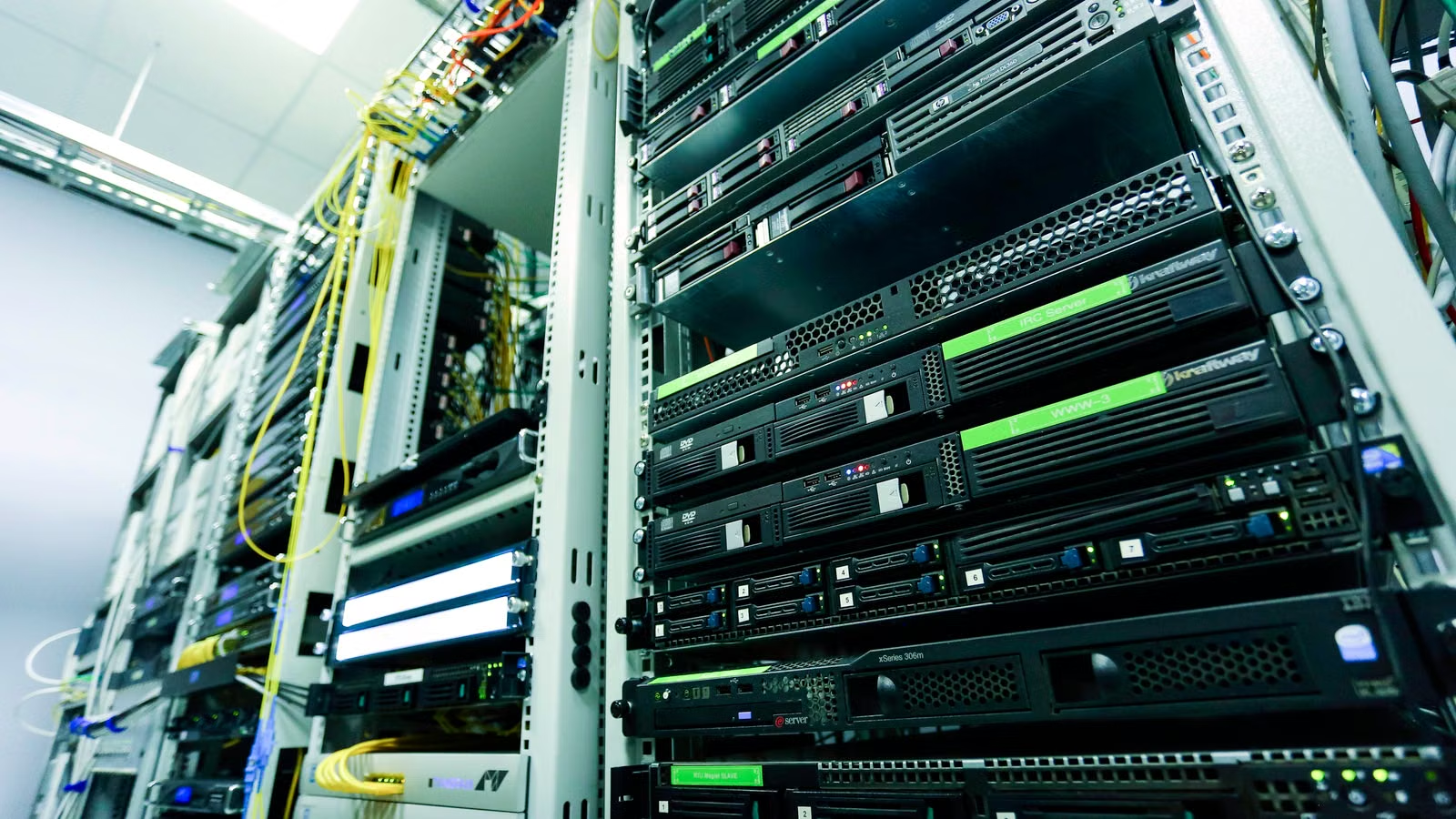
When reading Pure Storage and NetApp earnings, the first step is not simply asking whether revenue grew. You need to distinguish their business models. Pure Storage is more like a growth-oriented storage platform, with the focus on all-flash replacement, subscription, Evergreen services, and AI data infrastructure. NetApp is more like a mature hybrid cloud data management platform, with the focus on Hybrid Cloud, Public Cloud, all-flash, margins, and cash flow. If you only look at quarterly revenue and EPS, you may miss subscription revenue visibility, cloud business scale, gross margin structure, and free cash flow quality.
Pure Storage’s latest quarter has a clear focus. Its Q1 FY2027 earnings showed revenue of about $1.053 billion, up 35% year over year; subscription services revenue of about $476 million, up 17%; Subscription ARR of $2.0 billion, up 19%; and RPO of $3.8 billion, up 41%. These metrics show that Pure Storage is not only growing through hardware sales, but also expanding its subscription base and long-term contract visibility.
NetApp’s starting point is different. NetApp Q4 FY2026 earnings showed quarterly revenue of $1.948 billion, up 12% year over year, and FY2026 full-year revenue of $6.925 billion, up 5%. A mature company like this does not necessarily need to pursue the highest revenue growth. What matters more is whether it can maintain high gross margins, stable cash flow, ongoing buybacks and dividends, and platform stickiness through hybrid cloud and all-flash upgrades.
| First-Layer Metric | What Matters More for Pure Storage | What Matters More for NetApp |
|---|---|---|
| Revenue structure | Product revenue, subscription services revenue | Hybrid Cloud, Public Cloud |
| Sustainability | ARR, RPO, Evergreen services | Billings, renewals, cloud service growth |
| Product upgrade | FlashArray, FlashBlade, AI data platform | all-flash, ONTAP, AFF |
| Profit quality | non-GAAP gross margin, operating leverage | gross margin, operating margin |
| Cash return | FCF, buybacks, SBC dilution | FCF, dividends, buybacks |
Why should you not look only at revenue and EPS? Enterprise storage companies are not pure hardware vendors. Their revenue includes storage arrays, software, support services, subscriptions, cloud services, consumption-based storage, and professional services. Hardware orders may create quarterly revenue volatility, while subscriptions and support services better reflect customer stickiness. EPS can also be affected by stock-based compensation, buybacks, tax rates, one-time items, and deferred revenue. Therefore, the first screen of an earnings review should break down revenue structure before moving to margins and cash flow.
Summary: The right starting point for Pure Storage and NetApp earnings is different. Pure Storage is better analyzed with a growth framework, focusing on ARR, RPO, subscription services, product revenue growth, and AI data platform orders. NetApp is better analyzed with a mature-business framework, focusing on Hybrid Cloud, Public Cloud, all-flash, gross margin, free cash flow, and shareholder returns. You should not judge the report only by “revenue beat” or “EPS beat.” Instead, evaluate whether growth is sustainable, margins are stable, cash flow is real, and the company can convert AI and cloud demand into long-term contracts and high-quality revenue.
How Should You Read ARR and Subscription Revenue? Where Is Pure Storage’s Core Upside?

ARR is one of the core metrics in Pure Storage earnings because it reflects the annualized recurring revenue scale of subscription services and consumption-based storage. You should not only look at whether Pure Storage’s quarterly product revenue is high. You also need to track whether Subscription ARR, subscription services revenue, RPO, and Evergreen//One are growing together. If ARR and RPO grow faster than total revenue, future revenue visibility may be improving. If product revenue grows rapidly but ARR slows, you should question whether growth is overly dependent on one-time hardware delivery.
The core of Pure Storage’s subscription strategy is shifting enterprise storage from the traditional “buy equipment” model toward services, capacity-based usage, and lifecycle management. In its FY2026 10-K, the company disclosed that Subscription ARR was about $1.924 billion at the end of FY2026, up 16% year over year. The same filing also disclosed that Subscription NDR fell from 117% in FY2025 to 113% in FY2026, indicating that existing customers continued to expand, but at a slower pace. This detail matters because ARR is not only about size; it also depends on new customers, expansion within existing customers, and renewal quality.
| Pure Storage Metric | Meaning | Key Interpretation |
|---|---|---|
| Subscription services revenue | Subscription revenue recognized in the current period | Shows realized subscription revenue |
| Subscription ARR | Annualized recurring revenue scale | Shows sustainable revenue base |
| RPO | Contracted future revenue not yet recognized | Shows contract visibility |
| Subscription NDR | Expansion and retention from existing customers | Shows customer stickiness |
| Evergreen//One | Consumption-based storage service | Shows depth of subscription transition |
ARR and product revenue differ mainly in time horizon. Product revenue may come from one-time system sales, concentrated large customer deliveries, or hardware order releases in a specific quarter. ARR is closer to a sustainable recurring revenue base. Pure Storage’s FY2026 10-K disclosed total FY2026 revenue of about $3.663 billion, including product revenue of about $1.972 billion and subscription services revenue of about $1.691 billion. This shows that the company still depends on both product sales and subscription services; it is not a pure SaaS company.
RPO helps fill the blind spots of ARR. Pure Storage’s RPO represents future revenue under contracts that have been signed but not yet recognized. At the end of FY2026, RPO was about $3.7 billion, up about 40%, mainly driven by growth in Evergreen//Forever and Evergreen//One contracts. When reading RPO, remember that it is not immediate revenue and does not fully equal order quality, but it helps assess long-term customer commitments and future revenue visibility.
The significance of Evergreen//One is that it shifts enterprise storage from hardware ownership toward service outcomes and usage management. For customers, it reduces overbuying and lifecycle management pressure. For Pure Storage, it improves revenue visibility and customer lock-in, but also raises demands on delivery capability, capacity planning, service costs, and capital investment.
Pure Storage’s risks are not limited to slower growth. You also need to watch NAND costs, hardware pricing adjustments, supply chain pressure, AI order sustainability, subscription gross margin, customer budget cycles, and valuation. The company mentioned in its FY2026 10-K that supply chain component costs and pricing adjustments may affect sales and gross margins, which means high ARR cannot fully offset hardware cost volatility.
Summary: In Pure Storage earnings, ARR, RPO, and subscription services revenue determine growth quality. ARR represents the subscription base, RPO represents future contract visibility, and subscription services revenue represents recurring revenue that has already been recognized. Product revenue growth can lift short-term revenue, but ARR and RPO better show whether the company is moving from hardware sales toward a durable storage services platform. When reading PSTG, you should look at product revenue, subscription revenue, Subscription NDR, RPO, gross margin, and free cash flow together, instead of assuming earnings quality has improved simply because one quarter’s revenue growth is strong.
How Should You Read NetApp’s Cloud Revenue and Hybrid Cloud?

When reading NetApp earnings, you need to separate Hybrid Cloud from Public Cloud. NetApp’s revenue base still comes mainly from Hybrid Cloud, while Public Cloud is smaller in scale but has high margins and strategic importance. You should not look only at cloud revenue growth. You also need to assess whether all-flash, ONTAP, cloud file services, and enterprise data management capabilities are increasing overall platform value. NetApp’s cloud narrative is not pure SaaS; it is about connecting on-premises storage, hybrid cloud, public cloud file services, and data management software into one platform.
NetApp Q4 FY2026 Hybrid Cloud segment revenues were $1.766 billion, up 13% year over year. FY2026 full-year Hybrid Cloud revenue was $6.237 billion, up 6%. This shows that NetApp’s core base remains enterprise on-premises and hybrid cloud data infrastructure, not pure public cloud revenue.
Public Cloud segment revenues were $182 million in Q4 FY2026, up 11% year over year, and $688 million for the full fiscal year, up 3%. This business is much smaller than Hybrid Cloud, but it has higher gross margins and represents NetApp’s ability to monetize cloud data services. When looking at Public Cloud, do not only focus on growth rate. Also ask whether it can drive broader customer investment in ONTAP, all-flash, and hybrid cloud architecture.
| NetApp Metric | Meaning | Key Interpretation |
|---|---|---|
| Hybrid Cloud revenue | Core revenue base | Shows traditional enterprise and hybrid cloud demand |
| Public Cloud revenue | Cloud service monetization | Shows cloud data service scaling |
| all-flash array net revenue | High-performance storage upgrade | Shows customer migration to all-flash |
| Billings | Orders and revenue momentum | Shows short- to medium-term demand |
| Segment gross margin | Profit quality by business | Shows cloud service and hardware mix quality |
NetApp Q4 FY2026 all-flash array net revenue reached $1.2 billion, up 18% year over year, making it a very important signal in the report. All-flash represents enterprise customers upgrading from traditional storage systems toward high-performance, low-latency, AI/HPC-friendly architectures. For NetApp, all-flash is not just a standalone hardware product. It is tied to ONTAP, data protection, backup, cloud migration, and enterprise data governance.
ONTAP is key to understanding NetApp. NetApp’s value is not only in storage arrays, but also in data management software, hybrid cloud control, and long-term switching costs for enterprise customers. Once customers place core data, backup strategies, cloud file services, and permission governance inside the NetApp system, replacement costs increase. This is also the foundation that allows NetApp to maintain high margins and strong cash flow.
Pure Storage and NetApp also have different cloud narratives. Pure Storage emphasizes all-flash platforms, consumption-based subscription models, and modern data infrastructure. NetApp emphasizes intelligent data infrastructure, hybrid cloud, ONTAP, and public cloud service integration. Both companies talk about AI data platforms, but Pure Storage is more focused on infrastructure modernization and consumption-based storage, while NetApp is more focused on enterprise data management and hybrid cloud platform extension.
Summary: NetApp’s cloud revenue should not be analyzed separately from Hybrid Cloud and all-flash. Hybrid Cloud is the revenue base, Public Cloud is a high-margin strategic extension, all-flash is the enterprise storage upgrade signal, and ONTAP is the core of platform stickiness. When reading NTAP, place these metrics together. If Hybrid Cloud is stable, Public Cloud is growing, all-flash is accelerating, and gross margin remains high, NetApp’s mature platform still has earnings quality. If cloud revenue stalls, all-flash slows, or margins decline, you should be more cautious about whether the hybrid cloud narrative is being realized.
How Should You Read Gross Margin? Why Can Pure Storage and NetApp Maintain High Margins?
Gross margin is a key indicator of earnings quality for Pure Storage and NetApp because enterprise storage companies may appear to sell hardware, but their real profits come from software, subscriptions, support services, cloud services, and data management capabilities. High gross margin indicates stronger product differentiation, customer stickiness, service revenue mix, and platform capability. If gross margin declines, it may suggest rising hardware costs, tougher price competition, greater large-customer bargaining power, or a worse revenue mix.
Pure Storage has maintained a high gross margin over time. Its Q1 FY2027 earnings showed GAAP gross margin of 68.7% and non-GAAP gross margin of 70.1%. Its FY2026 10-K disclosed product gross margin of about 67%, subscription services gross margin of about 74%, and total gross margin of about 70% for FY2026. These figures show that although Pure Storage still has hardware attributes, its subscription services, software capabilities, and high-end all-flash platform support overall margin levels.
NetApp’s gross margin structure reflects a mature platform. Its Q4 FY2026 earnings showed GAAP gross profit of $1.365 billion and FY2026 full-year GAAP gross profit of $4.899 billion. Public Cloud segment gross margin reached 85.7% in Q4 FY2026. This indicates that while NetApp’s cloud services are smaller than Hybrid Cloud in revenue scale, their profit quality is higher.
| Gross Margin Type | What to Watch | Possible Meaning |
|---|---|---|
| Product gross margin | Hardware pricing power, component costs | Shows storage array competition intensity |
| Subscription gross margin | Service delivery efficiency, customer scale | Shows recurring revenue quality |
| Support service gross margin | Maintenance revenue from installed base | Shows value of the installed customer base |
| Public Cloud gross margin | Cloud service scaling ability | Shows profit quality of cloud revenue |
| non-GAAP gross margin | Operating view excluding certain expenses | Helps observe operating trends |
What does a high gross margin mean? It usually means enterprise customers are willing to pay for reliability, performance, data protection, management software, and service capabilities. For Pure Storage, high gross margin comes from all-flash systems, software integration, and subscription services. For NetApp, it comes from ONTAP, hybrid cloud platforms, all-flash upgrades, and public cloud services. Neither company is simply “buy hardware, sell hardware at a markup.”
What could a falling gross margin mean? First, rising NAND or other hardware component costs may pressure product margins. Second, large customer orders may increase revenue but come with stronger bargaining power, lowering near-term margins. Third, cloud service expansion may require infrastructure investment in early stages. Fourth, competitor promotions or tighter customer budgets may force price concessions. Therefore, gross margin should always be read together with revenue structure and customer type.
Summary: Gross margin is more informative than revenue growth alone when assessing the quality of an enterprise storage company. Pure Storage and NetApp can maintain high margins because their value is not only storage hardware, but also software, subscriptions, support, cloud services, and data management capabilities. When reading earnings, separate product gross margin, subscription gross margin, Public Cloud gross margin, and non-GAAP gross margin. If revenue growth comes with stable gross margins, growth quality is likely stronger. If revenue grows while gross margin keeps falling, competition pressure, cost pressure, or product mix problems may be rising.
How Should You Read Cash Flow and Shareholder Returns? Which Company Has More Stable Earnings Quality?
Cash flow is the underlying metric for judging Pure Storage and NetApp earnings quality. Pure Storage’s free cash flow helps verify whether growth is supported by real operating cash. NetApp’s free cash flow and shareholder returns help verify the profit quality of a mature business. You should not look only at net income, because deferred revenue, subscription contracts, capital expenditure, stock-based compensation, buybacks, and dividends all affect final shareholder value. For enterprise storage companies, a good income statement with weak cash flow often means growth quality still needs validation.
Pure Storage Q1 FY2027 earnings showed operating cash flow of $180 million and free cash flow of $112 million. FY2026 full-year free cash flow was about $616 million. For a growth company, positive free cash flow is important because it shows the company is not relying only on external financing to support growth, but can generate operating cash while expanding both subscription services and product business.
NetApp’s cash flow is more mature. Its Q4 FY2026 earnings showed free cash flow of $900 million, and FY2026 full-year free cash flow of $1.869 billion, up 40% year over year. NetApp also returned $1.36 billion to shareholders through buybacks and cash dividends in FY2026. This is typical of a mature technology company: revenue growth may not be the highest, but cash flow is strong, buybacks and dividends are stable, and operating leverage is clear.
| Cash Flow Metric | Pure Storage Interpretation | NetApp Interpretation |
|---|---|---|
| Operating cash flow | Whether growth converts into operating cash | Cash generation from mature business |
| Free cash flow | Cash quality after capital expenditure | Foundation for dividends and buybacks |
| FCF margin | Efficiency of converting revenue into cash | Operating efficiency and shareholder return capacity |
| Share repurchase | Dilution offset and capital allocation | Core shareholder return tool |
| Dividend | Usually not central for Pure Storage | Mature cash flow feature for NetApp |
| Stock-based compensation | Need to monitor dilution impact | Affects real shareholder return |
Why is free cash flow more important than net income? Enterprise storage companies have many subscriptions, service contracts, deferred revenue, and long-term customer commitments. Net income can be affected by non-cash expenses, stock-based compensation, taxes, and accounting recognition timing, while free cash flow is closer to actual cash available to the company. Especially when a company talks about AI, cloud, and subscription transformation, you need to see whether these narratives eventually translate into cash flow, not just revenue growth.
NetApp is more like a mature cash-flow technology stock. Its strengths are stable margins, strong FCF, and clear dividends and buybacks. Its limitation is that revenue growth is usually lower than that of high-growth companies, and valuation upside depends more on whether AI, all-flash, and Public Cloud can drive reacceleration. Pure Storage is more like a growth-oriented cash-flow company. It grows faster, and its subscription and RPO expansion is stronger, but its valuation is more sensitive to ARR slowdown, hardware gross margin, AI order sustainability, and stock-based compensation.
Summary: If you only look at growth, Pure Storage has more upside elasticity. If you look at cash flow stability, NetApp is more mature. Pure Storage’s free cash flow shows that its growth has some operating cash support, but you still need to monitor whether ARR, RPO, and gross margin can continue. NetApp’s free cash flow and shareholder returns are stronger, making FCF margin, buybacks, dividends, and operating margin key indicators of earnings quality. When comparing PSTG and NTAP, the right question is not simply which company is better, but whether you value growth elasticity more or cash flow stability and shareholder returns more.
How Can Retail Investors Use Earnings to Assess Opportunities and Risks in PSTG and NTAP?
Retail investors comparing PSTG and NTAP should not simply ask which stock rises faster. They should break the analysis into five dimensions: growth, margins, cash flow, valuation, and risk. Pure Storage is better assessed through ARR, RPO, subscription revenue, AI data platform orders, and product revenue growth. NetApp is better assessed through Hybrid Cloud, Public Cloud, all-flash, FCF margin, dividends, and buybacks. Neither company is a pure hardware company, and neither should be valued only as a traditional storage equipment vendor.
NetApp’s FY2027 guidance expects full-year revenue of $7.325 billion to $7.575 billion, non-GAAP gross margin of 68.5% to 69.5%, and non-GAAP operating margin of 29.1% to 30.1%. This indicates that management still expects revenue growth and margin stability. For Pure Storage, investors need to keep verifying whether the strong Q1 FY2027 growth can continue, especially whether product revenue, subscription revenue, RPO, and AI data infrastructure demand can grow together.
| Evaluation Dimension | PSTG Focus | NTAP Focus |
|---|---|---|
| Growth | ARR, RPO, product revenue, subscription services | Hybrid Cloud, Public Cloud, all-flash |
| Margins | Product gross margin, subscription gross margin | gross margin, operating margin |
| Cash flow | FCF, capex, stock-based compensation | FCF margin, dividends, buybacks |
| Valuation | P/S, EV/Revenue, growth-adjusted valuation | P/E, EV/FCF, dividend yield |
| Risk | ARR slowdown, AI order volatility, hardware costs | cloud revenue scale, IT budgets, slowing growth |
What type of investment logic does PSTG fit better? It is more aligned with growth, subscription transformation, AI data platforms, and all-flash replacement. You need to accept higher valuation volatility while requiring the company to keep delivering ARR, RPO, subscription revenue, and product revenue growth. If growth slows, valuation pressure may be greater than for mature companies.
What type of investment logic does NTAP fit better? It is more aligned with mature profitability, hybrid cloud, cash flow, and shareholder returns. You should not look for explosive short-term growth. Instead, check whether Hybrid Cloud remains stable, Public Cloud improves, all-flash continues to grow, and FCF supports dividends and buybacks. If revenue growth stays low for a long period, valuation upside may also be limited.
Trading costs also matter. If you follow U.S.-listed enterprise storage companies such as PSTG and NTAP, you need to understand order costs, liquidity, and market volatility in addition to earnings and valuation. U.S. stock trading costs usually include more than commissions. They may also include platform fees, external institutional fees, trading activity fees, and other charges. Biya charges 0 USD commission for U.S. stock trading, while platform fees, external institutional fees, and other charges are subject to U.S. stock trading fees and order display. Service availability depends on the user’s location, identity verification results, platform rules, and applicable laws and regulations.
If you need to track PSTG, NTAP, and other U.S.-listed technology companies, you can use U.S. stock information search to view basic information, then combine earnings dates, company guidance, valuation metrics, and risk factors for judgment. Earnings analysis can only help you build a framework and does not constitute investment advice.
Summary: To use earnings to assess PSTG and NTAP, place growth, margins, cash flow, and valuation in the same framework. Pure Storage should be evaluated through ARR, RPO, subscription revenue, product revenue, and AI data platform orders. NetApp should be evaluated through Hybrid Cloud, Public Cloud, all-flash, free cash flow, dividends, and buybacks. PSTG’s opportunity lies in growth elasticity, while its risks lie in valuation and growth sustainability. NTAP’s opportunity lies in cash flow stability and shareholder returns, while its risks lie in slowing growth and limited cloud revenue scale. You should rely on earnings metrics rather than only AI or cloud storage narratives.
After understanding how to read Pure Storage and NetApp earnings, the next step is to keep tracking earnings dates, management guidance, ARR, RPO, Public Cloud, all-flash, gross margin, free cash flow, and valuation changes. You can view PSTG through the framework of “growth-oriented enterprise storage and subscription platform,” and NTAP through the framework of “mature hybrid cloud and cash-flow technology stock.” If relevant services are available in your region, you can use Biya to follow U.S. stocks, Hong Kong stocks, crypto assets, and other multi-asset markets, or download App to manage your watchlist, review order fees, and assess market risks. Public earnings information, trading rules, and fee structures should be evaluated together with platform disclosures and local regulatory requirements. No earnings analysis should be interpreted as a return guarantee.
FAQ
Why Is ARR Important in Pure Storage Earnings?
ARR is important because it reflects the annualized recurring revenue scale of Pure Storage’s subscription services. You should evaluate ARR together with subscription services revenue, RPO, Subscription NDR, and free cash flow. ARR growth may indicate better revenue visibility, but it should not be used alone as a buy or sell signal. Gross margin and valuation also matter.
How Should You Read Public Cloud Revenue in NetApp Earnings?
Public Cloud revenue reflects NetApp’s ability to monetize cloud services, but its scale should still be judged together with Hybrid Cloud. Public Cloud has high margins and strategic importance, but if Hybrid Cloud, all-flash, and the ONTAP platform do not grow together, cloud revenue growth alone is not enough to prove better overall earnings quality.
What Does High Gross Margin Mean for Pure Storage and NetApp?
High gross margin shows that Pure Storage and NetApp are not only selling hardware, but also delivering value through software, support services, subscriptions, and cloud services. Stable gross margin usually reflects product differentiation and customer stickiness. If hardware costs rise, price competition intensifies, or large customers gain bargaining power, margins may come under pressure.
Is PSTG or NTAP More of a Growth Stock?
PSTG is usually more of a growth stock, while NTAP is more of a mature cash-flow technology stock. PSTG’s focus is ARR, RPO, subscription revenue, and product revenue growth. NTAP’s focus is free cash flow, dividends and buybacks, Hybrid Cloud, and margin stability. They suit different risk preferences.
How Should You Read Free Cash Flow for Enterprise Storage Companies?
Free cash flow helps determine whether an enterprise storage company’s profits can turn into real cash. You should look at operating cash flow, capital expenditure, FCF margin, deferred revenue, buybacks, dividends, and stock-based compensation. Stable free cash flow usually indicates more reliable business quality than net income alone.
What Risks Should Retail Investors Watch When Comparing PSTG and NTAP?
Retail investors comparing PSTG and NTAP should watch AI demand, enterprise IT budgets, ARR slowdown, cloud competition, gross margin pressure, free cash flow volatility, and valuation risk. Before trading, they should also consider fees, liquidity, and local regulatory requirements, instead of relying only on enterprise storage or AI data platform narratives.
*This article is provided for general information purposes and does not constitute legal, tax or other professional advice from BiyaPay or its subsidiaries and its affiliates, and it is not intended as a substitute for obtaining advice from a financial advisor or any other professional.
We make no representations, warranties or warranties, express or implied, as to the accuracy, completeness or timeliness of the contents of this publication.
Related Blogs of

MACD Crypto Trading Strategy: Settings, Signals, and Risk Management


Choosing a Stock Trading App: Beginner Checklist


Crypto-Related Stocks vs Digital Assets: What Investors Actually Own

Wire Transfer Requirements: Sender and Beneficiary Details Checklist
Choose Country or Region to Read Local Blog
 Australia
 Austria
 Belgium
 Canada
 Cyprus
 Czech Republic
 Denmark
 Estonia
 Finland
 France
 Germany
 Greece
 Hong Kong
 India
India Indonesia
 Ireland
 Italy
Italy Japan
Japan Latvia
 Lithuania
 Luxembourg
 Malaysia
 Malta
Malta Morocco
 Nepal
Nepal Netherlands
 New Zealand
 Norway
 Pakistan
 Philippines
 Poland
 Portugal
 Romania
 Singapore
 Slovakia
 Slovenia
 South Africa
 South Korea
 Spain
Spain Sweden
 Thailand
 United States
 Turkey
 United Arab Emirates
 United Kingdom
 Vietnam