
How Does NAND Price Increase Affect SanDisk? Enterprise SSDs, Consumer Storage, and Margin Leverage





The impact of NAND price increases on SanDisk is not simply that “products become more expensive.” The real drivers are ASP per gigabyte, enterprise SSD mix, consumer-end volume, and gross margin leverage moving together. You can view SanDisk as a high-beta company in an upward NAND cycle: enterprise SSDs benefit more directly from AI data center demand, while consumer storage can also see price increases but is more likely to be affected by channel inventory and user downgrading. When assessing SNDK stock, the key question is whether higher NAND prices can continue to translate into revenue, gross margin, and cash flow, rather than only watching NAND price headlines.
Key Takeaways
- NAND price increases first lift SanDisk’s ASP and amplify margin leverage.
- Enterprise SSDs are the business line with the clearest and fastest benefit.
- Consumer storage can also rise in price, but volume and channel inventory are more sensitive.
- Long-term agreements improve revenue visibility, but do not fully remove cyclicality.
- Margin improvement depends on whether ASP continues to outpace cost changes.
- Supply recovery, customer downgrading, and valuation overpricing are the main risks.
What Does NAND Price Increase Mean for SanDisk?
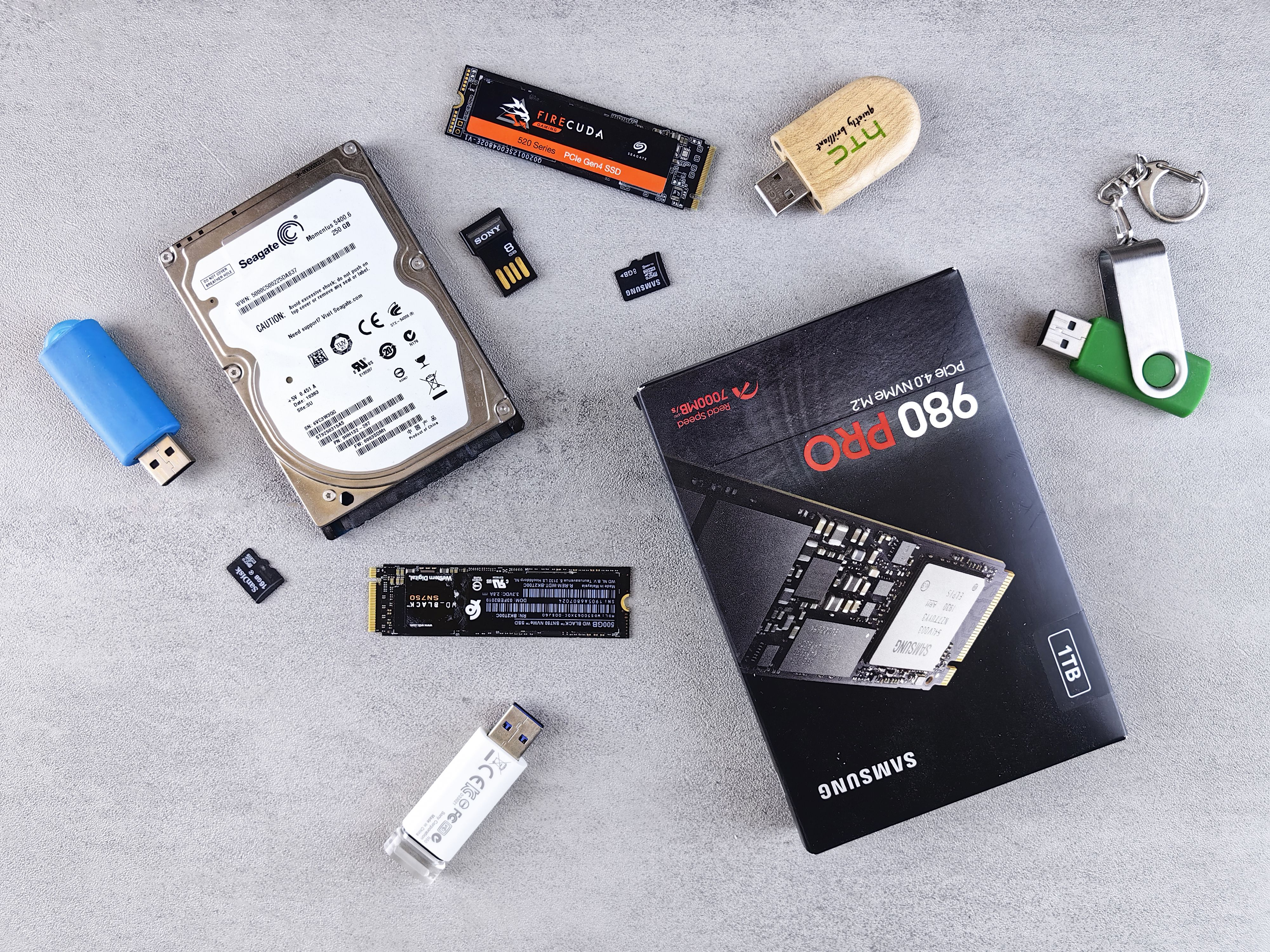
The most direct impact of NAND price increases on SanDisk is higher ASP per gigabyte. If shipment volume does not fall sharply, revenue and gross margin can be amplified at the same time. In its Q3 FY2026 earnings results, SanDisk reported quarterly revenue of $5.95 billion, up 251% year over year, with GAAP gross margin reaching 78.4%. This shows that the NAND upcycle has already entered the income statement in a meaningful way.
To understand this, you can break SanDisk’s financials into three variables: ASP, exabytes sold, and product mix. ASP is the selling price per unit of capacity. Exabytes sold represent total shipped capacity. Product mix refers to the balance among enterprise SSDs, Edge, Consumer, and other product lines. NAND price increases first affect ASP. If customers are still willing to buy high-capacity products, shipment volume remains stable or rises. If more capacity is allocated to enterprise SSDs, gross margin can expand further.
SanDisk is not simply a USB drive or memory card brand. After it completed its separation from Western Digital and began trading as SNDK, the company became closer to an independent NAND Flash and advanced storage company, with products covering SSDs, embedded products, removable cards, USB drives, wafers, and components. In other words, NAND price increases affect its enterprise, edge, and consumer businesses at the same time.
However, NAND price increases are not a one-way positive without risk. The storage industry has always been highly cyclical. The faster prices rise, the more likely customers are to lock in supply early, adjust configurations, or delay purchases. Once downstream demand can no longer absorb higher prices, the industry can enter an inventory digestion phase. For SanDisk, the positive effect of price increases depends on several conditions: ASP rising, shipment volume not falling sharply, enterprise SSD mix improving, cost per gigabyte not rising at the same pace, and customer agreements being fulfilled smoothly.
| Transmission Variable | Positive Impact on SanDisk | Reverse Signal to Watch |
|---|---|---|
| ASP per GB | Higher unit revenue and wider gross margin | Rapid price increases cause customer downgrading |
| Exabytes sold | Revenue benefits from both price and capacity | Shipment decline offsets price increases |
| Enterprise SSD mix | High-value customers lift margin | AI procurement pace slows |
| Consumer business | Brand and channels support cash flow | End demand is pressured by prices |
| Cost per GB | Margin leverage is strong when costs lag | Process, material, and capacity costs rise |
| Long-term agreements | Revenue and pricing visibility improve | Agreement execution falls short |
Summary: NAND price increases matter to SanDisk because they turn industry price upside into higher ASP, higher gross margin, and stronger cash flow. The truly important issue is not NAND prices rising on their own, but whether those price increases can pass through to enterprise SSD, Edge, and Consumer businesses without causing significant shipment contraction. SanDisk’s Q3 FY2026 revenue and gross margin already show strong cycle leverage, but cycle leverage works both ways. When prices rise, margins expand quickly; when prices fall or inventories reverse, margins can also decline quickly. Therefore, NAND price increases are better understood as a profit amplifier, not a stable long-term moat without volatility.
Why Are Enterprise SSDs SanDisk’s Most Price-Sensitive Business?

Enterprise SSDs are SanDisk’s most sensitive and margin-leveraged business when NAND prices rise. The reason is straightforward: AI data centers, cloud vendors, and inference servers require higher-capacity, more reliable, lower-latency storage. Customers care more about supply stability and performance than simply paying the lowest unit price. TrendForce expects 2Q26 NAND Flash contract prices to rise 70%–75% and notes that NAND capacity is increasingly being allocated to enterprise SSDs, which directly matches the surge in SanDisk’s data center business.
AI training is often linked by the market to GPUs and HBM, but AI inference also requires large amounts of high-speed storage. Long context windows, code repositories, legal documents, RAG, vector databases, and enterprise knowledge bases all generate continuous read and write demand. Reuters noted that when AI systems process large legal documents and code repositories, demand for NAND storage memory rises significantly. This explains why enterprise SSDs are not just ordinary server components, but part of AI infrastructure.
The biggest difference between enterprise SSDs and consumer SSDs is procurement logic. Ordinary consumers may delay purchases because of price increases, or downgrade from 2TB to 1TB. Cloud vendors and large enterprise customers care more about capacity delivery, stability, endurance, power consumption, validation cycles, and supply assurance. Once an AI service goes live, insufficient storage can affect service quality, so customers are more willing to lock in supply through long-term agreements.
SanDisk’s results also verify this difference. In its End Market Summary, SanDisk disclosed that Q3 FY2026 Datacenter revenue reached $1.467 billion, up 233% sequentially and 645% year over year. During the same period, Consumer revenue was $820 million, down 10% sequentially but up 44% year over year. This shows that the enterprise side is a stronger absorber of both price and capacity.
| Enterprise SSD Demand Source | Why It Raises NAND Demand | Impact on SanDisk |
|---|---|---|
| AI inference servers | Long context and multi-turn tasks need high-speed data access | Enterprise SSD shipments and ASP both benefit |
| Cloud vendor expansion | CSPs need stable capacity supply | Long-term agreements become easier to execute |
| RAG and vector databases | Data retrieval and caching demand rises | High-capacity SSD demand strengthens |
| Enterprise storage upgrades | Lower latency and higher reliability are required | Product mix shifts toward higher-value markets |
| QLC NAND adoption | Supports large-capacity storage at lower cost | Improves capacity delivery capability |
| Supply tightness | Customers accept higher prices to lock supply | Supplier pricing power improves |
If you follow storage stocks such as SanDisk, WDC, Micron, and Seagate, you can use U.S. stock information search to track individual stock performance, supply chain trends, and earnings schedules together. It is important to remember that strong enterprise SSD demand does not mean all storage categories are equally strong. Pricing leverage, customer structure, and inventory cycles need to be analyzed separately.
Summary: Enterprise SSDs are the key business that turns SanDisk from an ordinary NAND-cycle stock into an AI storage beneficiary. NAND price increases pass through more smoothly in enterprise SSDs because AI data center customers care more about stable supply, capacity assurance, performance, and long-term service continuity. Compared with consumers, enterprise customers have greater pricing tolerance and are more willing to sign long-term supply agreements. However, this high leverage also creates new risks: if AI capex slows, cloud purchasing schedules change, or competitors add enterprise SSD supply, the valuation premium assigned to SanDisk’s data center business may also be reassessed.
How Will Consumer Storage Be Affected by NAND Price Increases?

Consumer storage will also be supported by NAND price increases, but its leverage is weaker than enterprise SSDs. USB drives, memory cards, portable SSDs, PC client SSDs, and smartphone storage are closer to end-consumer products. When prices rise, users may reduce capacity, delay upgrades, or wait for promotions. SanDisk’s Consumer revenue increased 44% year over year in Q3 FY2026, but declined 10% sequentially, suggesting that price benefits may be partly offset by volume and channel factors.
Price transmission in consumer storage is usually slower. Retail channels involve distributor inventory, promotion schedules, price protection, and brand pricing strategies. A rise in NAND contract prices does not necessarily show up fully and immediately in end-user prices. Channels may first digest old inventory, or they may worry that higher prices will slow sell-through. For SanDisk, brand and channel strength can help protect some pricing premium, but they cannot fully remove end-demand volatility.
User behavior also affects price transmission. For example, camera users may delay buying high-capacity SD cards, gamers may downgrade from a 4TB portable SSD to a 2TB model, PC users may postpone upgrades, and smartphone vendors may reduce base storage configurations. In its analysis of AI server demand driving NAND price increases, TrendForce noted that PC and smartphone manufacturers may reduce storage capacity in their products to curb NAND demand. This is a typical sign that consumer-end price tolerance is limited.
Consumer storage is not without value. SanDisk’s brand awareness, retail channels, and broad product portfolio still provide cash flow and market coverage. In higher-end use cases such as imaging, gaming, creators, and mobile work, users still have willingness to pay for speed, durability, and brand reliability. The difference is that consumer storage is better as a stable base business, not the strongest source of margin leverage in a NAND price upcycle.
NAND price increases usually affect consumer storage in these ways:
- End-user prices rise, but with a lag versus upstream NAND contract prices;
- Consumers shift from higher-capacity models to mid- or lower-capacity models;
- Channels become more cautious about restocking to avoid high-price inventory risk;
- Brand promotions decrease and discount intensity may narrow;
- High-end products maintain premiums, while low-end demand weakens;
- Smartphone, PC, and consumer electronics vendors may adjust storage specifications.
| Consumer Storage Scenario | Possible Change After NAND Price Increase | Impact on SanDisk |
|---|---|---|
| Portable SSDs | High-capacity models see clearer price increases | Margin improves but volume is pressured |
| SD/microSD cards | End users focus more on promotions | Brand premium offers some buffer |
| USB drives | Low-end demand is price-sensitive | Price transmission is weaker |
| PC client SSDs | OEMs may reduce capacity configurations | Shipment uncertainty increases |
| Smartphone storage | Device makers control bill-of-material cost | Embedded demand may be pressured |
| Creator storage | Speed and reliability requirements are higher | High-end products are more resilient |
Summary: Consumer storage benefits from NAND price increases, but it is not SanDisk’s strongest source of margin leverage. Enterprise SSD customers care more about supply stability and performance, while consumer-end users are more likely to downgrade, delay purchases, or wait for promotions when prices rise. For SanDisk, the value of the consumer business lies in brand, channels, and product coverage, rather than the same strong upcycle leverage as the data center business. When assessing consumer storage, focus on two questions: whether end-user price increases can pass through smoothly, and whether shipment volume can remain stable. If prices rise too quickly and demand contracts sharply, the consumer business’s contribution to overall margin improvement will weaken.
How Do NAND Price Increases Amplify SanDisk’s Margins?
NAND price increases amplify SanDisk’s margins through higher ASP, better product mix, cost lag, and operating leverage. In its Form 10-Q, SanDisk disclosed that Q3 FY2026 net revenue increased 251% year over year, mainly because ASP per gigabyte increased 248%, while exabytes sold were essentially flat. This means SanDisk’s revenue growth was driven primarily by a sharp increase in unit capacity pricing, not by selling substantially more capacity.
The first layer of leverage is ASP. NAND industry costs are usually measured by cost per gigabyte, while selling prices are measured by ASP per gigabyte. When ASP rises faster than cost per gigabyte, gross margin expands quickly. In the same gross margin disclosure, SanDisk said Q3 FY2026 gross margin improved by about 5,600 basis points year over year, mainly due to higher ASP and shipment growth, while ASP growth exceeded changes in cost per gigabyte.
The second layer of leverage is product mix. Capacity is not allocated equally across all products. When NAND supply is tight, suppliers allocate more resources to higher-margin enterprise SSDs, data center customers, and higher-value products, rather than lower-margin wafers, low-end USB drives, or price-sensitive consumer products. TrendForce noted that NAND suppliers are improving bit output through process upgrades and QLC adoption, but enterprise SSD orders have shown no sign of slowing, reinforcing the priority of high-value products.
The third layer of leverage is operating expenses. When revenue grows rapidly, R&D, sales, and administrative expenses do not rise fully in proportion. SanDisk’s Q3 FY2026 revenue increased 97% sequentially, while Non-GAAP operating expenses increased only 8% sequentially. This is operating leverage. When revenue and gross margin rise, operating profit and EPS often improve faster than revenue.
However, margin leverage also works in reverse. If NAND prices fall, or customers demand more price protection, or channel inventory write-downs increase, gross margin will come under pressure. SanDisk’s 10-Q also notes that sales incentives and marketing programs are recorded as reductions to gross revenue, and that these ratios are affected by industry conditions, pricing strategies, seasonal demand, competitor actions, channel mix, and product availability.
| Margin Amplification Mechanism | Financial Statement Signal | Risk to Watch |
|---|---|---|
| ASP increase | Higher revenue per gigabyte | Price growth slows or reverses |
| Cost lag | ASP outpaces cost per GB | Process and material costs rise |
| Product mix upgrade | Enterprise SSD mix increases | Consumer and low-margin products rebound |
| Operating leverage | Opex grows slower than revenue | R&D and customer support costs rise |
| Less price protection | Gross-to-net improves | Channel subsidies increase again |
| Long-term agreements | Revenue becomes more predictable | Execution, price caps, and customer risk |
If you trade high-volatility U.S. stocks, you should look not only at share prices and earnings, but also at actual trading costs. U.S. stock trading costs often include not only commissions, but also platform fees, external agency fees, transaction activity fees, and other charges. For example, according to U.S. stock trading fees, Biya charges $0 commission for U.S. stock trading, while platform fees, external agency fees, and other charges are subject to the fee center and order page. Service availability depends on the user’s location, identity verification status, platform rules, and applicable laws and regulations.
Summary: The impact of NAND price increases on SanDisk’s margins is not linear; it is leveraged. Rising ASP lifts unit revenue, product mix shifts toward enterprise SSDs improve gross margin, and revenue growth outpacing expense growth further amplifies operating profit. Q3 FY2026 results already show that SanDisk has high margin leverage in a strong NAND cycle. But you also need to think in reverse: if ASP falls, customers demand price protection, consumer channels destock, or enterprise SSD supply increases, margins may decline quickly. When analyzing SanDisk, do not look only at revenue growth. Watch ASP, shipment volume, product mix, and expense ratios together.
Can Long-Term Agreements Help SanDisk Escape the NAND Cycle?
Long-term agreements can reduce part of SanDisk’s cycle volatility, but they cannot allow SanDisk to fully escape the NAND cycle. Reuters reported that SanDisk has signed five long-term supply agreements, including three agreements signed in the third fiscal quarter worth about $42 billion, with terms of one to five years and structures including price caps, price floors, and terms that prevent customers from exiting at no cost. Such agreements improve visibility, but they are not cycle immunity.
The benefits of long-term agreements are clear. For customers, AI data centers require stable SSD supply. Especially when supply is tight, locking in capacity can be more important than pushing for short-term discounts. For SanDisk, long-term agreements help with capacity planning, reduce extreme price volatility, improve revenue visibility, and turn customer demand from short-term orders into clearer financial commitments. In an interview with Reuters, SanDisk’s CEO emphasized the company’s goal of moving away from the storage industry’s boom-bust cycle toward more consistent and predictable economics.
However, long-term agreements also bring execution risks. First, customer demand may change, especially if AI capex slows or model efficiency improves, which could change actual purchasing schedules. Second, price caps may limit SanDisk’s upside in extreme supply shortage conditions. Third, price floors provide protection, but if market prices fall sharply, customers may renegotiate, delay purchases, or reduce new agreements. Fourth, product specifications may change, and existing agreements may need to match new capacity, power, and performance requirements.
Long-term agreements can also change valuation logic. If the market believes these agreements improve earnings stability, SanDisk may no longer be valued purely as a traditional NAND-cycle stock and may receive some “visibility premium.” But this premium depends on agreement quality, not agreement headlines. Investors need to watch agreement size, duration, customer type, pricing mechanism, prepayments or break clauses, actual fulfillment progress, and whether the agreements cover enterprise SSDs or broader NAND products.
| Long-Term Agreement Dimension | Positive Effect | Limitation and Risk |
|---|---|---|
| Revenue visibility | Reduces short-term order volatility | Customer demand can still change |
| Price floor | Buffers price declines | Does not cover all product lines |
| Price cap | Makes customers more willing to sign | Limits upside in an upcycle |
| Customer binding | Improves supply chain stability | Customer concentration rises |
| Capacity planning | Supports long-term investment | Expansion may meet a cycle downturn |
| Valuation impact | Improves earnings predictability | Failed execution compresses valuation multiples |
Summary: Long-term agreements can help SanDisk reduce extreme volatility in the NAND cycle, but they cannot fully remove cyclicality. Their real value lies in improving revenue visibility, stabilizing customer relationships, reducing sharp price swings, and supporting enterprise SSD capacity planning. At the same time, they bring risks such as price caps, customer concentration, delivery obligations, and changes in demand. When evaluating long-term agreements, do not look only at the headline amount. Focus on whether the agreements actually convert into revenue, gross margin, and cash flow. Long-term agreements are an important tool for upgrading SanDisk’s business model, but they are not a promise of stable profit growth.
How Should Ordinary Investors Judge the Impact of NAND Price Increases on SanDisk Stock?
Ordinary investors should not look only at “NAND price increase” headlines. They need to evaluate the stage of the price cycle, enterprise SSD mix, shipment volume, gross margin, long-term agreements, and valuation expectations together. Early in a NAND price increase cycle, the trend usually benefits SanDisk’s earnings. In the middle stage, revenue and EPS are released quickly. In the later stage, investors need to watch for supply recovery, demand downgrading, and overly full market expectations. For SNDK, the key is not whether price increases have happened, but how long they can last and whether they can continue turning into profit.
The first step is to judge the cycle stage. In the early stage, watch whether NAND contract prices have turned from falling to rising, whether inventories are falling, and whether suppliers are reducing low-margin shipments. In the middle stage, watch whether enterprise SSDs, ASP, gross margin, and cash flow are being realized. In the later stage, watch whether customers begin downgrading, suppliers raise capital expenditure, and enterprise SSD prices still have upward momentum. If the market has already priced in high prices, high margins, and long-term agreements, any data below expectations can trigger valuation adjustment.
The second step is to build a tracking checklist. You can focus on eight indicators:
- Whether NAND Flash contract prices continue rising;
- Whether enterprise SSD contract prices remain stronger than consumer SSD prices;
- Whether Datacenter revenue continues to grow sequentially;
- Whether Consumer revenue shows volume pressure;
- Whether ASP per GB continues to exceed cost per GB;
- Whether exabytes sold remain stable or grow;
- Whether gross margin guidance remains high;
- Whether long-term agreements convert into actual orders and cash flow.
The third step is to avoid three common mistakes. First, do not equate NAND price increases with guaranteed share price increases. Stock prices reflect expectations and surprises, not only facts. Second, do not look only at revenue growth without shipment volume. If revenue growth mainly comes from price increases while shipment volume falls, demand tolerance needs to be reassessed. Third, do not assume that strong enterprise SSD demand means consumer storage is equally strong. Enterprise customers and retail users have very different price tolerance.
| Indicator | Positive Signal | Negative Signal | Valuation Impact |
|---|---|---|---|
| NAND contract price | Increases continue | Growth slows or reverses | Determines cycle direction |
| Enterprise SSD | Revenue and prices rise together | Customer procurement slows | Determines AI premium |
| Consumer | Revenue stable and promotions decrease | Sequential decline and downgrading | Measures end-demand tolerance |
| ASP per GB | Higher than cost change | Price increases fail to pass through | Determines gross margin |
| Exabytes sold | Stable or growing | Clear decline | Measures real demand |
| Long-term agreements | Orders materialize | Execution uncertainty | Affects valuation multiple |
If you follow SanDisk, WDC, Micron, Seagate, and the AI storage supply chain, you can use Biya to track relevant U.S. and Hong Kong stocks while reviewing earnings, valuation, order fees, and risk disclosures together. Biya is a global multi-asset trading wallet that supports U.S. stocks, Hong Kong stocks, and cryptocurrency trading. Specific service availability depends on the user’s location, identity verification results, platform rules, and applicable laws and regulations.
Summary: To judge the impact of NAND price increases on SanDisk stock, you need to combine industry pricing, financial structure, and market expectations. The stronger the price increase, the greater the short-term margin leverage, but also the more sensitive valuation becomes to negative changes. A more balanced framework is to use NAND contract prices to judge the cycle direction, enterprise SSDs to assess growth leverage, consumer storage to measure price tolerance, and gross margin plus long-term agreements to evaluate profit sustainability. SanDisk may continue to benefit from AI data center demand for high-speed storage, but it remains a highly cyclical and volatile semiconductor company. Before trading, decisions should be based on your own risk tolerance and the latest financial data.
If you continue following NAND, enterprise SSDs, AI data centers, and the U.S. semiconductor cycle, you need to track not only industry price headlines, but also financial guidance, valuation changes, trading costs, and risk disclosures. You can use U.S. stock information search to monitor companies across the storage supply chain, and review account registration, order pages, and fee disclosures to understand the actual trading process. Biya charges $0 commission for U.S. stock trading, while platform fees, external agency fees, and other charges are subject to the fee center and order page. This content only discusses public market information, trading rules, and fee structures, and does not constitute investment advice. Before trading, confirm service availability, fee rules, and local regulatory requirements.
FAQ
Why Do NAND Price Increases Improve SanDisk’s Margins?
NAND price increases improve SanDisk’s ASP per gigabyte. If cost per gigabyte does not rise at the same pace, gross margin expands. Final margin performance also depends on enterprise SSD mix, exabytes sold, price protection, channel inventory, and execution of long-term agreements.
Do Enterprise SSD Price Increases Affect SanDisk More?
Enterprise SSD price increases usually affect SanDisk more because AI data center customers care more about capacity, performance, reliability, and stable supply, and are less price-sensitive than ordinary consumer storage buyers. If cloud procurement slows, this leverage can also reverse.
Will NAND Price Increases Raise Consumer SSD Prices?
NAND price increases may raise prices for consumer SSDs, portable SSDs, memory cards, and USB drives, but end-user prices are also affected by channel inventory, promotion schedules, brand strategy, and consumer price tolerance. Consumer-side price transmission is usually slower than enterprise SSDs.
Can SanDisk’s Long-Term Agreements Reduce NAND Cycle Risk?
SanDisk’s long-term agreements can improve revenue and pricing visibility, but they cannot fully remove NAND cycle risk. Demand changes, rising costs, product specification changes, price caps, and customer fulfillment all affect the final profit contribution from these agreements.
What Metrics Should Ordinary Investors Watch in SanDisk Earnings?
Ordinary investors should focus on NAND ASP, enterprise SSD revenue, Consumer revenue, exabytes sold, gross margin, free cash flow, long-term agreements, and next-quarter guidance. Looking only at share price moves or revenue growth can overlook the company’s cycle position.
What Are the Main Risks of NAND Price Increases for SanDisk Stock?
The main risks include supply recovery, slower AI data center demand, consumer downgrading, customer inventory reversal, higher price protection, weaker-than-expected execution of long-term agreements, and valuation overpricing. Judgments should be based on company disclosures and market data.
*This article is provided for general information purposes and does not constitute legal, tax or other professional advice from BiyaPay or its subsidiaries and its affiliates, and it is not intended as a substitute for obtaining advice from a financial advisor or any other professional.
We make no representations, warranties or warranties, express or implied, as to the accuracy, completeness or timeliness of the contents of this publication.
Related Blogs of

Online Bank-to-Bank Transfers: Account Linking, Steps, and Limits


International Money Transfers: Methods, Requirements, and Costs


Crypto Exchange Fees Comparison: Trading Fees, Spreads, and Withdrawals


International Wire Transfer Time: What Affects Delivery?

Choose Country or Region to Read Local Blog
 Australia
 Austria
 Belgium
 Canada
 Cyprus
 Czech Republic
 Denmark
 Estonia
 Finland
 France
 Germany
 Greece
 Hong Kong
 India
India Indonesia
 Ireland
 Italy
Italy Japan
Japan Latvia
 Lithuania
 Luxembourg
 Malaysia
 Malta
Malta Morocco
 Nepal
Nepal Netherlands
 New Zealand
 Norway
 Pakistan
 Philippines
 Poland
 Portugal
 Romania
 Singapore
 Slovakia
 Slovenia
 South Africa
 South Korea
 Spain
Spain Sweden
 Thailand
 United States
 Turkey
 United Arab Emirates
 United Kingdom
 Vietnam