Why Can’t HBM Exist Without Advanced Packaging? The Role of TSV, CoWoS, and Packaging Equipment




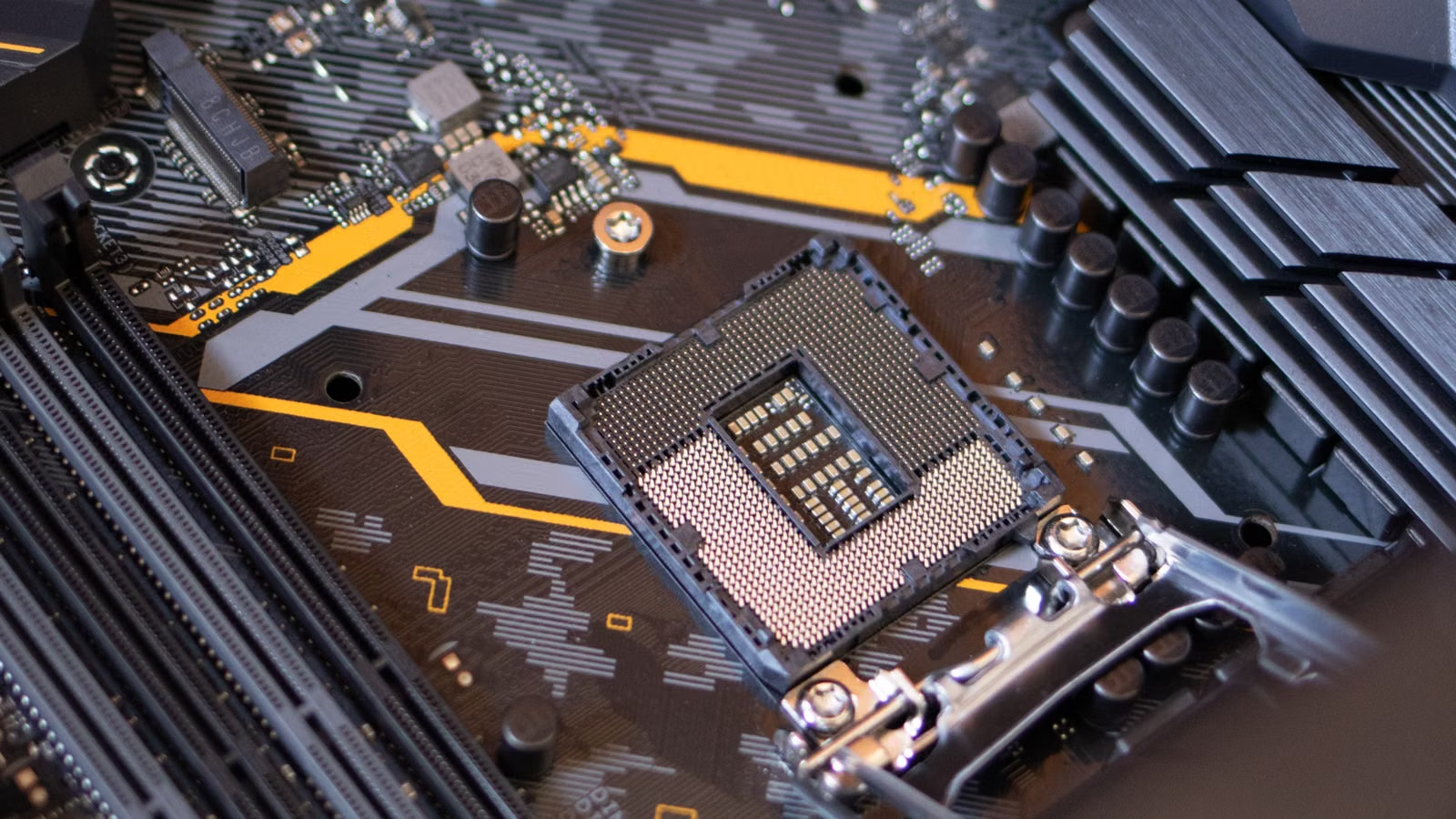
HBM is not a simple upgrade of ordinary DRAM. It is a system-level engineering structure built on “multi-layer DRAM stacking + TSV vertical interconnects + 2.5D/3D advanced packaging + co-packaged integration with GPUs or AI accelerators.” AI chips need higher bandwidth, lower power consumption, and higher packaging density over shorter distances. TSV solves vertical stacking, CoWoS solves horizontal interconnection between logic chips and HBM, and packaging equipment determines yield, capacity, and cost.
Key Takeaways
- HBM’s core advantage comes from stacked DRAM and an ultra-wide I/O interface.
- TSV is the key to vertical interconnection among multiple DRAM layers in HBM.
- CoWoS enables GPUs, ASICs, and HBM to work together in the same package.
- Advanced packaging capacity affects the delivery speed of AI chips.
- TCB, hybrid bonding, and inspection equipment determine HBM yield.
- Investing in the HBM supply chain requires tracking memory, packaging, and equipment together.
Why Is HBM Not Just a Simple Upgrade of Ordinary DRAM?

HBM does not simply increase DRAM frequency. Instead, it vertically stacks multiple DRAM layers and places them next to a GPU or AI ASIC through TSVs, micro-bumps, interposers, and advanced packaging. It solves the “memory bandwidth wall” in AI training and inference. Therefore, the key is not just memory process technology, but whether memory, logic chips, and packaging structures can work together.
AI large model training, inference, long-context processing, KV cache, vector databases, and multimodal workloads all require massive amounts of data to move quickly between compute units and memory. Ordinary DDR or GDDR relies on longer external connections, so I/O channels and power efficiency are limited. HBM uses ultra-wide I/O and short-distance interconnects, shifting the bandwidth problem from “raising frequency” to “increasing parallel channels.”
Micron states that its HBM4 uses a 2048-pin bus interface, runs above 11Gbps, and delivers more than 2.8TB/s of bandwidth per stack. Samsung also says its HBM4 can provide up to 3300GB/s of bandwidth and is designed for AI system efficiency and performance scaling. These specifications show that HBM’s core value is not that a single DRAM die becomes faster, but that stacked architecture and wide interfaces deliver higher throughput within limited package space.
| Comparison Dimension | Ordinary DRAM / GDDR | HBM |
|---|---|---|
| Structure | Single chip or distributed packaging | Vertically stacked multi-layer DRAM |
| Interconnect method | Mainly PCB traces | TSVs, micro-bumps, interposers |
| Bandwidth source | Higher frequency | Ultra-wide I/O and short-distance interconnects |
| Main use cases | PCs, servers, graphics cards | AI accelerators, HPC, data centers |
| Key bottlenecks | Frequency, power consumption, distance | Packaging yield, capacity, thermal management |
HBM’s system value comes from being “closer to compute.” In AI accelerators, GPUs, ASICs, chiplets, and multiple HBM stacks are usually placed inside the same advanced package and connected through silicon interposers or RDL interposers. TSMC’s CoWoS-S description states that a large silicon interposer can accommodate logic chiplets and HBM cubes for AI and supercomputing applications. This means HBM is not sold as an independent memory component that is connected over long distances; it becomes part of the AI chip package itself.
The more advanced HBM becomes, the harder packaging becomes. HBM3E, HBM4, and HBM4E increase I/O count, stack height, bandwidth, and power density. SK hynix states in its HBM4 materials that HBM4 increases I/O terminals from 1024 in the previous generation to 2048 and uses Advanced MR-MUF technology to reduce mass production risk. The more I/Os and the taller the stack, the greater the challenges in warpage, heat dissipation, bonding accuracy, and testing.
Summary: HBM’s value is not simply that it is “faster DRAM.” It redesigns memory bandwidth, power consumption, and space efficiency inside the AI chip package. Ordinary DRAM relies more on chip process technology and external connections, while HBM depends on TSVs, micro-bumps, interposers, CoWoS, and advanced packaging equipment. When evaluating the HBM supply chain, you should not only look at DRAM supplier capacity. You also need to assess whether advanced packaging can support more stacks, higher yield, larger package areas, and faster delivery.
What Role Does TSV Play in HBM?

TSV is the core interconnect technology that enables HBM to be vertically stacked. It uses vertical conductive vias passing through silicon to connect multiple DRAM dies, allowing data, power, and control signals to move up and down inside the stack. Without TSV, HBM would find it difficult to achieve high bandwidth, low power consumption, and high-density stacking within limited area.
TSV stands for Through-Silicon Via. You can think of it as a vertical “high-speed channel” running through silicon. An HBM stack is usually composed of multiple DRAM dies, a base die or logic die, micro-bumps, TSVs, underfill, and packaging materials. Traditional chips rely more on edge wiring or package substrate connections, where paths are longer. TSV allows signals to move vertically inside silicon, creating shorter paths that are better suited for highly parallel data transmission.
TSV helps reduce power consumption and latency because HBM does not need to rely on narrow high-frequency channels to accumulate bandwidth. Instead, it transfers data through many parallel I/Os at relatively lower clocks. TSMC states in its discussion of HBM and wide interfaces that HBM can operate at lower clock speeds for the same bandwidth, reducing power consumption. This is critical for AI chips because data movement itself consumes significant energy. If higher memory bandwidth came with sharply higher power consumption, the system-level benefit would be weakened.
TSV also creates manufacturing challenges. It requires deep via etching, insulation layer formation, copper filling, CMP planarization, wafer thinning, bonding, packaging, and inspection. Any TSV defect can affect the yield of the entire HBM stack. When Samsung commercialized HBM4, it noted that HBM4 improves power efficiency through low-voltage TSV technology and PDN optimization, while also improving thermal resistance and heat dissipation. This shows that TSV is not just an interconnect structure; it is directly related to power delivery, energy efficiency, and thermal management.
TSV affects HBM in five major ways:
- It vertically connects multiple DRAM dies to form a high-density stack.
- It shortens signal paths, reducing latency and data movement energy.
- It supports ultra-wide I/O parallel transmission, improving package-level bandwidth.
- It increases storage capacity per unit area, fitting AI chips’ limited package space.
- It increases the complexity of etching, filling, thinning, bonding, and inspection.
For the supply chain, TSV pushes HBM from “memory chip manufacturing” toward a combined process of “memory manufacturing + advanced packaging + high-precision inspection.” Memory suppliers need to coordinate DRAM dies, base dies, TSVs, stacking, and packaging materials, while equipment suppliers need to solve micron-level alignment, defect inspection, stress control, and thermal material compatibility.
Summary: TSV is one of the biggest structural differences between HBM and ordinary DRAM. It allows multiple DRAM layers to be vertically interconnected inside silicon instead of relying on external wiring, forming a high-bandwidth, low-power, high-density stacked structure. However, TSV also significantly increases manufacturing and packaging difficulty, requiring more precise etching, filling, thinning, bonding, and inspection capabilities. When evaluating HBM capacity, you must pay attention to TSV yield, stack height, thermal management, and packaging equipment capability.
Why Is CoWoS the Key Connection Platform Between AI Chips and HBM?
CoWoS places GPUs, AI ASICs, chiplets, and multiple HBM stacks inside one large package and connects them through silicon interposers or RDL interposers. HBM provides high-bandwidth memory, but only through 2.5D packaging platforms like CoWoS can AI chips efficiently access that bandwidth.
CoWoS stands for Chip on Wafer on Substrate. In simple terms, logic chips and HBM are first connected to an interposer through wafer-level integration, and then attached to the package substrate below. The interposer provides high-density, short-distance, low-latency interconnect paths, allowing a GPU or ASIC to access multiple HBM stacks at the same time. Without this high-density connection platform, HBM’s bandwidth would be difficult to convert into usable AI accelerator performance.
AI accelerators increasingly rely on larger interposers because logic chips are becoming larger, the number of HBM stacks is increasing, and chiplet combinations are becoming more complex. TSMC stated in its 2025 technology update that it plans to mass-produce 9.5-reticle-size CoWoS in 2027, supporting the integration of 12 or more HBM stacks. This means AI chip packaging is moving from “one chip + a small number of HBM stacks” toward “multiple chiplets + multiple HBM stacks + ultra-large packages.”
| CoWoS Type | Main Structure | Advantages | Suitable Use Cases |
|---|---|---|---|
| CoWoS-S | Silicon interposer | High-density interconnects, strong performance | AI GPUs, HPC, HBM integration |
| CoWoS-R | RDL interposer | Better flexibility, relatively higher cost potential | Large heterogeneous integration |
| CoWoS-L | RDL + local silicon interconnect | Stronger scalability | Ultra-large packages, complex chiplets |
| SoIC + CoWoS | 3D stacking + 2.5D integration | Higher integration density | Next-generation AI chips |
TSMC’s CoWoS platform includes CoWoS-S, CoWoS-R, and CoWoS-L. CoWoS-S is based on a silicon interposer and offers high interconnect density, making it common in high-performance AI and HPC. CoWoS-R uses an RDL interposer and emphasizes greater design flexibility. CoWoS-L combines RDL with local silicon interconnects and is better suited for more complex large-package designs. Demand for CoWoS-L in AI chips such as Nvidia Blackwell also shows that AI packaging is moving from a single solution toward multiple parallel platforms.
CoWoS can easily become a bottleneck because it requires advanced wafer foundry processes, package substrates, interposers, HBM supply, thermal management, and high-yield assembly to work together. TrendForce expects severe 2.5D packaging shortages to ease only slightly by 2027, and notes that TSMC plans to expand CoWoS capacity by more than 60% by 2027. This shows that AI chip delivery depends not only on GPU dies, but also on whether packaging platforms can expand on schedule.
Summary: HBM provides high bandwidth, but CoWoS determines whether AI chips can use that bandwidth efficiently. Without CoWoS or similar 2.5D packaging, GPU-HBM connections would still be limited by interconnect density, distance, power consumption, and package size. When evaluating the AI chip supply chain, CoWoS is not a back-end supporting role; it is the core platform connecting advanced logic chips, HBM, and system performance. Insufficient packaging capacity can directly limit the delivery of AI chips from Nvidia, AMD, cloud ASIC suppliers, and others.
Why Can Advanced Packaging Equipment Become a Bottleneck in the HBM Supply Chain?
HBM supply bottlenecks are not limited to DRAM wafers. They also involve TSVs, stacking, bonding, inspection, substrates, and CoWoS capacity. Advanced packaging equipment determines whether HBM can be mass-produced at sufficient yield and speed, including thermo-compression bonding, hybrid bonding, temporary bonding, wafer thinning, inspection and metrology, and packaging material equipment. Equipment shortages or unstable yield can directly limit AI chip delivery.
TCB thermo-compression bonding is one of the key processes in HBM and 2.5D/3D packaging. Thermo-Compression Bonding uses temperature, pressure, and high-precision alignment to connect die to wafer, die to substrate, or multiple chip layers. ASMPT’s FIREBIRD TCB targets 2D, 2.5D, and 3D heterogeneous integration, with ±2.0 μm placement accuracy and a processing cycle of less than two seconds, making it suitable for high-performance computing and AI applications.
As HBM stack height increases, traditional flux-based processes may create contamination, cleaning, and yield challenges. ASMPT further states in its AOR TCB introduction that fluxless thermocompression bonding can reduce contamination risk, improve bonding uniformity, and accelerate time-to-yield. For HBM, yield is not a small issue because a defect in any layer of a stack can affect the cost of the entire product.
Hybrid bonding is seen as a next-generation direction. Hybrid bonding connects copper to copper and oxide to oxide directly, improving interconnect density and reducing pitch. Besi’s Hybrid Bonding platform emphasizes cleanliness, optical alignment, and high-density interconnects, mainly targeting 3D integration and advanced packaging. Yole Group expects TCB and hybrid bonding to drive back-end equipment market growth, with the TCB equipment market reaching USD 936 million and the hybrid bonding equipment market reaching USD 397 million by 2030.
| Equipment Segment | Main Function | Impact on HBM | Example Companies |
|---|---|---|---|
| TSV equipment | Etching, filling, insulation | Determines vertical interconnect capability | Applied Materials, etc. |
| TCB equipment | Die-to-wafer / die-to-substrate bonding | Determines stacking and packaging yield | ASMPT, etc. |
| Hybrid bonding | High-density direct interconnects | Supports next-generation 3D integration | Besi, Applied Materials, etc. |
| Inspection and metrology | Defect, alignment, warpage inspection | Affects yield and reliability | KLA, Onto, etc. |
| Materials and substrates | Underfill, mold, substrate | Affects heat dissipation and mechanical stability | Materials and substrate suppliers |
Inspection, metrology, and material equipment are equally important. TSVs, micro-bumps, RDL, underfill, mold, and warpage all require strict inspection. Applied Materials states that AI computing is constrained by the memory wall, and that HBM and 3D stacking introduce new process complexity, requiring new DRAM and advanced packaging systems to improve yield and production efficiency. Advanced packaging cannot be solved by a single bonding machine; it requires coordination across an entire equipment and materials chain.
Summary: The HBM supply chain bottleneck cannot be solved simply by memory suppliers starting more wafers. The more layers, wider I/O, and larger package sizes HBM has, the more it depends on thermo-compression bonding, hybrid bonding, TSV processes, inspection and metrology, and packaging materials. Advanced packaging equipment determines HBM mass production speed, yield, and cost. It is an easily overlooked but critical part of the AI chip supply chain. When tracking HBM expansion, you should also watch equipment orders, lead times, tool installation progress, customer validation, and yield ramp-up.
Which Companies and Segments in the HBM Supply Chain Deserve Attention?
The HBM supply chain can be divided into five groups: memory suppliers, wafer foundry and advanced packaging platforms, packaging equipment, materials and substrates, and AI chip customers. Investors should not only look at HBM shipments. They also need to understand who controls stacking technology, who has CoWoS capacity, who provides critical equipment, and who can enter the supply chains of Nvidia, AMD, and cloud ASIC customers.
Memory suppliers are the first layer. Competition among SK hynix, Samsung, and Micron is not just about DRAM wafer capacity. It is also about HBM3E, HBM4, and HBM4E stacking, yield, thermal management, and customer qualification. SK hynix emphasizes Advanced MR-MUF and 2048 I/O. Micron emphasizes a 2048-pin bus, above 11Gbps speed, and more than 2.8TB/s per stack. Samsung emphasizes up to 3300GB/s bandwidth, low-voltage TSV I/O, and PDN optimization. These details show that HBM competition has entered the stage of “specifications + packaging + customer adoption.”
Wafer foundry and packaging platforms are the second layer. TSMC’s CoWoS capacity affects the delivery schedule of Nvidia, AMD, Broadcom, and cloud providers’ self-developed ASICs. Samsung Foundry, Intel Foundry, and the OSAT ecosystem are also investing in advanced packaging, but in high-end AI accelerators, CoWoS remains one of the core platforms. For investors, CoWoS expansion, interposer area, substrate supply, and packaging yield are key indicators for observing AI chip supply chain bottlenecks.
Packaging equipment and materials are the third layer. Companies such as ASMPT, Besi, Applied Materials, KLA, Onto, DISCO, and TEL do not directly sell HBM, but their bonding, inspection, thinning, metrology, and material handling equipment affects HBM stacking and CoWoS yield. Reuters reported that Besi’s first-quarter orders rose 104.5%, driven by adoption of hybrid bonding technology. Equipment orders often lead packaging capacity release, so they are also worth tracking.
| Supply Chain Segment | Key Variables | Indicators to Watch |
|---|---|---|
| HBM suppliers | Stack height, yield, customer qualification | HBM3E/HBM4 shipments, ASP, gross margin |
| Wafer foundry | AI GPU/ASIC logic chips | Advanced-node capacity, customer concentration |
| CoWoS / 2.5D packaging | Interposers, substrates, packaging capacity | CoWoS expansion, yield, delivery cycle |
| Packaging equipment | TCB, hybrid bonding, inspection | Orders, lead times, equipment ASP |
| Materials and substrates | Underfill, substrate, RDL | Supply stability, thermal management capability |
If you follow related stocks, you should separate technology roadmaps from trading costs. HBM, CoWoS, and advanced packaging equipment stocks may fluctuate quickly due to AI expectations. Before trading, you need to study earnings reports, orders, and valuations, while also understanding actual fee structures. Biya supports U.S. stocks, Hong Kong stocks, and other multi-asset trading. Biya’s U.S. stock trading commission is USD 0, while platform fees, external institutional fees, and other fees are subject to the fee center and order page. Service availability depends on the user’s location, identity verification result, platform rules, and applicable laws and regulations.
Summary: The HBM supply chain is not a single “memory stock” story. It is determined by memory suppliers, wafer foundries, CoWoS, packaging equipment, materials, and AI chip customers together. When evaluating related stocks, you should separate short-term orders, long-term capacity, customer qualification, and equipment bottlenecks. As HBM evolves toward HBM4, HBM4E, and HBM5, the importance of packaging equipment and CoWoS capacity will increase. The companies with real barriers are often those that can maintain yield, delivery, and customer qualification after each specification upgrade.
What Risks Should Investors Watch in the HBM and Advanced Packaging Supply Chain?
HBM and advanced packaging are important directions in AI infrastructure, but that does not mean every related company will continue to benefit. Major risks include easing supply-demand tightness after CoWoS expansion, lower-than-expected HBM yield, delayed customer qualification, volatility in equipment orders, slower AI chip demand, geopolitical and export restrictions, and valuations pricing in optimism too early.
The first type of risk is that supply expansion eases the bottleneck. TSMC, OSATs, memory suppliers, and equipment vendors are all expanding capacity. Shortages in CoWoS, HBM stacking, and packaging equipment may not last forever. TrendForce’s view on 2.5D packaging also suggests that shortages may begin to ease in 2027. If supply expands faster than real AI chip demand, pricing power and profitability may move from “extreme shortage” back toward “structural tightness.”
The second type of risk is customer qualification and yield. Producing HBM samples is not enough; products must pass long-term validation by Nvidia, AMD, and ASIC customers. HBM4’s 2048 I/Os, higher stack height, more complex base die, and larger package area may all extend the production ramp timeline. Equipment company orders may reflect industry strength first, but actual revenue and profit still depend on delivery, acceptance, and customer expansion schedules.
The third type of risk is valuation and trading behavior. Stocks related to HBM, CoWoS, and packaging equipment may already price in optimistic AI expectations. If order growth slows, gross margin misses expectations, or customers shift toward multiple suppliers, stock volatility may rise. For ordinary investors, the right technology direction does not automatically mean the entry price is reasonable.
| Risk Type | Specific Manifestation | Impact on Investment Judgment |
|---|---|---|
| Capacity risk | CoWoS expands faster than demand | Prices and margins decline |
| Yield risk | HBM4 stacking and bonding are difficult | Shipment delays and cost increases |
| Customer risk | Major customer qualification is delayed | Revenue recognition is pushed back |
| Equipment cycle | Orders fall after a peak | Equipment stocks become more volatile |
| Valuation risk | Stocks price in AI expectations early | Margin of safety declines |
| Policy risk | Export restrictions and geopolitical tensions | Supply chain uncertainty rises |
If your region meets the relevant service conditions, you can further review Biya U.S. stock trading fees to understand the differences between commissions, platform fees, external institutional fees, and fees displayed on the order page. Popular semiconductor stocks may fluctuate significantly when AI expectations change. Before trading, you should fully understand order types, fee structures, and risks.
Summary: The long-term direction of HBM and advanced packaging is clear, but short-term investment still depends on prices, yield, capacity, customer qualification, and valuation. Advanced packaging bottlenecks can create strong industry momentum, but they can also ease as capacity expands. You should not use “strong AI demand” alone to judge every HBM supply chain stock. You need to separate memory suppliers, CoWoS, equipment, materials, and customer structures. Companies with technical barriers, customer qualification, expansion capability, and reasonable valuation are more suitable for continuous tracking.
Understanding the HBM and advanced packaging supply chain can help you track changes in AI semiconductors and related stocks. If you follow companies such as SK hynix, Micron, Samsung, TSMC, ASMPT, Besi, Applied Materials, and KLA across advanced packaging and memory supply chains, you need to examine technology roadmaps, customer qualification, and capacity expansion, while also paying attention to trading costs and order fees. Biya is a global multi-asset trading wallet that supports U.S. stocks, Hong Kong stocks, and crypto trading. Depending on your location, identity verification result, and platform rules, you may choose to learn more through account registration or app download. The above only introduces public market information, technology roadmaps, and fee structures. It does not constitute investment advice.
FAQ
Why Must HBM Use TSV Technology?
HBM must use TSV because multiple DRAM dies need vertical channels to transmit data, power, and control signals. TSV shortens signal paths and improves bandwidth and density, but it also increases the difficulty of etching, filling, thinning, bonding, and yield control.
What Is the Relationship Between CoWoS and HBM?
CoWoS is an advanced packaging platform that connects AI chips and HBM. HBM provides high-bandwidth memory, while CoWoS places GPUs, ASICs, and multiple HBM stacks in the same package and connects them at high speed. Together, they determine the bandwidth, power consumption, and packaging efficiency of AI accelerators.
Why Does HBM4 Require More Advanced Packaging?
HBM4 requires more advanced packaging because I/O count, bandwidth, stack height, and power density all increase. It needs more precise TSV, bonding, thermal management, inspection, and CoWoS integration capabilities. Packaging yield directly affects mass production speed and cost.
How Can Advanced Packaging Equipment Stocks Benefit from HBM Expansion?
Advanced packaging equipment stocks may benefit from higher demand for TCB, hybrid bonding, TSV processing, inspection and metrology, and materials equipment driven by HBM expansion. However, actual benefits still depend on order conversion, customer concentration, delivery cycles, acceptance progress, and valuation levels.
Is CoWoS the Only Bottleneck in the HBM Supply Chain?
CoWoS is not the only bottleneck in the HBM supply chain. It is an important link, but DRAM wafers, TSVs, stacking, bonding, substrates, inspection, thermal management, and customer qualification also affect delivery. Constraints in any one of these links can slow AI chip shipments.
How Can Ordinary Investors Track the HBM Advanced Packaging Cycle?
Ordinary investors can track HBM3E/HBM4 shipments, CoWoS capacity, packaging equipment orders, customer qualification, AI chip demand, and company gross margin changes. A single news item is not enough to judge the cycle. It should be analyzed together with financial reports, industry data, and trading risks.
*This article is provided for general information purposes and does not constitute legal, tax or other professional advice from BiyaPay or its subsidiaries and its affiliates, and it is not intended as a substitute for obtaining advice from a financial advisor or any other professional.
We make no representations, warranties or warranties, express or implied, as to the accuracy, completeness or timeliness of the contents of this publication.
Related Blogs of

How Does NAND Price Increase Affect SanDisk? Enterprise SSDs, Consumer Storage, and Margin Leverage


Why Is Western Digital’s Gross Margin Changing? Nearline HDDs, Long-Term Pricing, and Cloud Customer Demand

How to Read NAND Contract Prices and Spot Prices? Why Enterprise SSDs and Consumer SSDs Do Not Move in Sync


How Should You View Shanghai Fudan’s Non-Volatile Memory Business? Application Scenarios, Competition, and Risks
Choose Country or Region to Read Local Blog
 Australia
 Austria
 Belgium
 Canada
 Cyprus
 Czech Republic
 Denmark
 Estonia
 Finland
 France
 Germany
 Greece
 Hong Kong
 India
India Indonesia
 Ireland
 Italy
Italy Japan
Japan Latvia
 Lithuania
 Luxembourg
 Malaysia
 Malta
Malta Morocco
 Nepal
Nepal Netherlands
 New Zealand
 Norway
 Pakistan
 Philippines
 Poland
 Portugal
 Romania
 Singapore
 Slovakia
 Slovenia
 South Africa
 South Korea
 Spain
Spain Sweden
 Thailand
 The United States
 Turkey
 United Arab Emirates
 United Kingdom
 Vietnam
Contact Us




BIYA GLOBAL LLC is registered with the Financial Crimes Enforcement Network (FinCEN), an agency under the U.S. Department of the Treasury, as a Money Services Business (MSB), with registration number 31000218637349, and regulated by the Financial Crimes Enforcement Network (FinCEN).
BIYA GLOBAL LIMITED is a registered Financial Service Provider (FSP) in New Zealand, with registration number FSP1007221, and is also a registered member of the Financial Services Complaints Limited (FSCL), an independent dispute resolution scheme in New Zealand.