How to Read NAND Contract Prices and Spot Prices? Why Enterprise SSDs and Consumer SSDs Do Not Move in Sync




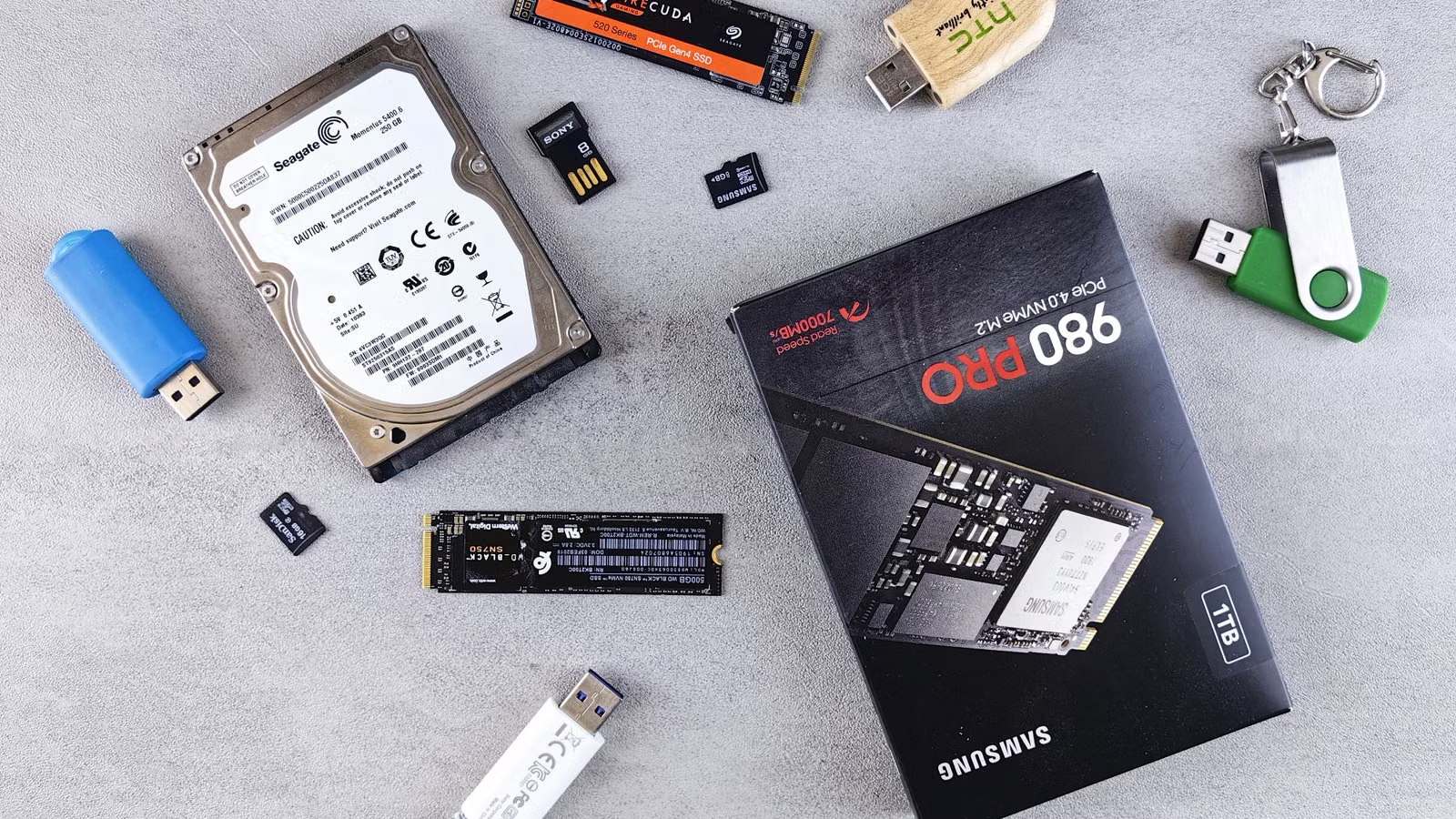
When NAND contract prices and spot prices move out of sync, it does not mean one of them is “wrong.” They simply reflect different parts of the market. Contract prices are closer to quarterly procurement prices negotiated between NAND suppliers and OEMs, cloud providers, and server customers. Spot prices are closer to short-term trading sentiment among channels, module makers, and distributors. When you analyze enterprise SSDs and consumer SSDs, you need to look at price type, procurement cycle, inventory position, end-market demand, and capacity allocation. You cannot use a single price indicator to judge the entire NAND Flash cycle.
Key Takeaways
- Contract prices reflect long-term procurement by major customers, while spot prices reflect short-term channel supply and demand.
- Enterprise SSDs are driven by AI data center demand, so price transmission is stronger.
- Consumer SSDs are more affected by PCs, retail channels, and price sensitivity.
- NAND suppliers tend to prioritize high-margin enterprise products.
- To judge the NAND cycle, you need to track prices, inventory, demand, and product mix together.
- Storage stock analysis should not rely only on NAND spot price movements.
What Do NAND Contract Prices and Spot Prices Represent?

NAND contract prices answer the question: “At what price are major customers locking in supply for the coming period?” Spot prices answer a different question: “At what price is the channel willing to trade today?” If you care about storage manufacturers’ revenue, enterprise SSD gross margins, and cloud providers’ procurement costs, contract prices matter more. If you care about short-term retail SSD prices, module maker inventory, and channel restocking sentiment, spot prices are more sensitive. The two are not substitutes; they are two different price signals across the supply chain.
DRAMeXchange’s NAND Flash contract prices are usually updated monthly or quarterly, and their formation is affected by customer relationships, procurement volume, and market conditions. For NAND suppliers, contract prices are closer to sustainable revenue and margin trends because major customers buy in large quantities and negotiate over longer cycles. Once contract prices are revised upward, the impact may last for a quarter or even longer.
Spot prices, by contrast, reflect the channel market more directly. Module makers, distributors, retail channels, and some smaller customers refer to spot quotes when buying NAND wafers, memory cards, USB drives, consumer SSDs, or selected finished products. Spot prices react quickly, but they are also more vulnerable to sentiment. When buyers rush to secure supply, prices can rise quickly; when inventory is being liquidated, prices can also fall suddenly.
| Dimension | NAND Contract Price | NAND Spot Price |
|---|---|---|
| Main participants | OEMs, cloud providers, server customers, large module makers | Channel distributors, traders, smaller module makers |
| Pricing cycle | Monthly or quarterly | Daily or short-cycle |
| Volatility | Slower, but more relevant to earnings | Faster, but noisier |
| Best used to observe | Supplier revenue, enterprise SSDs, long-term supply and demand | Channel inventory, short-term transactions, retail sentiment |
| Main risk | May lag demand changes | Can be distorted by low trading volume |
You also need to distinguish between different contract price categories. PC-Client OEM SSD contract prices come from quarterly negotiations between SSD suppliers and major OEM/ODM customers, making them more useful for tracking notebook, desktop, and client SSD costs. Enterprise SSD contract prices come from quarterly negotiations between enterprise SSD suppliers and large customers, making them more relevant for AI servers, cloud service providers, and data center demand.
Summary: When reading NAND contract prices and spot prices, the key is not deciding which one is “more real,” but identifying the question you want to answer. Contract prices are more useful for judging supplier pricing power, enterprise SSD revenue, and major customer procurement costs. Spot prices are better for judging channel sentiment, module maker inventory, and short-term consumer-side pricing. If contract prices rise while spot prices stay flat, it may mean major customers are locking in supply while channel demand remains weak. If spot prices rise before contract prices move, it may only reflect short-term shortage or stronger channel expectations. You need to place both indicators on the same supply-demand map instead of using one to replace the other.
Why Are NAND Contract Prices Being Driven by AI and Enterprise SSDs in 2026?

The key variable behind NAND contract prices in 2026 is AI data center and enterprise SSD demand, not just a recovery in smartphones or PCs. TrendForce expects NAND Flash contract prices to rise 70%–75% quarter over quarter in the second quarter of 2026, and notes that more NAND capacity is being allocated to enterprise SSDs, while consumer applications are being scaled back under cost pressure. To understand this round of price increases, you need to put AI servers and CSP long-term procurement at the center.
AI workloads have changed the role of SSDs in data centers. In the past, SSDs were often viewed mainly as data repositories. Now, in training datasets, inference caching, vector databases, logging systems, checkpoint files, and long-context tasks, SSDs are moving closer to the compute layer. TrendForce’s enterprise SSD analysis also notes that SSDs are no longer just data storage repositories; they are becoming key components that support compute workloads.
Enterprise SSD procurement also behaves more like infrastructure investment. Cloud providers, server OEMs, and AI cluster customers usually do not wait for discounts the way individual consumers do. They care more about supply stability, capacity planning, product qualification, and long-term availability. As AI inference and AI agent services accelerate deployment, major customers are more willing to sign long-term agreements to secure supply. Even at higher prices, locked supply can be more manageable than cluster delivery delays caused by shortages.
| Driver | Impact on NAND Contract Prices | Impact on Enterprise SSDs | Impact on Consumer SSDs |
|---|---|---|---|
| AI server expansion | Pushes up quarterly contract prices | Strengthens high-capacity orders | Crowds out supply allocation |
| CSP long-term procurement | Improves supplier bargaining power | Raises supply priority | Reduces channel allocation |
| QLC high-capacity demand | Supports pricing for high-capacity products | Makes 245TB-class drives more relevant | Slower transmission to retail |
| Weak smartphones and PCs | Limits consumer-side absorption | Smaller impact | Leads to lower capacity or delayed purchases |
| Delayed capacity expansion | Sustains supply tightness | Supports stronger contract prices | Forces price pressure downstream |
TrendForce reported that revenue from the top five enterprise SSD brands exceeded USD 18.46 billion in the first quarter of 2026, up 86.1% quarter over quarter. In the same quarter, enterprise SSD contract prices rose by around 80%. This shows that enterprise SSDs are not merely following NAND price increases; they are becoming the center of NAND supply-demand tightness.
Summary: NAND contract price increases in 2026 cannot be explained only by “consumer electronics inventory restocking.” The more important logic is AI data center expansion, cloud providers locking in supply, high-capacity enterprise SSD adoption, and NAND suppliers reallocating capacity. When you judge the NAND cycle, you should prioritize enterprise SSD orders, CSP procurement, QLC high-capacity products, and long-term agreements, instead of focusing only on whether PC or smartphone shipments are recovering. As long as AI and server-side demand continue absorbing capacity, NAND contract prices may reflect tightness earlier and more strongly than consumer-side prices.
Why Can NAND Spot Prices Diverge from Contract Prices?

NAND spot prices and contract prices often diverge because major customer procurement and channel trading do not move on the same schedule. The contract market may continue rising because of AI server and enterprise SSD long-term agreements, while the channel market may remain weak due to soft retail demand, module maker funding pressure, or uneven inventory structures. When you see spot prices fall, you cannot immediately conclude that the NAND cycle is over. When you see spot prices rise, you also cannot directly infer that NAND suppliers’ profits are improving in sync.
Spot prices are easily amplified by inventory and sentiment. If channel distributors worry about future shortages, they may stock up on NAND wafers, memory cards, or SSDs ahead of time. If they worry that end demand is weak, they may reduce procurement or even liquidate inventory. DRAMeXchange’s NAND Flash price categories cover NAND Flash Spot Price, Wafer Spot Price, Memory Card Spot Price, PC-Client OEM SSD Contract Price, SSD Street Price, and other dimensions, which also shows that “one NAND price” is actually a combination of multiple market layers.
There are three common situations where contract prices rise while spot prices stay flat or fall. First, major customers may have already locked in supply through long-term contracts, while channel buyers cannot obtain enough supply but end demand is not strong enough to chase higher prices. Second, after module makers consume earlier low-cost inventory, replenishing at higher prices compresses margins and makes them cautious. Third, consumer buyers are sensitive to SSD price increases, making it difficult for brands and retailers to fully pass on higher costs.
When judging spot prices, you can focus on five variables:
- Whether rising spot quotes are accompanied by higher trading volume.
- Whether NAND wafer prices and finished SSD retail prices move together.
- Whether module makers are actively restocking or merely maintaining inventory.
- Whether enterprise SSD contract prices are still being revised upward.
- Whether demand from PCs, smartphones, DIY systems, and gaming devices is genuinely recovering.
If only spot quotes rise while trading volume is low, retail prices do not move, and module makers remain cautious, the signal may only reflect short-term expectations and may not be sustainable. Conversely, if spot prices correct in the short term but enterprise SSD contract prices continue rising, supplier inventory remains low, and cloud orders stay strong, the core cycle may still be concentrated upstream and in the enterprise market.
Summary: NAND spot prices are a thermometer for the channel market, but they are not a complete answer for supplier earnings or enterprise SSD momentum. Spot prices are highly sensitive to short-term sentiment, inventory changes, and module maker procurement, but they can be distorted by low trading volume and channel bargaining. When using spot prices to judge the NAND cycle, you should also check contract prices, trading volume, inventory, retail SSD prices, and enterprise SSD orders. Only when prices rise, inventory falls, transactions improve, and end demand strengthens together do spot prices provide a stronger signal of real cycle improvement.
Why Do Enterprise SSDs and Consumer SSDs Not Move in Sync?
Enterprise SSDs and consumer SSDs do not move in sync because their customers, use cases, product specifications, and procurement methods are different. Enterprise SSDs serve data centers, AI servers, and cloud providers, emphasizing sustained performance, endurance, low latency, power-loss protection, and long-term supply. Consumer SSDs serve personal computers, gaming, retail upgrades, and lighter workloads, with more focus on capacity, peak speed, and value for money. Therefore, even though both use NAND Flash, price transmission can differ significantly.
Phison defines client SSDs as storage devices used mainly in personal computers, notebooks, and tablets, usually with a single host sending read and write commands. Enterprise SSDs, however, are used in data center racks, application servers, or RAID environments, and may face commands from multiple hosts and far heavier read/write workloads. This usage difference means enterprise SSDs should not be understood simply as “larger consumer SSDs.”
| Dimension | Enterprise SSD | Consumer SSD |
|---|---|---|
| Main customers | Cloud providers, server OEMs, AI data centers | PC users, DIY builders, retail channels |
| Procurement method | Long-term agreements, qualification, batch delivery | Channel sales, promotions, one-off purchases |
| Price sensitivity | Relatively lower, with more focus on supply stability | Higher, with purchases easily delayed |
| Key metrics | DWPD, QoS, PLP, sustained writes | Capacity, read/write speed, value |
| Price transmission | Reflects contract price increases faster | Often lags or is constrained by demand |
Specification differences also create cost differences. Enterprise SSDs pay more attention to DWPD, QoS, end-to-end data protection, power-loss protection, and stable latency. In Kingston’s comparison of enterprise SSDs and client SSDs, the company notes that data center environments require low latency and sustained performance, and choosing the wrong SSD can create higher replacement costs and performance risks. Consumer SSDs, by contrast, often use SLC Cache to improve short-burst write performance, which is suitable for lighter and intermittent workloads in personal computers.
Capacity allocation by suppliers also depends on margin and customer certainty. Enterprise SSDs carry higher unit prices, longer qualification cycles, and stronger customer lock-in. Once qualified by cloud providers and server customers, orders are generally stickier than retail consumer SSD orders. TrendForce noted that Micron has reallocated part of its capacity from smartphones and channel markets to enterprise SSDs over the past year. This helps explain why enterprise products can rise faster in price, while the consumer market often faces a lagging pattern where “costs have increased, but demand has not caught up.”
Summary: Enterprise SSDs and consumer SSDs both use NAND, but they belong to different demand curves. Enterprise SSD pricing is driven by AI data center capital expenditure, cloud provider long-term agreements, qualification cycles, and high-capacity demand. Consumer SSD pricing is influenced by PC shipments, retail inventory, user budgets, and channel promotions. When NAND supply is tight, suppliers are more likely to prioritize enterprise SSDs, causing enterprise prices to rise faster, while consumer prices may swing between reduced supply and weak demand.
How Should You Use NAND Prices to Judge Supply Chain Momentum?
Judging NAND supply chain momentum requires more than simply noticing that “prices are rising.” A more effective approach is to look at contract prices, spot prices, enterprise SSD orders, consumer SSD retail prices, inventory, and capacity allocation together. A genuinely strong cycle usually shows continuous upward revisions in contract prices, falling supplier inventory, strong enterprise SSD demand, spot prices supported by both price and volume, and eventual cost transmission into the consumer market.
The first step is to check whether contract prices continue to move higher. If NAND Flash contract prices rise for two consecutive quarters, it means major customers are accepting higher procurement costs. In particular, Enterprise SSD Contract Price 2Q26 noted that strong AI and general server demand pushed enterprise SSD shipments higher, while severe shortages kept enterprise SSD contract prices rising. This indicator is closer to enterprise demand than retail SSD prices.
The second step is to see whether spot prices are supported by real transactions. Rising spot prices with low trading volume may simply reflect strong seller quotes. Rising spot prices together with active module maker restocking look more like a genuine supply-demand improvement. The third step is to watch whether consumer SSDs begin to transmit costs. If enterprise SSDs rise while consumer SSDs do not, the cycle’s center remains AI and data centers. If consumer SSDs also rise, cost pressure has begun spreading into the retail market.
You can use the following indicators for cross-checking:
- NAND Flash contract price: to judge pricing between suppliers and major customers.
- Enterprise SSD contract price: to judge AI and data center demand.
- PC-client OEM SSD contract price: to judge client SSD costs.
- Wafer spot price: to judge module maker and channel procurement sentiment.
- SSD street price: to judge whether retail prices are really transmitting costs.
- Supplier inventory: to judge whether price increases are supported by supply constraints.
- PC, smartphone, and server shipments: to judge whether demand is broadening.
If you follow storage stocks, you should also separate price signals from trading costs. Popular storage stocks may become more volatile during NAND upcycles. Before trading, you need to study earnings, valuations, and industry data, while also understanding actual cost structures. Biya supports U.S. stock, Hong Kong stock, and other multi-asset trading. Biya’s U.S. stock trading commission is USD 0, while platform fees, external institutional fees, and other fees are subject to the fee center and order page. Service availability depends on the user’s location, identity verification result, platform rules, and applicable laws and regulations.
Summary: NAND supply chain momentum cannot be explained by a single price indicator. You should first use contract prices to judge the relationship between suppliers and major customers, then use spot prices to judge channel conditions, and finally validate demand structure through enterprise SSDs, consumer SSDs, inventory, and end-market shipments. If enterprise SSDs are strong while consumer SSDs are weak, AI data centers remain the main theme. If both rise together, cost pressure is spreading. If both weaken together, the cycle may be entering an inventory correction. Investment decisions should also consider company product mix, customer concentration, capital expenditure, and valuation. This does not constitute investment advice.
Which Stocks and Investment Judgments Are Affected by NAND Price Changes?
NAND price increases usually benefit upstream storage suppliers and enterprise SSD supply chains, but they do not necessarily benefit every downstream company. Upstream suppliers may benefit from higher contract prices and a greater enterprise SSD mix. Controller makers, module makers, and brand vendors need to be assessed based on inventory cost, product mix, and price pass-through ability. PC, smartphone, and consumer electronics brands may face higher BOM costs. You cannot simply look at NAND price increases; you also need to identify who has pricing power and who is absorbing the cost.
For upstream storage suppliers, contract prices, product mix, and enterprise customer exposure are the most important variables. Companies such as Samsung, SK hynix / Solidigm, Micron, Kioxia, and SanDisk are affected by AI server demand and demand for high-capacity QLC products in the enterprise SSD market. TrendForce noted that SanDisk’s QLC enterprise SSD products have entered mass production shipments and may benefit from expanding demand for high-capacity storage in AI training datasets.
The middle of the supply chain is more complex for controller makers and module makers. Controller companies may benefit from PCIe 5.0, enterprise NVMe, low-latency SSDs, and high-capacity solutions. But if module makers replenish inventory at high prices while retail demand does not improve in sync, they may face inventory write-downs and margin pressure. Channel distributors depend more on spot prices, inventory turnover, and promotional cycles.
| Supply Chain Segment | Main Indicators | Potential Benefits | Main Risks |
|---|---|---|---|
| NAND suppliers | Contract prices, enterprise SSD mix | ASP and margin improvement | Demand reversal, capacity imbalance |
| Enterprise SSD vendors | CSP orders, qualification progress | High-capacity product ramp | Customer concentration, delivery pressure |
| Controller makers | PCIe, NVMe, enterprise solutions | Demand for high-end controllers | Long qualification cycles |
| Module makers | Spot prices, inventory cost | Revaluation of low-cost inventory | High-cost inventory buildup |
| PC/smartphone brands | BOM cost, price pass-through | Price increases for premium models | Demand pressured by higher costs |
For ordinary investors, NAND prices are only the starting point. You ultimately need to return to company financials. You should check whether revenue growth comes from pricing or shipment growth, whether gross margin improvement is sustainable, whether the enterprise SSD mix is rising, whether inventory is healthy, and whether capital expenditure may create pressure in the next supply cycle. If your region meets the relevant service conditions, you can review Biya U.S. stock trading fees to understand the difference between commissions, platform fees, external institutional fees, and fees displayed on the order page.
Summary: NAND price increases do not mean every company in the storage supply chain benefits equally. The most direct beneficiaries are usually upstream suppliers with capacity, customers, and favorable product structures, as well as companies that have entered high-capacity enterprise SSD supply chains. Module makers and consumer electronics brands may face pressure between higher costs and weaker demand. When making investment judgments, you need to break “price increases” into contract prices, spot prices, enterprise SSDs, consumer SSDs, inventory, and profit transmission, instead of simply equating NAND price increases with storage stock gains.
Understanding the divergence between NAND contract prices, spot prices, enterprise SSDs, and consumer SSDs can help you track storage cycles, AI data center spending, and related stock movements more clearly. For investors following the U.S. and Hong Kong storage supply chains, industry data from TrendForce and DRAMeXchange should be combined with company earnings, order structure, inventory cycles, and trading costs. Biya is a global multi-asset trading wallet that supports U.S. stock, Hong Kong stock, and crypto trading. Depending on your location, identity verification result, and platform rules, you may choose to learn more through account registration or app download. The above only introduces public market information, industry pricing structures, and fee information, and does not constitute investment advice.
FAQ
Does a Rise in NAND Contract Prices Mean SSD Prices Will Rise Immediately?
Not necessarily. A rise in NAND contract prices usually affects OEMs, cloud providers, and enterprise SSD procurement costs first. Consumer SSD retail prices are still affected by channel inventory, brand promotions, end-market demand, and capacity-specific supply and demand. If retail inventory is sufficient, price transmission may be delayed. If supply remains tight, consumer SSD prices are more likely to follow.
Does a Drop in NAND Spot Prices Mean the Storage Cycle Is Over?
Not necessarily. A drop in NAND spot prices may only reflect weaker channel transactions, module maker inventory reduction, or short-term liquidation. It does not necessarily mean enterprise SSD demand has reversed. To judge whether the storage cycle is ending, you also need to look at contract prices, supplier inventory, enterprise SSD orders, AI data center procurement, and whether consumer-side shipments are weakening at the same time.
Why Do Enterprise SSDs Rise in Price More Easily Than Consumer SSDs?
Enterprise SSDs rise in price more easily because they serve AI data centers, cloud providers, and server customers, where demand is more rigid and products require high capacity, stable latency, endurance, and long qualification cycles. When supply is tight, suppliers usually prioritize enterprise-grade products, while consumer SSD price transmission may lag.
Should Consumers Look at NAND Contract Prices or Retail SSD Prices?
Consumers should focus more on retail SSD prices, capacity tiers, and promotional cycles. Contract prices can indicate future cost trends, but the actual price you pay depends on brand inventory, channel competition, product positioning, and promotion timing. If you are simply upgrading a personal computer, you do not need to base your purchase decision directly on enterprise SSD contract prices.
What Indicators Matter Most When Investing in NAND Stocks?
When investing in NAND stocks, the most important indicators include contract prices, enterprise SSD revenue mix, supplier inventory, capital expenditure, customer structure, gross margin, and end-market demand. Spot prices can help assess channel sentiment, but they should not be used alone as a buy or sell signal. When trading, fees, order details, and local regulatory requirements should also be taken into account.
Will Rising NAND Prices Affect PC and Smartphone Prices?
They may, but the transmission is not always synchronized. NAND is an important storage cost component in PCs, smartphones, and SSDs. If price increases continue, brands may respond by raising prices, lowering storage configurations, adjusting product mix, or reducing promotions. Whether the increase ultimately reaches end-user prices depends on consumer demand and brand competition.
*This article is provided for general information purposes and does not constitute legal, tax or other professional advice from BiyaPay or its subsidiaries and its affiliates, and it is not intended as a substitute for obtaining advice from a financial advisor or any other professional.
We make no representations, warranties or warranties, express or implied, as to the accuracy, completeness or timeliness of the contents of this publication.
Related Blogs of

How Does NAND Price Increase Affect SanDisk? Enterprise SSDs, Consumer Storage, and Margin Leverage


How to View HBM Advanced Packaging Equipment Stocks? ASMPT’s Opportunities and Cyclical Risks


How Should You View Shanghai Fudan’s Non-Volatile Memory Business? Application Scenarios, Competition, and Risks


Why Can’t HBM Exist Without Advanced Packaging? The Role of TSV, CoWoS, and Packaging Equipment

Choose Country or Region to Read Local Blog
 Australia
 Austria
 Belgium
 Canada
 Cyprus
 Czech Republic
 Denmark
 Estonia
 Finland
 France
 Germany
 Greece
 Hong Kong
 India
India Indonesia
 Ireland
 Italy
Italy Japan
Japan Latvia
 Lithuania
 Luxembourg
 Malaysia
 Malta
Malta Morocco
 Nepal
Nepal Netherlands
 New Zealand
 Norway
 Pakistan
 Philippines
 Poland
 Portugal
 Romania
 Singapore
 Slovakia
 Slovenia
 South Africa
 South Korea
 Spain
Spain Sweden
 Thailand
 The United States
 Turkey
 United Arab Emirates
 United Kingdom
 Vietnam
Contact Us




BIYA GLOBAL LLC is registered with the Financial Crimes Enforcement Network (FinCEN), an agency under the U.S. Department of the Treasury, as a Money Services Business (MSB), with registration number 31000218637349, and regulated by the Financial Crimes Enforcement Network (FinCEN).
BIYA GLOBAL LIMITED is a registered Financial Service Provider (FSP) in New Zealand, with registration number FSP1007221, and is also a registered member of the Financial Services Complaints Limited (FSCL), an independent dispute resolution scheme in New Zealand.