
Is Micron a Cyclical Stock or an AI Growth Stock? Valuation Logic and Risk Breakdown





Micron cannot be simply classified as a traditional cyclical stock, nor can it be fully valued like a software-style AI growth stock. A more accurate description is that Micron is a “memory-cycle stock reshaped by AI demand.” You need to look not only at DRAM and NAND pricing cycles, but also at whether HBM, server memory, data center SSDs, and long-term customer agreements can improve earnings stability. For investors watching MU stock, AI semiconductors, and U.S. tech valuations, the key question is not “Is Micron an AI stock?” but “Can AI lift and extend Micron’s cycle earnings?”
Key Takeaways
- Micron remains cyclical, but AI is changing the cycle structure.
- HBM and server memory are lifting Micron’s earnings leverage.
- DRAM/NAND pricing remains the base variable for valuation swings.
- Long-term customer agreements improve visibility but do not remove cyclicality.
- Valuation should not rely only on P/E; earnings cycle position matters.
- Main risks include supply recovery, customer concentration, and geopolitical regulation.
Is Micron More Like a Cyclical Stock or an AI Growth Stock?
Micron is now better understood as a “cyclical stock with an AI premium.” If you look only at its business model, it still sells memory chips, and its revenue and gross margin fluctuate with supply and demand, ASP, inventories, and capacity utilization. But if you look at its product mix, HBM, DDR5 RDIMM, server LPDDR, and data center SSDs are pushing it closer to an AI infrastructure supplier. To judge Micron properly, you should not attach a single label to it. You need to consider both its cyclical base and its AI-driven upside.
The core variable in the traditional memory industry is straightforward: when prices rise, profits expand rapidly; when prices fall, profits contract quickly. In its Q3 FY2026 earnings release, Micron reported revenue of $41.456 billion and a non-GAAP gross margin of 84.9%. This suggests that the current environment is not a normal recovery phase, but a strong cycle driven by AI demand, tight supply, and rising prices.
However, strong earnings do not mean the cycle has disappeared. Memory chips are not software subscriptions, where customers renew indefinitely at fixed prices. DRAM, NAND, and HBM pricing are all affected by capacity, yield, customer inventories, and competitors’ expansion plans. Micron also identifies average selling price volatility as a key risk factor, noting that DRAM and NAND annual ASP changes have been significant over the past five years.
You can understand Micron’s identity through the following framework:
| Dimension | Traditional Cyclical Logic | AI Growth Logic | Micron’s Current Position |
|---|---|---|---|
| Revenue driver | DRAM/NAND price cycle | AI data center expansion | Both are present |
| Gross margin | Highly volatile | High-end products lift margins | HBM and server products are lifting margins |
| Valuation method | P/B, mid-cycle earnings | Forward P/E, cash flow | A blended approach is needed |
| Risk source | Inventory, expansion, price declines | AI demand below expectations | Cyclical and growth risks overlap |
| Metrics to watch | ASP, inventory, capex | HBM, customer agreements, data center revenue | Both sets of indicators matter |
Micron is therefore not “the next Nvidia,” nor is it the same memory stock that used to depend mainly on PC and smartphone replacement cycles. AI has turned memory from a basic component into a performance bottleneck. HBM gives Micron stronger pricing power and deeper customer ties, but the company still operates in a heavy-asset semiconductor manufacturing industry: capital-intensive, cyclical, exposed to rapid technology transitions, and sensitive to supply and demand.
Summary: Micron is better viewed as an AI memory-cycle leader rather than a pure cyclical stock or a pure growth stock. If you analyze it only as a traditional cyclical stock, you may underestimate the valuation uplift from HBM, server DRAM, and long-term customer agreements. If you analyze it as a non-cyclical growth stock, you may overlook risks from DRAM/NAND price declines, supply recovery, and capex fluctuations. A more balanced approach is to first assess where earnings sit in the cycle, then evaluate whether AI-related businesses can lift the company’s long-term earnings base. Micron’s growth premium is more likely to hold only if AI demand remains strong, supply stays constrained, customer agreements convert into revenue, and gross margins remain elevated.
Why Is AI Repricing Micron?
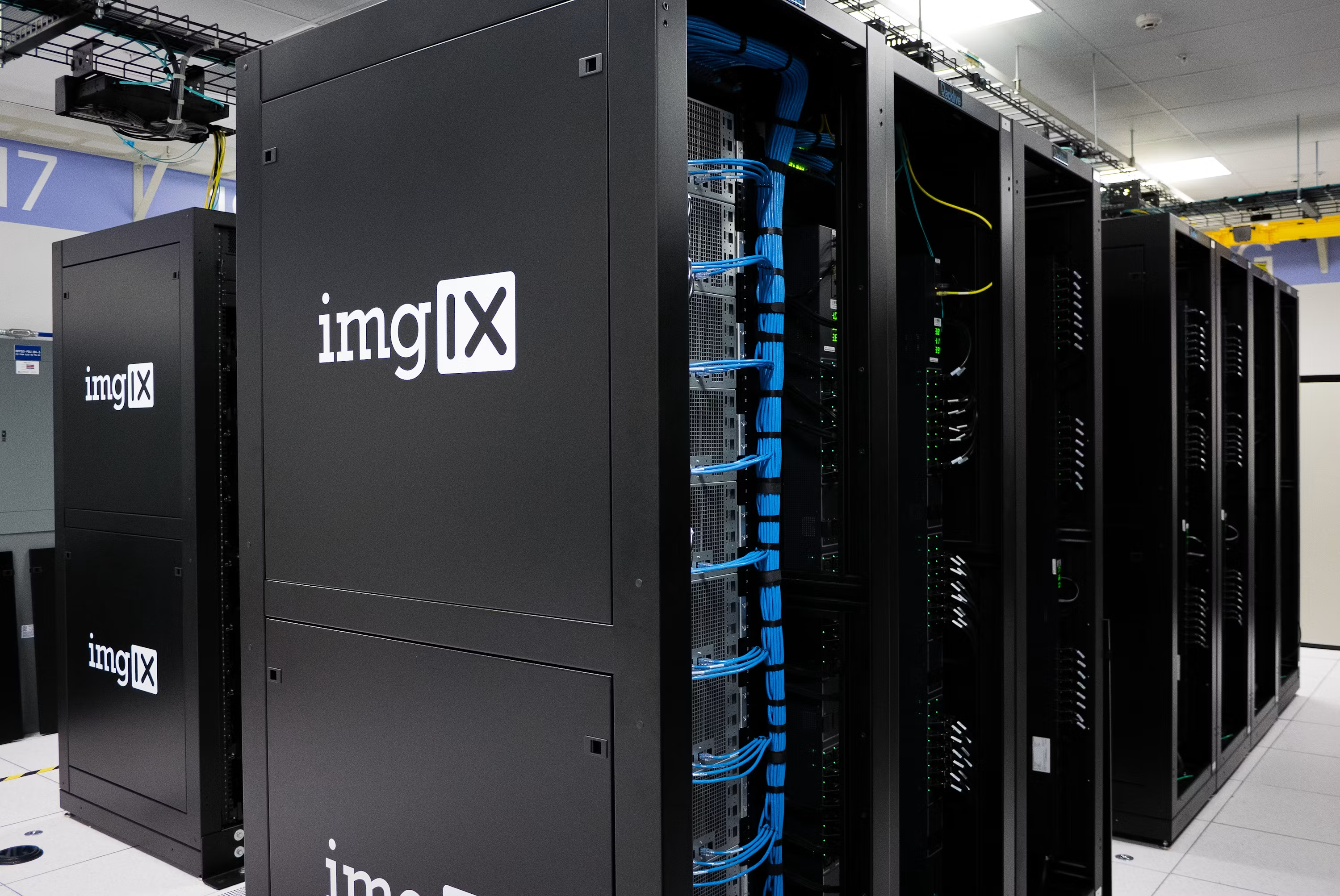
AI is repricing Micron because large-model training, inference, and data center expansion all require memory and storage with higher bandwidth, lower power consumption, and larger capacity. In the past, the market paid more attention to PC, smartphone, and consumer electronics inventory cycles. Now, it is focused on AI servers, GPU-attached HBM, cloud service provider data center procurement, and long-term supply agreements. This has expanded Micron’s valuation anchor from “memory price recovery” to “a core supplier in AI infrastructure.”
HBM is the main entry point for Micron’s AI story. HBM stands for High Bandwidth Memory, and its role is to provide higher-bandwidth data access for GPUs, AI accelerators, and high-performance computing chips. Micron’s HBM4 information shows that HBM4 can deliver pin speeds above 11Gb/s and bandwidth above 2.8TB/s. For AI chips, compute power is not the only bottleneck. Whether data can be supplied quickly enough to the compute units also determines training and inference efficiency.
AI demand also affects more than HBM. As inference workloads grow, long context windows, agentic AI, multi-turn tasks, and enterprise AI deployment will expand demand for server DRAM, RDIMM, LPDDR, NAND, and data center SSDs. In its AI memory and storage materials, Micron highlights HBM3E, TSV, advanced packaging, and power optimization as technologies directly serving AI workloads. In other words, Micron is not selling just one AI-themed product; it benefits across multiple memory and storage layers.
Another key change is long-term customer agreements. Reuters reported that Micron disclosed 16 strategic customer agreements involving customer commitments of $22 billion, including take-or-pay terms, cash deposits, and price floors. These agreements do not make the cycle disappear, but they can make part of Micron’s revenue and margins more predictable. For investors, the more predictable a business becomes, the more likely the market is to assign it a higher valuation multiple.
AI’s impact on Micron’s financials can be broken down as follows:
| AI Demand Driver | Related Product | Potential Impact on Micron |
|---|---|---|
| GPU/AI ASIC ramp-up | HBM3E, HBM4 | Higher selling prices and margins |
| Inference server expansion | DDR5 RDIMM, server LPDDR | Broader data center memory demand |
| Long context and agent applications | High-capacity memory, SSDs | Higher storage capacity demand |
| Cloud vendors locking capacity | Long-term supply agreements | Better revenue visibility |
| Data center upgrades | PCIe Gen6 SSDs, QLC SSDs | Additional non-HBM market opportunities |
Trading costs also deserve attention. If you are watching high-volatility U.S. stocks such as Micron, transaction costs can affect your actual trading experience. U.S. stock trading costs usually include more than commissions; they may also include platform fees, external agency fees, transaction activity fees, and other charges. For example, according to U.S. stock trading fees, Biya charges $0 commission for U.S. stock trading, while platform fees, external agency fees, and other charges are subject to the fee center and order page. Service availability depends on the user’s location, identity verification status, platform rules, and applicable laws and regulations.
Summary: AI is repricing Micron not because the market casually attached an AI label to it, but because memory and storage have become critical resources in AI data centers. HBM raises product ASP and technical barriers, server DRAM broadens demand, data center SSDs expand storage use cases, and long-term customer agreements improve revenue visibility. However, the AI premium also increases expectation risk. Once the market prices in high demand, high prices, and high margins in advance, any slowdown in AI capex, change in customer orders, or easing of supply constraints can cause much larger valuation swings.
Why Does Cyclicality Remain the Biggest Variable in Micron’s Valuation?
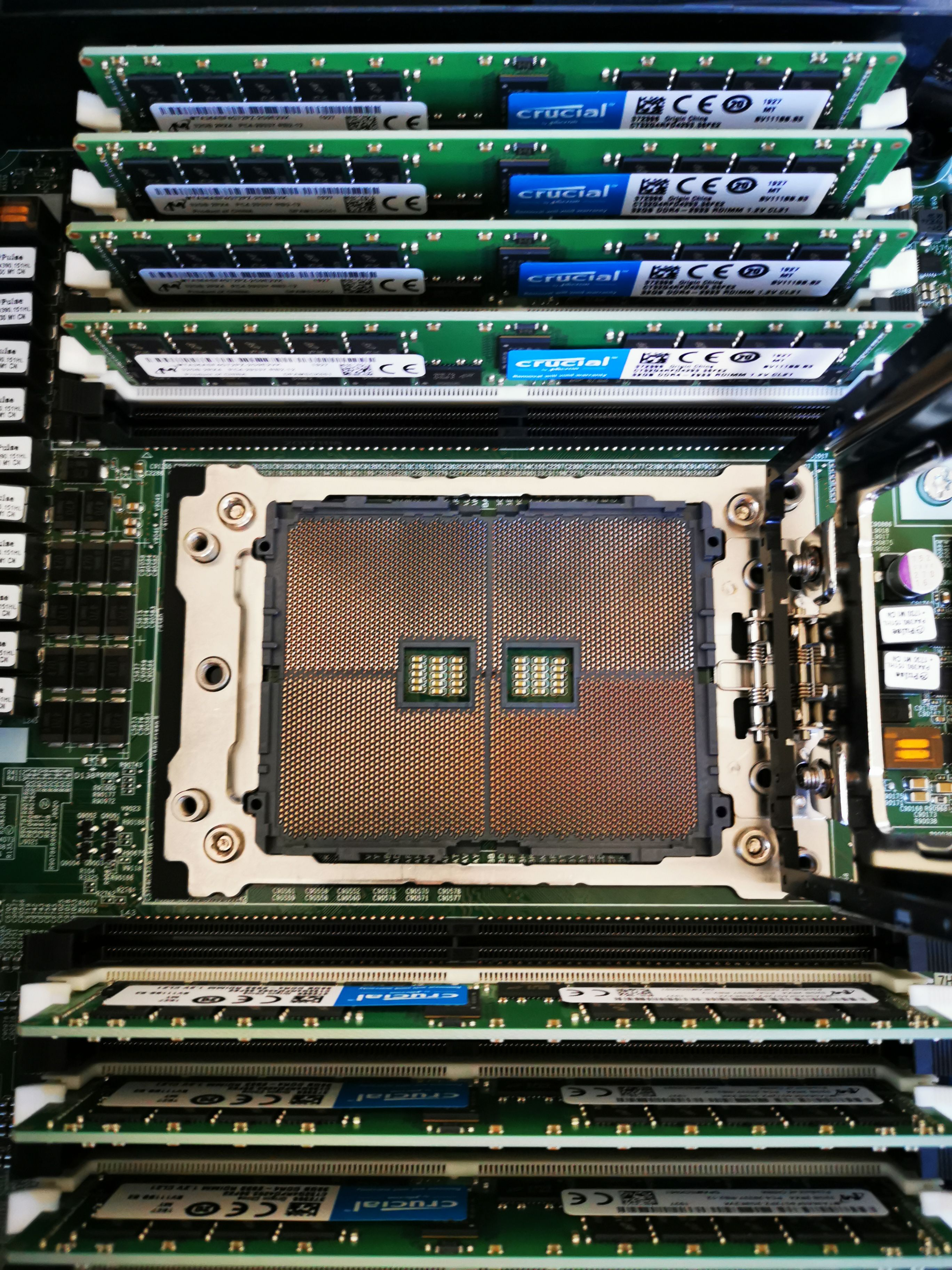
Micron’s AI logic is strong, but cyclicality remains the largest variable in its valuation. The reason is that DRAM and NAND are still highly standardized, capital-intensive, and price-sensitive industries. HBM can lift the earnings base, but it cannot turn every memory product into a long-term fixed-price contract. Once supply catches up with demand, ASP declines can compress gross margins and push the market to value Micron like a cyclical stock again.
TrendForce noted in its 1Q26 DRAM industry data that conventional DRAM contract prices rose by roughly 93%–98% in 1Q26, driving DRAM industry revenue up 81% quarter over quarter. This kind of price increase explains why Micron’s earnings leverage is so large. It also shows that current profits are driven not only by higher shipments, but also by pricing and supply tightness.
The most common mistake in cyclical-stock analysis is that profits near the top of the cycle can make the stock look cheap. A low P/E does not necessarily mean a strong margin of safety; it may simply mean EPS has been amplified by peak-cycle conditions. Conversely, during an industry downturn, P/E can look very high or earnings may disappear altogether, but the stock may not necessarily be expensive. For Micron, the right question is not “Is the current P/E low?” but “Is current EPS already close to a cycle high?”
Supply is the second key variable. Micron, SK hynix, and Samsung all adjust capital expenditure according to margins and customer demand. TrendForce’s HBM supply-demand analysis noted that HBM4 supply agreements are becoming a key focus in 2027 negotiations, while suppliers are also reallocating capacity between HBM and conventional DRAM. When prices become attractive enough, the industry will eventually attempt to add supply. The only difference is timing.
To judge Micron’s cycle position, you can track these eight indicators:
- Whether DRAM contract prices continue rising and whether the pace slows;
- Whether NAND contract prices recover alongside DRAM or remain weaker;
- Whether HBM capacity remains in short supply;
- Whether Micron’s gross margin continues to rise sequentially;
- Whether customer inventories remain normal or show signs of pull-forward demand;
- Whether capital expenditure is raised significantly;
- Whether competitors are releasing additional capacity;
- Whether management continues to emphasize tight supply.
Another easily overlooked point is that AI products and traditional products transmit cycles differently. HBM requires customer qualification, advanced packaging, yield ramp-up, and platform compatibility, which makes near-term supply harder to release. Conventional DRAM and some NAND products are more directly influenced by spot prices, contract prices, and inventory cycles. As a result, Micron’s cycle is no longer a simple “everything rises and falls together” structure. High-end AI products and traditional memory products may move in layers.
Summary: Micron’s cyclicality has not disappeared; it has become more complex. AI demand can lengthen the upcycle and may lift the earnings base, but DRAM/NAND pricing, supply recovery, inventory changes, and capital expenditure will still determine valuation leverage. If you only look at AI demand, you may overlook downside risk from falling prices. If you only look at the traditional memory cycle, you may underestimate how HBM and long-term customer agreements can improve earnings stability. A more balanced approach is to monitor ASP, gross margin, capex, HBM supply, and customer agreements to determine whether Micron is in the early stage, middle stage, or expectation-heavy phase of the upcycle.
How Should Micron’s Valuation Logic Shift?
Micron’s valuation should not rely only on current P/E, nor should it be valued mechanically using growth-stock multiples. You should first determine where earnings sit in the cycle, then assess whether AI-related businesses can sustainably lift the long-term earnings base. Cyclical valuation focuses more on P/B, mid-cycle EPS, gross margin ranges, and capital expenditure. AI growth valuation focuses more on HBM share, cash flow, customer agreements, and the durability of data center revenue.
Micron reported non-GAAP EPS of $25.11 in Q3 FY2026 and guided Q4 non-GAAP EPS to $31, plus or minus $1. This kind of earnings leverage can make forward P/E look very low, but you need to view it within the industry cycle. If ASP remains stable or continues rising, a low forward P/E may still provide valuation support. If prices decline, a low P/E may simply be “optically cheap” because of cycle-high earnings.
The first step in traditional cyclical valuation is to estimate normalized earnings. You can look at gross margin, net margin, return on assets, and free cash flow across multiple cycles, rather than focusing only on one exceptionally strong quarter. Micron’s Q3 FY2026 adjusted free cash flow reached $18.3 billion, showing strong cash generation during the boom phase. But this should be assessed alongside capital expenditure and future expansion pressure.
The second step in AI valuation is to judge whether earnings stability has genuinely improved. Long-term customer agreements, price floors, cash deposits, and remaining performance obligations can make the market more willing to believe that Micron is no longer fully exposed to spot prices and short-term contract pricing swings. Reuters reported that Micron’s remaining performance obligations related to such customer agreements were about $100 billion, which is an important basis for the market to reassess Micron’s business model.
You can divide Micron’s valuation into three scenarios:
| Scenario | Core Assumption | Suitable Valuation Logic | Main Risk |
|---|---|---|---|
| Bull case | AI demand keeps exceeding expectations and supply remains constrained | Higher growth premium | Expectations become too high and valuation stretches |
| Base case | AI demand remains strong but price increases slow | Cyclical valuation plus AI premium | EPS growth slows |
| Bear case | Supply returns or customer orders slow | Traditional cyclical valuation | P/E compression and margin decline |
For ordinary investors, it is more practical to use a valuation range rather than a single target price. First, use mid-cycle earnings to assess the margin of safety. Then use HBM, data center revenue, and customer agreements to judge valuation upside. If you use U.S. stock information search to track MU, NVDA, AMD, AVGO, and other AI supply chain companies, you should also monitor earnings dates, after-hours volatility, order types, and trading costs instead of comparing only one-day price moves.
Summary: Micron’s valuation logic is shifting from a single cyclical-stock framework to a hybrid model of “cycle earnings base plus AI premium.” The stronger current profits become, the more you should watch whether P/E is being depressed by high EPS. At the same time, the more AI customer agreements Micron signs, the less appropriate it becomes to value the company only with an old-cycle model. To decide whether Micron is expensive or cheap, you need to answer three questions: Are current earnings sustainable? Can AI-related businesses lift the long-term earnings base? Has the stock already priced in strong growth expectations? Only when all three answers are favorable is Micron’s high valuation leverage more likely to persist.
What Risks Could Break Micron’s AI Growth Story?
Micron’s biggest risk is not that AI demand disappears completely, but that the market has already priced in strong demand, tight supply, high ASP, and high gross margins. If supply constraints ease, customer capex slows, HBM competition intensifies, or geopolitical and regulatory risks worsen, Micron could shift from an AI growth-stock valuation logic back to a cyclical-stock valuation logic, pressuring both earnings expectations and valuation multiples.
The first risk is demand timing. AI data center construction requires GPUs, memory, networking, electricity, land, cooling, and financing to align. If cloud providers, AI companies, or enterprise customers delay capital expenditure, memory demand growth may slow. Reuters’ report on the Anthropic and Micron agreement shows that AI developers are competing for memory and storage resources, but this demand intensity also means Micron is more tied to the AI infrastructure cycle.
The second risk is competition and substitution. SK hynix, Samsung, and Micron are all competing for HBM share. The key to competition is not just announcing products, but achieving customer qualification, yield, delivery stability, power efficiency, and packaging capability. Cheaper memory solutions, changes in AI chip architecture, near-memory computing, or more efficient inference models could weaken the long-term pricing power of high-end HBM.
The third risk is geopolitics and regulation. In its Form 10-Q risk disclosures, Micron noted that China’s CAC restrictions on purchases of Micron products by critical information infrastructure operators affected revenue related to mainland China and Hong Kong. The same filing also discusses export controls, tariffs, trade restrictions, rare earth material supply, and manufacturing concentration in Taiwan. For a semiconductor company, geopolitical risks can affect revenue, costs, supply chains, and valuation at the same time.
The fourth risk is supply normalization. Micron’s high gross margin depends on tight supply and demand. If competitors release capacity, or if customers pull forward orders and later slow demand, price floors and long-term agreements may not fully protect all product lines. Reuters also noted in its Micron earnings coverage that pricing power would be tested first if supply gradually recovers.
| Risk Type | Trigger Signal | Impact on Micron |
|---|---|---|
| AI capex slowdown | Cloud vendors reduce capital expenditure | HBM and server memory expectations cool |
| Supply recovery | Competitors expand capacity and improve yield | ASP and gross margin come under pressure |
| Customer concentration | Large customer orders fluctuate | Revenue visibility declines |
| Technology substitution | Lower-cost memory architectures emerge | High-end product premium narrows |
| Geopolitical regulation | Export limits, tariffs, purchase restrictions | Sales, costs, and delivery are affected |
| Inventory reversal | Customers destock after pull-forward orders | Cycle turning point may arrive earlier |
Summary: Micron’s AI story requires several conditions to remain in place at the same time: AI data centers must keep expanding, HBM supply must remain tight, long-term customer agreements must convert into revenue, DRAM/NAND prices must not fall quickly, and geopolitical and regulatory risks must remain manageable. If any of these conditions deteriorate, the market may reduce Micron’s valuation multiple again. When analyzing Micron, you should not only ask “Is AI demand strong?” You should also ask “Has strong demand already been priced in?” “When will supply catch up?” and “How long can high gross margins last?” These questions determine whether Micron continues to trade as an AI memory leader or returns to a traditional cyclical-stock framework.
How Can Ordinary Investors Build a Micron Analysis Framework?
Ordinary investors should not judge Micron only by post-earnings stock moves. A more useful framework is “cycle position + AI execution + valuation margin of safety + risk signals.” Short-term traders focus on expectation gaps. Cycle investors focus on pricing and inventory turning points. Long-term allocators focus on whether HBM, data center revenue, cash flow, and customer agreements can continue improving.
The first step is to define your investment or trading logic. If you are only trading earnings events, focus on revenue guidance, EPS guidance, gross margin, and after-hours expectation gaps. If you are investing in a cycle reversal, watch DRAM/NAND contract prices, inventory, capacity utilization, and capital expenditure. If you are allocating to the AI supply chain, pay attention to HBM4, HBM4E, server DRAM, data center SSDs, customer agreements, and free cash flow.
The second step is to build a tracking checklist:
- Whether quarterly revenue continues to grow sequentially;
- Whether gross margin remains high or continues to improve;
- Whether EPS guidance is above market expectations;
- Whether HBM shipment, qualification, and capacity ramp-up are smooth;
- Whether DRAM/NAND contract price growth slows;
- Whether capital expenditure is significantly above expectations;
- Whether inventory begins to rise again;
- Whether management changes its view on supply tightness.
The third step is to avoid three common mistakes. First, do not treat Micron as the same type of company as Nvidia. Nvidia’s strength lies in AI accelerators and software ecosystems, while Micron’s strength lies in memory and storage. Their pricing power and valuation logic are different. Second, do not assume a low P/E automatically means the stock is cheap. Low P/E is common near cyclical profit peaks. Third, do not equate one earnings beat with long-term certainty. Semiconductor cycles often approach expectation peaks when sentiment is most optimistic.
| Signal to Watch | Positive Meaning | Negative Meaning |
|---|---|---|
| Gross margin keeps rising | Product mix and pricing remain strong | The cycle may be approaching a high point |
| Capex is raised | Demand is strong and customers are locking capacity | Future supply risk increases |
| HBM remains undersupplied | AI premium continues | Valuation can swing sharply if shortage eases |
| Inventory declines | Cycle remains healthy | Restocking upside may become limited |
| Customer agreements expand | Visibility improves | Customer concentration risk rises |
| DRAM price growth slows | Industry enters a more stable phase | Cycle turning point may emerge |
If relevant services are available in your region and you want to track U.S. semiconductor, AI data center, and memory supply chain stocks, using a global multi-asset trading wallet such as Biya also means you should review quotes, order fees, and risk disclosures together. Biya supports U.S. stock trading, Hong Kong stock trading, and cryptocurrency trading, but service availability depends on the user’s location, identity verification status, platform rules, and applicable laws and regulations.
Summary: You can analyze Micron as an AI memory-cycle leader rather than judging it through one fixed label. A practical framework is to first use DRAM/NAND prices and inventory to assess the cycle, then use HBM, server memory, data center SSDs, and customer agreements to evaluate AI execution, and finally manage risk through valuation and position sizing. Micron may continue to benefit from AI infrastructure expansion, but it remains a high-volatility semiconductor stock. Before trading, you should understand the earnings schedule, fee structure, order types, and your own risk tolerance. This content discusses public market information, trading rules, and fee structures only, and does not constitute investment advice.
If you follow Micron, Nvidia, AMD, Broadcom, TSMC, and other AI supply chain companies, you need to look beyond stock prices and consider earnings, valuation, transaction costs, and regulatory risks together. You can use U.S. stock information search to monitor popular stock information and market changes, while also reviewing account registration, order pages, and fee disclosures to understand the actual trading process. Biya charges $0 commission for U.S. stock trading, while platform fees, external agency fees, and other charges are subject to the fee center and order page. Before trading, confirm whether the service applies to your location, identity verification status, and local regulatory requirements, and make decisions based on your own risk tolerance.
FAQ
Should Micron Stock Be Valued as a Cyclical Stock?
Micron still needs to be valued with a cyclical-stock framework, but not only with a traditional cycle model. You should look at P/B, mid-cycle EPS, gross margin ranges, HBM revenue mix, and long-term customer agreements together. If you only look at current P/E, you may mistake cycle-high earnings for long-term cheap valuation.
How Much Can HBM Affect Micron’s Long-Term Profitability?
HBM is one of the core sources of Micron’s AI earnings leverage, but its impact depends on supply, customer qualification, yield, pricing, and competition. HBM can lift Micron’s earnings base, but it does not mean all of Micron’s businesses can maintain permanent high growth or high margins.
How Would Falling DRAM Prices Affect Micron’s Valuation?
Falling DRAM prices usually compress Micron’s revenue, gross margin, and EPS, and may cause the market to value the company like a cyclical stock again. You should watch DRAM contract prices, customer inventories, capacity utilization, and management’s supply-demand commentary, rather than focusing only on one quarter’s profits.
What Metrics Should Ordinary Investors Watch in Micron’s Earnings?
Ordinary investors should focus on revenue guidance, gross margin, EPS guidance, HBM progress, DRAM/NAND pricing, capital expenditure, inventory, customer agreements, and free cash flow. Single-quarter EPS matters, but it is not enough to determine Micron’s full cycle position.
How Are Micron and Nvidia Different in the AI Supply Chain?
Micron mainly provides memory and storage, while Nvidia mainly provides AI accelerators, networking, and software ecosystems. Both companies benefit from AI data center expansion, but their business models, pricing power, margin stability, and valuation logic are different.
What Are the Main Risks for Micron Stock?
The main risks for Micron stock include falling memory prices, supply expansion, customer order changes, slower AI capital expenditure, HBM competition, export controls, tariffs, manufacturing concentration in Taiwan, and supply chain disruptions. These risks should be assessed based on company disclosures and local regulatory requirements.
*This article is provided for general information purposes and does not constitute legal, tax or other professional advice from BiyaPay or its subsidiaries and its affiliates, and it is not intended as a substitute for obtaining advice from a financial advisor or any other professional.
We make no representations, warranties or warranties, express or implied, as to the accuracy, completeness or timeliness of the contents of this publication.
Related Blogs of

International Wire Transfer Time: What Affects Delivery?


Choosing a Stock Trading App: Beginner Checklist




Choose Country or Region to Read Local Blog
 Australia
 Austria
 Belgium
 Canada
 Cyprus
 Czech Republic
 Denmark
 Estonia
 Finland
 France
 Germany
 Greece
 Hong Kong
 India
India Indonesia
 Ireland
 Italy
Italy Japan
Japan Latvia
 Lithuania
 Luxembourg
 Malaysia
 Malta
Malta Morocco
 Nepal
Nepal Netherlands
 New Zealand
 Norway
 Pakistan
 Philippines
 Poland
 Portugal
 Romania
 Singapore
 Slovakia
 Slovenia
 South Africa
 South Korea
 Spain
Spain Sweden
 Thailand
 United States
 Turkey
 United Arab Emirates
 United Kingdom
 Vietnam