
How Should You View Seagate’s HAMR Technology? Nearline HDD Capacity Upgrades and the Supply-Demand Cycle





Seagate’s HAMR technology is worth watching, but you should not understand it simply as “hard drives getting larger.” The more important point is that HAMR may reshape the supply-demand cycle of Nearline HDDs, the unit storage cost of data centers, and Seagate’s earnings structure. If you follow STX, U.S.-listed storage stocks, or AI data center infrastructure, you should judge HAMR through three lines of analysis: whether the technology can be reliably mass-produced, whether cloud customers continue to adopt it, and whether capacity upgrades can translate into shipments, gross margin, and cash flow improvement.
Key Takeaways
- HAMR’s core value is increasing platter capacity and reducing cost per TB.
- Nearline HDD demand mainly comes from cloud storage, AI data, logs, and archives.
- Seagate’s edge is not only capacity, but also production timing and customer validation.
- Tight supply can support pricing and gross margin, but also increases delivery risk.
- Judging STX requires tracking EB shipments, margins, and guidance, not just news.
- WD, Toshiba, and QLC SSDs can all affect Seagate’s long-term advantage.
Why Has HAMR Become a Core Variable in Seagate’s Nearline HDD Cycle?
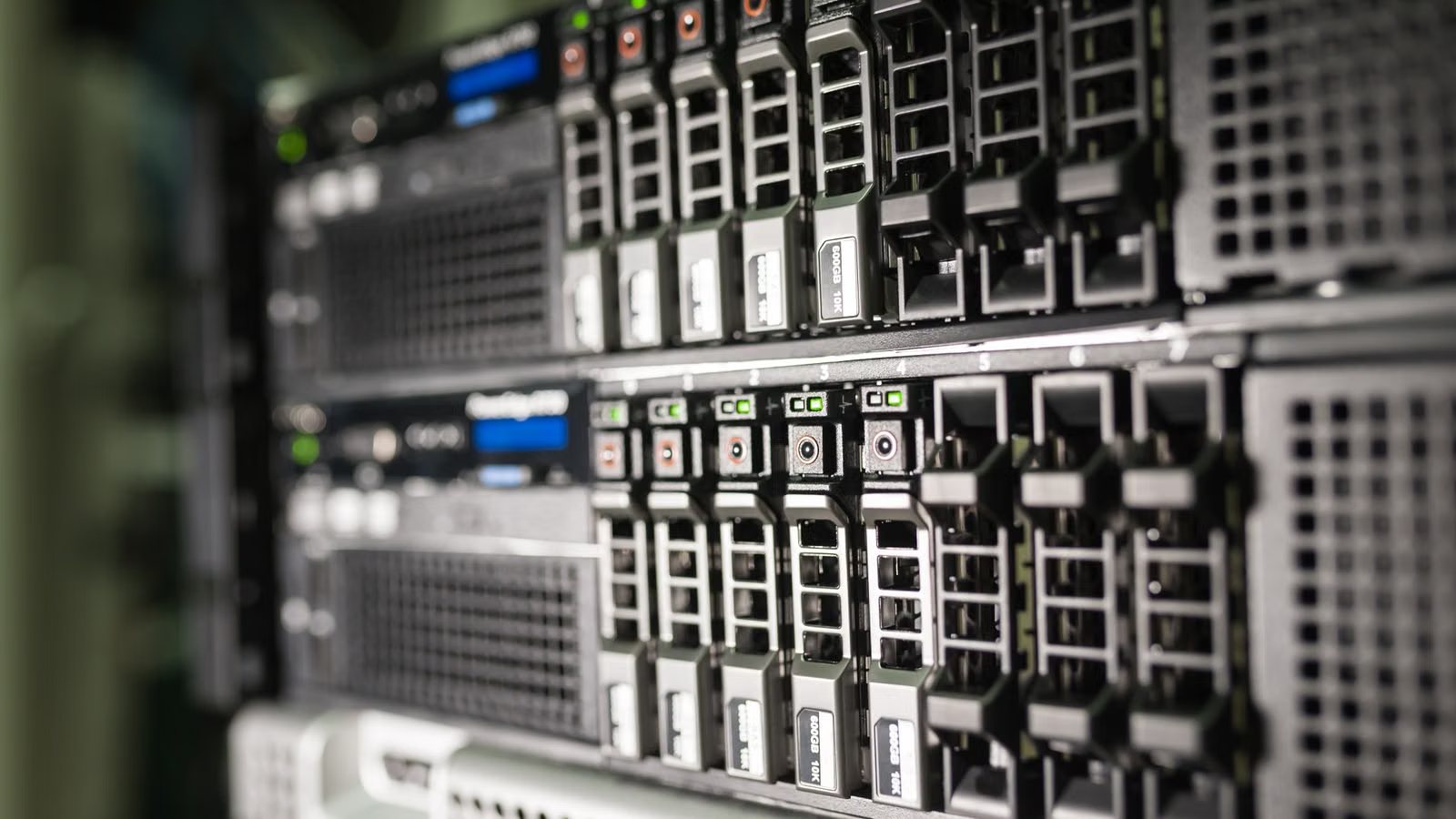
When you look at Seagate’s HAMR, the key is not the technical label of laser-assisted writing. The real question is whether it can help Nearline HDDs continue improving capacity, power efficiency, rack density, and cost per TB. Nearline HDDs are built for cloud providers and enterprise data centers. Their role is to support massive data pools, not to replace high-performance SSDs. As long as AI, cloud storage, archiving, and log data continue to grow, high-capacity HDDs still have clear commercial value.
The demand logic for Nearline HDDs is different from consumer hard drives. Consumer HDDs are more tied to PCs, NAS devices, and personal storage. Nearline HDDs are closely linked to hyperscale cloud, AI data centers, data lakes, long-term archives, and object storage. Toshiba’s description of nearline storage also shows that the category has expanded beyond traditional backup into data lakes, cloud storage, compliance archiving, and business continuity.
AI makes this cycle more complex. Training datasets, model checkpoints, inference logs, RAG knowledge bases, and multimodal content all need to be stored, reused, and traced. Hot data will use more SSDs or high-performance storage, but warm data, cold data, and archived data still require a low-cost, high-capacity storage tier. Google Spanner’s tiered storage reflects a similar idea: some data can stay on SSD first and then move to HDD after a certain period, balancing performance and cost.
| User Search Question | What Users Actually Care About | Analysis Direction |
|---|---|---|
| What is Seagate HAMR? | Whether the technology is truly useful | Look at areal density, capacity, power, and reliability |
| How does HAMR affect STX? | Whether it improves valuation logic | Look at shipments, margin, and customer adoption |
| Why is Nearline HDD supply tight? | Whether a new cycle has started | Look at AI demand and capacity expansion speed |
| Will HDDs be replaced by SSDs? | Whether long-term demand still exists | Look at tiered storage and cost per TB |
AI data centers do not only buy GPUs and HBM. The more training and inference happen, the more data is accumulated behind them, and not all of that data can be stored on expensive high-performance SSDs. The importance of HAMR is that it allows HDDs to keep increasing capacity without sharply increasing rack space or power consumption, thereby extending Nearline HDDs’ cost advantage in massive storage.
Summary: HAMR has become a core variable in Seagate’s cycle because it connects technical progress with commercial results. The real question is not whether HAMR is advanced, but whether it can help Seagate secure higher capacity, longer orders, a better product mix, and stronger gross margin in cloud customer procurement. The Nearline HDD cycle is shifting from a traditional inventory cycle to one influenced by AI data growth, cloud customer capacity reservations, and high-capacity product ramp-up. If these factors align, Seagate’s technical lead can translate into stronger earnings leverage; if customer validation or demand slows, the technical narrative may be repriced.
What Problem Does HAMR Technology Actually Solve?
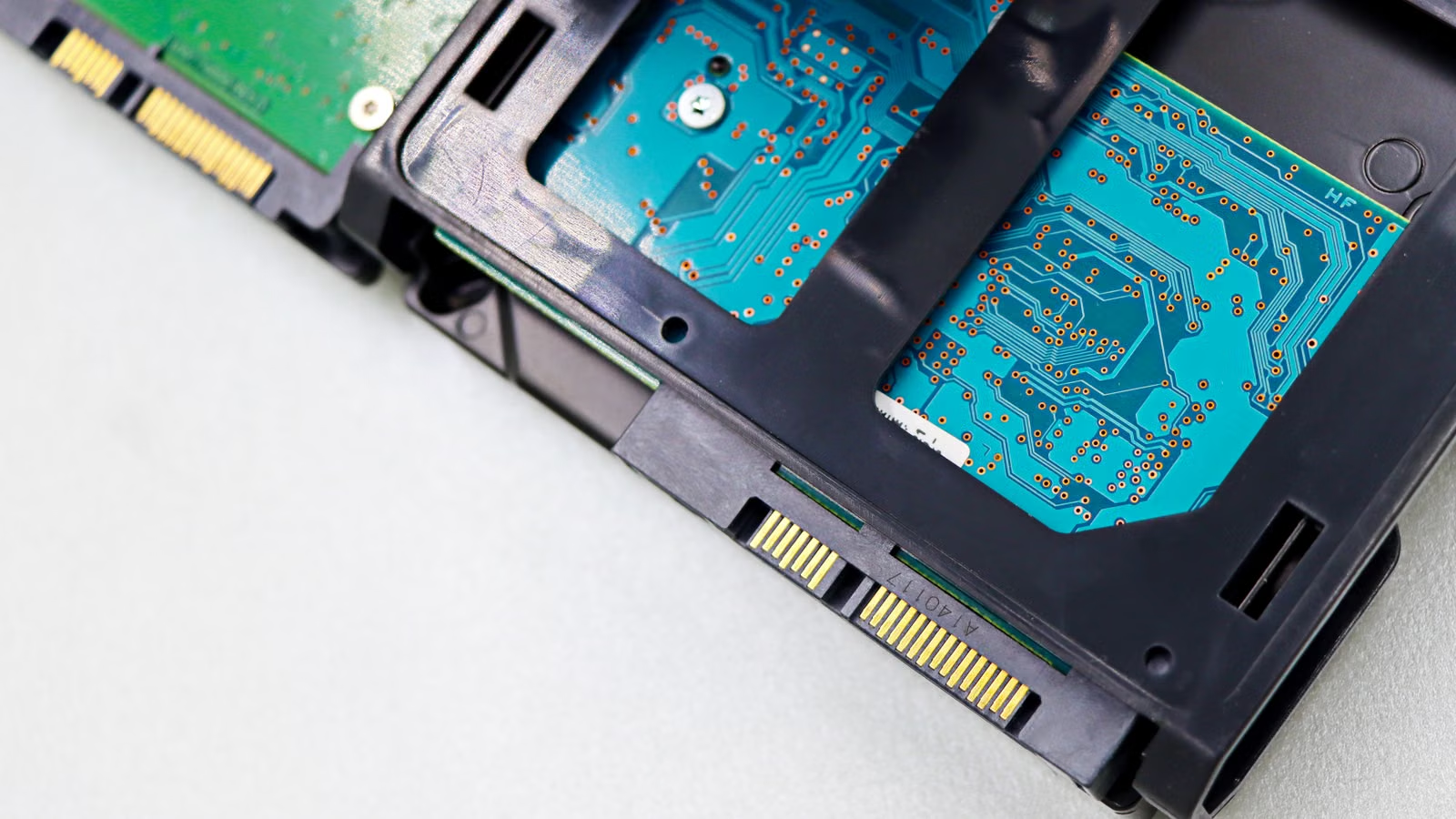
HAMR addresses the problem that traditional HDDs face as areal density becomes harder to improve. For a hard drive to become larger, it must essentially write more data onto the same-sized platter. But as data bits become smaller, magnetic stability and write difficulty both become bigger challenges. HAMR uses localized heating at the moment of writing, making it easier to write data into the magnetic medium, which then cools and remains stable. This makes HAMR an important path for HDDs to keep moving toward higher capacities.
Traditional PMR, ePMR, and MAMR all aim to improve magnetic recording capability, but HAMR represents a larger shift. Heat-Assisted Magnetic Recording relies on a “heat-assisted” process: the write head uses near-field light or nanophotonic components to briefly heat an extremely small area before writing data. Seagate’s Mozaic 3+ emphasizes that this is a full hard drive architecture, not a single component. It includes media, read/write heads, nano-optics, controller chips, and other upgrades.
That is also why the challenge of HAMR is not in the lab, but in enterprise-grade reliable mass production. Data center customers will not deploy drives at scale just because the capacity number looks attractive. They need to verify write endurance, failure rates, thermal behavior, vibration tolerance, firmware stability, batch consistency, and long-term TCO. Seagate’s Mozaic Platform connects 4TB+ per disk with 44TB capacity, showing that areal density has moved from a technical concept into a product roadmap. However, large-scale adoption still depends on customer validation and sustained shipments.
| Technology Route | Basic Idea | Advantage | Limitation |
|---|---|---|---|
| PMR | Perpendicular magnetic recording | Mature and reliable | Areal density growth slows |
| ePMR | Enhanced perpendicular magnetic recording | Extends existing architecture | Limited capacity leap |
| MAMR | Microwave-assisted writing | Improves write capability | Timeline depends on vendor |
| HAMR | Heat-assisted writing | Greater areal density potential | Complex production and long validation cycle |
In 2024, Seagate announced that Exos 30TB+ had entered volume shipments for hyperscale cloud customers. This was a key milestone in HAMR commercialization. In 2025, Seagate expanded Exos M to capacities up to 36TB, highlighting a 10-disk design and 3.6TB per disk capability.
Summary: At its core, HAMR allows HDDs to keep improving areal density within the same physical form factor. For the industry, it solves the problem of continuing to reduce the cost of large-scale storage. For Seagate, it determines whether the company can maintain product leadership in the high-capacity phase of Nearline HDDs. For investors, it represents the intersection of technology roadmap, customer validation, and profitability. You do not need to master every optical component, but you should understand one key point: HAMR’s success will ultimately be measured by reliable production, customer adoption, and unit capacity economics, not by maximum capacity numbers in product announcements.
From 30TB to 44TB, What Does Seagate’s Capacity Roadmap Mean?
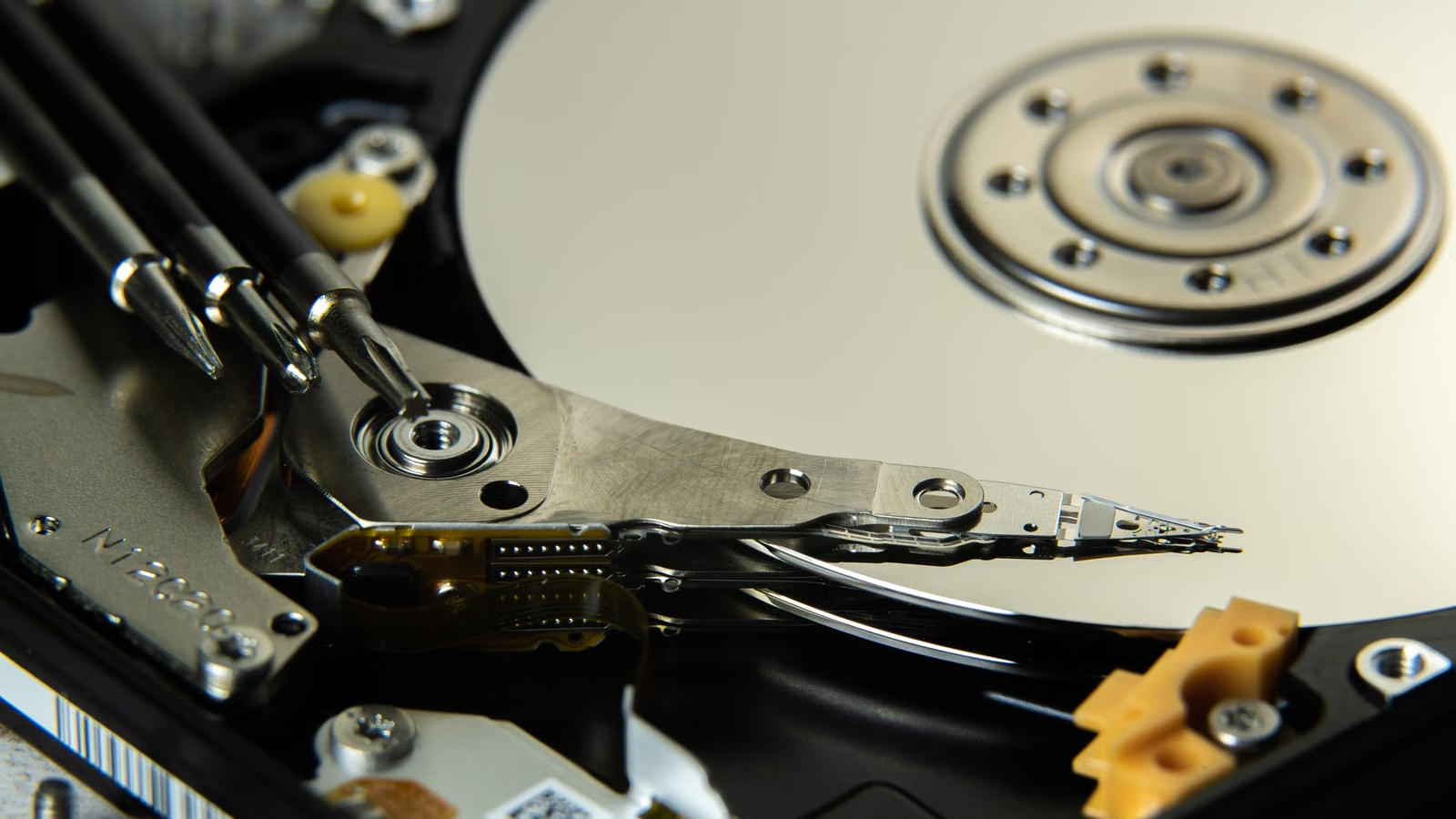
Seagate’s move from 30TB to 44TB shows that HAMR has shifted from “proving the technology works” to “proving it can be deployed at scale.” The 30TB+ stage marked the beginning of commercialization. The 32TB and 36TB products made the lineup more complete, while 44TB began to reflect the single-platter density advantage of Mozaic 4+. When you judge this roadmap, focus on whether capacity gains bring real TCO improvement, not just the headline TB number.
Seagate’s Mozaic 4+ supports capacities up to 44TB, and the company says related products have entered volume shipments to two leading hyperscale cloud providers. This matters more than a lab capacity record because production-environment deployment by cloud customers means the product has entered real data center planning.
Capacity gains have four main commercial implications. First, the same rack can hold more data, improving rack density. Second, power consumption per TB can decline, reducing long-term electricity pressure. Third, fewer hardware units are needed per unit of capacity, lowering maintenance complexity. Fourth, cloud providers can support more AI data and cloud storage growth within limited data center space.
| Capacity Stage | Technology Platform | Main Customers | Commercial Meaning | Uncertainty |
|---|---|---|---|---|
| 30TB+ | Mozaic 3+ | Cloud providers and enterprise data centers | HAMR commercialization begins | Initial validation cycle |
| 32TB | Mozaic 3+ | Enterprise and high-capacity deployments | Product line expansion | Price acceptance |
| 36TB | Mozaic 3+ | High-capacity Nearline scenarios | Continued single-platter density gains | Supply pace |
| 44TB | Mozaic 4+ | Hyperscale cloud | Higher rack density | Scale-up ramp |
| 100TB roadmap | Future HAMR | Long-term data centers | Long-term capacity potential | Timing and reliability |
You also need to distinguish CMR and SMR. CMR is more general-purpose and has stronger deployment compatibility. SMR increases capacity by overlapping tracks, but random write behavior is more complex, making it better suited to large cloud customers that can control write patterns. Toshiba’s sampling of 30–34TB SMR Nearline HDD also shows that high-capacity HDD deployment often combines SMR, host management, and specific data center architectures.
Summary: The significance of Seagate’s capacity roadmap is not just the move from 30TB to 44TB. It is about turning HAMR’s single-platter density advantage into deployable data center capacity density and cost advantages. For cloud providers, high-capacity drives can reduce rack, power, cabling, maintenance, and space pressures. For Seagate, high-capacity products often mean a more premium product mix and stronger customer stickiness. However, a capacity roadmap does not automatically equal guaranteed growth. Each new capacity generation must pass reliability validation, yield ramp-up, and customer deployment, so timing should be part of your investment judgment.
Why Is the Nearline HDD Supply-Demand Cycle Tightening?
Nearline HDD supply is tightening because demand is becoming longer, larger, and more concentrated, while supply expansion is slow. AI inference, cloud storage, and data archiving are encouraging hyperscalers to reserve future capacity earlier. But the HDD supply chain involves platters, read/write heads, helium sealing, firmware, qualification, and yield ramp-up. It cannot expand as quickly as software services. This cycle looks more like structural shortage layered on top of cyclical recovery.
TrendForce noted in 2025 that rising inference AI demand was creating Nearline HDD shortages, while also driving faster QLC SSD growth in 2026. This is important: the market does not need only HDDs, nor only SSDs. Instead, storage resources are being reallocated across different data temperatures and cost structures.
Demand-side changes mainly come from four types of data. First, training datasets and multimodal content are getting larger. Second, inference logs and user interaction data are continuously generated. Third, companies need to retain more historical data for compliance, risk control, and model iteration. Fourth, cloud providers may lock in high-capacity HDD supply earlier to avoid future shortages. On the supply side, manufacturing and qualification cycles are long, especially for new platforms like HAMR. This cannot be solved simply through short-term production overtime.
| Variable | Impact on Supply-Demand | Meaning for Seagate | Signal to Watch |
|---|---|---|---|
| AI inference data growth | Supports ongoing storage demand | More stable Nearline orders | Cloud capex |
| High-capacity HDD reservations | Extends order visibility | Better capacity allocation | Long-term agreements and backlog |
| Slow supply chain expansion | Reinforces shortage | Supports ASP and margin | Lead times |
| QLC SSD growth | Diverts some warm data | Creates substitution pressure | SSD cost per TB |
| Higher customer concentration | Larger orders, stronger bargaining power | Revenue upside and risk coexist | Large customer exposure |
Tight supply can improve ASP and gross margin, but it does not mean Seagate has unlimited pricing power. Cloud customers are large and have strong bargaining power. They will also evaluate WD, Toshiba, QLC SSDs, tape archiving, and object storage architecture optimization. If prices rise too quickly, alternatives may become more attractive, and delivery delays can also affect customer planning.
Summary: The Nearline HDD cycle is tightening not simply because “hard drives are hot again,” but because AI and cloud storage are making capacity demand more predictable, cloud customers are reserving supply earlier, and HDD supply expansion plus customer qualification take time. If Seagate can steadily deliver high-capacity HAMR products, it may gain better capacity allocation, pricing conditions, and margin performance. But you should also remember that tight supply can attract substitutes and competing capacity. The stronger the cycle, the higher the market’s expectations for execution.
How Does HAMR Affect Seagate’s Earnings and Valuation Logic?
HAMR affects Seagate’s valuation mainly through EB shipments, product mix, gross margin, and cash flow. You should not only look at HDD unit shipments, because high-capacity Nearline HDDs can increase total capacity shipped and improve revenue quality even if unit volumes do not rise sharply. What the market is really pricing is whether Seagate can turn technology leadership into high-capacity shipments, data center revenue, and stronger profitability.
In FY2026 Q3, Seagate reported revenue of $3.11 billion, GAAP gross margin of 46.5%, non-GAAP gross margin of 47.0%, and free cash flow of $953 million. These figures show that market interest in HAMR is not only about technological imagination. It is already connected to margins, data center demand, and order structure.
When analyzing Seagate, EB shipments matter more than unit shipments. EB means exabyte, a measure of massive capacity shipped. If the share of high-capacity drives rises, Seagate can deliver more capacity with fewer units, potentially improving revenue quality and gross margin. At the same time, the higher the adoption of Mozaic 3+ and Mozaic 4+, the more clearly technology leadership enters the financial statements.
| Metric | Why It Matters | Positive Signal | Risk Signal |
|---|---|---|---|
| EB shipments | Measures real capacity demand | Continued growth | Slower growth |
| Nearline share | Shows data center demand quality | Higher high-capacity mix | Higher low-end demand share |
| Gross margin | Reflects product mix and pricing | Stays high | Pricing pressure returns |
| Free cash flow | Measures earnings quality | Cash flow expands | Inventory and capex drag |
| Customer validation | Shows HAMR adoption | More cloud customers adopt | Qualification delays |
| Guidance | Reflects forward visibility | Revenue and EPS raised | Order digestion slows |
When you translate technology analysis into trading decisions, you also need to consider actual transaction costs. If you follow STX, WDC, or the AI storage supply chain, stock price volatility is only one dimension. Platform fees, external institutional fees, transaction activity fees, and other costs after execution can also affect your real holding cost. If services are available in your region under applicable rules, you can review U.S. stock trading fees. Biya charges $0 commission for U.S. stock trading, while platform fees, external institutional fees, and other costs are subject to the fee center and order page.
Summary: HAMR’s impact on Seagate’s earnings will not remain at the level of “technology leadership.” It ultimately has to show up in EB shipment growth, a better Nearline product mix, gross margin expansion, improved free cash flow, and customer validation progress. From a valuation perspective, the market may assign a higher premium to technology leadership and tight supply, but higher expectations also increase pressure on financial execution. When you judge STX, it is better to combine the technology roadmap, financial indicators, industry supply-demand conditions, and valuation level in one framework instead of making decisions based only on a single product announcement.
What Risks Should You Watch When Bullish on Seagate HAMR?
When you are bullish on Seagate HAMR, the biggest risk is not that the technology lacks a story, but that the story may be realized more slowly than the market expects. HAMR involves new media, lasers, nanophotonics, read/write heads, and controller chips. Reliability, yield, customer qualification, and mass-production consistency all take time. Competition and SSD substitution also mean Seagate’s lead does not eliminate risk.
Technology risk comes first. Enterprise hard drives must run stably for long periods. Cloud customers will look at MTBF, AFR, workload ratings, firmware stability, thermal behavior, and failure curves after large-scale deployment. StorageReview’s testing of Exos M 30TB highlights compatibility, sustained throughput, and data center deployment characteristics, but a single review cannot replace long-term hyperscaler validation.
Competition risk also matters. Western Digital’s discussion of HAMR technology emphasizes that HAMR will support a 100TB+ capacity roadmap, while WD continues to advance both ePMR and HAMR. Toshiba has also introduced 12-disk stacking technology combined with MAMR to move toward 40TB-class data center HDDs. In other words, Seagate leads, but competitors are not standing still.
| Risk Type | Trigger | Impact on Seagate | Signal to Track |
|---|---|---|---|
| Production yield risk | HAMR ramp-up underperforms | Higher costs and limited delivery | Shipment guidance and customer feedback |
| Reliability risk | Failure rate is high at scale | Slower customer adoption | Qualification progress and return rates |
| Competition risk | WD/Toshiba close the capacity gap | Weaker pricing power | Competitor roadmaps |
| Substitution risk | QLC SSD cost per TB declines | Some warm data shifts to SSD | SSD pricing and supply |
| Cyclical risk | Cloud capex slows | Lower order visibility | Hyperscaler capex |
| Valuation risk | Market expectations are too high | Earnings volatility expands | EPS guidance and valuation multiple |
Macroeconomic conditions and customer concentration also need attention. When AI data center investment is hot, the market can easily extrapolate long-term demand in a straight line. If cloud customers digest inventory or adjust capex timing, HDD orders can also slow temporarily. The more concentrated the customer base becomes, the larger the order size may be, but bargaining power and single-customer risk also increase.
Summary: HAMR gives Seagate technical advantage and cyclical leverage, but the risks are real. You need to watch four things at the same time: whether the technology can be mass-produced reliably, whether cloud customers expand deployment, whether competitors narrow the gap, and whether AI plus cloud storage demand continues. Looking only at the capacity roadmap may cause you to ignore yield and customer validation. Looking only at short-term earnings may cause you to underestimate the long-term value of the platform. A more balanced approach is to treat HAMR as a key variable in the high-capacity HDD cycle, not as a standalone investment conclusion.
To judge Seagate HAMR and the Nearline HDD cycle, it helps to build a tracking list: Seagate’s Mozaic shipments, STX gross margin, EB shipments, WD and Toshiba capacity roadmaps, QLC SSD pricing, and cloud customer capex. You can also use U.S. stock information to follow storage supply chain names such as STX and WDC, while using Biya to manage your own watchlist for U.S. and Hong Kong stocks. Biya is a global multi-asset trading wallet that supports U.S. stocks, Hong Kong stocks, and digital asset trading. Service availability depends on the user’s location, identity verification results, platform rules, and applicable laws and regulations. Any analysis of HAMR, Nearline HDDs, or AI storage stocks should only help you build a research framework and does not constitute investment advice. Before trading, you should understand order types, fee structures, billing details, and your own risk tolerance.
FAQ
Is Seagate HAMR useful for evaluating STX stock?
Seagate HAMR can be an important variable for evaluating STX, but it should not determine the investment conclusion on its own. You also need to consider EB shipments, Nearline mix, gross margin, free cash flow, customer validation progress, and valuation. Technology leadership only becomes more durable for the stock when it translates into revenue and profit.
How is Nearline HDD different from consumer HDD?
Nearline HDDs are mainly used by cloud providers, enterprise data centers, and large-scale storage systems. They focus more on capacity, reliability, power efficiency, long-term operation, and cost per TB. Consumer HDDs are more commonly used in PCs, home NAS devices, or external storage, with very different deployment scale, workload, and qualification requirements.
Why do AI data centers still need HDDs?
AI data centers still need HDDs because not all data requires SSD-level performance. Training data, inference logs, archives, multimodal content, and historical data often care more about capacity and cost. HDDs are well suited to warm and cold data storage, while real-world architectures usually combine SSDs, HDDs, and object storage in tiers.
What are the main technical risks of Seagate HAMR?
The main risk of Seagate HAMR is reliable mass production, not the concept itself. Key areas to watch include laser and optical component lifespan, media stability, read/write head consistency, yield, enterprise-grade failure rates, and hyperscaler qualification progress. If ramp-up is slower than expected, both cost and delivery can be affected.
Could WD and Toshiba weaken Seagate’s HAMR advantage?
WD and Toshiba could weaken Seagate’s advantage, but the impact depends on production timing and customer adoption. WD is advancing ePMR and HAMR in parallel, while Toshiba is pushing MAMR, SMR, and multi-disk designs. Seagate’s current lead still needs to be maintained through sustained shipments, customer validation, and financial performance.
Which Nearline HDD indicators should retail investors track?
Retail investors should focus on EB shipments, Nearline HDD mix, data center revenue, gross margin, HAMR product shipments, customer validation progress, and next-quarter guidance. Maximum capacity figures and media headlines are not enough. Shipment data, margins, and cash flow in earnings reports better reflect the quality of the cycle.
*This article is provided for general information purposes and does not constitute legal, tax or other professional advice from BiyaPay or its subsidiaries and its affiliates, and it is not intended as a substitute for obtaining advice from a financial advisor or any other professional.
We make no representations, warranties or warranties, express or implied, as to the accuracy, completeness or timeliness of the contents of this publication.
Related Blogs of

Cheapest Way to Transfer Money Internationally: Small vs. Large Transfers


Crypto Exchange Fees Comparison: Trading Fees, Spreads, and Withdrawals





Choose Country or Region to Read Local Blog
 Australia
 Austria
 Belgium
 Canada
 Cyprus
 Czech Republic
 Denmark
 Estonia
 Finland
 France
 Germany
 Greece
 Hong Kong
 India
India Indonesia
 Ireland
 Italy
Italy Japan
Japan Latvia
 Lithuania
 Luxembourg
 Malaysia
 Malta
Malta Morocco
 Nepal
Nepal Netherlands
 New Zealand
 Norway
 Pakistan
 Philippines
 Poland
 Portugal
 Romania
 Singapore
 Slovakia
 Slovenia
 South Africa
 South Korea
 Spain
Spain Sweden
 Thailand
 United States
 Turkey
 United Arab Emirates
 United Kingdom
 Vietnam