Can USDT Earned from Prediction Markets Be Spent Directly in Mainland China? Bank Card Binding Practical Tutorial





Image Source: unsplash
You may want to know whether USDT earned from prediction markets can be spent directly in mainland China. According to the latest policy regulations, USDT is classified as an illegal virtual currency, and related financial activities are strictly prohibited in mainland China. You can refer to the table below to understand the current regulatory attitude:
| Item | Description |
|---|---|
| Legal Status | USDT is classified as an illegal virtual currency and prohibited from use in financial activities. |
| Trading and Services | All domestic activities involving cryptocurrencies are considered illegal financial activities. |
| Stablecoins | Without regulatory approval, the issuance of RMB-pegged stablecoins overseas is prohibited. |
Although the policy is strict, you can still achieve consumption through methods such as bank card binding, third-party payment platforms, or conversion and withdrawal, but you need to pay special attention to safety and compliance issues.
Core Points
- USDT is regarded as an illegal virtual currency in mainland China, and any related financial activities are strictly prohibited.
- Despite the strict policy, users can still achieve consumption through bank card binding, third-party payment platforms, or conversion and withdrawal, but compliance and security must be considered.
- Choose compliant platforms for bank card binding, ensure the protection of personal identity information, and avoid legal risks caused by improper operations.
- Before consuming USDT, be sure to assess your own risk tolerance, closely monitor policy developments, and keep all transaction vouchers.
- When using digital currency cards, enable two-factor authentication, regularly check account security, and guard against cyber attacks and phishing risks.
Current Status of Consuming USDT Earned from Prediction Markets in Mainland China

Image Source: unsplash
Legality and Policy Risks
When you use USDT earned from prediction markets in mainland China, the first thing you face is the high uncertainty of policies and laws. On February 6, 2023, the People’s Bank of China, China Securities Regulatory Commission, and multiple departments jointly issued a statement, explicitly prohibiting any individual or entity from issuing “offshore RMB” stablecoins without approval from relevant departments. The People’s Bank of China and seven regulatory agencies further emphasized that any unapproved RMB-pegged stablecoins and tokenized real-world assets (RWA) are prohibited. These policies target not only onshore issuers but also offshore issuers, demonstrating the strict attitude of Chinese regulators toward stablecoins. If you hold or attempt to consume USDT earned from prediction markets in mainland China, you need to fully recognize the risk that related financial activities may be deemed illegal.
You also need to note that although the policy mainly targets issuance and circulation, in actual operations, any exchange, payment, transfer, or other behavior involving stablecoins may be monitored by financial institutions. Once abnormalities are detected, banks have the right to freeze related accounts and even cooperate with investigations. Before conducting any consumption related to USDT, be sure to assess your own risk tolerance and closely monitor policy developments.
Tip: You should avoid conducting large-amount USDT transactions or consumption directly in mainland China, especially not transferring funds through unknown channels, to avoid crossing legal red lines.
Overview of Feasible Consumption Methods
Despite the strict policy, there are still multiple paths for cashing out and consuming USDT earned from prediction markets. You can refer to the following common methods:
- Bank Card Binding Consumption
You can choose virtual bank card services that support digital currencies, such as Biyapay. By registering and completing real-name authentication, you can recharge USDT to the platform account and then bind a bank card issued by a Hong Kong licensed bank. This way, you can make USD-settled consumption worldwide, and some platforms also support online shopping and POS machine swiping. This method has relatively high compliance and strong security, but attention must be paid to platform selection and protection of identity information. - Third-Party Payment Platforms
Some international third-party payment platforms support USDT recharge and consumption. You can exchange USDT for USD balance through these platforms and then use it for overseas e-commerce shopping or service payments. This method is suitable for small-amount, daily consumption, but you need to be vigilant about platform qualifications and fund security. - Conversion to RMB and Withdrawal
You can also exchange USDT earned from prediction markets for USD through over-the-counter (OTC) channels, and then transfer it to bank accounts in Hong Kong or other regions through legal means. Some users choose to settle funds through Hong Kong licensed banks to avoid regulatory risks in mainland China. This method requires strict verification of the counterparty’s identity to prevent fraud and money laundering risks.
| Method | Compliance | Convenience | Risk Points | Applicable Scenarios |
|---|---|---|---|---|
| Bank Card Binding | Relatively High | Relatively High | Requires real-name authentication, platform selection | Overseas consumption, online shopping |
| Third-Party Payment Platforms | Average | Relatively High | Platform qualifications, exchange losses | Small-amount payments |
| Conversion to RMB and Withdrawal | Relatively Low | Average | Fund security, compliance risks | Fund cash-out |
When choosing a consumption method, you should prioritize compliance and fund security. The bank card binding method, especially through compliant platforms like Biyapay, can effectively reduce policy risks. You should also pay attention to the platform’s domain name security and anti-phishing measures to avoid asset losses due to improper operations.
Recommendation: During the operation process, be sure to keep all transaction vouchers, regularly follow the latest policy information released by authoritative institutions such as the People’s Bank of China, and adjust fund management strategies in a timely manner.
Comparison of USDT Consumption Methods
Bank Card Binding Consumption
You can recharge USDT earned from prediction markets to a virtual bank card through platforms like Biyapay, and then bind a bank card issued by a Hong Kong licensed bank for consumption. This method supports real-time conversion, usually completing payment in a few seconds, with network fees around $0.02, far lower than traditional payment channels. When making USD settlements worldwide, the experience is smooth and suitable for high-frequency or large-amount consumption.
You need to pay attention to security risks. Using virtual bank cards for cryptocurrency transactions may involve commercial operations without a Chinese payment or financial license, posing compliance risks. Some platforms have simple real-name authentication processes that may be exploited by criminals, leading to damage to user rights or use in money laundering activities. You should prioritize compliant platforms, protect personal information, and avoid legal risks caused by improper operations.
| Consumption Method | Speed | Fees |
|---|---|---|
| Bound Bank Card Payment | Real-time conversion, instantaneous completion | Only about $0.02 in network fees |
| Security Risk Type | Description |
|---|---|
| Illegal Commercial Operations | Using virtual credit cards for cryptocurrency transactions may involve operations without a Chinese payment/financial license, violating relevant regulations. |
| Damage to User Rights | If criminals impersonate others to register virtual credit cards, users’ legitimate rights may not be protected, lacking clear legal provisions. |
| Anti-Money Laundering Difficulties | The virtual credit card application process is simple, requiring minimal personal information, which may be exploited by criminals for money laundering. |
Tip: When using bank card binding for consumption in mainland China, be sure to verify the platform’s qualifications and ensure all operations comply with local laws and regulations.
Third-Party Payment Platforms
You can also choose international third-party payment platforms, recharge USDT and exchange it for USD balance, and then use it for overseas e-commerce shopping or service payments. Such platforms usually support small-amount payments with high convenience, but handling fees and exchange losses are relatively noticeable. During use, you need to pay attention to platform qualifications and fund security to avoid asset freezing or losses due to insufficient platform compliance.
Compared to bank card binding, the transaction speed of third-party payment platforms may be slightly slower, and some platforms charge transaction fees from 0.9% to 3%. You should weigh speed against cost based on actual needs and reasonably choose consumption channels.
| Consumption Method | Speed | Fees |
|---|---|---|
| Traditional Payment Methods | May take several minutes | Usually higher handling fees |
| Using Other Cryptocurrencies | May incur additional fees | 0.9% to 3% transaction fees |
Conversion to RMB and Withdrawal
You can exchange USDT earned from prediction markets for USD through over-the-counter (OTC) channels and then transfer it to bank accounts in Hong Kong or other regions. When cashing out USDT to RMB in mainland China, you need to pay special attention to legal and tax responsibilities. China currently only recognizes RMB as the official currency, and cryptocurrencies are classified as virtual commodities. Profits from selling cryptocurrencies must be declared at a 20% capital gains tax, and detailed transaction records and personal income tax returns must be submitted to the State Taxation Administration.
In actual operations, you need to strictly verify the identity of the trading counterparty to prevent fraud and money laundering risks. Compliance is relatively low, fund security pressure is high, and large-amount frequent operations are not recommended.
| Topic | Description |
|---|---|
| Legal Status | Cryptocurrencies are not legal tender in China; only RMB is recognized as the official currency and classified as a virtual commodity. |
| Tax Obligations | Profits from selling cryptocurrencies are subject to 20% capital gains tax, calculated based on appreciation. |
| Reporting Requirements | Individuals and enterprises must annually report cryptocurrency gains to the State Taxation Administration with detailed transaction records. |
Recommendation: When cashing out USDT in mainland China, be sure to keep all transaction vouchers, proactively fulfill tax declaration obligations, and guard against policy risks.
Practical Guide to Binding Cards for USDT Earned from Prediction Markets
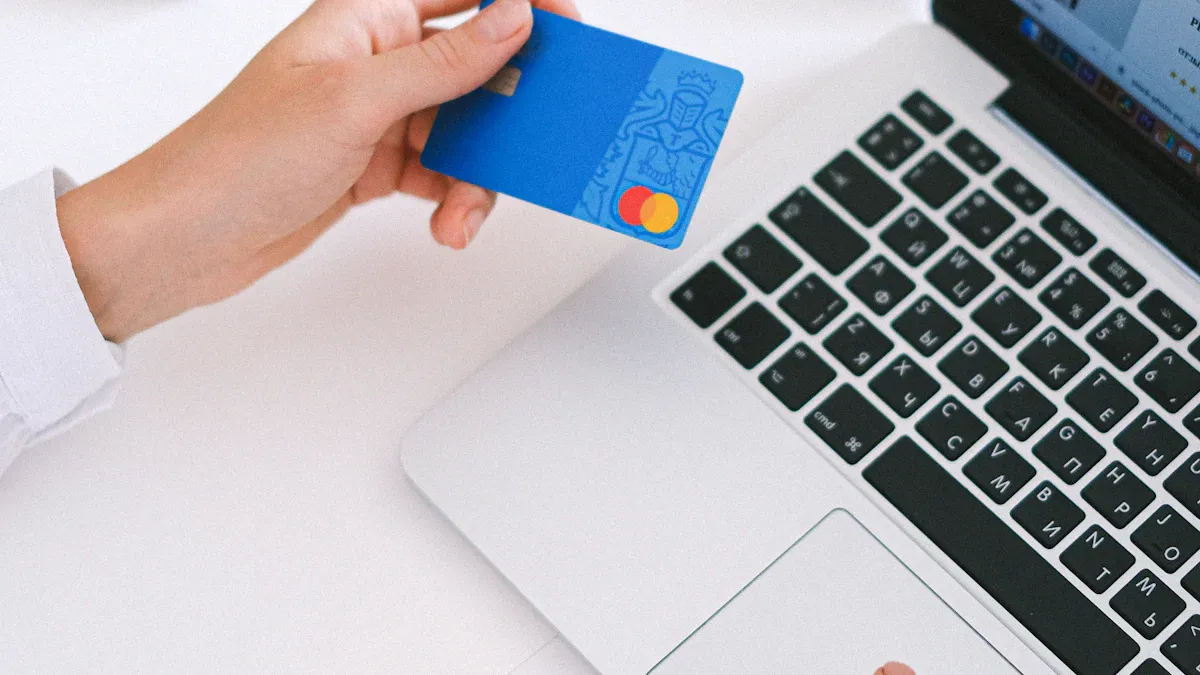
Image Source: pexels
Choosing a Digital Currency Card Platform
When choosing a digital currency card platform, you should prioritize the platform’s compliance, user experience, and fee structure. Currently, commonly used digital currency card platforms in Chinese-speaking regions include Bybit Card, Bitget Card, Infini Card, and Biyapay. Biyapay is favored by many users due to its convenient operation process and good compatibility with Hong Kong licensed banks. You can refer to the table below to understand the features and fees of mainstream platforms:
| Platform Name | Features | Fees |
|---|---|---|
| Bybit Card | Low annual fee, supports mainland KYC authentication, free application | No annual fee |
| Bitget Card | No annual fee, direct USDT consumption | No annual fee |
| Infini Card | Supports binding with Alipay and WeChat Pay, flexible consumption | No annual fee |
| Biyapay | Supports multi-currency recharge, binds Hong Kong licensed bank cards, secure and compliant | No annual fee |
When choosing a platform, you should prioritize whether it supports binding to Hong Kong licensed bank accounts, has a complete real-name authentication process, and has strong security measures. It is recommended to carefully read the platform’s service agreement to understand its support policies and compliance statements for mainland China users.
Account Registration and Real-Name Authentication
When registering a digital currency card platform account, you need to prepare valid identification documents and contact information. Most platforms require you to complete the KYC (Know Your Customer) real-name authentication process. The general process is as follows:
- Visit the platform’s official website or download the official App, and click “Register”.
- Fill in basic information such as email and mobile phone number, and set a strong password.
- Upload identity proof documents (such as passport, ID card, or Hong Kong-Macau pass), and some platforms support Hong Kong address authentication.
- Perform facial recognition or video authentication to ensure identity authenticity.
- Wait for platform review, usually completed within 1-3 working days.
During the real-name authentication process, you should ensure that the submitted information is true and valid to avoid account review failure due to mismatched documents. Some platforms support multi-language services to facilitate smooth registration.
Recharge and Card Binding Process
After completing real-name authentication, you can start recharging the virtual card and binding a bank card. Taking Biyapay as an example, the standard operation process is as follows:
- Log in to your account and enter the “Card Management” page.
- Select the virtual prepaid card you need to recharge.
- Choose the funding source, common methods include USDT recharge, bank transfer, or other cryptocurrencies.
- Enter the recharge amount, confirm it is correct, and submit.
- Wait for platform processing, usually credited within a few minutes to hours.
- After successful recharge, enter the “Bind Bank Card” page, input Hong Kong licensed bank account information, and complete binding.
In actual operations, you may encounter the following technical issues:
- Payment success rate fluctuations, especially when binding to specific merchants such as WeChat or Alipay, where some platforms show higher failure rates.
- Customer service response speeds vary, and some platforms handle issues slowly.
- Binding processes on certain payment platforms are cumbersome and require multiple verifications.
It is recommended to prioritize platforms that support binding to Hong Kong licensed bank accounts and understand the platform’s recharge and withdrawal policies in advance to ensure smooth fund flow.
Domain Binding to Enhance Security
During operations, you should attach great importance to account security. Many phishing websites deceive users by forging platform pages. You can enhance security through the following measures:
- Obtain domain names only through official platform channels and avoid clicking unknown links.
- Add the platform domain to browser bookmarks to prevent entering counterfeit websites by mistake.
- Enable two-factor authentication (2FA) to improve account security level.
- Regularly check account login records and change passwords promptly if abnormalities are found.
You can also pay attention to whether the platform supports domain binding functionality, which binds your account to a specific domain to prevent malicious third-party logins. This measure can effectively reduce phishing attack risks and protect your asset security on the platform.
Tip: Before each login and operation, be sure to verify the domain name spelling to avoid asset losses due to negligence.
Risks and Compliance Tips
When using USDT earned from prediction markets for bank card binding and consumption in mainland China, you must strictly comply with China’s financial regulatory policies. According to regulatory documents issued in 2021, all commercial activities related to cryptocurrencies, including exchange services and ICOs, are prohibited. Financial institutions must not provide any services for virtual currency transactions. During operations, you should pay attention to the following compliance requirements:
| Compliance Requirement | Description |
|---|---|
| Anti-Money Laundering (AML) Checks | Financial institutions must monitor fund flows related to virtual currency transactions to prevent money laundering risks. |
| Know Your Customer (KYC) Requirements | All platforms must strictly verify user identities to identify and block illegal activities related to virtual currencies. |
| Mandatory Provisions | All commercial activities related to cryptocurrencies are prohibited, and financial institutions must not provide any related services. |
When using digital currency card platforms, you should proactively cooperate with the platform’s KYC and AML checks, keep all transaction vouchers, and avoid large-amount or frequent fund transfers. You should also closely follow the latest policies issued by authoritative institutions such as the People’s Bank of China, adjust fund management strategies in a timely manner, and guard against compliance risks.
Recommendation: When conducting operations related to USDT earned from prediction markets in mainland China, prioritize fund security and compliance, rationally assess risks, and avoid crossing legal red lines due to improper operations.
Common Questions and Solutions
Reasons for Binding Card Failure
When binding a bank card to a digital currency card platform, common failure reasons mainly include the following:
- The bank card does not support international transactions. You need to confirm that the bank card used is issued by a Hong Kong licensed bank and has international payment functions enabled.
- The bank has set payment restrictions. Some banks restrict cryptocurrency-related transactions; it is recommended to contact bank customer service to confirm if there is risk control interception.
- Platform information is filled incorrectly. You should carefully verify information such as bank card number and cardholder name to ensure consistency with bank reserved information.
- Unstable network environment. Avoid using public Wi-Fi during binding and switch to a secure network environment.
- Platform system maintenance or upgrade. You can try again later or follow the platform’s announcements.
Tip: When operating on platforms like Biyapay, it is recommended to prioritize bank cards that support international transactions and ensure all information is accurate. If payment fails, log in to the platform to check card details, or contact the bank to confirm the specific reason.
Handling Recharge Not Credited
When recharging USDT earned from prediction markets to a digital currency card platform and finding that funds are not credited, you can troubleshoot according to the following steps:
- Check if the correct blockchain network was selected (such as TRC20, ERC20, or BSC BEP-20); choosing the wrong network will cause recharge failure.
- Confirm the wallet address is entered correctly; an incorrect address will lead to asset loss.
- View the blockchain explorer to confirm whether the transaction has been confirmed by the network.
- Check the bank account or digital wallet to confirm if there was actual deduction. In some cases, pending fees will be automatically refunded after failure.
- Log in to the platform account, check recharge history records, and confirm if the balance matches expectations.
- If transaction records exist but the balance has not changed, it may be a platform system delay. You can try clearing the app cache and logging in again.
- If the bank has deducted funds but there is no record on the platform, it is recommended to contact platform customer service promptly and provide the transaction hash and related vouchers.
Recommendation: During the recharge process, be sure to keep all transaction vouchers and prioritize mainstream blockchain networks to reduce arrival delays due to network congestion or address errors.
Account Security Protection
When using digital currency card platforms, account security is crucial. It is recommended to take the following measures:
- Enable two-factor authentication (2FA) or multi-factor authentication (MFA), protecting the account through multiple means such as password, mobile phone, and authenticator.
- For large amounts of funds, it is recommended to use multi-signature (Multisig) wallets to enhance fund security level.
- Do not click on any links from unknown sources, especially suspicious URLs in chat apps, emails, or search ads.
- For infrequently used or new platforms, it is recommended to use a separate wallet for interaction to avoid damage to the main wallet assets.
- Regularly check account login records and change passwords promptly if abnormalities are found.
You also need to be vigilant about the following common security threats:
- Ghost-Tapping: Cybercriminals steal payment card information through social engineering for retail fraud and money laundering.
- Data breaches: Data leaks from banks or telecom companies may lead to theft of personal identity information, increasing SIM swap risks.
- Remote swiping: Criminals sell payment card information on channels like Telegram, often settled in USDT.
When managing USDT earned from prediction markets in mainland China, prioritize account security, regularly update security settings, and guard against various cyber attacks.
When consuming USDT earned from prediction markets in mainland China, you can choose methods such as bank card binding, third-party payment platforms, or conversion and withdrawal. You should prioritize compliant platforms, strictly follow real-name authentication and secure operation processes. You need to closely monitor policy changes, keep transaction vouchers, rationally manage funds, and guard against compliance and fund security risks.
FAQ
Why does it always prompt information mismatch during card binding?
You need to ensure that the bank card information is completely consistent with the platform account details. Bank cards issued by Hong Kong licensed banks usually require accurate name, address, and document number. You can re-verify all information to avoid binding failure due to spelling errors.
How long does it take for USDT to arrive after recharge?
When using Biyapay to recharge USDT, it usually arrives within a few minutes. The actual arrival time depends on blockchain network congestion. You can query the transaction status through the blockchain explorer to ensure fund security.
What materials are needed to bind a Hong Kong bank account?
You need to prepare a bank card issued by a Hong Kong licensed bank, identity proof documents, and valid contact information. The platform will require you to complete real-name authentication and upload photos of relevant documents. You can prepare all materials in advance to improve review efficiency.
Will funds be lost if recharge fails?
During the recharge process, if the address or network type is entered incorrectly, funds may not be recoverable. You should carefully verify the wallet address and network type. If it is due to platform system delay causing non-arrival, funds are generally automatically refunded or handled with customer service assistance.
How to protect account security and prevent phishing attacks?
You can enhance security by enabling two-factor authentication, only accessing official domains, and regularly changing passwords. You should avoid clicking unknown links, keep transaction vouchers, and contact platform customer service promptly if abnormalities are found.
*This article is provided for general information purposes and does not constitute legal, tax or other professional advice from BiyaPay or its subsidiaries and its affiliates, and it is not intended as a substitute for obtaining advice from a financial advisor or any other professional.
We make no representations, warranties or warranties, express or implied, as to the accuracy, completeness or timeliness of the contents of this publication.
Related Blogs of

Wise Safety for Large Transfers: Limits, Risks and Safer Alternatives


Multi-Currency Account Comparison: Wise, Revolut, HSBC and DBS for Global Users




Choose Country or Region to Read Local Blog
 Australia
 Austria
 Belgium
 Canada
 Cyprus
 Czech Republic
 Denmark
 Estonia
 Finland
 France
 Germany
 Greece
 Hong Kong
 India
India Indonesia
 Ireland
 Italy
Italy Japan
Japan Latvia
 Lithuania
 Luxembourg
 Malaysia
 Malta
Malta Morocco
 Nepal
Nepal Netherlands
 New Zealand
 Norway
 Pakistan
 Philippines
 Poland
 Portugal
 Romania
 Singapore
 Slovakia
 Slovenia
 South Africa
 South Korea
 Spain
Spain Sweden
 Thailand
 The United States
 Turkey
 United Arab Emirates
 United Kingdom
 Vietnam
Contact Us




BIYA GLOBAL LLC is registered with the Financial Crimes Enforcement Network (FinCEN), an agency under the U.S. Department of the Treasury, as a Money Services Business (MSB), with registration number 31000218637349, and regulated by the Financial Crimes Enforcement Network (FinCEN).
BIYA GLOBAL LIMITED is a registered Financial Service Provider (FSP) in New Zealand, with registration number FSP1007221, and is also a registered member of the Financial Services Complaints Limited (FSCL), an independent dispute resolution scheme in New Zealand.