What Is the Relationship Between HBM and GPUs? Why NVIDIA Shipments Depend on High-Bandwidth Memory





HBM is not the computing core of a GPU. It is the high-speed memory that high-end AI GPUs cannot operate efficiently without. The GPU performs matrix computation, while HBM continuously feeds it model weights, activations, KV cache, and other data. If memory capacity is insufficient, the model or context cannot fit; if bandwidth is insufficient, even the most powerful GPU will spend time waiting for data. Understanding the relationship between HBM and GPUs helps you judge the real constraints behind NVIDIA, memory suppliers, TSMC advanced packaging, and AI server shipments.
Key Takeaways
- HBM is high-bandwidth memory, while a GPU is a parallel computing processor.
- AI GPU performance depends on compute, memory capacity, bandwidth, and packaging.
- NVIDIA H100, H200, B200, Blackwell Ultra, and Rubin keep raising HBM specifications.
- Shortages in HBM, GPU dies, or CoWoS packaging can all limit final shipments.
- HBM4 improves bandwidth but increases validation, thermal, and supply-chain complexity.
- HBM investing requires tracking orders, yield, customer qualification, and valuation.
What Is the Relationship Between HBM and GPUs?
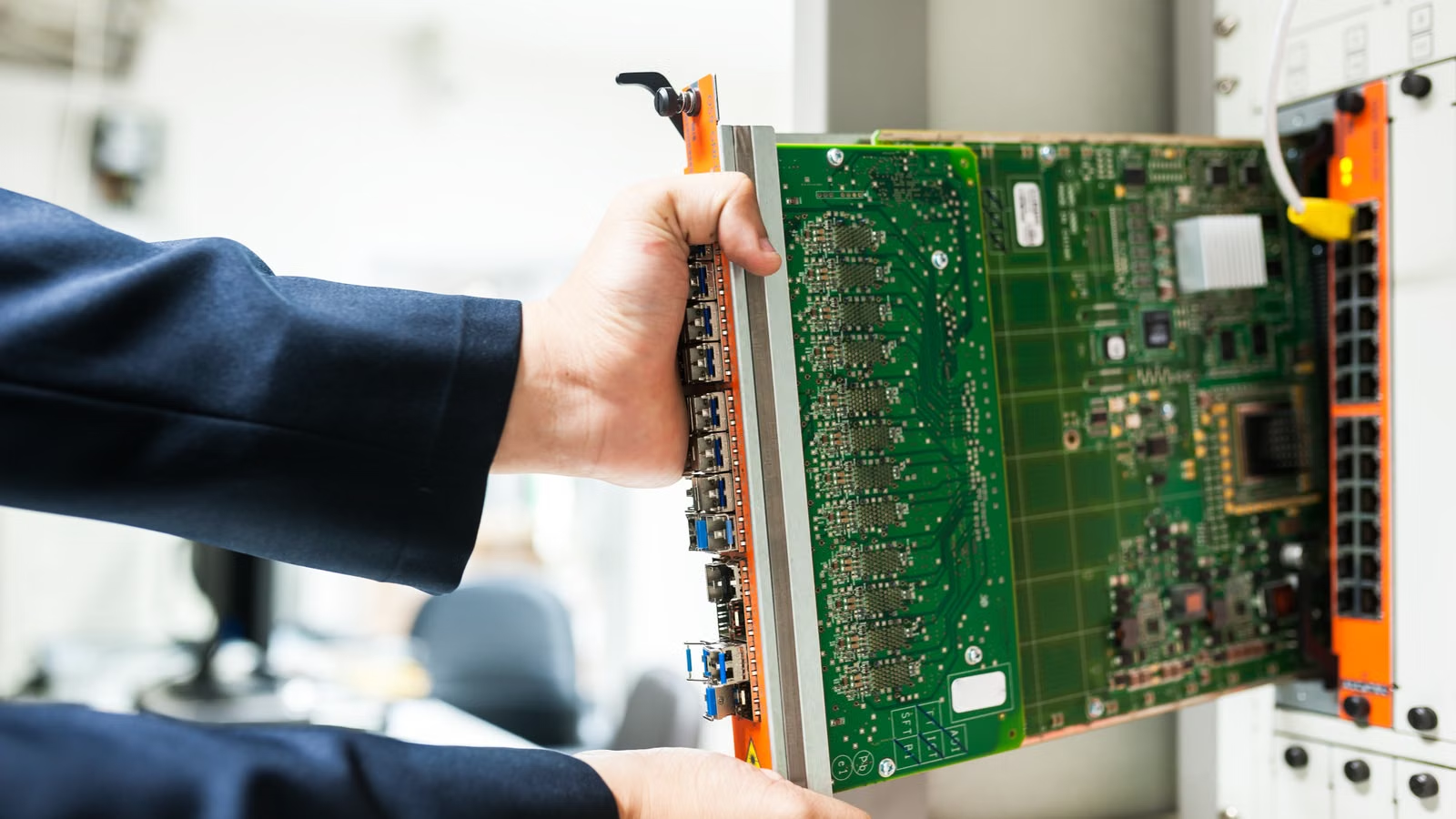
A GPU is the processor that performs computation, while HBM is the high-speed memory placed close to the GPU. You can think of the GPU as the “compute engine” responsible for matrix multiplication, tensor operations, and parallel workloads, while HBM is the “high-speed feeding system” that continuously supplies data to that engine. During AI training and inference, the GPU repeatedly reads model weights, input tokens, activations, intermediate results, and KV cache. HBM does not perform AI computation directly, but it determines whether these data can reach the GPU fast enough.
In a traditional computer, the CPU, memory, and storage are usually distributed across different parts of the motherboard. In a high-end AI GPU, the structure is much more compact: the GPU die and multiple HBM stacks are often connected through an interposer and advanced packaging. TSMC’s CoWoS is a typical example. It integrates logic chips and HBM stacks into the same high-density package, allowing the GPU to access memory through extremely wide data channels.
HBM is distinctive because of its stacked structure and ultra-wide interface. It is not ordinary memory laid out as a single flat chip. Instead, multiple DRAM dies are vertically stacked, connected through TSVs, and linked to the GPU memory controller through a base die and interposer. Compared with conventional graphics memory, HBM is closer to a high-bandwidth data pool placed next to the GPU.
| Component | Main Role | Typical Location | Meaning for AI GPUs |
|---|---|---|---|
| GPU compute core | Executes matrix, tensor, and parallel computation | Core of the AI accelerator | Determines theoretical compute ceiling |
| HBM | Stores model weights, activations, KV cache | Near the GPU package | Determines local memory capacity and bandwidth |
| CPU DDR memory | Stores system data and some task data | Server motherboard | Cannot directly replace local GPU memory |
| SSD / storage system | Stores models, datasets, and logs long term | Server or data center | Handles persistent storage, not high-frequency compute access |
This structure also explains a common misunderstanding: HBM is not a replacement for the GPU, nor is it another type of compute chip. It is still DRAM in nature, but packaged and connected in a way that better fits AI GPUs. GPU Tensor Cores perform computation, while HBM supplies data. The two depend on each other, but their responsibilities are completely different.
From a software perspective, model training and inference are not simply a matter of “reading data once.” Transformer models repeatedly read weights, calculate attention, generate activations, and maintain KV cache during inference. Google Cloud’s explanation of GPU memory also emphasizes that insufficient memory directly limits how models can be fine-tuned and run. For developers, memory capacity determines whether a model can run; memory bandwidth determines how smoothly it runs.
For investors, this relationship is important. When looking at NVIDIA AI GPUs, it is not enough to focus only on FLOPS, Tensor Cores, or CUDA Cores. When looking at HBM companies, it is also not enough to treat them as ordinary DRAM cycle plays. High-end AI chips have become combined products made up of GPU logic dies, HBM stacks, advanced packaging, and system interconnects. Each part can affect final supply.
Summary: The relationship between HBM and GPUs can be described as the coordination between high-speed memory and the compute core. The GPU performs large-scale parallel computation for AI models, while HBM delivers model weights, intermediate results, and context data at extremely high bandwidth. Without a GPU, HBM cannot perform AI computation independently; without enough HBM, GPU compute units may sit idle while waiting for data. Therefore, judging the real capability of an AI GPU requires looking not only at peak compute, but also at HBM capacity, memory bandwidth, packaging, and system-level interconnects.
Why Ordinary Memory Struggles to Meet High-End AI GPU Requirements
High-end AI GPUs use HBM not because ordinary graphics memory is useless, but because large-model training and inference require extremely high data throughput within limited power and packaging space. GPU compute capability has been rising rapidly. If memory bandwidth cannot keep up, compute units will wait for data, and theoretical compute will not translate into real throughput. HBM helps relieve the “memory wall” problem in AI accelerators through a wider interface, shorter connection paths, and better bandwidth efficiency.
The “memory wall” means that compute speed improves faster than data movement speed. Matrix multiplication in AI models may look like a compute problem, but every computation requires reading weights and input data. In large language model inference, the decode stage often needs to repeatedly read model weights; the longer the context, the larger the KV cache. In this situation, memory capacity and bandwidth directly affect concurrent users, token throughput, and latency.
The difference between HBM, GDDR, and DDR is not simply “which one is faster.” They are designed for different product logic:
| Comparison | HBM | GDDR | DDR |
|---|---|---|---|
| Main application | AI GPUs, HPC, data center accelerators | Consumer GPUs, gaming GPUs, some workstations | CPU system memory |
| Bandwidth source | Ultra-wide bus and multi-channel parallelism | Higher per-pin speed | General-purpose memory channels |
| Packaging location | Close to GPU, often in the same advanced package | Around the GPU on a graphics card PCB | Server or PC motherboard |
| Cost structure | High, dependent on advanced packaging and stacking yield | Relatively lower, better for consumer scale | Focuses more on capacity and general use |
| Power efficiency | Better efficiency at high bandwidth | Moderate | Not suitable as direct local GPU memory |
| Typical constraint | Capacity, yield, validation, packaging | Bandwidth and power ceiling | Latency and bandwidth limitations |
Consumer GPUs still widely use GDDR because gaming, graphics rendering, and mass-market products are more sensitive to cost, pricing, and supply volume. GDDR can deliver strong memory performance with lower packaging complexity. HBM is more suited to data centers: individual GPUs are expensive, and customers are willing to pay a premium for higher throughput, better power efficiency, and greater model capacity.
It is also important to separate “capacity” from “bandwidth.” Capacity answers whether something can fit; bandwidth answers how fast it can be read. Larger memory capacity can hold larger models, longer contexts, and more KV cache. Higher memory bandwidth allows the GPU to read those data faster. Both matter, but they cannot replace each other.
AI training depends heavily on both capacity and bandwidth. Training requires storage for model weights, activations, gradients, and optimizer states. Inference is also becoming more dependent on HBM because long context, multi-turn conversations, retrieval-augmented generation, and high-concurrency services all increase local memory pressure. HBM does not automatically solve every performance problem, but it is a key condition for high-end AI GPUs to overcome memory bottlenecks.
| Constraint Type | Main Symptom | Can HBM Improve It? |
|---|---|---|
| Compute-limited | Tensor Cores or matrix compute become the bottleneck | Only indirectly |
| Bandwidth-limited | GPU waits for weights, activations, or KV cache | Strongly improves |
| Capacity-limited | Model, batch, or context cannot fit | Strongly improves |
| Communication-limited | Multi-GPU synchronization and networking slow training | Requires NVLink, InfiniBand, and other interconnects |
| Software-limited | Kernel efficiency, scheduling, or cache hit rate is weak | Requires software stack optimization |
So HBM is not simply a more expensive and more advanced label. It is the result of AI GPU architecture reaching a stage where memory delivery becomes critical. As compute density increases, ordinary memory architectures are more likely to hit limits in packaging area, power consumption, and bandwidth. HBM uses a more complex manufacturing approach in exchange for greater data transfer capability per unit area.
Summary: Ordinary memory still has value, but it struggles to simultaneously meet high-end AI GPU requirements for bandwidth, power efficiency, connection distance, and capacity density. GDDR is better suited to cost-sensitive, high-volume consumer GPUs, while DDR is more suitable as CPU system memory. High-end AI GPUs use HBM because training and inference both amplify data movement pressure: model parameters must be read, activations must be written, KV cache must remain local, and long context plus high concurrency further increase memory demand. HBM’s advantage is that it places more data closer to the GPU, moves it faster, and delivers lower power consumption per unit of bandwidth.
How HBM Affects the Real Performance of NVIDIA AI GPUs
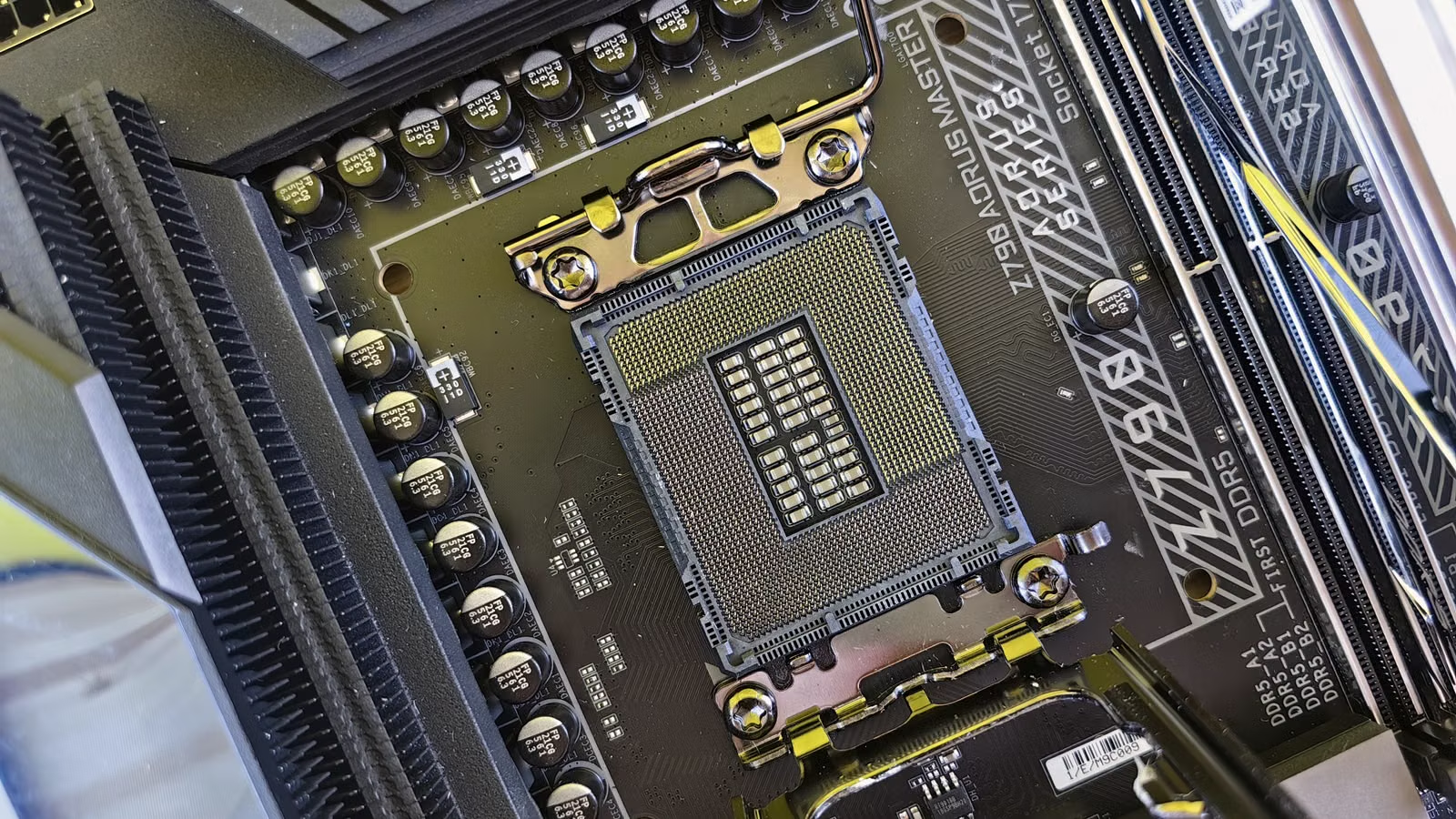
NVIDIA keeps increasing HBM capacity and bandwidth because newly added Tensor Core compute needs enough data supply. The evolution from H100, H200, B200, and Blackwell Ultra to Rubin shows a clear direction: as compute capability rises, local memory capacity and bandwidth must rise with it. Otherwise, AI training and inference will be constrained by model weight access, KV cache, long context, and concurrent serving, preventing hardware performance from being fully utilized.
Public specifications show that every generation of NVIDIA data center GPU has made HBM more important. NVIDIA H100 SXM specifications provide 80GB of HBM and 3.35TB/s-class memory bandwidth. NVIDIA H200 raises this to 141GB of HBM3e and 4.8TB/s bandwidth. In the Blackwell generation, DGX B200 provides 1,440GB of GPU memory and 64TB/s of HBM3e bandwidth across eight Blackwell GPUs, which implies roughly 180GB and 8TB/s-class bandwidth per GPU. Looking further ahead, NVIDIA Rubin is planned to use HBM4, with up to 288GB per GPU and up to 22TB/s aggregate bandwidth.
| Platform | HBM Generation | Memory and Bandwidth Focus | Meaning for AI Workloads |
|---|---|---|---|
| H100 | HBM / HBM3-class | 80GB, 3.35TB/s-class | Supports mainstream large-model training and inference |
| H200 | HBM3e | 141GB, 4.8TB/s | Improves large-model inference, HPC, and memory-constrained workloads |
| B200 | HBM3e | DGX B200 has 1,440GB and 64TB/s across eight GPUs | Supports Blackwell training and inference throughput demand |
| Blackwell Ultra | HBM3E | Up to 288GB, 8TB/s | Targets larger models, longer context, and higher concurrency |
| Rubin | HBM4 | Up to 288GB, 22TB/s | Further improves long-context and high-throughput inference |
These specification changes show that NVIDIA is not simply adding more compute. AI training consumes substantial memory: model weights, activations, gradients, optimizer states, and distributed training buffers all take space. Larger HBM capacity can reduce CPU offload, lower cross-device partitioning pressure, and allow larger batch sizes or more complex model structures. Higher bandwidth helps the GPU read and write data faster, improving device utilization.
The value of HBM in inference is often underestimated. Many people assume inference only means “running the model once,” but long-context inference continuously expands KV cache; the more concurrent users there are, the more obvious local memory consumption becomes. The decode stage also frequently reads weights, and insufficient bandwidth directly affects token generation speed. For cloud providers, HBM is not just a specification. It affects how many requests a server can handle and how many tokens can be generated per watt.
However, HBM is not a universal solution. Real performance still depends on model architecture, quantization, batching strategy, FlashAttention and other kernel optimizations, GPU interconnects, networking, and scheduling systems. If a workload is mainly limited by network communication, simply increasing HBM bandwidth will not linearly improve total speed. If software cannot fully utilize the hardware, peak bandwidth may remain only a number on a spec sheet.
You can use three questions to judge how dependent an AI GPU workload is on HBM:
- Are model weights, activations, and KV cache close to the memory capacity limit?
- Does the workload repeatedly read large amounts of weights, limiting decode or inference throughput?
- In multi-GPU training or inference, is the bottleneck local memory or cross-GPU communication?
If the answer points to local memory, HBM capacity and bandwidth are core metrics. If the bottleneck comes from networking, scheduling, or software, HBM is still important, but it is not the only determining factor.
Summary: NVIDIA AI GPU performance upgrades are essentially upgrades across compute, memory, interconnects, and software. The shift from H100 to H200 highlights the capacity and bandwidth value of HBM3e. B200 and Blackwell Ultra bind larger HBM to stronger Tensor Cores. Rubin’s move toward HBM4 is designed to support long-context, multimodal, MoE, and high-concurrency inference demand. HBM affects real GPU performance not by replacing compute units, but by continuously feeding them data. The stronger the compute, the more it needs faster, closer, and larger memory systems.
Why NVIDIA GPU Shipments Depend on HBM
NVIDIA does not deliver bare GPU dies to customers. It delivers AI accelerators that have already gone through HBM matching, advanced packaging, module assembly, and system validation. Even if GPU wafers have been produced, final deliverable GPU volume can still be constrained if there are not enough qualified HBM stacks, if yields are insufficient, if platform validation is incomplete, or if CoWoS and other advanced packaging capacity is tight. Therefore, NVIDIA shipments depend on HBM not only because of performance, but also because of manufacturing and supply-chain structure.
A high-end AI GPU usually requires multiple steps to come together:
- TSMC manufactures the GPU logic die and improves yield;
- SK hynix, Micron, Samsung, and other suppliers manufacture HBM;
- HBM goes through DRAM stacking, TSV, base die, testing, and binning;
- The GPU die and multiple HBM stacks enter advanced packaging;
- The packaged product completes reliability, power, thermal, and signal testing;
- It is then assembled into SXM modules, HGX boards, DGX systems, or full servers.
In this chain, GPU dies, HBM stacks, CoWoS packaging, substrates, thermal systems, and server assembly must be available in the right proportions. Expanding only one part of the chain does not necessarily increase final shipments. If there are enough GPU dies but not enough HBM, delivery cannot happen. If HBM is available but CoWoS is not, delivery cannot happen. Even after packaging is complete, delays in server power systems, cooling, or motherboards can still affect final delivery schedules.
HBM is also not a standard component that can be swapped freely. HBM products from different suppliers may vary in power consumption, speed, thermal characteristics, base die design, packaging compatibility, and reliability. NVIDIA can qualify multiple HBM suppliers, but each HBM product must be validated for a specific platform. For a memory supplier to enter NVIDIA’s supply chain, it is not enough to “be able to make HBM.” It must prove that its product can operate reliably with the target GPU, target package, and target server environment.
| Supply-Chain Link | Main Participants | Common Constraint | Impact on NVIDIA Shipments |
|---|---|---|---|
| GPU logic chip | TSMC, NVIDIA | Advanced-node capacity, yield, mask cycle | Determines available GPU die volume |
| HBM | SK hynix, Micron, Samsung | Stacking yield, customer qualification, capacity allocation | Determines available memory combinations |
| Advanced packaging | TSMC and packaging ecosystem | CoWoS capacity, interposers, substrates, testing | Determines whether GPU and HBM can be integrated |
| System assembly | ODMs and server vendors | Power, liquid cooling, motherboards, delivery schedule | Determines full-server and rack-level delivery |
| Cloud deployment | Hyperscalers and AI cloud providers | Data center power, networking, operations | Determines demand realization pace |
This is also why the market watches HBM, CoWoS, and AI servers at the same time. Rising HBM demand benefits memory suppliers such as SK hynix, Micron, and Samsung. Demand for GPU logic chips affects TSMC advanced-node capacity. Larger packages and more HBM stacks increase pressure on CoWoS capacity. AI GPUs have moved from single-chip competition to system-level competition across memory, foundry, packaging, servers, and data centers.
For investors, this logic also explains why HBM news can affect NVIDIA supply-chain sentiment. If an HBM supplier receives key customer qualification, the market may reassess its order opportunities. If CoWoS capacity expands faster than expected, expectations for NVIDIA system shipments may also improve. If HBM capacity expands too quickly, investors also need to watch for memory pricing and inventory-cycle reversal.
If you follow U.S.-listed names such as NVIDIA, TSMC, and Micron, you can use U.S. stock information search to track related company data, market moves, and trading signals. But HBM-related news should be interpreted together with earnings, capital expenditure, customer qualification, shipment schedules, and valuation. A single supply-chain headline should not be treated as a deterministic investment conclusion.
Summary: NVIDIA GPU shipments depend on HBM for two reasons. First, AI GPUs need HBM to provide high-capacity, high-bandwidth local memory, or compute units cannot continuously receive data. Second, NVIDIA ultimately sells complete AI accelerators and systems, not isolated GPU dies. Each high-end GPU requires multiple qualified HBM stacks, advanced packaging, module testing, and server assembly. When analyzing NVIDIA supply, you need to look at GPU dies, HBM stacks, CoWoS capacity, substrates, cooling, power, and cloud deployment together, not just one chip production number.
How HBM4 May Change GPU Performance and Supply-Chain Analysis
HBM4 will further improve local memory bandwidth and capacity density for AI GPUs, but it will not make the supply chain simpler. Instead, HBM4 binds GPUs, memory suppliers, base dies, advanced packaging, and system cooling even more tightly. You can think of HBM4 as a key upgrade direction for next-generation AI GPUs: it can relieve memory bottlenecks in long-context inference, high-concurrency serving, and large-model deployment, but it also increases validation, yield, cost, and packaging complexity.
From a standards perspective, one of HBM4’s most important changes is a wider interface. The JESD270-4 HBM4 standard supports a 2048-bit interface and transfer speeds of up to 8Gb/s, enabling up to 2TB/s of bandwidth per stack. Compared with HBM3E, HBM4 is not merely raising frequency; it increases parallel data transfer through a wider interface and more channels.
Memory suppliers are already competing around HBM4. Samsung HBM4 highlights 2048 I/O and up to 3,300GB/s bandwidth. Micron HBM4 specifies a 2048-pin bus interface, speeds above 11.0Gbps, and more than 2.8TB/s per stack. SK hynix HBM4 emphasizes higher bandwidth and efficiency for next-generation AI customers. These signals show that HBM4 has become a core battleground for memory suppliers competing for AI platform qualification and premium orders.
But HBM4 also brings more difficulty. A wider interface and higher bandwidth mean signal integrity, power, thermal management, and packaging space become harder to control. The base die also becomes more important because it is not just the bottom layer of the memory stack; it may also carry more complex interface, logic, and customization functions. In the future, HBM suppliers and GPU makers will need to begin joint design earlier, and customer qualification cycles may become even more important.
HBM4 can improve:
- GPU local memory bandwidth;
- The model and context size a single GPU can support;
- Token throughput in some inference scenarios;
- Headroom for long-context and high-concurrency services;
- Energy efficiency pressure for some data-transfer tasks.
HBM4 cannot solve alone:
- Multi-GPU or multi-node networking bottlenecks;
- Data center power, liquid cooling, and rack deployment limits;
- Software scheduling, kernel optimization, and cache hit-rate issues;
- The computational complexity of AI model architectures;
- High HBM cost and potential oversupply risk.
From an industry-analysis perspective, the HBM4 era requires tracking whether a product is truly being adopted, not merely whether a supplier has announced it. Even when two suppliers both offer HBM4, the results can differ greatly depending on whether their products pass qualification at NVIDIA, AMD, or custom ASIC customers; whether they enter mass production; whether yield is stable; and whether they match the target package. Capacity plans, sample shipments, customer qualification, long-term supply agreements, and recognized revenue all mean different things.
If you treat HBM as a trading theme, you should also pay attention to actual transaction costs. U.S. stock trading costs are not only about commission; they may also include platform fees, external agency fees, transaction activity fees, and other charges. Biya charges $0 commission for U.S. stock trading, while platform fees, external agency fees, and other costs are subject to U.S. stock trading fees and the order page. Service availability depends on the user’s location, identity verification results, platform rules, and applicable laws and regulations. Public market information, trading rules, and fee structures do not constitute investment advice.
Summary: HBM4 will push AI GPU memory systems toward higher bandwidth and larger capacity, but it will also make supply-chain analysis more complex. You should not only look at “HBM4 bandwidth is higher.” You also need to track base dies, packaging, thermal management, customer qualification, yield, and mass-production timing. For NVIDIA, HBM4 helps future platforms such as Rubin support long-context inference and high-throughput training. For memory suppliers, HBM4 is an opportunity to improve product mix. For investors, HBM4 represents both a growth theme and potential risks from capacity expansion, price volatility, and overheated expectations.
How to Track the HBM and GPU Supply Chain From an Investment Perspective
To analyze the HBM and GPU supply chain, it is not enough to say “NVIDIA is strong” or “HBM is in short supply.” A more effective approach is to break the chain into six layers: demand, specifications, capacity, qualification, pricing, and financial realization. Growth in NVIDIA GPU shipments will lift HBM demand, but memory suppliers’ revenue and profit still depend on product generation, customer mix, contract pricing, yield, capital expenditure, and the traditional DRAM cycle.
You can focus on the following indicators:
| Dimension | Specific Signal | Key Question |
|---|---|---|
| GPU platform specifications | Number of HBM stacks per GPU, capacity, bandwidth | Does the new platform increase HBM content? |
| Customer qualification | Whether HBM passes NVIDIA, AMD, or ASIC customer validation | Has the supplier entered a core platform? |
| Capacity expansion | HBM wafer starts, packaging, TSV, testing capacity | Is expansion faster than demand? |
| Advanced packaging | CoWoS, interposers, substrates, testing capacity | Is packaging limiting final GPU delivery? |
| Financial realization | HBM revenue share, gross margin, prepayments, inventory | Are orders turning into profits? |
| Demand side | Cloud capex, AI server deployment, inference revenue | Are downstream customers still buying? |
HBM themes are prone to two extreme misjudgments. The first is looking only at demand while ignoring supply. Strong AI GPU demand does not mean HBM will always be in shortage. When memory suppliers expand capacity aggressively, pricing and inventory may re-enter cyclical volatility. The second is looking only at memory suppliers while ignoring packaging and systems. Even if HBM supply increases, NVIDIA GPU delivery will not necessarily rise at the same pace if CoWoS, substrates, liquid cooling, power, or server assembly cannot keep up.
Investors also need to distinguish technical leadership from financial benefit. Being the first to announce HBM4 does not mean a company will immediately generate large-scale revenue. Passing customer qualification does not necessarily mean high-margin volume ramps right away. Entering the supply chain does not automatically mean valuation is reasonable. For HBM companies, the more important questions are the share of high-end HBM in total revenue, margin contribution, long-term supply agreements, capital discipline, and whether traditional DRAM/NAND cycles create drag.
If you track NVIDIA, TSMC, Micron, SK hynix-related ADRs, or other AI supply-chain names in U.S. and Hong Kong markets, you can use Biya to view multi-asset market data and trading access. For users who meet the relevant service conditions, the Biya App can also be used to follow U.S. stocks, Hong Kong stocks, and digital asset market changes. Before trading, you should still check the order-page fees, local regulatory requirements, risk tolerance, and account eligibility.
A more disciplined tracking framework is to treat HBM as a “midstream amplifier” of compute demand. When cloud providers keep increasing AI capex, NVIDIA’s new platforms increase HBM content, CoWoS expands in parallel, memory suppliers pass qualification, and price discipline holds, the HBM theme is more likely to convert into financial results. Conversely, if downstream capex slows, capacity is released all at once, pricing falls, or inventory rises, HBM may move from a growth story back into a memory-cycle story.
Summary: The investment logic of HBM and GPUs is not simply “NVIDIA is strong, so all HBM companies are strong.” A more complete view should include GPU platform specifications, HBM content, customer qualification, advanced packaging, cloud capex, memory pricing, and company valuation. HBM is a key bottleneck in AI GPU supply and an important variable in the memory industry’s shift from traditional cycles toward high-end AI product mix. But every supply-chain theme goes through expectations, orders, revenue, profit, and valuation repricing. Before trading, public information, financial data, and risk boundaries should be considered together.
Once you understand the relationship between HBM and GPUs, it becomes easier to separate the different profit drivers across the AI chip supply chain. NVIDIA mainly benefits from GPU platforms and its software ecosystem. TSMC benefits from advanced nodes and CoWoS. Memory suppliers benefit from HBM product-mix upgrades. Server vendors and cloud providers absorb deployment and capex changes. When tracking related U.S. and Hong Kong stocks through Biya, you can compare price moves, earnings, shipment schedules, fee structures, and valuation within one framework. Biya charges $0 commission for U.S. stock trading, while platform fees, external agency fees, and other costs are subject to the fee center and order page. Popular AI supply-chain stocks can be volatile, so you should understand order types, fee structures, company fundamentals, and your own risk tolerance before trading.
FAQ
Is HBM Part of the GPU or an Independent Chip?
HBM is an independently manufactured DRAM stack, but in high-end AI GPUs it is usually integrated with the GPU die inside the same advanced package. It is not the GPU compute core, but it is essential local memory for the complete AI accelerator. In simple terms, it is an independent chip in manufacturing, but part of the GPU module at the system level.
Why Do Gaming GPUs Usually Use GDDR Instead of HBM?
Gaming GPUs usually use GDDR because it has lower cost and lower packaging complexity, making it more suitable for high-volume consumer products. HBM provides higher bandwidth and better efficiency, but its manufacturing, qualification, and advanced packaging costs are also higher, so it is mainly used in data center AI, HPC, and high-end professional accelerators.
Does Larger HBM Capacity Always Mean Stronger GPU Performance?
Larger HBM capacity does not always mean stronger GPU performance. More capacity can hold larger models, batches, and KV cache, but actual speed also depends on memory bandwidth, compute capability, software optimization, model architecture, GPU interconnects, and server configuration. Capacity determines whether a workload can fit; bandwidth and compute determine how fast it can run.
Can NVIDIA Source HBM From Multiple Suppliers at the Same Time?
NVIDIA can source HBM from multiple suppliers, but each supplier’s product must pass performance, power, reliability, and packaging compatibility validation for a specific GPU platform. Adding suppliers can expand supply and reduce single-source risk, but unqualified HBM cannot simply be swapped into a production platform.
Why Can HBM Shortages Delay NVIDIA GPU Delivery?
HBM shortages can delay NVIDIA GPU delivery because each sellable AI GPU requires multiple qualified HBM stacks, followed by advanced packaging and system testing. Even if GPU dies have already been produced, shortages in HBM, CoWoS, substrates, or server assembly can still delay final delivery.
How Can Retail Investors Judge Whether the HBM Supply Chain Is Oversupplied?
Retail investors should monitor HBM capacity expansion, customer qualification, average selling prices, inventory, delivery lead times, cloud capex, and GPU shipment volume together. Supplier capacity plans alone are not enough. The key is whether orders translate into revenue and profit. Specific judgments should be based on earnings reports, company disclosures, and regulatory filings.
*This article is provided for general information purposes and does not constitute legal, tax or other professional advice from BiyaPay or its subsidiaries and its affiliates, and it is not intended as a substitute for obtaining advice from a financial advisor or any other professional.
We make no representations, warranties or warranties, express or implied, as to the accuracy, completeness or timeliness of the contents of this publication.
Related Blogs of

Why Does the AI Data Explosion Also Benefit HDDs? Cold Data, Nearline HDDs, and Cloud Storage Demand


How Much Longer Can HBM Keep Rising? A Cycle View from Supply, Pricing, and AI GPU Demand


Will NAND Prices Keep Rising? Enterprise SSD Demand and the Memory Cycle


Why Do 3nm and 2nm Matter for AI Chip Competition? An Analysis of TSMC’s Advanced Process Capacity

Choose Country or Region to Read Local Blog
 Australia
 Austria
 Belgium
 Canada
 Cyprus
 Czech Republic
 Denmark
 Estonia
 Finland
 France
 Germany
 Greece
 Hong Kong
 India
India Indonesia
 Ireland
 Italy
Italy Japan
Japan Latvia
 Lithuania
 Luxembourg
 Malaysia
 Malta
Malta Morocco
 Nepal
Nepal Netherlands
 New Zealand
 Norway
 Pakistan
 Philippines
 Poland
 Portugal
 Romania
 Singapore
 Slovakia
 Slovenia
 South Africa
 South Korea
 Spain
Spain Sweden
 Thailand
 The United States
 Turkey
 United Arab Emirates
 United Kingdom
 Vietnam
Contact Us




BIYA GLOBAL LLC is registered with the Financial Crimes Enforcement Network (FinCEN), an agency under the U.S. Department of the Treasury, as a Money Services Business (MSB), with registration number 31000218637349, and regulated by the Financial Crimes Enforcement Network (FinCEN).
BIYA GLOBAL LIMITED is a registered Financial Service Provider (FSP) in New Zealand, with registration number FSP1007221, and is also a registered member of the Financial Services Complaints Limited (FSCL), an independent dispute resolution scheme in New Zealand.