
Why Does the AI Data Explosion Also Benefit HDDs? Cold Data, Nearline HDDs, and Cloud Storage Demand




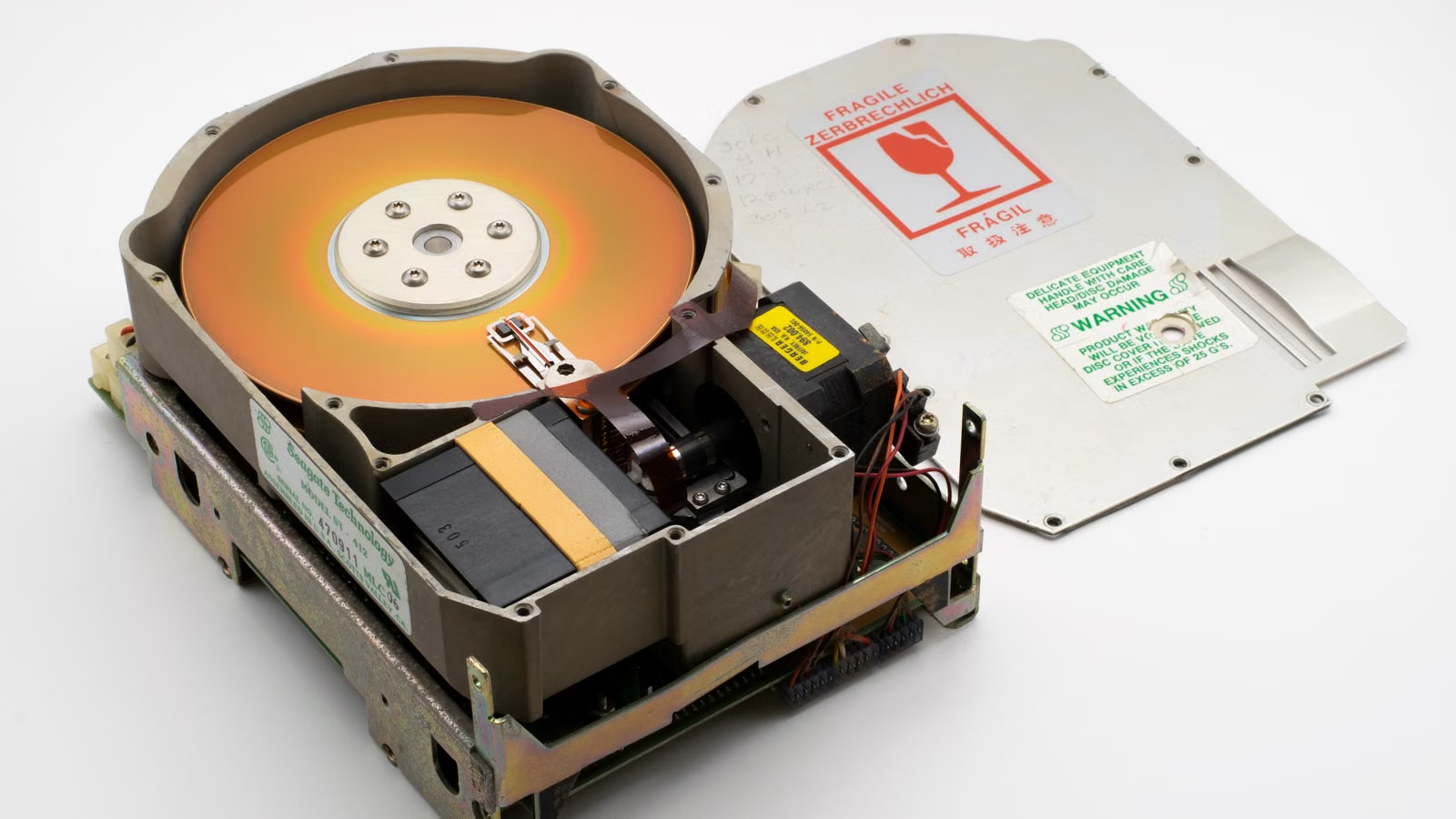
The AI data explosion also benefits HDDs because AI does not only generate hot data that requires millisecond-level access. It also continuously creates training source data, logs, model versions, audit records, backups, and compliance retention data. These datasets are accessed less frequently but must be stored for long periods, so they eventually flow into cloud object storage, data lakes, backup systems, and cold storage layers. SSDs handle low latency and high throughput, while nearline HDDs handle PB/EB-scale low-cost capacity. In AI data centers, the two are complementary rather than simple substitutes.
Key Takeaways
- AI data continuously moves from hot storage into warm and cold storage layers.
- Nearline HDDs are an important low-cost, high-capacity medium for cloud providers.
- SSDs suit high-performance access, while HDDs suit long-term online capacity.
- Seagate and Western Digital are more direct HDD beneficiaries.
- HDD cycles still depend on pricing, customer concentration, and SSD substitution risk.
Why Does the AI Data Explosion Benefit Not Only SSDs, but Also HDDs?
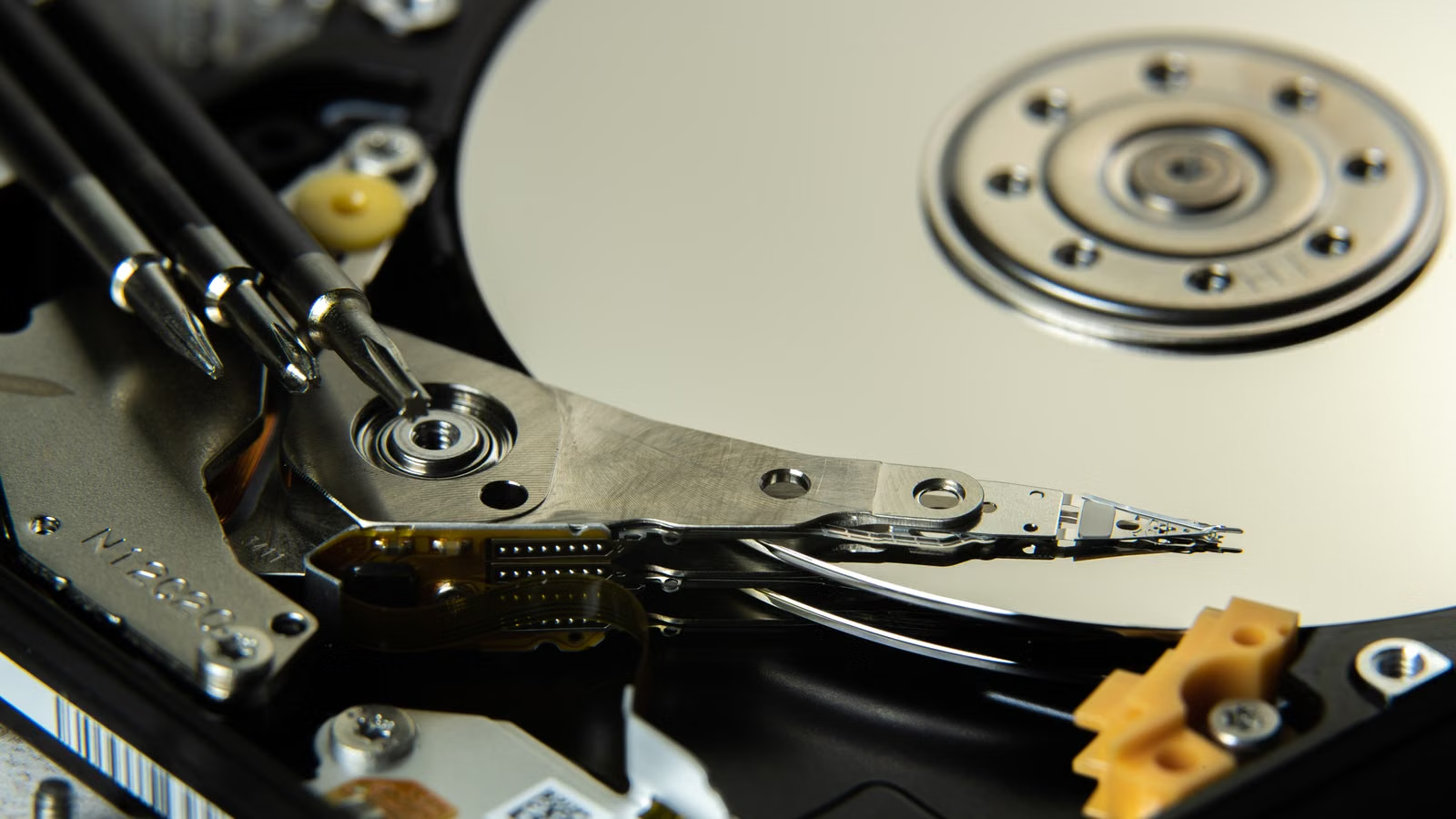
The AI data explosion benefits both SSDs and HDDs because AI workflows create two types of storage demand: low-latency hot data used for training, inference, RAG, and vector retrieval; and warm or cold data formed by training data lakes, historical checkpoints, logs, audits, backups, and compliance retention. SSDs solve performance bottlenecks, while HDDs solve capacity cost. When data scales from TB to PB and EB levels, the cost per TB and large-capacity advantages of nearline HDDs remain important.
Every stage of an AI application leaves data behind. Before model training, raw text, images, videos, code, and sensor data must be stored. During training, intermediate datasets, parameter versions, model checkpoints, and experiment logs are generated. After inference goes live, request records, response logs, monitoring metrics, security audits, and user feedback continue to accumulate. Much of this data may be useful for tuning in the short term, but it does not need constant high-frequency access over the long term.
This is where cold and warm data come from. You can divide AI data into three layers:
| Data Layer | Access Frequency | Typical AI Data | More Suitable Medium |
|---|---|---|---|
| Hot data | High | Online inference context, hot vector index areas, real-time features | DRAM / enterprise SSD |
| Warm data | Occasional | Training data lakes, older model versions, some logs | Nearline HDD / QLC SSD |
| Cold data | Low | Compliance retention, long-term backups, audit archives | HDD / archive storage / tape |
Cloud storage tiering also illustrates this economic logic. Google Cloud Storage separates Standard, Nearline, Coldline, and Archive by access frequency, minimum storage duration, and retrieval cost. AWS S3 Glacier Deep Archive is designed for long-term archiving, with a minimum storage duration of 180 days. Azure Blob Storage also divides Hot, Cool, Cold, and Archive tiers by access pattern and retention period. Cloud products do not directly prove that a specific hardware medium is always used underneath, but they reflect the same principle: the less frequently data is accessed, the more it needs a lower-cost capacity layer.
In the AI era, it is easy to focus only on GPUs, HBM, and enterprise SSDs. But the largest volume of data often settles into cheaper capacity layers. Data does not disappear after a large model finishes training. The more inference runs, the more logs, monitoring data, and feedback are generated. When enterprises adopt RAG, raw documents, permission snapshots, index backups, and historical versions also need to be stored. The HDD opportunity comes from these accumulated long-term data assets, not from every inference request directly reading a hard drive.
Summary: The key reason the AI data explosion benefits HDDs is not that HDDs can replace SSDs for low-latency tasks. It is that AI continuously creates warm and cold data that must be stored long term, accessed less frequently, and held at massive scale. SSDs are better for hot data and performance-sensitive use cases, while nearline HDDs are better for object storage, data lakes, backups, logs, and compliance retention. As enterprise and cloud data volumes keep expanding, HDDs still have value because of their cost per TB, mature supply chain, and large-capacity roadmap.
What Is a Nearline HDD, and Why Is It a Mainstay of Cloud Storage?

A nearline HDD is a high-capacity hard drive positioned between high-frequency online access and offline archive. It is mainly used in cloud data centers, object storage, backups, data lakes, and low-frequency access scenarios. It is not a consumer HDD, nor is it a high-performance SSD. It is a capacity-oriented device built for hyperscale storage systems. Cloud providers use nearline HDDs because their cost per TB, capacity density, stable supply, and predictable operating costs are better suited to large-scale data retention.
“Nearline” can be understood as “near online.” The data remains accessible to the system, but it does not handle the highest-frequency or lowest-latency requests. Compared with fully offline tape, nearline HDDs are easier to access. Compared with enterprise SSDs, they are weaker in performance but lower in cost per unit of capacity. For cloud providers, many datasets do not need to be read or written every second, but they must remain searchable, recoverable, and billable at any time. That is where nearline HDDs fit.
| Type | Main Use | Strength | Limitation |
|---|---|---|---|
| Consumer HDD | PC, light NAS workloads | Low price, easy to buy | Not suited for large-scale 24/7 workloads |
| Nearline HDD | Cloud object storage, backup, data lake | High capacity, low TCO, large-scale deployment | Weak random access and latency |
| Enterprise SSD | Hot data, indexes, inference cache | Low latency, high IOPS | Higher cost per TB |
| Tape | Deep archive, disaster recovery | Low long-term storage cost | Slow retrieval, complex operations |
Nearline HDD technology is still advancing. CMR is easier to manage for writes and suits general enterprise workloads. SMR and UltraSMR increase capacity through higher areal density and are better suited to sequential writes and object storage under cloud provider control. HAMR uses heat-assisted magnetic recording to increase areal density and is an important route for HDDs above 30TB. Seagate has introduced 36TB HAMR hard drives based on its Mozaic 3+ platform, while Western Digital has launched 32TB UltraSMR and 26TB CMR HDDs for hyperscale, cloud, and enterprise data center customers.
| Technology Direction | Core Value | More Suitable Scenario | Main Limitation |
|---|---|---|---|
| CMR | Strong compatibility, simpler write management | General enterprise storage | Slower capacity gains |
| SMR / UltraSMR | Higher single-drive capacity | Cloud object storage, sequential writes | Depends on system-level management |
| HAMR | Higher areal density | 30TB+ capacity roadmap | Requires strong manufacturing yield and customer validation |
| QLC SSD | Balance between capacity and speed | Warm data, read-intensive cache | Cost still higher than HDD |
| Tape | Low-cost long-term archive | Extremely low-frequency access data | Longer retrieval time |
Summary: The value of nearline HDDs is not maximum performance. It is large-scale, low-cost, online-accessible capacity. Cloud storage, object storage, AI data lakes, and long-term backups all need this layer. SSD development has not made HDDs irrelevant. Instead, it has made HDDs more concentrated in the capacity layer. As long as AI and cloud applications keep generating massive amounts of low-frequency access data, nearline HDDs will remain an important storage medium in cloud data centers.
How Does AI Cloud Storage Demand Flow Into Nearline HDD Shipments and Pricing?
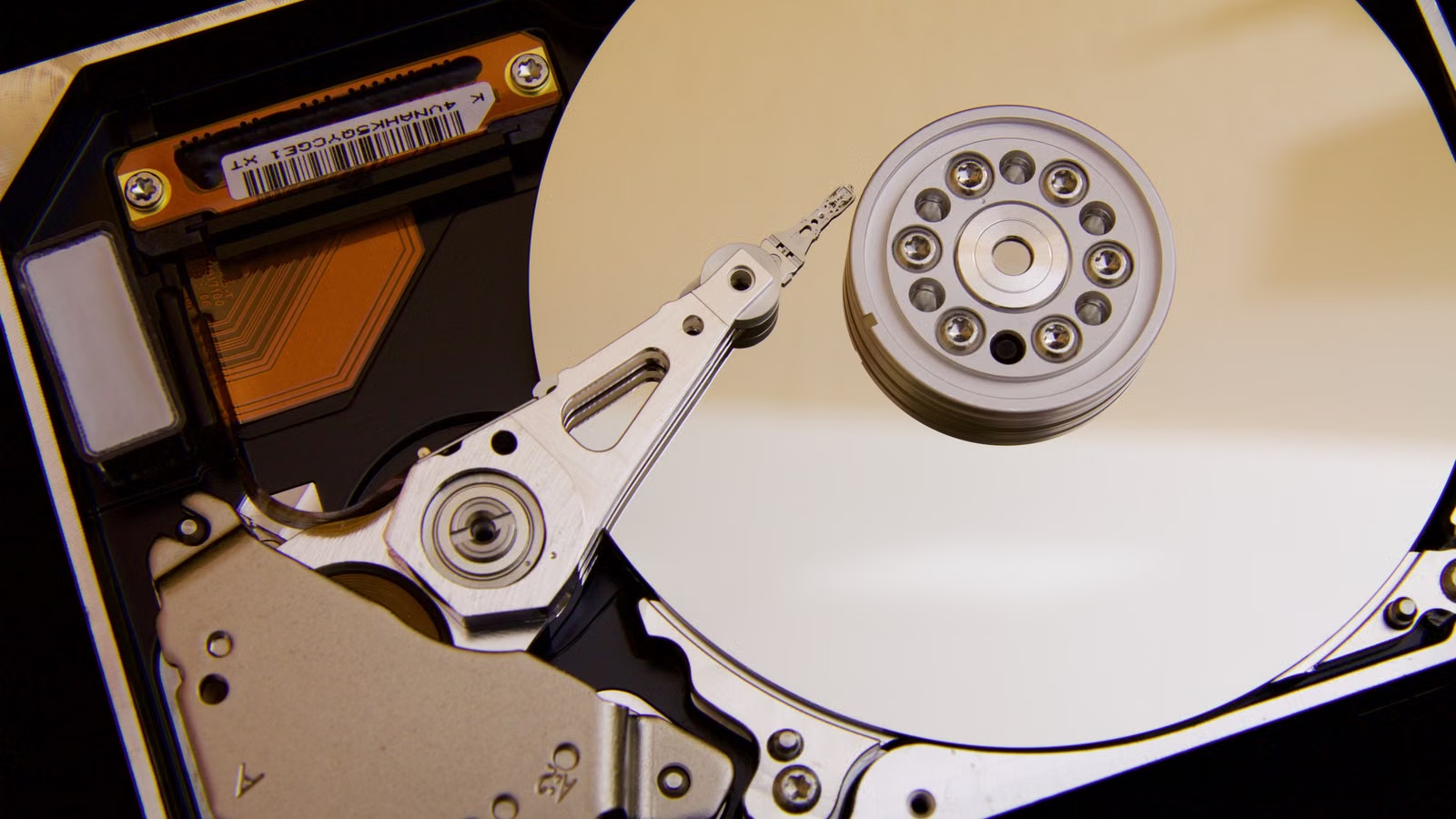
AI demand for nearline HDDs does not come only from training datasets. It comes from the full chain of “data generation, processing, accumulation, backup, and reuse.” The more training and inference workloads run, the more raw data, logs, model versions, compliance retention data, and backups are created. When these datasets flow into cloud object storage and cold storage, cloud providers need more high-capacity HDDs, which can affect nearline HDD shipment capacity, ASP, and long-term order visibility.
The transmission path can be understood as follows:
AI application growth → Training, inference, logs, and evaluation data increase → Data is separated into hot and cold tiers → Hot data enters SSDs, cache, or memory → Warm and cold data enters object storage and data lakes → Cloud providers buy more nearline HDD capacity → High-capacity HDD shipments, pricing, and margins improve
TrendForce noted in 2025 that rising AI inference demand was causing a severe nearline HDD shortage, pushing some demand toward high-capacity QLC SSDs. This point matters: HDDs and SSDs are not in a simple one-way replacement relationship. They adjust dynamically depending on supply constraints, access frequency, and cost changes. When HDD supply is tight, some warm data may shift upward to QLC SSDs. But as long as a cost-per-TB gap remains, cold data and large-scale object storage will still tend to favor HDDs.
Cloud storage tiering further amplifies this demand. AWS, Azure, and Google Cloud all divide object storage into different access tiers. The purpose is to let customers choose storage based on access frequency and cost. When AI companies, internet platforms, financial institutions, and enterprise customers use these services, the underlying hardware demand flows through cloud provider procurement into HDDs, SSDs, networking, and storage systems.
| AI Data Source | Path Into HDD Demand | Impact on HDD Manufacturers |
|---|---|---|
| Raw training data | Data lakes, object storage | Increases exabyte-scale capacity demand |
| Checkpoints and model versions | Historical version storage, backups | Increases long-term capacity occupancy |
| Inference logs | Monitoring, audit, risk control | Raises cold data accumulation speed |
| RAG enterprise knowledge bases | Raw documents and index backups | Adds low-frequency online-accessible data |
| Compliance retention | Regulation, audit, disaster recovery | Raises long-term retention demand |
For investors, the financial transmission for nearline HDDs depends mainly on three variables: shipment capacity, ASP, and gross margin. If AI and cloud storage demand is strong while HDD supply is limited, manufacturers may have stronger pricing power. If cloud customers sign long-term supply agreements, revenue visibility improves. If high-capacity products become a larger share of shipments, average drive capacity and margin structure may also improve.
Summary: AI does not support HDD demand because every model inference directly reads from HDDs. It supports HDD demand because inference, training, logging, and data governance continuously create huge amounts of low-frequency access data. Once these datasets enter cloud object storage, data lakes, backup systems, and archives, they create long-term capacity demand. Nearline HDD shipment and pricing improvement comes from this accumulated data asset base, not from short-term concept trading.
How Do HDDs, SSDs, and Tape Divide Roles in AI Cloud Storage?
HDDs, SSDs, and tape are not complete substitutes in AI cloud storage. They divide roles based on access frequency, latency requirement, retention period, and cost structure. SSDs suit hot data, low-latency inference, vector indexes, and high-throughput caching. Nearline HDDs suit large-scale online warm and cold data. Tape suits extremely low-frequency access, long-term compliance archive, and offline backups. Real cloud storage architectures are usually multi-tiered, not based on a single medium.
You can judge the right storage layer using “access frequency + retrieval time + cost per TB.” The more frequently data is accessed and the more latency-sensitive it is, the closer it should be to SSDs and memory. The less frequently it is accessed and the longer it must be retained, the closer it moves toward HDDs, cold storage, and tape. The LTO organization has long emphasized the long-term retention and TCO value of LTO tape for extremely low-frequency access data, which explains why tape has not disappeared from enterprise archive markets.
| Medium | Core Strength | Typical AI Scenario | Main Risk |
|---|---|---|---|
| Enterprise SSD | Low latency, high IOPS | RAG hot indexes, inference cache, online features | Higher cost per TB |
| QLC SSD | Balance between capacity and speed | Warm data, read-intensive cache, HDD shortage substitute | Write endurance and price |
| Nearline HDD | Large capacity, low cost | Data lakes, object storage, backups, logs | Weak random access |
| Tape | Low-cost long-term retention | Deep archive, disaster recovery, offline protection | Slow retrieval, complex operations |
Which scenarios are harder for SSDs to fully replace? Mainly PB/EB-scale object storage, long-term training data lakes, multi-version model retention, security audit logs, compliance backups, and low-frequency access data that still needs to be available online. For these datasets, the main question is not “can access be faster?” but “can more data be stored for longer at lower cost?”
Which scenarios may allow SSDs to pressure HDDs? Mainly high-frequency RAG vector databases, low-latency inference caches, high-write-throughput data preprocessing, data centers with severe rack space or power constraints, and cases where HDD shortages force customers to look for alternatives. TrendForce has also discussed opportunities for high-capacity nearline SSDs during HDD supply gaps. But this does not mean HDD demand disappears. It shows that AI storage is moving into a more complex hybrid architecture.
Summary: The core question in AI cloud storage is not whether HDDs, SSDs, or tape will completely replace one another. The real question is which type of data belongs in which layer. Hot data requires low latency and suits SSDs. Warm and cold data require low-cost online capacity and suit nearline HDDs. Extremely low-frequency long-term retention data can move into tape or deep archive. The HDD investment logic works if AI data growth continues to settle into the capacity layer rather than remaining only in the high-performance storage layer.
Which HDD and Cloud Storage Stocks Benefit More Directly?
The stocks that benefit more directly from AI cold data and nearline HDD demand are mainly Seagate and Western Digital, because they directly supply high-capacity HDDs to cloud providers, hyperscale data centers, and enterprise storage markets. Indirect beneficiaries include storage systems, servers, cloud services, and some component companies, but their HDD exposure is usually diluted by other businesses. They should not be categorized simply as “AI storage concept” stocks.
Seagate’s core factors are high-capacity HDDs, its HAMR roadmap, nearline shipment capacity, and long-term supply agreements. The company’s fiscal 2026 second-quarter results showed that Seagate generated US$2.83 billion in revenue, with GAAP gross margin of 41.6% and non-GAAP gross margin of 42.2%. This indicates that high-capacity data center storage demand has already been reflected in financial results. Its Mozaic 3+ and HAMR roadmap are key to continued increases in single-drive capacity.
Western Digital’s logic became clearer after the Sandisk separation. Sandisk has completed its separation from Western Digital and now trades on Nasdaq as SNDK, while Western Digital is more focused on HDDs. WD’s fiscal 2026 third-quarter results showed that Western Digital generated US$3.337 billion in revenue, up 45% year over year, with GAAP gross margin of 50.2%. For investors, post-separation WDC is closer to a pure HDD exposure, but it is also more directly exposed to HDD cycles and cloud customer procurement timing.
| Beneficiary Tier | Representative Companies | Benefit Path | Exposure Purity |
|---|---|---|---|
| HDD manufacturers | Seagate, Western Digital | Nearline HDD shipments and pricing | High |
| Flash / SSD companies | Sandisk, Micron, Kioxia | Substitute demand during HDD shortages | Medium |
| Storage system vendors | NetApp, Dell, HPE | Enterprise and cloud storage deployments | Medium-low |
| Cloud providers | AWS, Azure, Google Cloud | Cloud storage revenue growth | Low |
| Component supply chain | Heads, platters, motors, related parts | High-capacity HDD production chain | Depends on business mix |
If you follow U.S.-listed storage supply-chain names such as Seagate, Western Digital, Sandisk, Micron, and NetApp, you can first use U.S. stock information lookup to build a watchlist, then return to company filings to check revenue structure, gross margin, customer agreements, and inventory changes. Where your location, identity verification, and applicable rules allow, Biya supports U.S. stocks, Hong Kong stocks, and digital asset trading, making it easier to observe HDDs, SSDs, NAND, and enterprise storage systems within one supply-chain framework.
When trading popular storage stocks, actual trading costs also matter. U.S. stock trading costs usually include more than commissions; they may also include platform fees, external agency fees, and trading activity fees. Biya’s U.S. stock commission is US$0, while platform fees, external agency fees, and other charges are subject to U.S. stock trading fees and the order page. Public market information, fee structures, and industry data can help you understand trading conditions, but they do not constitute investment advice.
Summary: AI cold data and nearline HDD demand most directly benefit Seagate and Western Digital, but “direct exposure” does not mean “lower risk.” Seagate’s key factors are HAMR, high-capacity HDDs, and cloud customer demand. Western Digital has a clearer HDD story after separating Flash. Sandisk, Micron, Kioxia, NetApp, Dell, and HPE may also benefit, but their exposure is more indirect. When screening stocks, you should consider business purity, valuation, customer concentration, product roadmap, and pricing cycle together.
What Indicators and Risks Should Investors Track?
To judge whether the HDD cycle can continue, you should not look only at the AI data explosion narrative. You need to track nearline HDD shipment capacity, average drive capacity, ASP, customer orders, gross margin, inventory, capital expenditure, and SSD substitution pressure. If shipment capacity and pricing improve at the same time, while long-term customer agreements improve revenue visibility, the logic is stronger. If price increases are mainly driven by short-term shortages while demand begins to slow, cycle reversal risk increases.
Key indicators include:
- Nearline HDD exabyte shipments.
- Mass capacity revenue.
- Average drive capacity and the share of 30TB+ products.
- Long-term cloud customer supply agreements and order coverage.
- HDD ASP, gross margin, and free cash flow.
- Customer inventory and cloud capital expenditure timing.
- Progress in HAMR, ePMR, SMR, and other capacity roadmaps.
- QLC SSD substitution pressure for warm data and some cold data.
| Indicator | Positive Signal | Risk Signal |
|---|---|---|
| Nearline shipment capacity | Continuous growth | Shipment slowdown |
| Average drive capacity | Rising 30TB+ share | Slow high-capacity transition |
| HDD ASP | Moderate increase with stable orders | Price rises while demand weakens |
| Gross margin | Driven by better product mix | Mainly dependent on shortages |
| Customer agreements | Multi-year orders improve visibility | Concentrated and cancellable orders |
| Supply expansion | Matched with customer demand | Aggressive industry-wide expansion |
| SSD substitution | Affects only some warm data | Sharp QLC SSD price declines |
The main risks fall into four categories. First, cloud AI CAPEX may slow, causing storage expansion to fall short of expectations. Second, when nearline HDD supply recovers, pricing and gross margins may decline. Third, lower QLC SSD costs may move some warm data from HDDs to SSDs. Fourth, customer concentration is high, and procurement timing from a small number of major customers can magnify revenue volatility. High-capacity HDDs also involve yield, reliability, warranty cost, and new-technology production risks.
Valuation must also be considered. If HDD stocks already fully reflect tight supply and rising profits, future earnings reports must continue to prove simultaneous improvement in shipments, ASP, and gross margin. Conversely, if industry demand remains strong but the market cuts expectations due to short-term volatility, repricing opportunities may appear. The key is not to predict one quarter’s share price, but to build a framework across demand, supply, pricing, financials, and valuation.
Summary: Whether the HDD investment logic continues depends on whether AI data growth keeps flowing into warm and cold storage layers, and whether nearline HDD supply remains disciplined. Positive signals include exabyte shipment growth, a higher share of high-capacity products, stable ASP, better gross margin, and more long-term customer agreements. Risk signals include overexpansion, slower cloud CAPEX, rising inventory, stronger QLC SSD substitution, and valuations that already price in too much upside. For retail investors, systematically tracking these indicators is more useful than chasing concepts.
If you follow AI data centers, cloud storage, and the HDD supply chain, you should not look only at GPUs, HBM, and SSDs. Cold data, nearline HDDs, cloud object storage, and high-capacity hard drives should also be part of the framework. Biya is a global multi-asset trading wallet that supports U.S. stocks, Hong Kong stocks, and digital asset trading. It also covers more than 190 countries and regions and supports payment in over 40 local currencies. Service availability depends on your location, identity verification results, platform rules, and applicable laws and regulations. Before using the Biya App, check trading fees, order types, account rules, and your own risk tolerance. AI cold data is a long-term trend, but HDD stocks remain highly cyclical. Any trading decision should be based on public disclosures, billing details, and local regulatory requirements.
FAQ
Why Does AI Cold Data Increase HDD Demand?
AI cold data increases HDD demand because training data, inference logs, model versions, audit records, and backups usually do not require high-frequency access but must be stored at low cost for long periods. Nearline HDDs offer advantages in capacity cost and online accessibility, making them suitable for this type of data.
What Is the Difference Between Nearline HDDs and Regular HDDs?
Nearline HDDs are designed for cloud data centers and enterprise storage, with emphasis on high capacity, stable operation, large-scale deployment, and low TCO. Regular HDDs are more commonly used in personal computers, light NAS environments, or consumer scenarios. They differ in reliability, workload profile, and operational requirements.
Will HDDs Be Fully Replaced by Enterprise SSDs?
HDDs are unlikely to be fully replaced by enterprise SSDs in the near term. SSDs are better for hot data and low-latency scenarios, while HDDs are better for PB/EB-scale warm and cold data. Some demand may migrate only when HDD supply is tight, SSD costs fall, or access frequency rises.
Why Do AI Data Centers Need Nearline HDDs?
AI data centers need nearline HDDs because training, inference, logging, and enterprise knowledge bases continuously generate large amounts of data that must be stored but is not frequently accessed. Nearline HDDs can support object storage, backups, data lakes, and long-term retention while lowering overall storage cost.
Which Company Benefits More from AI HDD Demand, Seagate or Western Digital?
Both Seagate and Western Digital are direct beneficiaries of AI HDD demand, but their benefit paths differ. Seagate emphasizes HAMR and high-capacity roadmaps, while Western Digital has a clearer HDD business after separating Sandisk. Final judgment still depends on customer orders, gross margin, valuation, and production progress.
How Can Retail Investors Track HDD Stock Risk?
Retail investors can track nearline HDD shipment capacity, ASP, gross margin, long-term customer agreements, inventory, and cloud provider capital expenditure. If shipments slow, inventory rises, SSD substitution strengthens, or valuations already price in too much upside, volatility risk in HDD stocks may increase.
*This article is provided for general information purposes and does not constitute legal, tax or other professional advice from BiyaPay or its subsidiaries and its affiliates, and it is not intended as a substitute for obtaining advice from a financial advisor or any other professional.
We make no representations, warranties or warranties, express or implied, as to the accuracy, completeness or timeliness of the contents of this publication.
Related Blogs of

Crypto-Related Stocks vs Digital Assets: What Investors Actually Own


Wire Transfer Requirements: Sender and Beneficiary Details Checklist




Choose Country or Region to Read Local Blog
 Australia
 Austria
 Belgium
 Canada
 Cyprus
 Czech Republic
 Denmark
 Estonia
 Finland
 France
 Germany
 Greece
 Hong Kong
 India
India Indonesia
 Ireland
 Italy
Italy Japan
Japan Latvia
 Lithuania
 Luxembourg
 Malaysia
 Malta
Malta Morocco
 Nepal
Nepal Netherlands
 New Zealand
 Norway
 Pakistan
 Philippines
 Poland
 Portugal
 Romania
 Singapore
 Slovakia
 Slovenia
 South Africa
 South Korea
 Spain
Spain Sweden
 Thailand
 United States
 Turkey
 United Arab Emirates
 United Kingdom
 Vietnam