AI ASIC vs GPU: What Is the Difference, and Who Could Reshape Nvidia’s Supply Chain?




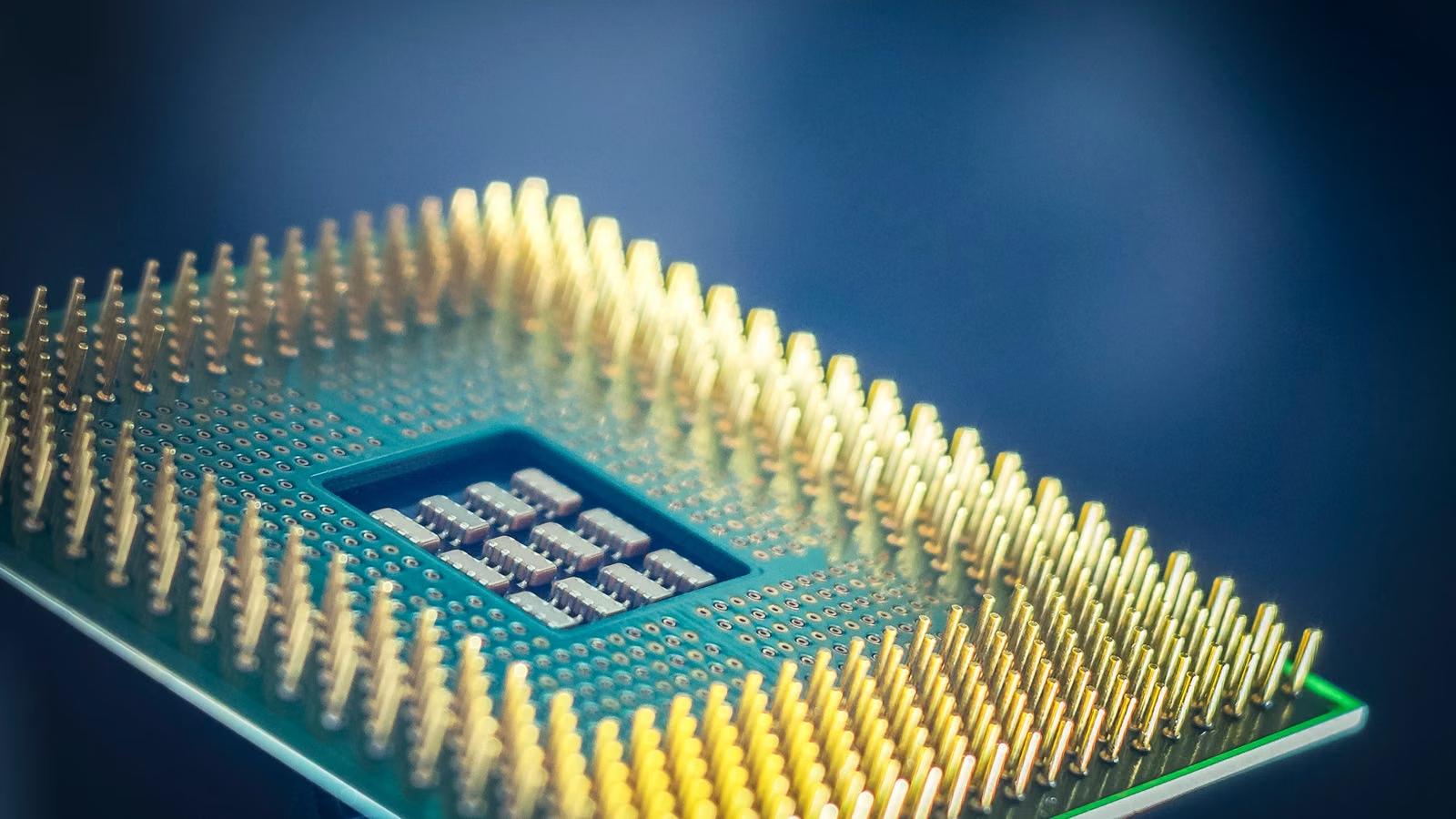
AI ASICs and GPUs are not locked in a simple replacement battle. GPUs remain better suited for fast-changing model architectures, large-scale training clusters, enterprise deployment, and general AI workloads. ASICs are more attractive when workloads are massive, repetitive, relatively stable, and highly sensitive to power consumption or cost per token. The real force reshaping Nvidia’s supply chain may not be one custom chip, but a broader shift driven by hyperscalers, Broadcom, Marvell, TSMC, HBM, advanced packaging, and high-speed interconnects.
Key Takeaways
- GPUs are stronger in programmability, software maturity, and large training clusters.
- AI ASICs are stronger in power efficiency and cost optimization for specific workloads.
- ASICs are more likely to first take share in inference, recommendation, and internal fixed workloads.
- Nvidia’s moat now extends beyond GPUs to CUDA, NVLink, networking, and rack-scale systems.
- Broadcom, Marvell, TSMC, and HBM suppliers are key companies to watch.
- Investors should track production ramps, customer concentration, and supply-chain bottlenecks.
What Is the Real Difference Between AI ASICs and GPUs?
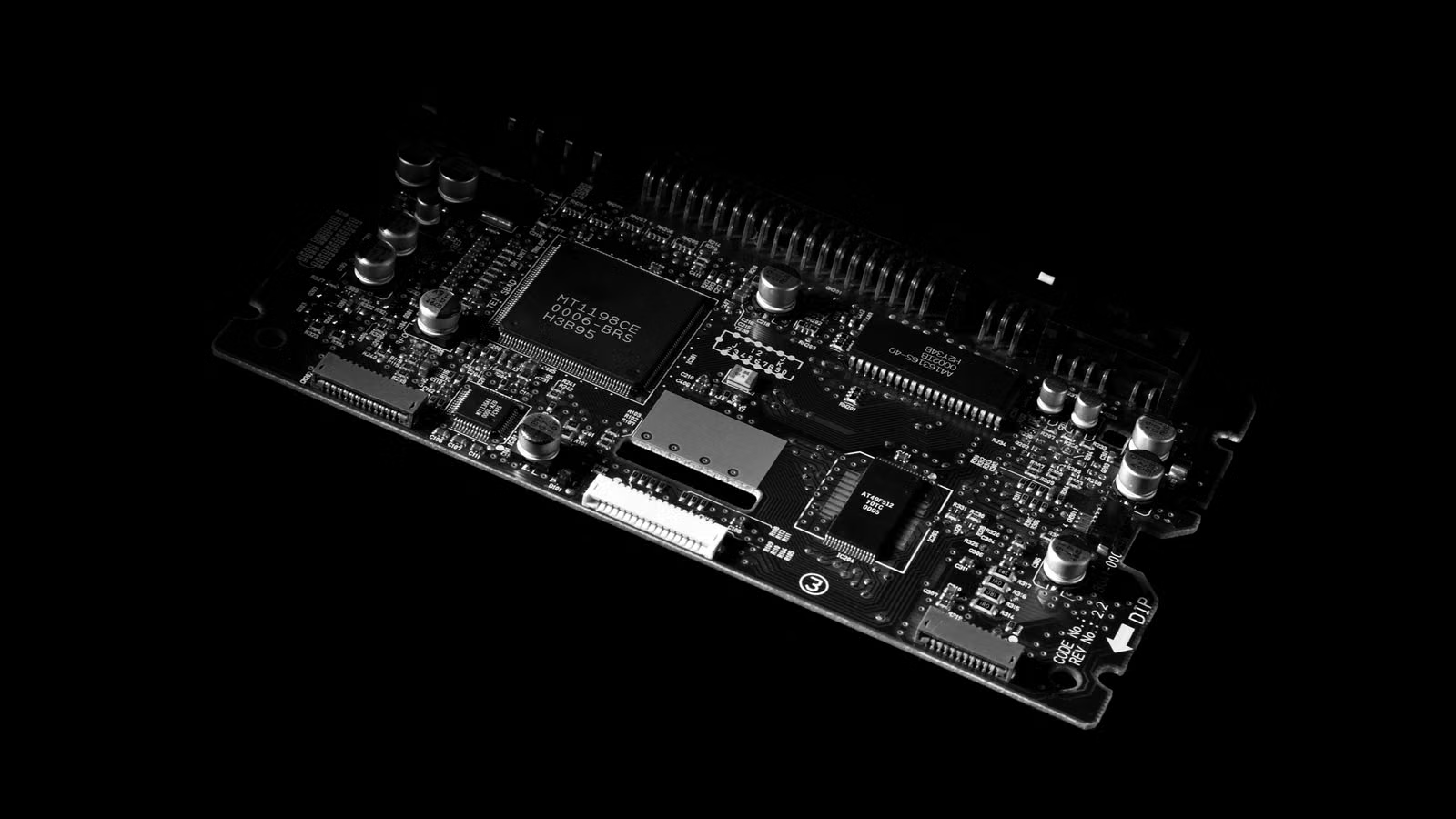
The core difference between AI ASICs and GPUs is specialized efficiency versus general-purpose flexibility. A GPU is a programmable accelerator designed for large-scale parallel computing, covering AI training, inference, scientific computing, graphics, and many other workloads. An AI ASIC is designed around specific AI workloads, concentrating more transistors, power, and memory bandwidth on target operators, model structures, or service scenarios. To compare them properly, you cannot only look at theoretical compute. You also need to consider software support, model evolution, utilization rate, and total data-center cost.
The GPU’s advantage comes from parallel computing flexibility and a mature ecosystem. Large model training often involves matrix multiplication, tensor parallelism, pipeline parallelism, mixed precision, communication synchronization, and fault-tolerant scheduling. GPUs can adapt to these changes through software updates and compiler improvements. In the NVIDIA Blackwell architecture, the focus is not only single-chip performance, but also the combination of GPUs, NVLink, NVSwitch, networking, and software into a complete cluster platform.
The AI ASIC logic is different. Instead of adapting to as many workloads as possible, it sacrifices some generality to improve power efficiency, throughput, or cost predictability in a defined workload. Recommendation systems, ad ranking, large language model inference, video processing, search ranking, and other repeated workloads can become strong ASIC candidates when they run at enormous scale and follow relatively stable compute paths.
| Comparison Area | GPU | AI ASIC |
|---|---|---|
| Design goal | Parallel computing across many tasks | Specific AI workloads |
| Programmability | High | More limited |
| Adaptability to model changes | Strong | Depends on design headroom |
| Deployment speed | Can be deployed after purchase | Requires design, tape-out, and validation |
| Energy efficiency | Depends on utilization | Usually stronger in target workloads |
| Software ecosystem | CUDA, ROCm, mature framework support | Depends on proprietary compilers and cloud stacks |
| Typical users | Cloud providers, enterprises, research labs, startups | Hyperscalers and leading AI companies |
ASICs are not automatically cheaper. Chip design, verification, tape-out, packaging, software tooling, operations, and long-term support all require heavy investment. ASICs only become economically attractive when workloads are large enough, algorithms are stable enough, and utilization is high enough to amortize the upfront development cost. For most companies, using GPU cloud instances or managed accelerators such as TPU and Trainium is far more realistic than designing a chip from scratch.
Summary: The GPU’s core value is flexibility, maturity, and portability, making it ideal for training, research, and changing workloads. The AI ASIC’s core value is task-specific efficiency, making it better for stable, high-volume, cost-sensitive workloads. The difference is not about one architecture being universally superior. It is about compute scale, model stability, software ecosystems, and supply-chain execution. To judge whether a company can challenge Nvidia with ASICs, first ask whether it has enough internal workload volume and whether it can maintain the software stack over multiple chip generations.
Why Are Cloud Providers Accelerating AI ASIC Development?
Cloud providers are developing AI ASICs mainly to reduce long-term inference costs, diversify compute supply, and embed their own model and data-center requirements directly into hardware. They are not trying to abandon GPUs overnight. Once inference requests scale from millions to billions, power consumption, latency, memory use, and cost per token become critical. GPUs remain central to training and flexible deployment, but hyperscalers have enough scale to optimize stable workloads with custom chips.
Training is often a periodic compute peak. Inference is a continuous service. Search, recommendation, advertising, coding assistants, customer support, speech, multimodal generation, and agentic workflows all require ongoing user-response capacity. In inference, platforms care deeply about throughput per watt, rack density, memory bandwidth, service latency, and queuing efficiency. When a model architecture and business scenario stabilize, ASICs can be designed around low-precision compute, KV cache management, memory movement, batching, and network communication.
Google is one of the clearest examples. Google Cloud positions Ironwood TPU as custom silicon for training, reinforcement learning, large-scale inference, and model serving. Its later TPU 8t and TPU 8i direction further separates training-oriented and inference-oriented system design. This shows custom chips evolving from a single accelerator into a layered AI infrastructure strategy.
AWS follows a similar platform approach. Trainium3 UltraServers combine chips, servers, Neuron software, and EC2 instances, aiming to provide lower-cost training and inference capacity inside AWS. Meta’s MTIA roadmap highlights recommendation, ranking, training, and generative AI workloads, with Broadcom involved in custom silicon. OpenAI’s 10GW custom AI accelerator collaboration with Broadcom also shows model companies moving closer to hardware definition.
| Company | Custom Chip Direction | Main Goal |
|---|---|---|
| TPU, Ironwood, TPU 8t/8i | Support Gemini, Cloud AI, and internal AI infrastructure | |
| AWS | Trainium and Inferentia ecosystem | Reduce cloud training and inference cost |
| Meta | MTIA | Optimize recommendation, ranking, and generative AI workloads |
| OpenAI | Custom accelerators with Broadcom | Embed model-serving needs into hardware |
| Microsoft | In-house accelerators plus external GPUs | Increase Azure AI compute diversity and cost flexibility |
Still, hyperscaler custom silicon does not mean they stop buying GPUs. Frontier model training, rapid algorithm iteration, and multi-tenant cloud services still require GPU flexibility. The real goal is a compute portfolio: use GPUs for uncertain, rapidly changing, ecosystem-dependent workloads, and gradually move stable, high-cost internal workloads toward custom accelerators.
Summary: Cloud providers are building AI ASICs because scale changes the economics of compute. The larger the inference workload, the more important power efficiency, latency, and utilization become. But ASICs are not a single-chip breakthrough. They require chips, compilers, frameworks, networking, racks, and service workloads to be optimized together. Only companies such as Google, AWS, Meta, and OpenAI have enough AI workload volume and engineering capacity to move custom silicon from experiments into long-term infrastructure.
Will AI ASICs Replace Nvidia GPUs?
AI ASICs are more likely to take share from Nvidia in some hyperscaler internal workloads than to fully replace GPUs. In the near term, frontier model training, enterprise AI deployment, and multi-tenant cloud services remain highly dependent on GPUs. Over time, stable inference, recommendation systems, and internal platform workloads may increasingly shift toward ASICs. The future is more likely to be a coexistence of GPUs, custom ASICs, AMD commercial GPUs, and other accelerators, rather than a winner-takes-all chip market.
Nvidia’s strongest asset is not only the GPU core. It is the full platform. The GB200 NVL72 combines 72 Blackwell GPUs, Grace CPUs, liquid-cooled racks, and a large NVLink domain for trillion-parameter model workloads. For training clusters, single-chip performance matters, but multi-GPU communication, fault tolerance, scheduling, framework compatibility, developer experience, and maintainability matter just as much.
The ASIC challenge is uncertainty. If model architectures change quickly, a chip designed around today’s attention mechanism, precision format, memory path, or parallelism strategy may need major changes within a few years. GPUs can absorb many changes through software and compiler updates. ASICs need enough design headroom at the beginning. Too little headroom creates obsolescence risk; too much headroom weakens the efficiency benefit of specialization.
| Workload | More Likely to Use GPUs | More Likely to Use ASICs |
|---|---|---|
| Frontier foundation model training | Fast model changes require flexibility | Only mature training ASICs can participate |
| Large model inference | Multi-model, multi-customer, multi-framework services | Massive single-model call volume |
| Recommendation and ad ranking | Mixed experimentation workloads | Stable, high-frequency internal workloads |
| Enterprise private deployment | Ecosystem and talent availability matter | Direct ASIC development is rare |
| Cloud provider internal workloads | When rapid expansion is needed | When long-term cost can be amortized |
| Edge fixed tasks | Lower deployment barrier | Strict power and form-factor limits |
AMD also creates competitive pressure, but through a different route. The ROCm software stack and Instinct MI300X represent commercial GPU competition, not typical hyperscaler ASIC development. AMD offers another purchasable, deployable, cloud-friendly general accelerator option, rather than hardwiring one cloud provider’s internal workload into silicon.
Nvidia is also adapting to the ASIC trend. NVLink Fusion allows hyperscale customers and custom ASIC designers to connect custom CPUs or XPUs into Nvidia’s NVLink interconnect and OCP MGX rack ecosystem. This means even if some compute shifts from standard GPUs to custom chips, Nvidia may still retain value in interconnects, networking, software, and rack-scale systems.
For investors tracking AI chip stocks, architecture is only one part of the decision. Actual trading cost also matters when building or rebalancing a portfolio. U.S. stock trading costs may include commissions, platform fees, external institution fees, transaction activity fees, and other charges. Biya’s U.S. stock trading fees show a $0 commission model, while platform fees, external institution fees, and other charges are subject to the fee center and order page. This is market-structure information, not investment advice.
Summary: ASICs can change Nvidia’s growth mix, but they do not directly end the GPU market. The first workloads likely to be shifted are stable, high-frequency, large-scale internal inference and recommendation tasks. The hardest workloads to displace remain frontier training, general enterprise deployment, and mature software ecosystems. To evaluate Nvidia’s durability, do not only track GPU shipments. Watch data-center networking, NVLink, CUDA, rack-scale systems, and whether customers continue to stay inside Nvidia’s platform ecosystem.
How Could AI ASICs Reshape Nvidia’s Supply Chain?
AI ASICs do not create a completely separate supply chain. Instead, they change how value is distributed inside the existing AI chip supply chain. GPUs and ASICs still compete for advanced process nodes, HBM, CoWoS, ABF substrates, optical modules, power, and liquid cooling. The biggest changes happen in chip definition, design services, network interconnects, and system integration. In other words, Nvidia’s supply chain does not disappear; it shifts from expansion around one standard GPU platform to multiple custom platforms consuming the same critical capacity.
Chip Design Value Moves Toward Broadcom and Marvell
Custom chips do not mean hyperscalers do everything alone. Large customers usually define the workload, performance target, system requirements, and part of the architecture. Broadcom, Marvell, and other design partners provide high-speed SerDes, chip implementation, interface IP, packaging coordination, networking solutions, and production experience. OpenAI and Broadcom’s Jalapeño inference chip shows how model companies are translating inference needs directly into hardware design goals.
Marvell’s opportunity is especially tied to interconnects and custom platforms. Its co-packaged optics architecture focuses on improving connection density and bandwidth between AI accelerators, addressing a common cluster bottleneck: chips compute quickly, but data does not always move quickly enough. As AI clusters scale from servers to racks, then across multiple racks and data centers, networking value keeps rising.
TSMC, HBM, and Advanced Packaging Remain Shared Bottlenecks
Whether the chip is a GPU or an ASIC, high-end AI training and inference usually require advanced process nodes, high-bandwidth memory, and complex packaging. TSMC’s CoWoS is valuable because it integrates logic chips, chiplets, and HBM stacks through dense interconnects in a single package. ASIC growth does not automatically weaken CoWoS demand. It may actually diversify the advanced packaging customer base.
HBM follows the same logic. Samsung’s HBM4 emphasizes higher bandwidth and AI system efficiency, while SK hynix’s HBM4 messaging highlights 2,048 I/O, higher bandwidth, and improved energy efficiency. As long as AI chips remain constrained by memory bandwidth, GPUs and ASICs both consume large amounts of HBM. The difference is that demand may become less concentrated around Nvidia and more distributed across Nvidia, cloud custom silicon, Broadcom-linked projects, AMD, and other platforms.
| Supply-Chain Layer | GPU-Dominated Phase | After ASIC Expansion |
|---|---|---|
| Chip architecture | Nvidia dominates standard platforms | Cloud providers and model companies help define chips |
| Design services | Value concentrated in GPU vendors | Broadcom and Marvell roles rise |
| Foundry | Advanced-node demand concentrated | GPUs and ASICs compete for capacity |
| HBM | Closely tied to leading GPU platforms | Customer base becomes more diversified |
| Advanced packaging | Built around GPU modules | Custom ASICs also consume CoWoS-like capacity |
| Interconnect | NVLink and InfiniBand are strong | Ethernet, CPO, and open interconnects gain opportunities |
| System integration | Standard GPU servers dominate | Custom racks, liquid cooling, and power design become more important |
Networking and Rack Systems Become the New Battleground
The next stage of AI chip competition is not only about the chip itself. It is also about how chips connect to each other. Large model training requires high bandwidth, low latency, and synchronized multi-node communication. Inference services also need fast scheduling across memory, compute units, and racks. Whoever reduces communication overhead can improve actual GPU or ASIC utilization.
This is also why Nvidia still has defensive strength. Even if customers introduce custom ASICs, Nvidia can retain system-level value if the interconnect, DPU, NIC, switch, scheduling software, and rack design remain tied to its ecosystem. On the other hand, if Ethernet, CPO, and custom XPUs mature, more value could move toward Broadcom, Marvell, optical module suppliers, switch chip vendors, and server ODMs.
Summary: AI ASICs do not dismantle Nvidia’s supply chain. They redistribute value across custom chips, networking, and system integration. TSMC, HBM, and CoWoS are likely to remain shared bottlenecks benefiting from both GPU and ASIC growth. Broadcom and Marvell are more directly exposed to the rise of custom silicon. The main risks are customer concentration, project delays, yield issues, and mismatches between advanced packaging capacity and actual demand.
Who Is Most Likely to Reshape Nvidia’s Supply Chain?
The companies most likely to reshape Nvidia’s supply chain are not limited to one direct competitor. The real force is a group: hyperscalers define demand, Broadcom and Marvell deliver custom silicon and interconnects, TSMC provides advanced manufacturing and packaging, HBM vendors supply critical memory, and Nvidia defends its value through CUDA, NVLink, rack-scale systems, and software. To understand the future structure, shift the question from “who sells the chip?” to “who defines the platform, controls the bottleneck, and owns the workload?”
| Player | How It Changes the Market | Key Indicator | Main Risk |
|---|---|---|---|
| Google, AWS, Meta, OpenAI | Shift internal workloads toward custom chips | Production scale and cloud availability | Software migration and project delays |
| Broadcom | Custom ASICs, networking, and connectivity | AI semiconductor revenue and customer count | High customer concentration |
| Marvell | XPU, SerDes, CPO, switching chips | Ramp timing of custom programs | Competition with Broadcom and Nvidia |
| TSMC | Advanced process and CoWoS | Packaging capacity and advanced-node demand | Geopolitics and capital spending pressure |
| HBM suppliers | High-bandwidth memory | Qualification, yield, and pricing cycle | Supply-demand volatility |
| AMD | Commercial GPU alternative | ROCm adoption and cloud customer usage | Software ecosystem still catching up |
| Nvidia | Software, networking, rack platforms | Data-center networking and system revenue | Customers push supplier diversification |
From a certainty perspective, TSMC and HBM vendors may be the broadest beneficiaries. Whether customers buy Nvidia GPUs, AMD GPUs, or AI ASICs, advanced AI chips are moving toward larger packages, higher bandwidth, higher power, and denser interconnects. That keeps advanced foundry, HBM, and packaging capacity at the center of the supply chain.
From an upside perspective, Broadcom and Marvell deserve close attention. They are not simply foundry suppliers, nor do they sell complete GPU platforms like Nvidia. They sit in the middle layer where customers want custom silicon. The more hyperscalers try to encode their workloads into chips, the more valuable design implementation, networking, SerDes, and packaging coordination become.
From a defensive perspective, Nvidia remains very strong. Its advantage is not one GPU generation. It is the data-center platform: CUDA, NCCL, TensorRT, NVLink, Spectrum-X, BlueField, DGX, HGX, GB200, and future Rubin systems. These create meaningful migration costs. As long as customers need fast deployment, high reliability, and mature ecosystems, Nvidia will not be easily displaced by a single ASIC.
Investors should not judge the AI ASIC theme only by chip announcements. The more important leading indicators include:
- Whether a chip has moved from sample stage to production revenue.
- Whether customer usage has moved from internal testing to large-scale deployment.
- Whether the custom chip supports training or mainly inference.
- Whether HBM, CoWoS, substrates, and optical module orders are rising together.
- Whether the software ecosystem can attract developers and cloud customers over time.
If you track U.S.-listed names such as NVDA, AVGO, MRVL, AMD, TSM, and MU, it helps to place them in one watchlist and compare their financial disclosures, order cycles, margins, capital expenditure, and valuation changes. You can use U.S. stock market information to follow related companies and compare their positions across the AI chip supply chain. Trading costs should also be reviewed before placing orders, because actual costs may include more than headline commissions.
Summary: The real change in Nvidia’s supply chain comes from the diffusion of demand definition. Cloud providers and model companies are no longer just buyers of standard GPUs; they increasingly want to define their own accelerators. Broadcom, Marvell, TSMC, HBM suppliers, and advanced packaging companies can all capture value from this shift. Nvidia is not passive, however. It is extending its moat from GPUs into software, interconnects, networking, and rack-scale systems. The more likely future is multi-platform expansion, not a single ASIC replacing Nvidia outright.
If you want to turn AI ASICs, GPUs, HBM, CoWoS, and hyperscaler CAPEX into a practical investment watchlist, compare each company by revenue exposure, order visibility, production timing, gross margin, valuation, and supply-chain constraints. Biya supports multi-asset trading across U.S. stocks, Hong Kong stocks, and digital assets, while also offering market information and trading access for related names. Availability depends on your location, identity verification results, platform rules, and applicable laws and regulations. Market information and fee structures are for reference only and do not constitute investment advice. Before trading, review order types, fee details, price volatility, and your risk tolerance. You can also use the Biya App to continue tracking AI chip supply-chain assets.
FAQ
Are AI ASICs Only Used for Inference?
No. AI ASICs can be used for both training and inference, but suitability depends on chip architecture, memory bandwidth, interconnect scale, and software support. Google TPU, for example, covers both training and inference scenarios. However, many custom ASIC projects begin with inference, recommendation, or ranking because those workloads are more stable and easier to optimize for cost and efficiency.
Should a Normal Enterprise Build Its Own AI ASIC?
Most enterprises should not build their own AI ASIC. Chip development requires heavy R&D spending, long validation cycles, software tooling, and stable large-scale workloads. A more realistic path is to use GPU cloud instances, Google TPU, AWS Trainium, or other cloud accelerators. Migration decisions should be based on model size, call volume, engineering capacity, and total cost.
When Can an AI ASIC Cost Less Than a GPU?
An AI ASIC may cost less than a GPU only when the workload is stable, usage volume is very large, utilization is high, and the chip lifecycle is long enough. The calculation should not only compare chip prices. It should include tape-out, packaging, software maintenance, data-center power, cooling, and migration costs. Actual results depend on real deployment tests and billing data.
Will AI ASIC Growth Reduce HBM Demand?
AI ASIC growth does not necessarily reduce HBM demand. High-performance ASICs may also need multiple HBM stacks and advanced packaging, especially in large-model training and high-throughput inference. The bigger change may be customer diversification: HBM demand could spread from GPU-centric platforms to cloud custom silicon and other commercial accelerators.
How Can Investors Tell Whether an AI ASIC Has Reached Mass Production?
Investors should look for production revenue, customer deployment, supply-chain orders, cloud service availability, capital expenditure, and formal financial disclosures. A successful sample chip does not equal commercial-scale production. Mass deployment still requires yield, packaging, software adaptation, and data-center validation. Investment decisions should rely on company filings and official disclosures.
*This article is provided for general information purposes and does not constitute legal, tax or other professional advice from BiyaPay or its subsidiaries and its affiliates, and it is not intended as a substitute for obtaining advice from a financial advisor or any other professional.
We make no representations, warranties or warranties, express or implied, as to the accuracy, completeness or timeliness of the contents of this publication.
Related Blogs of

What Is the Roundhill DRAM ETF? Buying the AI Memory Supply Chain with One ETF


What Is HBM? Why AI Servers Depend on High-Bandwidth Memory


Has the DRAM Price Cycle Entered an Upswing? Key Indicators for Memory Stock Investing


Choose Country or Region to Read Local Blog
 Australia
 Austria
 Belgium
 Canada
 Cyprus
 Czech Republic
 Denmark
 Estonia
 Finland
 France
 Germany
 Greece
 Hong Kong
 India
India Indonesia
 Ireland
 Italy
Italy Japan
Japan Latvia
 Lithuania
 Luxembourg
 Malaysia
 Malta
Malta Morocco
 Nepal
Nepal Netherlands
 New Zealand
 Norway
 Pakistan
 Philippines
 Poland
 Portugal
 Romania
 Singapore
 Slovakia
 Slovenia
 South Africa
 South Korea
 Spain
Spain Sweden
 Thailand
 The United States
 Turkey
 United Arab Emirates
 United Kingdom
 Vietnam
Contact Us




BIYA GLOBAL LLC is registered with the Financial Crimes Enforcement Network (FinCEN), an agency under the U.S. Department of the Treasury, as a Money Services Business (MSB), with registration number 31000218637349, and regulated by the Financial Crimes Enforcement Network (FinCEN).
BIYA GLOBAL LIMITED is a registered Financial Service Provider (FSP) in New Zealand, with registration number FSP1007221, and is also a registered member of the Financial Services Complaints Limited (FSCL), an independent dispute resolution scheme in New Zealand.