
Why Is Seagate Getting Attention from AI Data Centers? Can a Non-Chip Stock Benefit Too?





Seagate STX is gaining attention from AI data centers not because it has become a chip company like Nvidia, Micron, or TSMC, but because AI infrastructure needs long-term, low-cost, large-scale data storage. GPUs handle compute, HBM and DRAM support high-speed data exchange, SSDs serve hot data access, while Seagate’s strengths lie in nearline HDDs and mass-capacity storage for long-term data retention. For investors, the key question is not whether Seagate is an AI chip stock, but whether AI data centers will continue expanding, whether cloud customers will keep buying high-capacity HDDs, and whether HAMR technology can translate into revenue and margin upside.
Key Takeaways
- Seagate is not an AI chip stock, but it sits in the AI data infrastructure value chain.
- AI data centers need GPUs, but they also need large, low-cost, scalable storage.
- Nearline HDDs remain important for storing massive volumes of cloud data.
- HAMR and Mozaic are central to Seagate’s high-capacity HDD competitiveness.
- STX should be analyzed through demand, margins, cash flow, and valuation risk.
Why Are AI Data Centers Paying Attention to Seagate Again?
AI data centers are paying attention to Seagate because AI does not only consume compute power; it also continuously creates and stores data. You can think of AI infrastructure as a complete system: chips handle training and inference, networks move data, power and cooling keep systems running, and storage preserves training datasets, inference logs, enterprise private data, backups, and archived records. As AI moves from experimentation to enterprise deployment, data volumes keep expanding, and the value of high-capacity HDDs is being reassessed by the market.
Seagate does not position itself as a chip manufacturer, but as a mass-capacity data storage company. In its discussion of AI storage infrastructure, Seagate emphasizes that AI requires a layered storage architecture, from high-throughput memory to high-capacity hard drives, with the key challenge being the balance among performance, cost, and scalability. This matters because AI data centers are not simply buying GPUs; they are building long-term infrastructure that connects compute with data retention.
You can separate different hardware roles in an AI data center like this:
| Infrastructure Layer | Main Function | Relationship to AI |
|---|---|---|
| GPU / ASIC | Model training and inference compute | Determines the upper limit of compute capacity |
| HBM / DRAM | High-speed temporary data access | Affects compute efficiency |
| SSD | Hot data and high-frequency access | Suited to low-latency workloads |
| HDD / nearline HDD | Large-scale long-term storage | Suited to massive data retention |
| Data center networking | Interconnects nodes and moves data | Determines cluster efficiency |
This is why Seagate is not an “Nvidia substitute,” yet it still belongs in the AI investment discussion. AI training requires datasets, inference generates outputs and logs, and enterprise AI adoption requires companies to retain compliance records, customer data, model versions, and backups. Not all data needs to sit on expensive high-speed SSDs. Much of it depends more on capacity, cost per terabyte, reliability, and long-term retention, which is where high-capacity HDDs remain useful.
Reuters also linked Seagate’s strong quarterly outlook in April 2026 to rising demand for data storage hardware driven by enterprise AI adoption. For investors, this signal shows that the market discussion around STX is no longer only about the traditional PC hard drive cycle; it is increasingly connected to cloud data centers, AI workloads, exabyte demand, and high-capacity storage procurement.
Summary: Seagate is gaining attention from AI data centers not because it has entered the GPU or HBM market, but because AI makes data itself more valuable. Cloud providers and enterprises need to store more training data, inference data, backup data, and long-term archives. High-capacity HDDs still have advantages in cost and scale. When analyzing STX, you should place it in the storage layer of AI infrastructure rather than simply classify it as a chip stock.
If Seagate Is Not a Chip Stock, Why Can It Still Benefit from AI?
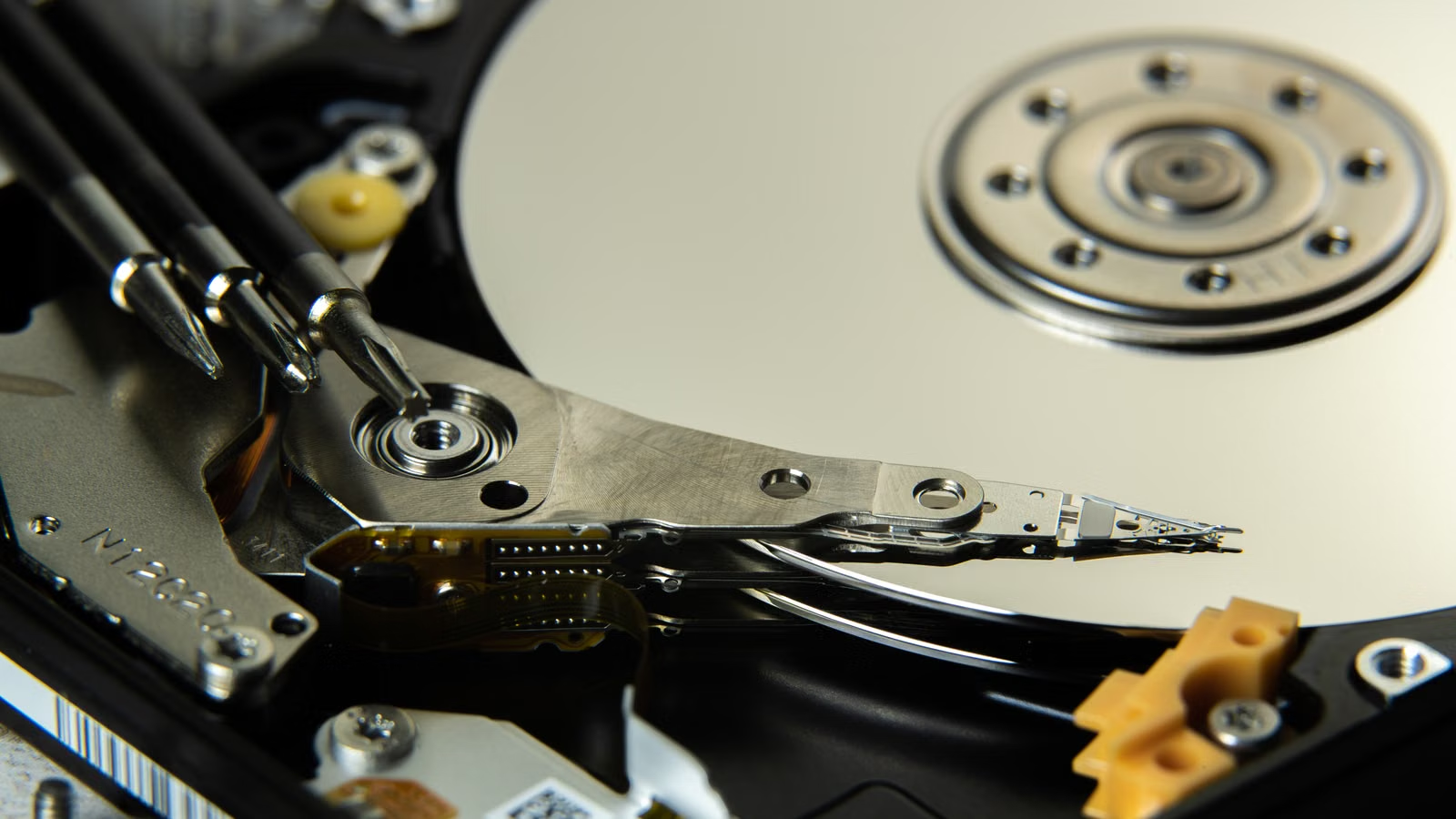
Seagate is not a chip stock, but it can still benefit from AI because AI commercialization does not only drive compute purchases; it also drives data retention, data governance, and cloud storage expansion. You should not apply the same framework used for advanced nodes, GPU architecture, or HBM capacity directly to STX. A better framework is this: AI applications increase data volume, data volume drives cloud data center expansion, expansion boosts nearline HDD demand, and stronger demand then affects Seagate’s revenue, product mix, gross margin, and free cash flow.
The difference between AI chip stocks and storage hardware stocks can be viewed this way:
| Comparison Dimension | AI Chip Stocks | Seagate STX |
|---|---|---|
| Core Variable | Compute power, process nodes, packaging, HBM | Capacity, cost per TB, cloud customer procurement |
| Main Customer Logic | Training and inference cluster buildout | Data retention, backup, archive, object storage |
| Source of Financial Leverage | High ASP, platform ecosystem, supply scarcity | High-capacity mix, supply discipline, margin recovery |
| Main Risks | Technology cycles, competition, export controls | Cycle reversal, slower customer procurement, pricing pressure |
This means STX’s AI logic is more indirect, but not empty. Chips are the “compute gateway” for AI, while hard drives are the “long-term warehouse” for AI data assets. As cloud service providers, enterprise customers, and AI application companies continue to store more data, HDDs can shift from being viewed as traditional hardware to being seen as part of AI data infrastructure. This is also why Seagate has repeatedly emphasized mass capacity, hyperscale cloud, data centers, and AI-driven demand in recent years.
That said, indirect exposure also means expectations need to be managed. Seagate does not deserve a chip-stock valuation simply because AI is hot. Its revenue still depends on cloud customer procurement cycles, HDD industry supply, product pricing, and inventory cycles. If STX rises sharply, investors should ask three questions: first, are cloud customer orders sustainable; second, are high-capacity products improving gross margins; third, has the market already priced in too much optimism?
From a portfolio perspective, STX looks more like an “AI infrastructure data storage cyclical” than a pure AI compute leader. Its strengths include a concentrated industry structure, recovering nearline HDD demand, and capacity gains from technology upgrades. Its limitations include continued cyclicality, customer concentration, cloud capex exposure, and pricing sensitivity.
Summary: Seagate is not a chip stock, but it can benefit from AI because AI data centers require not only compute but also large-scale data storage. When evaluating STX, you should not simply compare it with Nvidia. Instead, focus on whether AI data volume continues to grow, whether cloud customers keep buying high-capacity HDDs, whether industry supply remains disciplined, and whether these factors translate into better gross margins and cash flow.
How Do Nearline HDD, HAMR, and Mozaic Support Seagate’s Growth Story?
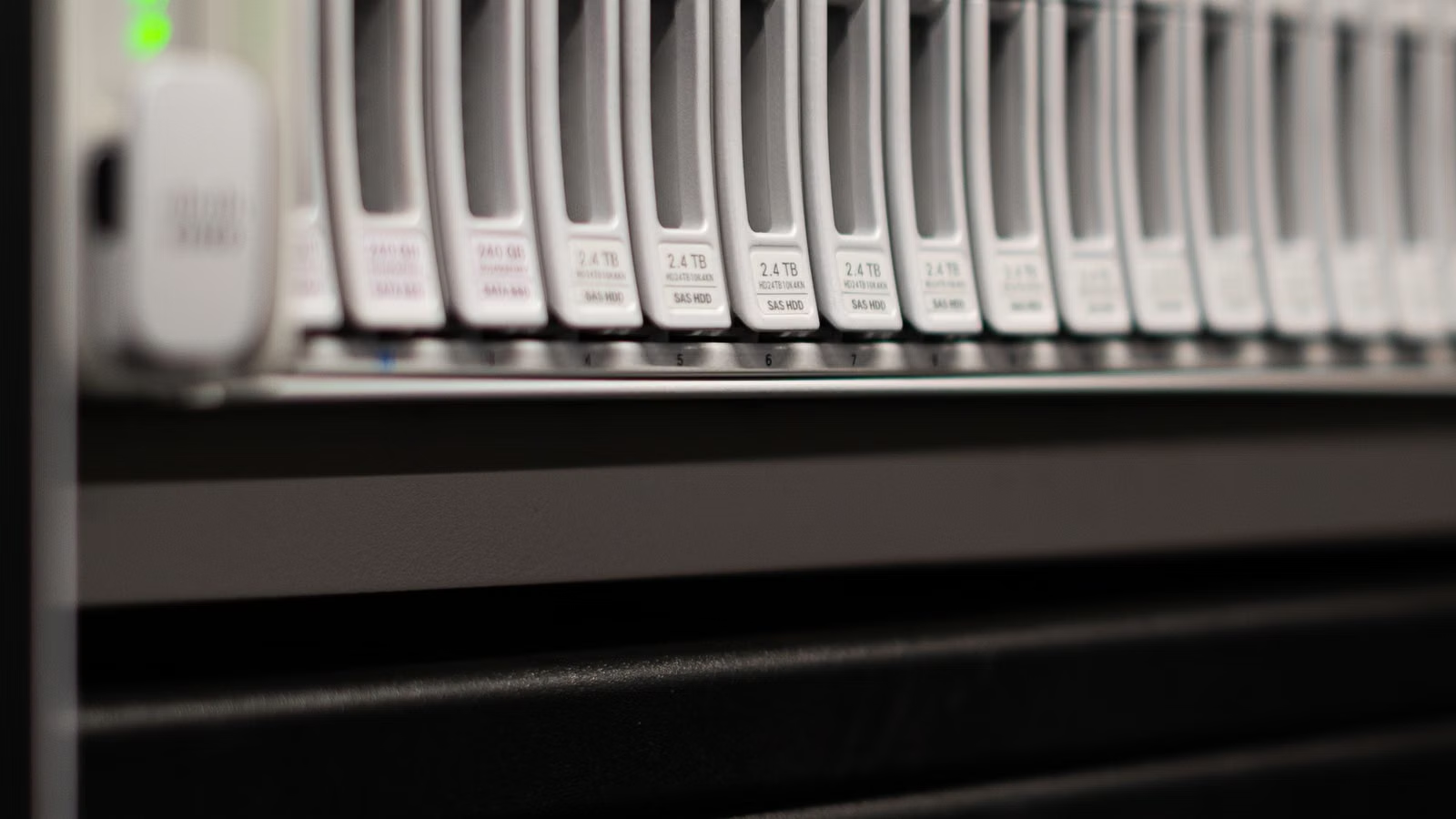
Nearline HDD, HAMR, and Mozaic are the key channels through which Seagate turns AI data center demand into business value. You can think of nearline HDDs as the main high-capacity hard drives used in cloud data centers. They are suited for storing large amounts of data that may not require millisecond-level access but must still be retained reliably. HAMR improves areal density, while Mozaic is Seagate’s platform for commercializing HAMR. The investment story becomes more complete only when AI-driven data growth on the demand side is matched by capacity upgrades on the supply side.
At the product level, Seagate announced in 2025 that its 30TB Exos M drives were available through global channels, aimed at meeting demand for high-capacity, scalable storage driven by data center and AI deployments. In 2026, Seagate further announced that Mozaic 4+ supported up to 44TB and was shipping in volume to two leading hyperscale cloud providers. This type of information is more important than a general AI narrative because it directly relates to customer qualification, production ramp, and capacity upgrades.
The technology logic can be broken down into three layers:
| Technology or Product | Problem It Solves | Meaning for Seagate |
|---|---|---|
| Nearline HDD | Low-cost large-capacity cloud data storage | Captures AI data retention demand |
| HAMR | Raises areal density and enables higher drive capacity | Extends the HDD technology roadmap |
| Mozaic platform | Turns HAMR into commercial products | Improves customer adoption and product mix |
| 30TB / 44TB products | Improves rack capacity and storage efficiency | Supports ASP, margin, and customer stickiness |
The core idea behind HAMR technology is to briefly heat tiny areas of the disk, allowing smaller data bits to be written reliably and increasing storage density. Seagate’s Mozaic platform packages this technology into a data center product roadmap. For investors, this is not just an engineering detail. It is one of the main indicators of whether STX can maintain competitiveness in high-capacity HDDs.
Why does areal density matter? Because data centers do not only look at the price of one hard drive. They also care about how much data can be stored within the same rack space, power envelope, and operating environment. Higher areal density can help cloud customers reduce unit storage costs, lower rack usage, and improve energy efficiency. In explaining Mozaic 3+, Seagate also highlights that higher capacity allows data centers to scale storage without a proportional increase in space and resource consumption.
Summary: Nearline HDD determines whether Seagate can capture AI data center mass-capacity demand. HAMR determines whether the HDD capacity roadmap can continue moving upward. Mozaic determines whether the technology can enter volume production and cloud customer procurement. When assessing STX’s technology story, do not stop at “hard drives are getting bigger.” Look at customer qualification, production scale, unit cost, areal density, and whether the mix shift improves margins.
Do Seagate’s Latest Results Show AI Data Center Demand in the Numbers?
AI data center demand has already shown up in Seagate’s financial performance to some extent, but it should not be interpreted as a smooth, risk-free growth line. A more accurate view is that FY2026 results show improving revenue, gross margin, and cash flow, while management’s next-quarter outlook also looks strong. This suggests that high-capacity storage demand is supporting performance. However, the story still needs to be verified over future quarters, especially through cloud customer orders, nearline HDD pricing, HAMR product adoption, and free cash flow durability.
Seagate’s FY2026 third-quarter results reported revenue of $3.11 billion, GAAP gross margin of 46.5%, non-GAAP gross margin of 47.0%, non-GAAP diluted EPS of $4.10, and free cash flow of $953 million. The company also guided for FY2026 fourth-quarter revenue of $3.45 billion, plus or minus $100 million, and non-GAAP EPS of $5.00, plus or minus $0.20. Compared with the FY2026 second-quarter results of $2.83 billion in revenue and a 42.2% non-GAAP gross margin, the improvement is clear.
You can read the financials through the following framework instead of focusing only on the share price reaction:
| Metric | Why It Matters | How to Read It for STX |
|---|---|---|
| Revenue | Reflects customer procurement scale | Whether cloud and enterprise demand is continuing |
| Gross margin | Reflects pricing and product mix | Whether high-capacity HDDs are improving profit quality |
| EPS | Reflects operating leverage | Whether revenue growth is translating into earnings |
| Free cash flow | Reflects cash generation | Whether Seagate can support debt reduction, dividends, and buybacks |
| Next-quarter guidance | Reflects management visibility | Whether demand is more than a one-quarter recovery |
There is also a practical trading consideration. If you are following popular U.S. stocks such as STX, you should understand not only company fundamentals but also your actual trading costs. U.S. stock trading costs may include more than commissions; they can also include platform fees, external agency fees, transaction activity fees, and other charges. Taking U.S. stock trading fees as an example, Biya charges $0 commission for U.S. stock trading, while platform fees, external agency fees, and other charges are subject to the fee center and order page. Fees do not replace fundamental analysis, but they can affect the real experience of frequent trading, staged buying, and small orders.
For STX, the most important financial signal is whether revenue and gross margin improve at the same time. Revenue growth alone is not enough. If revenue rises but margins fall, demand may not have enough pricing power. If revenue growth, margin expansion, and stronger free cash flow appear together, that looks more like a combination of strong demand, better product mix, and favorable supply-demand conditions. Seagate’s Q3 FY2026 numbers are one reason the market has been paying closer attention.
Summary: Seagate’s AI storage logic has partly entered the financial verification stage. Revenue, gross margin, EPS, and free cash flow have improved, and the company’s next-quarter outlook is positive. Still, investors need to distinguish between reported results and forward guidance, and continue tracking whether later quarters confirm the trend. STX’s appeal comes from earnings leverage, but its risk also comes from the possibility that the market has already priced in much of that leverage.
How Is Seagate Different from Chip Stocks, SSDs, and Western Digital?
Seagate differs from chip stocks because it benefits from data scale rather than compute bottlenecks. It differs from SSDs because it is better suited to low-cost mass capacity rather than ultra-low latency. It differs from Western Digital because both companies sit in the HDD supply-side theme, but their technology execution, customer mix, valuation, and financial performance should be analyzed separately. You should not place STX, NVDA, MU, WDC, and PSTG into one generic “AI concept stock” basket.
A more useful comparison looks like this:
| Company or Category | Relationship to STX | Key Difference to Watch |
|---|---|---|
| NVDA | AI compute core | Compute platform vs data retention |
| MU | Memory chip company | DRAM/HBM/NAND vs HDD hardware |
| WDC | Direct HDD peer | Technology roadmap, customer orders, margins |
| SSD makers | Complementary in tiered storage | Speed advantage vs cost-per-TB advantage |
| Enterprise storage system companies | Data management and storage platforms | Software systems vs storage hardware |
Compared with chip stocks, Seagate is not directly driven by GPU architecture upgrades and does not compete in advanced semiconductor process nodes. It depends more on cloud customer buildout cycles, data center capacity planning, and HDD industry supply-demand dynamics. Compared with SSDs, HDDs offer lower access speed but retain advantages in large-scale, low-cost, long-term storage. AI data centers usually use both SSDs and HDDs: hot data, high-frequency access, and caching are better suited to SSDs; cold data, backups, logs, training corpora, and long-term archives are better suited to HDDs.
Compared with Western Digital, Seagate belongs to the same AI storage supply-side theme. Western Digital’s Q3 FY2026 results reported revenue of $3.34 billion, up 45% year over year, GAAP gross margin of 50.2%, and non-GAAP gross margin of 50.5%. This shows that the market is not rewarding only Seagate, but is reassessing the supply-demand dynamics of the high-capacity HDD industry more broadly. However, the two companies still differ in share price, valuation, customer contracts, capital returns, and technology execution.
You can also think of STX as back-end infrastructure in the AI data chain. In the early phase of the AI trade, the market often focuses on GPUs, HBM, advanced packaging, and power infrastructure. As AI applications accumulate more data, back-end storage demand starts receiving more attention. This logic may lag the chip cycle, but once it appears in financial results, the earnings leverage can become significant.
If you use Biya to follow U.S. stocks such as STX, WDC, MU, and NVDA, it is better not to focus only on single-day price moves. Instead, classify them by their position in the value chain: compute, memory, hard drives, enterprise storage, cloud services, and power infrastructure each have different valuation drivers. For ordinary investors, this classification is more useful than simply chasing the broad “AI theme.”
Summary: Seagate’s comparative advantage lies in high-capacity HDDs and AI data center storage expansion, not in high-performance compute chips or all-flash arrays. STX should be analyzed separately from NVDA, MU, WDC, SSD makers, and enterprise storage system companies. AI data centers need both speed and scale: SSDs solve high-performance access, while HDDs solve low-cost mass-capacity retention. Seagate’s core value sits in the latter.
What Risks and Confirmation Signals Should STX Investors Watch?
The biggest risk in investing in STX is that the market prices in AI storage demand before future results fully confirm it. Seagate may benefit from AI data center expansion, high-capacity HDD demand, and HAMR technology upgrades, but it remains a hardware company with meaningful cyclical exposure. You need to watch cloud capex, order visibility, product pricing, industry supply, inventory trends, and valuation, rather than assume that “AI data centers need hard drives” automatically removes volatility.
Key risks include:
| Risk Type | Specific Manifestation | Signal to Watch |
|---|---|---|
| Cloud capex slowdown | Large customers delay purchases | Management commentary and guidance changes |
| Supply reversal | Industry expands too quickly | Pricing pressure and rising inventory |
| Technology execution risk | HAMR ramp is slower than expected | Customer qualification, shipment scale, yield |
| Valuation risk | Stock price prices in too much optimism | Post-earnings reaction to guidance |
| Substitution pressure | SSD costs fall too quickly | Changes in cost-per-TB gap |
| Customer concentration | A small number of cloud customers matter too much | Long-term agreements, cancellations, pricing negotiation |
You can use three lines of analysis to judge whether STX is a cyclical recovery story or a structural growth story. The first is demand durability: are AI data centers continuously increasing storage budgets, or was demand concentrated in only a few quarters? The second is supply discipline: does the HDD industry avoid excessive expansion and maintain rational pricing? The third is technology execution: do HAMR and Mozaic continue entering mainstream cloud customers and raising the share of higher-capacity products?
For ordinary investors, tracking STX does not require watching every daily headline. A more practical approach is to review revenue, gross margin, free cash flow, inventory, capital expenditure, management commentary on hyperscale cloud demand, and next-generation Mozaic shipment progress each quarter. If these indicators improve together, the AI storage thesis has stronger support. If revenue growth slows, gross margin falls, inventory rises, or guidance weakens, investors should be cautious about a cycle shift.
Trading risk also matters. Popular AI infrastructure stocks often move sharply around earnings. Staged observation, understanding order types, and knowing fee structures are usually more prudent than simply chasing a rally. You can use U.S. stock information to track basic information on relevant U.S. stocks, then combine that with company filings and your own risk tolerance. Service availability depends on your location, identity verification results, platform rules, and applicable laws and regulations.
Summary: STX’s opportunity comes from AI data center storage demand, improving nearline HDD supply-demand conditions, HAMR technology upgrades, and financial leverage. Its risks come from slower cloud customer procurement, valuation overextension, supply reversal, and technology execution shortfalls. Seagate should not be treated as an “AI stock that must go up,” but as an AI data infrastructure beneficiary that requires multi-quarter verification.
If you are following STX because you want to understand U.S. stock opportunities created by AI data centers, the more important task is to build a consistent tracking framework: first identify the company’s position in the value chain, then look for financial verification, and finally consider trading costs and your risk tolerance. Biya is a global multi-asset trading wallet that supports U.S. stocks, Hong Kong stocks, and cryptocurrency trading, and allows payments in more than 40 local currencies across over 190 countries and regions. For AI infrastructure-related U.S. stocks such as STX, WDC, MU, and NVDA, you can combine company financials, industry data, and actual order information after you download the app. Biya charges $0 commission for U.S. stock trading, while platform fees, external agency fees, and other charges are subject to the fee center and order page. The information above only introduces public market information, industry logic, and fee structures, and does not constitute investment advice.
FAQ
Is Seagate STX an AI chip stock?
Seagate STX is not an AI chip stock. It mainly provides data storage technology and hard drive products. Its AI relevance comes from data center demand for high-capacity HDDs, nearline HDDs, and mass-capacity storage, rather than GPUs, HBM, or advanced semiconductor manufacturing.
Why do AI data centers still need HDDs?
AI data centers still need HDDs because large volumes of training data, inference logs, backup data, and archived records depend more on capacity and cost per terabyte than on maximum access speed. SSDs are better for hot data and low-latency workloads, while HDDs are better for large-scale long-term storage.
What is the difference between Seagate STX and Western Digital WDC?
Seagate STX and Western Digital WDC are both important HDD companies exposed to AI storage demand, but they differ in technology roadmap, customer mix, financial performance, and valuation. Investors should separately compare revenue growth, gross margin, free cash flow, customer orders, and high-capacity product progress.
Why is HAMR important for Seagate STX?
HAMR is important for Seagate STX because it can increase hard drive areal density and allow single-drive capacity to keep rising. If HAMR and Mozaic scale successfully, Seagate may improve its high-capacity product mix, but investors should still monitor customer qualification and delivery progress.
How can ordinary investors track Seagate STX’s AI storage thesis?
Ordinary investors can track Seagate’s revenue, gross margin, free cash flow, nearline HDD demand, HAMR product shipments, cloud customer capex, and management guidance. Single-day stock price moves should not replace financial verification and industry supply-demand analysis.
What are the main risks of investing in Seagate STX?
The main risks of investing in Seagate STX include slower cloud capex, falling HDD prices, weaker-than-expected HAMR production, high valuation, and share price volatility. Before trading, investors should consider the latest financial results, order trends, fee structure, and their own risk tolerance.
*This article is provided for general information purposes and does not constitute legal, tax or other professional advice from BiyaPay or its subsidiaries and its affiliates, and it is not intended as a substitute for obtaining advice from a financial advisor or any other professional.
We make no representations, warranties or warranties, express or implied, as to the accuracy, completeness or timeliness of the contents of this publication.
Related Blogs of
MACD Crypto Trading Strategy: Settings, Signals, and Risk Management


Choosing a Stock Trading App: Beginner Checklist





Choose Country or Region to Read Local Blog
 Australia
 Austria
 Belgium
 Canada
 Cyprus
 Czech Republic
 Denmark
 Estonia
 Finland
 France
 Germany
 Greece
 Hong Kong
 India
India Indonesia
 Ireland
 Italy
Italy Japan
Japan Latvia
 Lithuania
 Luxembourg
 Malaysia
 Malta
Malta Morocco
 Nepal
Nepal Netherlands
 New Zealand
 Norway
 Pakistan
 Philippines
 Poland
 Portugal
 Romania
 Singapore
 Slovakia
 Slovenia
 South Africa
 South Korea
 Spain
Spain Sweden
 Thailand
 United States
 Turkey
 United Arab Emirates
 United Kingdom
 Vietnam