Is Pure Storage an AI Storage Stock? An Analysis of All-Flash Storage, Subscription Revenue, and Enterprise Customers





Pure Storage can be viewed as an AI storage-related stock, but it is not an AI chip stock, nor is it an HDD capacity-cycle stock like Seagate or Western Digital. When analyzing PSTG, the key is not whether it has GPUs, HBM, or advanced process technology. The real question is whether enterprise AI needs higher-performance data access, lower-latency all-flash platforms, more unified data management, and more predictable subscription revenue. In the latest official framing, the company has shifted from Pure Storage to Everpure, with its ticker updated to NYSE:P, although international investors still commonly search for it using keywords such as Pure Storage, PSTG, and AI storage stock.
Key Takeaways
- Pure Storage’s AI logic comes from enterprise data platforms and all-flash architecture.
- FlashBlade//EXA targets AI, HPC, and GPU-intensive workloads.
- Evergreen, ARR, and RPO shape PSTG’s revenue visibility.
- Enterprise customers, hyperscalers, and Fortune 500 penetration are key validation signals.
- Major risks include valuation, gross margin, component costs, and customer purchasing cycles.
Is Pure Storage Really an AI Storage Stock?

Pure Storage can be considered an AI storage-related stock, but its benefit path does not come from chip price increases or the HDD capacity cycle. It is better understood as an enterprise AI data infrastructure company focused on how data is accessed, protected, orchestrated, governed, and delivered to AI workloads. You can place it in the data layer of AI infrastructure, not the compute layer. GPUs handle compute, HBM handles high-speed memory, and all-flash platforms help enterprises move data into AI pipelines faster and more reliably.
The latest Everpure Q1 FY2027 financial results use the Everpure and NYSE:P framing, and describe the company’s expansion from a storage provider into a data management platform. This shift matters because Pure Storage’s investment logic is extending from “selling all-flash arrays” to “managing enterprise data assets.”
You can distinguish different AI hardware and data companies as follows:
| Company or Category | Core Position | AI-Related Logic |
|---|---|---|
| Nvidia | AI compute platform | GPUs, networking, software ecosystem |
| Micron | Memory chips | HBM, DRAM, NAND cycle |
| Seagate / WDC | High-capacity HDDs | Nearline HDD, cost per TB |
| NetApp | Hybrid cloud data management | Enterprise data and cloud management |
| Pure Storage / Everpure | All-flash enterprise data platform | Low latency, high concurrency, subscription-based storage |
An AI storage stock is not the same as an AI chip stock. AI chip stocks are usually analyzed through compute demand, process nodes, packaging, and supply scarcity. Pure Storage should be analyzed through whether enterprise AI enters production, whether GPU clusters need high-throughput storage, whether enterprise data needs unified management, and whether customers are willing to pay for performance, availability, and operational simplicity.
Summary: Pure Storage can be classified as an AI storage-related stock, but it is not a “Nvidia-style compute stock” or a “Seagate-style HDD capacity stock.” When evaluating PSTG, you should focus on whether the company can create lasting value in enterprise AI data access, all-flash replacement, data governance, and subscription-based services. The AI label alone is not enough. What really matters is whether enterprise customers treat Pure Storage as a foundational platform for AI-ready storage and Enterprise Data Cloud.
Why Can All-Flash Storage and FlashBlade//EXA Enter AI Data Centers?
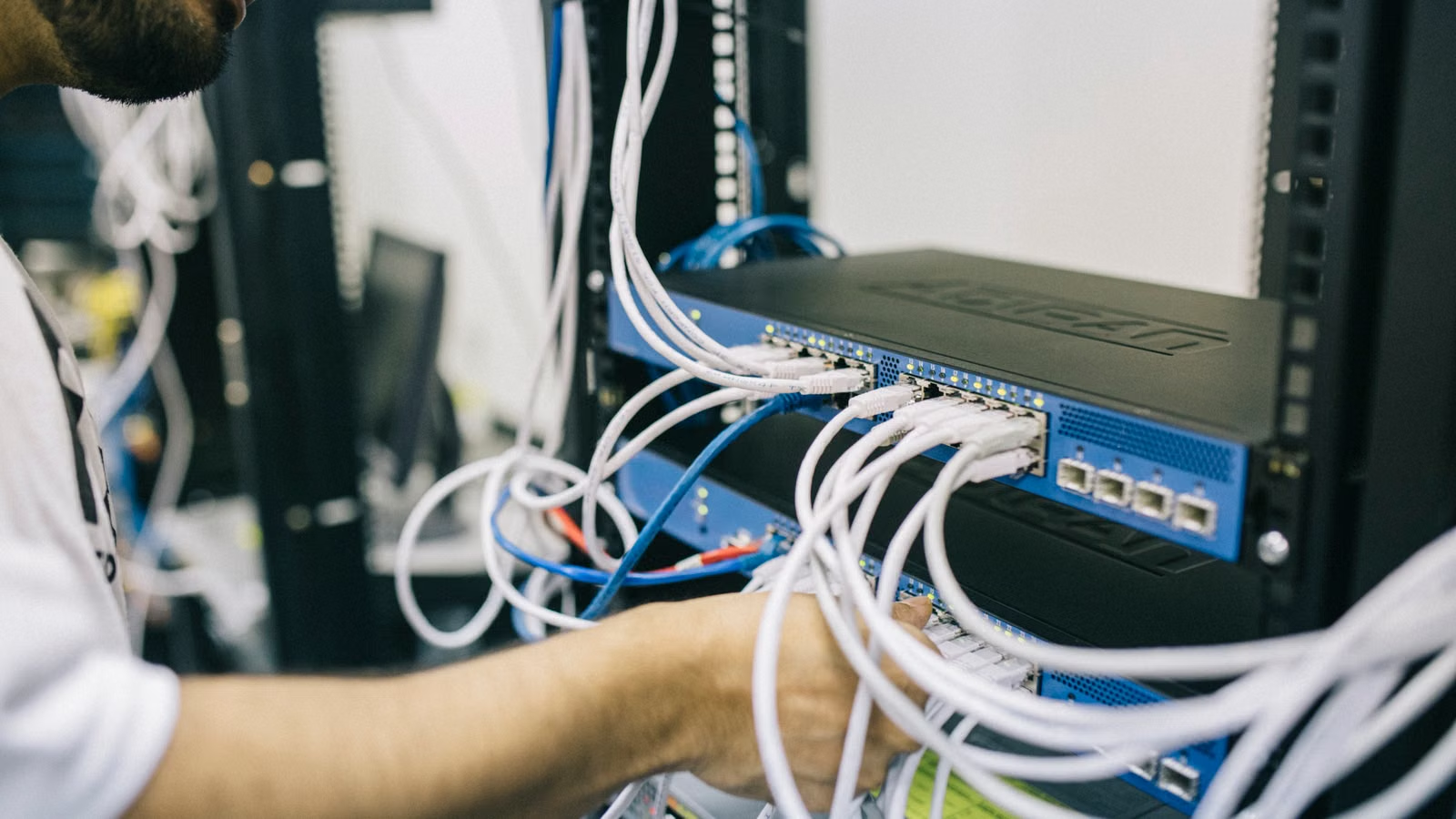
All-flash storage can enter AI data centers because AI training, fine-tuning, inference, and RAG workflows need more than just capacity. They also need high throughput, low latency, high concurrency, and stable data delivery. GPUs are expensive. If the storage system cannot keep up, GPUs may sit idle while waiting for data instead of continuously computing. This is where Pure Storage has an opportunity: it does not provide compute, but it can reduce data bottlenecks and help enterprise AI workloads access, process, and protect data faster.
FlashBlade//EXA is positioned as a high-performance data storage platform for AI and HPC. The company’s materials emphasize that the architecture is built for modern AI and high-performance computing workloads, with a focus on bandwidth, scalable management, and a configurable disaggregated architecture. Its technical brief describes the platform as designed for AI and HPC deployments, supporting TB/s-scale throughput and the metadata services needed for such workloads.
In AI scenarios, storage bottlenecks are not a single capacity issue. They are multi-dimensional:
| AI Scenario | Storage Pressure | Relevant Pure Storage Capability |
|---|---|---|
| Model training | Massive concurrent reads and checkpointing | High throughput, low latency |
| Model fine-tuning | Frequent access to enterprise data and model versions | Fast data access |
| RAG / knowledge bases | Vector data, document indexing, metadata | Metadata performance and concurrency |
| Inference logs | Continuous writes, archiving, and analysis | Stable writes and data protection |
| AI governance | Compliance, recovery, access control | Data management and cyber resilience |
Pure Storage has also integrated the NVIDIA AI Data Platform reference design into FlashBlade and obtained NVIDIA Cloud Partner and Enterprise deployment-related certifications. This signal is more meaningful than simply saying “AI needs storage,” because it shows that Pure Storage’s platform has entered the ecosystem validation scope for GPU clouds, enterprise AI factories, and high-performance AI pipelines.
Summary: Pure Storage’s all-flash AI logic is not simply about “bigger capacity.” It is about solving GPU data supply, low-latency access, metadata bottlenecks, and the stability of enterprise AI pipelines. HDDs are better suited to low-cost, high-capacity cold data, while all-flash storage is better suited to high-performance hot data and AI workflows. When looking at FlashBlade//EXA, the key question is whether it enters real production environments, not whether the launch messaging sounds technically impressive.
How Do Subscription Models, Evergreen, and Enterprise Data Cloud Change Revenue Quality?

Pure Storage should not be valued purely like a traditional hardware company, because it has clear subscription and platform characteristics. In addition to product revenue, you should watch subscription services revenue, Subscription ARR, RPO, Evergreen//One, and Enterprise Data Cloud. Hardware sales reflect current demand, subscription revenue reflects service delivery and renewal capacity, and RPO represents contracted revenue that has not yet been recognized.
The latest FY2027 first-quarter data show revenue of approximately $1.1 billion, up 35% year over year; product revenue of $577 million, up 55%; subscription services revenue of $476 million, up 17%; Subscription ARR of $2.0 billion, up 19%; and RPO of $3.8 billion, up 41%. These numbers show that PSTG’s story is not just about one quarter of hardware shipments. It is about product demand, service revenue, and future revenue visibility improving at the same time.
| Metric | How You Should Read It |
|---|---|
| Product revenue | Reflects demand for all-flash platforms and large customer purchases |
| Subscription services revenue | Reflects the quality of services, support, and subscription revenue |
| Subscription ARR | Measures the scale of recurring subscription business |
| RPO | Indicates future revenue pool and contract visibility |
| Evergreen//One | Reflects the storage-as-a-service consumption model |
| Enterprise Data Cloud | Reflects the shift from storage management to data management |
According to the SEC Form 10-K, Subscription ARR is the annualized recurring contract value of active, non-cancelable subscription agreements, plus four times the quarterly amount of on-demand billings. This definition is also a reminder that ARR matters, but it is not an unconditional guarantee of future revenue, and it cannot replace analysis of revenue, deferred revenue, or RPO.
Evergreen//One matters because it makes storage delivery resemble a service-consumption model, allowing customers to use performance, capacity, and availability in a more flexible way. Meanwhile, Enterprise Data Cloud shifts the narrative from “managing storage devices” to “managing data assets,” emphasizing data control, automation, governance, and cyber resilience across on-premises, public cloud, and hybrid cloud environments.
Summary: Pure Storage’s revenue quality comes from two lines: all-flash product shipments and subscription/platform expansion. ARR, RPO, Evergreen, and Enterprise Data Cloud improve revenue visibility and allow the market to evaluate PSTG more like a platform company. But subscriptionization should not be confused with risk-free SaaS. No matter how high ARR is, investors still need to monitor renewals, consumption volatility, customer budgets, and whether gross margins can continue supporting valuation.
Can Enterprise Customers and Hyperscalers Support Pure Storage’s AI Narrative?
Enterprise customers and hyperscalers are critical to whether Pure Storage’s AI narrative can translate into real performance. Product launches can attract attention, but revenue is ultimately determined by whether customers purchase, expand, renew, and place the platform into production environments. Pure Storage’s core base is large enterprise IT and mission-critical systems, while its growth imagination comes from enterprise AI, GPU clouds, MSPs, cloud-native applications, and hyperscaler deployments. When evaluating PSTG, you should not only read AI headlines; you should also examine customer structure and order quality.
According to the FY2026 Form 10-K, the company had more than 14,500 customers globally at the end of fiscal 2026. Public materials also show that its customers span large enterprises, SaaS companies, cloud service providers, the public sector, and many industry verticals. The value of enterprise customers is not only one-time purchases, but long-term renewals, cross-product expansion, and data platform entrenchment.
| Customer Type | Core Need | Meaning for PSTG |
|---|---|---|
| Fortune 500 enterprises | Stability, compliance, mission-critical continuity | Provides a long-term customer base |
| Finance, healthcare, manufacturing | Low latency, security, recovery capability | Supports high-value use cases |
| Hyperscalers | Large-scale deployment, performance/cost balance | Provides scale validation |
| MSPs | Multi-tenant and service-based delivery | Expands subscription-based usage |
| AI enterprise customers | RAG, vector data, GPU pipelines | Validates AI-ready storage |
Enterprise AI deployment is rarely completed by buying a single device. It needs to integrate with existing databases, cloud platforms, containers, backup systems, security processes, and compliance workflows. Portworx represents Pure Storage’s extension into Kubernetes data management and cloud-native applications, helping the company cover more modern containerized workloads instead of only traditional enterprise storage.
The hyperscaler opportunity is more complex. It can bring large orders and technical validation, but it may also bring margin pressure, price negotiation, delivery-timing volatility, and revenue concentration. For PSTG, a hyperscaler deal is not a risk-free positive. You need to watch whether orders are sustainable, whether they increase ARR and RPO, whether they pressure gross margins, and whether they help FlashBlade//EXA, FlashArray, and Enterprise Data Cloud enter broader production environments.
If you follow popular AI infrastructure U.S. stocks such as PSTG, you also need to pay attention to actual trading costs in addition to orders and financial results. U.S. stock trading costs may include not only commissions, but also platform fees, external agency fees, transaction activity fees, and other charges. Taking U.S. stock trading fees as an example, Biya charges $0 commission for U.S. stock trading, while platform fees, external agency fees, and other charges are subject to the fee center and order page. Fees do not replace fundamental analysis, but they can affect the real experience of staged trading and small orders.
Summary: Pure Storage’s AI narrative requires validation from both enterprise customers and hyperscalers. Enterprise customers provide stable renewals, mission-critical use cases, and a data platform foundation, while hyperscalers provide scale validation and AI infrastructure upside. But large customer orders may also bring margin and volatility risks. When analyzing PSTG, you should track customer count, ARR, RPO, renewals, hyperscaler orders, FlashBlade//EXA adoption, and gross margin rather than focus only on AI product announcements.
Do the Latest Financial Results Show Pure Storage’s AI Storage Logic Is Being Realized?
Pure Storage’s AI storage logic has shown strong validation in the latest financial results, but it is not fully proven yet. Q1 FY2027 revenue, product revenue, ARR, RPO, and full-year guidance all point to strong demand, suggesting that enterprise data platforms and all-flash demand are translating into performance. However, AI storage still needs multi-quarter verification, especially around whether high growth can continue, whether margins remain stable, whether free cash flow improves, and whether hyperscaler and enterprise customer orders are recurring.
The latest quarter can be read as follows:
| Metric | Q1 FY2027 Performance | Investment Meaning |
|---|---|---|
| Revenue | Approximately $1.1 billion, up 35% YoY | Demand strength is elevated |
| Product revenue | $577 million, up 55% YoY | Platform purchasing improved significantly |
| Subscription services revenue | $476 million, up 17% YoY | Recurring revenue continues to grow |
| Subscription ARR | $2.0 billion, up 19% YoY | Subscription business scale is expanding |
| RPO | $3.8 billion, up 41% YoY | Contracted revenue pool is strengthening |
| Non-GAAP gross margin | 70.1% | Profit quality remains high |
| Free cash flow | $112 million | Cash generation needs continued monitoring |
The company also guided for Q2 FY2027 revenue of $1.095 billion to $1.105 billion and raised FY2027 full-year revenue guidance to $4.41 billion to $4.51 billion. This is management’s outlook, not a realized result. When analyzing the company, you should separate reported financial results from forward guidance: the former reflects current demand and profit quality, while the latter reflects order visibility and management confidence, but may still be affected by supply chains, customer purchasing behavior, and macro budgets.
High product revenue growth indicates clear momentum in all-flash platforms and large customer purchasing, but one quarter of growth alone does not prove a long-term trend. Subscription services revenue, ARR, and RPO are better indicators of revenue quality, but ARR is not a revenue guarantee. A more balanced approach is to watch whether revenue, gross margin, RPO, free cash flow, and full-year guidance improve together over multiple quarters.
Summary: Pure Storage’s AI storage logic has entered the financial validation stage. Product revenue growth, ARR expansion, RPO growth, and raised full-year guidance all support market interest. But you still need to distinguish between reported results and future guidance. Whether PSTG’s valuation can hold depends on whether high growth continues, subscription revenue remains stable, gross margin is maintained, and AI and hyperscaler orders generate sustained contributions.
How Is PSTG Different from Seagate, Western Digital, and NetApp?
PSTG differs from Seagate, Western Digital, and NetApp because it benefits from a different part of the storage stack. Seagate and Western Digital lean more toward nearline HDDs, high capacity, cost per TB, and cold or warm data retention in cloud data centers. Pure Storage leans more toward all-flash, high performance, low latency, enterprise data platforms, and subscription-based services. NetApp emphasizes hybrid cloud data management and long-standing enterprise IT relationships. All of them may benefit from AI data growth, but they should not be analyzed as the same type of company.
| Company | Core Logic | Main Metrics to Watch |
|---|---|---|
| Pure Storage / Everpure | All-flash, enterprise data platform, subscriptionization | ARR, RPO, gross margin, AI customers |
| Seagate | Nearline HDD, mass-capacity storage | HDD capacity demand, ASP, gross margin |
| Western Digital | HDD and data center capacity cycle | Cloud customer orders, product mix, cash flow |
| NetApp | Hybrid cloud and enterprise data management | Subscription revenue, cloud services, enterprise renewals |
| Micron | DRAM, NAND, HBM | Memory chip pricing and capacity cycle |
All-flash is not a simple replacement for HDDs. AI data centers use multiple storage tiers at the same time: HDDs are suited to low-cost, large-capacity, long-term retention, while SSDs and all-flash arrays are suited to hot data, high concurrency, low latency, and real-time access. Pure Storage’s value is not in replacing every hard drive, but in occupying the higher-performance, higher-value data layer of the AI pipeline.
The difference between Pure Storage and NetApp also matters. Pure Storage emphasizes all-flash, Evergreen, FlashBlade, FlashArray, and operational simplicity. NetApp emphasizes hybrid cloud data management, file/object/block storage combinations, and the enterprise IT ecosystem. Both compete for enterprise AI data management opportunities, but their valuation variables differ. PSTG depends more on all-flash product strength, subscription expansion, and whether the AI-ready storage narrative is realized.
Summary: When analyzing AI storage stocks, the first step is not asking which one “sounds most like an AI stock,” but determining where each company sits in the data stack. PSTG sits in the high-performance all-flash and enterprise data platform layer. STX and WDC sit in the high-capacity HDD layer. NTAP is more focused on hybrid cloud data management. MU is tied to the memory chip cycle. Only after separating the value-chain positions can you understand revenue leverage, margin risk, and valuation logic correctly.
What Risks and Validation Signals Should Pure Storage Investors Watch?
The main risk in investing in Pure Storage is that the market may have already priced in AI storage, subscriptionization, and hyperscaler expectations before revenue, gross margin, or order continuity fully keeps up. PSTG’s story is attractive: enterprise AI needs data platforms, all-flash storage can improve performance, and subscription revenue can increase visibility. But it is not a risk-free growth stock. Component costs, customer concentration, competition, and valuation volatility can all affect returns.
You can track the following indicators over time:
| Validation Signal | Positive Meaning | Warning Signal |
|---|---|---|
| ARR / RPO | Subscription scale and future revenue pool are expanding | Growth slows |
| Gross margin | Product and service profit quality remains stable | Component costs or large customer pricing pressure |
| Free cash flow | Cash generation improves | Profit growth fails to convert into cash |
| Hyperscaler orders | Large customers validate product capability | Order concentration and quarterly volatility |
| FlashBlade//EXA adoption | AI/HPC use cases are entering real deployments | Many launches, limited revenue contribution |
| Customer renewals and expansion | Platform stickiness strengthens | Renewal rate or consumption model comes under pressure |
SEC risk disclosures also indicate that gross margin can be affected by component costs, customer mix, product mix, pricing, and hyperscale customers. For Pure Storage, rising flash, DRAM, and other component costs may compress margins. Hyperscaler customers can bring scale, but they may also have stronger bargaining power.
Ordinary investors should not track PSTG only through AI headlines and single-day stock moves. A more effective approach is to review revenue growth, product revenue, subscription services revenue, ARR, RPO, non-GAAP gross margin, free cash flow, full-year guidance, and management commentary on AI, Enterprise Data Cloud, and hyperscalers each quarter. If these indicators improve together, the AI storage thesis becomes more credible. If gross margin falls, guidance is cut, or subscription growth slows, valuation may need to be reassessed.
Summary: Pure Storage’s opportunity comes from enterprise AI data platform adoption, all-flash performance advantages, subscription revenue, and large customer penetration. Its risks come from valuation, gross margin, component costs, customer concentration, and competition. A reasonable analysis should not stop at labeling PSTG an “AI storage stock.” It should continuously test whether AI demand is turning into revenue quality, margins, and free cash flow.
If you are following PSTG because you want to track U.S. stock opportunities created by AI data centers and enterprise AI infrastructure, the more important task is to build a continuous observation framework: first identify where the company sits in the AI value chain, then check whether financial results validate demand, and finally consider trading costs and your own risk tolerance. Biya is a global multi-asset trading wallet that supports U.S. stocks, Hong Kong stocks, and cryptocurrency trading, and covers more than 190 countries and regions with payments in over 40 local currencies. You can use U.S. stock information to track related stocks such as PSTG, STX, WDC, NTAP, and NVDA, while also referring to company financials, fee structures, and order page information. Biya charges $0 commission for U.S. stock trading, while platform fees, external agency fees, and other charges are subject to the fee center and order page. Service availability depends on your location, identity verification results, platform rules, and applicable laws and regulations. The content above only introduces public market information, trading rules, and fee structures, and does not constitute investment advice.
FAQ
Is Pure Storage an AI storage stock?
Pure Storage can be viewed as an AI storage-related stock, but it is not an AI chip stock. Its AI relevance comes from all-flash enterprise data platforms, FlashBlade, Enterprise Data Cloud, NVIDIA ecosystem validation, and enterprise AI data management demand, not from GPU or HBM manufacturing.
What is the difference between Pure Storage and Seagate STX?
Pure Storage focuses on all-flash, high performance, and enterprise data platforms, while Seagate STX focuses on nearline HDDs, large capacity, and cost per TB. Both may benefit from AI data growth, but Pure Storage is more tied to low latency and subscription models, while Seagate is more tied to capacity cycles and HDD supply-demand dynamics.
Why is Pure Storage’s subscription revenue important?
Pure Storage’s subscription revenue matters because Subscription ARR and RPO improve revenue visibility and help the market evaluate the company through a platform-style lens. But ARR is not a guarantee of future revenue. Investors still need to watch renewals, consumption volatility, customer expansion, and revenue recognition timing.
Why does FlashBlade//EXA matter for Pure Storage?
FlashBlade//EXA is an important Pure Storage platform for AI and HPC workloads. It focuses on solving high concurrency, metadata bottlenecks, throughput, and GPU data supply. Whether it can scale into production environments is an important signal for validating PSTG’s AI storage thesis.
How should ordinary investors track PSTG earnings?
Ordinary investors should focus on revenue, product revenue, subscription services revenue, ARR, RPO, non-GAAP gross margin, free cash flow, and full-year guidance. They should also pay attention to management commentary on AI, hyperscalers, and enterprise customer demand, rather than relying only on short-term stock price moves.
What are the main risks of investing in Pure Storage?
The main risks of investing in Pure Storage include high valuation, rising flash and DRAM costs, gross margin volatility, customer order concentration, slower subscription renewals, and intensifying competition. Before trading, investors should consider the latest financial results, platform fees, order rules, and their own risk tolerance.
*This article is provided for general information purposes and does not constitute legal, tax or other professional advice from BiyaPay or its subsidiaries and its affiliates, and it is not intended as a substitute for obtaining advice from a financial advisor or any other professional.
We make no representations, warranties or warranties, express or implied, as to the accuracy, completeness or timeliness of the contents of this publication.
Related Blogs of

Can SMIC Produce Memory Chips? The Difference Between a Wafer Foundry and a Memory Design Company


Is ASMPT a Semiconductor Equipment Stock or a Memory Stock? Its Position in the Advanced Packaging Chain


What Are the Bottlenecks in HBM Packaging? CoWoS, TCB, and the Link to Equipment Suppliers


How Do Dell’s AI Server and Storage Businesses Affect Its Stock Price?

Choose Country or Region to Read Local Blog
 Australia
 Austria
 Belgium
 Canada
 Cyprus
 Czech Republic
 Denmark
 Estonia
 Finland
 France
 Germany
 Greece
 Hong Kong
 India
India Indonesia
 Ireland
 Italy
Italy Japan
Japan Latvia
 Lithuania
 Luxembourg
 Malaysia
 Malta
Malta Morocco
 Nepal
Nepal Netherlands
 New Zealand
 Norway
 Pakistan
 Philippines
 Poland
 Portugal
 Romania
 Singapore
 Slovakia
 Slovenia
 South Africa
 South Korea
 Spain
Spain Sweden
 Thailand
 The United States
 Turkey
 United Arab Emirates
 United Kingdom
 Vietnam
Contact Us




BIYA GLOBAL LLC is registered with the Financial Crimes Enforcement Network (FinCEN), an agency under the U.S. Department of the Treasury, as a Money Services Business (MSB), with registration number 31000218637349, and regulated by the Financial Crimes Enforcement Network (FinCEN).
BIYA GLOBAL LIMITED is a registered Financial Service Provider (FSP) in New Zealand, with registration number FSP1007221, and is also a registered member of the Financial Services Complaints Limited (FSCL), an independent dispute resolution scheme in New Zealand.