Can SMIC Produce Memory Chips? The Difference Between a Wafer Foundry and a Memory Design Company




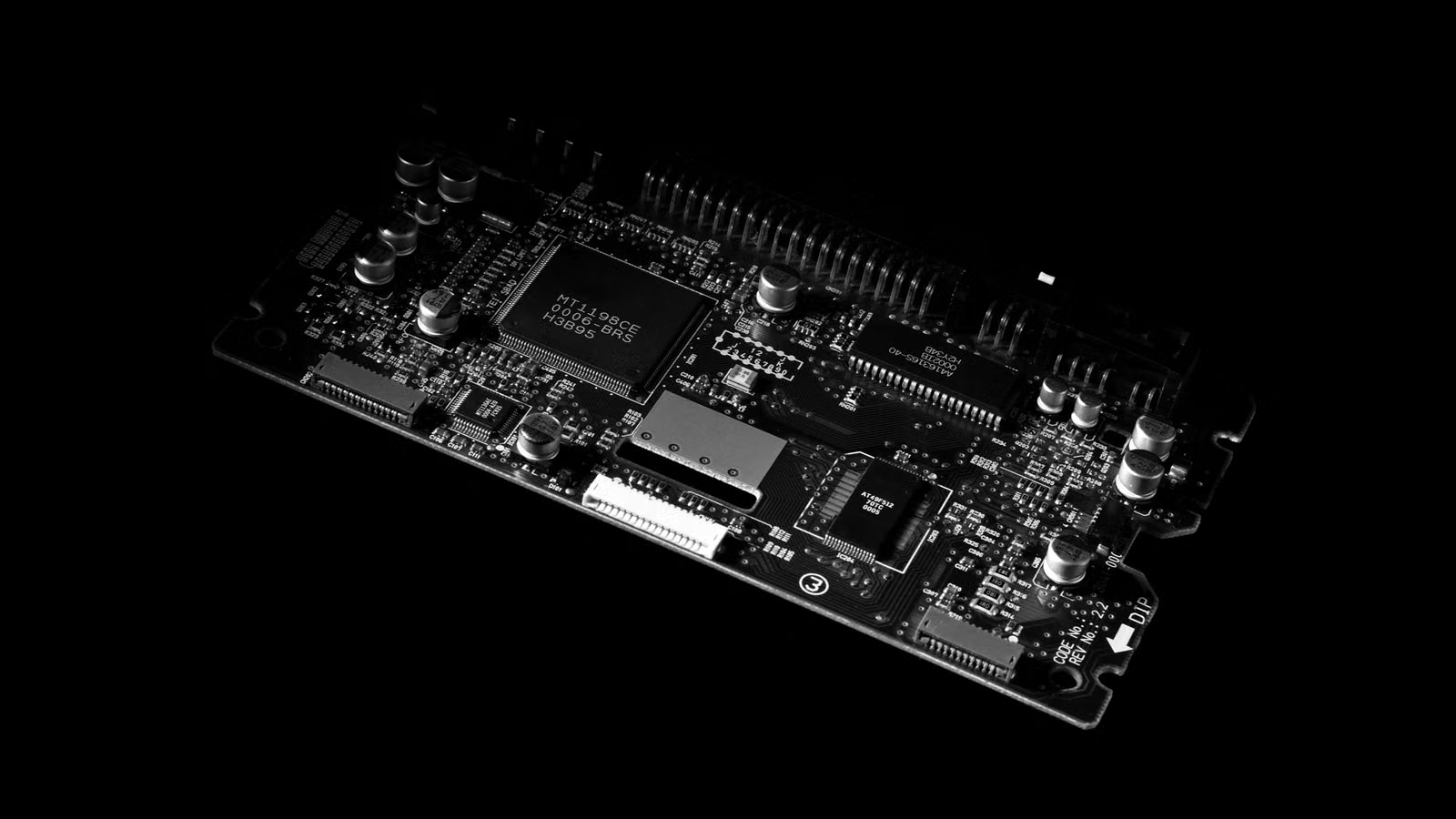
SMIC can participate in the wafer manufacturing of some memory-related chips, but it should not be simply classified as a memory chip company. More accurately, SMIC 0981.HK is a wafer foundry. Its core business is providing wafer manufacturing services based on customers’ chip designs and process platforms. SMIC may be related to mature-node and specialty technologies such as eNVM, EEPROM, eFlash, NOR Flash, and MCU embedded memory, but it is not comparable to DRAM, NAND, or HBM manufacturers such as Micron, Samsung Electronics, or SK hynix. When analyzing SMIC, you need to separate “the ability to manufacture some memory-related chips for customers” from “selling proprietary memory products.”
Key Takeaways
- SMIC is primarily a wafer foundry stock, not a typical memory stock.
- It can manufacture some memory-related chips, but does not sell proprietary DRAM or NAND.
- A foundry is analyzed through customer orders, utilization, and process platforms.
- Memory design companies are driven by product pricing, shipment, and inventory cycles.
- To analyze 0981.HK, focus on revenue mix, gross margin, and capital expenditure.
Can SMIC Produce Memory Chips? First Separate “Foundry Manufacturing” From “Selling Its Own Products”
SMIC can participate in the wafer manufacturing of some memory-related chips, but that does not make it a memory chip manufacturer. Its role is to provide foundry services based on customer designs, process nodes, and manufacturing platforms. It does not operate like a memory IDM that designs, manufactures, and sells DRAM, NAND, or HBM under its own brand. When you look at 0981.HK, the key question is not simply “Can it make memory?” but “Does its revenue come from foundry services or from proprietary memory product sales?”
In its 2025 annual report, SMIC describes itself as one of the world’s leading wafer foundries, providing semiconductor foundry and technology services on 8-inch and 12-inch wafers. Its main revenue line is IC wafer foundry, meaning integrated circuit wafer manufacturing services. It does not disclose revenue by DRAM, NAND, or HBM product lines.
In the foundry context, “can produce” usually means the foundry has a process platform, manufacturing flow, and mass-production capability that can turn a customer’s design into wafer output. The customer may be a fabless chip design company or an IDM outsourcing part of its production. The foundry earns revenue from manufacturing services, while the customer is usually responsible for product definition, sales, pricing, and inventory management.
| Question | Correct interpretation | Meaning for 0981.HK |
|---|---|---|
| Can SMIC manufacture memory-related chips? | It can participate in some foundry manufacturing | Linked to process platforms and customer orders |
| Is SMIC a memory chip manufacturer? | Not a typical memory manufacturer | Should not be valued like Micron or SK hynix |
| Are DRAM/NAND/HBM SMIC’s core business? | Not the main revenue line | Mostly an indirect exposure |
| Are eNVM/NOR/EEPROM related to SMIC? | More relevant | Linked to specialty and mature-node processes |
| What should investors analyze? | Capacity, margin, customer demand | More important than memory prices |
SMIC’s memory-related exposure is more relevant in embedded non-volatile memory and mature specialty processes. For example, SMIC previously introduced a diversified embedded non-volatile memory platform, covering technologies such as eEEPROM, eFlash, MTP, and OTP. These technologies are more commonly used in MCUs, smart cards, security chips, IoT devices, consumer electronics, and industrial control, rather than being comparable to commodity DRAM or 3D NAND.
Summary: SMIC can participate in the manufacturing of some memory-related chips, but it is not a typical memory chip company. Its core identity is still that of a wafer foundry, with revenue generated from customer manufacturing orders, process platforms, wafer shipments, and capacity utilization. Technologies such as eNVM, EEPROM, eFlash, and NOR Flash connect SMIC with the memory supply chain, but this connection is closer to mature-node and specialty processes than to proprietary DRAM, NAND, or HBM product sales. When studying 0981.HK, you should first separate foundry manufacturing capability from memory manufacturer revenue exposure. Otherwise, it is easy to misunderstand the company’s real business model.
What Is the Fundamental Difference Between a Wafer Foundry and a Memory Design Company?
A wafer foundry earns money from manufacturing services, utilization, and process platforms. A memory design company or memory manufacturer earns money from memory product pricing, shipment volume, and product mix. SMIC follows the foundry model: customers provide design requirements, while the company provides process technology, capacity, yield support, and mass-production services. A memory design company defines products such as NOR Flash, EEPROM, NAND controllers, or other memory-related chips, and then earns revenue by selling chips or solutions.
The core logic of wafer foundry is “customer designs, foundry manufactures.” A foundry usually provides PDKs, process platforms, wafer fabrication, yield optimization, mass-production support, and sometimes supporting services such as design services, IP support, and mask making. SMIC’s annual report states that in addition to IC foundry, the company also provides one-stop supporting services such as design services, IP support, and mask manufacturing. These services still revolve around foundry manufacturing.
A memory design company is closer to a product company. It needs to determine what capacity, interface, power consumption, reliability, and cost structure the end market requires, then design NOR Flash, EEPROM, NAND controllers, embedded memory solutions, or other memory-related chips. A memory IDM must go further by handling wafer manufacturing, packaging and testing, capacity management, inventory, and global customer pricing.
| Dimension | Wafer foundry | Memory design company | Memory IDM |
|---|---|---|---|
| Typical role | SMIC, TSMC, Hua Hong | GigaDevice and other fabless companies | Micron, Samsung, SK hynix |
| Core revenue | Foundry services | Chip sales or solution sales | DRAM/NAND/HBM sales |
| Proprietary memory brand | Usually no | Yes or partially yes | Yes |
| Key indicators | Utilization, gross margin, capex | Product shipment, pricing, customer adoption | ASP, bit growth, inventory |
| Relationship with SMIC | SMIC itself | Potential customer | Different business model |
Even though both are involved in “making chips,” the investment logic is completely different. A foundry’s earnings leverage comes from higher utilization, better product mix, depreciation absorption, yield improvement, and stronger customer orders. A memory stock’s earnings leverage is highly tied to memory price cycles, inventory cycles, bit growth, server and smartphone demand, and DRAM/NAND/HBM supply discipline.
If a memory design company sends NOR Flash or MCU embedded memory chips to SMIC for manufacturing, the two companies are in the same supply chain but not in the same business. The design company bears product definition, market sales, and inventory risk. SMIC bears manufacturing process, delivery, yield, and capacity allocation responsibilities. The former is closer to product operation; the latter is closer to manufacturing platform operation.
Summary: The difference between SMIC and a memory design company is not merely a matter of terminology; it is a business model difference. A wafer foundry sells manufacturing capability, process platforms, and capacity. A memory design company sells memory chip products, controllers, or solutions. A memory IDM bears product, manufacturing, inventory, and pricing cycle risks at the same time. SMIC can manufacture memory-related chips for customers, but that does not give it the same revenue leverage as a memory product company. When comparing SMIC with memory companies, you should separately analyze utilization, gross margin, capital expenditure, product pricing, inventory, and customer structure instead of applying one unified memory-cycle framework.
Which Process Platforms Create SMIC’s Memory-Related Exposure?
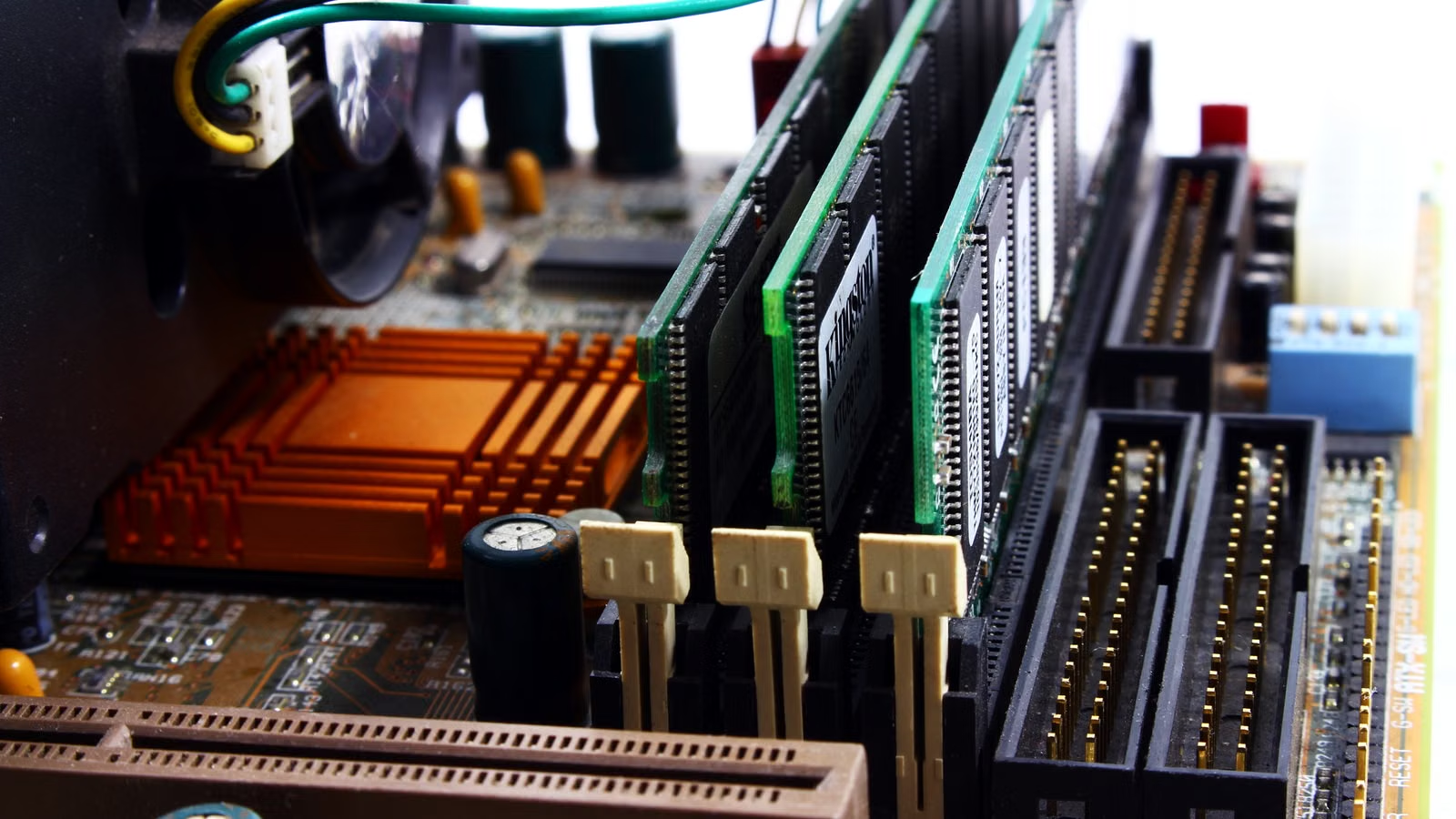
SMIC’s strongest memory-related exposure does not come from DRAM, 3D NAND, or HBM. It comes from embedded non-volatile memory and mature specialty processes. Technologies such as eNVM, eFlash, EEPROM, MTP, OTP, and NOR Flash are commonly used in MCUs, smart cards, consumer electronics, industrial control, IoT, and automotive electronics. They are better understood as a memory function or process capability inside a chip, not as a standalone commodity memory product line.
eNVM stands for embedded non-volatile memory. It can retain data after power is turned off and can be integrated with logic circuits on the same chip. TSMC’s explanation of eFlash/eNVM classifies OTP, MTP, flash, MRAM, and RRAM as non-volatile memory technologies. This helps clarify an important point: embedded memory is a process capability, not necessarily evidence that a company sells standalone memory chips under its own brand.
NOR Flash is another area that is often misunderstood. Infineon’s explanation of NOR Flash emphasizes its use in code storage, firmware, boot code, and devices that require direct access to program instructions. Its logic is different from NAND Flash, which is used for large-capacity data storage, and also different from DRAM, which is used as high-speed system memory. NOR Flash is common in embedded systems, automotive ECUs, industrial controllers, communications equipment, and low-power electronics.
| Memory-related technology | Typical use | Relationship with SMIC | Same as DRAM/NAND/HBM? |
|---|---|---|---|
| eNVM | MCU, smart cards, IoT | Process platform related | No |
| EEPROM | Configuration, calibration, small data storage | Specialty process related | No |
| eFlash | Embedded program storage in MCUs | Embedded memory related | No |
| NOR Flash | Firmware, boot code, code storage | Mature-node / specialty foundry related | No |
| DRAM/NAND/HBM | Main memory, large storage, AI high-bandwidth memory | Not the main business line | No |
When you see terms such as “Flash,” “EEPROM,” or “NVM,” you should not immediately classify the company as a memory stock. Many MCUs, security chips, smart card chips, power management chips, sensor chips, and other devices may need a small amount of embedded memory to store programs, configuration settings, calibration parameters, or security data. These requirements can generate wafer foundry opportunities, but they are not the same as the global DRAM, NAND, or HBM market cycle.
For 0981.HK, this type of memory-related exposure is closer to “mature-node demand” and “specialty process platform capability.” It may affect customer orders, process mix, utilization, and some product ASPs, but it is not the same as direct exposure to DRAM or NAND price increases. Therefore, when analyzing SMIC’s relationship with memory, you should clearly separate eNVM/NOR/EEPROM from commodity memory products.
Summary: SMIC’s memory-related exposure mainly comes from eNVM, eFlash, EEPROM, MTP, OTP, NOR Flash, and MCU embedded memory, rather than DRAM, 3D NAND, or HBM manufacturing. These memory-related technologies often serve embedded systems and mature-node applications, and they form part of a foundry process platform. They show that SMIC can manufacture some memory-related chips, but they do not make the company a memory chip producer. If you mix up eNVM with HBM, or NOR Flash with NAND manufacturing, you may misread SMIC’s supply chain position and investment logic.
Why Should SMIC Not Be Treated Simply as a DRAM, NAND, or HBM Concept Stock?
SMIC should not be treated simply as a DRAM, NAND, or HBM concept stock. The key variables for DRAM, NAND, and HBM are memory manufacturer capacity, product pricing, bit growth, inventory cycles, packaging capability, and customer qualification. SMIC’s key variables are wafer foundry orders, mature-node demand, utilization, depreciation, gross margin, and customer structure. Memory upcycles may indirectly affect customer orders, but they do not mean SMIC has direct HBM or NAND revenue leverage.
DRAM is a key system memory product for servers, PCs, smartphones, and consumer electronics. NAND is mainly used in SSDs, smartphones, and mass storage. HBM is used in AI GPUs and high-performance computing. Their price cycles, supply-demand balance, and earnings leverage are mainly driven by memory manufacturers such as Micron, Samsung Electronics, and SK hynix. SMIC is not a mainstream manufacturer of these products, nor does it disclose DRAM/NAND/HBM as standalone revenue lines.
| Topic | Memory manufacturer logic | SMIC logic |
|---|---|---|
| DRAM price increase | Directly affects product ASP | May affect customer costs and orders |
| NAND cycle | Affects flash manufacturer profits | Indirectly affects end-market demand |
| HBM expansion | Benefits HBM makers and advanced packaging | Mostly an indirect chain for SMIC |
| AI servers | Drive high-end memory and advanced packaging | May support local chip foundry demand |
| Mature nodes | Not the main focus for memory IDMs | Important focus for SMIC |
Memory price increases can also have two-way effects on SMIC. On the positive side, AI, HBM, and high-end memory demand may occupy global advanced capacity, causing some mature-node orders to return to local foundries with available capacity. Reuters reported that, as AI, memory, and high-bandwidth applications consume overseas foundry resources, foreign clients shifting orders back to China became one of the trends observed by SMIC.
On the negative side, higher memory prices may raise the bill of materials for end devices, especially lower-end smartphones, consumer electronics, and some IoT devices. If customers reduce production or delay orders due to cost pressure, some mature-node demand at SMIC could also be affected. Another Reuters report on SMIC’s expansion noted that the company planned to add 12-inch wafer capacity, while also pointing out that new equipment would raise depreciation costs, which could pressure profitability.
The relationship between HBM and SMIC is more indirect. The key parts of the HBM supply chain include DRAM dies, TSVs, advanced packaging, 2.5D/3D interconnects, AI GPU customers, and packaging capacity. If SMIC benefits, it is more likely through Chinese semiconductor localization, mature-node substitution, customer order spillover, and a stronger domestic supply chain, not through direct sales of HBM products. It would be inaccurate to describe HBM expansion as “SMIC’s HBM revenue growth.”
Summary: SMIC may be influenced by semiconductor localization, AI-related demand spillover, and global capacity redistribution, but it should not be valued directly using an HBM or memory manufacturer framework. Memory price cycles may affect some customer demand and end-device costs, but they are not SMIC’s core profit driver. When analyzing 0981.HK, treat DRAM/NAND/HBM as external variables rather than main business labels. More important variables include foundry orders, utilization, wafer shipments, process mix, depreciation pressure, customer structure, and mature-node competition.
From Financial Structure: How Does SMIC 0981.HK Actually Make Money?
SMIC 0981.HK’s financial structure looks much more like a wafer foundry than a memory stock. The company discloses revenue by industry, application, region, wafer size, and service type, with a focus on IC wafer foundry, 8-inch and 12-inch capacity, consumer electronics, smartphones, computers and tablets, industrial and automotive, and connectivity and IoT. It does not disclose revenue by DRAM, NAND, or HBM product lines, so you cannot explain its whole performance using the memory manufacturer price cycle.
In 2025, SMIC recorded revenue of US$9,326.8 million, up 16.2% year over year. Gross margin was 21.0%, up 3 percentage points from 2024. The annual report also stated that the improvement was related to higher wafer shipments, increased utilization, and changes in product mix. These are typical wafer foundry drivers, not memory product pricing drivers.
| Financial metric | 2025 figure | What it tells you |
|---|---|---|
| Total revenue | US$9.3268 billion | Semiconductor manufacturing business expanded |
| IC wafer foundry revenue | US$8.7964 billion | Foundry service is the core |
| Consumer electronics share | 43.2% | Mature-node demand is important |
| Smartphone share | 23.1% | End-market demand affects orders |
| 12-inch wafer revenue share | 77.1% | 12-inch capacity is important |
| 8-inch wafer revenue share | 22.9% | Mature specialty processes still contribute |
By service type, the annual report disclosed 2025 IC Industry revenue of US$9.3268 billion, of which IC wafer foundry revenue was US$8.7964 billion and others accounted for US$530.4 million. This shows that wafer foundry remains the company’s main business. Even if some customer products are memory-related chips, SMIC recognizes revenue mainly from wafer manufacturing services, not from branded memory chip sales.
By application, 2025 IC wafer foundry revenue came from consumer electronics at 43.2%, smartphones at 23.1%, computers and tablets at 14.8%, industrial and automotive at 11.0%, and connectivity and IoT at 7.9%. These end applications may include eNVM, NOR Flash, MCU embedded memory, and other memory functions, but they may also include logic, analog, CIS, RF, power management, and display driver products. You cannot classify a foundry as a memory company simply because the end devices use memory.
Wafer size and capital expenditure also reflect the foundry model. In 2025, 12-inch wafers contributed 77.1% of SMIC’s revenue, while 8-inch wafers contributed 22.9%. At the same time, acquisition of property, plant, and equipment reached US$8.3998 billion. For a foundry, expansion can increase future capacity, but it also brings depreciation pressure. During a capacity ramp, if orders, ASP, or product mix do not keep up, gross margin may come under pressure.
Summary: SMIC’s financial structure supports its identity as a wafer foundry stock. Its main revenue line is IC wafer foundry, its applications cover consumer electronics, smartphones, computers and tablets, industrial and automotive, and connectivity and IoT, and its wafer mix is led by 12-inch capacity with 8-inch as a secondary contributor. When analyzing 0981.HK, focus on utilization, wafer shipments, ASP, gross margin, capital expenditure, and depreciation. Do not focus only on DRAM, NAND, or HBM prices. Memory-related demand can affect some customer orders, but it is not the core disclosure framework of the company’s financial structure.
What Metrics and Risks Should Investors Track for SMIC 0981.HK?
Investors in 0981.HK should focus on utilization, wafer shipments, ASP, gross margin, depreciation, capital expenditure, customer structure, regional revenue, and policy risks. The memory cycle can be observed as an external variable, but it cannot replace SMIC’s own foundry order and capacity logic. If you treat SMIC as a pure memory stock, you may misread its revenue leverage, profit sources, and key risks.
| Metric to track | Positive signal | Risk signal |
|---|---|---|
| Utilization | Higher utilization | New capacity ramp pressures margin |
| Gross margin | Better utilization and mix | Rising depreciation and pricing pressure |
| Capital expenditure | Stronger future capacity | Higher depreciation burden |
| Application mix | Growth in industrial, automotive, and IoT | Weakening consumer electronics and smartphone demand |
| Regional revenue | Stable local demand | High dependence on one region |
| Policy risk | Localization support | Export controls and supply chain restrictions |
Among operating indicators, utilization is especially important. SMIC’s annual report disclosed that its utilization rate reached 93.5% in 2025, up 8 percentage points from the previous year. Foundries are asset-heavy and depreciation-intensive. Higher utilization usually helps absorb fixed costs, but if new capacity ramps slowly, depreciation may rise before revenue is fully released, putting pressure on gross margin.
Regional revenue is also important for risk analysis. In 2025, SMIC generated about 85.6% of its revenue from China, 11.6% from the United States, and 2.8% from Eurasia. A high domestic revenue share highlights local chip demand and supply chain localization opportunities, but it also means investors need to keep monitoring domestic customer demand, consumer electronics cycles, smartphone orders, industrial and automotive expansion, and the policy environment.
On the risk side, the annual report’s forward-looking statements highlight uncertainties such as semiconductor cycles, market conditions, supply shortages, technology adoption, exchange-rate fluctuations, and geopolitical risks. For SMIC, external export controls, equipment and software support, parts supply, customer order changes, capital expenditure, and depreciation can all affect earnings and valuation.
If you compare semiconductor stocks across Hong Kong, U.S., and A-share markets, trading costs should also be part of your framework. Hong Kong-listed 0981.HK, U.S.-listed semiconductor equipment and memory companies, and A-share 688981.SH trade in different markets with different currencies, fee structures, liquidity, and FX risks. You can use Biya real-time FX rates to observe major currency conversions, then confirm the final cost through order pages and account statements. Biya charges US$0 commission for U.S. stock trading, while platform fees, external institution fees, and other charges are subject to the fee center and order page. If the relevant service is available in your region, you can also review U.S. stock trading fees.
Summary: Investing in SMIC should be based on foundry metrics, not only on the memory cycle. Utilization, wafer shipments, ASP, gross margin, capital expenditure, depreciation, application mix, and regional revenue are the main variables for understanding 0981.HK. Memory prices, HBM momentum, and AI server demand can be external variables, but they cannot replace foundry order and capacity logic. You should also monitor export controls, supply chain restrictions, mature-node competition, Hong Kong market liquidity, FX risk, and trading fees. Public market information, trading rules, and fee structures can help build an analytical framework, but they do not constitute investment advice.
If you study semiconductor companies such as SMIC, Hua Hong Semiconductor, TSMC, Micron, SK hynix, and Samsung Electronics, what you need is a cross-market comparison framework. Hong Kong stocks include 0981.HK and 1347.HK, U.S. markets include memory manufacturers and equipment names, and A-shares include 688981.SH and the local semiconductor supply chain. You can use Biya to help monitor multi-asset markets, and combine Hong Kong stock search with U.S. stock search to compare names across different markets. Availability of related services depends on user location, identity verification results, platform rules, and applicable laws and regulations. Before making any transaction, you should rely on order pages, account statements, and local regulatory requirements.
FAQ
Is SMIC 0981.HK a Memory Chip Stock?
No, SMIC is not a typical memory chip stock. It is a wafer foundry that can manufacture some memory-related chips for customers, but it does not primarily sell proprietary DRAM, NAND, or HBM products. To analyze 0981.HK, focus first on capacity, gross margin, and foundry orders.
Can SMIC Manufacture NOR Flash or EEPROM?
SMIC is related to memory-related processes such as NOR Flash, EEPROM, eFlash, and eNVM. These businesses are more closely tied to specialty and mature-node foundry services, often used in MCUs, smart cards, IoT, and industrial control, rather than commodity DRAM or NAND manufacturing.
What Is the Difference Between SMIC and a Memory Design Company?
SMIC provides wafer manufacturing services, while a memory design company defines and sells memory chip products. The two may have a foundry-customer relationship, but their revenue sources, inventory risks, and valuation indicators are different. They should not be analyzed with the same memory-cycle framework.
Does SMIC Directly Benefit From HBM Price Increases?
SMIC does not directly benefit from HBM price increases in the same way as HBM manufacturers. HBM strength may indirectly affect SMIC through localization demand, mature-node order spillover, or customer foundry demand, but SMIC should not be described as directly selling HBM products.
What Key Metrics Matter Most for Investing in SMIC?
Investors should focus on utilization, wafer shipments, ASP, gross margin, capital expenditure, depreciation, application mix, and regional revenue. The memory cycle can be an external variable, but it cannot replace the foundry’s own capacity and order indicators.
How Are SMIC Hong Kong Shares 0981.HK Different From A-Shares 688981?
0981.HK and 688981 refer to the same company, but they trade in different markets and currencies. 0981.HK trades in Hong Kong, while 688981 trades on the STAR Market. Investors need to consider account access, trading rules, fees, liquidity, and FX risk separately.
*This article is provided for general information purposes and does not constitute legal, tax or other professional advice from BiyaPay or its subsidiaries and its affiliates, and it is not intended as a substitute for obtaining advice from a financial advisor or any other professional.
We make no representations, warranties or warranties, express or implied, as to the accuracy, completeness or timeliness of the contents of this publication.
Related Blogs of

Is NetApp an AI Infrastructure Stock? Cloud Data Management and Enterprise Storage Positioning


HPE, Dell, and Enterprise Storage: Which Company Looks More Like an AI Infrastructure Player?

How to Read Seagate STX Earnings: Nearline HDD, Free Cash Flow, and Shareholder Returns

Why Is Seagate Getting Attention from AI Data Centers? Can a Non-Chip Stock Benefit Too?

Choose Country or Region to Read Local Blog
 Australia
 Austria
 Belgium
 Canada
 Cyprus
 Czech Republic
 Denmark
 Estonia
 Finland
 France
 Germany
 Greece
 Hong Kong
 India
India Indonesia
 Ireland
 Italy
Italy Japan
Japan Latvia
 Lithuania
 Luxembourg
 Malaysia
 Malta
Malta Morocco
 Nepal
Nepal Netherlands
 New Zealand
 Norway
 Pakistan
 Philippines
 Poland
 Portugal
 Romania
 Singapore
 Slovakia
 Slovenia
 South Africa
 South Korea
 Spain
Spain Sweden
 Thailand
 The United States
 Turkey
 United Arab Emirates
 United Kingdom
 Vietnam
Contact Us




BIYA GLOBAL LLC is registered with the Financial Crimes Enforcement Network (FinCEN), an agency under the U.S. Department of the Treasury, as a Money Services Business (MSB), with registration number 31000218637349, and regulated by the Financial Crimes Enforcement Network (FinCEN).
BIYA GLOBAL LIMITED is a registered Financial Service Provider (FSP) in New Zealand, with registration number FSP1007221, and is also a registered member of the Financial Services Complaints Limited (FSCL), an independent dispute resolution scheme in New Zealand.