Is NetApp an AI Infrastructure Stock? Cloud Data Management and Enterprise Storage Positioning




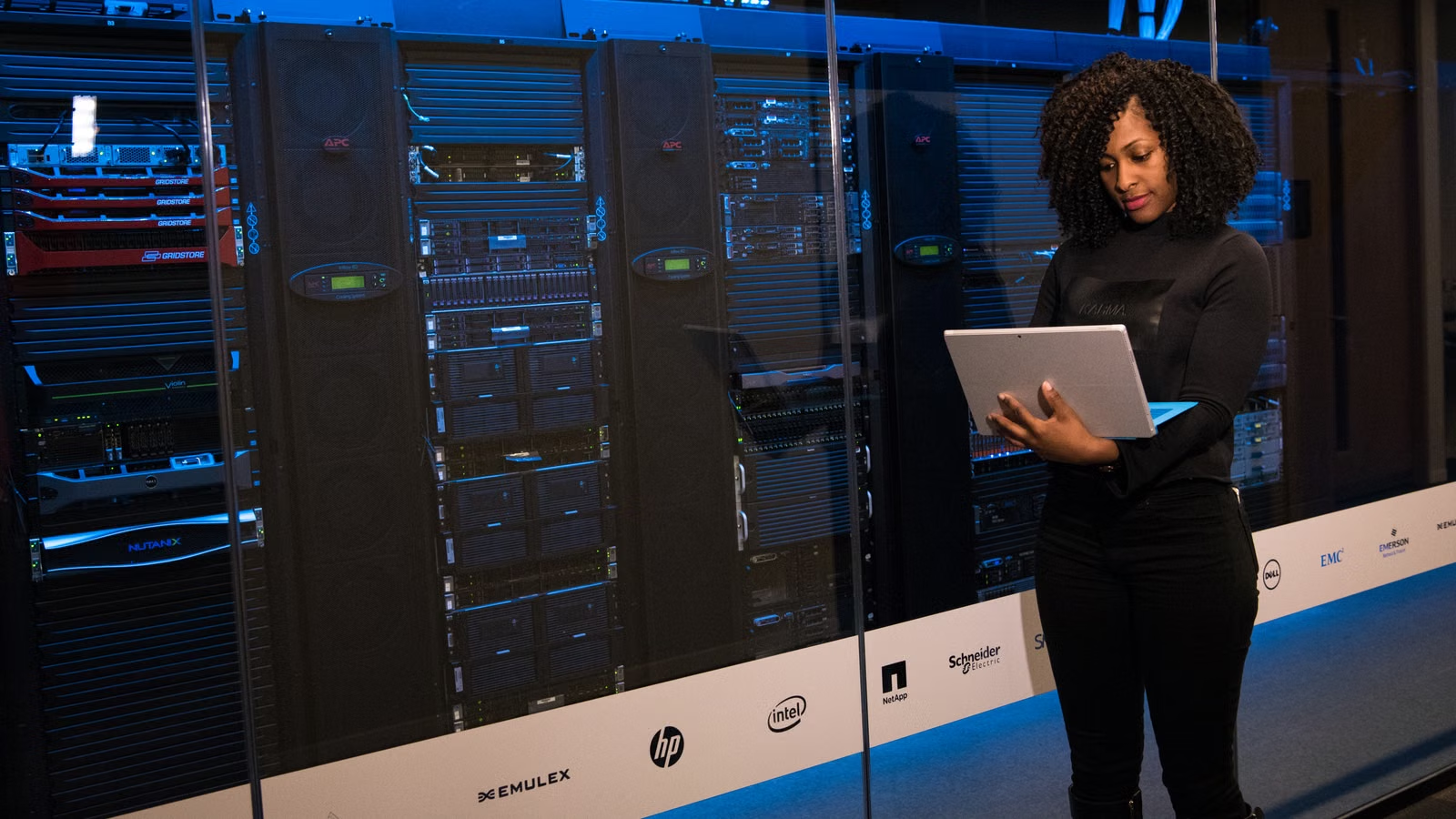
NetApp can be viewed as an AI infrastructure-related stock, but it is not an AI chip stock, nor is it simply a company selling hard drives or flash storage devices. To understand NTAP, the key is to look at how enterprise AI uses data: data must be stored, protected, migrated, governed, and kept available across on-premises, public cloud, and hybrid cloud environments. NetApp’s value sits in this “data infrastructure layer.” Through ONTAP, AFF all-flash systems, StorageGRID, BlueXP, Keystone, and NVIDIA-related collaborations, NetApp helps enterprises turn fragmented data into assets that are manageable, recoverable, and usable for AI.
Key Takeaways
- NetApp’s AI positioning is in the data infrastructure layer, not the chip compute layer.
- Cloud data management is what distinguishes NTAP from traditional storage hardware stocks.
- ONTAP, AFF, StorageGRID, and BlueXP form NetApp’s hybrid cloud data platform.
- All-flash array revenue and Public Cloud revenue are key financial validation points.
- Main risks include valuation, enterprise IT spending, cloud growth, and competitive pressure.
Is NetApp Really an AI Infrastructure Stock?

NetApp can be considered an AI infrastructure-related stock, but it is not an AI chip stock. Its role is not to manufacture GPUs, HBM, or advanced process chips, but to help enterprise data be accessed by AI systems safely, reliably, and efficiently. You can place NetApp in the data layer of the AI value chain: compute runs models, networks move data, while storage and data management make enterprise data accessible, protected, governed, and portable.
In its FY2026 fourth-quarter and full-year results, NetApp describes itself as an Intelligent Data Infrastructure company. This positioning is broader than “enterprise storage company” because it includes not only storage hardware, but also hybrid cloud data management, security, automation, and AI data platforms. For investors, the question is not whether NTAP has chips, but whether it can help enterprises connect data to AI workflows.
| Company or Category | Position in the AI Chain | Difference from NetApp |
|---|---|---|
| Nvidia | GPU, networking, AI software ecosystem | Direct provider of core compute |
| Micron | HBM, DRAM, NAND | Tied to the memory chip cycle |
| Seagate / WDC | Nearline HDD and mass-capacity storage | More driven by cost per TB and capacity cycles |
| Pure Storage | All-flash enterprise platform | More focused on low latency and high-performance data |
| NetApp | Hybrid cloud data management and enterprise storage | Focused on unified data platforms, governance, and cloud connectivity |
AI infrastructure is not only about GPUs. When enterprises move AI from proof of concept to production, they also need to solve data permissions, data silos, backup and recovery, cross-cloud migration, compliance audits, and cybersecurity. These are the areas where NetApp is strong. It does not determine model training speed like Nvidia, nor is it directly driven by HBM price cycles like Micron, but it can influence whether enterprise data can be reliably used by AI applications.
Enterprise AI adoption also explains NetApp’s position. Most enterprises do not train general-purpose foundation models from scratch. Instead, they build around their own data through RAG, fine-tuning, inference, knowledge bases, customer service automation, risk control, and production data analytics. These use cases require more than models. They require data to be found, classified, protected, and accessed. That is why NetApp’s enterprise data management capabilities are part of the AI infrastructure discussion.
Summary: NetApp can be considered an AI infrastructure-related stock, but it belongs to the data layer, not the compute layer. When looking at NTAP, you should not only ask whether it produces AI chips. You should ask whether enterprise AI needs unified data platforms, hybrid cloud storage, data protection, and security governance. If the bottleneck in enterprise AI shifts from “do we have a model?” to “can our data safely enter the model?”, NetApp’s value becomes easier to understand.
Why Is Cloud Data Management NetApp’s Core Positioning?

Cloud data management is NetApp’s core because enterprise data usually does not live in only one place. Your data may exist across on-premises data centers, AWS, Azure, Google Cloud, object storage, databases, file systems, and container environments at the same time. Before AI can use this data, enterprises must solve access, migration, backup, permissions, cost, and security. NetApp’s role is to help enterprises manage this data consistently across hybrid cloud environments.
NetApp AI materials emphasize that enterprise AI needs to move from proof of concept to production, and that this requires scalable, secure, and manageable data infrastructure. In other words, the challenge of enterprise AI is not only “is the model powerful enough?” It also includes “where is the data?”, “who can access it?”, “how is it protected?”, “can it be used across clouds?”, and “is the cost controllable?”
| Enterprise Problem | Cloud Data Management Capability | Related NetApp Direction |
|---|---|---|
| Data is scattered across on-premises and cloud environments | Unified access and migration | ONTAP, Cloud Volumes ONTAP |
| AI data preparation is complex | Data discovery, classification, governance | AI Data Engine, metadata management |
| Business continuity requirements are high | Backup, disaster recovery, recovery | BlueXP, ransomware resilience |
| Cloud costs are hard to control | Tiering, capacity optimization, automation | Keystone, tiering |
| Multicloud environments are inconsistent | Cross-cloud data management | Hybrid multicloud platform |
Why can enterprise AI not function without data management? The reason is simple: AI applications often need access to existing enterprise data, and that data is usually scattered, sensitive, inconsistent in format, and subject to access and compliance constraints. Financial institutions cannot move customer data freely, healthcare companies need to protect privacy, and manufacturing data may be spread across factories, edge nodes, and cloud platforms. If data cannot be securely organized, AI models are unlikely to enter real production workflows.
Hybrid cloud is also a foundation of NetApp’s differentiation. Many enterprises will not move all their data into a single public cloud, nor will they remain entirely on-premises. They are more likely to use a combination of on-premises, public cloud, and multicloud environments. Through cloud-native storage services, the ONTAP ecosystem, and unified control capabilities, NetApp helps data remain relatively consistent in management across different environments.
For investors, cloud data management matters more than simply “selling storage hardware” because it determines whether NetApp can evolve from a traditional enterprise storage company into an AI and cloud infrastructure company. If NTAP’s Public Cloud, all-flash, data protection, and AI data platform revenue continue to grow, the market is more likely to view it as an enterprise data infrastructure platform rather than a pure hardware vendor.
Summary: Cloud data management is not simply putting data into the cloud. It means keeping enterprise data accessible, protected, governed, and portable across on-premises, cloud, and multicloud environments. NetApp’s core value is reducing enterprise data complexity and enabling data to enter AI, analytics, and mission-critical business workflows. To understand NTAP’s AI infrastructure positioning, you first need to understand that “data management” is closer to its long-term thesis than “storage capacity.”
How Do ONTAP, AFF, StorageGRID, and BlueXP Form an Enterprise Storage Platform?

NetApp’s enterprise storage platform is not a single piece of hardware. It is a complete data management system built around ONTAP, AFF, StorageGRID, BlueXP, Keystone, and other products and services. You can think of ONTAP as the underlying data management software, AFF as the high-performance all-flash array, StorageGRID as object storage, BlueXP as the cross-environment control plane, and Keystone as a more flexible storage-as-a-service model.
ONTAP is NetApp’s core asset. It is used to manage, protect, and move data across on-premises and cloud environments, covering all-flash, hybrid-flash, software-defined storage, and cloud deployments. For enterprise customers, ONTAP’s value is not one isolated feature. It is the ability to provide relatively consistent data management, replication, protection, and migration capabilities across different environments.
| Product / Platform | Main Role | AI or Enterprise Use Case |
|---|---|---|
| ONTAP | Data management OS | Cross-environment data consistency and control |
| AFF A-Series | High-performance all-flash | AI, databases, mission-critical applications |
| AFF C-Series | Capacity-oriented flash | Balance between cost and performance |
| StorageGRID | Object storage | AI data lakes, unstructured data |
| BlueXP / Console | Control and management plane | Backup, migration, security, governance |
| Keystone | Storage as a service | Flexible consumption and cost management |
AFF A-Series targets high-performance enterprise workloads, including databases, mission-critical applications, virtualization, and data scenarios that need low-latency access. In AI use cases, all-flash storage does not replace every form of storage, but it is well suited to parts of the workflow where data access is frequent, throughput requirements are high, and latency is sensitive. Unlike HDDs, all-flash systems focus more on performance and responsiveness.
StorageGRID is better suited to object storage, data lakes, unstructured data, backup, and archiving. NetApp describes StorageGRID as scalable object storage for AI and modern data workloads. For AI, unstructured data is especially important because enterprise documents, images, logs, audio and video, sensor data, and archived materials may all become inputs for RAG or analytics systems.
BlueXP brings storage and data services across environments into one control plane, helping enterprises with protection, governance, and hybrid cloud management. Keystone offers a storage-as-a-service model, allowing enterprises to consume storage capabilities in a more service-like way, which can be useful when budgets, capacity needs, and project timelines are uncertain.
Summary: NetApp’s enterprise storage positioning is not built around one device. It is built around a data platform composed of ONTAP, AFF, StorageGRID, BlueXP, and Keystone. To understand NTAP’s AI infrastructure logic, you cannot only look at hardware shipments. You need to see whether NetApp can cover the full enterprise data lifecycle from mission-critical business systems, data lakes, hybrid cloud, and object storage to AI workflows. This is also what separates NetApp from traditional hardware-cycle stocks.
What Does NetApp’s Partnership with NVIDIA Mean?
NetApp’s partnership with NVIDIA shows that it is entering the enterprise AI data platform ecosystem, but it does not mean NetApp has become a compute company. NetApp still does not provide GPUs, nor does it directly compete in HBM or advanced semiconductor processes. The significance of the partnership is that AI factories need data management, data access, unstructured data connectivity, and security governance, and NetApp can connect the enterprise data layer to NVIDIA’s AI compute ecosystem.
In March 2026, NetApp said it would support NVIDIA STX, a modular rack-scale storage reference architecture for agentic AI. In the related statement, NetApp emphasized that its data management capabilities can help bridge the gap between AI compute and unstructured data storage. This wording is important: the partnership does not turn NetApp into a GPU company. It helps enterprise data enter AI factories more easily.
| Partnership Direction | Problem It Solves | Meaning for NTAP |
|---|---|---|
| NVIDIA AI Data Platform | Connects enterprise data to AI applications | Enters the AI data platform ecosystem |
| NVIDIA STX | Storage architecture for agentic AI | Supports high-performance data engines |
| AI Data Engine | Finds, manages, and prepares data | Moves from storage toward data intelligence |
| AIPod / DGX architecture | AI deployment reference architecture | Improves enterprise AI deployment credibility |
| RAG / inference | Uses private enterprise data | Expands production AI use cases |
NetApp AFX and AI Data Engine are also positioned around enterprise AI data pipelines. AFX targets hybrid multicloud AI data pipelines, emphasizing a unified data foundation, enterprise-grade management, and security capabilities. NetApp AIPod is a reference architecture for enterprise AI deployments, aiming to combine compute, storage, and data management into a more complete architecture and reduce the complexity of building systems from scratch.
Why does an AI factory need a data platform? Because an AI factory is not just a GPU cluster. It also needs data ingestion, indexing, access control, backup, recovery, data quality, metadata management, and security audits. If data cannot enter models quickly and safely, GPU utilization and AI production efficiency will suffer. NetApp’s value is to help enterprises connect data to AI gradually without completely breaking their existing IT architecture.
However, the partnership should not be overinterpreted. NVIDIA ecosystem validation, reference architectures, and AI Data Engine strengthen NetApp’s AI narrative, but revenue growth still depends on customer adoption, order size, product gross margin, all-flash revenue, Public Cloud revenue, and free cash flow. AI partnerships are an entry point, not a financial result by themselves.
Summary: NetApp’s partnership with NVIDIA shows that it has a place in enterprise AI data platforms, but it does not mean NetApp has become a chip company. When looking at these partnerships, you should focus on whether ecosystem validation turns into real customer production deployments. The real test is not the headline, but whether all-flash growth, Public Cloud growth, AI data platform adoption, gross margin, and free cash flow continue to improve.
Do the Latest Financial Results Validate NTAP’s AI and Cloud Data Management Logic?
NTAP’s AI and cloud data management logic has been partially validated in the latest financial results, but it is not the same as a high-growth AI chip story. NetApp’s FY2026 Q4 and full-year results showed solid performance in revenue, all-flash arrays, Public Cloud, billings, and free cash flow. You can understand it as a “stable enterprise data platform plus AI infrastructure upside” rather than a pure high-beta AI growth stock.
According to NetApp’s latest reported results, Q4 FY2026 net revenues were $1.948 billion, up 12% year over year. FY2026 full-year revenue was $6.925 billion, up 5%. Q4 all-flash array net revenue was $1.2 billion, up 18%. Q4 Public Cloud net revenue was $182 million, up 11%. FY2026 full-year billings were $7.206 billion, up 6%.
| Metric | What It Shows | How to Read It |
|---|---|---|
| Net revenue | Overall demand | Enterprise IT and cloud data management demand |
| All-flash array revenue | High-performance storage demand | AI, databases, mission-critical workloads |
| Public Cloud revenue | Cloud data management progress | Hybrid cloud and cloud-native storage |
| Free cash flow | Cash quality | Whether dividends, buybacks, and investment are supported |
| Guidance | Management visibility | Whether demand has continuity |
| Billings | Commercial activity strength | Contract and purchasing momentum |
Why does all-flash growth matter? Because it shows that customers still need high-performance enterprise storage. AI, databases, virtualization, analytics, trading systems, and mission-critical applications can all drive all-flash purchases. If all-flash revenue continues to grow, it suggests NetApp is not only maintaining revenue from existing customers, but also retaining competitiveness in high-performance data infrastructure.
Public Cloud revenue should also be viewed separately. It is not NetApp’s largest revenue source, but it affects how the market understands NTAP’s long-term positioning. If Public Cloud continues growing, it indicates that NetApp’s connection with hyperscalers, hybrid cloud customers, and cloud data management demand is strengthening. Conversely, if cloud revenue slows, the market may once again view NTAP more as a traditional enterprise storage company.
If you follow U.S. stocks such as NTAP, you should also understand trading costs in addition to financial metrics. U.S. stock trading costs may include not only commissions, but also platform fees, external agency fees, transaction activity fees, and other charges. Taking U.S. stock trading fees as an example, Biya charges $0 commission for U.S. stock trading, while platform fees, external agency fees, and other charges are subject to the fee center and order page. Fees do not replace fundamental analysis, but they can affect the actual experience of staged trading, small orders, and portfolio adjustments.
Summary: NTAP’s AI and cloud data management logic has been partially validated by FY2026 Q4 results, especially through all-flash array revenue, Public Cloud revenue, billings, and free cash flow. However, reported results and forward guidance should be separated. NetApp’s FY2027 Q1 and full-year revenue outlook represents management expectations, not realized results. Its strengths are enterprise customers, platform stability, and cash flow, while its limitation is that growth may not be as fast as pure AI chip stocks.
How Is NetApp Different from Pure Storage, Seagate, and Western Digital?
NetApp differs from Pure Storage, Seagate, and Western Digital because it sits in a different data layer. NetApp is more focused on hybrid cloud data management and enterprise storage platforms. Pure Storage is more focused on all-flash, high-performance, subscription-based data platforms. Seagate and Western Digital are more tied to nearline HDDs, mass capacity, cost per TB, and cloud data center capacity cycles. All of them may benefit from AI data growth, but they benefit from different parts of the stack.
| Company | Core Positioning | Key Metrics |
|---|---|---|
| NetApp | Hybrid cloud data management, enterprise storage | All-flash, Public Cloud, free cash flow |
| Pure Storage | All-flash enterprise platform, subscriptionization | ARR, RPO, gross margin, AI customers |
| Seagate | HDD mass-capacity storage | Nearline HDD, ASP, gross margin |
| Western Digital | HDD and capacity cycle | Cloud customer orders, product mix, cash flow |
| Micron | Memory chips | DRAM, NAND, HBM cycles |
| Nvidia | AI compute platform | GPU, networking, software ecosystem |
The difference between NetApp and Pure Storage is that NetApp emphasizes hybrid cloud, consistent data management, the enterprise ecosystem, and Public Cloud, while Pure Storage emphasizes all-flash, low latency, high-performance platforms, and subscription revenue. Both serve enterprise customers, and both can tell an AI data infrastructure story, but the metrics investors watch are not identical. PSTG is more focused on ARR, RPO, gross margin, and all-flash platform expansion, while NTAP is more focused on all-flash, Public Cloud, billings, free cash flow, and hybrid cloud control capabilities.
NetApp is also not the same type of company as HDD vendors. Seagate and Western Digital are more tied to nearline HDD demand, cloud data center capacity expansion, cost per TB, and large-customer procurement cycles. NetApp is more focused on enterprise data management, cloud connectivity, software control planes, and hybrid cloud architecture. In other words, HDD companies solve “low-cost retention of massive data,” while NetApp solves “how enterprise data is managed and used for business.”
When analyzing AI storage stocks, the first step is not to find which company sounds most like an AI concept stock. The first step is to determine where the company sits in the data stack: compute, memory, all-flash, HDD, object storage, hybrid cloud management, or data security. Different layers correspond to different valuation drivers and risks. For example, HDD stocks are more affected by pricing cycles, all-flash companies are more affected by high-performance demand and component costs, while hybrid cloud data platforms are more affected by enterprise IT budgets and cloud migration cycles.
Summary: NetApp’s uniqueness is not that it looks most like a chip stock. It is better understood as an enterprise hybrid cloud data platform company. When looking at NTAP, focus on enterprise data platform demand, all-flash growth, Public Cloud progress, free cash flow, and AI data management product adoption. Putting NTAP, PSTG, STX, WDC, and MU into one broad “AI storage stock” basket risks missing their very different revenue sources, margin structures, and cycle risks.
What Mistakes, Risks, and Validation Signals Should NTAP Investors Watch?
The biggest mistake in investing in NTAP is treating it simply as an AI chip stock, or assuming that NVIDIA partnerships alone are enough without financial validation. NetApp’s opportunity comes from enterprise AI data infrastructure, hybrid cloud data management, all-flash growth, and strong cash flow. Its risks come from slower enterprise IT spending, cloud consumption volatility, rising flash costs, intensifying competition, and valuation already pricing in AI expectations.
| Metric to Watch | Positive Signal | Warning Signal |
|---|---|---|
| All-flash revenue | Continued growth | Slower growth or pricing pressure |
| Public Cloud revenue | Cloud data management progress | Cloud consumption slows |
| Free cash flow | Solid cash quality | Profit fails to convert into cash |
| Gross margin | Stable product and service profitability | Flash costs or competitive pressure |
| AI Data Engine / AFX | AI platform adoption | Many launches, limited revenue |
| FY2027 guidance | Management confidence | Guidance cut |
The first risk is enterprise IT spending. NetApp’s customers are largely enterprises and institutions. If macro conditions lead to tighter IT budgets, storage upgrades, hybrid cloud projects, and AI data platform deployments may be delayed. The second risk is competition. Pure Storage, Dell, HPE, IBM, cloud-native storage services from hyperscalers, and other data platform companies can all compete with NetApp in different customer scenarios.
The third risk is cost and gross margin. The all-flash business is affected by NAND, SSDs, supply chains, product mix, and price competition. If flash costs rise or large customers gain more bargaining power, gross margins may come under pressure. The fourth risk is AI product commercialization. AI Data Engine, AFX, AIPod, and NVIDIA collaborations strengthen the narrative, but the ultimate question is whether customers actually deploy them and generate sustainable revenue.
Ordinary investors tracking NTAP can focus on several core indicators: total revenue, all-flash array revenue, Public Cloud revenue, billings, gross margin, free cash flow, dividends and buybacks, FY2027 guidance, and management commentary on AI data platforms and cloud data management. Single-day stock reactions and AI headlines are not enough. Multi-quarter data matters more.
Summary: NTAP’s opportunity comes from stable enterprise customers, hybrid cloud data management, all-flash growth, AI data platforms, and free cash flow. Its risks come from valuation, enterprise IT spending, cloud consumption volatility, component costs, and competitive pressure. A more reasonable view is to treat NetApp as a “stable enterprise data platform plus AI infrastructure upside” company, rather than simply labeling it an AI concept stock. Only sustained financial and customer adoption evidence can make the AI infrastructure thesis more convincing.
If you follow NTAP because you want to understand U.S. stock opportunities created by AI data centers, cloud data management, and enterprise storage, the more important task is to build a continuous tracking framework: first identify where the company sits in the AI value chain, then check whether financial results validate demand, and finally consider trading costs and your own risk tolerance. Biya is a global multi-asset trading wallet that supports U.S. stocks, Hong Kong stocks, and cryptocurrency trading, and covers more than 190 countries and regions with payments in over 40 local currencies. You can use U.S. stock information to track related stocks such as NTAP, PSTG, STX, WDC, and NVDA, while also referring to company financials, fee structures, and order information. Biya charges $0 commission for U.S. stock trading, while platform fees, external agency fees, and other charges are subject to the fee center and order page. Service availability depends on your location, identity verification results, platform rules, and applicable laws and regulations. The content above only introduces public market information, trading rules, and fee structures, and does not constitute investment advice.
FAQ
Is NetApp an AI infrastructure stock?
NetApp can be viewed as an AI infrastructure-related stock, but it is not an AI chip stock. Its AI relevance comes from enterprise data management, hybrid cloud storage, all-flash arrays, ONTAP, AI Data Engine, and NVIDIA ecosystem collaboration, not from GPU or HBM manufacturing.
What is the difference between NetApp and Pure Storage?
NetApp is more focused on hybrid cloud data management and enterprise storage platforms, while Pure Storage is more focused on all-flash, high-performance, subscription-based data platforms. Both may benefit from enterprise AI, but NetApp is more tied to Public Cloud, ONTAP, and free cash flow, while Pure Storage is more tied to ARR, RPO, and all-flash growth.
What does NetApp cloud data management mean?
NetApp cloud data management means managing, protecting, migrating, and governing data across on-premises, public cloud, and hybrid cloud environments. Its value lies in helping enterprise data safely and reliably enter AI, analytics, and mission-critical business processes, rather than simply placing data in the cloud.
Why is NetApp’s all-flash growth important?
NetApp’s all-flash growth shows that enterprises still need high-performance storage. AI, databases, analytics, and mission-critical applications can all drive all-flash purchases. Investors should look at revenue growth, gross margin, order continuity, and Public Cloud progress together.
How should ordinary investors track NTAP earnings?
Ordinary investors should focus on total revenue, all-flash array revenue, Public Cloud revenue, billings, gross margin, free cash flow, FY2027 guidance, and management commentary on AI data platforms. They should not judge fundamentals only by single-day stock price movements.
What are the main risks of investing in NetApp NTAP?
The main risks of investing in NetApp NTAP include high valuation, slower enterprise IT spending, cloud consumption volatility, rising flash costs, intensifying competition, and weaker-than-expected commercialization of AI products. Before trading, investors should consider the latest financial results, fee structures, and their own risk tolerance.
*This article is provided for general information purposes and does not constitute legal, tax or other professional advice from BiyaPay or its subsidiaries and its affiliates, and it is not intended as a substitute for obtaining advice from a financial advisor or any other professional.
We make no representations, warranties or warranties, express or implied, as to the accuracy, completeness or timeliness of the contents of this publication.
Related Blogs of

HPE, Dell, and Enterprise Storage: Which Company Looks More Like an AI Infrastructure Player?


What Are the Bottlenecks in HBM Packaging? CoWoS, TCB, and the Link to Equipment Suppliers


Can SMIC Produce Memory Chips? The Difference Between a Wafer Foundry and a Memory Design Company


How to Read Seagate STX Earnings: Nearline HDD, Free Cash Flow, and Shareholder Returns
Choose Country or Region to Read Local Blog
 Australia
 Austria
 Belgium
 Canada
 Cyprus
 Czech Republic
 Denmark
 Estonia
 Finland
 France
 Germany
 Greece
 Hong Kong
 India
India Indonesia
 Ireland
 Italy
Italy Japan
Japan Latvia
 Lithuania
 Luxembourg
 Malaysia
 Malta
Malta Morocco
 Nepal
Nepal Netherlands
 New Zealand
 Norway
 Pakistan
 Philippines
 Poland
 Portugal
 Romania
 Singapore
 Slovakia
 Slovenia
 South Africa
 South Korea
 Spain
Spain Sweden
 Thailand
 The United States
 Turkey
 United Arab Emirates
 United Kingdom
 Vietnam
Contact Us




BIYA GLOBAL LLC is registered with the Financial Crimes Enforcement Network (FinCEN), an agency under the U.S. Department of the Treasury, as a Money Services Business (MSB), with registration number 31000218637349, and regulated by the Financial Crimes Enforcement Network (FinCEN).
BIYA GLOBAL LIMITED is a registered Financial Service Provider (FSP) in New Zealand, with registration number FSP1007221, and is also a registered member of the Financial Services Complaints Limited (FSCL), an independent dispute resolution scheme in New Zealand.