What Is Cold Data? Why AI Still Needs Long-Term Storage After Training and Inference





Cold data refers to data that is accessed infrequently and does not require real-time response, but still needs to be stored for the long term. For AI, the end of training does not mean data can be deleted, and the end of inference does not mean logs lose their value. Raw datasets, model versions, inference feedback, anomaly records, and audit evidence can all become useful again for retraining, quality review, compliance checks, and business analysis. The value of HDDs is not speed, but high capacity, lower cost per unit of storage, and nearline storage capability. That is why HDDs remain an important foundation for long-term AI cold data storage.
Key Takeaways
- Cold data is low-frequency data with long-term value, not useless data.
- After AI training, datasets, model versions, experiment records, and data sources still matter.
- Inference logs gradually cool down, but can still support evaluation, review, and retraining.
- HDDs are well suited to large-scale, low-frequency, cost-sensitive AI cold data storage.
- Cold data needs lifecycle management; it should not be stored forever or deleted casually.
- To understand HDD demand, investors should watch cloud capex, nearline HDDs, and data growth.
What Is Cold Data, and Why Is It Not “Useless Data”?

Cold data is data that is accessed infrequently, has weak real-time requirements, but still needs to be retained. The key question is not whether the data is useful today, but how often it is accessed, whether it may be needed in the future, and whether retrieval can wait. In AI scenarios, historical training corpora, old model versions, inference logs, backups, audit records, and multimedia datasets can all become cold data.
Many people misunderstand cold data because the word “cold” sounds like expired, idle, or worthless. In reality, cold data is often part of a company’s long-term data asset pool. It is simply not being called frequently at the moment. IBM’s explanation of multi-temperature storage follows this same logic: frequently accessed data stays on faster storage, while less frequently accessed data can be placed on slower and lower-cost storage.
| Data Type | Access Frequency | Latency Requirement | AI Scenario Example | Common Storage Media |
|---|---|---|---|---|
| Hot data | High | Millisecond-level | Online inference, real-time features, training cache | SSD, NVMe, memory cache |
| Warm data | Medium | Seconds to minutes | Recent logs, data lakes, evaluation samples | SSD + HDD, object storage |
| Cold data | Low | Minutes to hours acceptable | Historical corpora, model archives, audit records | HDD, object storage, archival storage |
| Deep archive | Extremely low | Hours to days | Long-term compliance archives, disaster recovery copies | Cloud archive, tape, low-frequency storage tiers |
In AI systems, cold data often includes:
- Raw training corpora, pre-cleaning datasets, and annotation records;
- Feature versions, embedding snapshots, and data processing scripts;
- Model checkpoints, old model weights, and experiment parameters;
- Inference requests, model responses, user feedback, and quality scores;
- Safety evaluations, red-team tests, incident reviews, and compliance audit materials.
You can think of cold data as a low-frequency data asset. It may not be queried every day, but when model bias appears, outputs become abnormal, customer disputes arise, regulators ask for evidence, or a new round of training begins, this data may become hot again. Google Cloud’s storage classes reflect a similar tiering model: Standard, Nearline, Coldline, and Archive are designed for different access frequencies, minimum storage durations, and retrieval cost structures.
Summary: Cold data is not useless data. It is data that is accessed infrequently, has weaker real-time requirements, but still needs to be stored. In AI, cold data is especially complex because it does not only include backup files. It also includes training corpora, model versions, inference logs, feedback records, and compliance evidence. To decide whether data is “cold,” you should look at access frequency, recovery time, long-term reuse value, and compliance requirements, rather than simply checking whether someone opened it recently. For AI infrastructure, cold data is the core asset in the second half of the data lifecycle and a major source of long-term HDD demand.
Why Data Cannot Be Deleted After AI Training Ends
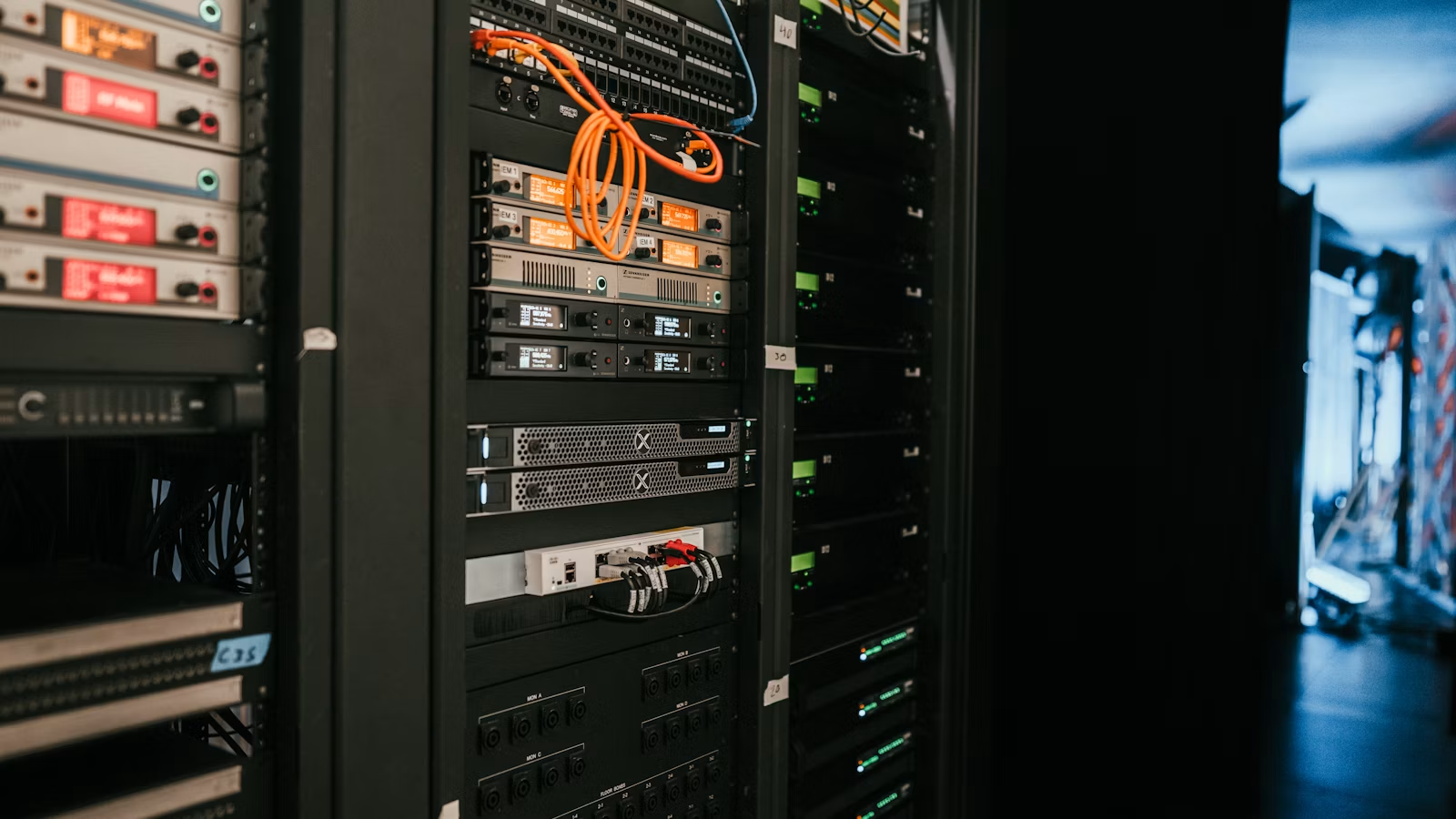
After AI training is completed, the data still cannot be deleted casually because model quality, bias investigation, training reproducibility, data authorization, and future retraining all depend on historical data. Training is the end of one computation process, not the end of the data lifecycle. As long as a model remains in use, you need to explain what data it learned from, why it produced certain outputs, and how to roll back to an earlier version when necessary.
The most important value of training data is reproducibility and traceability. This is especially true in enterprise AI, financial AI, healthcare AI, content generation, and automated decision-making. A model is not something that is “done” once training finishes. You need to preserve data sources, cleaning rules, training configurations, evaluation results, and version records. NIST’s generative AI risk management materials also emphasize recording training data sources to trace the origin and lineage of AI-generated content.
Post-training data retention usually serves these goals:
- Reproducing results: Can the same data and parameters produce similar model performance?
- Investigating bias: If the model performs poorly for certain users, languages, industries, or tasks, can you trace it back to the data source?
- Handling copyright and authorization issues: Is there a record of where the training data came from, how it was authorized, and how it was processed?
- Supporting retraining: New models need historical corpora, old labels, and old evaluation sets as baselines.
- Rolling back versions: If a new model performs worse, can you restore an older model and its associated data state?
- Supporting audits: During external review, can you explain how data entered the training pipeline?
Western Digital’s AI Data Cycle describes AI data as a continuous cycle: raw data, data preparation and ingestion, model training, inference, new content generation, and then further data consumption and generation. This cycle shows that training is not the endpoint. It is one stage in an ongoing flow of data. Training data that cools down today may re-enter the core workflow tomorrow because of a new model, a new task, or a new regulatory requirement.
| Post-Training Data | Risk After Deletion | Long-Term Retention Value |
|---|---|---|
| Raw corpus | Cannot verify what the model learned from | Supports retraining, authorization audits, and quality traceability |
| Cleaning rules | Hard to explain sample changes | Keeps the training pipeline reproducible |
| Annotation results | Cannot trace the source of bias | Supports evaluation sets and fine-tuning data |
| Model checkpoints | Cannot roll back to intermediate states | Supports recovery and version comparison |
| Old model weights | Cannot compare old and new models | Supports A/B testing and business continuity |
Long-term retention does not mean every dataset must stay on expensive hot storage. A more practical approach is to keep recently used and high-frequency data on SSDs or high-performance object storage, while moving low-frequency but still valuable data into HDDs, nearline storage, or archival tiers. AWS S3 Glacier offers retrieval options ranging from milliseconds to hours, which shows that cold data storage is not simply “locking data away.” It is a tiered strategy based on retrieval time and cost.
Summary: After AI training ends, data still matters for model reproducibility, bias investigation, compliance evidence, and future iteration. You do not need to keep all training data on high-speed storage forever, but you also should not delete it simply because the training job has finished. A more stable strategy is to retain data sources, versions, cleaning rules, annotation records, and model checkpoints, then migrate them to the right cold storage tier based on access frequency. This keeps costs under control while preserving the evidence chain needed for model errors, business rollbacks, or compliance audits.
Why AI Inference Logs and Feedback Also Become Cold Data

After AI inference is completed, inputs, outputs, context, latency, model version, retrieved materials, and user feedback all become analyzable data. When they are newly generated, they may be hot data used for real-time monitoring and risk control. After some time, access frequency drops, and they move into warm or cold data tiers. But these logs can still support quality evaluation, product optimization, incident review, and model retraining.
Inference logs are not ordinary server access logs. A single AI inference request may include a prompt, response, context window, RAG retrieval sources, tool calls, model version, response time, safety flags, and user feedback. For enterprises, these records can answer several important questions: Is the model stable? Is it hallucinating? What questions do users ask most often? Which answers trigger complaints? Which knowledge base content was not retrieved correctly?
Common uses of inference data include:
- Building real user question samples for future fine-tuning and evaluation;
- Identifying hallucinations, bias, unauthorized answers, and safety issues;
- Analyzing high-frequency tasks to improve product workflows and knowledge base structure;
- Comparing the real-world performance of different model versions;
- Supporting customer complaints, risk investigations, and incident reviews;
- Evaluating RAG retrieval quality, context hit rate, and response completeness.
| Inference Data Stage | Data Temperature | Main Use | Storage Requirement |
|---|---|---|---|
| Newly generated | Hot data | Real-time monitoring, risk control, user experience | Low latency, high throughput |
| Days to weeks old | Warm data | Model evaluation, product analysis, issue classification | Queryable, moderate cost |
| Months to years old | Cold data | Auditing, retraining, long-term trends, incident review | High capacity, low cost, recoverable |
A Seagate-commissioned AI storage survey found that among enterprises already using AI, 90% believe longer data retention helps improve AI output quality, and 88% believe trustworthy AI requires retaining more data for longer periods. This explains why inference data does not automatically lose value after the response is generated. The more AI systems depend on real-world feedback, the more they need long-term records to correct model behavior.
However, inference logs also have boundaries. They may contain personal information, trade secrets, account data, medical information, financial intent, or internal company materials. You cannot preserve them indefinitely just because they “may be useful someday.” Instead, you need anonymization, encryption, access control, data minimization, and scheduled deletion. When user data spans multiple countries or regions, retention periods should also follow local laws, customer contracts, and platform policies.
Summary: AI inference logs gradually cool down from hot data to cold data, but lower access frequency does not mean lower value. They can help evaluate model quality, identify real user needs, optimize knowledge bases, review abnormal outputs, and provide training samples for the next model cycle. The real challenge is retention boundaries: which fields must be kept, which information should be anonymized, which records should expire, and who can access them. How well inference cold data is managed often determines whether an AI system remains a one-off tool or becomes a continuously improving production system.
Why HDDs Still Fit Long-Term AI Cold Data Storage
HDDs are suitable for AI cold data not because they are faster than SSDs, but because they still offer advantages in high capacity, cost per unit of storage, and nearline storage. AI data centers need GPUs, HBM, and SSDs for high-speed computation, but they also need HDDs to store training corpora, inference logs, backups, model versions, and archived data. The core requirement for cold data is simple: store it at scale, make it recoverable, and keep the cost under control. That is where HDDs remain strong.
In storage architecture, SSDs are better suited to low-latency, high-IOPS, high-concurrency access. HDDs are better suited to capacity storage. When discussing nearline HDD shortages, TrendForce noted that the large volume of data generated by AI inference is increasing storage pressure in data centers, while HDDs continue to dominate cold data storage because of their lower cost per GB. High-performance SSDs can fill some gaps, but in large-scale long-term retention, cost structure remains a key variable.
| Storage Option | Main Advantage | Main Limitation | Better Fit |
|---|---|---|---|
| SSD/NVMe | Low latency, high IOPS | Higher cost per unit of capacity | Training cache, online inference, feature stores |
| HDD | High capacity, cost-friendly | Weaker random access performance | Cold data, warm data, nearline storage |
| Object storage | Strong scalability and lifecycle management | Depends on network and platform architecture | Data lakes, logs, archived data |
| Tape/deep archive | Low cost for long-term retention | Slow retrieval, complex operations | Very low-frequency access, compliance archives |
In AI infrastructure, HDDs function as the capacity foundation. GPUs and HBM determine how fast models can train and infer. SSDs determine how efficiently active data can be read and written. HDDs absorb the long-term accumulation of data assets. In its discussion of the long-term case for HDD storage, Western Digital cited IDC’s forecast that global data creation will grow from 173.4ZB in 2024 to 527.5ZB in 2029. Regardless of which media ultimately store this data, AI, cloud computing, and multimedia data will continue to drive demand for capacity storage.
Reliability also should not be judged only at the single-drive level. Enterprise HDD environments usually rely on RAID, erasure coding, multiple replicas, cross-rack fault tolerance, health monitoring, and scheduled replacement to ensure data availability. Backblaze’s 2025 drive statistics covered 344,196 hard drives and reported an annualized failure rate of 1.36%. This type of data is useful for understanding large-scale HDD operations, but it should not be applied mechanically to every enterprise environment.
Summary: The value of HDDs is not replacing SSDs, but completing the capacity layer of the AI storage pyramid. You can think of SSDs as the high-speed workspace and HDDs as the long-term data asset pool. AI training data, inference logs, model versions, backups, and audit materials usually do not need to occupy expensive high-speed storage forever, but they do need to be recoverable, traceable, and reusable in the future. As long as AI continues to generate large volumes of low-frequency data, HDDs will remain important in cold data, warm data, and nearline storage.
How Long-Term Cold Data Storage Affects AI Cost, Compliance, and Data Value
Long-term cold data storage affects cost, compliance, and data value at the same time. Proper tiering can reduce the burden on high-performance storage and allow SSDs and compute resources to serve truly high-frequency workloads. From a compliance perspective, cold data preserves training sources, model versions, and inference evidence. From a value perspective, data that is rarely accessed today may become hot again because of retraining, complaints, audits, or product reviews.
Cost is the most direct impact. If all training corpora, inference logs, historical models, and evaluation records are stored on high-performance SSDs or hot object storage, the budget will be dragged up by large amounts of low-frequency data. A more realistic approach is to set lifecycle policies based on data temperature and business value.
| Management Action | Short-Term Effect | Long-Term Impact | Suitable Situation |
|---|---|---|---|
| Full hot storage | Fastest query performance | High cost and wasted resources | High-frequency training and real-time business |
| Tiered archiving | Controlled cost | Requires governance rules | Most AI data platforms |
| Compression and deduplication | Reduces capacity footprint | Adds processing requirements | Logs, backups, duplicate corpora |
| Scheduled deletion | Reduces risk and cost | May lose traceability | Data with no retention obligation |
From a compliance perspective, cold data is part of the evidence chain. Training data sources, user consent, model versions, evaluation records, red-team tests, abnormal handling records, and human review logs may all need to be explained during an audit. In its description of S3 Glacier’s security and compliance capabilities, AWS mentions audit logs, encryption, and Object Lock. This shows that long-term retention is not just about “putting data somewhere.” It also involves access control, immutability, and traceability.
From a data value perspective, cold data has one important feature: it can become hot again. Historical training sets may matter when a new model is released. Old inference logs may matter during a quality incident. User feedback may matter when a product is redesigned. Old model versions may matter when a rollback is required. The real management question is: when should data be retained, how long should it be retained, how can it be retrieved, and who can access it?
| Cold Data Type | Trigger for Becoming Hot Again | Potential Value |
|---|---|---|
| Historical training set | New model retraining | Expands coverage and validates old samples |
| Inference logs | User complaint or quality incident | Locates the cause of abnormal outputs |
| Old model version | New model performance decline | Supports rollback and comparison |
| Safety evaluation records | Compliance review | Provides evidence of risk handling |
| User feedback samples | Product strategy adjustment | Reveals real user needs |
If you look at the HDD industry from an investment perspective, storage demand should be separated from trading cost. AI cold data may support demand for HDDs, enterprise SSDs, cloud storage, and data center infrastructure, but related stocks are still affected by supply-demand cycles, customer concentration, pricing, inventory, earnings guidance, and valuation swings. When using Biya to follow U.S. storage-related companies, you should look beyond AI theme momentum and also pay attention to actual trading costs. Biya charges 0 USD in commission for U.S. stock trading, while platform fees, external institutional fees, and other costs are subject to the U.S. stock trading fee details and the order page. Public market information and fee structures are for reference only and do not constitute investment advice.
Summary: Long-term cold data storage is not merely an IT cost item. It is a cost buffer, compliance evidence layer, and future data asset layer for AI systems. Proper tiering prevents low-frequency data from occupying high-performance resources. Compliance records support source tracing and risk explanation. Historical data can regain value in retraining, incident review, and product iteration. The key is not unlimited retention, but lifecycle-based control over data temperature, so that retention, archiving, retrieval, and deletion all follow clear rules.
How to Decide Which AI Data Should Move Into HDD Cold Storage
To decide whether AI data should move into HDD cold storage, focus on six dimensions: access frequency, recovery time objective, capacity scale, compliance requirements, reuse value, and sensitivity. If the data is accessed infrequently, has large capacity requirements, may be reused in the future, and can tolerate delayed retrieval, it is usually suitable for HDDs or nearline storage. If the data supports real-time inference, online retrieval, or training cache, it should not be placed directly into the cold tier.
Data suitable for HDD cold storage usually has these characteristics:
- Raw corpora that have completed the main training process but may be reused later;
- Low-frequency historical inference logs, user feedback, and quality scores;
- Model checkpoints, old model weights, experiment parameters, and evaluation results;
- Security tests, red-team records, compliance audits, and incident review materials;
- Large-scale image, video, audio, and multimodal training materials;
- Backup, disaster recovery, replica data, and cross-region long-term retention data.
Data that should not be moved directly into cold storage is also easy to identify: real-time feature stores, online RAG indexes, low-latency vector retrieval systems, active training caches, online risk control data, and user session records requiring second-level responses. These datasets need hot or warm storage support. Cooling them too early will affect model service quality.
| Decision Question | If Yes | If No | Storage Suggestion |
|---|---|---|---|
| Will it be accessed frequently in the next 7–30 days? | Keep in hot/warm tier | Consider cooling down | Set a migration window |
| Can retrieval wait several hours? | Can enter cold tier | Needs warm tier | Choose media based on SLA |
| Does it have audit or compliance requirements? | Retain evidence chain | Judge by business value | Use encryption and access control |
| Does it contain sensitive information? | Classify and anonymize first | Archive normally | Prioritize security policy |
| Does it still have retraining value? | Retain version history | Compress or delete | Review value regularly |
A more mature AI data lifecycle can follow this flow: generation, cleaning, training, inference, evaluation, archiving, deletion, or reactivation. First classify the data and label its sensitivity. Then define retention periods for hot, warm, and cold tiers. Next, use automated rules to migrate data while preserving metadata, checksums, and version relationships. Finally, review the value of cold data regularly and delete data that has passed its retention period, has no reuse value, and has no compliance obligation.
For individual investors or industry researchers, this framework also helps explain HDD demand. AI does not consume storage only during training. Inference, feedback, logs, backups, audits, and content generation all continue to produce cold data. When following U.S. storage companies, you can use U.S. stock information search to track relevant company information, then combine it with earnings reports, orders, cloud capex, and industry supply-demand signals. Whether related services are available depends on the user’s location, identity verification result, platform rules, and applicable laws and regulations. Before trading, users should also understand order types, fee structures, and price volatility risks.
Summary: HDD cold storage is suitable for AI data that is low-frequency, large-scale, and still worth retaining. You should not push all data into the cold tier, but you also should not delete data that may be useful for retraining, auditing, or incident review just to save short-term cost. The most stable approach is to build a tiering standard based on access frequency, recovery time, compliance requirements, reuse value, and sensitivity, so that data can move in an orderly way across hot, warm, and cold tiers instead of being managed by ad hoc human judgment.
Understanding the relationship between cold data and HDDs helps you see AI infrastructure more clearly: compute determines whether a model can run, while storage determines whether data can be accumulated, reused, and traced. For those following AI data centers, HDDs, enterprise SSDs, cloud capex, and U.S.-listed storage companies, cold data is not a marginal concept. It is part of the long-term demand base of the AI value chain. You can use Biya to follow U.S. stocks, Hong Kong stocks, digital assets, and other multi-asset markets, and if your location, identity verification, and applicable platform rules allow, you can register an account and evaluate opportunities based on public information, company filings, and your own risk tolerance. The storage industry is cyclical. AI demand, pricing, inventory, customer orders, and technology paths may all change, so no trading decision should rely on a single thematic narrative.
FAQ
What Is the Difference Between Cold Data and Backup Data?
Cold data refers to data that is accessed infrequently but still has long-term value. Backup data focuses on system recovery after failure or disaster. The two can overlap, but their purposes are different. In AI, historical training sets are usually cold data, while model weight copies and database snapshots are closer to backup data.
How Long Should AI Inference Logs Be Retained?
There is no universal retention period for AI inference logs. The right duration depends on business review needs, model optimization, customer contracts, privacy protection, and local regulatory requirements. If logs involve personal information, sensitive business data, or financial scenarios, anonymization, access control, encryption, and scheduled deletion should be applied.
Will HDD Cold Storage Slow Down AI Training?
HDD cold storage may slow training if high-frequency training data is read directly from the cold tier. A better approach is to move required datasets into a hot tier, cache layer, or high-performance object storage before training begins. HDDs are better used as long-term capacity pools rather than real-time training caches.
Must AI Cold Data Be Stored on HDDs?
AI cold data does not have to be stored only on HDDs. It can also use object storage, infrequent-access cloud storage, tape, or hybrid architectures. HDDs are attractive because of capacity and cost structure, but the final choice depends on access frequency, recovery time, budget, data security, and compliance requirements.
How Can Companies Prevent AI Cold Data From Growing Without Limit?
Companies should build data lifecycle management instead of storing all AI data forever. Key practices include data classification, retention periods, automated archiving, duplicate cleanup, sensitive data anonymization, regular value reviews, and scheduled deletion, while preserving necessary audit records.
How Should Investors Understand AI-Driven HDD Demand?
Investors can view HDDs as capacity infrastructure for AI data centers, not high-speed compute components. Key indicators include nearline HDD shipments, cloud capex, cost per unit of storage, supply-demand tightness, company earnings guidance, and storage pricing cycles.
*This article is provided for general information purposes and does not constitute legal, tax or other professional advice from BiyaPay or its subsidiaries and its affiliates, and it is not intended as a substitute for obtaining advice from a financial advisor or any other professional.
We make no representations, warranties or warranties, express or implied, as to the accuracy, completeness or timeliness of the contents of this publication.
Related Blogs of

What Is the Difference Between EEPROM and NOR Flash? A Beginner’s Guide to Shanghai Fudan’s Hong Kong-Listed Business


How Do Microsoft, Amazon, Google, and Meta’s AI Capex Affect Storage Stocks?

Why Are Cloud Providers Signing Long-Term HDD Contracts? Demand Visibility for Western Digital and Seagate


What Is HAMR? Seagate and Western Digital’s Roadmaps for High-Capacity HDDs
Choose Country or Region to Read Local Blog
 Australia
 Austria
 Belgium
 Canada
 Cyprus
 Czech Republic
 Denmark
 Estonia
 Finland
 France
 Germany
 Greece
 Hong Kong
 India
India Indonesia
 Ireland
 Italy
Italy Japan
Japan Latvia
 Lithuania
 Luxembourg
 Malaysia
 Malta
Malta Morocco
 Nepal
Nepal Netherlands
 New Zealand
 Norway
 Pakistan
 Philippines
 Poland
 Portugal
 Romania
 Singapore
 Slovakia
 Slovenia
 South Africa
 South Korea
 Spain
Spain Sweden
 Thailand
 The United States
 Turkey
 United Arab Emirates
 United Kingdom
 Vietnam
Contact Us




BIYA GLOBAL LLC is registered with the Financial Crimes Enforcement Network (FinCEN), an agency under the U.S. Department of the Treasury, as a Money Services Business (MSB), with registration number 31000218637349, and regulated by the Financial Crimes Enforcement Network (FinCEN).
BIYA GLOBAL LIMITED is a registered Financial Service Provider (FSP) in New Zealand, with registration number FSP1007221, and is also a registered member of the Financial Services Complaints Limited (FSCL), an independent dispute resolution scheme in New Zealand.