What Is HAMR? Seagate and Western Digital’s Roadmaps for High-Capacity HDDs




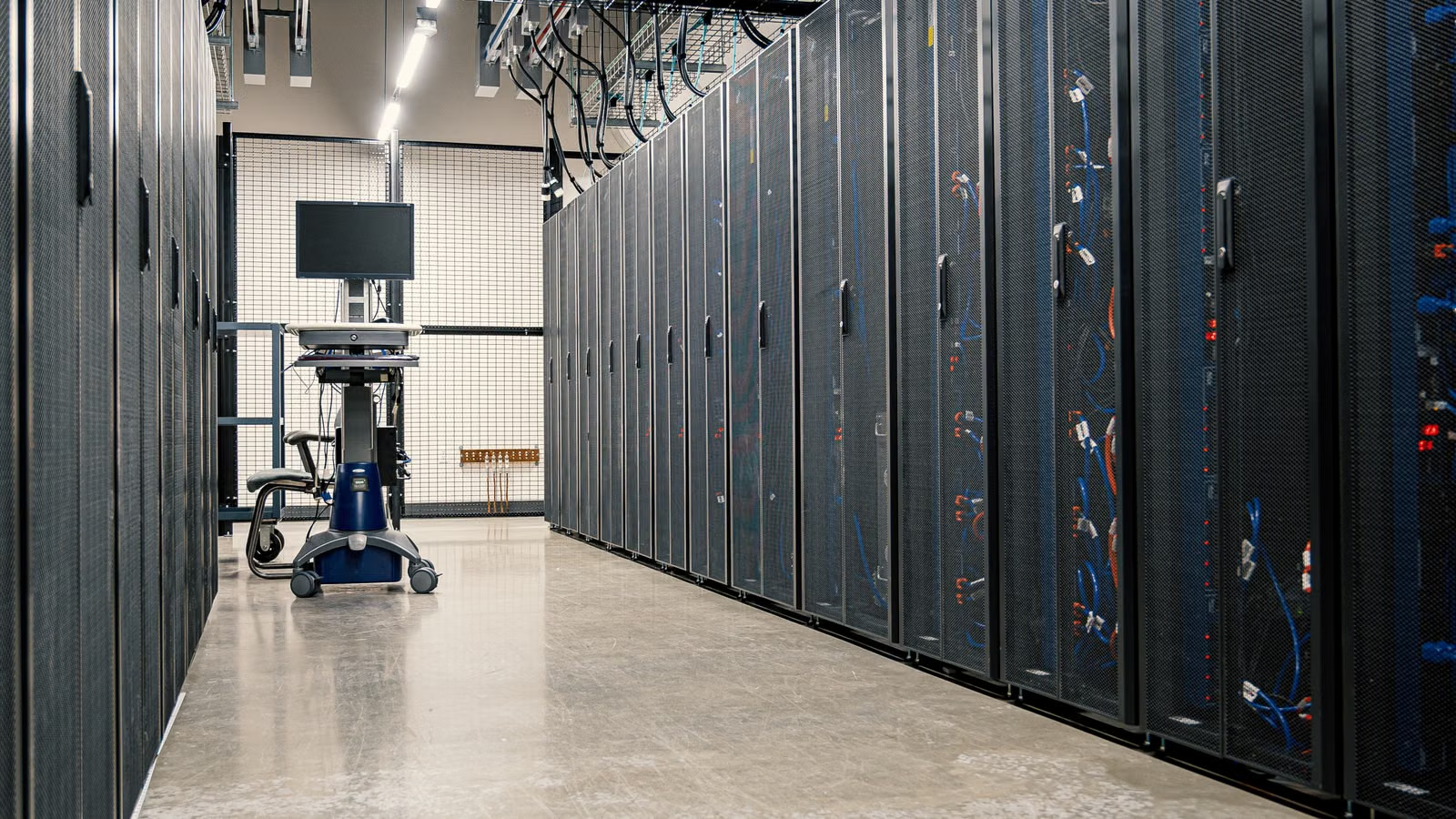
HAMR stands for Heat-Assisted Magnetic Recording. It uses a tiny laser to heat an extremely small area of the disk surface at the moment data is written, temporarily making a highly stable magnetic medium easier to write to. This allows HDDs to increase areal density and total drive capacity. Understanding HAMR is not just about understanding a hard drive technology. It also helps you understand why AI data centers, cloud storage, and long-term cold data retention are pushing nearline HDDs into the 30TB, 40TB, and higher-capacity era. Seagate has moved earlier with its HAMR-based Mozaic platform, while Western Digital is extending its current roadmap with ePMR and UltraSMR while also validating HAMR.
Key Takeaways
- HAMR uses laser-assisted writing to overcome traditional PMR areal density limits.
- Seagate’s roadmap is more aggressive, centered on HAMR and Mozaic commercialization.
- Western Digital’s roadmap is more gradual, combining ePMR, UltraSMR, and HAMR.
- Nearline HDD competition depends on capacity, power, TCO, reliability, and customer qualification.
- AI cold data, inference logs, and object storage demand support high-capacity HDD growth.
- Investors should look beyond headline capacity and track shipment scale and financial execution.
What Is HAMR, and Why Do Hard Drives Need “Laser Heating”?
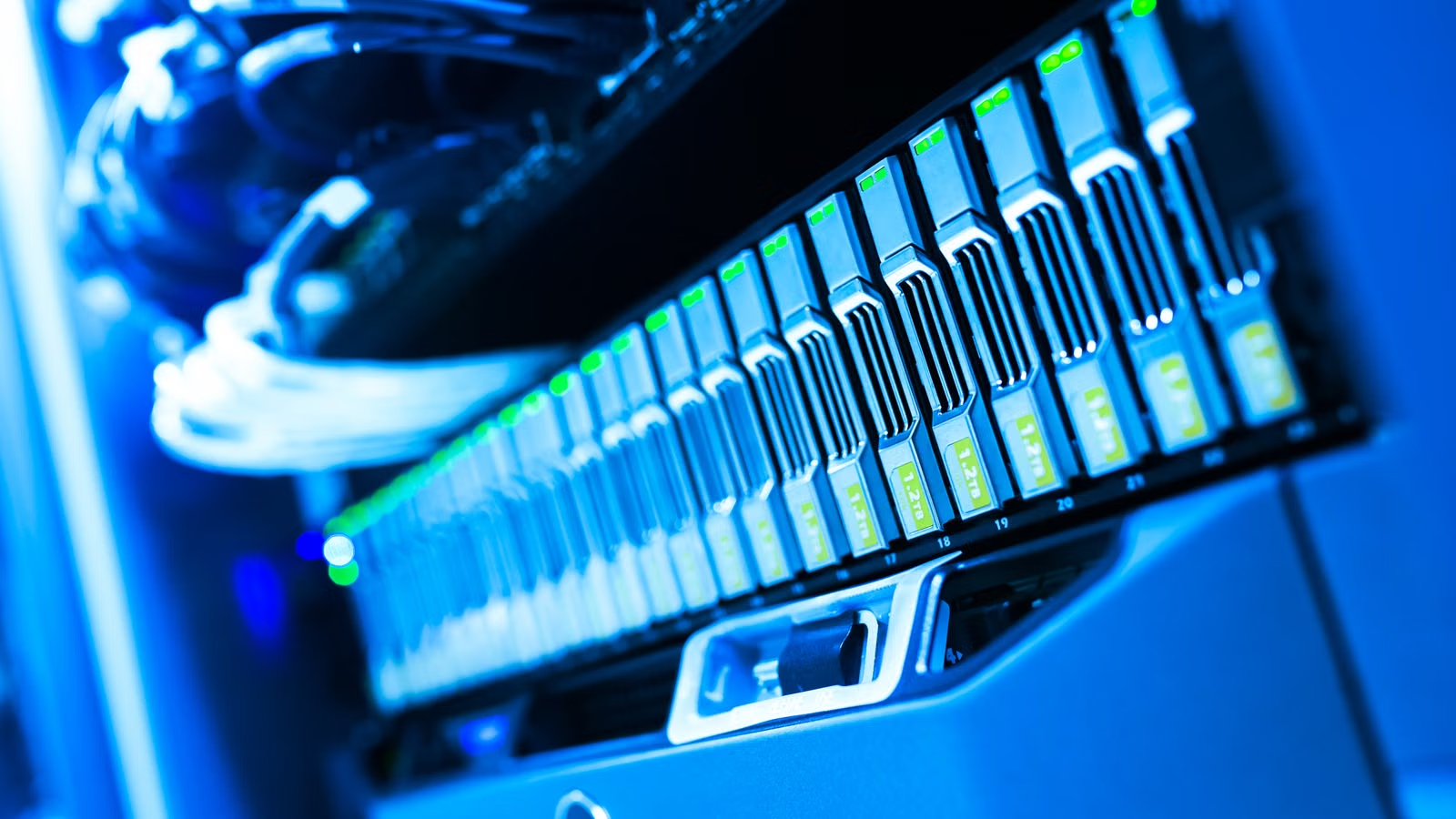
HAMR is a technology designed to increase HDD recording density. It does not heat the entire hard drive. Instead, at the exact moment data is written, a tiny laser heats a very small region of the disk surface, temporarily reducing the writing difficulty of a highly stable magnetic medium. After the data is written, the region cools quickly and the magnetic state becomes stable again, allowing more data to be stored in a smaller physical area.
Traditional HDD capacity growth has mainly depended on making data bits smaller and packing them more densely. But as bits become smaller, they become more vulnerable to thermal disturbance, which can weaken long-term data stability. If manufacturers use more stable magnetic materials, ordinary write heads have more difficulty writing data. This is often described as the magnetic recording trilemma. Western Digital’s explanation of HAMR technology notes that HAMR uses laser heating to temporarily reduce media anisotropy, making smaller bits and higher storage density possible.
| Challenge | Problem Created by Higher Capacity | HAMR’s Solution |
|---|---|---|
| Smaller bits | More data must fit into the same area | Increase areal density |
| More stable media | Data must resist thermal disturbance | Use high-anisotropy media |
| Harder writing | Traditional write heads are not enough | Temporarily reduce write difficulty with laser heating |
You can think of HAMR as a physical tool that allows HDD capacity to keep growing. It is not simply a higher spindle speed, nor is it just a faster interface. It changes the writing conditions at the magnetic recording layer. Seagate’s Mozaic platform is built around HAMR as a combined engineering system, including new media, nanophotonic lasers, plasmonic writers, read/write heads, and controller chips.
The relationship between HAMR, PMR, ePMR, and MAMR can be understood this way:
| Technology | Meaning | Main Purpose |
|---|---|---|
| PMR | Perpendicular Magnetic Recording | Foundation of traditional HDD capacity growth |
| ePMR | Energy-assisted PMR | Extends the PMR capacity roadmap |
| MAMR | Microwave-Assisted Magnetic Recording | Uses microwave energy to assist writing |
| HAMR | Heat-Assisted Magnetic Recording | Uses laser heating to break through areal density limits |
Regular users do not need to memorize all the physics. The key point is that HAMR is meant to help HDDs keep increasing platter capacity. The higher the capacity per platter, the more terabytes can fit into the same 3.5-inch form factor, the same rack space, and the same data center deployment environment. That is why HAMR is often discussed together with nearline HDDs, hyperscale data centers, AI storage, and cold data storage.
Summary: HAMR is not simply “a laser inside a hard drive.” Its core value is solving the magnetic recording trilemma through laser-assisted writing. As traditional HDDs try to increase capacity, they face smaller bits, weaker thermal stability, and greater writing difficulty at the same time. HAMR locally and briefly heats the recording medium so that highly stable magnetic materials can be written, then cools them back into a stable data state. For data centers, HAMR matters because it improves areal density, platter capacity, and total drive capacity, opening the way for higher-capacity nearline HDDs.
Why Nearline HDDs Need HAMR: AI Data Centers Are Driving Capacity Demand

Nearline HDDs need HAMR because cloud storage, AI data centers, and enterprise data lakes are generating more low-frequency data that still needs to be retained for a long time. SSDs are better for low latency and high IOPS, while HDDs are better for high-capacity, cost-sensitive, long-term storage. As data volumes continue to grow, HDDs must use HAMR, ePMR, UltraSMR, and other technologies to increase drive capacity while lowering cost per TB and power consumption per TB.
Nearline HDDs are not offline tape, and they are not high-performance SSDs. They usually sit between hot online data and deep archive storage, supporting cloud object storage, backups, distributed file systems, AI training corpora, inference logs, media libraries, and enterprise warm or cold data. Your data may not be accessed every day, but when you need to train a new model, trace logs, restore backups, or support an audit, it still needs to be recoverable.
Common nearline HDD workloads include:
- Cloud object storage and distributed file systems;
- AI training corpora, data lakes, and model versions;
- Inference logs, user feedback, and quality evaluation records;
- Unstructured data such as video, images, and audio;
- Backups, disaster recovery, audits, and long-term retention data.
AI makes the HDD capacity roadmap more important because AI does not only consume GPUs, HBM, and SSDs. Before training, data must be collected, cleaned, and stored. During training, checkpoints, experiment parameters, and evaluation results are created. After inference, prompts, responses, RAG retrieval records, embeddings, user feedback, and safety logs continue to accumulate. These datasets may start as hot data, but over time they cool down and move into the capacity layer served by HDDs or object storage.
| Data Layer | Typical Media | AI Scenario | Key Metrics |
|---|---|---|---|
| Hot data | SSD / NVMe | Online inference, training cache | Latency, IOPS, throughput |
| Warm data | SSD + HDD / object storage | Recent logs, data lakes | Query efficiency, cost |
| Cold data | HDD / archival storage | Historical corpora, audits, backups | Capacity, TCO, reliability |
When discussing nearline HDD supply tightness, TrendForce noted that data generated by AI inference is increasing data center storage demand, while HDDs still have a cost advantage in cold data storage. This shows that the HDD story is not about competing with SSDs in every workload. It is about serving as the capacity foundation within the data lifecycle.
For cloud providers, nearline HDD competition is not about which drive is fastest. It is about which supplier can deliver higher capacity, lower TCO, lower power consumption, and more stable supply at acceptable performance levels. Whether a 30TB, 32TB, or 40TB HDD is valuable depends not only on capacity, but also on how much data can fit per rack, how much power is consumed per TB, how stable the firmware is, how the software stack supports the drive, and how reliable the drive remains over time.
Summary: Nearline HDDs need HAMR because AI and cloud computing are pushing data centers toward higher storage density. Hot data needs SSDs, and extremely low-frequency archives may use deeper storage tiers, but large volumes of training corpora, inference logs, object storage data, backups, and audit records need high-capacity, low-cost, long-running storage. HAMR, ePMR, and UltraSMR all aim to solve the same basic problem: how to let HDDs store more data within the same physical and power constraints. The more AI workloads grow, the more important the nearline HDD capacity roadmap becomes.
Seagate’s High-Capacity HDD Roadmap: Earlier Commitment to HAMR and Mozaic
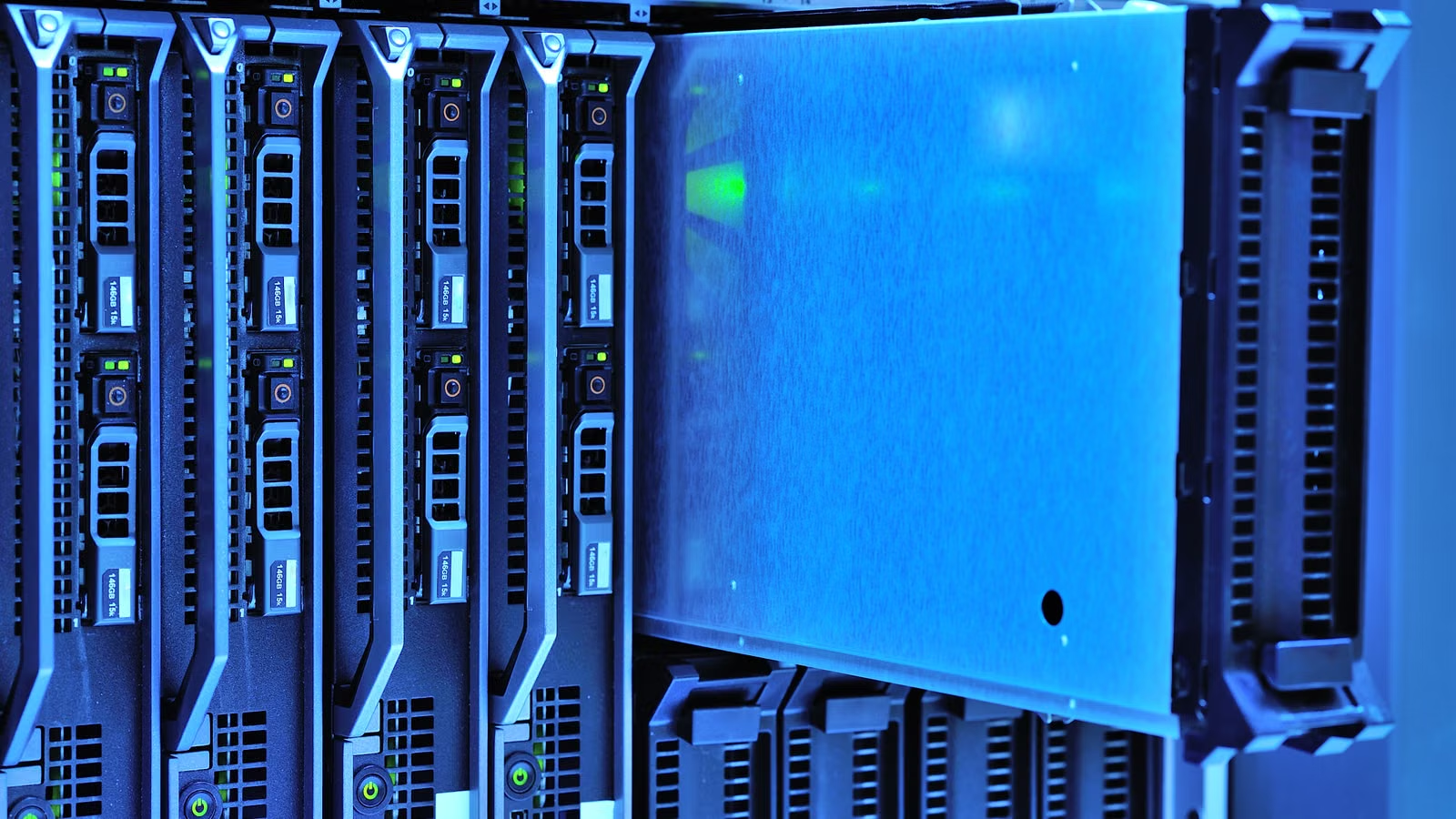
Seagate’s high-capacity HDD roadmap is more aggressive. Its core strategy is to increase platter capacity through HAMR and the Mozaic platform. Seagate has already pushed Exos M into 30TB, 32TB, and 36TB capacity points, positioning Mozaic 3+ as the foundation for future high-capacity nearline HDDs. You can understand this roadmap as: cross the HAMR technology threshold first, then use customer qualification and scale shipments to reduce cost.
In 2024, Seagate announced that its 30TB+ Exos hard drives were ramping for hyperscale cloud customers, signaling that HAMR was moving beyond the laboratory stage. In 2025, Seagate announced Exos M drives up to 36TB, stating that its HAMR-based Mozaic 3+ platform can support 3.6TB per platter using a 10-disk design.
Mozaic 3+ can be viewed as Seagate’s system-level packaging of HAMR commercialization. It is not just about adding a laser to a drive. It combines media, writers, read heads, controller chips, firmware, and manufacturing processes. Seagate’s description of Mozaic 3+ emphasizes the goal of increasing data center capacity without requiring additional resources.
| Capacity Point | Technology Platform | Industry Meaning | Key Observation |
|---|---|---|---|
| 30TB | Mozaic 3+ / HAMR | HAMR commercialization milestone | Moving from qualification to availability |
| 32TB | Mozaic 3+ / HAMR | Cloud customer adoption point | Hyperscaler deployment pace |
| 36TB | Mozaic 3+ / HAMR | Demonstration of higher platter capability | 3.6TB per platter |
| Higher capacities | Future Mozaic platforms | Long-term capacity roadmap | Yield, cost, reliability |
When Seagate announced global availability of 30TB drives in 2025, Exos M and IronWolf Pro 30TB were positioned against AI, data center, and high-capacity NAS demand. This shows that HAMR is gradually moving from cloud customer qualification to broader commercial channels. However, commercialization does not remove risk. You still need to watch HAMR yield, unit cost, long-term reliability, customer qualification cycles, and the real share of shipments.
Seagate’s advantage is clear: the technology narrative is strong, the capacity leap is visible, and the areal density story is more distinctive. If HAMR scales successfully, Seagate may gain stronger differentiation in high-capacity nearline HDDs. But this roadmap also carries earlier technology transition risk, because hyperscalers do not buy based only on headline capacity. They test power, vibration, firmware stability, failure rates, deployment compatibility, and long-term supply.
Summary: Seagate’s high-capacity roadmap is essentially about using HAMR to open a higher ceiling for HDD capacity. Mozaic 3+ is not a single technology label, but a commercial platform built around HAMR. The significance of 30TB, 32TB, and 36TB is that they show HAMR moving from concept to samples, customer qualification, and product availability. But when judging Seagate’s roadmap, you should not look only at the highest capacity point. You also need to track sustained hyperscale adoption, shipment expansion, cost reduction, and long-term data center reliability.
Western Digital’s High-Capacity HDD Roadmap: ePMR, UltraSMR, and HAMR in Parallel
Western Digital’s high-capacity roadmap emphasizes a smoother transition. It has not simply abandoned PMR. Instead, it continues to increase capacity through ePMR, UltraSMR, OptiNAND, ArmorCache, TSA, and an 11-disk platform while also validating HAMR with customers. The core idea is not “Western Digital is not doing HAMR,” but rather that customers should be able to migrate gradually within their existing deployment, workload, and TCO constraints.
In 2024, Western Digital introduced 32TB UltraSMR and 26TB CMR ePMR HDDs, emphasizing nearline data center demand. Unlike Seagate’s stronger focus on HAMR, WD highlighted ePMR, UltraSMR, OptiNAND, ArmorCache, TSA, and an 11-disk mechanical platform, extending mature technologies further upward.
| Technology | Main Role | Suitable Scenario | Limitation |
|---|---|---|---|
| ePMR | Extends the PMR capacity roadmap | CMR nearline HDDs | Areal density growth becomes harder over time |
| UltraSMR | Increases effective capacity | Cloud cold data, object storage, sequential writes | Random rewrite behavior is more complex |
| OptiNAND | Improves metadata and management capability | Enterprise HDDs | Not a standalone recording technology |
| HAMR | Opens higher capacity ceiling | Future high-capacity nodes | Cost, yield, and reliability need validation |
WD’s 11-disk platform reflects this engineering approach: without changing the 3.5-inch form factor, WD improves capacity through mechanical design, media, firmware, and cache management. For hyperscalers, this kind of roadmap is attractive because migration risk is relatively controlled, and customers do not need to rebuild their entire deployment logic in a short period.
By 2026, Western Digital announced that its 40TB UltraSMR ePMR HDD had entered validation with two hyperscale customers, with volume production planned for the second half of 2026. WD also said its HAMR HDDs were being validated by two hyperscale customers, with ramp planned for 2027. This signal is important: WD is not abandoning HAMR. It is pursuing a dual-path strategy with ePMR and HAMR in parallel.
In its discussion of purposeful storage innovation, Western Digital emphasized that technologies such as HelioSeal, TSA, OptiNAND, UltraSMR, and the 11-disk platform will carry into the HAMR stage to reduce technology transition risk. In other words, WD wants to strengthen the platform customers already trust before introducing HAMR as the next major step.
Summary: Western Digital’s roadmap is not simply conservative. It places greater emphasis on customer migration, TCO, and deployment continuity. ePMR and UltraSMR allow WD to keep offering higher-capacity products before HAMR reaches large-scale volume, while the 11-disk platform and OptiNAND help extend the life of the existing architecture. The key questions are how much longer ePMR can support capacity growth, how broad UltraSMR’s workload fit is, and whether HAMR validation can transition to volume shipments on schedule. WD’s challenge is not whether it has HAMR, but when HAMR becomes the main line.
Seagate vs. Western Digital: Which Roadmap Is More Aggressive, and Which Is More Gradual?
Seagate’s roadmap is more aggressive, centered on using HAMR earlier to increase areal density. Western Digital’s roadmap is more gradual, focused on extending current platforms with ePMR and UltraSMR while also advancing HAMR. The two companies are not simply in an “advanced versus behind” relationship. They have chosen different technology transition speeds, customer adoption paths, and capacity execution strategies.
| Comparison Dimension | Seagate | Western Digital |
|---|---|---|
| Main technology | HAMR / Mozaic | ePMR + UltraSMR + HAMR |
| Roadmap style | Earlier transition into HAMR | Gradual transition with parallel paths |
| Capacity narrative | Platter capacity, areal density, Mozaic | TCO, reliability, customer migration |
| Customer risk | Earlier technology transition | More gradual technology transition |
| Key observation | HAMR yield and shipment scale | ePMR ceiling and HAMR ramp |
When comparing the two roadmaps, you cannot look only at maximum TB numbers. CMR and SMR differences also matter. CMR is better suited for general nearline workloads and has more straightforward write behavior. SMR / UltraSMR can increase effective capacity, but it is better suited to sequential writes, object storage, cold data, and environments where hyperscalers can optimize the software stack. If a 32TB or 40TB drive uses UltraSMR, its workload fit should not be treated the same as a general-purpose CMR drive.
| Recording Method | Main Feature | Better Fit |
|---|---|---|
| CMR | Independent tracks, more general write behavior | General enterprise nearline workloads |
| SMR | Overlapping tracks to increase capacity | Sequential writes, object storage, cold data |
| UltraSMR | Optimizes capacity efficiency on top of SMR | Hyperscale cloud storage |
| HAMR | Write-assist technology, not the same as CMR/SMR classification | Higher areal density HDD platforms |
Hyperscaler qualification is critical. A high-capacity HDD does not become a large-scale deployment just because it has been announced. Cloud providers test reliability, power, firmware, vibration, compatibility, rack density, failure rates, and supply stability over long periods. The usual path includes technology samples, customer testing, qualification, small-batch deployment, scale purchasing, and supply chain stabilization. Any delay in that chain can affect how quickly a product roadmap turns into revenue.
Seagate’s advantage is earlier access to the HAMR capacity narrative. Western Digital’s advantage is a smoother customer migration route. The former is like “crossing the technology threshold earlier,” while the latter is like “widening the bridge before switching generations.” Both approaches can work, and both can run into problems. What ultimately determines the industry landscape is not the highest capacity announced at a product launch, but whether customers adopt the drives in volume, whether production remains stable, whether unit costs decline, and whether reliability meets expectations.
Summary: The difference between Seagate and Western Digital is essentially the difference between an earlier generational transition and a smoother transition path. If Seagate scales HAMR successfully, it may gain stronger technical positioning in high-capacity HDD nodes. If Western Digital keeps extending ePMR while switching smoothly to HAMR, it may reduce customer migration risk. When judging the two companies, you should not simply compare 30TB, 32TB, 36TB, or 40TB numbers. You need to look at CMR/SMR type, customer qualification, real shipments, TCO, reliability, and financial performance.
Industry and Investment Perspective: How HAMR May Change Nearline HDD Competition
HAMR may influence the competitive landscape of nearline HDDs, but it does not make the analysis simple. It can increase drive capacity, reduce cost per TB, and improve power efficiency per TB, but it can also introduce uncertainty around yield, cost, reliability, and customer qualification cycles. For industry observers and investors, the key question is whether technology milestones can become real orders, revenue, margins, and long-term customer adoption.
Important indicators to track include:
- Nearline HDD exabyte shipments and average drive capacity;
- Customer adoption share of HAMR, ePMR, and SMR;
- Hyperscaler long-term orders, qualification progress, and purchasing cadence;
- Cost per TB, power per TB, and rack density;
- Gross margin, inventory, pricing, and capacity utilization;
- Cloud capex and AI data center construction pace.
| Observation Point | Positive Meaning | Risk or Limitation |
|---|---|---|
| HAMR capacity increases | Higher drive density | Yield and cost pressure |
| Cloud customer qualification | Clearer demand signal | Qualification cycles may be long |
| Higher SMR capacity | Lower cold data cost | Workload fit is limited |
| Rising AI storage demand | Stronger nearline HDD demand | Cycles, inventory, and pricing volatility |
| Leading company roadmap | Stronger valuation narrative | Financial execution may take time |
For investors, HAMR is a technology variable, not a direct reason to buy. AI cold data and cloud storage demand may strengthen the HDD industry logic, but storage stocks are still affected by pricing cycles, customer orders, inventory, capital spending, competition, and earnings guidance. If you follow Seagate, Western Digital, enterprise SSDs, AI data centers, and the nearline HDD supply chain, you can use Biya to track U.S. stocks and multi-asset market information while keeping thematic analysis separate from trading costs.
When researching popular AI storage stocks, you should understand not only the capacity roadmap but also the fee structure of actual trading. U.S. stock trading costs may include more than commission; they may also include platform fees, external institutional fees, and transaction activity fees. Biya charges 0 USD in commission for U.S. stock trading, while platform fees, external institutional fees, and other costs are subject to the U.S. stock trading fee details and the order page. Public market information, company news, and fee structures are for reference only and do not constitute investment advice.
Summary: HAMR is an important technology variable in nearline HDD competition, but it is not the only variable. Industry competition will eventually come down to customer adoption, shipment scale, TCO, reliability, production capacity, and financial execution. You can think of HAMR as a new step in the HDD capacity roadmap, while ePMR / UltraSMR represents the current extension path. For investors, the truly important question is whether a technology roadmap can become sustainable orders, not the highest capacity number announced once. There is often a long distance between capacity leadership, customer validation, and financial results.
Understanding HAMR, ePMR, UltraSMR, and nearline HDD roadmaps can help you see the AI storage supply chain more clearly: compute determines how fast a model can run, while storage determines how long data can be retained, whether it can be reused, and whether it can be traced. If you follow Seagate, Western Digital, AI data centers, cloud capex, and enterprise storage, you can use U.S. stock information search to track related company information. If your location, identity verification status, and applicable platform rules allow, you can also register an account. The storage industry is cyclical. Technology roadmaps, customer qualification, inventory, pricing, and earnings guidance can all change, so trading decisions should be based on public information, fee structures, and your own risk tolerance.
FAQ
Will HAMR Replace All HDDs?
HAMR will not replace all HDDs immediately. It is more likely to be used first in high-capacity nearline HDDs and hyperscale data center environments. Lower-capacity, cost-sensitive, or already mature product lines may continue using PMR, ePMR, or other extension technologies, depending on cost, customer demand, and product positioning.
Are HAMR Hard Drives Suitable for Regular PCs?
HAMR hard drives are mainly aimed at high-capacity enterprise storage, cloud storage, NAS, and data center use cases. Regular PC users usually do not need to prioritize HAMR. Personal buyers should focus more on capacity, price, noise, power consumption, warranty, and actual use case rather than whether a drive uses HAMR.
How Do CMR and SMR Affect Nearline HDDs?
CMR is better suited to general enterprise workloads, while SMR or UltraSMR is better suited to sequential writes, object storage, and cold data scenarios. Nearline HDD purchasing should not be based only on capacity. Write pattern, software stack support, recovery time, operating model, and long-term reliability requirements also matter.
What Are the Main Risks of Seagate’s HAMR Roadmap?
The main risks of Seagate’s HAMR roadmap are production yield, unit cost, customer qualification time, and long-term reliability. Capacity leadership can create a technical advantage, but the industrial value is only truly realized when hyperscalers adopt the drives at scale and that adoption shows up in shipments, revenue, and gross margin.
Does Western Digital’s ePMR Roadmap Mean It Is Falling Behind?
Western Digital’s ePMR roadmap does not necessarily mean it is falling behind. It is more like a strategy to extend mature technology while reducing customer migration risk. The key questions are how much additional capacity ePMR and UltraSMR can provide, and whether WD’s HAMR validation and production ramp can proceed as planned.
How Should Investors Track HAMR Industry Progress?
Investors should track nearline HDD exabyte shipments, HAMR customer qualification, cloud capex, drive capacity, gross margin, inventory, and pricing cycles. Relevant information should be based on company earnings reports, investor materials, and public market data, rather than a single product announcement.
*This article is provided for general information purposes and does not constitute legal, tax or other professional advice from BiyaPay or its subsidiaries and its affiliates, and it is not intended as a substitute for obtaining advice from a financial advisor or any other professional.
We make no representations, warranties or warranties, express or implied, as to the accuracy, completeness or timeliness of the contents of this publication.
Related Blogs of

How Do Microsoft, Amazon, Google, and Meta’s AI Capex Affect Storage Stocks?


What Is the Difference Between EEPROM and NOR Flash? A Beginner’s Guide to Shanghai Fudan’s Hong Kong-Listed Business

TSMC Q2 Earnings Call Preview: Can AI Chip Demand Still Support High Growth?


ASML Earnings Preview: Can EUV Order Signals Continue to Validate the AI Chip Cycle?

Choose Country or Region to Read Local Blog
 Australia
 Austria
 Belgium
 Canada
 Cyprus
 Czech Republic
 Denmark
 Estonia
 Finland
 France
 Germany
 Greece
 Hong Kong
 India
India Indonesia
 Ireland
 Italy
Italy Japan
Japan Latvia
 Lithuania
 Luxembourg
 Malaysia
 Malta
Malta Morocco
 Nepal
Nepal Netherlands
 New Zealand
 Norway
 Pakistan
 Philippines
 Poland
 Portugal
 Romania
 Singapore
 Slovakia
 Slovenia
 South Africa
 South Korea
 Spain
Spain Sweden
 Thailand
 The United States
 Turkey
 United Arab Emirates
 United Kingdom
 Vietnam
Contact Us




BIYA GLOBAL LLC is registered with the Financial Crimes Enforcement Network (FinCEN), an agency under the U.S. Department of the Treasury, as a Money Services Business (MSB), with registration number 31000218637349, and regulated by the Financial Crimes Enforcement Network (FinCEN).
BIYA GLOBAL LIMITED is a registered Financial Service Provider (FSP) in New Zealand, with registration number FSP1007221, and is also a registered member of the Financial Services Complaints Limited (FSCL), an independent dispute resolution scheme in New Zealand.