
What Is the Difference Between EEPROM and NOR Flash? A Beginner’s Guide to Shanghai Fudan’s Hong Kong-Listed Business




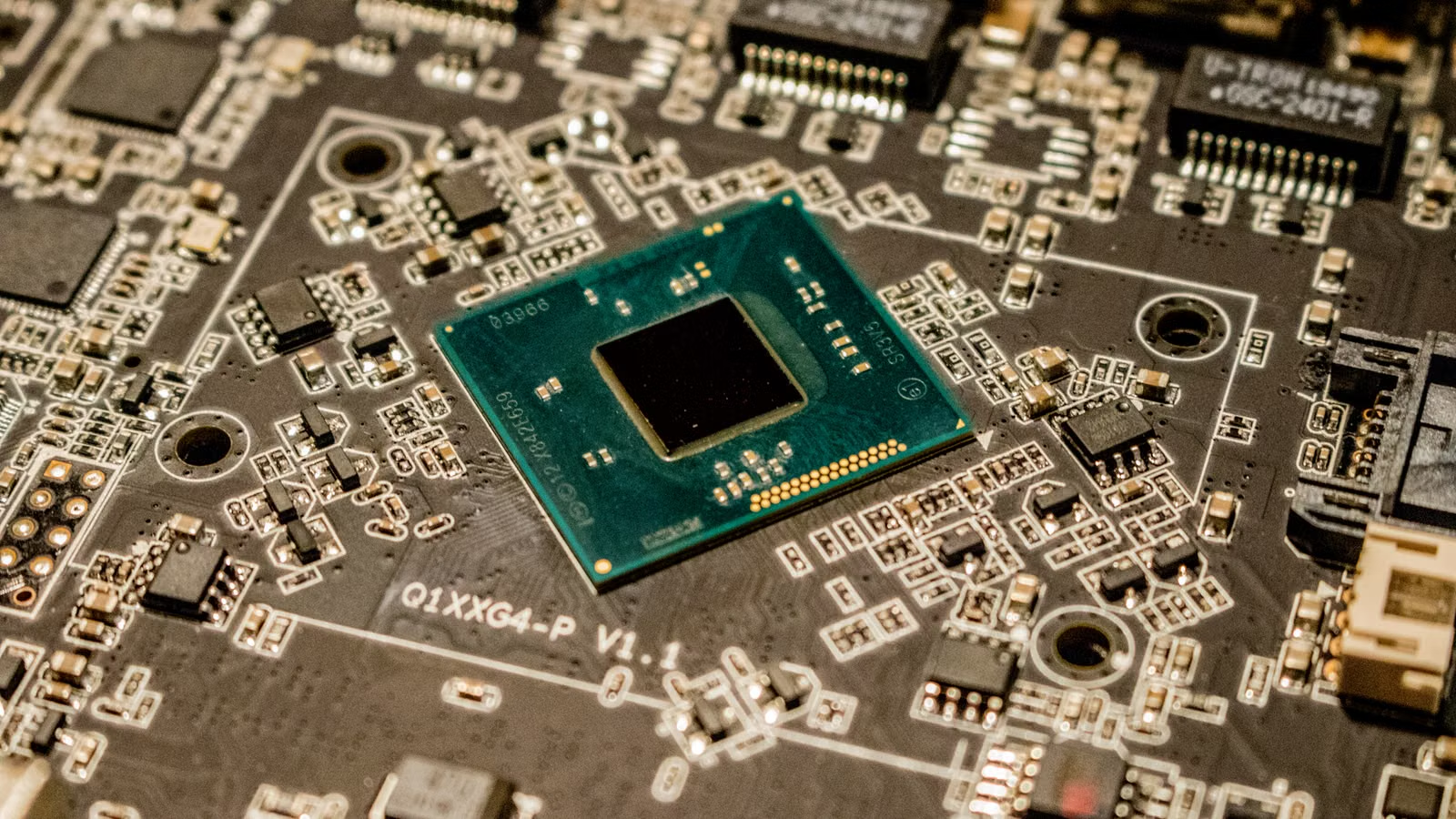
EEPROM, NOR Flash, and SLC NAND can all retain data after power is turned off, but they do not solve the same problem. You can think of EEPROM as a “small parameter notebook,” NOR Flash as a “firmware and boot-code repository,” and SLC NAND as a “higher-capacity embedded data storage layer.” If you are looking at Shanghai Fudan Microelectronics in Hong Kong, the key is not simply whether it has “memory chips,” but how its products differ by capacity, interface, customer scenario, high-reliability demand, and cyclical risk.
Key Takeaways
- EEPROM is suitable for storing small parameters, calibration values, device IDs, and configuration data.
- NOR Flash is better suited for firmware, bootloaders, BIOS, and embedded code storage.
- SLC NAND focuses on higher-capacity data storage, usually with ECC and controller support.
- Shanghai Fudan’s NVM portfolio covers EEPROM, NOR Flash, and SLC NAND.
- To assess Shanghai Fudan’s memory business, watch high-reliability memory, automotive adoption, and customer ramp-up.
Start With the Use Case: EEPROM, NOR Flash, and SLC NAND Are Not the Same Type of Demand
EEPROM, NOR Flash, and SLC NAND share one core feature: they retain data when power is off. Their differences lie in capacity, read/write granularity, speed, cost, and where they sit inside a system. EEPROM is typically used for small amounts of critical data that may need to be modified repeatedly. NOR Flash is often used for boot code, firmware, and program storage. SLC NAND is more suitable for storing system images, logs, resource files, or larger data sets in embedded devices. Once you first identify “what needs to be stored,” and then “where it is used,” you will not confuse the three as the same kind of chip.
In the semiconductor industry, non-volatile memory is often referred to as NVM. Its biggest difference from DRAM is that it does not require continuous power to retain data. Shanghai Fudan Microelectronics states in its non-volatile memory product line that the relevant products mainly include EEPROM memory, NOR Flash memory, and SLC NAND Flash memory, with multiple capacity, interface, and package options.
| Type | Main Use | Typical Capacity Profile | Typical Applications | What You Should Watch |
|---|---|---|---|---|
| EEPROM | Parameters, configuration, small data | Relatively small | Smart meters, modules, automotive electronics, medical devices | Endurance, data retention, low power |
| NOR Flash | Firmware, boot code, programs | Small to medium capacity | IoT, displays, security devices, networking, industrial control | Random read, XIP, interface compatibility |
| SLC NAND | Embedded data storage | Higher capacity | Networking, security monitoring, wearables, set-top boxes | ECC, reliability, capacity upgrades |
What Non-Volatile Memory Means
The core value of non-volatile memory is that it allows a device to “remember” information it must preserve. For example, smart meters need to store measurement parameters, automotive electronic modules need to store calibration data, routers and surveillance devices need to store firmware, and medical instruments may need to store configuration and operating records. Any device that needs to recover to the correct state after power loss may use some type of NVM. The key difference among NVM types is not whether they can retain data, but how much data they store, how often it is rewritten, how fast it must be read, and whether the system needs to execute code directly from the chip.
Why Beginners Often Mix the Three Together
The confusion comes from the fact that all three are “memory” products, while Flash itself is also divided into NOR Flash and NAND Flash. In practice, EEPROM is more focused on fine-grained modification, NOR Flash is more focused on random reads and firmware execution, and NAND Flash is more focused on capacity density. A simple way to judge the difference is to ask: if a device only needs to store a few dozen bytes to a few kilobytes of parameters, EEPROM is usually the first option; if it needs fast boot and firmware reads, NOR Flash is usually more relevant; if it needs to store larger system data or logs, SLC NAND may be more suitable.
How to Break Down Shanghai Fudan’s Memory Business
When looking at Shanghai Fudan Microelectronics 01385.HK, you should divide its “memory chip” business into three layers: product, application, and business value. At the product level, look at the capacity and interfaces of EEPROM, NOR Flash, and SLC NAND. At the application level, look at mobile phone modules, smart meters, automotive electronics, networking, security monitoring, industrial control, and medical instruments. At the business level, look at revenue, customer adoption, automotive-grade or high-reliability demand, pricing pressure, and inventory cycles. This gives you a clearer framework than simply treating the company as a DRAM or consumer SSD cycle play.
Summary: EEPROM, NOR Flash, and SLC NAND all fall under the broad category of non-volatile memory, but they play different roles inside electronic systems. EEPROM is like a “parameter notebook,” suitable for small, fine-grained, frequently updated data. NOR Flash is like a “firmware shelf,” suitable for boot code and embedded program reads. SLC NAND is like an “embedded data warehouse,” suitable for higher-capacity data storage. When you analyze Shanghai Fudan’s memory business, the first question is not whether it has memory chips, but what problems those products solve, which end markets they enter, and why customers need them.
The Core Difference Between EEPROM and NOR Flash: One Is for Parameters, the Other Is for Code
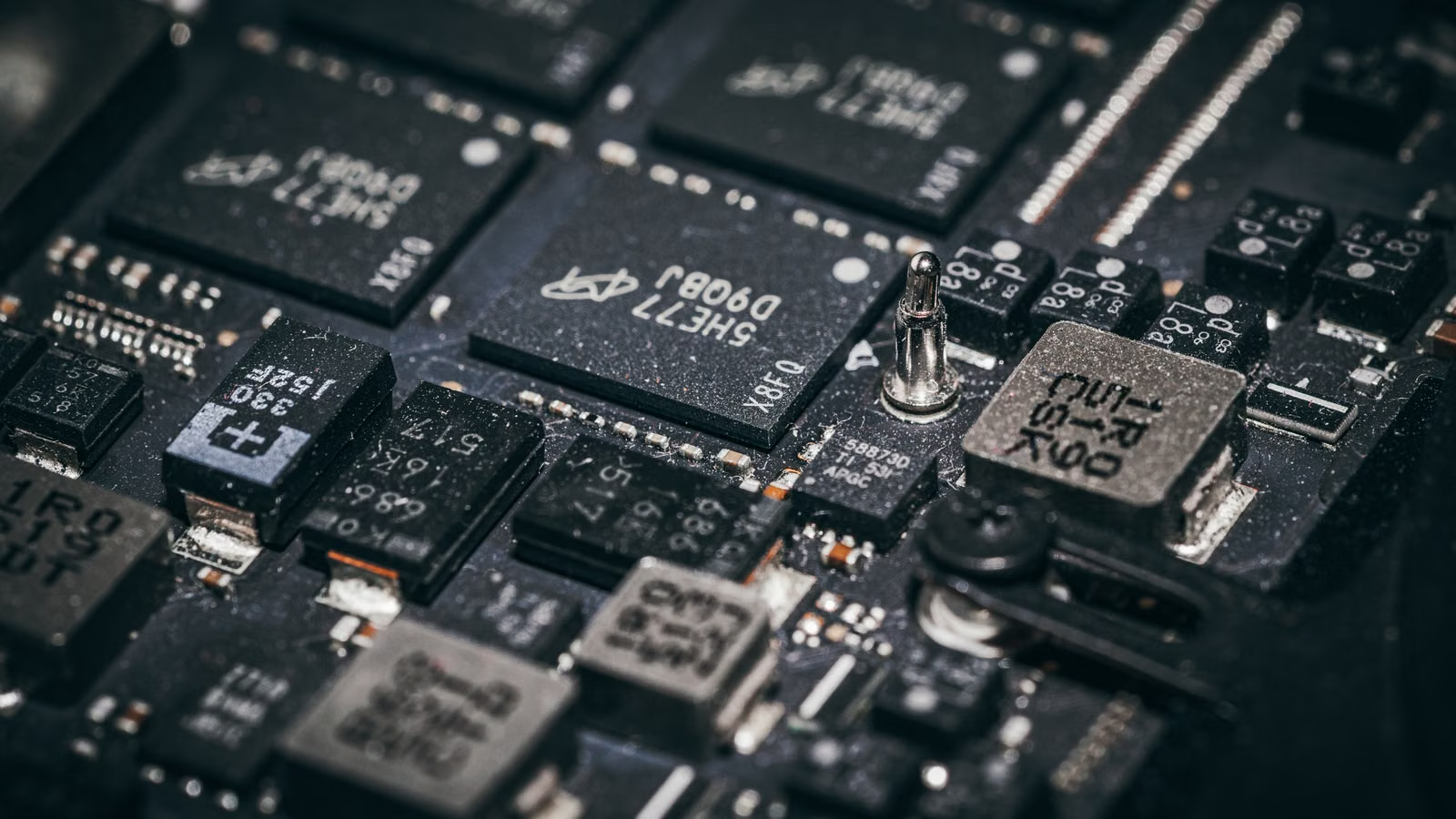
The key difference between EEPROM and NOR Flash lies in how they write data and where they are used. EEPROM is usually more suitable for byte-level or small-block data changes, making it common for configuration, calibration, device identity, and measurement parameters. NOR Flash is better suited for use cases that require high read performance and stable code storage, such as firmware, bootloaders, BIOS, and embedded system boot code. They are not simple substitutes; they serve different needs based on data size and read/write behavior.
Macronix explains in its comparison of low-density SPI EEPROM and Serial NOR Flash that EEPROM can write and erase data byte by byte, while Flash typically requires sector erase, block erase, or chip erase before writing. This difference matters: if a device frequently updates small parameters, EEPROM is a more natural fit; if the device mainly reads firmware, NOR Flash has advantages in read performance and capacity cost.
| Comparison Dimension | EEPROM | NOR Flash |
|---|---|---|
| Core Positioning | Small parameter storage | Code, firmware, boot programs |
| Write Method | Suitable for fine-grained writes | Usually requires sector or block erase first |
| Read Characteristics | Enough for parameter reads | Stronger fast random-read capability |
| Capacity Range | Usually smaller | Usually larger than EEPROM |
| Typical Data | IDs, configuration, calibration, measurements | Bootloader, BIOS, firmware |
| Decision Factor | Endurance, low power, data retention | XIP, read speed, interface, cost |
What EEPROM Is Suitable For
The typical value of EEPROM is storing “small but critical” data. Examples include calibration parameters in smart meters, identification information in mobile camera modules, configuration data in automotive control modules, operating parameters in industrial instruments, and calibration data in medical devices. ST describes Serial EEPROM as a non-volatile solution suitable for parameter management, sensor calibration, data logging, and small boot-code storage. This explains why EEPROM often appears in small-data scenarios with high requirements for reliability and rewritability.
What NOR Flash Is Suitable For
NOR Flash’s strengths are concentrated in reading and code execution. Infineon’s introduction to NOR Flash memory highlights its ability to retain data after power loss, while also supporting fast reads, random access, and direct instruction execution from memory cells. This makes NOR Flash suitable for firmware, system boot code, BIOS, embedded control programs, and device upgrade packages. For IoT modules, display panels, security equipment, and industrial devices, reliable boot and stable startup often matter more than simply maximizing capacity.
Why NOR Flash Is Often Associated With XIP
XIP stands for Execute-In-Place, which means a processor can execute code directly from external Flash instead of first copying all code into RAM. ST notes in its discussion of Serial NOR flash in embedded systems that serial NOR Flash is commonly used for storing firmware or boot code, with communication speeds ranging from tens to hundreds of MHz. When you see NOR Flash mentioned together with XIP, boot, or firmware, the underlying message is that it sits in a critical position in the device startup chain.
Summary: The biggest difference between EEPROM and NOR Flash is not which one is more advanced, but what type of data they serve. EEPROM is designed for small, critical, frequently updated data, with emphasis on byte-level flexibility, endurance, and data retention. NOR Flash is designed for code and firmware, with emphasis on read speed, random access, XIP, and reliable startup. To decide whether a device needs EEPROM or NOR Flash, ask three questions: how large is the data, how often does it need to be rewritten, and does the system need to read or execute code quickly from the chip? The more parameter-oriented the data is, the closer it is to EEPROM; the more firmware-oriented it is, the closer it is to NOR Flash.
NOR Flash vs. SLC NAND: One Focuses on Random Reads, the Other on Capacity and Data Storage
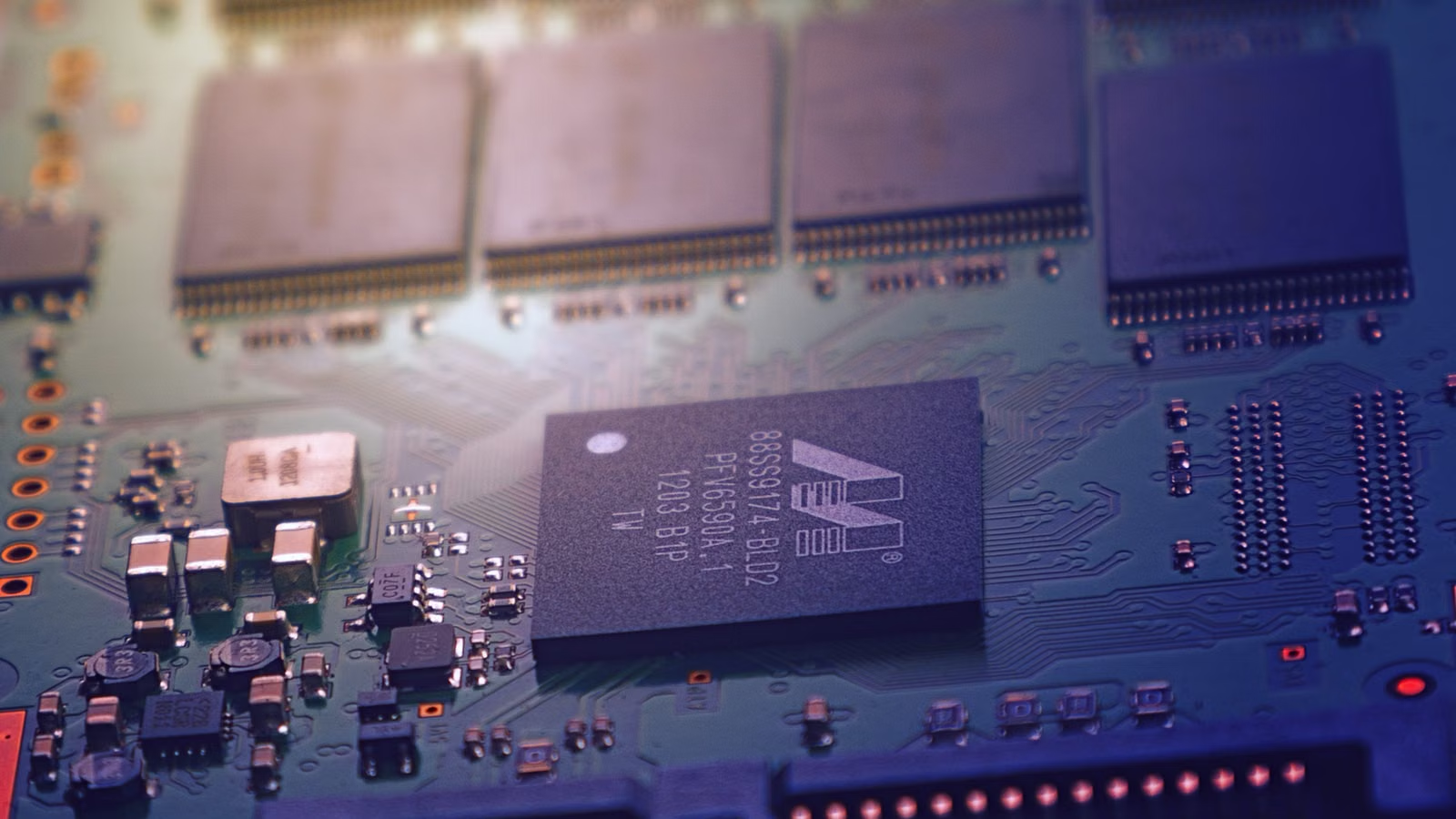
NOR Flash and SLC NAND are both Flash technologies, but they play different roles in a system. NOR Flash is more suitable for fast random reads, code storage, and boot execution. SLC NAND is more suitable for higher-capacity data storage, often used for system images, logs, resource files, and business data in embedded devices. You can think of NOR Flash as the “boot and code entry point,” while SLC NAND is a “larger embedded data layer.” They overlap in some areas, but their boundaries are not identical.
Micron defines SLC NAND flash as one bit per cell, with high performance and write endurance for systems that require stronger reliability. SLC stands for Single-Level Cell. Each memory cell stores only 1 bit. Compared with MLC, TLC, or QLC, SLC may not offer the highest density, but its reliability, endurance, and read/write consistency are more suitable for critical embedded scenarios.
| Comparison Dimension | NOR Flash | SLC NAND |
|---|---|---|
| Strength | Random reads, code execution | Capacity, data storage, endurance |
| Common Uses | Firmware, boot, BIOS, control programs | Logs, system images, resources, data |
| System Requirements | Suitable for XIP and fast startup | Usually requires ECC and bad-block management |
| Cost Logic | Higher cost per unit of capacity | Better cost efficiency per unit of capacity |
| Typical Scenarios | Industrial control, IoT, displays, automotive control | Networking, security monitoring, wearables, set-top boxes |
| Selection Focus | Startup speed, random access | Capacity, reliability, controller capability |
Why NOR Flash Is Suitable for Code Storage
Code storage requires data to be read reliably, quickly, and accurately every time a device starts. NOR Flash’s random access capability allows processors to read instructions by address, while XIP allows it to serve as the boot entry point in embedded systems. Infineon’s SEMPER NOR flash also highlights high performance, XIP, long-term storage, and reliability as product features. For automotive dashboards, industrial controllers, and connected devices, the cost of boot failure can be high, so the value of NOR Flash is not just capacity but determinism.
Why SLC NAND Is Suitable for Embedded Data Storage
SLC NAND’s strength is that it offers larger capacity while maintaining relatively high reliability. It does not primarily pursue extremely high capacity and low cost like consumer TLC or QLC NAND, nor does it mainly take on code-execution duties like NOR Flash. Shanghai Fudan’s English product materials show that its SLC NAND Flash products include the FM25LS and FM25S series, with capacities from 0.5Gbit to 8Gbit and applications covering mobile phones, data cards, set-top boxes, networking products, and communication equipment. These products are more like a reliable data layer inside embedded systems.
When NOR Flash and SLC NAND May Be Used Together
In more complex devices, NOR Flash and SLC NAND may coexist. For example, a device may use NOR Flash to store the bootloader and critical firmware, while using SLC NAND to store system images, logs, configuration packages, image resources, or application data. The former is responsible for “starting first and reading code first,” while the latter is responsible for “storing more data reliably.” This is why you should not treat NOR Flash and SLC NAND as completely mutually exclusive when reading a company’s product line. They often work together in different layers of the same system.
Summary: The difference between NOR Flash and SLC NAND mainly comes down to random reads and capacity roles. NOR Flash is better suited for the startup chain, firmware, boot code, BIOS, and embedded program reads. SLC NAND is better suited for higher-capacity data storage, especially in networking, security monitoring, wearables, and set-top boxes. They are not simply “high-end versus low-end.” They occupy different layers in system architecture. When analyzing a related company’s business, you should identify whether its product enters the code storage position or the data storage position, because that affects customer qualification cycles, replacement difficulty, pricing pressure, and demand elasticity.
Shanghai Fudan’s Memory Business: What Customer Scenarios Do the Three Product Lines Serve?
When looking at Shanghai Fudan’s memory business in Hong Kong, you should not stop at labels such as “it makes NOR Flash” or “it has NAND.” A more accurate breakdown is this: EEPROM corresponds to small-capacity parameters and high-reliability small data; NOR Flash corresponds to firmware, code, and boot storage; SLC NAND corresponds to higher-capacity embedded data. Shanghai Fudan places these products under its non-volatile memory product line, serving end markets such as automotive electronics, industrial applications, networking, security monitoring, medical devices, smart meters, and consumer electronics.
Shanghai Fudan states in its 2025 annual report that its EEPROM products mainly consist of the FM24, FM25, FM93, and FMSPD5118 series, supporting I²C, I³C, SPI, and Micro Wire interfaces, with capacities from 1Kbit to 2Mbit. Its NOR Flash products mainly consist of the FM25 and FM29 series, supporting SPI and general parallel interfaces, with capacities from 1Mbit to 2Gbit. Its SLC NAND Flash products mainly consist of the FM25 and FM29 series, supporting SPI and ONFI interfaces, with capacities from 1Gbit to 8Gbit.
| Shanghai Fudan Product Line | Main Series and Interfaces | Capacity Range | Typical Applications |
|---|---|---|---|
| EEPROM | FM24 / FM25 / FM93 / FMSPD5118; I²C, I³C, SPI, Micro Wire | 1Kbit–2Mbit | Mobile phone modules, smart meters, home appliances, automotive electronics, medical instruments, industrial meters |
| NOR Flash | FM25 / FM29; SPI, general parallel interface | 1Mbit–2Gbit | Networking, IoT modules, displays, security devices, set-top boxes, Ukey, automotive electronics |
| SLC NAND Flash | FM25 / FM29; SPI, ONFI | 1Gbit–8Gbit | Networking, security monitoring, wearables, set-top boxes, automotive electronics, medical instruments |
What to Watch in Shanghai Fudan’s EEPROM Business
The key watchpoints for Shanghai Fudan’s EEPROM business are whether customer scenarios remain stable, whether parameter storage enters high-reliability applications, and whether automotive adoption continues. Smart meters, mobile camera modules, home appliances, automotive electronics, and industrial instruments usually do not look only at chip price. They also care about long-term supply, consistency, data retention, endurance, and temperature range. Microchip’s Serial EEPROM product materials also classify these products by communication protocols such as I²C, SPI, and Microwire, as well as by density. This is comparable to the interface structure disclosed by Shanghai Fudan.
What to Watch in Shanghai Fudan’s NOR Flash Business
For NOR Flash, you need to watch whether firmware-storage applications are stable, and whether demand in displays, security devices, networking, industrial control, and PC-related peripherals recovers. Customer qualification for NOR Flash usually focuses on compatibility, reliability, startup speed, power consumption, and supply stability. For downstream device makers, replacing a firmware storage chip is not just about choosing a cheaper component. It also involves testing, certification, firmware adaptation, and long-term supply. Therefore, the business value of NOR Flash often lies in customer stickiness and product reliability.
What to Watch in Shanghai Fudan’s SLC NAND Business
For SLC NAND, you should watch capacity upgrades, key customer ramp-up, and embedded data demand. Networking, security monitoring, wearables, and set-top boxes generate more local data, logs, or system-image demand, which may support SLC NAND adoption as capacities rise. Compared with NOR Flash, SLC NAND places more emphasis on controllers, ECC, bad-block management, and system-level adaptation. When looking at Shanghai Fudan’s NAND products, do not just ask whether it has NAND. Ask which end markets it has entered, whether it has stable customers, and whether there is room for continued capacity upgrades.
Summary: Shanghai Fudan’s non-volatile memory business should be understood through three product lines: EEPROM, NOR Flash, and SLC NAND. EEPROM is for small-capacity critical parameters, NOR Flash is for firmware and code, and SLC NAND is for higher-capacity embedded data. Their customers may overlap, but their needs differ, as do their technical requirements, qualification cycles, and pricing dynamics. When reading financial reports or announcements, put product series, interfaces, capacity, application areas, customer adoption, and revenue changes into one table. That is more useful than simply asking whether the company is a “memory chip concept stock.”
Business Value of Shanghai Fudan: Non-Volatile Memory Is Not a Simple Commodity Memory Cycle
Shanghai Fudan’s EEPROM, NOR Flash, and SLC NAND products are closer to niche embedded memory than to highly commoditized DRAM, consumer NAND, or SSD products. They are still affected by semiconductor cycles, downstream inventory, and pricing, but their business value comes more from high-reliability applications, customer certification, domestic supply chains, product consistency, and long-term supply capability. If you use a simple “all memory chips benefit from price increases” logic to analyze Shanghai Fudan, you may miss the difference between it and global commodity memory leaders.
Shanghai Fudan’s English disclosure states that its non-volatile memory product line generated approximately RMB 1.042 billion in revenue in 2025, of which high-reliability memory contributed approximately RMB 681 million. This structure shows that Shanghai Fudan’s NVM business is not only made up of ordinary consumer-electronics chips, but also includes products with higher requirements for reliability, consistency, and customer qualification.
| Watchpoint | What to Look At | Why It Matters |
|---|---|---|
| Product mix | Changes in EEPROM, NOR, and SLC NAND contribution | Identifies which demand category is driving growth |
| High-reliability memory | Revenue share and customer fields | Affects margin quality and customer stickiness |
| Automotive adoption | Whether products enter OEM AVL lists or mass shipment | Long qualification cycle, higher replacement barriers |
| Downstream cycle | Demand in displays, security, networking, industrial control | Affects orders and pricing |
| Capacity upgrades | NAND and NOR capacity iteration | Affects ASP and application expansion |
| Competitive landscape | Global vendors, domestic peers, supply-chain changes | Affects market share and pricing pressure |
Why High-Reliability Memory Deserves Separate Attention
High-reliability memory is typically used in fields with higher requirements for stability, temperature tolerance, lifespan, data integrity, and consistency. Once customers complete qualification, they may not change suppliers frequently in the short term, because replacement can require retesting, system adaptation, and quality-risk evaluation. Shanghai Fudan also mentions in its English disclosure that automotive-grade EEPROM products have begun mass shipments and entered the AVL lists of several automakers. For you, this kind of information is more important than simply asking whether a certain product has increased in price, because it relates to customer structure and product barriers.
Why Shanghai Fudan Should Not Be Viewed Only Through a Memory Price-Cycle Lens
Commodity memory is more directly affected by supply, demand, capacity, pricing, and inventory cycles. Typical products include DRAM, 3D NAND, SSDs, and HDDs. Shanghai Fudan’s NVM products are also influenced by industry conditions, but they are more closely tied to embedded, industrial, automotive, networking, and security applications. Their upside may not be as dramatic as a pure commodity memory cycle, but product qualification, customer stickiness, and high-reliability applications may provide a different type of stability. It is more suitable to view the company through a framework of “niche non-volatile memory + domestic semiconductor supply + high-reliability applications.”
Key Risks for Hong Kong Stock Investors
The risks should not be ignored. First, demand changes in displays, security monitoring, networking, industrial applications, and consumer electronics can affect orders. Second, competition among domestic and overseas NOR Flash, EEPROM, and SLC NAND suppliers may pressure prices. Third, automotive-grade and high-reliability customer adoption cycles are long and do not necessarily translate into rapid near-term revenue. Fourth, inventory, R&D expenses, process iteration, packaging and testing, and supply-chain fluctuations can affect profitability. Fifth, Hong Kong stock valuations are also influenced by liquidity, market risk appetite, and semiconductor-sector sentiment.
Summary: Shanghai Fudan’s memory business is not a simple copy of the commodity memory cycle. Its core watchpoints are the product mix across EEPROM, NOR Flash, and SLC NAND, as well as high-reliability memory, automotive-grade EEPROM, networking and security demand, and customer adoption. A cyclical upturn may improve demand and pricing, but long-term business value still depends on product reliability, application scenarios, customer qualification, and revenue quality. When making a judgment, look at technology, financial reports, and market conditions together rather than relying only on the broad idea that “memory chips are rising in price.”
A Beginner’s Framework: From Technical Differences to Company Analysis
You do not need to become a chip engineer before building a clear framework. First, ask what EEPROM, NOR Flash, and SLC NAND store. Then look at which products Shanghai Fudan sells. Next, identify which end markets those products enter. Finally, combine revenue, customer adoption, pricing pressure, and risk disclosures. This approach helps you translate technical terms into business questions when reading company announcements, and it also prevents you from putting all memory-related stocks into the same basket.
You can read Shanghai Fudan’s memory business in five steps:
- Identify the product line: EEPROM, NOR Flash, SLC NAND, or another chip business.
- Check capacity and interface: capacity defines application boundaries, while interface determines system compatibility.
- Look at application fields: smart meters, automotive, networking, security, medical, and industrial applications have very different demand profiles.
- Track revenue changes: distinguish between ordinary NVM revenue, high-reliability memory revenue, and other business lines.
- Read risk disclosures: watch customer adoption, competition, inventory, pricing, R&D, and market liquidity.
| Technical Concept | Business Meaning | Investor Watchpoint |
|---|---|---|
| EEPROM | Small data, parameters, calibration | Watch smart meters, modules, automotive-grade, and industrial demand |
| NOR Flash | Firmware, boot, code | Watch IoT, displays, security, PC, and industrial cycles |
| SLC NAND | Higher-capacity embedded data | Watch networking, security, wearables, and capacity upgrades |
| SPI / I²C / ONFI | How chips connect to systems | Watch compatibility and customer replacement costs |
| XIP / ECC | System-level reliability capability | Watch whether products enter critical applications |
| High-reliability memory | Higher qualification barriers | Watch revenue quality and customer stickiness |
If you extend technical analysis into public-market investing, you also need to include trading costs and rules in your decision framework. Investors who track both Hong Kong-listed semiconductor companies and overseas chip stocks should remember that trading costs may include more than commissions. They may also include platform fees, external institution fees, transaction activity fees, and other charges. Taking Biya’s U.S. stock trading fees as an example, U.S. stock trading commission is USD 0, while platform fees, external institution fees, and other charges are subject to the fee schedule and order-page display. Service availability depends on the user’s location, identity verification result, platform rules, and applicable laws and regulations.
Key Terms Worth Understanding
For beginners, the most useful terms are NVM, SPI, I²C, ONFI, XIP, ECC, endurance, data retention, automotive-grade, industrial-grade, and high-reliability memory. NVM means the chip can retain data after power loss. SPI, I²C, and ONFI are interfaces. XIP relates to direct code execution. ECC relates to error correction. Endurance refers to program/erase life. Data retention refers to how long data can be preserved. Automotive-grade and industrial-grade relate to temperature, reliability, and qualification requirements.
Questions You Should Avoid Overinterpreting
Do not treat a single product adoption as guaranteed high growth. Do not assume domestic substitution means no competition. Do not equate technical coverage directly with profit elasticity. Shanghai Fudan has EEPROM, NOR Flash, and SLC NAND product lines, but each product line has its own pricing, customers, inventory cycle, and qualification period. For ordinary investors, a more balanced method is to combine financial-report revenue, company announcements, industry cycles, and risk disclosures, while using market tools to track valuation and trading changes.
Summary: To move from technical differences to company analysis, use the five-step framework of “what it stores, where it is used, who pays for it, how revenue changes, and where the risks are.” EEPROM, NOR Flash, and SLC NAND are the entry points for understanding Shanghai Fudan’s NVM business, but they are not the whole answer. You also need to look at interfaces, capacity, end markets, customer qualification, high-reliability memory share, and industry cycles. Before trading Hong Kong or overseas chip companies, you should also understand order types, fee structures, platform rules, and local regulatory requirements, instead of turning technical interest directly into unverified investment decisions.
If you often track Shanghai Fudan, Hong Kong-listed semiconductor companies, U.S. chip stocks, and digital asset markets at the same time, you can place technical materials, company announcements, financial data, and market movements into one shared observation framework. Biya supports U.S. stocks, Hong Kong stocks, and crypto trading, and also offers multi-asset trading wallet capabilities. You can use Hong Kong stock search to check 01385.HK and other Hong Kong-listed stocks, then combine announcements and financial reports to assess business changes. If your location, identity verification result, and applicable rules meet the relevant service conditions, you can also download the app to manage watchlists, market data, and trading workflows. The information above only introduces public-market information, technical concepts, and fee structures. It does not constitute investment advice.
FAQ
Is EEPROM or NOR Flash Better for Storing Device Configuration?
EEPROM is usually better for storing device configuration. Configuration data, calibration values, serial numbers, and status parameters are usually small in size but may need to be modified many times, which makes EEPROM’s fine-grained write capability more suitable. NOR Flash can also store data, but it is more commonly used for firmware, boot code, and program reads. The actual choice still depends on capacity, interface, endurance, cost, and system design.
Is NOR Flash or SLC NAND Better for Storing Firmware?
NOR Flash is usually better for storing boot firmware and critical code. Its random-read performance and XIP capability make it more suitable for fast startup in embedded systems. SLC NAND can also store system images or larger data sets, but it usually requires ECC, bad-block management, and controller support. If firmware must be executed directly or loaded quickly during startup, NOR Flash is more common. If larger capacity is required, NAND may be used as a data layer.
What Products Are Included in Shanghai Fudan’s Non-Volatile Memory Business?
Shanghai Fudan’s non-volatile memory business mainly includes EEPROM, NOR Flash, and SLC NAND Flash. EEPROM covers small-capacity parameter storage, NOR Flash covers firmware and code storage, and SLC NAND covers higher-capacity embedded data storage. When analyzing this business line, you should separately look at product capacity, interface, application fields, customer adoption, and high-reliability memory revenue, rather than relying only on the broad “memory chip” label.
Can Shanghai Fudan Be Analyzed Like a Commodity Memory Cycle Stock?
Shanghai Fudan should not be analyzed purely as a commodity memory cycle stock. Its EEPROM, NOR Flash, and SLC NAND products are closer to niche embedded non-volatile memory, with customer scenarios including smart meters, automotive, networking, security, industrial control, and medical instruments. Industry conditions can affect demand and pricing, but company performance also depends on high-reliability products, customer qualification, product mix, competitive dynamics, and R&D spending.
What Risks Should Beginners Watch in Shanghai Fudan’s Memory Business?
Beginners should focus on downstream demand, pricing competition, customer adoption, inventory cycles, R&D spending, and Hong Kong market liquidity risk. EEPROM, NOR Flash, and SLC NAND serve different application fields, so their demand patterns also differ. Automotive-grade or high-reliability products have long qualification cycles, and technical progress should not be treated as immediate profit growth. Before trading, investors should also review platform rules, fee details, and local regulatory requirements.
Can EEPROM, NOR Flash, and SLC NAND Replace One Another?
The three may replace one another in some boundary cases, but they will not fully substitute for each other. EEPROM is more suitable for small-capacity parameters, NOR Flash is more suitable for firmware and boot code, and SLC NAND is more suitable for higher-capacity embedded data. Actual system design also considers interface, power consumption, package, cost, reliability, ECC, and software adaptation. For investors, the key question is not which one replaces which, but which one enters more stable and higher-value application scenarios.
*This article is provided for general information purposes and does not constitute legal, tax or other professional advice from BiyaPay or its subsidiaries and its affiliates, and it is not intended as a substitute for obtaining advice from a financial advisor or any other professional.
We make no representations, warranties or warranties, express or implied, as to the accuracy, completeness or timeliness of the contents of this publication.
Related Blogs of

Cheapest Way to Transfer Money Internationally: Small vs. Large Transfers


Wire Transfer Requirements: Sender and Beneficiary Details Checklist



Choose Country or Region to Read Local Blog
 Australia
 Austria
 Belgium
 Canada
 Cyprus
 Czech Republic
 Denmark
 Estonia
 Finland
 France
 Germany
 Greece
 Hong Kong
 India
India Indonesia
 Ireland
 Italy
Italy Japan
Japan Latvia
 Lithuania
 Luxembourg
 Malaysia
 Malta
Malta Morocco
 Nepal
Nepal Netherlands
 New Zealand
 Norway
 Pakistan
 Philippines
 Poland
 Portugal
 Romania
 Singapore
 Slovakia
 Slovenia
 South Africa
 South Korea
 Spain
Spain Sweden
 Thailand
 United States
 Turkey
 United Arab Emirates
 United Kingdom
 Vietnam