Tesla Earnings Preview: Will Deliveries, Margins, or Robotaxi Decide the Stock’s Next Move?




Ahead of Tesla’s earnings, the key question is not simply whether deliveries look strong. The real question is whether delivery recovery can translate into stronger margins, cash flow, and support for the Robotaxi valuation story. You need to analyze TSLA as two businesses at the same time: one is an electric vehicle manufacturer, where the stock is driven by deliveries, ASP, and automotive gross margin; the other is an AI and autonomous driving platform, where the market focuses on FSD, Robotaxi, Cybercab, and Elon Musk’s comments on commercialization timing.
Key Takeaways
- Q2 deliveries came in well above consensus, but earnings quality remains the key test.
- Automotive gross margin matters more than deliveries in judging Tesla’s profitability.
- Robotaxi drives long-term valuation upside but still needs scale and regulatory validation.
- Energy storage, FSD subscriptions, and services revenue are important secondary signals.
- Musk’s comments on AI investment and capital spending may amplify post-earnings volatility.
What Does the Market Really Want to See Before Tesla’s Q2 Earnings?
When you read a Tesla earnings preview, the first layer is whether deliveries have recovered. The second layer is whether those deliveries are profitable. The third layer is whether Robotaxi can continue to support Tesla’s premium valuation. Tesla’s disclosed Q2 production and deliveries showed 451,758 vehicles produced, 480,126 vehicles delivered, and 13.5 GWh of energy storage products deployed. This gives the market a clear signal: demand was meaningfully stronger than expected at the quarterly level, but financial quality still needs to be confirmed through revenue, margins, and cash flow.
| Metric | Q2 Disclosed Data | What You Should Watch |
|---|---|---|
| Total deliveries | 480,126 vehicles | Strength of demand recovery |
| Total production | 451,758 vehicles | Whether inventory was reduced |
| Model 3/Y deliveries | 467,762 vehicles | Resilience of core models |
| Other model deliveries | 12,364 vehicles | Contribution from Cybertruck, Semi, and others |
| Energy storage deployments | 13.5 GWh | Strength of the second growth curve |
Stronger-than-consensus deliveries are the most direct positive signal ahead of earnings. Tesla’s previously published Q2 delivery consensus showed an average analyst estimate of 406,024 total deliveries and 13.8 GWh of energy storage deployments. Actual deliveries came in significantly above that estimate, while energy storage deployments were slightly below that consensus figure. This means the market will discuss both “auto recovery” and whether the energy business is falling short of more optimistic expectations.
More importantly, the delivery number has already changed the pre-earnings expectation gap. Reuters’ coverage of the Tesla Q2 delivery reaction noted that after the delivery data was released, the stock still fell about 7% intraday, partly because the market had already priced in a more optimistic setup. For you, this shows that the core issue before earnings is not simply “are deliveries good?” but “how much of the good news is already priced in?”
Summary: Before Tesla’s Q2 earnings, the market already has two important data points: deliveries and energy storage deployments. The 480,126 vehicle delivery figure points to strong EV demand recovery, and deliveries exceeding production also suggests some easing in inventory pressure. But deliveries are only a revenue-side signal. They do not automatically prove profitability has improved. What you still need earnings to confirm is whether these deliveries came with better average selling prices, controlled unit costs, stable automotive gross margins, and free cash flow strong enough to support Tesla’s AI investment cycle.
Can Deliveries Decide TSLA’s Short-Term Stock Direction?
Deliveries can shape TSLA’s short-term sentiment, but they rarely decide the entire post-earnings stock direction on their own. Strong deliveries usually improve revenue expectations, reduce inventory concerns, and weaken the narrative of slowing demand. But if delivery growth comes from price cuts, financing incentives, or a greater mix of lower-margin models, the stock reaction may become divided. You should view deliveries as the entry point into the earnings discussion, not the final answer.
The quality of deliveries needs to be assessed across three dimensions:
| Dimension | Positive Signal | Risk Signal |
|---|---|---|
| Regional demand | Europe and China both recover | One region drives most of the upside |
| Product mix | Model 3/Y remain stable, premium mix improves | Lower-priced variants take share |
| Inventory change | Deliveries exceed production | Concentrated deliveries pull forward demand |
| Pricing strategy | ASP remains stable or improves | Promotions drive volume |
| Guidance tone | Management raises full-year confidence | Management highlights uncertainty and cost pressure |
This delivery recovery has clear regional characteristics. Reuters reported that Tesla’s Q2 deliveries exceeded expectations, helped by a rebound in European demand, while the U.S. market still faced pressure after the removal of EV tax credits, and China was shaped by both the refreshed Model Y and intense local competition. In other words, the global delivery total looks strong, but you should not focus only on the headline number. You need to watch how management explains demand trends across Europe, the U.S., and China.
Short-term traders treat deliveries as a price catalyst. Long-term investors should look for profitability leverage behind those deliveries. If deliveries are strong, revenue is strong, and margins are also strong, the market is more likely to believe Tesla’s core business recovery is high quality. If deliveries are strong but margins are weak, investors may suspect Tesla is using price to buy volume. If deliveries are strong but management sounds cautious on the second half of the year, the stock may experience a “good news already priced in” reaction.
Summary: Deliveries matter for TSLA’s short-term direction because they directly affect market expectations for revenue, inventory, and the demand cycle. But deliveries cannot answer the earnings quality question by themselves. You should treat the 480,126 delivery figure as a strong starting point, then continue watching whether automotive revenue grows accordingly, whether ASP remains stable, whether the delivery mix is healthy, and whether management extends Q2 strength into its outlook for the rest of the year.
Gross Margin Is the Core Test of Tesla’s Earnings Quality
If you could choose only one Tesla earnings metric to judge profitability quality, automotive gross margin should come first, especially automotive gross margin excluding regulatory credits. Deliveries tell you that vehicles were sold. Margins tell you whether those vehicles were sold profitably. Tesla’s latest Q1 2026 Update showed total revenue of $22.387 billion, total GAAP gross margin of 21.1%, operating margin of 4.2%, automotive GAAP gross margin of 21.1%, and automotive gross margin excluding regulatory credits of 19.2%.
| Metric | Q1 2026 Baseline | What to Watch in Q2 Earnings |
|---|---|---|
| Total revenue | $22.387 billion | Whether it rises meaningfully with deliveries |
| Total GAAP gross margin | 21.1% | Whether cost and mix improve |
| Operating margin | 4.2% | Whether AI, R&D, and SG&A weigh on profit |
| Automotive GAAP gross margin | 21.1% | Profitability of the auto business |
| Automotive gross margin excluding regulatory credits | 19.2% | Real improvement in core auto economics |
| Free cash flow | $1.444 billion | Whether it supports heavy AI capex |
The key to margins is not just the reported level, but the source of any improvement. If margins improve because of higher ASP, lower material costs, better manufacturing efficiency, and FSD-related revenue, the market will likely view the improvement as higher quality. Tesla’s Q1 materials referenced positive impacts from average selling price, FSD sales and subscriptions, and lower unit costs, while AI and other R&D projects contributed to operating expense pressure. That creates a natural Q2 framework: can the core auto business improve enough to absorb rising AI investment?
Regulatory credits also deserve attention. In Q1, regulatory credits contributed 1.9 percentage points to automotive gross margin. If Q2 margin improvement is mainly driven by credits, one-time items, or currency effects, the market may not reward it with a higher multiple. If automotive gross margin excluding regulatory credits also improves, that would be a stronger signal that delivery growth is producing real operating leverage. For a company like Tesla, whose valuation depends heavily on future growth, margins determine whether that growth deserves a premium multiple.
Summary: Strong Tesla deliveries show demand recovery. Strong margins show earnings quality recovery. When reading Q2 earnings, you should prioritize automotive GAAP gross margin, automotive gross margin excluding regulatory credits, ASP, unit costs, and operating expenses. If delivery growth does not bring margin improvement, the market may treat strong deliveries as a short-term volume rebound. If margins improve at the same time, investors are more likely to believe Tesla’s core business has regained profitability leverage.
How Will Robotaxi and FSD Affect Tesla’s Valuation?
Robotaxi does not primarily affect next quarter’s revenue. It affects whether Tesla can shift from being valued as an electric vehicle company to being valued as an autonomous driving platform. When you evaluate TSLA, you need to separate two things: FSD as driver-assistance software, which can already contribute subscription and add-on revenue; and Robotaxi as a driverless mobility business, which still needs proof through operating cities, fleet size, regulatory boundaries, and unit economics. The former affects revenue mix. The latter affects the valuation narrative.
| Robotaxi / FSD Indicator | Why It Matters for Valuation | What to Listen for on the Call |
|---|---|---|
| Number of operating cities | Validates expansion pace | Whether new cities are named |
| Fleet size | Validates commercial depth | Whether vehicle count and utilization are disclosed |
| Safety driver and regulatory limits | Defines business boundaries | Whether human monitoring is required |
| FSD subscriptions | Indicates software revenue potential | User growth and pricing changes |
| Cybercab | Shows hardware rollout path | Production timing, cost, and capacity |
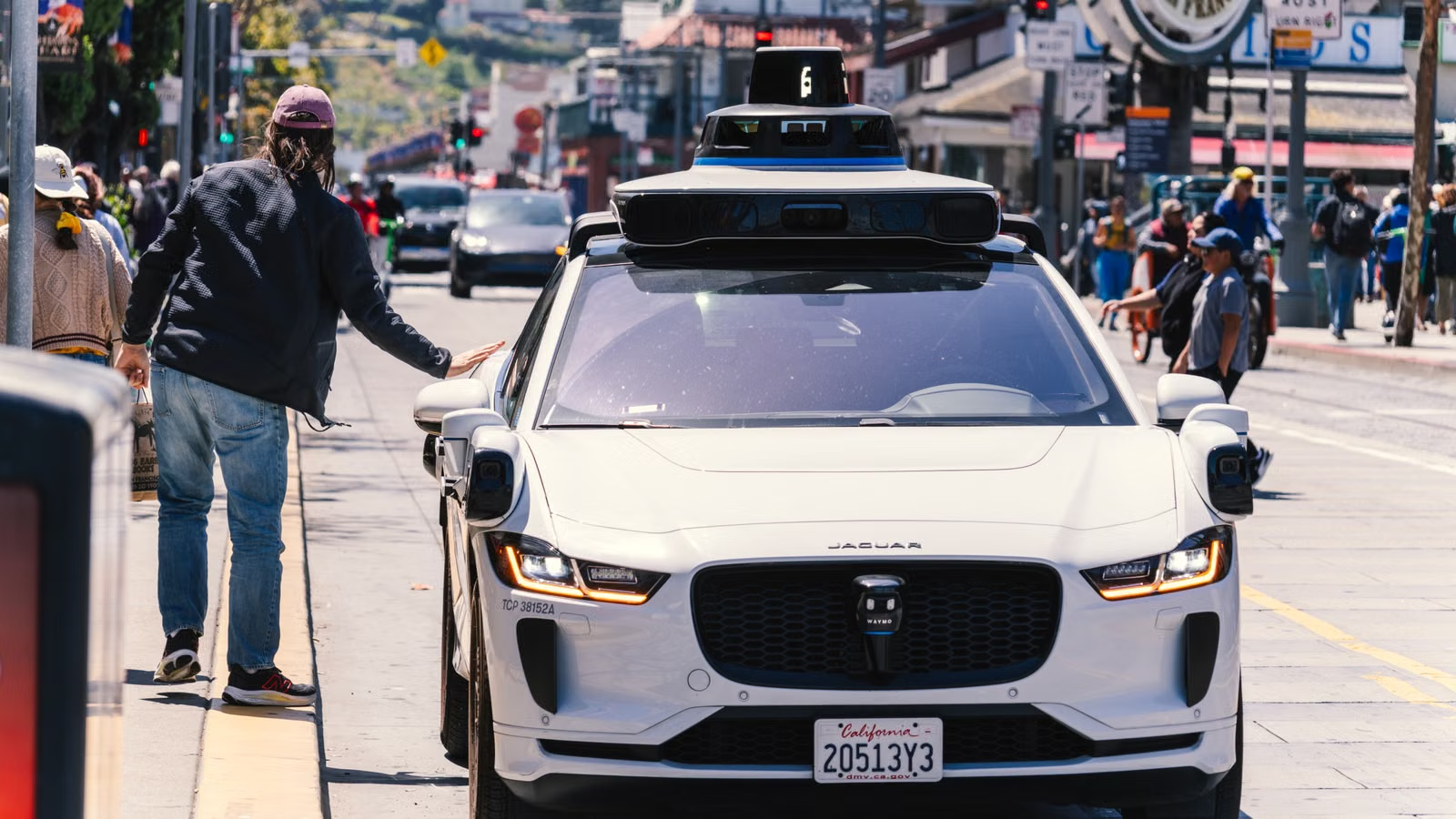
Robotaxi progress is strengthening the narrative. Reuters reported that Tesla has rolled out Robotaxi in Miami and had previously expanded unsupervised robotaxi service in Austin. At the same time, the Austin fleet remains much smaller than Waymo’s local fleet, and Waymo’s service city updates show broader commercial operating coverage. For investors, this does not invalidate Tesla’s opportunity. It simply means the Robotaxi story needs to move from “can it operate?” to “can it scale profitably?”
FSD also needs to be understood with clear boundaries. Tesla’s own Full Self-Driving Supervised description emphasizes that the feature requires active driver supervision and does not make the vehicle fully autonomous. Tesla’s FSD subscription can create software revenue potential, but it is not the same stage as a driverless Robotaxi commercial model. On the earnings call, the more Tesla provides quantifiable operating metrics, the more support it gives to valuation. The more the discussion remains focused on vision without operating data, the greater the short-term volatility risk.
Summary: Robotaxi is the most flexible long-term variable in Tesla’s valuation, but the stock is unlikely to keep rising solely because Robotaxi exists. You need to watch whether it moves from limited-area operation to broader commercial scale, including city count, fleet size, regulatory approvals, service availability, FSD subscription growth, and the Cybercab production path. The closer Robotaxi gets to a measurable business, the easier it becomes for the market to support Tesla’s AI valuation premium.
How Will the Elon Musk Factor Amplify Tesla’s Earnings Volatility?
Elon Musk affects Tesla’s stock because he can pull the company’s valuation away from traditional auto multiples and toward AI, robotics, and autonomous driving multiples. But that also raises the market’s demand for execution. Every earnings call comment on Robotaxi, FSD, Cybercab, Optimus, and capital spending can change assumptions about future cash flow and valuation multiples.
The Musk factor can be broken into three parts:
- Narrative premium: AI, Robotaxi, and robotics prevent Tesla from being valued only as a carmaker.
- Execution threshold: The bigger the vision, the more the market demands timelines and evidence.
- Cash flow pressure: Heavy capex supports the long-term story but may pressure near-term free cash flow.
- Expectation volatility: The more ambitious the call commentary, the larger the stock reaction can become.
Reuters noted that Tesla expects 2026 capital spending to exceed $25 billion, with investment directed toward AI infrastructure, battery production, Cybercab manufacturing, and Optimus robots. This number shows investors two sides of the same story: long-term platform investment and near-term profit or cash flow pressure. For you, the question is not simply whether capex is high. The question is whether management can explain when those investments may turn into revenue, margin, and cash flow.
This is why the earnings call can matter more than EPS. Tesla’s valuation debate is not just an earnings debate. It is a business model debate. Auto investors will ask whether deliveries and margins can remain strong. Technology investors will ask whether FSD and Robotaxi can scale. Cash flow investors will ask whether AI spending will pressure free cash flow. As long as these three questions are not answered together, TSLA can remain highly volatile after earnings.
Summary: The Elon Musk factor amplifies Tesla’s earnings reaction because the market is not only buying current-quarter profit. It is also buying the possibility that Tesla becomes a future AI platform. You should pay close attention to concrete details on the call: Robotaxi city expansion, FSD adoption, Cybercab production timing, Optimus commercialization, capital spending discipline, and full-year delivery outlook. The more specific the answers are, the easier it is for the market to reprice TSLA. The more vague they are, the more the stock may swing under high expectations.
What Scenarios Could Tesla Stock Face After Earnings?
Tesla’s post-earnings stock direction depends on the combination of deliveries, margins, and Robotaxi guidance, not a single EPS figure. The strongest setup is strong deliveries, strong margins, and clear Robotaxi guidance. The most divided setup is strong deliveries but weak margins. The riskiest setup is weak financial data while management mainly reinforces the long-term vision. You need scenario analysis, not a one-number view of TSLA.
| Earnings Combination | Likely Market Interpretation | Possible Stock Reaction |
|---|---|---|
| Strong deliveries + strong margins | Demand and profit improve together | Positive bias |
| Strong deliveries + weak margins | Volume may be driven by pricing | Higher disagreement |
| Strong margins + cautious guidance | Short-term beat, wait for next catalyst | Neutral to volatile |
| Weak financials + strong Robotaxi story | Near-term and long-term narratives conflict | High volatility |
| Strong financials + vague Robotaxi commentary | Core business supports stock, valuation upside limited | Depends on valuation |
The first scenario is the easiest one to support a higher stock price: delivery strength is not isolated, revenue, margins, and cash flow all improve, and Musk provides a clearer Robotaxi expansion path. The second scenario is more common and more divisive: deliveries are high, but margins do not recover, leading the market to question whether Tesla is buying volume with price. The third scenario is more long-term oriented: financials are not strong enough, but Robotaxi progress is encouraging, creating a tug-of-war between the auto business and AI valuation.
Ordinary investors should also factor transaction costs into earnings-season trading. Around major U.S. stock earnings, bid-ask spreads, after-hours volatility, and execution prices can all affect actual returns. For example, when using Biya to follow TSLA, U.S. stocks, and Hong Kong stocks, you can monitor both market volatility and order costs. Biya charges $0 commission for U.S. stock trading, while platform fees, external institution fees, and other applicable charges are subject to the U.S. stock trading fees shown in the fee schedule and order page. Fees are not the core of investment analysis, but in high-volatility earnings trades, they can affect your real execution experience.
Summary: Tesla’s post-earnings stock reaction will not be decided simply by “strong deliveries” or “Robotaxi momentum.” It depends on whether the three major drivers move in the same direction: deliveries shape near-term demand expectations, margins define earnings quality, and Robotaxi affects long-term valuation multiples. If all three improve, TSLA is more likely to receive a premium. If deliveries are strong but margins are weak, the stock may rise first and then fade. If the long-term narrative is strong but near-term numbers are not enough, volatility may become more intense.
How Should Ordinary Investors Read Tesla’s Earnings?
The most effective way to read Tesla earnings is to start with the financial tables, then listen to the earnings call, and only then interpret the stock reaction. Do not let after-hours price moves lead your judgment. TSLA’s one-day volatility often reflects delivery expectations, margin expectations, the Robotaxi narrative, and Musk’s comments all at once. Build the indicator framework first, then judge whether the price reaction makes sense.
A practical reading order:
- Check whether total revenue and automotive revenue match the 480,126 delivery figure.
- Review automotive gross margin and automotive gross margin excluding regulatory credits.
- Assess whether operating cash flow and free cash flow can support AI investment.
- Compare energy revenue with the 13.5 GWh of storage deployments.
- Listen to management’s guidance on full-year deliveries, capex, and Robotaxi.
- Finally, compare the after-hours stock reaction with the actual fundamentals.
You also need to distinguish between a trading reaction and an investment judgment. A trading reaction is about expectation gaps: if the market expected roughly 406,000 deliveries and Tesla delivered 480,126 vehicles, short-term sentiment naturally changes. An investment judgment is about sustainability: if margins, cash flow, and software revenue do not follow, strong deliveries may only represent a one-quarter rebound. Conversely, if the auto business generates stable cash flow and Robotaxi becomes increasingly measurable, the market may be more willing to value Tesla as a platform company.
If you need to track U.S. stock earnings and individual stock volatility, U.S. stock market data can help you place TSLA, NVDA, AAPL, and other companies into the same observation framework. If your region, identity verification status, and platform rules meet the relevant requirements, you can also download App to manage multi-asset trading and market monitoring. Service availability depends on your location, identity verification result, platform rules, and applicable laws and regulations.
Summary: Ordinary investors should not read Tesla earnings by looking only at headlines or after-hours moves. A more disciplined approach is to use a three-layer framework: first deliveries and revenue, then margins and cash flow, and finally Robotaxi, FSD, Cybercab, and capital spending guidance. This helps you judge whether the stock move is driven by fundamental improvement, a stronger valuation narrative, or short-term expectation gaps.
When you follow high-volatility U.S. stock earnings such as Tesla, you need to bring earnings dates, core indicators, stock volatility, and trading costs into one decision framework. Biya is a global multi-asset trading wallet that supports U.S. stocks, Hong Kong stocks, digital assets, and USDT conversion into major fiat currencies such as USD or HKD. For earnings-sensitive stocks like TSLA, analyzing deliveries and margins is only the first step. Before trading, you should also understand order types, execution prices, platform fees, external institution fees, and applicable rules. The information above only explains public market information, trading rules, and fee structures, and does not constitute investment advice. Any trading decision should be based on your own risk tolerance, local regulatory requirements, and the actual information displayed by the platform.
FAQ
What should investors watch most before Tesla earnings?
Before Tesla earnings, investors should focus on deliveries, automotive gross margin, automotive gross margin excluding regulatory credits, free cash flow, energy storage deployments, and Robotaxi progress. Deliveries reflect demand, margins reflect earnings quality, and Robotaxi and FSD shape long-term valuation potential.
Does a Tesla delivery beat always help TSLA stock?
A Tesla delivery beat does not always directly help TSLA stock. The reaction also depends on whether the market already priced in the beat, whether delivery growth relied on price cuts, whether automotive margins improved, and whether management gives clear full-year and Robotaxi guidance.
Why does Tesla automotive gross margin matter for TSLA valuation?
Tesla automotive gross margin matters because it reflects the real profitability of the car business. If delivery growth comes with margin improvement, the market is more likely to view growth as sustainable. If margins fall, investors may worry that volume is being driven by pricing incentives.
Why is Robotaxi important for Tesla stock?
Robotaxi is important for Tesla stock because it affects whether the company can move from an EV manufacturer valuation toward an autonomous driving platform valuation. Investors should track operating cities, fleet size, regulatory limits, FSD subscriptions, and Cybercab production rather than focusing only on launch headlines.
Which Elon Musk comments matter most on Tesla’s earnings call?
The most important Elon Musk comments on Tesla’s earnings call are likely to involve Robotaxi expansion, FSD availability, Cybercab production, the Optimus timeline, capital spending, and full-year delivery targets. More specific commentary can change the market’s assumptions about TSLA’s valuation.
Should ordinary investors buy TSLA based only on one Tesla earnings report?
Ordinary investors should not buy TSLA based only on one Tesla earnings report. Earnings can help update your view, but decisions should also consider valuation, position size, trading costs, risk tolerance, and local regulatory requirements. Earnings-day volatility should not be treated as a certain opportunity.
*This article is provided for general information purposes and does not constitute legal, tax or other professional advice from BiyaPay or its subsidiaries and its affiliates, and it is not intended as a substitute for obtaining advice from a financial advisor or any other professional.
We make no representations, warranties or warranties, express or implied, as to the accuracy, completeness or timeliness of the contents of this publication.
Related Blogs of

TSMC Q2 Earnings Call Preview: Can AI Chip Demand Still Support High Growth?


Which Price Increase Matters More to Micron: DRAM or NAND?


Why Are AI Data Centers Competing for Enterprise SSDs? From Training Data to Vector Databases


How Do Microsoft, Amazon, Google, and Meta’s AI Capex Affect Storage Stocks?

Choose Country or Region to Read Local Blog
 Australia
 Austria
 Belgium
 Canada
 Cyprus
 Czech Republic
 Denmark
 Estonia
 Finland
 France
 Germany
 Greece
 Hong Kong
 India
India Indonesia
 Ireland
 Italy
Italy Japan
Japan Latvia
 Lithuania
 Luxembourg
 Malaysia
 Malta
Malta Morocco
 Nepal
Nepal Netherlands
 New Zealand
 Norway
 Pakistan
 Philippines
 Poland
 Portugal
 Romania
 Singapore
 Slovakia
 Slovenia
 South Africa
 South Korea
 Spain
Spain Sweden
 Thailand
 The United States
 Turkey
 United Arab Emirates
 United Kingdom
 Vietnam
Contact Us




BIYA GLOBAL LLC is registered with the Financial Crimes Enforcement Network (FinCEN), an agency under the U.S. Department of the Treasury, as a Money Services Business (MSB), with registration number 31000218637349, and regulated by the Financial Crimes Enforcement Network (FinCEN).
BIYA GLOBAL LIMITED is a registered Financial Service Provider (FSP) in New Zealand, with registration number FSP1007221, and is also a registered member of the Financial Services Complaints Limited (FSCL), an independent dispute resolution scheme in New Zealand.