Why Are AI Data Centers Competing for Enterprise SSDs? From Training Data to Vector Databases




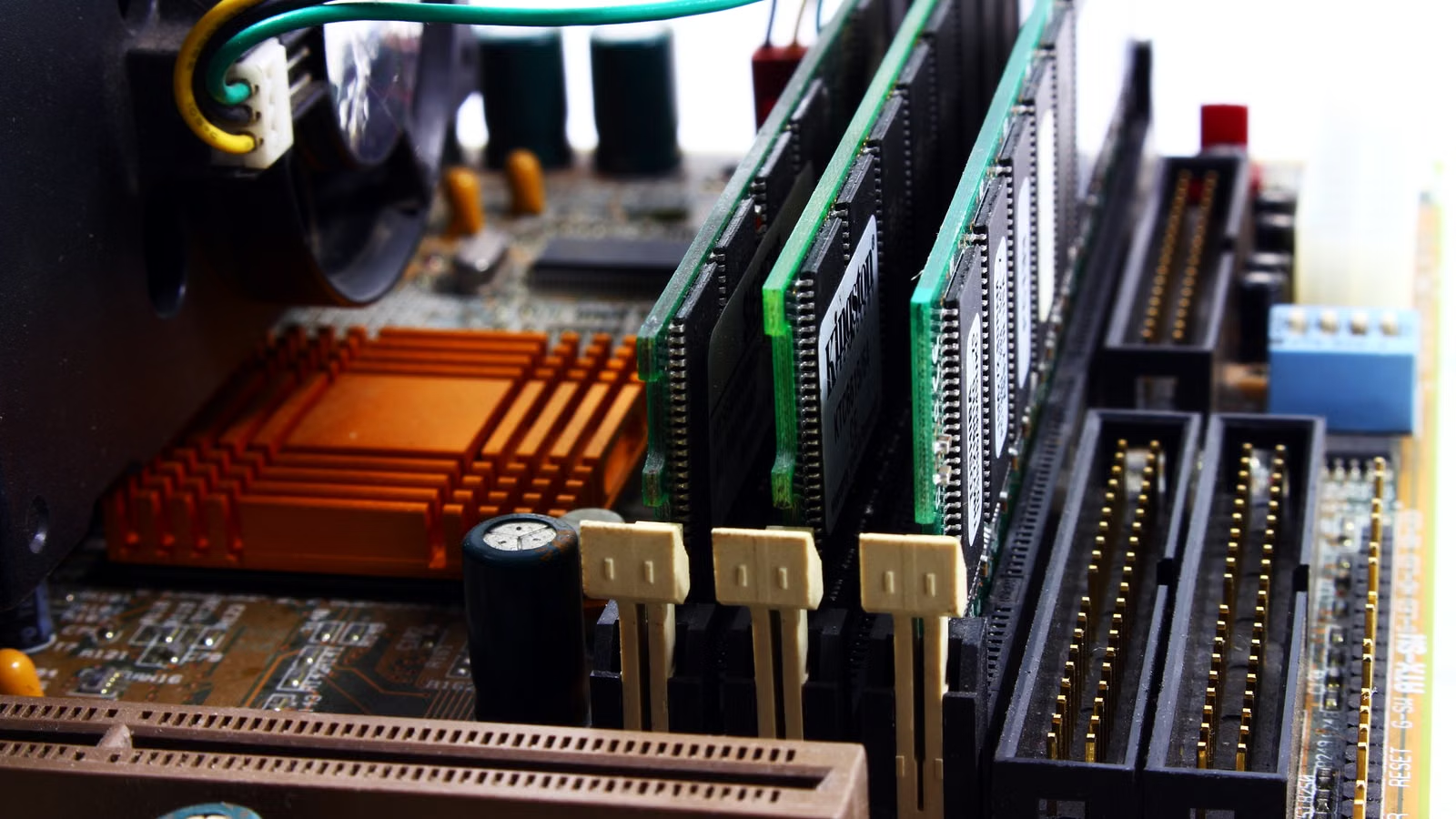
AI data centers are competing for enterprise SSDs not because SSDs will replace all HDDs, nor because AI only needs GPUs. The real reason is that training data ingestion, model checkpoints, inference caches, embeddings, RAG retrieval, and vector databases all require a storage layer with lower latency, higher IOPS, and more stable write performance than HDDs can provide. Enterprise SSDs sit between DRAM/HBM and HDDs, serving as the high-performance persistent layer for hot and warm data.
Key Takeaways
- AI data centers need SSDs because training, inference, and retrieval all require low-latency storage.
- Enterprise SSDs do not replace all HDDs; they serve the hot/warm data performance layer.
- Vector databases and RAG amplify demand for random reads, IOPS, and metadata access.
- QLC SSDs are entering the AI capacity layer, supporting enterprise SSD expansion.
- Limited NAND supply and higher enterprise SSD priority may squeeze consumer products.
- Investors should track SSD revenue, NAND pricing, QLC adoption, and cloud capex.
Why Are AI Data Centers Competing for Enterprise SSDs?

AI data centers are competing for enterprise SSDs because GPU clusters cannot run on compute alone. They must continuously read training data, write checkpoints, load model weights, handle inference requests, and support vector databases. Enterprise SSDs provide the low latency, high IOPS, and stable throughput that HDDs cannot match, while being more suitable than DRAM/HBM for large-scale persistent data. That makes them a critical performance buffer in AI data centers.
In an AI storage architecture, each medium has a clear role: HBM and DRAM handle high-speed access on the compute side, enterprise SSDs handle hot and warm data, while HDDs and object storage handle cold data, archives, and long-term retention. You can think of enterprise SSDs as the middle layer that keeps GPUs from waiting for data. If training data is fed directly from slower storage, GPU utilization may fall. If inference services retrieve data from cold storage every time, user experience also suffers.
The value of NVMe over Fabrics in AI workloads lies in high throughput, low latency, and cross-node scalability, which reduce storage bottlenecks in training and inference. In large model training, checkpoint write and recovery time can directly affect training continuity. If the storage system slows checkpointing, expensive GPU clusters may spend time waiting for I/O instead of computing.
The difference between enterprise SSDs and consumer SSDs also explains why AI data centers cannot simply buy ordinary retail SSDs.
| Dimension | Consumer SSD | Enterprise SSD |
|---|---|---|
| Main Use | PCs, gaming, personal files | Data centers, AI servers, databases |
| Core Metrics | Sequential read/write, capacity, price | IOPS, latency, endurance, QoS |
| Operating Environment | Single machine, light concurrency | High concurrency, long continuous operation |
| Data Protection | Basic | Power-loss protection, end-to-end checks, firmware management |
| Procurement Model | Retail and OEM | Cloud providers, server vendors, long-term contracts |
Enterprise SSDs emphasize stability, not just peak benchmark speed. AI data center workloads are often long-running, highly concurrent, and mixed read/write workloads. They must handle bulk data ingestion, small-block random access, failure recovery, and data integrity at the same time. Consumer SSDs may look fast in short benchmarks, but in high-concurrency, long-duration, continuous-write environments, differences in QoS, power-loss protection, firmware consistency, and endurance become much more important.
Summary: The core reason AI data centers are competing for enterprise SSDs is that GPU clusters need continuous, orderly, low-latency access to data. Enterprise SSDs are not the cheapest capacity layer, nor are they the fastest memory layer. They are the key performance layer connecting compute with persistent storage. During training, they improve data throughput and checkpoint efficiency. During inference, they support caches, logs, RAG, and vector databases. As AI infrastructure moves from one-off training projects to long-running online services, enterprise SSDs are increasingly becoming a core storage layer in production systems.
Where Does SSD Demand Come From, from Training Data to Checkpoints?
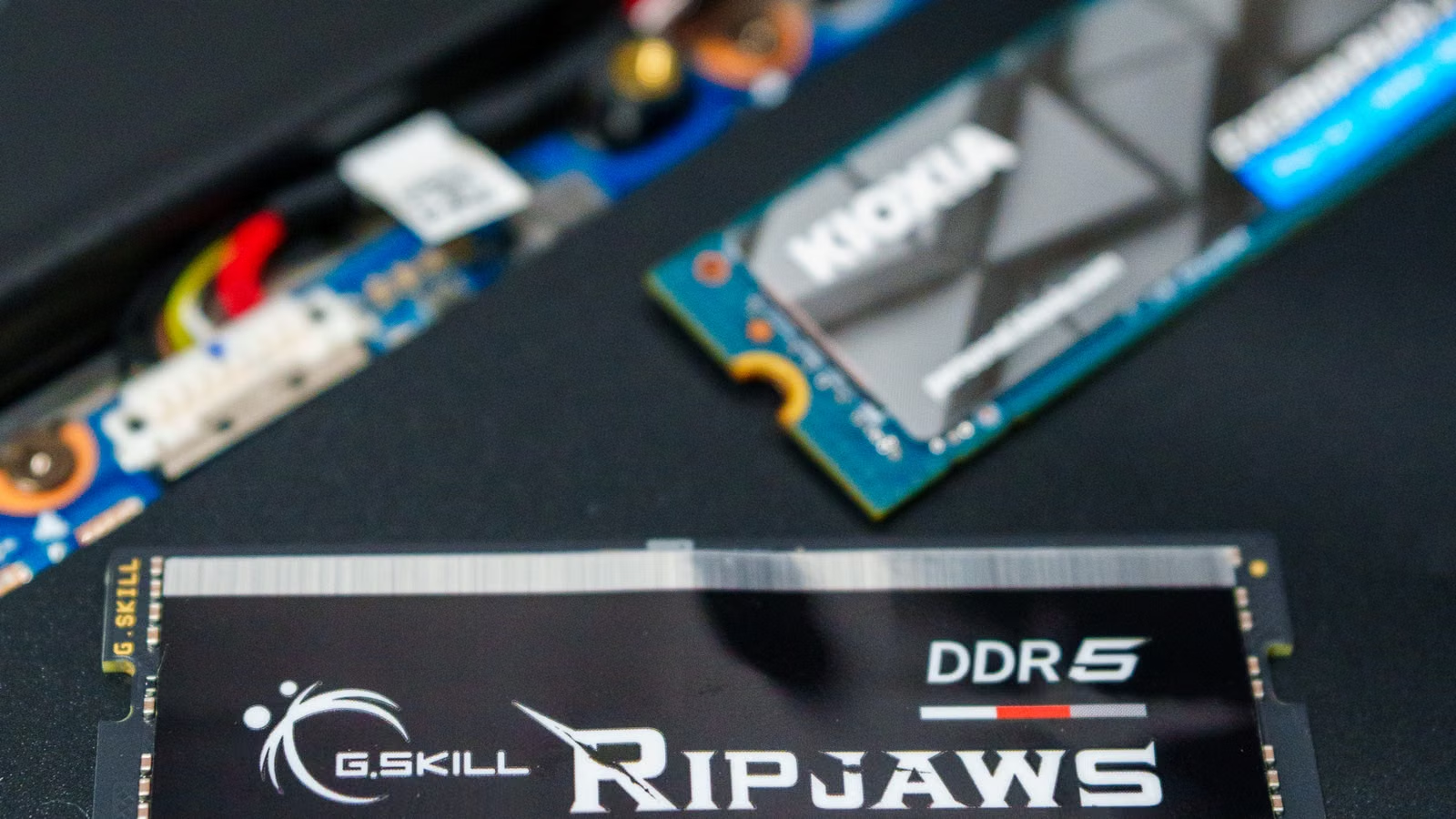
Enterprise SSD demand comes from multiple stages of the AI data lifecycle, including dataset ingestion, preprocessing, training sample reads, model checkpoints, failure recovery, inference caching, and log writes. You should not focus only on model training itself, because much of the SSD consumption happens in the data movement before and after training, as well as in high-frequency reads and writes during the training process. The larger the model, the larger the dataset, and the more frequent the iterations, the stronger the dependence on SSDs.
Before training, data usually comes from text, images, video, sensors, business logs, user behavior, and databases. Before entering the training set, this data must go through cleaning, deduplication, slicing, labeling, compression, format conversion, and distributed loading. Enterprise SSDs can serve as a high-performance buffer between the data lake and the GPU cluster, reducing latency in data ingestion and preprocessing.
During training, checkpoints make write performance critical. A checkpoint periodically saves model weights, optimizer states, and training progress so that training can resume from a recent state after node failure or interruption. Large model checkpoints can be huge and may be saved frequently. If SSD write speed, write stability, or endurance is insufficient, checkpoints can become a training bottleneck. Research on FastPersist also shows that persistent writes have long been underestimated in deep learning training, even though they directly affect training efficiency and recovery capability.
Inference also continuously creates SSD demand. Recommendation systems, RAG, AI agents, search, advertising, customer support, and coding assistants do not end once the model is trained. Every user request may trigger context retrieval, cache reads, log writes, feedback storage, and incremental updates. The larger the inference scale, the more distributed the read/write requests become, making low latency and stable SSD QoS more important.
| AI Stage | Main Data Actions | SSD Requirement |
|---|---|---|
| Data Ingestion | Bulk writes, cleaning, sorting | High throughput, stable writes |
| Training Preparation | Sample reads, feature generation | Random reads, caching ability |
| Model Training | Checkpoint, restore | Write endurance, low latency |
| Inference Service | Request cache, log writes | High concurrency, stable QoS |
| Continuous Learning | New data feedback, incremental training | Mixed reads/writes, scalable capacity |
This chain explains why AI data center SSD demand is not a short-term, one-off purchase. As long as models continue training, inference requests keep growing, and user data keeps flowing back, SSDs remain at the center of data movement. Enterprise SSDs are being purchased aggressively not because of one sudden model project, but because AI services are turning from laboratory workloads into long-running production systems.
Summary: AI’s demand for enterprise SSDs is not a single-point burst. It runs through the entire process of data entering the data center, being repeatedly used by models, and flowing back into future training. Training data requires throughput, checkpoints require reliable writes, inference services require low latency, and logs and feedback data feed the next training cycle. Tight enterprise SSD supply reflects the fact that AI infrastructure is expanding beyond compute purchases into full-system construction across data engineering, training recovery, online inference, and continuous learning.
Why Do Vector Databases Amplify Enterprise SSD Demand?
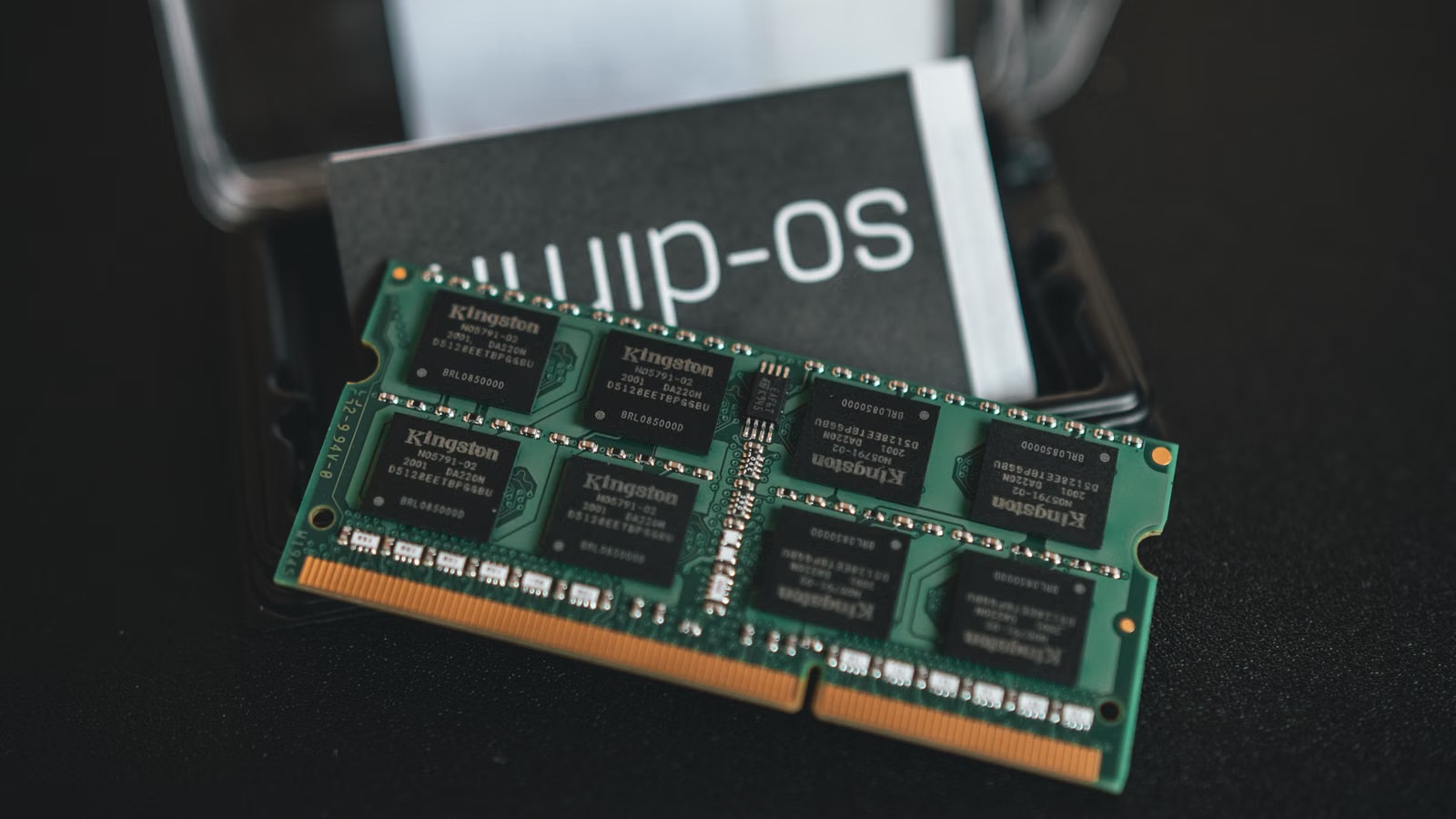
Vector databases amplify enterprise SSD demand because RAG, semantic search, recommendation systems, and AI agents need to quickly retrieve similar content from massive embedding datasets. Vector retrieval is not simple sequential file reading. It involves large volumes of small-block random reads, index access, metadata filtering, and concurrent queries. This access pattern fits the low latency, high IOPS, and stable QoS value of enterprise NVMe SSDs.
The core of a vector database is converting text, images, videos, products, user behavior, or knowledge base content into embeddings, then using similarity search to find the most relevant content. The basic logic of Milvus vector search is to submit a query vector, calculate similarity inside a collection, and return the closest results. At small scale, this can be handled in memory. But when the number of embeddings reaches billions, tens of billions, or more, a scalable storage layer becomes necessary.
RAG turns vector databases from offline tools into online inference infrastructure. Each time a user asks a question, the system may first retrieve relevant documents, history, product descriptions, code snippets, or business knowledge from a vector database, then pass the retrieved context to a large language model for generation. Lower latency means faster responses. More stable retrieval means more reliable answers. Vector databases need not only capacity, but also stable access to indexes, metadata, and hot data.
Why not put everything in DRAM? The answer is simple: cost is too high and capacity is limited. Why not put everything on HDDs? That answer is also clear: random-read latency is too high for high-concurrency retrieval. Micron’s analysis of AI storage requirements notes that modern SSDs are well suited to 4KB small-block random access, and new workloads such as vector databases strengthen that requirement. This is exactly why enterprise SSDs become important in RAG and vector search.
| Storage Medium | Strengths | Weaknesses | Role in Vector Databases |
|---|---|---|---|
| DRAM | Extremely low latency | High cost, limited capacity | Hot indexes, cache |
| Enterprise SSD | Low latency, high IOPS, large capacity | More expensive than HDD | Main indexes, hot/warm data |
| HDD | Low cost per capacity | High random-read latency | Cold data, archive |
| Object Storage | Strong scalability | Higher query latency | Raw data, backup |
Vector databases also have one often-overlooked feature: they are not read-only systems. Embeddings are updated, indexes are rebuilt, metadata is filtered, user behavior flows back, and new documents continuously enter the knowledge base. The more AI agents are adopted, the more enterprise knowledge bases, customer service systems, search systems, and recommendation systems need to continuously update vector data. This means SSDs must handle random reads, background writes, index merges, and metadata queries at the same time.
Summary: Vector databases upgrade enterprise SSDs from “training support storage” to “online inference infrastructure.” As RAG, semantic search, AI agents, and recommendation systems become more widespread, SSDs are no longer just storing files. They are supporting real-time retrieval, index access, metadata filtering, and concurrent queries. The growth of enterprise SSD demand signals that AI applications are moving from training into production. To judge whether enterprise SSD demand can continue, you should not only look at GPU shipments; you should also look at whether RAG and vector databases are truly entering enterprise production systems.
Why Has Enterprise SSD Supply Suddenly Become Tight?
Enterprise SSD supply has become tight because AI data center demand is growing rapidly, while NAND wafer capacity, new-process yields, QLC migration, enterprise qualification, and controller supply all take time. To improve profitability and delivery certainty, suppliers are prioritizing limited NAND resources for enterprise SSDs, while consumer SSDs, UFS, memory cards, and retail channels are more likely to be squeezed.
NAND supply cannot expand instantly. High-layer NAND expansion requires tools, cleanrooms, process migration, yield ramp-up, controller adaptation, and enterprise qualification. Even if NAND manufacturers decide to increase investment, it takes a long cycle for equipment to turn into qualified products inside cloud data centers. TrendForce’s observation on NAND wafer capacity notes that major suppliers have limited new capacity while AI-related demand remains strong, making enterprise SSD supply-demand mismatches more likely.
QLC SSD is another key variable. QLC offers lower cost per bit and higher capacity density, making it suitable for warm data, nearline SSD, model checkpoints, dataset caching, and some archive scenarios. It is not ideal for every high-write-intensity workload, but in AI data centers, it can form a tiered architecture with TLC SSDs, HDDs, and object storage. TrendForce’s forecast for QLC SSD shows that QLC’s share in the enterprise SSD market will continue to rise, indicating that AI data centers are using higher-capacity SSDs to handle the warm data layer.
Price increases come from supply-demand mismatch and customer priority. In its report on enterprise SSD contract prices, TrendForce said that AI agents and data center demand have caused a severe supply-demand imbalance, with enterprise SSD contract prices rising by about 80% in a single quarter. This should not be interpreted as “all SSDs are up 80%.” More accurately, it reflects stronger enterprise SSD bargaining power under cloud customer capacity locking, lower supplier inventory, and higher product priority.
| Supply-Demand Factor | Impact on Enterprise SSDs |
|---|---|
| AI server expansion | Raises demand for high-performance SSDs |
| RAG / vector database adoption | Raises demand for random reads and low latency |
| QLC adoption | Drives high-capacity enterprise SSD volume |
| Slow release of new NAND capacity | Limits overall bit supply |
| Supplier shift toward enterprise products | Squeezes consumer and retail channels |
| Cloud provider capacity locking | Raises contract prices and delivery priority |
Supply tightness also changes supplier allocation logic. When enterprise SSD pricing is stronger, orders are more predictable, and customers are more willing to sign long-term agreements, NAND makers naturally prioritize data center customers. Consumer SSDs, low-end retail products, and price-sensitive channels may face reduced supply, fewer promotions, or higher premiums on high-capacity models. This is similar to HBM squeezing ordinary DRAM: low-end products still have demand, but when resources are limited, higher-value orders receive priority.
Summary: Tight enterprise SSD supply is not simply “market hype.” It reflects a mismatch between AI demand and NAND supply timing. AI data centers need higher-performance, larger-capacity, and more stable SSDs, but NAND expansion, QLC migration, enterprise qualification, and controller delivery all take time. In the short term, enterprise SSDs will receive higher capacity priority, while consumer SSDs and retail products are more likely to face price increases, shortages, or specification changes. To judge this cycle, you need to track AI server expansion, NAND bit supply, QLC adoption, and enterprise contract pricing together.
Which Companies and Supply Chains Are Affected by Enterprise SSD Price Increases?
Enterprise SSD price increases affect NAND manufacturers, controller vendors, server OEMs, cloud providers, and enterprise customers. NAND manufacturers may benefit from improved ASP, gross margin, and data center SSD revenue. Server and cloud providers, however, face higher total AI cluster costs. Enterprise customers will pay more attention to storage architecture, capacity planning, and tiered storage instead of simply putting all data on the most expensive SSD tier.
The earnings leverage for NAND manufacturers is the most direct. In Micron’s fiscal 2026 third-quarter results, data center-related products were a major growth driver, while NAND and DRAM supply tightness also supported revenue and profit improvement. For companies such as Micron, Samsung, SK hynix, Kioxia, and Sandisk, sustained enterprise SSD price increases entering contract pricing could improve ASP, gross margin, and cash flow.
Samsung’s commentary also shows that the storage industry is shifting toward high-value AI products. Samsung Memory Business emphasized AI, high-value products, and server demand in its earnings discussion, indicating that major vendors are not merely selling more NAND bits. They are moving product mix toward data center SSDs, HBM, high-capacity DRAM, and AI storage.
Cloud providers and server vendors, by contrast, face cost pressure. AI server BOM is already elevated by GPUs, HBM, networking, liquid cooling, power, and racks. If enterprise SSD prices keep rising, the total cost of ownership for training and inference clusters will also increase. Cloud providers may use long-term agreements, joint qualification, TLC/QLC hybrid configurations, hot/cold data tiering, and software-layer optimization to control costs instead of buying the highest-spec SSDs without distinction.
| Storage Tier | Better-Suited Medium | Typical Use Case | Cost Pressure |
|---|---|---|---|
| Hot Data | NVMe SSD / DRAM | Inference cache, vector index | High |
| Warm Data | Enterprise SSD / QLC SSD | Checkpoints, dataset cache | Medium-high |
| Cold Data | HDD / object storage | Archive, logs, historical data | Medium |
| Long-Term Backup | HDD / cloud archive | Compliance retention, low-frequency access | Low |
HDDs, SSDs, and object storage will be divided more carefully. The more expensive enterprise SSDs become, the more important it is to separate hot, warm, and cold data. Vector indexes, inference caches, checkpoints, and frequently accessed data can sit on SSDs. Raw training data, historical logs, compliance archives, and low-frequency data can sit on HDDs or object storage. For enterprise customers, storage architecture matters more because incorrect data tiering directly raises the long-term cost of AI projects.
Summary: Enterprise SSD price increases transmit AI infrastructure cost pressure across the supply chain. NAND manufacturers and enterprise SSD suppliers may see better ASP and gross margin, while server vendors, cloud providers, and enterprise customers need to optimize data tiering, procurement timing, and total cost of ownership. For investors, SSD price increases alone are not enough. The key question is whether higher pricing translates into revenue, gross margin, long-term contracts, and cash flow. For enterprise customers, the goal is not to chase the highest-spec SSD everywhere, but to place different data in the right storage tier.
What Signals Should Ordinary Users, Enterprise Buyers, and Investors Watch?
To judge whether enterprise SSD supply remains tight, you should focus on enterprise SSD contract prices, NAND bit supply, data center SSD revenue, QLC SSD penetration, cloud AI capex, the scale of vector database deployment, and whether consumer SSDs are being squeezed. Different roles have different priorities, but the core question is the same: is the supply shortage a short-term inventory issue, or is it a structural shift in AI storage?
Ordinary users should watch whether consumer SSDs are being squeezed. As enterprise SSD priority rises, consumer SSDs may see price increases, fewer promotions, thinner low-end models, or larger premiums on high-capacity models. But ordinary users should not panic-buy based only on enterprise SSD news. A more practical approach is to watch channel inventory, historical price ranges, actual usage needs, and promotional cycles. If your usage is mostly light office work, there is no need to immediately upgrade to very large capacity just because data centers are competing for SSDs.
Enterprise buyers should focus on tiered storage and early capacity locking. If a company is deploying training, inference, RAG, log analytics, and archive systems, it should not place all data on expensive enterprise SSDs. A better approach is to distinguish between TLC and QLC, hot and cold data, online retrieval and long-term archive, while confirming DWPD, latency, IOPS, capacity, controller, firmware, warranty, and delivery cycle in advance.
Investors should watch earnings, pricing, and downstream demand tolerance:
| Observation Target | Core Indicator | What It Helps Judge |
|---|---|---|
| Micron, Samsung, SK hynix, Kioxia, Sandisk | Data center SSD revenue, NAND ASP, gross margin | Earnings leverage |
| TrendForce / Industry Pricing | Enterprise SSD contract prices, NAND wafer prices | Price cycle |
| Cloud Providers | AI capex, GPU cluster expansion, storage budget | Demand durability |
| Server OEMs | AI server shipments, SSD configuration changes | End-demand pull |
| Vector Database Ecosystem | RAG, agents, semantic search deployment | New workload demand |
| Consumer Market | PC SSD, retail SSD, smartphone storage prices | Cost spillover |
If you are tracking Micron, Sandisk, Samsung Electronics, SK hynix, Kioxia, enterprise SSDs, or semiconductor ETFs, you should also pay attention to actual trading costs in addition to NAND supply-demand and enterprise SSD pricing. U.S. stock trading costs may include not only commissions, but also platform fees, external agency fees, trading activity fees, and other charges. For example, Biya U.S. stock trading fees state that U.S. stock trading commission is $0, while platform fees, external agency fees, and other charges are subject to the fee schedule and order page. Public market information, trading rules, and fee structures are only references for decision-making and do not constitute investment advice.
Summary: Tight enterprise SSD supply affects ordinary consumers, enterprise procurement, and capital markets. Ordinary users should watch whether consumer SSDs become more expensive or lower-specced. Enterprises should focus on the AI data lifecycle and tiered storage. Investors should watch enterprise SSD revenue, NAND contract prices, QLC adoption, and cloud capex. The biggest mistake is to equate enterprise SSD price increases with “all SSDs will rise without limit,” because end-demand tolerance, inventory, and new capacity will all affect the slope of pricing. A more disciplined approach is to evaluate enterprise SSDs within the full AI data center storage architecture.
If you are tracking the AI storage supply chain, you can place Micron, Samsung, SK hynix, Kioxia, Sandisk, Pure Storage, NetApp, server OEMs, semiconductor ETFs, and cloud provider capex within the same framework. You can use Biya to follow U.S. stocks, Hong Kong stocks, crypto assets, and other multi-asset markets, and use U.S. stock information lookup to compare basic information on memory chips, enterprise SSDs, and AI server-related companies. If services are available in your region, you can then proceed through the Biya App. Service availability depends on your location, identity verification result, platform rules, and applicable laws and regulations. Before trading, always refer to the order page, fee schedule, and your own risk tolerance.
FAQ
Why do AI data centers need enterprise SSDs?
AI data centers need enterprise SSDs because training data reads, checkpoints, inference caches, log writes, and vector databases all require low latency, high IOPS, and stable throughput. HDDs are better for cold data, while DRAM/HBM is too expensive for large persistent datasets. Enterprise SSDs fit the hot/warm data performance layer.
Will enterprise SSDs replace data center HDDs?
No, they will not fully replace HDDs. Enterprise SSDs are better suited for hot data, warm data, checkpoints, and vector retrieval, while HDDs are better for cold data, archives, and low-cost large-capacity storage. AI data centers usually use tiered storage instead of relying on a single medium for everything.
Why do vector databases increase NVMe SSD demand?
Vector databases need to perform similarity search across massive embedding datasets, with access patterns involving large amounts of random reads, index queries, metadata filtering, and concurrent requests. NVMe SSDs offer lower latency and higher IOPS than HDDs, while costing less than DRAM, making them suitable for large-scale vector indexes.
Are QLC SSDs suitable for AI data centers?
QLC SSDs are suitable for some AI data center scenarios, especially warm data, model checkpoints, dataset caches, and nearline SSD layers. Their strengths are capacity density and lower cost per bit, but write endurance and performance must be evaluated by workload. They are not suitable for every high-write-intensity scenario.
Will enterprise SSD price increases affect consumer SSDs?
Yes, there can be indirect effects. When suppliers allocate more NAND wafers and high-end resources to enterprise SSDs, consumer SSD supply elasticity may fall, affecting retail prices, promotional activity, and high-capacity models. Final prices still depend on channel inventory and consumer demand.
What risks should investors watch in the enterprise SSD supply chain?
Key risks include slower AI capex, new NAND capacity coming online, weaker-than-expected QLC yields, enterprise SSD price declines, changes in cloud provider procurement cycles, and valuations already pricing in optimistic expectations. Investment decisions should consider financial reports, orders, fee structures, and personal risk tolerance.
*This article is provided for general information purposes and does not constitute legal, tax or other professional advice from BiyaPay or its subsidiaries and its affiliates, and it is not intended as a substitute for obtaining advice from a financial advisor or any other professional.
We make no representations, warranties or warranties, express or implied, as to the accuracy, completeness or timeliness of the contents of this publication.
Related Blogs of

What Is HAMR? Seagate and Western Digital’s Roadmaps for High-Capacity HDDs


What Is the Difference Between EEPROM and NOR Flash? A Beginner’s Guide to Shanghai Fudan’s Hong Kong-Listed Business

How Do Microsoft, Amazon, Google, and Meta’s AI Capex Affect Storage Stocks?

Tesla Earnings Preview: Will Deliveries, Margins, or Robotaxi Decide the Stock’s Next Move?

Choose Country or Region to Read Local Blog
 Australia
 Austria
 Belgium
 Canada
 Cyprus
 Czech Republic
 Denmark
 Estonia
 Finland
 France
 Germany
 Greece
 Hong Kong
 India
India Indonesia
 Ireland
 Italy
Italy Japan
Japan Latvia
 Lithuania
 Luxembourg
 Malaysia
 Malta
Malta Morocco
 Nepal
Nepal Netherlands
 New Zealand
 Norway
 Pakistan
 Philippines
 Poland
 Portugal
 Romania
 Singapore
 Slovakia
 Slovenia
 South Africa
 South Korea
 Spain
Spain Sweden
 Thailand
 The United States
 Turkey
 United Arab Emirates
 United Kingdom
 Vietnam
Contact Us




BIYA GLOBAL LLC is registered with the Financial Crimes Enforcement Network (FinCEN), an agency under the U.S. Department of the Treasury, as a Money Services Business (MSB), with registration number 31000218637349, and regulated by the Financial Crimes Enforcement Network (FinCEN).
BIYA GLOBAL LIMITED is a registered Financial Service Provider (FSP) in New Zealand, with registration number FSP1007221, and is also a registered member of the Financial Services Complaints Limited (FSCL), an independent dispute resolution scheme in New Zealand.