
Why Are Cloud Providers Signing Long-Term HDD Contracts? Demand Visibility for Western Digital and Seagate





Cloud providers are not signing long-term HDD contracts simply because they fear a short-term supply shortage. They are securing capacity-layer infrastructure for AI data centers years in advance. You can think of it this way: GPUs handle computation, SSDs handle high-speed reads and writes, while nearline HDDs store massive volumes of training data, inference logs, backups, and archived data at a lower $/TB. For Western Digital and Seagate, these long-term agreements improve demand visibility and support better product mix and gross margins, but they do not eliminate cyclical risk.
Key Takeaways
- Cloud providers sign long-term agreements to secure high-capacity HDD supply and exabyte-scale delivery schedules.
- AI data centers do not only buy GPUs; they also continuously generate data that must be stored.
- Western Digital emphasizes LTA duration, while Seagate emphasizes HAMR and supply discipline.
- HDD pricing power comes from tight supply, long qualification cycles, and $/TB cost advantages.
- Investors in WDC and STX should track demand visibility, technology execution, and cloud capex risk.
What Are Cloud Providers Really Securing Through Long-Term HDD Contracts?

When cloud providers sign long-term HDD contracts, they are really securing future nearline HDD capacity, exabyte-scale supply, delivery windows, and partial pricing frameworks for data center expansion. For hyperscale cloud companies, HDDs are not ordinary consumable hardware. They are the capacity foundation of cloud storage, object storage, backup systems, logs, and cold data infrastructure. As long as AI data continues to grow, cloud providers cannot wait until expansion is urgent before placing orders, because high-capacity HDD supply, qualification, and delivery all require advance planning.
Western Digital is a clear example. In Western Digital’s fiscal second quarter 2026 results, the company reported revenue of $3.02 billion, up 25% year over year, with a non-GAAP gross margin of 46.1%. More importantly, management’s comments on firm POs with its top seven customers indicated that 2026 supply was largely committed, with some LTAs already extending into 2027 and 2028. This shows that large customers have shifted HDD procurement from spot inventory replenishment to multi-year capacity locking.
Cloud providers are also not primarily focused on the number of drives. They are focused on exabyte capacity. A 30TB, 40TB, or 44TB high-capacity HDD affects more than the unit purchase price. It affects rack density, power consumption, cooling, operations, and data center space. For cloud providers, the real question is not “how many drives should we buy?” but “can we reliably obtain enough low-cost capacity over the next several years?”
| Procurement Dimension | Ordinary HDD Procurement | Cloud Provider Long-Term HDD Contract |
|---|---|---|
| Core Unit | Drive count, model, short-term price | Exabyte capacity, delivery schedule, supply priority |
| Main Goal | Replenish inventory, replace devices | Support multi-year cloud storage and AI data growth |
| Key Risk | Overpaying, inventory buildup | Supply disruption, delays, TCO instability |
| Contract Logic | Demand-based purchasing | LTA, firm PO, capacity allocation |
| Meaning for Vendors | Short-term revenue | Demand visibility, capacity planning, margin stability |
Long-term agreements usually do not mean prices are fixed forever. Instead, they define capacity, delivery, and pricing mechanisms in advance. For cloud providers, this reduces uncertainty around future expansion. For Western Digital and Seagate, it reduces the inventory volatility that has historically made HDD cycles painful. In the past, the HDD industry often expanded capacity during upcycles and cut prices during downturns. Now that large cloud customers are locking orders earlier, vendors can manage capacity more carefully and allocate more resources to high-capacity nearline HDDs rather than chasing unit shipments.
Summary: Cloud providers sign long-term HDD contracts to secure capacity certainty for future AI data centers. These are not ordinary purchasing contracts; they are long-term arrangements built around exabyte capacity, delivery schedules, TCO, and supply priority. When looking at WDC and STX, you should not focus only on “HDD price increases” or “sold-out capacity.” You also need to look at how many years the contracts cover, whether the customers are hyperscalers, whether the agreements include meaningful capacity commitments, and whether those commitments can translate into revenue, gross margin, and free cash flow.
Why Are AI Data Centers Making Nearline HDD Supply Tight Again?

AI data centers are making nearline HDD supply tight again because AI does not only consume compute; it continuously creates data. Training corpora, model checkpoints, inference logs, user interactions, embeddings, backup copies, compliance archives, and historical datasets all need to be stored for long periods. Not all of that data requires SSD-level latency, so cloud providers place frequently accessed data on SSDs and massive long-term data on HDDs, creating a tiered storage architecture.
In Western Digital’s fiscal third quarter 2026, revenue reached $3.34 billion, up 45% year over year, while non-GAAP gross margin reached 50.5%. This improvement was not only about pricing. It also reflected demand for high-capacity drives, cloud customer orders, and a stronger product mix. AI data center capacity demand increasingly looks like long-term infrastructure demand rather than a one-time purchasing cycle.
The division of labor between HDDs and SSDs can be understood through the table below:
| Storage Tier | Better-Suited Medium | Typical Use Cases | Cloud Provider Focus |
|---|---|---|---|
| Hot Data Tier | NVMe SSD | Databases, real-time cache, training intermediate data | Latency, IOPS, throughput |
| Warm Data Tier | SSD + HDD Hybrid | Feature stores, data lakes, model assets | Balance between performance and cost |
| Cold Data Tier | Nearline HDD | Logs, backups, historical training data | $/TB, reliability, capacity density |
| Active Archive Tier | High-Capacity HDD | Low-frequency but reusable data | TCO, power efficiency, lifecycle |
Another key change is that HDD industry growth is now increasingly measured by exabyte shipments rather than units. Seagate reported revenue of $2.83 billion and non-GAAP gross margin of 42.2% in its fiscal second quarter 2026. In management commentary around nearline demand, the focus was more on exabyte shipments than traditional PC-style unit shipments. In other words, even if the number of drives does not explode, rising drive capacity can still support meaningful growth in exabyte shipments and revenue quality.
HDDs remain especially attractive in the capacity layer. Western Digital’s analysis of HDD storage TCO emphasizes that data center storage decisions involve acquisition cost, power efficiency, density, performance, and product lifecycle. It also notes that enterprise SSDs still carry a significant $/TB premium over HDDs. For cloud providers, the more AI data grows, the more they need a lower-cost capacity layer for long-term storage instead of placing all data on higher-cost media.
Summary: AI is making HDD supply tight not because HDDs are replacing SSDs, but because the AI data lifecycle is becoming longer and the capacity layer is becoming more important. You can break AI infrastructure into several parts: GPUs handle computation, networking handles connectivity, HBM and DRAM handle high bandwidth and memory, SSDs handle high-performance reads and writes, and nearline HDDs handle long-term, low-cost, exabyte-scale storage. As long as AI training, inference, and archived data continue to grow, high-capacity HDDs will remain a resource that cloud providers must plan for in advance.
How Is Demand Visibility Different for Western Digital and Seagate?
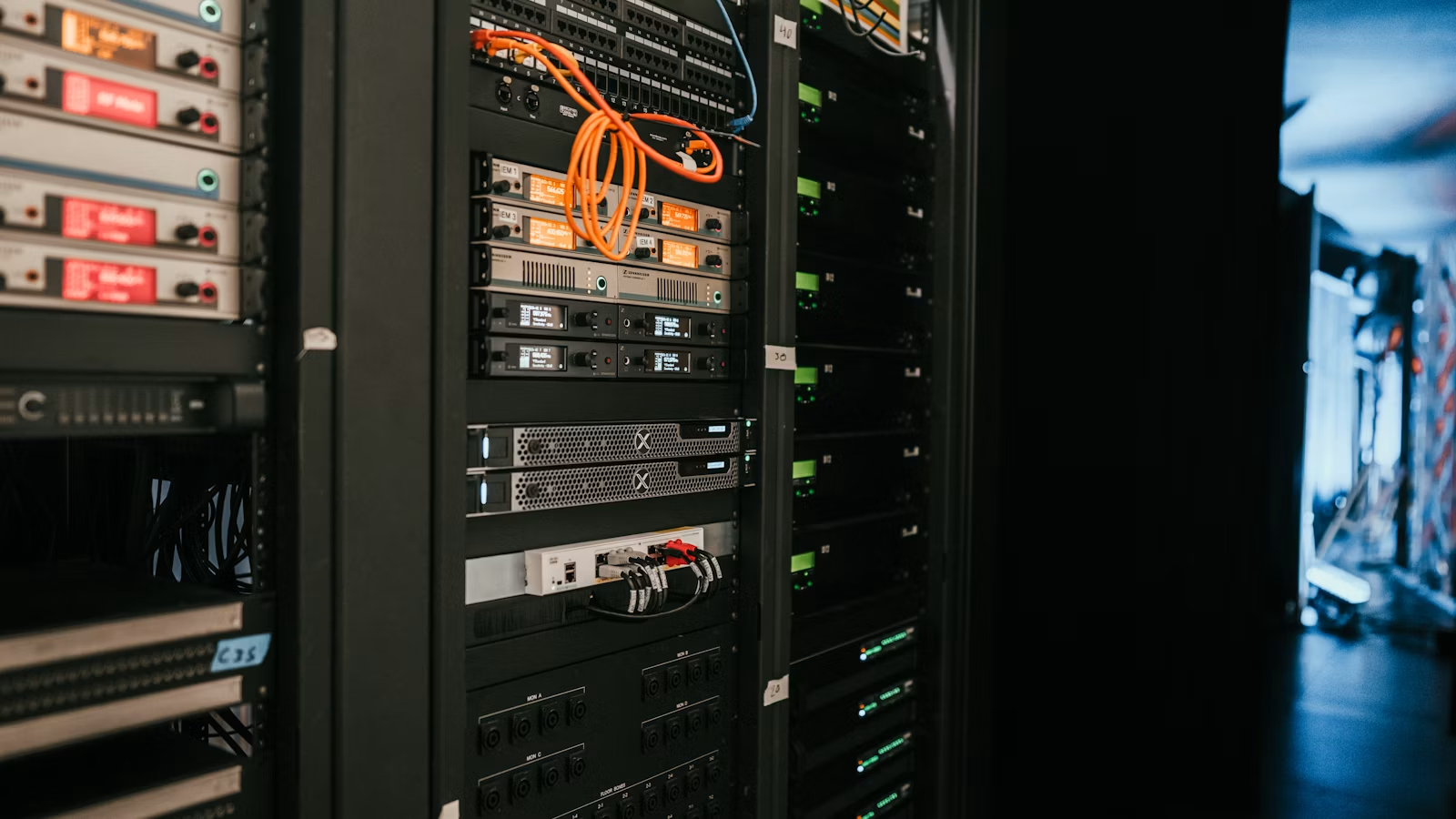
Western Digital and Seagate both benefit from long-term cloud customer agreements, but their demand visibility is expressed differently. Western Digital emphasizes firm POs, LTA duration, customer coverage, and adoption of UltraSMR and EPMR. Seagate emphasizes nearline capacity allocation, build-to-order pipelines, HAMR and Mozaic technology ramp-up, and supply discipline. When comparing WDC and STX, you should not only ask which company is growing revenue faster. You should also ask whether visibility comes from contracts, customers, technology, or product mix.
Western Digital’s advantage is that its long-term agreement narrative is more direct. The company had already reported strong revenue and gross margin in Q2 FY2026, and WD Q3 FY2026 pushed revenue further to $3.34 billion. More importantly, management has repeatedly emphasized long-term customer agreements and high-capacity drive roadmaps. For investors, this means WDC’s HDD business is no longer simply about “selling drives.” It is increasingly about providing multi-year capacity infrastructure to cloud customers.
Seagate’s logic is slightly different. In Seagate’s fiscal third quarter 2026, the company reported revenue of $3.11 billion, non-GAAP gross margin of 47.0%, and free cash flow of $953 million. Seagate places greater emphasis on meeting exabyte growth through HAMR, Mozaic, and areal density improvements rather than simply increasing unit output. The core idea is supply discipline: in a strong demand environment, Seagate is not blindly expanding production, but using higher-capacity products to improve revenue quality.
| Assessment Dimension | Western Digital WDC | Seagate STX |
|---|---|---|
| Source of Visibility | Firm POs, LTAs, cloud customer coverage | Capacity allocation, build-to-order pipeline, customer agreements |
| Technology Keywords | UltraSMR, EPMR, HAMR roadmap | HAMR, Mozaic, areal density |
| Financial Leverage | Gross margin improvement, better product mix | Free cash flow, supply discipline, capacity upgrades |
| Main Watch Point | How far LTAs extend | Whether HAMR ramps reliably |
| Key Risk | Customer concentration, price renegotiation | Technology ramp, delivery timing |
For ordinary investors, “visibility” does not mean “no risk.” Long-term agreements make future revenue more predictable, but you still need to see whether cloud providers continue expanding AI capex, whether the contracts are firm enough, whether products can be delivered on time, and whether technology upgrades truly lower costs. WDC and STX valuations may also fluctuate with market sentiment, especially if AI infrastructure optimism becomes overextended.
Summary: Western Digital and Seagate are both gaining stronger demand visibility from the traditional HDD cycle, but their narratives differ. WDC is more about “longer contract duration and customer lock-in,” while STX is more about “HAMR technology, exabyte growth, and supply discipline.” To decide which company is better positioned, you should not rely on a single quarter of revenue. You need to evaluate LTA duration, cloud customer structure, exabyte shipments, gross margin, free cash flow, and technology roadmaps together.
How Do Long-Term HDD Contracts Change Western Digital and Seagate’s Pricing Power?
Long-term HDD contracts improve pricing power not because vendors can raise prices at will, but because cloud providers have limited short-term alternatives for high-capacity drives. Nearline HDDs require long qualification cycles, strict reliability standards, and complex delivery planning. Cloud providers cannot easily switch core suppliers just because prices change in a single quarter. As long as AI data keeps growing and HDD supply expansion remains disciplined, Western Digital and Seagate should have a better pricing environment than in past consumer HDD cycles.
The HDD industry has historically been cyclical: companies expanded production during upcycles, prices fell during downturns, and profits were pressured by inventory and discounting. The change today is that cloud customers are willing to sign capacity agreements earlier, while vendors are focusing more on high-capacity drives, customized demand, and supply discipline. Seagate’s discussion of nearline capacity is not about endlessly expanding unit output. It is about managing allocated capacity and future order timing more carefully.
High-capacity HDD customer qualification also raises switching costs. Large cloud providers need to validate not only capacity, but also power consumption, firmware, error rates, vibration, thermal behavior, rack compatibility, maintenance workflows, and long-term reliability. Once a supplier’s drives are qualified and integrated into a cloud provider’s system architecture, switching suppliers may require retesting, operational adjustments, and higher delivery uncertainty.
Pricing power is shaped by five main factors:
- Supply side: High-capacity HDD expansion is slow, and platters, heads, yields, and areal density roadmaps all take time.
- Demand side: AI data growth improves the predictability of exabyte demand.
- Customer side: Hyperscalers care more about long-term TCO and reliable delivery.
- Vendor side: WDC and STX prefer allocating capacity to higher-capacity, higher-margin orders.
- Substitution side: Falling SSD costs may affect parts of the warm data tier, but they are unlikely to fully replace cold data and archive storage.
This is also why long-term HDD contracts help gross margins. They allow vendors to plan product mix more effectively and prioritize high-capacity nearline HDDs over fragmented, low-certainty, lower-margin orders. The recent gross margin improvement at Western Digital and Seagate reflects the combined effect of strong demand, product mix upgrades, a better pricing environment, and supply discipline.
Summary: Long-term HDD contracts change pricing power by shifting traditional hardware procurement from short-term bargaining toward long-term capacity planning. Cloud providers still care about price, but they are even more concerned about whether critical capacity can be delivered. HDD vendors still face cyclical risk, but long-term contracts, qualification barriers, and high-capacity roadmaps give them a stronger negotiating position. To judge whether pricing power is sustainable, focus on supply-demand gaps, contract duration, customer concentration, SSD substitution pressure, and changes in cloud capital expenditure.
How Does the Technology Roadmap Determine Whether Long-Term Contracts Can Be Fulfilled?
Whether HDD long-term agreements can be fulfilled ultimately depends on whether WDC and STX can continue delivering higher capacity, lower $/TB, better power efficiency, and verifiable reliability. Contracts provide demand visibility, but the technology roadmap determines delivery capability. Cloud providers are willing to sign long-term agreements because they believe future generations of HDDs can continue improving areal density, allowing the same racks, power budgets, and operating systems to store more data.
Seagate’s focus is HAMR and Mozaic. In its Mozaic 4+ announcement, the company said drives of up to 44TB were already shipping in volume to two leading hyperscale cloud customers. The core value of HAMR is higher areal density, meaning more data can be stored per unit of platter surface area. For cloud providers, this means more exabyte capacity within the same physical footprint. For Seagate, it means product upgrades can support higher ASPs and better gross margins.
Western Digital emphasizes a parallel roadmap across UltraSMR, EPMR, and HAMR. According to the Western Digital Q3 FY2026 earnings transcript, the company is moving 40TB EPMR drives through customer qualification and expanding UltraSMR adoption among major customers. UltraSMR is important because it improves effective capacity without requiring customers to wait for an entirely new hardware generation to mature, making it easier to ramp within existing customer ecosystems.
| Technology Metric | Meaning for Cloud Providers | Meaning for WDC/STX |
|---|---|---|
| Drive Capacity | More data stored in the same rack | Higher ASP and better product mix |
| Areal Density | Lower hardware need per unit of capacity | Improved cost curve |
| Power / TB | Lower long-term power and cooling costs | Stronger TCO competitiveness |
| Customer Qualification | Lower operational and compatibility risk | Shorter path from order to revenue |
| Production Yield | Stable delivery | Impact on gross margin and cash flow |
Technology roadmaps also shape investment risk. If HAMR production falls behind expectations, or if EPMR and UltraSMR customer qualification slows, demand visibility from long-term contracts may not fully translate into delivered revenue. Conversely, if high-capacity drive qualification proceeds smoothly, vendors can meet exabyte growth through higher capacity rather than large increases in unit output, making supply discipline easier to maintain.
Summary: Long-term HDD contracts are not just sales agreements; they are early commitments to future technology roadmaps. Seagate is betting on HAMR and Mozaic to raise areal density, while Western Digital is extending customer adoption through UltraSMR, EPMR, and HAMR. When judging the quality of long-term agreements, you need to look not only at contract duration, but also at technology milestones: customer qualification, production ramp, drive capacity, power efficiency, and TCO improvement.
How Can Ordinary Investors Judge Whether HDD Long-Term Contracts Are a Structural Opportunity or a Cyclical Peak?
To judge whether HDD long-term contracts represent a structural opportunity, you cannot rely only on headlines such as “2026 capacity sold out” or “AI drives demand.” You need to look at five things together: whether AI data demand continues, whether agreements extend into 2027, 2028, or beyond, whether exabyte shipments keep growing, whether gross margins remain elevated, and whether HAMR, EPMR, and UltraSMR execution stays on track. Only when demand, contracts, financials, and technology all align does the opportunity look more structural.
Key indicators to track:
| Indicator | What to Watch | What It Indicates |
|---|---|---|
| Contract Coverage | Whether agreements extend from 2026 into 2027 or 2028 | Demand visibility |
| Exabyte Shipments | Whether EB growth exceeds unit growth | Real capacity demand |
| Cloud Customer Mix | Whether hyperscalers continue to drive demand | Customer quality |
| Gross Margin | Whether product mix and pricing both support margins | Earnings quality |
| Technology Milestones | Whether HAMR, EPMR, and UltraSMR ramp successfully | Delivery capability |
| Cloud Capex | Whether large cloud providers sustain AI investment | Demand environment |
You should also watch for negative signals. First, if cloud providers slow AI capex, the strength of new HDD long-term agreements may weaken. Second, if QLC SSD costs fall rapidly, parts of the warm data layer may shift from HDD to SSD. Third, if HDD vendors expand capacity too aggressively to chase short-term revenue, supply discipline could break down. Fourth, if stock prices already reflect long-term optimistic assumptions, valuations may pull back even if fundamentals remain solid.
Trading costs also matter. If you are following AI storage-related U.S. stocks such as WDC, STX, MU, PSTG, and NTAP, you should look beyond the company fundamentals and understand commissions, platform fees, external agency fees, trading activity fees, and other real transaction costs. For example, Biya U.S. stock trading fees state that U.S. stock trading commission is $0, while platform fees, external agency fees, and other charges are subject to the fee schedule and order page. If services are available in your region, you can review the fee structure before placing an order. This section is for public market information, trading rules, and fee structure only, and does not constitute investment advice.
Summary: Long-term HDD contracts do improve demand visibility for WDC and STX, but investment analysis should not stop at “shortage” and “price increases.” You should view the HDD industry as a combination of the AI data infrastructure cycle and the traditional hardware cycle. During an upcycle, long-term agreements, exabyte growth, and high gross margins can amplify earnings leverage. During a downturn, slower cloud capex, technology delays, customer renegotiation, and elevated valuations can all create volatility. A more disciplined approach is to continuously track earnings reports, contract duration, technology qualification, and cash flow instead of making decisions based on a single news item.
If you are tracking the AI storage value chain, you can place Western Digital, Seagate, SanDisk, Micron, Pure Storage, and NetApp within the same framework: upstream exposure includes HDD, NAND, HBM, and SSD; midstream exposure includes data center storage systems; downstream demand depends on cloud provider AI capex and data growth. You can use Biya to follow relevant U.S. and Hong Kong stocks, and compare basic information through U.S. stock information lookup. If services are available in your region, you can then proceed through account registration and Biya App download. Service availability depends on your location, identity verification result, platform rules, and applicable laws and regulations. Before trading, always refer to the order page, fee schedule, and your own risk tolerance.
FAQ
Do cloud providers’ long-term HDD contracts mean HDD prices will keep rising?
Not necessarily. Long-term HDD contracts improve supply certainty and partial pricing visibility, but prices still depend on AI data center demand, supply expansion, product mix, SSD cost trends, and cloud capital expenditure. Long-term agreements are better understood as a risk management tool under tight supply, not a guarantee that prices will only rise.
Why don’t AI data centers fully replace HDDs with SSDs?
Because SSDs are better for low latency and high IOPS, while HDDs are better for low-cost, large-scale capacity. AI data centers usually use tiered storage: hot data sits on SSDs, while long-term logs, backups, archives, historical training data, and cold data sit on HDDs to balance performance, capacity, and TCO.
Which company has a stronger HDD long-term contract advantage, Western Digital or Seagate?
You cannot judge that only by contract duration. Western Digital emphasizes LTAs, firm POs, UltraSMR, and EPMR customer adoption, while Seagate emphasizes HAMR/Mozaic, areal density gains, and supply discipline. The stronger position will depend on future exabyte shipments, gross margin, customer qualification, and free cash flow execution.
What financial indicators show nearline HDD demand visibility?
Key indicators include exabyte shipments, cloud customer revenue mix, average nearline drive capacity, gross margin, order coverage duration, and next-quarter guidance. Revenue growth alone is not enough, because the HDD industry’s more important indicators are capacity growth, product mix improvement, and whether long-term agreements continue to extend.
How do HDD long-term contracts affect ordinary consumer HDD users?
They may affect supply and pricing for some high-capacity models, but that does not mean all consumer HDDs will be in short supply. Enterprise nearline HDDs are not the same as portable drives, NAS drives, or retail HDDs. Ordinary users should pay attention to specific capacity segments, channel inventory, warranty terms, and actual market prices.
What risks should investors watch when investing in WDC and STX?
Major risks include slower AI capex, cloud customer concentration, SSD or QLC substitution, weaker-than-expected technology ramp-up, HDD price declines, and elevated valuations. Long-term contracts improve demand visibility for WDC and STX, but they do not eliminate hardware cycle volatility. Investors should assess earnings, valuation, and personal risk tolerance before making decisions.
*This article is provided for general information purposes and does not constitute legal, tax or other professional advice from BiyaPay or its subsidiaries and its affiliates, and it is not intended as a substitute for obtaining advice from a financial advisor or any other professional.
We make no representations, warranties or warranties, express or implied, as to the accuracy, completeness or timeliness of the contents of this publication.
Related Blogs of

Cheapest Way to Transfer Money Internationally: Small vs. Large Transfers


Online Bank-to-Bank Transfers: Account Linking, Steps, and Limits


Wire Transfer Requirements: Sender and Beneficiary Details Checklist



Choose Country or Region to Read Local Blog
 Australia
 Austria
 Belgium
 Canada
 Cyprus
 Czech Republic
 Denmark
 Estonia
 Finland
 France
 Germany
 Greece
 Hong Kong
 India
India Indonesia
 Ireland
 Italy
Italy Japan
Japan Latvia
 Lithuania
 Luxembourg
 Malaysia
 Malta
Malta Morocco
 Nepal
Nepal Netherlands
 New Zealand
 Norway
 Pakistan
 Philippines
 Poland
 Portugal
 Romania
 Singapore
 Slovakia
 Slovenia
 South Africa
 South Korea
 Spain
Spain Sweden
 Thailand
 United States
 Turkey
 United Arab Emirates
 United Kingdom
 Vietnam