Amphenol Earnings Preview: Can AI Server Connector Demand Keep Beating Expectations?




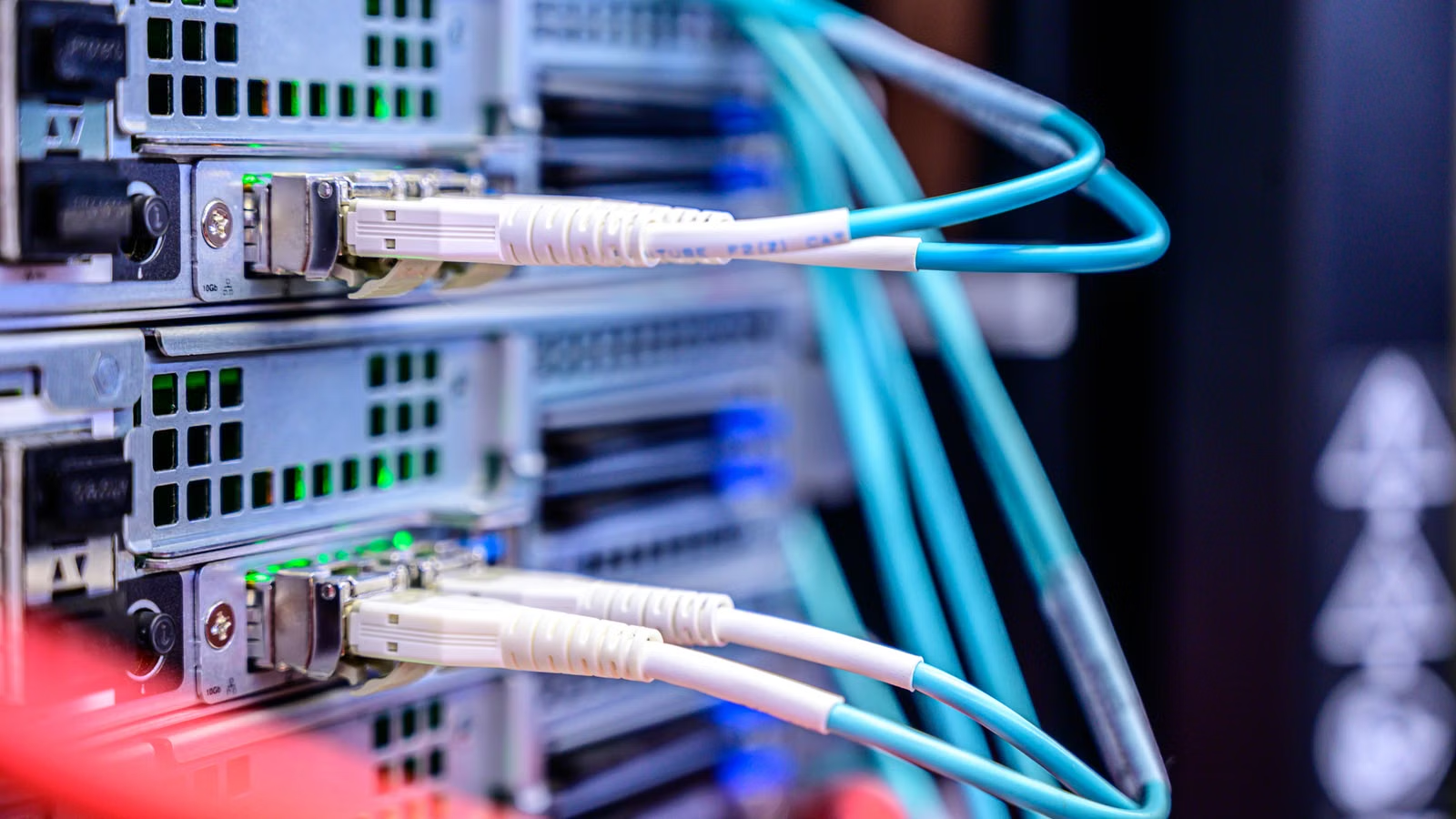
The key question for Amphenol APH’s upcoming earnings is not only whether revenue and EPS meet company guidance, but whether AI server connector demand can keep driving upside in the IT datacom segment. Amphenol’s 2nd Quarter 2026 Earnings is scheduled for July 29, 2026, at 1:00 PM ET. For investors, the better approach is to compare Q1 2026 reported results, Q2 guidance, order strength, CommScope acquisition synergies, and changes in AI data center architecture. APH is no longer just a traditional connector company; it has become one of the representative names in the “connectivity layer” of AI infrastructure.
Key Takeaways
- The focus for Amphenol Q2 is whether AI demand can keep exceeding market expectations.
- IT datacom is the most important segment for assessing APH’s AI exposure.
- Q1 orders and book-to-bill show demand remains at a high level.
- The CommScope acquisition strengthens copper, fiber, and data center connectivity capabilities.
- CPO, liquid cooling, and high-power racks are both opportunities and valuation risks.
Amphenol Q2 Earnings Preview: Which Metrics Matter Most?
When you look at Amphenol’s Q2 earnings, the first layer is whether revenue and adjusted EPS come in above guidance. The second layer is whether orders and book-to-bill remain strong. Only after that should you evaluate the stock reaction. In its first quarter 2026 results, Amphenol reported sales of $7.6 billion, up 58% year over year, with organic growth of 33%. Orders reached $9.4 billion, and book-to-bill was 1.24:1. Adjusted diluted EPS was $1.06, up 68% year over year. These figures form the factual baseline for the Q2 preview.
Amphenol’s Second Quarter 2026 Outlook calls for sales of $8.1 billion to $8.2 billion and adjusted diluted EPS of $1.14 to $1.16. That implies year-over-year sales growth of 43% to 45% and adjusted EPS growth of 41% to 43%. In other words, the market is not asking whether Amphenol is growing. The real question is whether growth can still beat already elevated expectations.
| Metric to Watch | Q1 2026 Reported Result | Q2 Earnings Focus |
|---|---|---|
| Sales | $7.6 billion | Whether sales exceed the $8.1–$8.2 billion guidance range |
| Orders | $9.4 billion | Whether AI and other end-market orders remain strong |
| Book-to-bill | 1.24:1 | Whether orders still exceed quarterly shipments |
| Adjusted EPS | $1.06 | Whether EPS exceeds the $1.14–$1.16 range |
| Adjusted operating margin | 27.3% | Whether margin resilience holds after acquisition dilution |
The book-to-bill ratio deserves special attention. Amphenol defines it as orders divided by net sales. In simple terms, if the ratio stays above 1, customer orders are running ahead of current-period deliveries, suggesting demand is still queuing up. If revenue looks strong but orders weaken, the market may start to worry about slower growth ahead.
Reuters noted in its coverage of AI data center demand that Amphenol’s Q2 revenue guidance was above the Wall Street consensus compiled by LSEG at the time. That is one reason APH attracted attention after its Q1 earnings. You should factor this into expectation management: once the market has already recognized strong AI data center demand, Q2 results need to provide stronger evidence to support another round of upward revisions.
Summary: The right way to assess Amphenol’s Q2 earnings is to move in order: guidance execution, order strength, margin quality, and AI demand durability. Sales growth alone is not enough because the company has already provided a high-growth outlook. If Q2 sales, adjusted EPS, orders, and book-to-bill all come in stronger than expected, the case for continued upside in AI server connector demand becomes more convincing. If revenue meets guidance but orders or management commentary cools, the market may reassess APH’s near-term valuation upside.
Why Has AI Server Connector Demand Become Amphenol’s Core Earnings Theme?
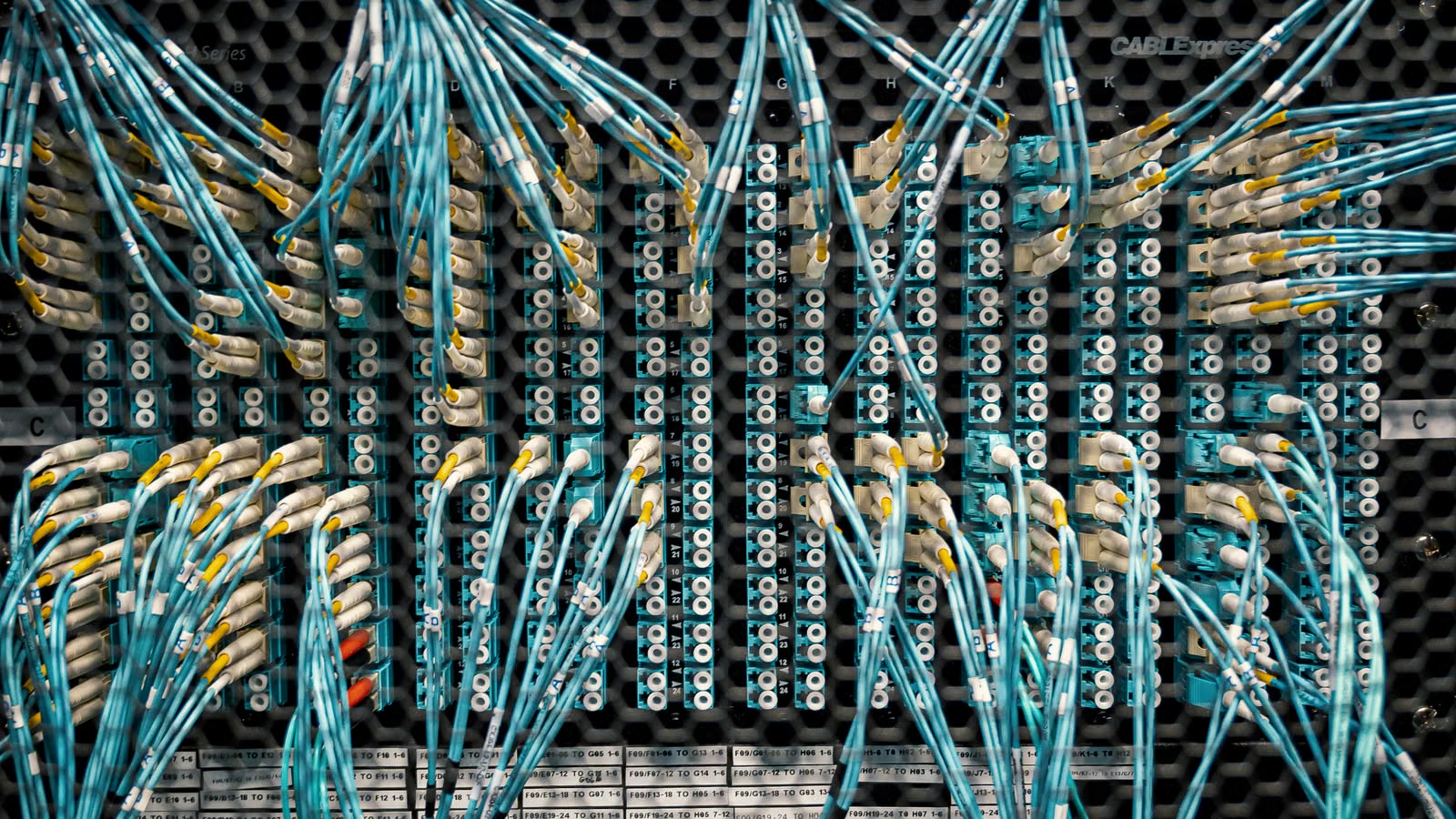
AI server connector demand has become the central theme for APH because GPU clusters do not only consume chips; they also raise the value of high-speed interconnects, power connectors, fiber connectivity, and cable assemblies. Amphenol positions IT Datacom as its interconnect business for information technology and data communications markets, with core technologies including high-speed, power, and fiber solutions. According to the Q1 2026 earnings call, IT datacom represented 41% of company sales, with sales in that market up 99% year over year and organic growth of 81%.
More importantly, Amphenol management said on the Q1 2026 earnings call that IT datacom grew 27% sequentially and 16% organically, with nearly all of the organic sequential growth coming from AI-related products. That shows AI is not just a broad market narrative. It has already moved into the center of Amphenol’s orders, revenue, and product mix.
AI server connectivity demand mainly comes from four layers:
| AI Infrastructure Layer | Connector Demand | Significance for APH |
|---|---|---|
| Inside GPU servers | Board-to-board, wire-to-board, high-speed I/O | Raises content per server |
| Inside racks | High-speed copper, power connectors, backplane connections | Benefits from high-density racks |
| Between racks | Fiber, network cabling, data center connectivity | Strengthens CommScope synergy |
| Cooling systems | Liquid cooling quick disconnects, blind-mate interfaces, manifold connections | Expands into thermal management |
You can think of an AI server as a systems engineering problem. GPUs determine the upper limit of compute, but connectors determine whether data, power, and cooling can move reliably through the system. The larger the training and inference clusters become, the more important data exchange, rack power, and service reliability become. High-speed copper cables, active electrical cables, fiber optics, power interconnects, busbars, and liquid cooling connectors all become part of the same infrastructure budget.
This is also why APH is different from a pure chip stock. Nvidia and Broadcom are more directly exposed to GPUs, accelerators, networking chips, and ASICs. Amphenol is more of a connectivity-layer “picks and shovels” supplier. Its upside may not be as steep as a pure AI semiconductor name, but its business mix is more diversified, with automotive, industrial, aerospace, defense, communications networks, and other markets providing additional buffers. When you assess APH’s AI story, the question is not only whether GPU demand is strong. You also need to ask whether AI rack connectivity complexity continues to rise.
Summary: The core of AI server connector demand is not the breakout of a single connector category, but the simultaneous increase in complexity across data, power, cooling, and maintenance. Amphenol’s Q1 results already showed IT datacom contributing far more to overall growth, with AI-related products driving most of the sequential organic growth. If Q2 results continue to show strong IT datacom growth, resilient customer demand, and solid order visibility, APH’s AI infrastructure thesis becomes more durable. If AI-related commentary weakens, the market’s tolerance for a premium valuation may decline.
Does the CommScope Acquisition Make Amphenol Stronger in Data Centers?
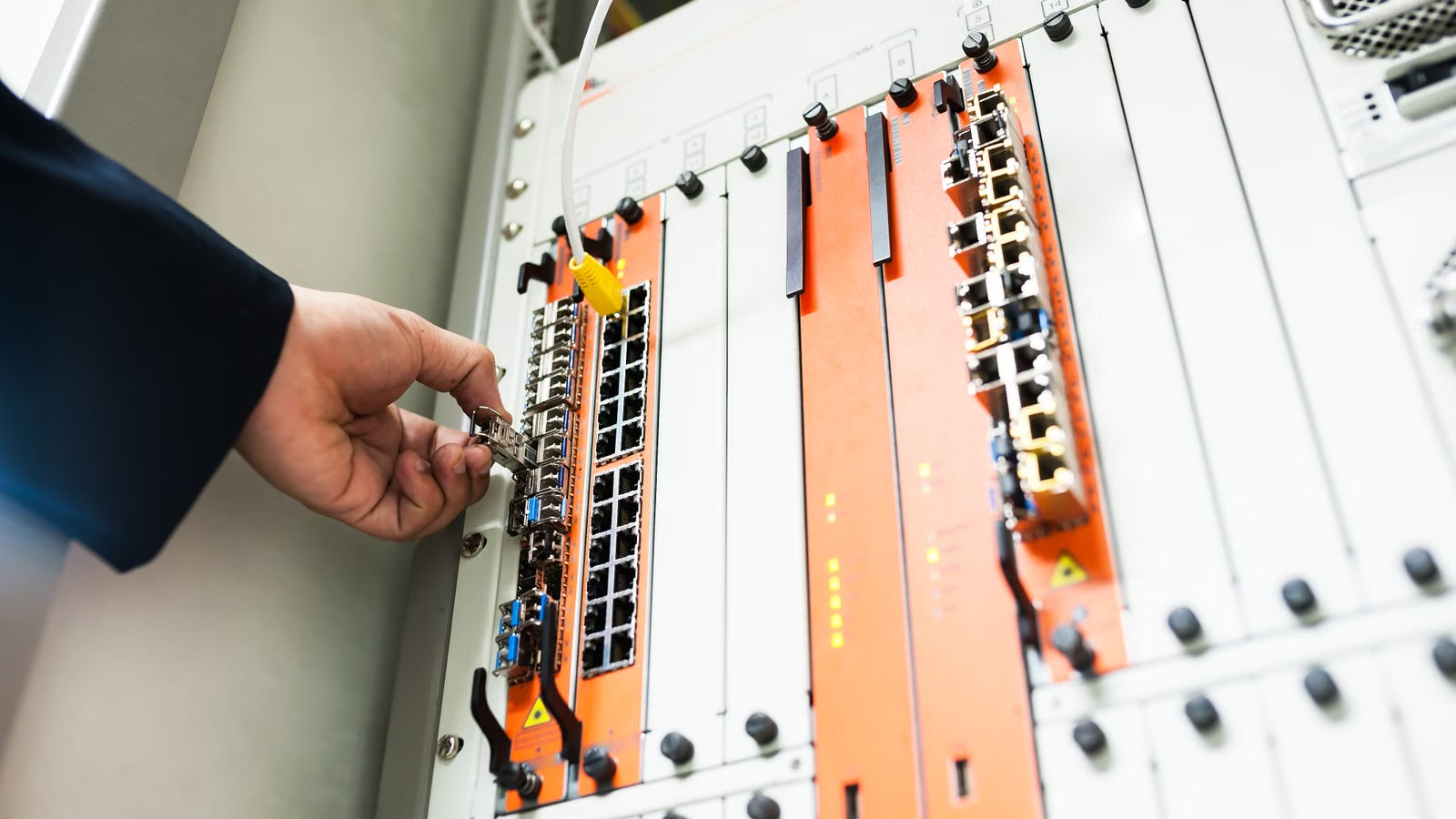
The CommScope acquisition makes Amphenol’s data center capability more complete because it adds strength in fiber, copper, building connectivity, and data center networking products. Amphenol has completed its acquisition of CommScope’s CCS business and expects the business to generate approximately $4.1 billion of sales in 2026 and contribute roughly $0.15 to 2026 diluted EPS, excluding acquisition-related expenses. For investors, this is not just a scale expansion. It increases APH’s depth across the AI data center connectivity chain.
Reuters described the US$10.5 billion transaction as a deal that can help Amphenol capture demand from AI applications and high-speed data center infrastructure. On the Q1 earnings call, management also emphasized that CommScope helps the company expand from server and in-rack connectivity to rack-to-rack, across-the-data-center, and even data-center-to-data-center networking scenarios.
| Dimension | APH Focus Before the Deal | Incremental Benefit After the Deal |
|---|---|---|
| Product coverage | High-speed connectors, power connectors, cable assemblies | Fiber, copper, building connectivity, data center connectivity |
| Application scope | Servers, equipment, inside racks | Between racks, within data centers, between data centers |
| Customer synergy | Equipment vendors, system vendors, cloud customers | Broader network and infrastructure customers |
| Investment focus | Organic growth | Organic growth plus acquisition synergy |
| Risk factor | AI demand volatility | Integration costs, amortization, margin dilution |
However, revenue expansion from an acquisition does not automatically mean all growth is high quality. In Q1 2026, Amphenol disclosed acquisition-related expenses and non-cash amortization tied to CommScope. Management also noted that the deal had some dilutive effect on adjusted operating margin. You need to distinguish between two questions: first, whether CommScope brings new customer access and product synergies; second, whether APH’s organic growth remains strong after excluding acquisition contribution.
From an earnings-preview perspective, management commentary on CommScope during the Q2 call will matter. If management continues to emphasize data center fiber, copper, customer cross-selling, and capacity investment, the market will be more likely to view the deal as a long-term AI infrastructure capability upgrade. If the discussion centers more on integration costs, supply constraints, or margin pressure, investors may reduce their near-term expectations for acquisition synergy.
Summary: The investment significance of the CommScope acquisition is that Amphenol is moving from being a supplier of server and equipment connectors toward becoming a broader data center connectivity infrastructure supplier. This expands APH’s participation across AI data center buildouts and gives it broader exposure to copper, fiber, power, and network cabling demand. But the deal is not risk-free. Q2 earnings need to show whether organic growth, margins, and synergy effects are improving at the same time.
Copper, Optical Interconnects, and Liquid Cooling Connectors: Is Architecture Change an Opportunity or a Risk?
AI architecture change is both an opportunity and a risk for Amphenol. The opportunity is that larger GPU clusters increase the value of interconnect, power, and cooling. The risk is that changes in CPO, optical interconnects, active copper, passive copper, pluggable optics, and liquid cooling may shift revenue allocation across different product lines. You should not simply interpret CPO as “fewer connectors.” A better framing is that lower-end connectors may face pressure, while high-speed, high-reliability, system-level connectivity solutions become more important.
When NVIDIA describes NVLink and liquid cooling, it notes that the GB200 NVL72 uses NVLink and liquid cooling to form a 72-GPU rack-scale system designed to reduce communication bottlenecks and increase compute density. This kind of rack-scale architecture pushes connectivity challenges from a single server to the rack, row, and full data center level. For Amphenol, high-speed copper cables, optical interconnects, power connections, and liquid cooling connectors may all gain opportunities at different layers.
| Technology Direction | Demand Impact | What to Watch for APH |
|---|---|---|
| High-speed copper | Short-reach, low-cost, high-bandwidth connections remain important | Share inside servers and racks |
| Active electrical cable | Improves signal integrity and reach | High-speed product capability |
| Optical interconnect | Better suited to longer-reach and high-bandwidth scenarios | CommScope fiber synergy |
| CPO | May change some traditional pluggable paths | Design participation and new product capability |
| Liquid cooling connectors | Raises demand for quick disconnects, blind-mate interfaces, and low-leakage designs | Industrial connectors and thermal management capability |
In liquid cooling, the OCP’s Open Rack V3 Blind Mate Manifold Specification brings blind-mate manifolds, quick disconnect interfaces, power architecture, and related infrastructure design issues into a more standardized framework. Amphenol Industrial also emphasizes in its discussion of AI data center liquid cooling connectors that high-density AI racks raise requirements for blind-mate designs, low pressure drop, cleanliness, fluid compatibility, and serviceability.
That means you should not only look at the number of connectors. You also need to look at connector value, reliability requirements, and customer design lock-in. If customers move from traditional racks to liquid-cooled racks, connectors shift from being ordinary supporting components to critical parts of system reliability. Whether a quick disconnect minimizes leakage, whether a blind-mate connection tolerates installation variance, and whether a manifold supports fast maintenance can all affect downtime risk in AI data centers.
Summary: AI architecture evolution does not eliminate connectivity demand; it redistributes it. Short-reach copper, fiber interconnects, CPO, power connections, and liquid cooling connectors will compete for budget at different infrastructure levels. Amphenol’s advantage lies in its broad product portfolio, deep customer reach, and stronger fiber capability after the CommScope deal. The risk is that technology routes may shift quickly, causing specific product lines to be displaced. In Q2 earnings, management commentary on CPO, optical interconnects, liquid cooling, and next-generation AI architectures will directly affect how the market judges APH’s long-term growth quality.
Stock Expectations, Valuation, and Risks: When Can Good Earnings Still Be “Not Good Enough”?
Amphenol’s biggest near-term risk is not that AI demand does not exist, but that the market has already assigned high expectations. Q1 results, Q2 guidance, order strength, and the CommScope acquisition have all reinforced APH’s AI infrastructure narrative. If Q2 earnings only meet company guidance while orders, IT datacom, margins, or second-half commentary fail to improve further, the stock may deliver a “good results, muted reaction” outcome. You need to assess earnings numbers and market expectations together.
| Risk Type | Possible Trigger | What to Watch |
|---|---|---|
| Elevated expectations | AI growth has already been priced in after Q1 | Whether Q2 clearly exceeds guidance |
| Order cooling | AI customer deployment timing changes | Book-to-bill and order commentary |
| Margin pressure | Acquisition amortization, capacity expansion, cost increases | Adjusted operating margin |
| Architecture shifts | CPO, optical interconnects, liquid cooling route changes | Next-generation platform design wins |
| Policy and tax risk | Tariffs, export controls, tax rate changes | Effective tax rate and risk disclosures |
APH’s valuation logic is also different from that of a typical industrial company. Traditional connector companies are often viewed as cyclical manufacturers or industrial technology businesses. Amphenol now carries an AI infrastructure premium. That premium is not based on the label of “AI concept stock,” but on orders, customer commitments, IT datacom growth, rising product value per system, and acquisition synergies. If the evidence does not keep strengthening, the valuation framework could shift from “AI growth compounder” back toward “high-quality industrial technology company.”
There is also a trading-cost angle around earnings events. During popular earnings windows, share price volatility, bid-ask spreads, trading volume, and order types can all affect execution quality. When you track APH, Nvidia, Broadcom, Coherent, Corning, TE Connectivity, and other AI infrastructure stocks, you should look beyond earnings and also understand platform fees, external institutional fees, and the actual cost shown on the order page. Biya’s U.S. stock trading fees state that U.S. stock trading commission is US$0, while platform fees, external institutional fees, and other charges are subject to the fee schedule and the order page. Availability of services depends on the user’s location, identity verification results, platform rules, and applicable laws and regulations.
For ordinary investors, earnings trades require discipline. Do not equate “long-term AI demand is strong” with “the stock will definitely rise after earnings.” Short-term reactions usually depend on the expectation gap: whether results beat, whether management raises guidance, whether orders remain strong, whether the competitive landscape changes, and whether analysts revise full-year estimates. If you cannot tolerate post-earnings gap risk, waiting until after the report to reassess may be a more prudent approach.
Summary: APH’s risk mainly comes from expectations, not from a single weakness in the business model. As long as AI data center capital spending remains strong, Amphenol still holds a strong industry position. But when valuation already reflects optimism, Q2 earnings need to prove there is still room for upward revision. You should put revenue, EPS, orders, margins, IT datacom, CommScope synergies, and trading costs into one checklist rather than reacting only to the headline earnings numbers.
How Can Ordinary Investors Use This Earnings Report to Judge APH’s AI Thesis?
You can treat Amphenol’s Q2 earnings as a “connectivity-layer thermometer” for AI infrastructure. If Q2 revenue and EPS exceed guidance, IT datacom continues to grow strongly, book-to-bill remains healthy, and management continues to emphasize AI data centers, customer demand, and next-generation architecture design opportunities, the AI server connector thesis for APH becomes more convincing. If any of these areas cool meaningfully, you should reassess near-term valuation and position risk.
| Decision Layer | Key Question | Possible Conclusion |
|---|---|---|
| Layer 1 | Did revenue and EPS beat guidance? | Determines whether earnings truly beat expectations |
| Layer 2 | Did IT datacom remain strong? | Shows whether AI demand is still the main driver |
| Layer 3 | Did book-to-bill stay healthy? | Measures demand visibility |
| Layer 4 | Is CommScope creating synergy? | Tests long-term product portfolio expansion |
| Layer 5 | Did management raise or strengthen its outlook? | Helps determine whether the market reprices the stock |
A practical tracking process has four steps. First, after the earnings release, check whether sales exceed the $8.1 billion to $8.2 billion range and whether adjusted EPS exceeds the $1.14 to $1.16 range. Second, review IT datacom growth, AI-related product commentary, and order quality. Third, check whether adjusted operating margin holds up despite acquisition and capacity expansion pressure. Fourth, listen for keywords on the call such as CPO, optics, active copper, liquid cooling, customer commitments, and capacity expansion.
If you already track the U.S. AI supply chain, you can use Biya to follow APH and related stocks, then evaluate pre-earnings expectations, post-earnings price reactions, transaction costs, and portfolio weightings together. If you prefer to organize information before making decisions, you can also use U.S. stock information search to review basic information on U.S.-listed companies, then combine that with company filings, order data, and your own risk tolerance.
It is important to remember that Amphenol is not a pure AI chip stock. Its strengths are multi-market exposure, a broad product portfolio, diverse customers, and strong execution. Its weaknesses are that short-term upside can still be affected by acquisition costs, valuation, and macro cycles. For you, APH is better analyzed within the AI infrastructure supply chain framework rather than as a direct substitute for GPU stocks. The central question is not whether APH has an AI story, but whether AI connector demand can continue to translate into orders, revenue, margins, and cash flow.
Summary: Ordinary investors do not need to predict the final winner of every connectivity technology. The better approach is to check whether the earnings report continues to prove three things: AI data center customers are still increasing purchases, Amphenol remains competitive across high-speed copper, fiber, power, and liquid cooling connectors, and growth is converting into profits and cash flow. As long as these three points remain intact, the APH connectivity-layer thesis has support. If orders, margins, or management outlook weaken, short-term risk will rise significantly.
If you follow Amphenol APH, Nvidia NVDA, Broadcom AVGO, Coherent, Corning, TE Connectivity, and other AI infrastructure-related U.S. stocks, the most important task around earnings is to assess fundamentals, valuation, trading costs, and your own risk tolerance together. Biya is a global multi-asset trading wallet that supports U.S. stocks, Hong Kong stocks, and crypto trading, as well as payments in more than 40 local currencies. For users who meet the relevant service availability requirements, tracking U.S. earnings opportunities can be combined with App download, market information, order-page details, and fee structures. Public market information and fee structures can help build a decision framework, but they do not constitute investment advice. Before trading, you should refer to platform rules, account statements, local regulatory requirements, and your own risk tolerance.
FAQ
When will Amphenol report Q2 2026 earnings?
Amphenol’s Q2 2026 earnings are scheduled for July 29, 2026, at 1:00 PM ET. Investors should rely on the company’s investor relations information and official announcements, then review sales, adjusted EPS, orders, book-to-bill, and IT datacom commentary after the release.
Which segment best reflects Amphenol’s AI server connector demand?
IT datacom is the key segment to watch for Amphenol’s AI server connector demand. It best reflects demand from AI data centers, high-speed interconnects, power connectors, fiber connectivity, and traditional data communications, though investors should also evaluate order strength and margin quality.
Why is book-to-bill important in APH earnings?
Book-to-bill is important in APH earnings because it measures orders relative to current-period sales. A ratio above 1 usually means orders are stronger than shipments, but it should not be used alone as an investment signal. Delivery capacity, customer demand durability, and management outlook also matter.
Will CPO reduce demand for Amphenol connectors?
CPO will not necessarily reduce demand for Amphenol connectors. It may change some traditional copper and optical interconnect paths, but it can also increase the importance of high-speed, optical, power, and system-level connectivity solutions. The key question is whether Amphenol participates in next-generation architecture design.
How does the CommScope acquisition affect Amphenol’s AI thesis?
The CommScope acquisition strengthens Amphenol’s exposure to fiber, copper, and data center connectivity. It helps APH expand from inside-server connectivity to rack-to-rack and data-center-level connectivity, but investors still need to monitor integration costs, organic growth, and margin performance.
How can ordinary investors judge whether APH earnings beat expectations?
Ordinary investors should not judge APH earnings only by year-over-year revenue growth. A more useful approach is to evaluate whether Q2 guidance was exceeded, whether IT datacom growth remained strong, whether orders were healthy, whether adjusted operating margin held up, and what management said about second-half AI data center demand.
*This article is provided for general information purposes and does not constitute legal, tax or other professional advice from BiyaPay or its subsidiaries and its affiliates, and it is not intended as a substitute for obtaining advice from a financial advisor or any other professional.
We make no representations, warranties or warranties, express or implied, as to the accuracy, completeness or timeliness of the contents of this publication.
Related Blogs of

Why Are AI Data Centers Competing for Enterprise SSDs? From Training Data to Vector Databases


How Do Microsoft, Amazon, Google, and Meta’s AI Capex Affect Storage Stocks?


Why Are Cloud Providers Signing Long-Term HDD Contracts? Demand Visibility for Western Digital and Seagate



Choose Country or Region to Read Local Blog
 Australia
 Austria
 Belgium
 Canada
 Cyprus
 Czech Republic
 Denmark
 Estonia
 Finland
 France
 Germany
 Greece
 Hong Kong
 India
India Indonesia
 Ireland
 Italy
Italy Japan
Japan Latvia
 Lithuania
 Luxembourg
 Malaysia
 Malta
Malta Morocco
 Nepal
Nepal Netherlands
 New Zealand
 Norway
 Pakistan
 Philippines
 Poland
 Portugal
 Romania
 Singapore
 Slovakia
 Slovenia
 South Africa
 South Korea
 Spain
Spain Sweden
 Thailand
 The United States
 Turkey
 United Arab Emirates
 United Kingdom
 Vietnam
Contact Us




BIYA GLOBAL LLC is registered with the Financial Crimes Enforcement Network (FinCEN), an agency under the U.S. Department of the Treasury, as a Money Services Business (MSB), with registration number 31000218637349, and regulated by the Financial Crimes Enforcement Network (FinCEN).
BIYA GLOBAL LIMITED is a registered Financial Service Provider (FSP) in New Zealand, with registration number FSP1007221, and is also a registered member of the Financial Services Complaints Limited (FSCL), an independent dispute resolution scheme in New Zealand.