What Is the Difference Between HBM Stocks and GPU Stocks?




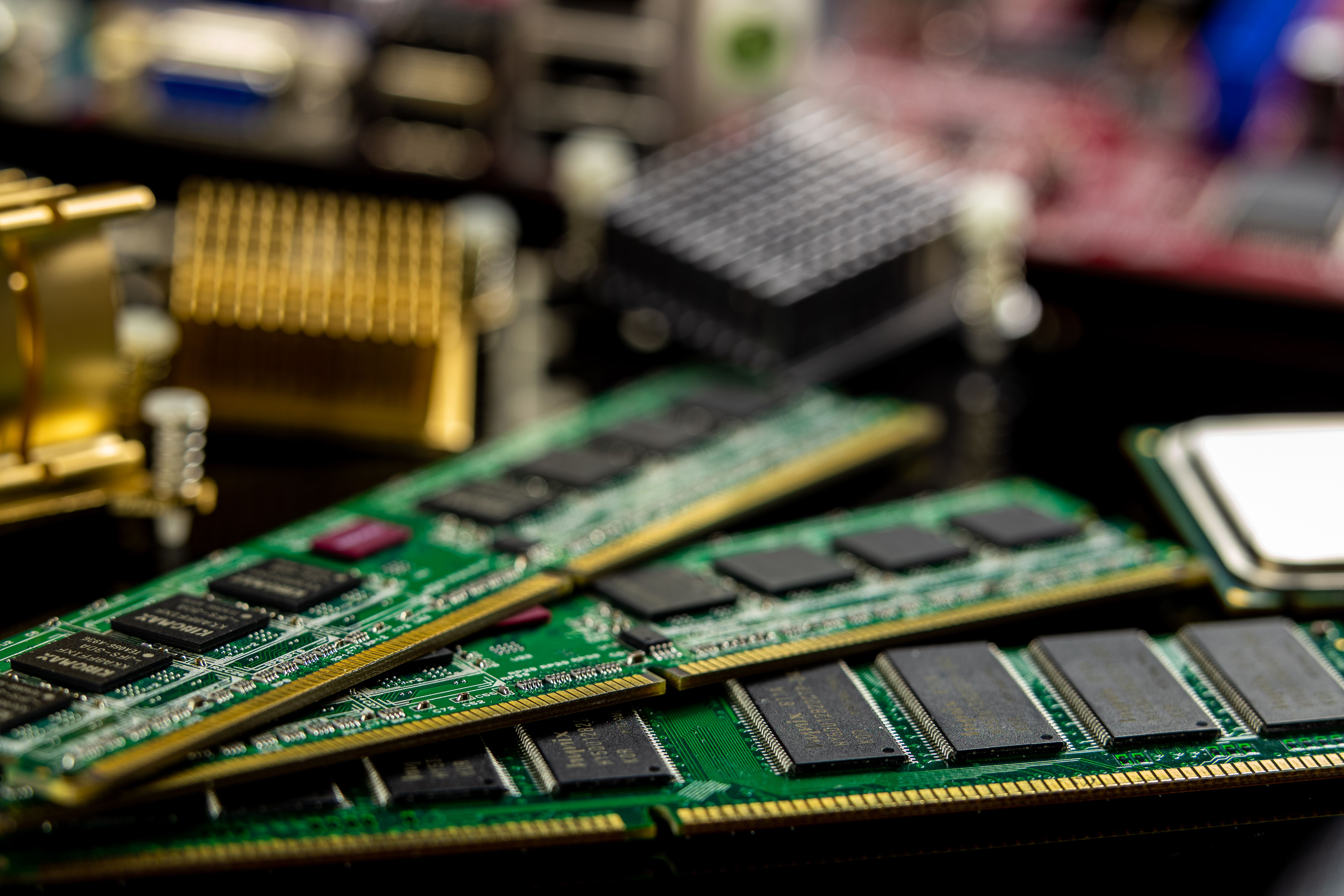
The biggest difference between HBM stocks and GPU stocks is that one is closer to the “AI computing platform,” while the other is closer to the high-bandwidth memory supply chain needed to unlock AI GPU performance. GPU stocks are mainly judged by compute power, ecosystem, server systems, and cloud customer orders. HBM stocks are judged by bandwidth, stacking, yield, advanced packaging, capacity, and pricing cycles. When comparing the two, you should not simply ask which theme is hotter. You need to understand which layer of the AI infrastructure chain each company is monetizing.
Key Takeaways
- GPU stocks are mainly about compute power, ecosystem, server systems, and cloud customer orders.
- HBM stocks are mainly about high-bandwidth memory, yield, capacity, and customer qualification.
- GPU demand sets the ceiling for HBM demand, while HBM supply can also limit GPU volume growth.
- GPU stocks are more platform-driven, while HBM stocks are more tied to the high-end memory cycle.
- HBM upside may be more concentrated, but it is also more sensitive to expansion and pricing cycles.
- Investment analysis should consider technology roadmaps, customer structure, gross margins, and inventory changes.
What Is the Core Difference Between HBM Stocks and GPU Stocks?
The core difference between HBM stocks and GPU stocks is their position in the supply chain. GPU stocks represent AI computing platforms, with revenue coming from AI accelerators, server systems, software ecosystems, and cloud provider procurement. HBM stocks represent GPU-adjacent high-bandwidth memory supply, with revenue coming from HBM stacks, customer qualification, advanced packaging coordination, and high-end DRAM volume growth.
A GPU can be understood as the computing engine of AI. It handles matrix computation, training acceleration, inference throughput, and model execution efficiency. Companies such as NVIDIA and AMD usually do not only sell individual chips. They build server platforms, interconnect systems, developer tools, and software ecosystems around GPUs. For example, NVIDIA DGX B200 comes with 8 Blackwell GPUs, 1,440GB of GPU memory, and 64TB/s of HBM3e bandwidth. This is no longer just a single-chip product. It is a system-level component of an AI factory.
HBM is more like the high-speed fuel channel next to that engine. It is not ordinary PC memory, nor is it low-end consumer electronics storage. It is high-bandwidth memory placed close to AI GPUs. When an AI model runs, weights, activations, KV cache, and context data need to move in and out of the GPU at high speed. Ordinary DRAM sits farther away from the GPU, and its bandwidth and latency are not enough for top-tier AI accelerators. HBM uses stacking, TSV, interposers, and advanced packaging to place higher bandwidth closer to the GPU.
| Comparison Dimension | GPU Stocks | HBM Stocks |
|---|---|---|
| Supply-chain position | AI computing core | GPU-adjacent high-bandwidth memory |
| Main value | Compute power, ecosystem, server systems | Bandwidth, capacity, power efficiency, yield |
| Representative company type | GPU / AI accelerator vendors | DRAM / HBM memory vendors |
| Revenue driver | GPU orders, AI servers, software ecosystem | HBM contracts, capacity, pricing, customer qualification |
| Main risk source | Competition, export controls, valuation, cloud CapEx | Cycles, expansion, yield, customer concentration |
When analyzing the two types of stocks, you should first distinguish between “platform” and “bottleneck.” GPU stocks usually reflect market expectations for AI computing platform share, and their valuations may include software ecosystems, server systems, data center networking, and inference platform capabilities. HBM stocks reflect whether high-end GPU demand is strong enough to drive memory capacity and bandwidth demand, and whether supply remains tight enough.
Summary: GPU stocks follow an AI computing platform logic, while HBM stocks follow an AI computing bottleneck logic. Both benefit from AI data center expansion, but their analytical frameworks are different. GPUs should be evaluated by product performance, software ecosystem, system-level share, and cloud provider capital expenditure. HBM should be evaluated by supply tightness, packaging coordination, yield ramp, customer qualification, and pricing cycles. You should not treat HBM stocks as simple accessories to GPU stocks, nor should you treat all memory stocks as HBM beneficiaries. The useful comparison is to identify exactly which layer of the AI chip chain a company occupies.
From a Supply-chain Perspective: GPUs Are the Compute Core, HBM Is the Performance Bottleneck
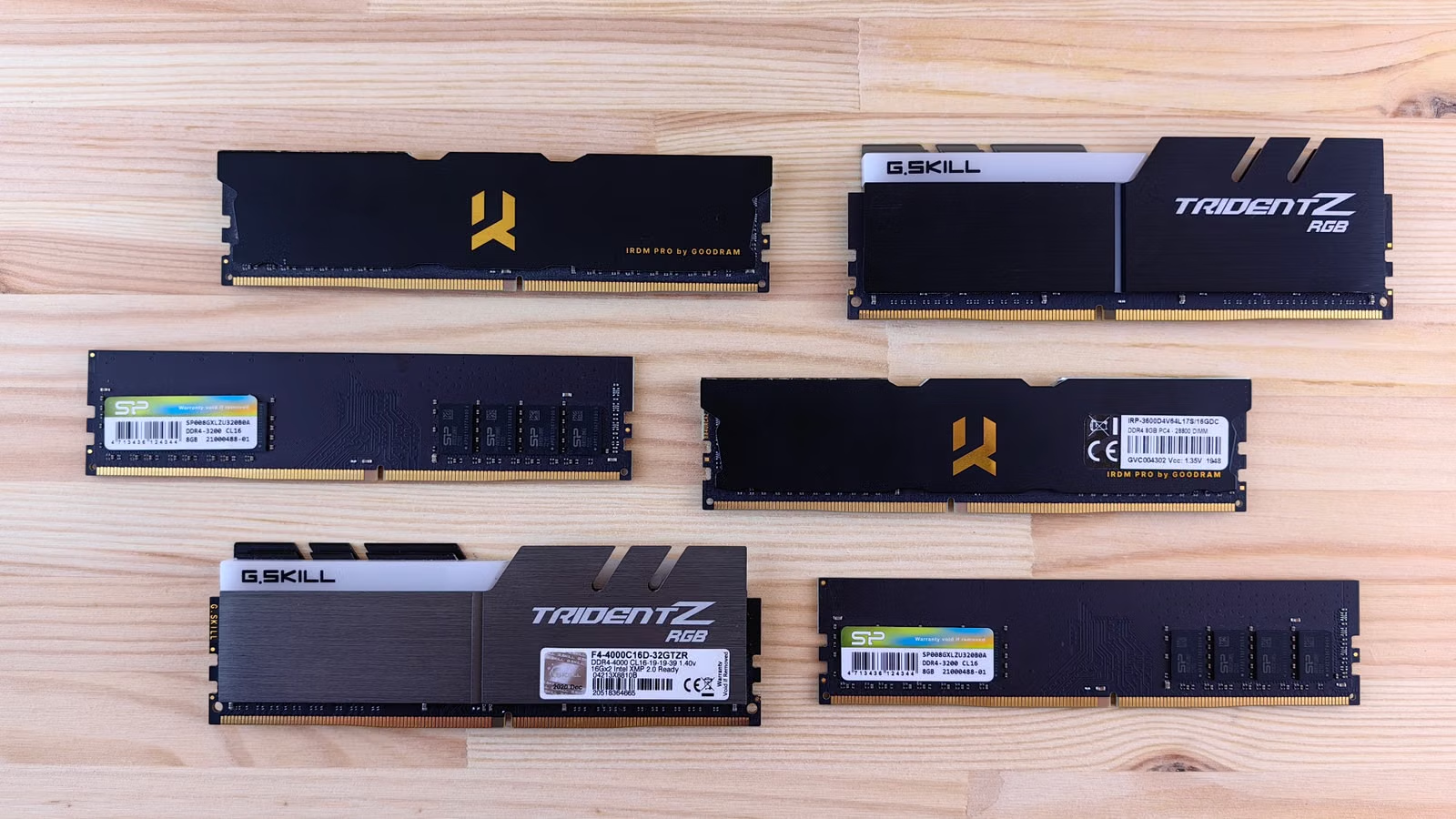
From a supply-chain perspective, GPUs are the central asset of AI infrastructure, while HBM is the key bottleneck for unlocking GPU performance. GPUs determine the computing capability of AI training and inference. But if HBM capacity is insufficient, bandwidth is too low, or supply cannot keep up, GPUs cannot operate efficiently at scale. GPUs and HBM are therefore both upstream-downstream partners and mutually constrained system components.
Why Are GPU Stocks Closer to AI Platform Logic?
GPU stocks are closer to AI platform logic because GPU vendors often control computing architecture, full-system solutions, interconnect systems, and developer ecosystems. NVIDIA’s advantage does not only come from the GPU chip itself. It also comes from CUDA, NVLink, DGX / HGX systems, networking equipment, and software toolchains. These capabilities increase customer switching costs and make GPU stock valuations more similar to platform technology companies.
You can see this shift in product specifications. NVIDIA H200 provides 141GB of HBM3e memory and 4.8TB/s of memory bandwidth, which shows that GPU upgrades are no longer only about compute units. They also depend on GPU memory capacity and bandwidth. Blackwell Ultra’s 288GB of HBM3e per GPU further shows that high-end AI GPUs are being configured with larger near-memory capacity for bigger models, longer context windows, and higher-concurrency inference.
Why Are HBM Stocks Closer to Supply Bottleneck Logic?
HBM stocks are closer to supply bottleneck logic because HBM volume growth depends not only on demand, but also on manufacturing difficulty. HBM requires DRAM die stacking, TSV, base dies, advanced packaging, thermal management, testing, and customer qualification. Even when end-market AI GPU demand is strong, poor HBM yield, weak packaging coordination, or delayed qualification can restrict the delivery pace of high-end GPUs.
AMD’s products also show how important HBM is to GPU performance. AMD Instinct MI325X’s 256GB of HBM3E and 6TB/s peak memory bandwidth make high-capacity HBM one of its main selling points. AMD Instinct MI300X’s 192GB of HBM3 also shows that AI accelerator competition is now inseparable from memory capacity and bandwidth.
| Segment | GPU Focus | HBM Focus |
|---|---|---|
| AI training | FP8 / FP4 compute, cluster interconnect | High-bandwidth access to large model weights and activations |
| AI inference | Token throughput, inference cost | KV cache, context window, concurrency capacity |
| Server system | GPU count, NVLink, total system power | HBM stack count, capacity, bandwidth |
| Supply chain | Foundry, advanced packaging, system assembly | DRAM die, TSV, yield, packaging coordination |
The relationship between HBM and GPUs is not about replacement. It is about which component becomes the bottleneck. In the early AI market, investors focused more on whether there were enough GPUs. As GPU clusters become larger, the market starts to care whether HBM is fast enough, large enough, and stable enough. When looking at GPU stocks, the key question is whether the computing platform can continue expanding share. When looking at HBM stocks, the key question is whether high-end memory supply can keep up with GPU volume growth.
Summary: GPUs are the central asset of AI infrastructure, but HBM is a necessary condition for GPUs to work efficiently. GPU stocks represent the “compute platform,” while HBM stocks represent a key bottleneck inside that platform. If AI GPU demand continues to grow, HBM will often benefit as well. But if HBM supply is insufficient, GPU deliveries can also be constrained. When comparing the two types of stocks, you should not only look at end demand. You also need to identify supply-chain bottlenecks. GPU stocks are better analyzed through platform share and ecosystem advantages, while HBM stocks are better analyzed through supply-demand gaps and product-generation upgrades.
From a Business Model Perspective: GPU Stocks Earn Platform Premiums, HBM Stocks Earn Supply-demand and Technology Premiums
From a business model perspective, GPU stocks earn platform premiums, while HBM stocks earn supply-demand and technology premiums. GPU vendors bind customers through chips, systems, software, and ecosystems. HBM vendors gain earnings leverage through high-end memory mix, locked capacity, yield improvement, and contract pricing. Both are pulled by AI, but their profit sources are not the same.
GPU Stock Revenue Depends More on Platform Capability
GPU vendor revenue is not only about chip shipments. High-end AI GPUs are usually sold together with server reference designs, full systems, network interconnects, software toolchains, and developer ecosystems. NVIDIA’s platform advantage can be seen in CUDA, TensorRT, NVLink, InfiniBand, Ethernet, DGX, and enterprise software ecosystems. AMD participates through MI300, MI325X, ROCm, and high-capacity HBM solutions.
This is why GPU stock valuations are often not interpreted only as a hardware cycle. The market tends to view them as AI infrastructure platforms. As long as cloud providers continue building AI data centers, GPU vendors may benefit across chips, systems, networking, and software. The risk also comes from this platform logic. If competition intensifies, customers increase self-developed chips, or cloud provider capital expenditure slows, the platform premium may be repriced.
HBM Stock Revenue Depends More on Product Mix and Supply Constraints
HBM vendors are still part of the memory semiconductor industry, but HBM has a different earnings structure from ordinary DRAM. High-end HBM has higher unit prices, longer qualification cycles, and deeper customer platform binding. When product mix improves, gross margins can rise significantly. In the fourth quarter of fiscal 2025, Micron reported Cloud Memory Business Unit revenue of $4.543 billion and gross margin of 59%, showing that when high-end cloud memory and HBM demand enter financial statements, earnings leverage can become clear.
HBM stocks are mainly driven by two groups of variables. The first group is technical: HBM3E, HBM4, HBM4E, 12-high, 16-high, power consumption, thermal performance, and packaging. The second group is cyclical: ASP, gross margin, capex, inventory, customer qualification, and supply expansion. Competition among SK hynix, Micron, and Samsung is not simply about who can make HBM. It is about who can qualify with major customers earlier and deliver stable supply at high yield.
GPU stocks are mainly judged by:
- AI GPU product roadmaps and architecture upgrades.
- Cloud provider and enterprise customer orders.
- Software ecosystem and developer lock-in.
- Data center systems, networking, and full-server capabilities.
- Inference cost, energy efficiency, and deployment efficiency.
HBM stocks are mainly judged by:
- HBM3E, HBM4, and HBM4E generation upgrades.
- Qualification progress with major GPU / ASIC customers.
- Capacity, yield, and advanced packaging coordination.
- Contract pricing, supply gaps, and product mix.
- Whether the ordinary DRAM cycle is improving at the same time.
Summary: GPU stocks and HBM stocks both benefit from AI, but they make money in different ways. GPU stocks earn premiums from computing platforms, system share, software ecosystems, and customer stickiness. HBM stocks earn earnings leverage from tight high-end memory supply, technology upgrades, and product mix improvement. The former is more like a platform technology stock, while the latter is more like a cyclical semiconductor stock with growth characteristics. If you care more about long-term platform share, GPU stocks are more representative. If you care more about short- to medium-term supply-demand mismatch and gross-margin leverage, HBM stocks are worth closer tracking.
From a Technical Barrier Perspective: GPUs Depend on Architecture and Ecosystem, HBM Depends on Stacking, Packaging, and Yield
The technical barriers of GPUs and HBM exist at different levels. GPU barriers come from computing architecture, software ecosystems, system integration, and customer switching costs. HBM barriers come from DRAM stacking, TSV, base dies, interposers, advanced packaging, thermal management, testing, and yield. One is more platform engineering, while the other is more manufacturing engineering.
GPU Technical Barriers Come from Architecture, Software, and System Integration
GPU competition includes computing architecture, Tensor Core / Matrix Core, memory capacity, interconnect bandwidth, power control, compilers, model optimization, and software compatibility. Customers do not choose GPUs only based on peak chip performance. They also care whether existing models can migrate smoothly, whether development tools are mature, whether cluster deployment is stable, and whether inference costs can fall.
This is also why the moat of GPU stocks is more complex. Advanced process nodes and packaging are important, but software ecosystems are just as important. Long-term use of CUDA, operator libraries, inference frameworks, and optimization tools creates switching costs for developers. Even if competitors launch GPUs with similar hardware specifications, they still need to solve software compatibility, performance tuning, and large-scale deployment stability.
HBM Technical Barriers Come from High-density Stacking and Advanced Packaging Coordination
The challenge of HBM is to be fast, tall, and stable at the same time. HBM vertically stacks multiple DRAM dies, uses TSV to create high-speed channels, and works with GPUs or AI ASICs through advanced packaging platforms. The higher the stack, the larger the capacity. But thermal management, yield, testing, and structural reliability also become more difficult.
Micron HBM4’s 2048-pin bus interface and more than 2.8TB/s of bandwidth per stack show that HBM4 is moving toward wider interfaces, higher bandwidth, and stronger energy efficiency. SK hynix 12-layer HBM4 samples have already been delivered to major customers and emphasize processing bandwidth above 2TB/s. Samsung 12-layer HBM4E samples emphasize speed of up to 16Gbps, improved energy efficiency, and better thermal performance. These upgrades show that HBM competition is expanding from capacity and bandwidth to packaging, cooling, and customer customization.
| Technical Dimension | GPU Stocks | HBM Stocks |
|---|---|---|
| Core technology | GPU architecture, AI operators, interconnect | DRAM stacking, TSV, packaging, thermal design |
| Software dependence | High; ecosystem determines switching cost | Lower, but must match customer platforms |
| Manufacturing difficulty | Advanced nodes, packaging, system integration | Yield, stack height, thermal management |
| Customer qualification | System-level validation | Deep binding with GPU / ASIC platforms |
| Iteration pace | GPU architecture generation upgrades | HBM3E, HBM4, HBM4E iteration |
HBM customer qualification is especially important. Once HBM enters a high-end AI GPU platform, short-term replacement is not easy because it involves packaging, electrical characteristics, thermal design, system validation, and supply stability. Conversely, if an HBM vendor falls behind in qualification, it may not fully benefit from current orders even when industry demand is strong.
Summary: GPU and HBM technical barriers exist on different layers. GPU barriers are more about architecture, software ecosystems, interconnect systems, and platform switching costs. HBM barriers are more about manufacturing process, stack height, packaging coordination, yield, and customer qualification. When judging GPU stocks, you should ask whether the company can maintain platform advantages and system-level share. When judging HBM stocks, you should ask whether the company can reliably supply next-generation high-bandwidth memory while maintaining yield and profitability during expansion.
From an Investment Upside Perspective: HBM May Be More Concentrated, While GPUs May Be More Platform-driven
HBM stocks and GPU stocks have different sources of investment upside. GPU stocks usually benefit from AI platform expansion, with a broader and longer-term logic. HBM stocks are more likely to show earnings leverage when supply is tight, prices rise, and product mix improves. But they are also more likely to come under pressure when capacity expands, inventory rises, and prices fall.
GPU stock upside comes from platform share. When AI data centers continue expanding, GPU vendors may benefit from AI accelerator shipments, full-server systems, network interconnects, software ecosystems, and lower inference costs. The advantage is broad exposure. The weakness is that market expectations are often already high. If valuations have priced in years of growth, even small changes in orders, gross margins, or export restrictions can magnify volatility.
HBM stock upside comes from bottleneck scarcity. When GPU demand is strong but HBM supply cannot keep up, HBM contracts, ASP, yield improvement, and product mix upgrades can quickly show up in earnings. If the ordinary DRAM cycle also improves at the same time, HBM vendors may benefit from both high-end products and the broader industry cycle. However, if HBM expands aggressively, customers push for lower prices, or next-generation products suffer yield issues, earnings leverage can also work in reverse.
| Key Question | GPU Stocks | HBM Stocks |
|---|---|---|
| Where does upside come from? | Platform share, system sales, software ecosystem | Supply-demand gap, pricing, yield, product mix |
| What is the bigger risk? | Competition, valuation, customer CapEx slowdown | Expansion, inventory, pricing cycles, qualification failure |
| Financial indicators | Data center revenue, orders, system margins | HBM revenue, DRAM mix, gross margin, capex |
| Better observation angle | Long-term AI platform landscape | Cycle turning points and supply-demand leverage |
| Volatility pattern | More affected by valuation expectations | More affected by pricing and inventory cycles |
The statement “HBM has more upside than GPUs” is not always true. It is more likely to be true when several conditions appear together: HBM supply is tight, high-end customer qualification is successful, the ordinary DRAM cycle is improving at the same time, gross margins are rising with product mix, and valuations have not fully priced in high growth. On the other hand, if GPU demand slows, HBM expands sharply, customers begin pushing down prices, or the market has already priced in high growth, HBM stocks may become more volatile than GPU stocks.
Summary: The strength of GPU stocks lies in platformization, while the strength of HBM stocks lies in bottleneck leverage. The former is better for tracking the long-term AI computing platform landscape. The latter is better for tracking high-end memory supply-demand cycles. There is no absolute winner between the two. The key is which type of risk you are willing to take. GPU stocks carry more platform competition, export restriction, and valuation risk. HBM stocks carry more cycle, capacity, yield, and pricing risk. If you only look at price gains, you may miss the underlying risk structure. Only by separating the sources of upside can you compare the two asset types clearly.
How Should Ordinary Investors Compare HBM Stocks and GPU Stocks?
Ordinary investors should compare HBM stocks and GPU stocks by first identifying which layer of the supply chain the company occupies, then checking whether AI demand has flowed into revenue, gross margins, and cash flow, and finally considering valuation, transaction costs, and risk boundaries. Do not rely only on market labels, because “AI chip stock” can refer to very different businesses and cycle exposures.
Step 1: Identify Which Layer the Company Occupies
You need to distinguish between GPU designers, AI ASIC vendors, HBM memory vendors, advanced packaging companies, equipment and materials suppliers, and server system vendors. Some companies may appear related to AI chips, but their revenue may mainly come from consumer electronics, ordinary DRAM, NAND, packaging materials, or equipment orders. Only companies whose revenue is truly connected to high-end HBM, AI GPUs, or key supply-chain bottlenecks should be analyzed under the corresponding framework.
Step 2: Check Whether the Cycle Has Reached Financial Data
For GPU stocks, focus on data center revenue, AI accelerator shipments, backlog, gross margin, software attach rate, and customer CapEx. For HBM stocks, focus on HBM revenue, DRAM bit shipments, ASP, capex, inventory, gross margin, and customer concentration. Theme popularity does not equal profit realization. The logic becomes stronger only when orders, pricing, gross margins, and cash flow improve together.
Step 3: Understand Transaction Costs and Risk Boundaries
If you are watching HBM or GPU-related stocks in the U.S., Hong Kong, or other markets, you should consider not only the industry-chain logic, but also actual transaction costs. U.S. stock trading costs usually include more than commissions. They may also include platform fees, external agency fees, trading activity fees, and other charges. Biya charges $0 commission for U.S. stock trading, while platform fees, external agency fees, and other charges are subject to the information shown in U.S. stock trading fees and on the order page. Whether related services are available depends on the user’s location, identity verification result, platform rules, and applicable laws and regulations.
You can also use Biya to follow U.S. stocks, Hong Kong stocks, and multi-asset market quotes, and place GPU, HBM, semiconductor equipment, advanced packaging, and cloud computing companies into the same AI infrastructure chain for comparison. Fees are not the factor that determines investment returns, but in high-volatility markets, phased buying, or frequent rebalancing, they can affect the real trading experience.
Ordinary investors can compare the two types of stocks with six questions:
- Does the company mainly earn revenue from GPUs, HBM, or peripheral supply-chain businesses?
- Has AI demand already entered orders and revenue?
- Is gross margin improvement driven by real product upgrades or a short-term pricing cycle?
- Is the customer base overly concentrated among a few cloud providers or GPU platforms?
- Has the valuation already priced in high-growth expectations?
- Are transaction fees, foreign exchange, account rules, and local compliance requirements clear?
Summary: Comparing HBM stocks and GPU stocks is not about which one has risen more. You need to first identify supply-chain position, then check whether growth has flowed into revenue, gross margins, cash flow, and inventory, and finally consider valuation, transaction costs, and personal risk tolerance. GPU stocks are better tracked from the angles of platform competition, software ecosystems, and data center systems. HBM stocks are better tracked from the angles of high-end memory supply-demand cycles, customer qualification, and pricing leverage. Public market information can help build an analytical framework, but it should not be understood as specific investment advice.
If you are following HBM stocks and GPU stocks, you can place them within the same AI infrastructure chain, but you should not use the same indicators to judge them. GPUs are more like the AI platform entry point, while HBM is more like the AI performance bottleneck. Advanced packaging, semiconductor equipment, cloud computing, and server systems each have different risk exposures. You can use U.S. stock information search to organize related names, then combine earnings reports, valuation, fee structure, and your own risk tolerance before making decisions. If related services are available in your region, you can also register an account to further explore Biya’s multi-asset trading support. Before trading, always refer to platform rules, order information, fee details, and applicable local regulatory requirements.
FAQ
Which Is More Affected by AI Demand: HBM Stocks or GPU Stocks?
Both HBM stocks and GPU stocks are affected by AI demand, but the transmission paths are different. GPU stocks are more directly affected by AI compute procurement, while HBM stocks benefit through high-end GPUs’ demand for memory capacity and bandwidth. HBM upside may be more concentrated, but its cycle volatility can also be more obvious.
Why Are HBM Stocks Not the Same as Ordinary DRAM Stocks?
HBM stocks are not the same as ordinary DRAM stocks because HBM is a high-bandwidth, stacked, GPU-adjacent high-end DRAM product. To judge an HBM stock, you need to look at HBM revenue share, customer qualification, capacity, yield, and product mix, rather than only checking whether the company produces memory.
Why Do GPU Stocks Usually Trade at Higher Valuations Than Memory Stocks?
GPU stocks often trade at higher valuations because they usually include expectations for platforms, software ecosystems, and data center systems. Memory stocks may also have AI-driven upside, but they are still affected by pricing cycles, inventory, and supply expansion. Their valuation frameworks are therefore usually more tied to cycles and product mix improvement.
Does AI Inference Growth Benefit HBM Stocks or GPU Stocks More?
AI inference growth usually benefits both GPU and HBM stocks, but in different ways. GPUs benefit from inference compute demand, while HBM benefits from KV cache, long context windows, and high concurrency requirements for memory capacity and bandwidth. The final impact also depends on inference cost, hardware utilization, and customer purchasing pace.
How Can Ordinary Investors Avoid Buying Fake HBM Concept Stocks?
Ordinary investors should check whether a company truly has HBM products, customer qualification, revenue contribution, or a core supply-chain position. Companies that only provide ordinary DRAM, consumer storage, low-end packaging, or peripheral materials may not significantly benefit from high-end HBM volume growth.
What Fees and Risks Should Investors Watch When Trading HBM and GPU-related Stocks?
When trading HBM and GPU-related stocks, investors should pay attention to stock price volatility, valuation, industry cycles, foreign exchange, platform fees, external agency fees, and local regulatory requirements. Specific fees should be based on platform fee information, order pages, and billing details. Public market information does not constitute investment advice.
*This article is provided for general information purposes and does not constitute legal, tax or other professional advice from BiyaPay or its subsidiaries and its affiliates, and it is not intended as a substitute for obtaining advice from a financial advisor or any other professional.
We make no representations, warranties or warranties, express or implied, as to the accuracy, completeness or timeliness of the contents of this publication.
Related Blogs of

What Is QLC NAND? Why Enterprise SSDs and AI Data Centers Are Paying Attention


What Are the Differences Between RDIMM, LPDDR, GDDR, and HBM? An Investor-Focused Explanation


Why Are AI Storage Stocks Suddenly Getting Attention? From Compute Bottlenecks to Data Storage Demand


Who Are the Leading HBM Companies? Business Differences Between Samsung, SK hynix, and Micron

Choose Country or Region to Read Local Blog
 Australia
 Austria
 Belgium
 Canada
 Cyprus
 Czech Republic
 Denmark
 Estonia
 Finland
 France
 Germany
 Greece
 Hong Kong
 India
India Indonesia
 Ireland
 Italy
Italy Japan
Japan Latvia
 Lithuania
 Luxembourg
 Malaysia
 Malta
Malta Morocco
 Nepal
Nepal Netherlands
 New Zealand
 Norway
 Pakistan
 Philippines
 Poland
 Portugal
 Romania
 Singapore
 Slovakia
 Slovenia
 South Africa
 South Korea
 Spain
Spain Sweden
 Thailand
 The United States
 Turkey
 United Arab Emirates
 United Kingdom
 Vietnam
Contact Us




BIYA GLOBAL LLC is registered with the Financial Crimes Enforcement Network (FinCEN), an agency under the U.S. Department of the Treasury, as a Money Services Business (MSB), with registration number 31000218637349, and regulated by the Financial Crimes Enforcement Network (FinCEN).
BIYA GLOBAL LIMITED is a registered Financial Service Provider (FSP) in New Zealand, with registration number FSP1007221, and is also a registered member of the Financial Services Complaints Limited (FSCL), an independent dispute resolution scheme in New Zealand.