
What Is QLC NAND? Why Enterprise SSDs and AI Data Centers Are Paying Attention




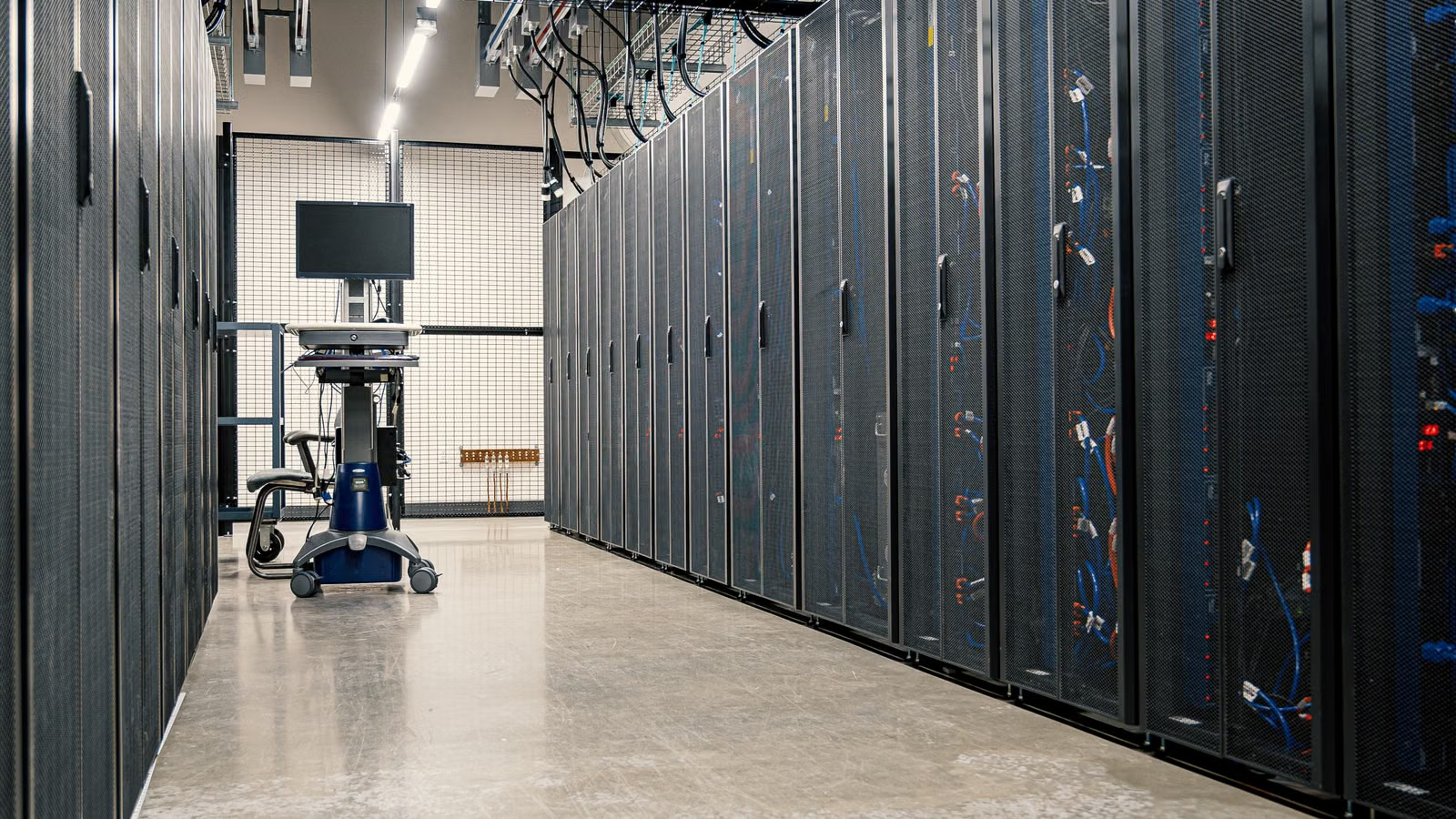
QLC NAND is a NAND Flash technology that stores 4 bits of data in each memory cell. Its core value is not peak single-drive performance, but higher capacity, lower cost per TB, and better rack density within the same physical space. For enterprise SSDs and AI data centers, QLC NAND matters because it can place more warm data, training datasets, object storage, and analytics data into a fast-access flash layer. However, you should not evaluate QLC by capacity alone. Write endurance, latency consistency, power consumption, warranty terms, and real workload behavior all matter.
Key Takeaways
- QLC NAND’s main advantages are high density, lower cost per TB, and large-capacity SSDs.
- Enterprise SSDs adopt QLC mainly for read-intensive and capacity-intensive workloads.
- AI data centers care about QLC because data lakes and object storage are expanding quickly.
- QLC SSDs are not suitable for every high-write workload; TLC remains better for balanced use cases.
- To evaluate QLC SSDs, focus on DWPD, TBW, PLP, QoS, power consumption, and TCO.
- For investors, QLC is an important signal for tracking the NAND cycle and AI storage supply chain.
What Is QLC NAND? Start with “How Many Bits per Cell” in NAND Flash
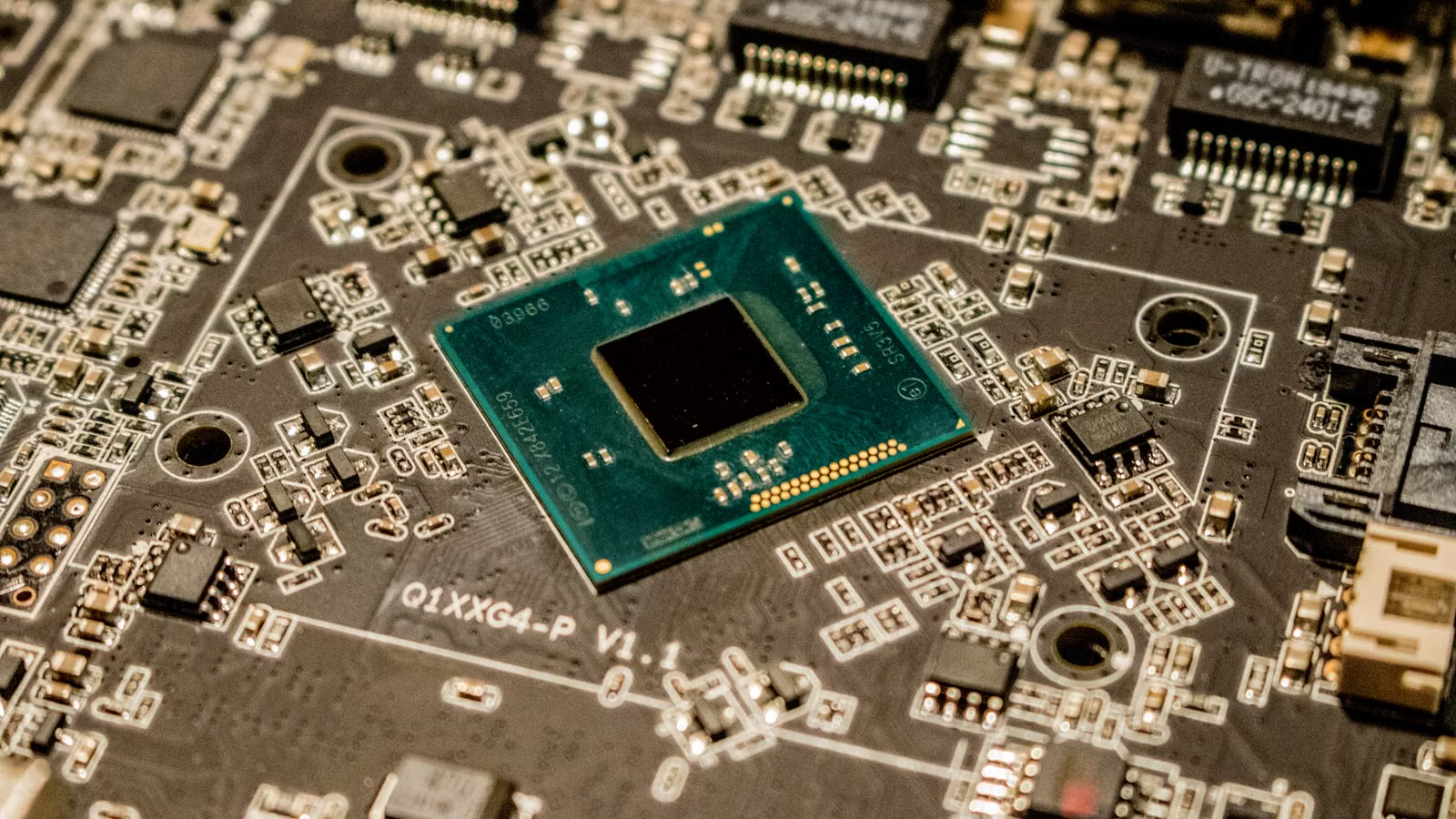
The direct definition of QLC NAND is this: each NAND memory cell stores 4 bits of data, giving it higher data density than SLC, MLC, and TLC. You can think of it as putting more information into the same “room,” while also making every “room number” harder to distinguish. According to Kingston’s explanation of QLC NAND, QLC needs to manage 16 different voltage states. This is the fundamental reason it can increase capacity and reduce cost while also creating challenges in write performance and reliability.
From SLC and MLC to TLC and QLC
One major direction in NAND Flash evolution is to store more bits in each memory cell. SLC stores 1 bit per cell, MLC stores 2 bits per cell, TLC stores 3 bits per cell, and QLC stores 4 bits per cell. In its explanation of Multi-Level Cell technology, Kioxia also notes that creating 16 threshold-voltage distributions enables 4 bits per cell, which is QLC.
| Type | Bits per Cell | Voltage States | Main Advantage | Main Limitation | Typical Use Cases |
|---|---|---|---|---|---|
| SLC | 1 | 2 | Strong endurance and stability | High cost, low capacity | Industrial-grade and mission-critical systems |
| MLC | 2 | 4 | More balanced performance and cost | Less common in mainstream consumer storage today | Some enterprise and industrial scenarios |
| TLC | 3 | 8 | Balanced capacity, performance, and endurance | Lower cost than MLC but higher than QLC | Mainstream consumer SSDs and enterprise SSDs |
| QLC | 4 | 16 | High density and lower cost per TB | Greater pressure on write endurance and latency management | High-capacity SSDs and read-intensive enterprise storage |
Why QLC NAND Can Reduce Cost per Unit of Capacity
QLC’s cost advantage comes from two levels. First, it stores more data using the same number of NAND cells. Second, it is usually combined with 3D NAND stacking, advanced controllers, SLC cache, ECC error correction, and firmware algorithms. For enterprises, QLC’s cost advantage is not simply about a “cheaper drive.” It can potentially reduce acquisition cost per TB, rack usage per PB, and available capacity per watt.
However, QLC also comes with trade-offs. Because the spacing between 16 voltage states is narrower, the controller must identify each data state with greater precision. As P/E cycles increase, bit errors, read disturb, data retention, and write amplification may all become more important. This means enterprise-grade QLC SSDs should not be evaluated by capacity alone. Controllers, firmware, over-provisioning, power-loss protection, and long-term stability design are all critical.
Core dimensions for evaluating QLC NAND:
- Capacity density: more data can be stored in the same chip area.
- Unit cost: cost per TB is usually lower than comparable TLC.
- Write endurance: generally weaker than TLC, requiring enterprise-grade design compensation.
- Read value: better suited to large-scale reads, analytics, and warm data.
- Management complexity: depends on ECC, caching, wear leveling, and firmware algorithms.
Summary: QLC NAND is not the “highest-performance NAND” by nature. It is a technology route that prioritizes capacity density and cost efficiency. To understand QLC, you should not look only at advertised read and write speeds, nor should you assume QLC is unsuitable for enterprise use. The real issue is that QLC raises capacity by storing 4 bits per cell, while relying on controllers, firmware, error correction, caching, and workload management to compensate for write and endurance limitations. In read-heavy, capacity-heavy, cost-sensitive workloads, QLC can be an important option for enterprise SSDs and AI data centers. In sustained high-write, low-latency, strongly consistent workloads, it should be evaluated more carefully.
Why Are Enterprise SSDs Paying Attention to QLC NAND? The Core Logic Is Capacity, TCO, and Infrastructure Efficiency
Enterprise SSDs are paying attention to QLC NAND not because they are chasing benchmark scores, but because they are trying to lower total cost of ownership. When enterprises buy storage, they are really comparing cost per TB, capacity per watt, capacity per rack, operational complexity, failure domains, expansion speed, and service availability. If QLC SSDs can provide sufficient performance in read-intensive scenarios, they may allow fewer devices to hold more data, reducing pressure on racks, power, cooling, and operations.
Enterprise SSD Cost Is Not Just About Drive Price
Consumer SSDs are often compared by capacity and speed. Enterprise SSDs are evaluated as part of a full system. If you are building a PB-scale storage pool, higher drive capacity can reduce the number of drives, server slots, network ports, cables, racks, and power consumption needed. QLC’s value lies in converting capacity-density advantages into infrastructure efficiency.
| Cost Dimension | What Enterprises Care About | Potential Role of QLC SSDs |
|---|---|---|
| Cost per TB | How much usable capacity can be purchased under the same budget | Higher density and lower unit capacity cost |
| Capacity per watt | How much data each watt of power can support | More data with fewer devices |
| Capacity per rack | How many PBs can be deployed in one rack | Higher rack density |
| Operational complexity | Device count, failure points, replacement frequency | Fewer devices and management objects |
| Service level | Latency, throughput, QoS, warranty | Depends on enterprise-grade controllers and firmware |
High-Capacity QLC SSDs Are Already Entering Enterprise Product Lines
From a product-roadmap perspective, QLC is no longer just another name for low-cost consumer SSDs. Micron’s 6600 ION NVMe SSD reaches up to 245TB and targets AI, cloud, enterprise, and hyperscale data center workloads. Solidigm’s D5-P5336 reaches up to 122TB and emphasizes read-intensive and data-intensive applications. Kioxia’s LC9 Series SSD also places 245.76TB, PCIe 5.0, NVMe 2.0, and E3.L specifications in the context of AI and large-scale data centers.
These products show that enterprise QLC SSDs are not trying to replace every high-performance SSD with low-end drives. Instead, they are entering the category of capacity-optimized enterprise flash. Compared with HDDs, QLC SSDs are faster, lower-latency, and more space-efficient. Compared with high-end TLC SSDs, they are more focused on capacity and cost-sensitive read-intensive workloads.
Main reasons enterprise SSDs care about QLC:
- Large-capacity SSDs can reduce the number of servers and racks required.
- Read-intensive workloads do not always need high-endurance TLC.
- AI, logs, media, and object storage are creating massive warm data pools.
- High-capacity flash can improve data access speed.
- Power, cooling, and space constraints make capacity per watt more important.
- Cloud and hyperscale users care more about long-term TCO.
Summary: Enterprise SSDs are paying attention to QLC NAND because data centers have moved from “single-drive performance” to a combined calculation of capacity, energy, space, operations, and service level. QLC SSDs are attractive because they use higher density to reduce cost per TB and move more data into a low-latency flash layer. They are not a universal answer for every enterprise workload, but they can improve capacity and infrastructure efficiency in object storage, analytics data, content libraries, AI data lakes, and read-intensive warm data layers. To judge whether an enterprise should adopt QLC, first look at whether the workload has controlled writes, frequent reads, large capacity requirements, and tight data center resource constraints.
Why Are AI Data Centers Paying Attention to QLC SSDs? AI Needs More Than GPUs — It Needs Massive Accessible Data
AI data centers care about QLC SSDs because AI workloads consume not only GPUs, HBM, and networking, but also storage. Training data, inference logs, multimodal assets, vector databases, feature data, model versions, checkpoints, and data lakes all require high-capacity, scalable, fast-access storage layers. QLC SSDs have an opportunity to move more data from slower cold storage into a faster-access warm-data layer.
AI Training and Inference Both Depend on Data Lakes
When people discuss AI infrastructure, they often focus first on GPUs and HBM. But in real data center operations, the storage layer continuously affects data supply efficiency. If training data is read too slowly, GPUs may spend more time waiting for data. If inference-side retrieval data, log analysis, and model-version management are inefficient, overall service cost may rise. In its engineering article on QLC SSDs in the data center, Meta explicitly frames QLC flash as an opportunity to optimize data center storage cost, performance, and power consumption.
| AI Data Type | Data Temperature | Read/Write Pattern | QLC SSD Fit |
|---|---|---|---|
| Training datasets | Warm data | Heavy reads, periodic updates | Relatively high |
| Multimodal asset libraries | Warm/cold data | Mostly large-file reads | Relatively high |
| Vector retrieval data | Warm/hot data | Frequent reads, controlled writes | Depends on latency requirements |
| Model checkpoints | Warm data | Large-file writes and reads | Requires write-pressure evaluation |
| Database logs | Hot data | Continuous small-block writes | Relatively low |
| Cold archives | Cold data | Infrequent reads | HDD or cold object storage may still be better |
QLC SSDs Offer “High Capacity + Read Efficiency + Energy Efficiency”
Not every layer in an AI data center needs top-tier low-latency SSDs. For many data lakes, object storage systems, analytics workloads, and inference-support datasets, the key metrics are capacity density, read throughput, power consumption, and total cost. Solidigm positions the D5-P5336 as a high-capacity solution for read-intensive workloads, which directly matches this type of data center demand.
You can think of AI storage in layers. Closest to compute are HBM and DRAM, which handle temporary high-speed data. Below that are high-performance TLC NVMe SSDs, suitable for higher-write and lower-latency scenarios. Below that, QLC SSDs can support large-capacity, read-intensive, warm data. Colder data may continue to sit on HDDs, tape, or lower-cost object storage.
AI data center scenarios where QLC SSDs matter:
- AI data lakes and object storage require high-capacity flash layers.
- Multimodal training data needs higher read efficiency.
- Inference systems may need fast access to vectors and context data.
- Model versions, logs, and analytics data continue to grow.
- Power and rack-space limits push data centers toward high-density SSDs.
- Cloud providers want a middle layer between performance and cost.
Summary: AI data centers care about QLC NAND not because QLC can replace HBM, DRAM, or high-end TLC SSDs, but because AI systems require increasingly large accessible data pools. Training, inference, retrieval, logs, and multimodal data all expand storage pressure. HDDs alone may struggle to meet latency and throughput needs, while relying only on high-end TLC can be too costly. QLC SSDs occupy a middle position among capacity, read performance, power consumption, and cost. To evaluate QLC’s value in AI, look at whether it can improve data access efficiency, reduce infrastructure cost per PB, and help GPUs and analytics systems spend less time waiting for data.
QLC NAND vs. TLC NAND: The Key Question Is Not Which Is Better, but Which Fits Your Workload
The difference between QLC and TLC should not be simplified as “QLC is cheaper, TLC lasts longer.” A more accurate judgment is this: TLC is usually better for relatively balanced performance, endurance, and latency consistency, while QLC is better for capacity density, read-intensive workloads, and cost-sensitive use cases. Which one you choose does not depend on marketing specifications. It depends on how much data your business writes each day, how often data is read, how sensitive latency is, and whether data can be tiered.
TLC Is More Balanced, While QLC Is More Capacity-Optimized
TLC stores 3 bits per cell, while QLC stores 4 bits per cell. That extra bit gives QLC higher density, but it also makes voltage-state identification more complex. As a result, QLC usually depends more heavily on SLC cache, wear leveling, write shaping, over-provisioning, and stronger ECC. For enterprises, if a workload involves large amounts of sustained random writes, TLC is usually the safer choice. If the workload is large-capacity reading, infrequent rewrites, and sequential access, QLC may be more economical.
| Comparison Dimension | TLC SSD | QLC SSD |
|---|---|---|
| Capacity density | High | Higher |
| Cost per TB | Medium | Usually lower |
| Write endurance | Stronger | Weaker, depending on enterprise-grade design |
| Latency consistency | Usually better | Depends on controller and workload |
| Suitable workloads | Databases, virtualization, mixed read/write | Object storage, data lakes, read-intensive analytics |
| Risk points | Higher cost | Write amplification, lifespan, performance drop-off |
DWPD, TBW, and WAF Determine Long-Term Stability
Enterprise SSDs should not be judged only by capacity and interface. Kingston’s explanation of TBW defines TBW as the total amount of data that can be written to an SSD over its lifetime; DWPD measures how many times the full drive capacity can be written per day during the warranty period. For QLC, DWPD, TBW, WAF, PLP, QoS, end-to-end data protection, and thermal-control strategies are often more important than sequential read speed alone.
Fees and trading costs should also be included in the same framework. If you track the supply chains of Micron, Samsung, Kioxia, SK hynix, and Solidigm, or if you follow storage and AI data center companies listed in the U.S. or Hong Kong markets, you should not only look at technology trends. You should also understand actual trading costs. Biya charges USD 0 stock-trading commission for U.S. stocks, while platform fees, external institutional fees, and other charges are subject to the U.S. stock trading fees and the order page. This information is for understanding public market data, trading rules, and fee structures only, and does not constitute investment advice. Service availability depends on the user’s location, identity verification results, platform rules, and applicable laws and regulations.
Before choosing QLC or TLC, ask yourself:
- Is daily write volume stable and predictable?
- Is the read/write ratio clearly skewed toward reads?
- Can data be separated into hot, warm, and cold tiers?
- Is extremely low tail latency required?
- Are power-loss protection and end-to-end data protection required?
- Does the vendor provide enterprise validation and warranty commitments?
Summary: QLC NAND and TLC NAND are not simply better-or-worse technologies. They are technical trade-offs for different workloads. TLC is better suited to mixed read/write, high-write, low-latency, and higher-endurance scenarios. QLC is better suited to large-capacity, read-heavy, controlled-write, cost-sensitive workloads. When making an enterprise procurement or investment judgment, you should evaluate DWPD, TBW, WAF, PLP, QoS, real workload testing, and cost structure together. Looking only at “QLC has larger capacity” can cause you to overlook lifespan risk. Looking only at “QLC has weaker endurance than TLC” may cause you to miss its TCO advantage in data lakes and read-intensive workloads.
Which Enterprise and AI Data Center Scenarios Fit QLC SSDs? Which Scenarios Require Caution?
QLC SSDs are best suited to scenarios with large capacity, heavy reads, controlled writes, and cost sensitivity. You can first evaluate them for AI data lakes, object storage, content libraries, analytics queries, CDN, backup acceleration layers, and warm data tiers. In contrast, database logs, trading systems, sustained random writes, and latency-sensitive applications require more caution, and may be better served by TLC or higher-endurance enterprise SSDs.
Scenarios Better Suited to QLC SSDs
AI data lakes are a typical use case. Large training samples, multimodal files, feature data, and model versions need to be stored for long periods and read periodically. Object storage and content delivery networks are similar: data volume is large, read demand is high, and although writes exist, they can often be managed through tiering, caching, and batch writes. Kioxia’s LC9 Series emphasizes high capacity, PCIe 5.0, NVMe 2.0, and multiple enterprise form factors, showing that QLC SSDs are moving closer to PB-scale data infrastructure.
| Scenario | Fit | Main Reason |
|---|---|---|
| AI data lakes | High | Large data volume and frequent reads |
| Object storage | High | Capacity and cost per TB matter |
| CDN and media libraries | High | Read-heavy with more sequential access |
| Analytics queries | Medium to high | Requires reading large amounts of historical data |
| Backup acceleration layer | Medium | Write frequency must be controlled |
| Database logs | Low | Continuous small-block write pressure |
| High-frequency trading | Low | High latency and consistency requirements |
Workload Profiling Is Required Before Deploying QLC SSDs
Before deploying QLC, the most important step is workload profiling. You need to understand daily write volume, peak write pressure, random-write ratio, read hotspots, data retention cycles, compression ratio, cache hit rate, and failure-recovery requirements. Making decisions based only on advertised capacity is risky.
In its LC9 materials, Kioxia notes that Flexible Data Placement can help reduce write amplification and extend SSD life. Mechanisms like this show that enterprise QLC is not only about NAND chips. Controllers, firmware, host coordination, and data-placement strategies all determine real-world performance.
Checklist before deploying QLC SSDs:
- Is the read/write ratio consistently read-heavy?
- Is daily write volume below the designed DWPD boundary?
- Does the SSD include PLP power-loss protection?
- Are QoS and tail-latency test data stable?
- Does it support enterprise telemetry and health monitoring?
- Has it been tested under real workloads rather than only lab benchmarks?
- Are hot/warm/cold tiering, caching, and lifecycle policies in place?
- Are warranty, replacement, spare parts, and supply continuity clearly defined?
Summary: QLC SSDs are not suitable for “any cheap large-capacity need.” They are most suitable for read-intensive, capacity-intensive, controlled-write enterprise scenarios that can be managed through data tiering. AI data lakes, object storage, model datasets, media content libraries, and analytics queries are more likely to benefit from QLC’s capacity and TCO advantages. Database logs, sustained random writes, low-latency trading, and strongly consistent core workloads require caution. Before deploying QLC, you must first profile the workload and verify long-term stability through DWPD, TBW, PLP, QoS, thermal control, write amplification, and failure-recovery strategies.
From an Industry-Trend Perspective, Why Will QLC NAND Continue to Matter for Enterprise SSDs and AI Data Centers?
QLC NAND will continue to attract attention because AI data centers are moving from pure compute expansion to system-level competition across compute, networking, storage, power, and rack density. Higher-layer 3D NAND, PCIe Gen5, NVMe, EDSFF, enterprise controllers, and more mature firmware give QLC a stronger chance to enter large-capacity enterprise storage layers. However, it is still affected by NAND price cycles, customer validation cycles, and write-endurance boundaries.
Higher-Layer 3D NAND Is Pushing QLC into the Mainstream
Early QLC was often viewed as a low-cost consumer option. When Samsung launched its 4-bit consumer SSD, it had already demonstrated QLC’s cost potential in high-capacity SSDs. Today, the enterprise market is paying more attention to high capacity, low power consumption, AI data infrastructure, and PB-scale deployment, which expands the application boundaries for QLC.
Micron’s Data center SSD lineup already describes QLC in relation to AI, cloud, enterprise, and hyperscale use cases. Kioxia’s LC9 highlights support for OCP Datacenter NVMe SSD specifications, PCIe 5.0, and enterprise form factors. These changes show that QLC is shifting from “cheap capacity” to “high-density data center infrastructure.”
| Trend | Positive Logic | Potential Risk | Key Indicators |
|---|---|---|---|
| Expansion of AI data lakes | Warm data and training data continue to grow | AI investment cycles may fluctuate | Cloud capex and SSD shipments |
| More high-capacity SSDs | Higher capacity per rack | Larger failure domains per drive | Validation of 122TB and 245TB products |
| PCIe Gen5 adoption | Higher throughput | Heat and power pressure | Interface generation and energy-efficiency metrics |
| NAND cycle shifts | Lower costs may encourage adoption | Price rebounds may affect procurement | Contract prices, inventory, gross margins |
| Maturing enterprise firmware | Better stability | Long validation cycles | DWPD, QoS, PLP, warranty |
Investment Observation Requires Combining Technology and Cycles
If you look at QLC NAND from an investment perspective, do not focus only on “AI storage demand growth.” NAND is a highly cyclical industry. Prices, inventory, capacity, customer procurement, and the allocation of capex between HBM and DRAM can all affect enterprise SSD vendors and memory-chip companies. You can use U.S. stock information to track related companies such as Micron, Western Digital, Seagate, NetApp, and Pure Storage, and use Hong Kong stock information to follow Hong Kong-listed semiconductor, cloud infrastructure, and data center supply-chain companies.
Six signals for observing QLC industry opportunities:
- Whether high-capacity enterprise SSDs enter validation at more cloud providers.
- Whether NAND contract prices enter an upward or downward cycle.
- Whether enterprise SSD revenue share and gross margins improve.
- Whether AI data center capex spreads from GPUs into storage.
- Whether QLC products move from 122TB toward 245TB-scale deployment.
- Whether vendors disclose improvements in power consumption, density, and TCO.
Summary: The long-term attention on QLC NAND comes from the expansion of AI data infrastructure, not from a single product specification. As enterprise data lakes, object storage, inference retrieval, and analytics data grow rapidly, data centers need higher capacity per rack and capacity per watt. QLC SSDs fit this demand. But QLC is not risk-free: NAND price cycles, customer validation pace, write endurance, heat, failure domains, and supply concentration can all affect adoption speed. To judge QLC’s industry trend, evaluate technology maturity, real customer adoption, enterprise SSD shipments, NAND pricing, and the structure of AI data center capital spending together.
If you follow QLC NAND, enterprise SSDs, and the AI data center supply chain, you can place technology shifts, company earnings, and trading costs into one observation framework. On the technology side, focus on high-capacity SSDs, NAND prices, cloud procurement, and AI data lake expansion. On the trading side, in addition to stock-price volatility, pay attention to commissions, platform fees, external institutional fees, order rules, and statement details. Users who meet the rules of their location and identity-verification requirements can use Biya to observe U.S. stocks, Hong Kong stocks, digital assets, and other multi-asset markets, while evaluating actual trading costs alongside fee structures. This content is only for understanding public market information and fee structures, and does not constitute investment advice. Before making any trade, you should make an independent judgment based on your risk tolerance, platform rules, and local regulatory requirements.
FAQ
What Is the Biggest Difference Between QLC NAND and TLC NAND for Enterprise SSDs?
The biggest difference between QLC NAND and TLC NAND lies in capacity density, cost, and write endurance. QLC stores 4 bits per cell, giving it higher density and making it suitable for large-capacity and read-intensive scenarios. TLC stores 3 bits per cell and is usually more balanced in write endurance, latency consistency, and mixed workload performance.
Which AI Data Center Workloads Are QLC SSDs Best Suited For?
QLC SSDs are better suited to AI data lakes, object storage, training datasets, multimodal asset libraries, inference retrieval data, and analytics queries. These scenarios usually involve large capacity, frequent reads, and relatively controlled writes, making it easier for QLC to deliver advantages in cost per TB, rack density, and read efficiency.
Can QLC NAND Enterprise SSDs Fully Replace HDDs?
QLC NAND enterprise SSDs cannot simply replace HDDs in every scenario. They have advantages in low latency, high read throughput, rack density, and energy efficiency, making them suitable for some warm-data and read-intensive workloads. However, for extremely low-cost cold archives and long-term infrequently accessed data, HDDs, tape, or cold object storage may still be more economical.
What Metrics Should Enterprises Prioritize When Buying QLC SSDs?
Enterprises should prioritize DWPD, TBW, PLP, QoS, power consumption, interface generation, warranty period, write amplification, and real workload test results when buying QLC SSDs. Capacity and sequential read speed are only baseline indicators. Long-term stability depends more on controller design, firmware, and workload fit.
Are QLC SSDs Suitable for Databases and High-Frequency Write Workloads?
QLC SSDs are generally not ideal for sustained high-frequency writes, database logs, or latency-sensitive workloads. These scenarios require higher endurance, low tail latency, and stable write performance. Enterprises should usually evaluate TLC enterprise SSDs or higher-endurance alternatives first, and rely on real workload testing before deployment.
How Can Individual Investors Track QLC NAND Industry Opportunities?
Individual investors can track enterprise SSD shipments, high-capacity QLC product validation, NAND price cycles, cloud capex, AI data center expansion, and changes in related companies’ gross margins. QLC NAND is an industry trend signal, but it does not mean related stocks will necessarily rise. Investors still need to evaluate valuation, cyclicality, and risk before trading.
*This article is provided for general information purposes and does not constitute legal, tax or other professional advice from BiyaPay or its subsidiaries and its affiliates, and it is not intended as a substitute for obtaining advice from a financial advisor or any other professional.
We make no representations, warranties or warranties, express or implied, as to the accuracy, completeness or timeliness of the contents of this publication.
Related Blogs of

MACD Crypto Trading Strategy: Settings, Signals, and Risk Management


Choosing a Stock Trading App: Beginner Checklist




Choose Country or Region to Read Local Blog
 Australia
 Austria
 Belgium
 Canada
 Cyprus
 Czech Republic
 Denmark
 Estonia
 Finland
 France
 Germany
 Greece
 Hong Kong
 India
India Indonesia
 Ireland
 Italy
Italy Japan
Japan Latvia
 Lithuania
 Luxembourg
 Malaysia
 Malta
Malta Morocco
 Nepal
Nepal Netherlands
 New Zealand
 Norway
 Pakistan
 Philippines
 Poland
 Portugal
 Romania
 Singapore
 Slovakia
 Slovenia
 South Africa
 South Korea
 Spain
Spain Sweden
 Thailand
 United States
 Turkey
 United Arab Emirates
 United Kingdom
 Vietnam