
Why Are AI Storage Stocks Suddenly Getting Attention? From Compute Bottlenecks to Data Storage Demand




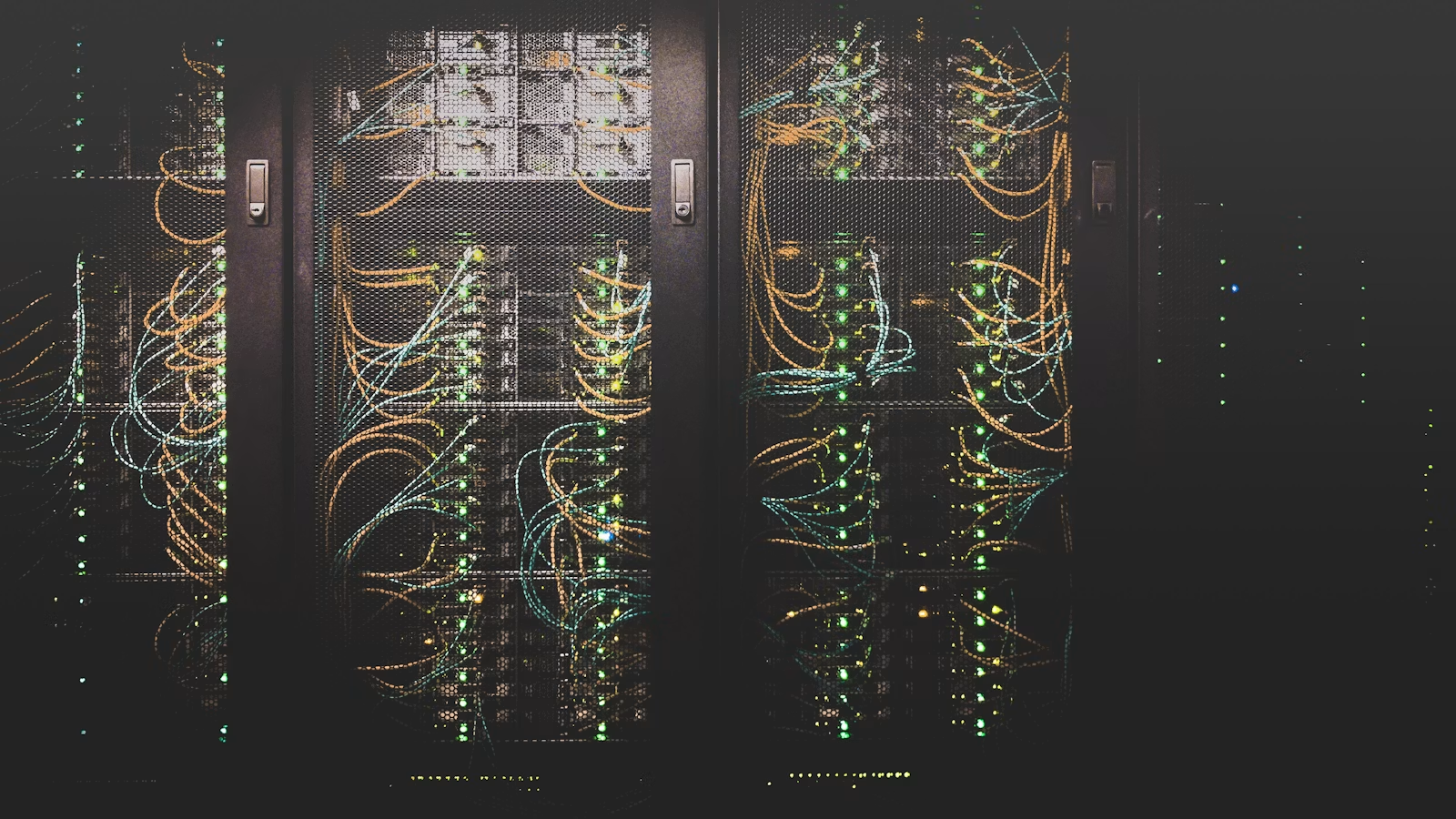
AI storage stocks are suddenly gaining attention not because “hard drives have become AI chips,” but because AI training, inference, RAG, vector databases, and data center expansion are turning storage from a back-end infrastructure layer into a critical bottleneck in the AI value chain. If you are just beginning to study AI infrastructure stocks, you should not focus only on GPUs. You also need to understand the different roles played by HBM, DRAM, NAND, enterprise SSDs, nearline HDDs, and storage systems. This sector has real demand drivers, but it also carries cyclical risks. A practical way to analyze it is through the framework of “industry-chain position + financial delivery + supply-demand pricing + valuation risk.”
Key Takeaways
- The AI storage sector includes not only chips, but also SSDs, HDDs, and storage systems.
- The stronger AI compute becomes, the more important data throughput, low-latency access, and capacity become.
- HBM sits close to the GPU, while SSDs and HDDs support training, inference, and data lake demand.
- Market repricing is driven by orders, price increases, margin improvement, and data center revenue growth.
- Beginners should first classify companies before assessing valuation, cyclicality, and trading costs.
- Long-term AI storage demand is clear, but that does not mean individual stocks are free from volatility or drawdown risk.
What Are AI Storage Stocks? Start by Defining the Sector Clearly
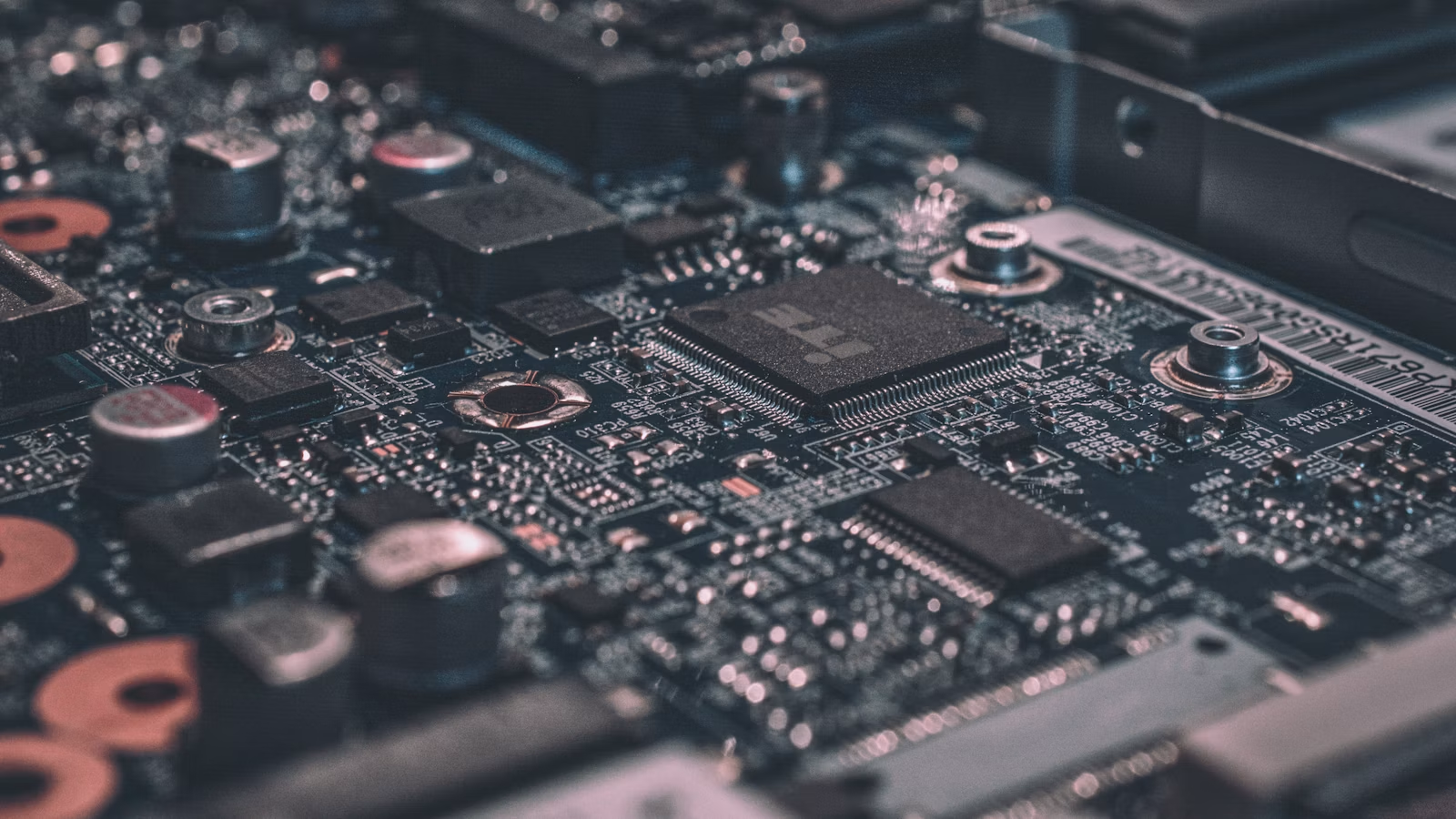
AI storage stocks are not a formal exchange-level industry category. They refer to a group of companies built around the storage demands created by AI data centers, model training, inference services, and enterprise AI applications. You can understand them as the infrastructure layer that enables AI data to be read, temporarily stored, transmitted, retrieved, preserved, and managed. This group includes memory and flash companies such as Micron, SK hynix, and Samsung; large-capacity hard drive companies such as Seagate and Western Digital; and enterprise storage system companies such as Pure Storage, NetApp, and Dell.
To understand this sector, the key is to classify storage by how close the data sits to the GPU, rather than simply asking whether a company is a semiconductor company.
| Layer | Representative Products | Problem Solved | Common Related Companies | Main Risks |
|---|---|---|---|---|
| Near GPU | HBM | High bandwidth and low power consumption | Micron, SK hynix, Samsung | Yield, packaging, customer qualification |
| Server Layer | DRAM, NAND, SSD | Node throughput and high-speed caching | Micron, Samsung, Kioxia, SanDisk | Price cycles, supply expansion |
| Capacity Layer | Nearline HDD | Massive low-cost data storage | Seagate, Western Digital, Toshiba | Customer concentration, substitution risk |
| System Layer | Storage arrays, STaaS | Enterprise deployment, disaster recovery, and data management | Pure Storage, NetApp, Dell | Sales cycles, valuation pressure |
HBM is the part of the AI storage chain closest to the GPU. Large-model training and high-performance inference require massive amounts of parameters and intermediate data to move quickly near the GPU. The value of HBM lies in providing high bandwidth, low latency, and better energy efficiency. In its 2026 market outlook, SK hynix described HBM3E and HBM4 as core products in an AI memory supercycle, showing that market attention has moved from ordinary DRAM to higher-value high-bandwidth memory.
NAND and enterprise SSDs mainly address high-speed reads, caching, training data preparation, and inference data access. Once AI applications enter production, a model does not simply “compute once.” It continuously reads knowledge bases, generates logs, updates vector indexes, and stores user context. In its fiscal 2026 third-quarter results, Micron reported data center SSD revenue of more than $5 billion and said industry demand for DRAM and NAND was significantly exceeding supply. Disclosures like this show that storage chips are no longer just an extension of the PC and smartphone cycle.
HDDs play a different role: low cost, stability, and massive capacity. AI training datasets, videos, images, logs, backups, archives, and data lakes cannot all be stored on expensive high-performance SSDs. Seagate cited IDC research showing that global installed storage capacity is expected to rise from 11,243 EB in 2025 to 19,341 EB in 2029, while stored data is expected to reach 13,986 EB by 2029. This kind of global storage capacity growth is an important reason nearline HDDs are being reconsidered by the market.
Summary: The core of AI storage stocks is not simply “buying hard drive companies.” It is about understanding how AI data creates different types of demand at different points in the infrastructure stack. The closer the data sits to the GPU, the more important bandwidth, yield, packaging, and customer qualification become. The closer it sits to the data lake, the more important capacity, unit cost, and long-term orders become. The closer it sits to enterprise applications, the more important data management, subscription revenue, and deployment capability become. Only after separating HBM, DRAM, NAND, SSDs, HDDs, and storage systems can you judge which part of AI infrastructure demand each company is truly exposed to.
Why Do AI Compute Bottlenecks Translate Into Storage Demand?
The AI bottleneck is not only about the number of GPUs. It is also about whether data can be delivered to compute units continuously, quickly, and cost-effectively. During training, AI systems need to read massive datasets. During inference, they need to access context and knowledge bases. RAG applications need to maintain vector indexes. Agentic workflows repeatedly read, judge, execute, and write back data. Once AI applications move from experiments into production, storage becomes a key factor affecting performance, cost, and reliability.
You can understand the transmission from compute to storage through four types of demand:
- High-bandwidth demand: Model parameters, activations, and intermediate data need to move rapidly in and out of compute units, increasing the importance of HBM and server memory.
- High-IOPS demand: Training data reads, inference caching, and vector retrieval require fast responses to large numbers of small data operations, raising the value of enterprise SSDs and NVMe.
- Large-capacity demand: Video, images, logs, corpora, backups, and data lakes continue to expand, with nearline HDDs and object storage forming the cost foundation.
- Manageability demand: Enterprise AI requires permission control, security, versioning, disaster recovery, and auditability, making storage systems and software more important.
Training-stage storage demand comes from data preparation. Before a large model is trained, data typically goes through collection, cleaning, deduplication, filtering, labeling, version management, and multiple rounds of experimentation. Data is not a one-time input; it is reused continuously as models evolve. IDC’s observations on AI infrastructure spending show that in the second quarter of 2025, servers accounted for 98% of AI-centric spending, while servers with embedded accelerators accounted for 91.8% of AI server infrastructure spending. This growth in AI infrastructure spending will continue to drive supporting segments such as memory, storage, and networking.
Inference-stage storage demand is more continuous. Training can be a project-based activity, but inference is daily business traffic. Customer-service bots, code assistants, search augmentation, ad recommendation, financial risk control, and enterprise knowledge bases all generate requests, context, logs, feedback, caches, and indexes. NVIDIA describes its AI Data Platform as GPU-accelerated AI storage for agentic AI workflows, with a focus on reducing latency, improving security, and making it easier for multimodal RAG, video search, and deep research workflows to access enterprise data.
RAG and vector databases further magnify the importance of storage. After companies convert documents, images, audio, tables, and business data into embeddings, they need to store, retrieve, update, and govern them. In its discussion of RAG data management challenges, NetApp notes that enterprise private documents and user queries are typically converted into vector embeddings for similarity search. This means AI applications are not just calling models; they also depend on sustainable data pipelines.
| AI Scenario | Source of Storage Pressure | Related Products |
|---|---|---|
| Large-model training | Corpus reads, version management, experimental data | HBM, DRAM, SSDs, object storage |
| AI inference | Context, caches, logs, user feedback | SSDs, DRAM, storage software |
| RAG knowledge bases | Document indexes, vector embeddings, retrieval results | SSDs, vector databases, object storage |
| Video and multimodal AI | Continuous growth in image, video, and audio files | HDDs, SSDs, data lakes |
| AI agents | Multi-round reading, execution, writeback, and audit | Storage systems, data governance platforms |
Summary: The stronger AI compute becomes, the less the data pipeline can afford to lag. GPU improvements increase compute speed, but they also expose pressure in data reading, caching, retrieval, and storage. Training needs high-throughput data pipelines; inference needs low-latency access; RAG requires updatable vector indexes; multimodal and agentic applications require more complex data governance. When studying AI storage stocks, you should view storage as part of AI infrastructure, not as a peripheral component of traditional IT spending.
Why Are AI Storage Stocks Being Repriced by the Market?

The market is suddenly paying attention to AI storage stocks because supply-demand changes are beginning to show up in earnings and guidance. In the past, storage was often treated as a highly cyclical hardware sector with compressed valuations. Now, AI data center orders, HBM capacity allocation, enterprise SSD growth, long-term HDD agreements, and margin improvement are causing investors to reassess the earnings leverage of these companies. In other words, the market is not only buying an “AI concept”; it is looking for second- and third-layer beneficiaries of AI infrastructure expansion.
The first change is revenue mix. Micron’s data center revenue, data center SSD revenue, and tight HBM supply show investors that memory is no longer merely tied to the consumer electronics cycle. The second change is gross margin. In its fiscal 2026 third-quarter results, Seagate reported revenue of $3.11 billion, GAAP gross margin of 46.5%, non-GAAP gross margin of 47.0%, and free cash flow of $953 million. These figures can change how the market views the cash-flow quality of HDD companies.
The third change is cloud customer demand. In its fiscal 2026 third-quarter results, Western Digital reported revenue of $3.337 billion, up 45% year over year, GAAP gross margin of 50.2%, and projected next-quarter revenue growth of 36% to 44% year over year. Its earnings materials also show cloud as a major revenue source, making the relationship between HDD capacity demand and AI data center expansion clearer.
The fourth change is the value of the system layer. In its fiscal 2026 third-quarter results, Pure Storage reported revenue of $964.5 million, up 16% year over year, subscription services revenue of $429.7 million, and raised its full-year revenue and operating profit guidance. The logic for system-layer companies is different from the chip pricing cycle; it is closer to enterprise AI data platforms, subscription services, and storage-as-a-service delivery.
| Previous Market View | Current Market View | Impact on Valuation |
|---|---|---|
| Storage is cyclical | AI may extend the upcycle | The market is willing to assign higher expectations |
| HDD growth is limited | AI data lakes need low-cost capacity | HDD companies regain attention |
| NAND is prone to oversupply | Enterprise SSD and inference demand are increasing | NAND pricing leverage is being reassessed |
| Storage systems are traditional IT | Enterprise AI needs unified data platforms | Subscription and software value rises |
However, repricing also means expectations can become too crowded. Strong AI demand does not mean every company can sustain high growth. Supply expansion, changes in customer purchasing schedules, capital expenditure slowdowns, and peaking gross margins can all trigger sharp share-price volatility. This is especially true because storage remains a cyclical industry: rising prices encourage capacity expansion, and capacity expansion can create pricing pressure in the next phase.
Summary: AI storage stocks are being repriced because investors are seeing strong demand, tight supply, and profit improvement begin to show up in earnings. Micron represents high-bandwidth memory and data center SSDs; Seagate and Western Digital represent high-capacity HDDs; Pure Storage represents enterprise storage systems and subscription capabilities. But repricing is not a guarantee of one-way upside. If stock prices already reflect years of optimistic expectations, any future supply-demand reversal, cloud customer order cuts, or valuation compression could amplify drawdowns.
Which Types of Companies in the AI Storage Chain Are Worth Tracking?
Beginners should not start by asking, “Which AI storage stock is the best?” Instead, they should first build a watchlist by industry-chain position. Different companies benefit from AI in different ways. HBM and DRAM companies are more driven by high-bandwidth memory demand. NAND and SSD companies are more exposed to inference, caching, and data center SSD demand. HDD companies are more tied to large-capacity data lakes. System-layer companies benefit more from enterprise AI data governance, subscriptions, and project delivery. Once you classify them clearly, you will avoid comparing all “AI storage concept stocks” as if they were the same.
Upstream storage chip companies mainly depend on HBM, DRAM, NAND, advanced packaging, yield, and customer qualification. Micron, SK hynix, and Samsung are core companies to monitor, while Kioxia and SanDisk are also related to NAND. You need to watch whether HBM capacity is locked in by major customers, whether DRAM and NAND average selling prices continue to rise, whether capital expenditure expands too quickly, and whether inventory builds abnormally.
Midstream storage product and capacity companies mainly depend on enterprise SSDs, nearline HDDs, firmware, controllers, and shipped capacity. Seagate and Western Digital are key HDD companies to watch. Western Digital’s Q3 FY26 earnings materials place cloud revenue mix, nearline exabytes, and gross margin changes among its key business metrics, showing that investors should not look only at total revenue. They also need to evaluate cloud customer capacity demand and unit economics.
System-layer companies depend more on enterprise deployment and data management capability. NetApp’s vector database solution brings components such as Milvus, pgvecto, ONTAP, and StorageGRID into the discussion of AI data infrastructure. This shows that enterprise AI deployment is not only about buying chips; it also requires data access, file-object coordination, permission management, and maintainability. Elastic’s discussion of GPU-accelerated vector search emphasizes the importance of vector indexing speed for production-scale AI, RAG, and agentic AI, further confirming the importance of the retrieval and storage layer from the software side.
| Company Type | How It Benefits From AI | What to Watch | Main Risks |
|---|---|---|---|
| HBM / DRAM | High-bandwidth memory demand | Customer qualification, locked capacity, gross margin | Yield, expansion, competition |
| NAND / SSD | Inference, caching, data reads | Enterprise SSD revenue, ASP, inventory | Price cycles, supply reversal |
| HDD | Low-cost large capacity | Cloud orders, nearline shipments, cash flow | Customer concentration, substitution risk |
| Storage Systems | Enterprise AI data management | Subscription revenue, RPO, customer renewal | Sales cycles, valuation pressure |
If you want to build a watchlist, you can classify companies by market. In the U.S., you can monitor MU, STX, WDC, SNDK, PSTG, NTAP, and DELL. In Korea, you can monitor SK hynix and Samsung. In Japan, you can monitor Kioxia. In Taiwan, you can monitor companies involved in servers, packaging, controllers, and equipment. You can also use U.S. stock information search to organize relevant U.S.-listed stocks first, then return to financial reports, product mix, and valuation for further screening.
Summary: The AI storage value chain is not a homogeneous sector. HBM/DRAM companies have larger upside potential but are more sensitive to technology iteration and customer qualification. NAND/SSD companies benefit from inference and data center SSD demand but still face price cycles. HDD companies benefit from large-capacity data lakes and long-term cloud customer orders, but their long-term growth may be lower than HBM. System-layer companies are closer to enterprise AI data platforms, and their growth may be steadier, but valuations still need to be assessed carefully. Classify first, compare earnings second, and the real sources of benefit become much clearer.
How Can Ordinary Investors Judge Whether AI Storage Stocks Are Overheated?
To judge whether AI storage stocks are overheated, you should not look only at share-price gains or “AI order” headlines. You need to assess revenue growth, data center revenue mix, gross margin, free cash flow, inventory, customer concentration, capital expenditure, and valuation multiples at the same time. If stock prices rise much faster than earnings delivery, while management guidance, industry pricing, and customer orders do not provide matching support, the sector may be entering an overheated expectations zone.
You can start with eight questions:
- Has revenue exceeded expectations for two consecutive quarters?
- Is data center-related revenue disclosed separately and growing continuously?
- Does gross margin improvement come from structural upgrades or short-term price increases?
- Are inventory days rising abnormally?
- Has management disclosed long-term orders, capacity reservations, or customer agreements?
- Has the share price risen much faster than earnings growth?
- Are cloud and AI company capital expenditures still being revised upward?
- Is industry supply expanding rapidly and potentially pressuring future prices?
The special feature of the storage industry is that it combines a growth story with cyclical characteristics. HBM, enterprise SSDs, and nearline HDDs may experience shortages due to AI demand, but high profits also attract capacity expansion. Reuters reported that SK hynix plans to invest about 100 trillion won in semiconductor facilities, including NAND plants and packaging facilities. This type of AI storage capacity expansion can support long-term supply, but it may also create supply-demand rebalancing pressure at a later stage.
Trading costs should also be included in the framework. If you are watching AI storage stock opportunities in the U.S. market, you need to consider not only company fundamentals, but also commissions, platform fees, external agency fees, exchange rates, and the actual costs shown on the order page. Biya charges $0 commission for U.S. stock trading, while platform fees, external agency fees, and other charges are subject to the U.S. stock trading fee information and the order page display. Whether related services are available depends on the user’s location, identity verification result, platform rules, and applicable laws and regulations.
| Evaluation Dimension | Healthy Signal | Overheated Signal |
|---|---|---|
| Earnings | Revenue, gross margin, and cash flow improve together | Only the stock price rises while earnings lag |
| Demand | Data center revenue continues to grow | Reliance on a single customer or single order |
| Supply | Tight capacity and strong order visibility | Large-scale expansion begins to release supply |
| Valuation | Roughly aligned with profit growth | Market prices in years of high growth in advance |
| Trading | Costs and rules are clear | Fees, taxes, and volatility risks are ignored |
Summary: The opportunity in AI storage stocks comes from strong demand, tight supply, earnings delivery, and profit improvement. The risk comes from the same chain: higher prices encourage expansion, and expansion may create pricing pressure in the next cycle. Ordinary investors should verify stock-price performance against financial reports and supply-demand data, while also considering trading costs, exchange rates, taxes, and local regulatory requirements. AI storage can be a long-term research theme, but it is not suitable for chasing solely based on trending news.
How Should Beginners Build an AI Storage Stock Research Framework?
For beginners, the most practical way to study AI storage stocks is to build a “theme — company — metric — risk” watchlist, instead of chasing every headline. You can divide AI storage into five categories: HBM, DRAM/NAND, SSD/HDD, storage systems, and ETFs. Then track each category using the same indicators: revenue, gross margin, data center exposure, inventory, free cash flow, valuation, cloud capital expenditure, and industry pricing. This approach prevents your judgment from being dominated by daily price moves.
First, decide whether you are studying industry trends, individual stocks, or ETFs. If you only want to understand the spread of AI infrastructure, an industry-chain map matters more. If you plan to trade individual stocks, you need to study earnings, valuation, and volatility more closely. If your risk tolerance is lower, you can also monitor semiconductor, cloud computing, or AI infrastructure ETFs and their holdings.
Second, build a company watchlist. In the U.S., you can monitor Micron, Seagate, Western Digital, SanDisk, Pure Storage, NetApp, Dell, Marvell, and Broadcom. In Korea, you can monitor SK hynix and Samsung. In Japan, you can monitor Kioxia. In Taiwan, you can monitor companies in servers, packaging, controllers, and equipment. When using a global multi-asset trading wallet such as Biya to observe U.S. stocks, Hong Kong stocks, and crypto markets, you can also place related companies into a watchlist and record earnings dates, price changes, and core risks using consistent criteria.
Third, review the sector quarterly rather than changing your view every day. The major signals in the storage industry usually come from earnings season, industry pricing, customer capital expenditure, and management guidance. You can include the following indicators in your tracking table:
| Observation Dimension | Beginner Focus | Advanced Focus |
|---|---|---|
| Demand | AI data center orders | Hyperscaler capex and long-term agreements |
| Pricing | DRAM, NAND, and HDD price increases | Contract price, spot price, ASP changes |
| Earnings | Revenue and EPS | Gross margin, FCF, inventory days |
| Valuation | P/E and P/S ratios | Adjusted peak-cycle earnings |
| Risk | Share-price drawdown | Supply expansion, customer concentration, policy constraints |
Fourth, set trading boundaries. Do not assume a company will definitely benefit simply because its name is linked to AI. Do not ignore valuation because one quarter beats expectations. Do not interpret “long-term demand exists” as “short-term pullbacks will not happen.” If related services are available in your region, you can download the App to further understand available markets, account rules, and order displays. Before trading, however, you should still rely on platform rules, billing details, and local regulatory requirements.
Summary: For beginners studying AI storage stocks, the most important step is to build a framework before moving into individual names. You can classify the sector into HBM, DRAM/NAND, SSD/HDD, storage systems, and ETFs, then validate the logic with revenue, gross margin, inventory, cash flow, valuation, and customer capital expenditure. The value of studying AI storage is that it helps you understand how AI infrastructure expands from GPUs into memory, SSDs, HDDs, and data platforms. Actual investment decisions should still reflect your risk tolerance, trading costs, and verifiable data.
When you start tracking AI storage stocks, it is better not to simply save news headlines. Instead, put industry-chain position, company earnings, pricing changes, valuation levels, risk events, and trading costs into the same observation table. Biya is a global multi-asset trading wallet that supports U.S. stocks, Hong Kong stocks, and crypto trading, as well as the exchange of USDT into major fiat currencies such as USD or HKD. If you are watching AI storage, semiconductor, and cloud infrastructure names in international markets, you can use it to help organize watchlists, review fee structures, and conduct pre-trade checks. Whether related services are available depends on the user’s location, identity verification result, platform rules, and applicable laws and regulations. Public market information and fee structures can help you prepare, but they do not constitute investment advice.
FAQ
What Is the Difference Between AI Storage Stocks and Semiconductor Stocks?
AI storage stocks are a subcategory within semiconductors and data infrastructure, mainly affected by demand for HBM, DRAM, NAND, SSDs, HDDs, and enterprise storage systems. Semiconductor stocks cover a broader range, including GPUs, CPUs, EDA, foundries, equipment, and materials.
Is the AI Storage Sector Only Worth Watching in the U.S. Market?
The AI storage sector is not limited to U.S. stocks. The U.S. has companies such as Micron, Seagate, Western Digital, and Pure Storage; Korea has SK hynix and Samsung; Japan has Kioxia; and Taiwan has companies related to servers, packaging, and controllers. You should screen based on market rules and your accessible trading universe.
How Can Ordinary Investors Distinguish HBM, SSD, and HDD Opportunities?
HBM is closer to AI chips, so the key factors are bandwidth, yield, and customer qualification. SSDs are closer to high-speed reads and inference caching, so enterprise demand matters more. HDDs are more focused on low-cost large capacity, so cloud customer long-term orders and cost per unit of capacity are key.
Does the Rise of AI Storage Stocks Mean the Industry Has No Cyclical Risk?
No. The storage industry still has clear cyclicality. Rising prices encourage capacity expansion, while slowing demand can affect inventory and gross margin. Even if long-term AI demand is valid, short-term stock prices may still fluctuate sharply due to high valuation, customer order cuts, or pricing reversals.
What Non-Financial Risks Can AI Data Center Expansion Create?
AI data center expansion may face pressure from electricity demand, cooling, land use, noise, environmental concerns, and regulation. These factors can affect construction progress and capital expenditure schedules, which may in turn influence order expectations for upstream storage, servers, and networking equipment.
Which Indicators Should Beginners Check First When Studying AI Storage Stocks?
Beginners should first look at revenue growth, data center revenue mix, gross margin, free cash flow, inventory, management guidance, and valuation changes. When trading is involved, they should also review platform fees, exchange rates, taxes, and local regulatory requirements, instead of making judgments based on a single news item.
*This article is provided for general information purposes and does not constitute legal, tax or other professional advice from BiyaPay or its subsidiaries and its affiliates, and it is not intended as a substitute for obtaining advice from a financial advisor or any other professional.
We make no representations, warranties or warranties, express or implied, as to the accuracy, completeness or timeliness of the contents of this publication.
Related Blogs of

Crypto Exchange Fees Comparison: Trading Fees, Spreads, and Withdrawals


Cheapest Way to Transfer Money Internationally: Small vs. Large Transfers


International Wire Transfer Time: What Affects Delivery?

Choose Country or Region to Read Local Blog
 Australia
 Austria
 Belgium
 Canada
 Cyprus
 Czech Republic
 Denmark
 Estonia
 Finland
 France
 Germany
 Greece
 Hong Kong
 India
India Indonesia
 Ireland
 Italy
Italy Japan
Japan Latvia
 Lithuania
 Luxembourg
 Malaysia
 Malta
Malta Morocco
 Nepal
Nepal Netherlands
 New Zealand
 Norway
 Pakistan
 Philippines
 Poland
 Portugal
 Romania
 Singapore
 Slovakia
 Slovenia
 South Africa
 South Korea
 Spain
Spain Sweden
 Thailand
 United States
 Turkey
 United Arab Emirates
 United Kingdom
 Vietnam