Who Are the Leading HBM Companies? Business Differences Between Samsung, SK hynix, and Micron





The leading HBM companies are mainly Samsung Electronics, SK hynix, and Micron, but their leadership logic is not the same. SK hynix is closer to the current leader in HBM mass production and customer certification. Samsung is more like an HBM challenger within a comprehensive semiconductor giant. Micron is closer to a high-growth challenger in the U.S. data center memory supply chain. When evaluating HBM leaders, you should not look only at company size or stock price performance. You also need to compare market share, product generation, yield, customer platforms, packaging resources, and financial conversion.
Key Takeaways
- The main HBM leaders are Samsung, SK hynix, and Micron.
- SK hynix is closer to the current leader in HBM production and customer certification.
- Samsung’s strengths lie in DRAM scale, manufacturing systems, and catch-up capability.
- Micron depends more on HBM4, the U.S. supply chain, and data center customer breakthroughs.
- To judge HBM leaders, watch share, yield, packaging, customers, and pricing.
- Investment analysis should combine technical leadership with valuation and cycle risk.
How to Define an HBM Leader: Not the Largest Company, but the One That Can Reliably Deliver High-End HBM
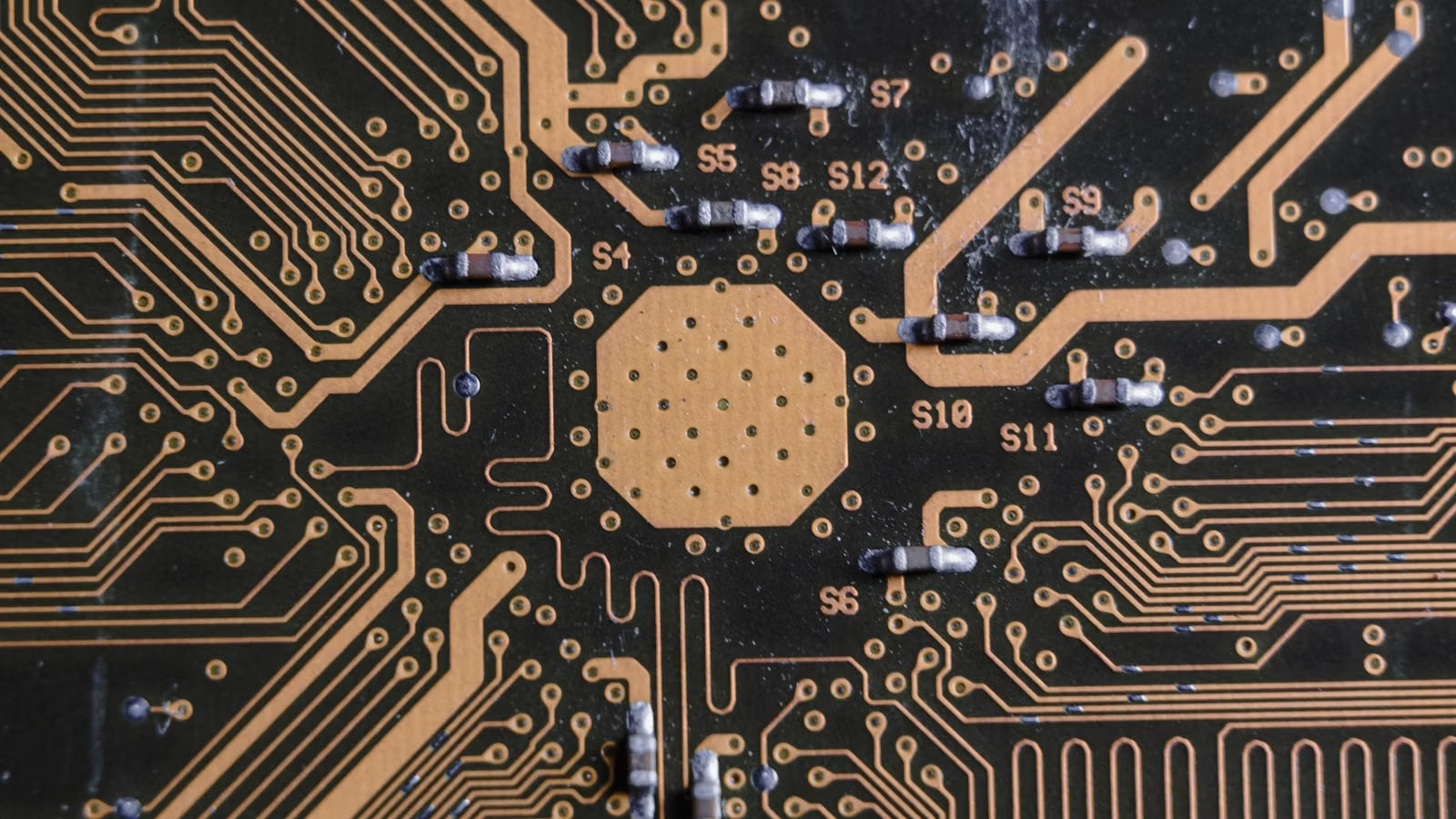
An HBM leader is not simply the world’s largest DRAM maker. Ordinary DRAM is more about scale, cost, process migration, and pricing cycles. HBM is more about whether high-end products can be produced reliably, whether they can pass certification on platforms from NVIDIA, AMD, cloud ASIC customers, and others, and whether the supplier can secure advanced packaging and testing resources. Therefore, Samsung, SK hynix, and Micron all belong to the core HBM leader group, but you need to distinguish between “comprehensive scale leader,” “specialized share leader,” and “growth-leverage leader.”
From the overall DRAM market perspective, Counterpoint’s DRAM and HBM market share data shows that Samsung remained the largest DRAM supplier in the first quarter of 2026, while SK hynix and Micron were also in the core competitive group. However, HBM cannot be judged entirely by ordinary DRAM rankings, because its customer structure, manufacturing difficulty, and value per unit are all different. High bandwidth memory requires TSV, stacking, micro-bumps, thermal management, logic-die coordination, and platform certification, making “deliverable supply” more important than “available capacity.”
You can evaluate HBM leaders through five key dimensions:
| Evaluation Dimension | What to Watch | Why It Matters |
|---|---|---|
| Market share | HBM shipments, bit output, platform allocation | Determines current industry position |
| Product generation | HBM3E, HBM4, HBM4E, 12H/16H | Determines next-generation competitiveness |
| Customer certification | NVIDIA, AMD, ASICs, cloud platforms | Determines access to mainstream AI servers |
| Supply capability | TSV, stacking, packaging, testing, yield | Determines whether capacity becomes shipments |
| Financial conversion | HBM revenue, gross margin, cash flow | Determines whether technology becomes profit |
As a result, SK hynix’s advantage is more about current specialized HBM leadership. Samsung’s advantage is more about comprehensive semiconductor resources and catch-up capability. Micron’s advantage is more about HBM4 adoption, its U.S. supply chain position, and its data center product portfolio. None of the three companies is a pure HBM company, but HBM is becoming increasingly important to their earnings leverage, valuation logic, and market expectations.
Summary: The leading HBM companies are mainly Samsung, SK hynix, and Micron, but they should not be ranked only by company size. A true HBM leader must be able to reliably mass-produce high-end products, enter major customer AI platforms, secure packaging resources, and convert HBM3E and HBM4 progress into revenue and profit. When evaluating HBM leaders, you should first ask “who can deliver reliably,” and then ask “whose financial leverage is the greatest.”
SK hynix: Why It Is Often Seen as the Current HBM Leader
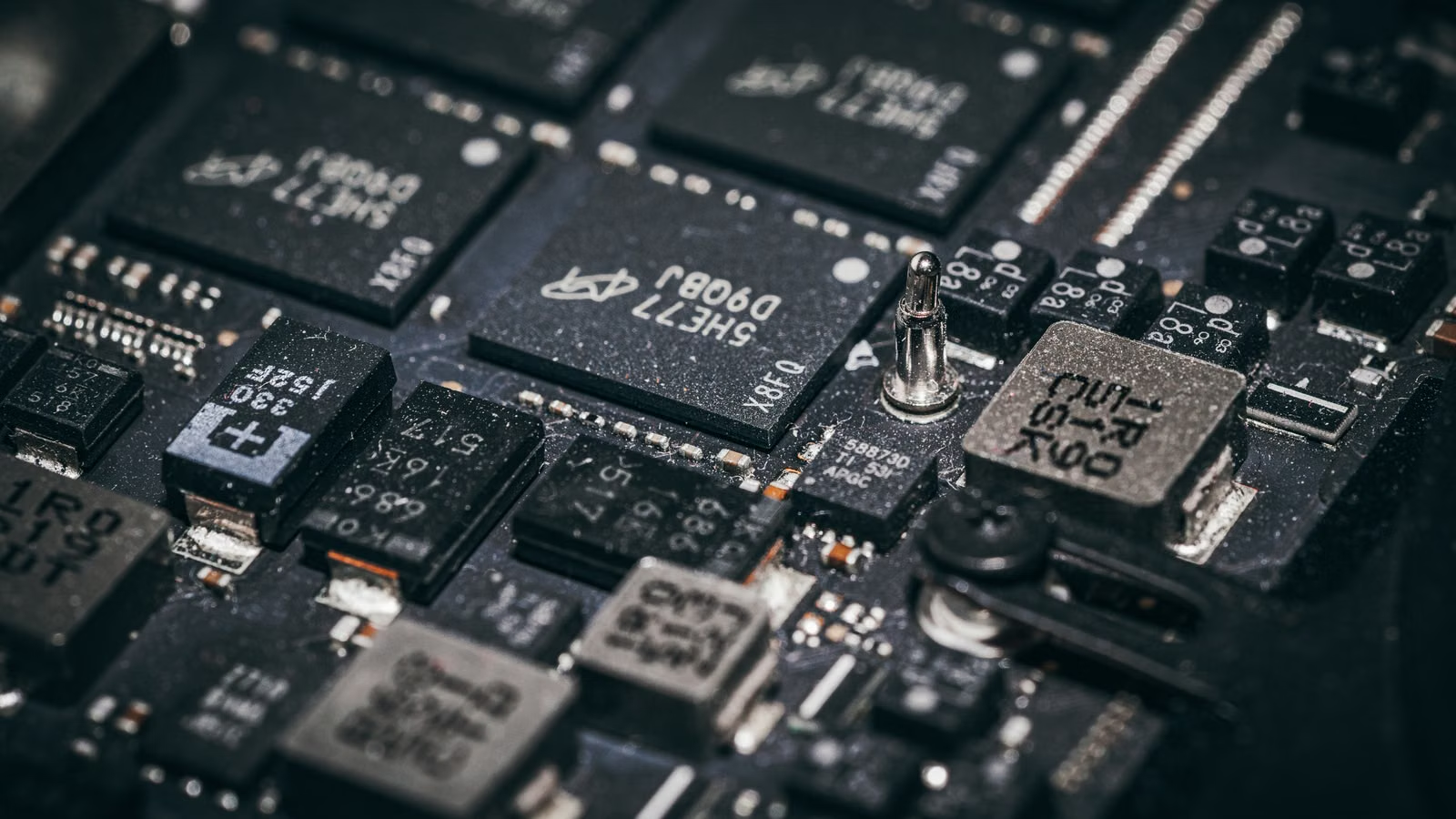
SK hynix is often viewed as the current HBM leader mainly because it has built a stronger phase advantage in HBM3E mass production, key customer adoption, and HBM4 readiness. You can think of SK hynix as an AI memory company with more direct HBM-specific leverage: when demand for high-end HBM rises, its revenue, profit, and market expectations tend to respond more quickly.
This has already been reflected in its financial performance. SK hynix’s 2025 financial results showed full-year revenue of KRW 97.1467 trillion, operating profit of KRW 47.2063 trillion, and net profit of KRW 42.9479 trillion. The company also stated that HBM revenue more than doubled year over year. In other words, SK hynix’s HBM story is not limited to product announcements; it has already become an important driver of earnings growth.
Technically, SK hynix emphasizes HBM4 and Advanced MR-MUF. SK hynix HBM4 uses 2,048 I/O ports, and the company says its bandwidth has doubled compared with the previous generation, while power efficiency has improved by more than 40%. The value of MR-MUF lies in helping multi-layer stacked HBM manage heat dissipation, warpage, and reliability, which directly affect yield and mass-production stability.
| SK hynix Strength | Meaning for HBM Competition | Risk to Keep Verifying |
|---|---|---|
| HBM3E mass-production experience | Supports customer trust and continued allocation | Whether leading share can continue |
| HBM4 readiness | Supports next-generation platform adoption | Customer certification timing |
| MR-MUF process | Helps heat dissipation and stacking reliability | Large-scale yield stability |
| AI memory financial contribution | Supports profit leverage | High expectations may increase valuation volatility |
However, SK hynix’s leadership also comes with higher expectations. If HBM4 customer certification, packaging resources, supply timing, or pricing negotiations fall short of market expectations, the stock and valuation may become more sensitive. In addition, HBM customer concentration is high, and changes in AI capital expenditure, GPU platform transitions, and ASIC demand structure may also affect the company’s future growth rhythm.
Summary: SK hynix is closer to the current specialized HBM leader, with strengths in HBM3E mass production, customer certification, AI memory financial contribution, and HBM4 readiness. You should not interpret “leadership” as “lower risk,” because leading companies often carry higher market expectations. When tracking SK hynix, focus on HBM4 share, customer platform allocation, yield, packaging capability, and the share of revenue coming from HBM.
Samsung: Why It Is the Strongest Comprehensive Challenger
Samsung is the HBM challenger that cannot be ignored, because its strengths do not come only from one HBM product but from a complete semiconductor system. When looking at Samsung, you should not only ask whether its current HBM share ranks first. You should also examine its DRAM manufacturing scale, Memory business financial strength, Foundry and System LSI coordination, and whether next-generation HBM4 can re-enter key customer platforms.
Samsung Electronics’ 2025 full-year results showed annual revenue of KRW 333.6 trillion and operating profit of KRW 43.6 trillion. In the fourth quarter, the Device Solutions division generated KRW 44.0 trillion in revenue and KRW 16.4 trillion in operating profit. Samsung also stated that its Memory business achieved record quarterly revenue and operating profit by expanding sales of high-value-added products such as HBM, server DDR5, and enterprise SSDs.
Samsung’s HBM4 progress is also worth watching. Samsung HBM4 has a stable processing speed of 11.7Gbps, about 46% higher than the 8Gbps industry standard, and can deliver up to 3.3TB/s of bandwidth per stack. Its 12-layer stack provides 24GB to 36GB capacity, while future 16-layer stacking can expand capacity to 48GB. Meanwhile, Samsung HBM3E emphasizes up to 36GB capacity and up to 1180GB/s bandwidth for LLMs, generative AI, AI data centers, and high-end GPUs.
| Samsung Strength | HBM Conversion Challenge | Investment Implication |
|---|---|---|
| Large DRAM manufacturing scale | HBM customer certification is more demanding | Do not look only at total capacity |
| Complete semiconductor business | HBM mass-production timing needs validation | Watch Memory profit contribution |
| Aggressive HBM4 specifications | Share gains require customer platform support | Watch entry into mainstream AI platforms |
| Strong capital and R&D resources | The catch-up process may take time | Focus on product execution, not only announcements |
Samsung’s key question is not whether it has technical reserves, but whether those reserves can translate into stable shipments and market share. HBM is a deeply customer-bound market. Having large-scale DRAM capacity alone does not immediately translate into high-end HBM share. Customer certification, yield ramp-up, packaging resources, and platform scheduling are what determine whether Samsung’s HBM comeback can materialize.
Summary: Samsung is the strongest comprehensive challenger in HBM, with advantages in DRAM scale, manufacturing systems, capital investment, HBM4 specifications, and semiconductor ecosystem depth. Its shortcoming is that high-end HBM customer certification and mass-production timing still need continuous verification. When looking at Samsung’s HBM business, you should not focus only on whether it is temporarily behind. You should focus on whether HBM4 turns into visible share, Memory margin improvement, and customer platform breakthroughs.
Micron: Why It Is an HBM Challenger and a U.S. Supply Chain Variable
Micron is a challenger within the HBM leader group, but it is not a marginal player. Its core appeal is not that its overall DRAM scale exceeds Samsung or SK hynix, but that it has HBM4, NVIDIA platform adoption, a data center product portfolio, and U.S. supply chain relevance. When looking at Micron, you should understand it within the broader AI data center memory portfolio, rather than treating it as a single-product HBM supplier.
Micron’s financial leverage is already clear. Micron’s fiscal 2026 third-quarter results showed quarterly revenue of USD 41.46 billion, GAAP net income of USD 28.24 billion, and operating cash flow of USD 25.39 billion. Micron also stated in its fiscal 2026 Q3 prepared remarks that data center revenue exceeded USD 25 billion in the quarter, representing an annualized run rate of more than USD 100 billion.
Technically, Micron’s key breakthrough is HBM4. Micron HBM4 36GB 12H has entered high-volume production for NVIDIA Vera Rubin, delivering more than 2.8TB/s of bandwidth and over 20% better power efficiency than HBM3E. The company also said it has provided HBM4 48GB 16H samples to customers, offering 33% more capacity per HBM cube than 36GB 12H. In addition, Micron HBM3E emphasizes a 24GB 8-high cube, more than 1.2TB/s bandwidth, and energy-efficiency advantages for AI workloads.
| Micron Opportunity | Data to Verify | Potential Risk |
|---|---|---|
| HBM4 entering NVIDIA Vera Rubin | HBM revenue share and customer mix | Dependence on one platform |
| Rapid data center revenue growth | Gross margin and cash flow durability | Valuation volatility near a cycle high |
| U.S. supply chain relevance | U.S. and global capacity expansion progress | Capital expenditure pressure |
| HBM, DRAM, and SSD portfolio | AI server customer expansion | HBM share gains falling short |
Micron should not be judged only by HBM share. It is also building a portfolio across data center DRAM, LP DRAM, SOCAMM2, PCIe Gen6 SSD, eSSD, and NAND. As AI inference, KV cache, vector databases, and agentic AI workloads grow, data centers need more memory and storage. Micron’s opportunity is to enter high-end AI platforms through HBM, then expand data center revenue with a broader memory and storage portfolio.
Summary: Micron is a high-growth challenger in the HBM leader group, with strengths in HBM4 adoption, NVIDIA Vera Rubin, data center revenue, and U.S. supply chain relevance. Its risks are also direct: if HBM share gains, yield, packaging capacity, or customer diversification fall short of expectations, valuation volatility may increase. When analyzing Micron, focus on whether HBM truly converts into revenue, gross margin, and free cash flow.
Business Differences Between Samsung, SK hynix, and Micron: Who Has Pure HBM Leverage and Who Is a Broader Platform?
Samsung, SK hynix, and Micron all belong to the HBM leader group, but their business structures are very different. SK hynix is more like an AI memory company with direct HBM leverage. Samsung is more like a comprehensive semiconductor platform where HBM is becoming an important variable in improving Memory profit quality. Micron is closer to a high-growth challenger benefiting from improvement in its data center memory and storage portfolio. You should not use the same valuation logic or risk framework for all three companies.
Structurally, Samsung covers consumer electronics, smartphones, displays, Memory, Foundry, System LSI, and other businesses. HBM is becoming more important to semiconductor profits, but it is not Samsung’s only business. SK hynix is more concentrated in DRAM, NAND, and AI memory, so HBM has a more direct impact on earnings leverage. Micron also covers DRAM and NAND, but in recent years it has emphasized coordination across data center HBM, DDR, LP DRAM, and SSD products.
| Company | Revenue Structure | HBM Impact on Earnings | What Investors Should Watch |
|---|---|---|---|
| Samsung | Comprehensive electronics and semiconductor giant | HBM improves Memory profit quality | HBM4 share and DS division profit |
| SK hynix | More focused on memory and AI memory | HBM has more direct profit leverage | HBM3E/HBM4 shipments and customers |
| Micron | DRAM/NAND plus data center portfolio | HBM is one source of growth leverage | HBM4, data center revenue, cash flow |
Customer structure is also changing. In the past, HBM was more dependent on GPU platforms, especially high-end training chips. But ASICs are becoming a new variable. TrendForce cited Goldman Sachs’ forecast that in 2026, HBM demand from GPUs will grow 23% year over year, while demand from ASICs will grow 82%, with ASICs accounting for about 33% of HBM market demand. This means future HBM competition will not only depend on NVIDIA, but also on Amazon, Google, Meta, Broadcom, Marvell, and other cloud and ASIC ecosystems.
Their technical routes also differ. SK hynix emphasizes MR-MUF and mass-production stability. Samsung emphasizes TSV-based stacking, high-speed HBM4 specifications, and an integrated manufacturing system. Micron emphasizes HBM4 high-volume production, 12H/16H stacking, and a data center portfolio. For you, technical specifications are only the first layer of information. What truly affects business value is mass-production yield, customer certification, packaging resources, and order durability.
Summary: The HBM business differences between Samsung, SK hynix, and Micron can be summarized this way: Samsung is a comprehensive semiconductor giant; SK hynix is an AI memory leader with more direct HBM leverage; Micron is a high-growth challenger in the U.S. data center memory supply chain. When comparing the three, do not focus only on HBM product headlines. Put business concentration, customer structure, technical validation stage, and financial conversion together.
How Investors Can Track HBM Leaders: Watch Share, Pricing, Packaging, and Valuation Risk
To track HBM leaders, you should not only look at which stock has risen the most or which company has announced HBM4. A better approach is to check HBM share, customer certification, packaging capacity, pricing trends, financial leverage, and valuation risk every quarter. HBM is an important variable in AI infrastructure, but stocks are still affected by cycles, market expectations, capital expenditure, and risk appetite.
You can build a quarterly checklist:
| Indicator | What to Watch | Why It Helps |
|---|---|---|
| HBM shipment share | HBM3E, HBM4, bit output | Helps judge current competitive position |
| Customer certification | NVIDIA, AMD, ASICs, cloud platforms | Helps judge access to mainstream AI servers |
| HBM revenue share | Revenue, gross margin, business-unit profit | Helps judge whether technology becomes financial results |
| Packaging capability | CoWoS, TSV, advanced packaging, testing | Helps judge whether capacity becomes shipments |
| Long-term agreements | Multi-year supply, take-or-pay, locked volume | Helps judge revenue visibility |
| DRAM pricing | Contract prices, spot prices, server DRAM | Helps judge cycle strength |
You also need to remember that being an HBM leader does not automatically make a stock safer. Leading companies may enjoy stronger pricing power, but they may also price in optimistic expectations earlier. Risks include a slowdown in AI capital expenditure, changes in customer self-designed ASIC schedules, competitor catch-up, overly rapid capacity expansion, geopolitical policy, exchange-rate movements, litigation, and antitrust risk. Especially when the HBM cycle is strong, valuations often price in future growth in advance. If earnings are only slightly below expectations, volatility can still rise.
If you use leading HBM companies as part of your U.S. or Hong Kong stock trading analysis, you should study not only the business differences between Samsung, SK hynix, and Micron, but also actual trading costs. U.S. stock trading costs usually include more than commission. They may also include platform fees, external agency fees, trading activity fees, and other charges. The Biya U.S. stock trading fees explanation states that U.S. stock trading commission is USD 0, while platform fees, external agency fees, and other charges are subject to the fee center and order page display. Confirming the fee structure before trading is more prudent than looking only at “zero commission.”
Summary: Investors tracking HBM leaders should focus on share, customer certification, packaging capability, pricing, financial leverage, and valuation risk. HBM is a long-term AI infrastructure variable, but stock performance is still affected by cycles and expectations. You should not ignore price volatility just because a company is an HBM leader, and you should not reject the industry trend only because of a short-term stock pullback. A more prudent approach is to combine industry data, financial reports, valuation, and trading costs.
If you follow Samsung, SK hynix, Micron, and the HBM supply chain over the long term, you can build a tracking framework around “company financial reports + product roadmap + customer platforms + fee costs + risk control.” You can use Biya to follow U.S. and Hong Kong stock-related assets, and use U.S. stock information search to track basic information on semiconductor companies. Availability of relevant services depends on your location, identity verification results, platform rules, and applicable laws and regulations. Public market information, company materials, and fee-structure explanations do not constitute investment advice. Before trading, you should understand order types, fee structures, exchange-rate changes, and price volatility risks, then make decisions based on your own risk tolerance.
FAQ
Who Are the Main Leading HBM Companies?
The main leading HBM companies are Samsung Electronics, SK hynix, and Micron. Their positioning differs: SK hynix is closer to the current leader in HBM production and customer certification, Samsung is a broader semiconductor giant, and Micron offers U.S. supply chain and data center memory leverage.
Why Is SK hynix Considered an HBM Leader?
SK hynix is considered an HBM leader mainly because of its strengths in HBM3E mass production, customer certification, HBM4 readiness, and AI memory financial contribution. However, its leadership still needs to be verified through next-generation platform share, yield, and customer orders.
How Is Samsung’s HBM Business Different From SK hynix?
Samsung’s HBM business has advantages in overall DRAM scale, semiconductor manufacturing systems, and product-line completeness. SK hynix has advantages in HBM customer adoption and phase-leading mass production. Comparing the two requires looking beyond scale to certification and shipment timing.
How Should Investors Evaluate Micron’s HBM Business?
Investors should evaluate Micron’s HBM business by focusing on HBM4, NVIDIA Vera Rubin, data center revenue, and customer expansion. Micron may offer strong growth leverage, but investors also need to watch HBM share, yield, packaging capability, and valuation volatility.
Do HBM Leader Stocks Always Benefit From AI Demand?
HBM leader stocks do not always directly benefit from AI demand. AI demand supports HBM revenue and pricing power, but stock performance also depends on valuation, customer concentration, capacity release, pricing cycles, earnings expectations, and broader market risk.
How Can Retail Investors Compare Samsung, SK hynix, and Micron?
Retail investors can compare Samsung, SK hynix, and Micron by looking at HBM share, HBM4 certification, financial contribution, advanced packaging capability, customer structure, valuation levels, and trading costs. For any trading activity, platform rules, billing details, and local regulatory requirements should prevail.
*This article is provided for general information purposes and does not constitute legal, tax or other professional advice from BiyaPay or its subsidiaries and its affiliates, and it is not intended as a substitute for obtaining advice from a financial advisor or any other professional.
We make no representations, warranties or warranties, express or implied, as to the accuracy, completeness or timeliness of the contents of this publication.
Related Blogs of

Which Products Are Affected by NAND Price Increases? SSDs, Smartphones, Servers, and Consumer Electronics


Why Look at HBM and Storage After GPUs? Breaking Down the AI Infrastructure Investment Chain


Why Are AI Storage Stocks Suddenly Getting Attention? From Compute Bottlenecks to Data Storage Demand


Enterprise SSD vs Consumer SSD: Price, Endurance, Use Cases, and Related Companies

Choose Country or Region to Read Local Blog
 Australia
 Austria
 Belgium
 Canada
 Cyprus
 Czech Republic
 Denmark
 Estonia
 Finland
 France
 Germany
 Greece
 Hong Kong
 India
India Indonesia
 Ireland
 Italy
Italy Japan
Japan Latvia
 Lithuania
 Luxembourg
 Malaysia
 Malta
Malta Morocco
 Nepal
Nepal Netherlands
 New Zealand
 Norway
 Pakistan
 Philippines
 Poland
 Portugal
 Romania
 Singapore
 Slovakia
 Slovenia
 South Africa
 South Korea
 Spain
Spain Sweden
 Thailand
 The United States
 Turkey
 United Arab Emirates
 United Kingdom
 Vietnam
Contact Us




BIYA GLOBAL LLC is registered with the Financial Crimes Enforcement Network (FinCEN), an agency under the U.S. Department of the Treasury, as a Money Services Business (MSB), with registration number 31000218637349, and regulated by the Financial Crimes Enforcement Network (FinCEN).
BIYA GLOBAL LIMITED is a registered Financial Service Provider (FSP) in New Zealand, with registration number FSP1007221, and is also a registered member of the Financial Services Complaints Limited (FSCL), an independent dispute resolution scheme in New Zealand.