
U.S. Storage Stocks vs. Hong Kong Storage-Related Stocks: How Do Purity, Upside Potential, and Risk Differ?





The biggest difference between U.S. storage stocks and Hong Kong storage-related stocks is not the trading venue, but business purity. U.S. storage stocks are more directly tied to storage cycles such as DRAM, NAND Flash, HBM, enterprise SSDs, and nearline HDDs. Hong Kong storage-related stocks are more often linked to semiconductor equipment, chip design, AI servers, domestic substitution, and technology-stock valuation recovery. If you want to track storage price increases and AI data center expansion, U.S. names are more direct. If you focus more on China’s semiconductor supply chain and Hong Kong technology-sector upside, Hong Kong-related names are better suited as industry-mapping targets.
Key Takeaways
- U.S. storage stocks are closer to DRAM, NAND, HDD, and HBM pricing cycles.
- Hong Kong-related names are mostly mapped to equipment, design, servers, and domestic substitution.
- U.S. upside comes more from product price increases, while Hong Kong upside often comes from valuation recovery.
- U.S. risks center on cycle reversal, while Hong Kong risks center on insufficient business purity.
- When comparing names, first check revenue structure before relying on market labels.
What Is the Core Difference Between U.S. Storage Stocks and Hong Kong Storage-Related Stocks?
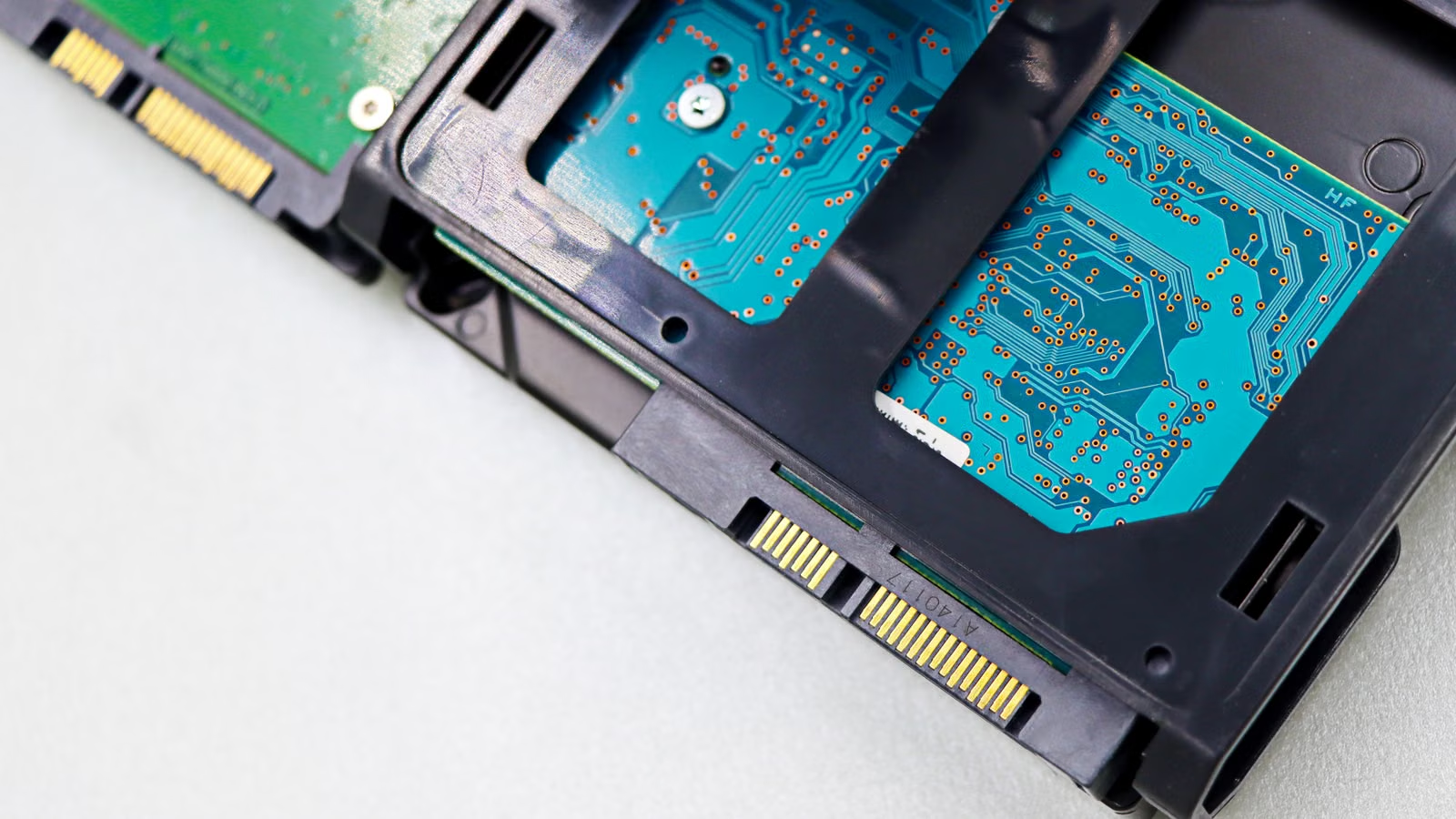
U.S. storage stocks are closer to “storage pricing cycle assets,” while Hong Kong storage-related stocks are closer to “semiconductor supply-chain mapping assets.” When you compare U.S. companies such as Micron, Western Digital, Seagate, and Sandisk, the key variables are usually memory, flash, hard drives, and data center storage demand. When you compare Hong Kong-listed companies such as ASMPT, Shanghai Fudan Microelectronics, and Lenovo, the key variables are more likely advanced packaging, non-volatile memory, AI servers, and risk appetite toward Hong Kong technology stocks.
The main line for U.S. storage stocks is more direct. Micron’s business revolves around DRAM, NAND, HBM, data center SSDs, and other storage products. Investors can see from Micron Investor Relations that its earnings and investor materials focus heavily on data center HBM, LP DRAM, NAND, and related product lines. After Western Digital completed the separation of its Flash business in 2025, the listed Western Digital became more focused on HDDs, while Sandisk became a clearer Flash / NAND observation target. Western Digital’s completion of the Flash business separation and Sandisk’s independent Nasdaq listing made the business boundaries of U.S. storage stocks clearer.
Hong Kong storage-related stocks are different. Shanghai Fudan Microelectronics does have non-volatile memory products such as EEPROM, SPI NOR Flash, and NAND Flash, and Shanghai Fudan Microelectronics’ NVM products clearly show these product directions. However, it is not the same business model as global DRAM or HBM leaders. ASMPT’s relationship with storage is not that it manufactures DRAM or NAND, but that it supplies advanced packaging equipment, especially equipment linked to HBM, TCB, and AI packaging capital expenditure. ASMPT’s 2025 results mentioned growth in advanced packaging revenue and highlighted the contribution of TCB solutions. Lenovo Group is more related to AI servers, PCs, infrastructure, and device integration. Lenovo’s FY2025/26 fourth-quarter results showed that AI-related revenue had become a growth engine, but Lenovo is not a pure storage-chip company.
| Comparison Dimension | U.S. Storage Stocks | Hong Kong Storage-Related Stocks |
|---|---|---|
| Business purity | Relatively high, directly covering storage products | Low-to-medium to medium, mostly supply-chain mapping |
| Core products | DRAM, NAND, HBM, HDD, SSD | NVM, packaging equipment, AI servers, semiconductor equipment |
| Main drivers | Storage prices, shipments, data center demand | Orders, valuation, policy expectations, Hong Kong tech sentiment |
| Representative names | MU, WDC, STX, SNDK | 1385.HK, 0522.HK, 0992.HK |
| Suitable use | Tracking the global storage cycle | Tracking China’s semiconductor chain and theme-driven upside |
For ordinary investors, the first step is not to decide whether U.S. stocks or Hong Kong stocks are “better,” but to identify what kind of risk exposure they are actually buying. If you want to track price movements in DRAM, NAND, HBM, and HDD, U.S. storage stocks are more direct. If you want to observe advanced packaging, domestic semiconductors, AI servers, and valuation recovery in Hong Kong tech stocks, Hong Kong-related names have more mapping value. These two types of stocks can sit in the same AI storage watchlist, but they cannot fully replace each other. U.S. stocks are more like an industry-cycle thermometer, while Hong Kong stocks are more like a supply-chain sentiment amplifier. The former depends more on product prices and earnings sensitivity; the latter depends more on order conversion, sector flows, and valuation recovery.
Why Are U.S. Storage Stocks More Direct in Terms of Business Purity?
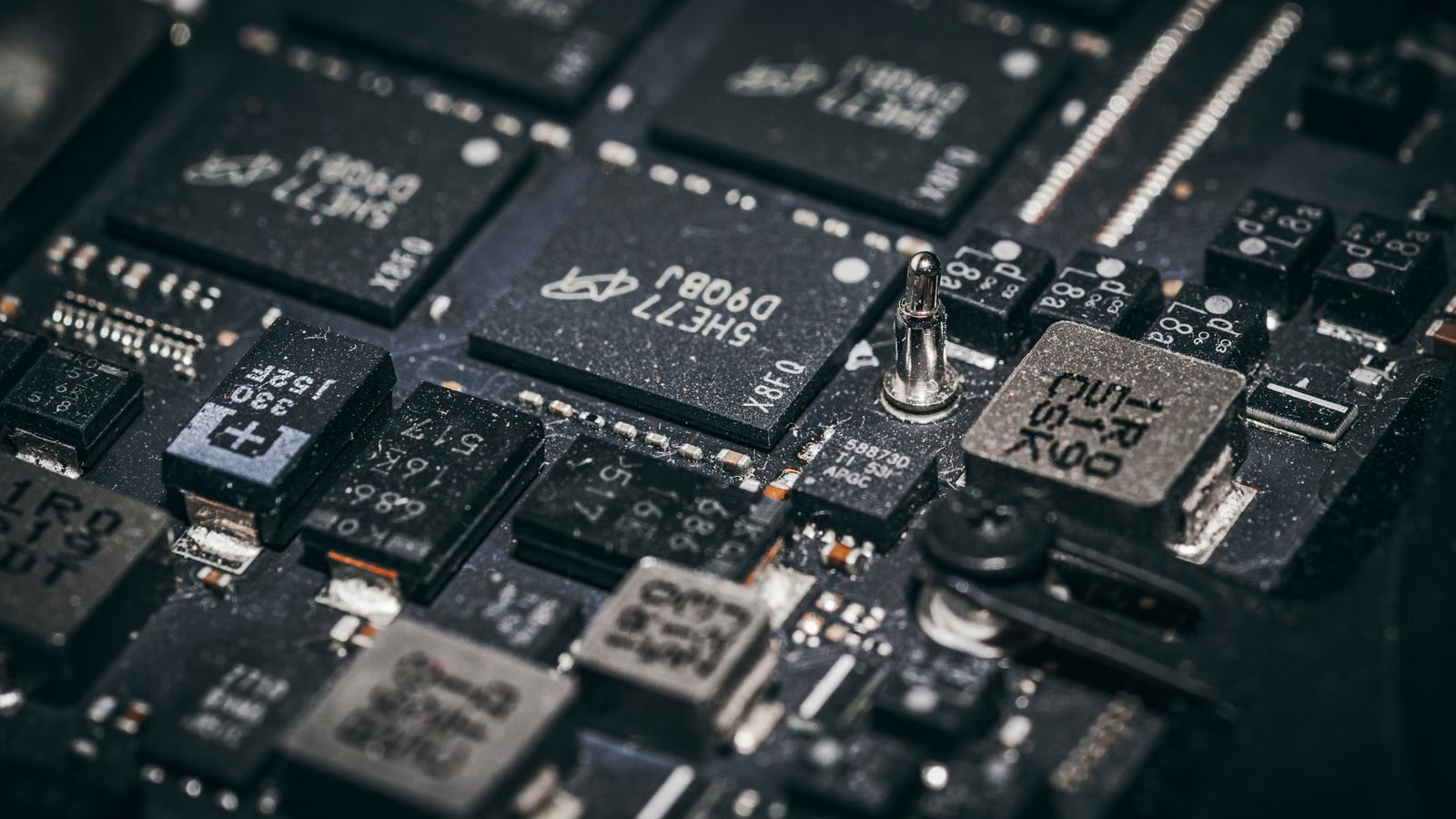
U.S. storage stocks are more direct because their revenue, gross margin, and valuation changes are more likely to be affected by storage products themselves. Micron corresponds to DRAM, NAND, HBM, and data center SSDs. Western Digital corresponds to nearline HDDs and enterprise storage capacity. Seagate corresponds to mass-capacity storage. Sandisk corresponds to NAND / Flash. When analyzing these companies, the key question is not whether they have an “AI concept,” but whether storage prices, customer orders, capacity allocation, and gross margins are improving at the same time.
Micron is one of the core stocks for observing the memory cycle. Its products cover DRAM, NAND, HBM, and storage solutions. In AI data center scenarios, HBM and server DRAM directly affect training and inference infrastructure. Since 2026, market research institutions have paid more attention to memory pricing. Gartner’s semiconductor revenue forecast expects memory revenue to grow significantly in 2026 and also points to annual price increases in DRAM and NAND Flash. This type of data directly affects revenue expectations and margin assumptions for U.S. storage companies such as Micron.
Western Digital and Seagate follow a different logic from memory stocks. They are more closely tied to HDDs and cloud storage capacity demand. AI training and inference generate massive amounts of data. After data is generated, not all of it is stored in expensive HBM or high-performance SSDs. Long-term archiving, object storage, backup, and cold data still require high-capacity storage. In its FY2026 third-quarter results, Seagate disclosed revenue, gross margin, free cash flow, and other metrics that investors can use to assess whether nearline HDD demand is truly being reflected in the income statement.
Sandisk is important because it provides a more independent exposure to NAND / Flash. In the past, Western Digital included both HDD and Flash businesses, and the mixed structure affected valuation analysis. After the separation, WDC became more HDD-oriented, while Sandisk became more Flash-oriented. Investors can therefore place them in different research frameworks: WDC for cloud storage capacity, HDD pricing, and enterprise demand; Sandisk for NAND Flash, enterprise SSDs, consumer storage, and supply-demand cycles.
To judge the purity of U.S. storage stocks, you can use this checklist:
| Item to Check | What to Focus On |
|---|---|
| Revenue structure | Share of DRAM, NAND, HDD, SSD, and HBM |
| Customer structure | Exposure to cloud providers, AI servers, and enterprise storage customers |
| Source of gross margin | Price increases, shipment growth, or product-mix improvement |
| Earnings metrics | ASP, bit growth, inventory, capital expenditure, order guidance |
| Cycle position | Whether price increases are in the early, middle, or late stage |
| Valuation reflection | Whether the stock price has already priced in the upcycle |
If you track multiple U.S. storage stocks at the same time, trading costs also affect your actual holding experience. U.S. stock trading costs are not only about commissions; they may also include platform fees, external agency fees, and trading activity fees. Eligible users can check commissions, platform fees, and order-related costs through Biya U.S. stock trading fees. Biya charges 0 USD commission for U.S. stock trading, while platform fees, external agency fees, and other costs are subject to the fee schedule and order-page display. Fees should not be used to determine trading direction, but in a high-volatility sector, it is necessary to understand the cost structure before frequent rebalancing.
The purity advantage of U.S. storage stocks lies in the shorter link between industry variables and company earnings. When DRAM, NAND, HBM, and HDD prices rise, revenue, gross margin, cash flow, and market expectations can often respond quickly. When supply increases, customer inventory rises, or cloud capital expenditure slows, the pullback can also be more direct. In other words, U.S. storage stocks are suitable for tracking the global storage cycle, but they are not low-risk assets. You need to keep monitoring prices, inventory, capacity, customer orders, and valuation instead of explaining every rally with a single “AI data center beneficiary” label.
Which Hong Kong Companies Are Only “Related” Rather Than Pure Storage Stocks?
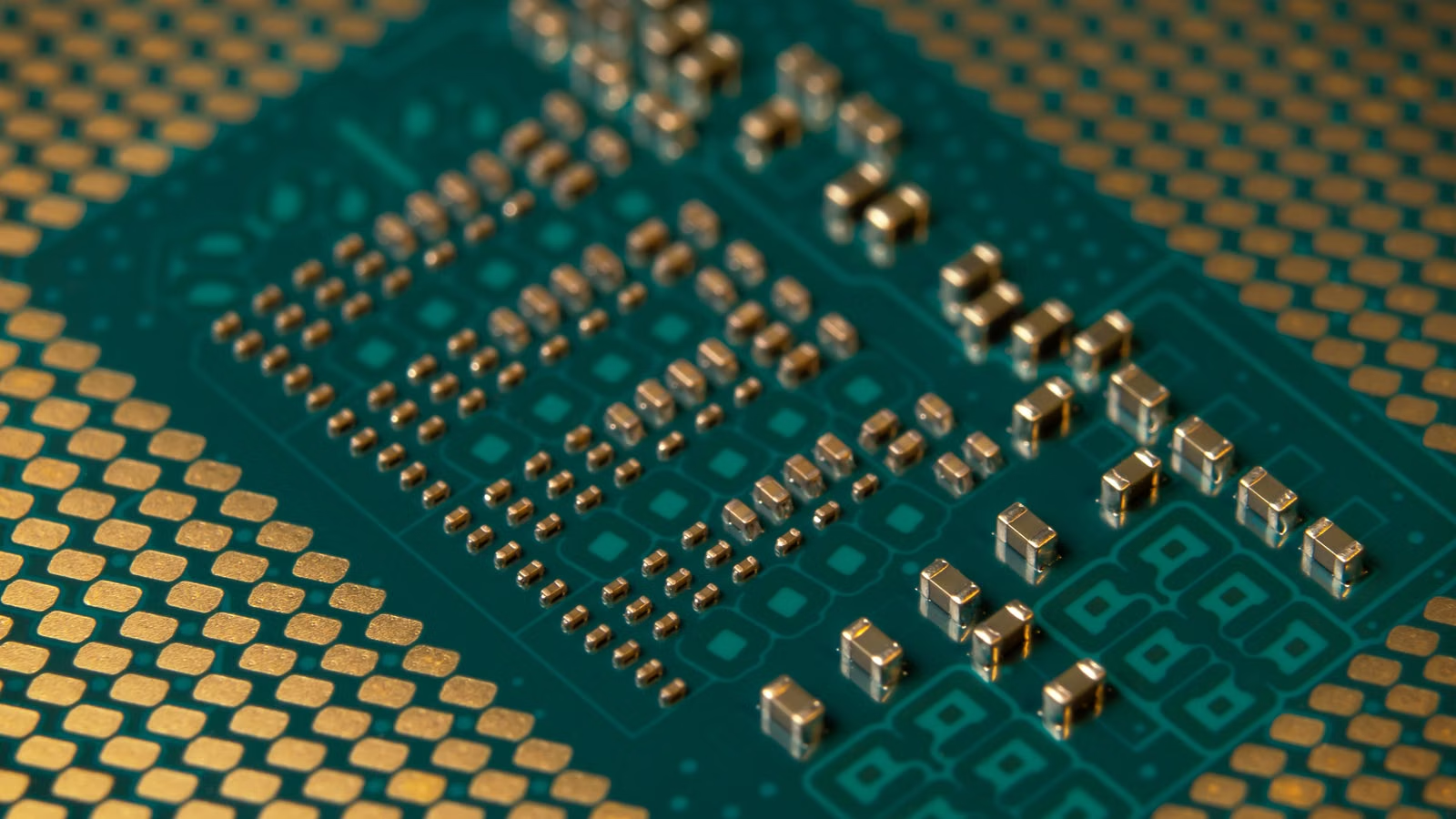
Most Hong Kong storage-related stocks are not pure storage stocks. They are linked to the storage cycle through non-volatile memory, advanced packaging, AI servers, semiconductor equipment, or domestic substitution. They may benefit from AI data centers and semiconductor-sector momentum, but their benefit paths are longer and their earnings verification is more complex. When analyzing Hong Kong names, the question should not be only “is this a storage concept?” but how much revenue actually comes from storage and whether the profit sensitivity can be verified in financial results.
Shanghai Fudan Microelectronics is a typical example of a company that is “storage-related but not a pure global DRAM/HBM name.” Its NVM product line includes EEPROM, SPI NOR Flash, NAND Flash, and other products. These are more often used in consumer electronics, communications, industrial, automotive electronics, IoT, and similar scenarios. Its relevance comes from non-volatile memory and domestic chip design, rather than direct exposure to global HBM or server DRAM prices. Therefore, when global DRAM or HBM prices rise, Shanghai Fudan Microelectronics may benefit from semiconductor-sector sentiment, but it should not be directly equated with Micron.
ASMPT’s logic is more related to advanced packaging equipment. HBM cannot exist without advanced packaging. AI chips and high-bandwidth memory integration require more complex packaging processes, so TCB, die bonding, and advanced packaging equipment attract market attention. ASMPT’s upside comes from packaging capital expenditure, equipment orders, customer expansion, and delivery schedules, rather than the ASP of storage chips themselves. It may reflect capital-expenditure expectations earlier than pure storage companies, but it may also pull back quickly if order verification falls short.
Lenovo Group is an indirect beneficiary in the AI hardware chain. AI servers require CPUs, GPUs, HBM, SSDs, HDDs, networking equipment, and cooling systems. As a device and infrastructure integrator, Lenovo may benefit from AI server order growth, but it may also face cost pressure from rising prices of storage, GPUs, and other components. Its relationship with storage is closer to a “demand transmission layer”: more AI servers mean higher demand for memory, SSDs, and HDDs, but whether Lenovo’s own margins improve still depends on supply-chain costs, customer structure, product mix, and delivery capability.
| Hong Kong Direction | Representative Type | Relationship With Storage | Purity Judgment |
|---|---|---|---|
| NVM chip design | Shanghai Fudan Microelectronics | EEPROM, NOR Flash, SLC NAND | Medium |
| Advanced packaging equipment | ASMPT | HBM packaging equipment chain | Indirect but relatively relevant |
| AI servers / hardware | Lenovo Group | Storage configuration upgrades and server demand | Indirect |
| Semiconductor manufacturing chain | Foundry, equipment, materials companies | May participate in storage or logic-chip manufacturing | Depends on order structure |
| Hong Kong tech sector | Hardware, software, platform companies | Affected by AI themes and capital-market sentiment | Low to medium |
The difficulty with Hong Kong storage-related stocks is that “relevance” is often amplified. For example, when HBM becomes a hot theme, advanced packaging equipment stocks may rise. When NAND becomes tight, non-volatile memory companies may receive attention. When AI server orders are strong, hardware integrators may benefit. But none of these means company profits will grow by the same magnitude. You need to separate three layers: the first layer is core storage-chip business, the second layer is storage equipment or packaging supply chain, and the third layer is AI hardware demand transmission. Hong Kong opportunities are not weak, but the research method must be more detailed. Hong Kong stocks are better suited as supply-chain mapping assets rather than direct substitutes for U.S. storage stocks.
In Terms of Upside Potential, Which Market Can Amplify the Rally More?
Both U.S. and Hong Kong stocks can amplify a rally, but their sources of upside are different. U.S. storage stocks get more upside from product prices, supply-demand gaps, customer long-term agreements, and gross-margin improvement. Hong Kong-related names get more upside from valuation recovery, industrial policy, southbound capital, AI hardware themes, and order expectations. If you care more about fundamental realization, U.S. storage stocks should be the priority. If you care more about theme diffusion and valuation upside, you need to study the purity and conversion risk of Hong Kong-related stocks.
The upside of U.S. storage stocks usually comes from supply-demand mismatch. AI server demand drives HBM, server DRAM, enterprise SSDs, and high-capacity HDDs. Storage makers may prioritize capacity for higher-value products, further tightening supply for consumer electronics, smartphones, PCs, and mature storage products. TrendForce’s research on AI server memory contract prices mentioned that contract prices for conventional DRAM and NAND Flash still faced clear upward pressure in the second quarter of 2026. The reasons included DRAM capacity being shifted toward server applications and NAND capacity being tilted toward enterprise SSDs.
The upside of Hong Kong-related names is more often driven by expectation gaps. For example, advanced packaging equipment companies may rise before orders are fully confirmed because the market anticipates HBM-related capital expenditure. AI server companies may be re-rated because of growing order pipelines. NVM design companies may receive valuation premiums from domestic substitution and storage price-increase narratives. This kind of upside can be strong, but it usually needs later earnings verification. If orders, revenue, margins, or cash flow fail to catch up, theme-driven rallies can retrace quickly.
The upside ranking across different storage segments can be understood as follows:
| Segment | Source of Upside | Main Risk |
|---|---|---|
| HBM / server DRAM | Scarcity, AI training demand, customer long-term agreements | Capacity release, price pullback from high levels |
| Enterprise SSD / NAND | Cloud storage, AI data centers, tight supply | Weak consumer demand, inventory changes |
| Nearline HDD | Cloud capacity expansion, cost advantage per TB | Customer concentration, changes in long-term orders |
| Advanced packaging equipment | HBM packaging capital expenditure | Order delivery schedule, valuation priced in too early |
| AI servers | Whole-server orders and infrastructure expansion | Component cost increases, thin margins |
| Hong Kong semiconductor themes | Valuation recovery and capital rotation | Insufficient purity, weaker-than-expected realization |
Higher upside does not automatically mean better investment quality. High-purity U.S. storage stocks may respond more directly during a price upcycle, but once price expectations peak, stock prices may correct ahead of fundamentals. Hong Kong-related stocks may rise faster when risk appetite improves, but if the company is only loosely related to the theme, the pullback can be sudden. When comparing upside, do not only look at the share-price increase. Look at where the upside comes from: product price increases, order growth, margin improvement, or pure valuation re-rating. The former is easier to verify through earnings, while the latter relies more heavily on market sentiment.
What Are the Main Risks for Each Type of Stock?
The biggest pitfall for U.S. storage stocks is the cycle peak, while the biggest pitfall for Hong Kong storage-related stocks is misjudging business purity. For U.S. names, strong earnings may already reflect a storage upcycle that the market has priced in. For Hong Kong names, a hot theme does not necessarily mean the company has meaningful storage revenue. When comparing the two, you must separate “cycle reversal risk” from “insufficient relevance risk,” otherwise it is easy to misjudge position size during volatile periods.
U.S. storage stocks have clear cyclical characteristics. DRAM, NAND, and HDD have all gone through multiple upcycles and downcycles. When supply contracts, demand surges, and inventory falls, price increases can quickly push up revenue and gross margins. But when manufacturers expand capacity, customers slow procurement, end demand weakens, or inventory rises, prices can also decline. Gartner’s discussion of “memflation” also reminds investors that memory-price increases are not a permanent trend. Gartner’s 2026 semiconductor revenue forecast highlights strong growth in memory revenue while also noting that price pressure may ease later.
The risks for Hong Kong storage-related stocks are more structural. First, business purity may be insufficient. A company may belong to the semiconductor or AI hardware chain, but storage may not represent a large share of revenue. Second, share prices may be affected more by Hong Kong liquidity, southbound flows, policy expectations, and risk appetite toward technology stocks. Third, order conversion may take longer than the market expects. Fourth, some companies’ margins may be affected by component costs. Storage price increases may not necessarily improve their profits; in some cases, they may raise costs instead.
New investors most often confuse three issues:
- Treating all semiconductor stocks as storage stocks and ignoring differences in core business.
- Treating AI server beneficiaries as direct beneficiaries of storage price increases and ignoring profit transmission.
- Looking only at share-price upside while ignoring revenue structure, gross margin, and cash-flow quality.
- Looking only at concept popularity without checking the latest earnings and order disclosures.
- Comparing only P/E ratios without distinguishing between cyclical earnings and normalized earnings.
You can use the following risk checklist:
| Risk Question | U.S. Storage Stocks | Hong Kong Storage-Related Stocks |
|---|---|---|
| Cycle reversal | High; watch prices and inventory | Medium; indirectly affected |
| Purity misjudgment | Lower; core business is usually clearer | High; revenue structure must be broken down |
| Valuation priced in early | High; common in upcycles | High; common in theme-driven rallies |
| Liquidity volatility | Usually lower | Higher for some names |
| Cost transmission | Depends on product structure | More sensitive for AI server and hardware chains |
| Earnings verification difficulty | Lower | Higher |
For cross-market investors, fees and exchange rates are also part of actual risk. U.S. and Hong Kong stocks differ in trading hours, settlement currencies, fee structures, and FX conversion. Final returns are not determined by share-price movements alone. You can use real-time exchange rates to monitor conversions between USD, HKD, and local currencies, while also checking actual order costs on your trading platform. Availability of related services depends on user location, identity verification results, platform rules, and applicable local laws and regulations. Public market information and fee structures can support decision-making, but they cannot replace personal risk assessment.
The risks of U.S. and Hong Kong stocks are not the same. U.S. storage-stock risk is closer to a commodity cycle: cycle peaks, capacity expansion, inventory, and price declines can affect valuation. Hong Kong-related stock risk is closer to theme mapping: a company may be related to storage, but it may not truly enjoy the profit sensitivity brought by storage price increases. When evaluating risk, do not only watch industry news and share-price performance. Return to earnings, products, customers, gross margin, orders, and valuation position. You only truly understand this type of asset when you can explain both the reason for the rally and the reason for a possible pullback.
How Can Ordinary Investors Build a U.S. and Hong Kong Storage Watchlist?
Ordinary investors should build a storage watchlist by first layering names by “purity,” then assigning attention based on “upside” and “risk.” High-purity names are used to track the storage cycle. Equipment and design companies are used to observe supply-chain transmission. AI server and hardware names are used to observe demand diffusion. The benefit of this method is that you will not force Micron, Seagate, ASMPT, and Lenovo into the same valuation logic.
The first layer is high-purity storage stocks, mainly in the U.S. Micron can be used to observe DRAM, NAND, HBM, and data center SSDs. Western Digital can be used to observe HDDs and cloud storage capacity demand. Seagate can be used to observe mass-capacity storage and nearline HDDs. Sandisk can be used to observe Flash / NAND. The second layer is the storage-related supply chain, where Hong Kong-listed names appear more often. ASMPT corresponds to advanced packaging equipment, while Shanghai Fudan Microelectronics corresponds to NVM product lines. The third layer is the demand transmission layer, such as Lenovo and other AI server, PC, and infrastructure companies. They may benefit from AI hardware demand, but they may also face cost pressure from rising storage and component prices.
A storage watchlist can be structured as follows:
| Layer | Representative Direction | Suitable Use | Key Metrics |
|---|---|---|---|
| High-purity storage | MU, WDC, STX, SNDK | Track the global storage cycle | ASP, shipments, gross margin, inventory |
| Equipment / design chain | ASMPT, Shanghai Fudan Microelectronics | Track supply-chain mapping | Orders, revenue share, product lines |
| AI hardware chain | Lenovo and similar names | Track demand transmission | AI revenue, server orders, margins |
| Theme-observation layer | Semiconductor sector | Track capital-market sentiment | Turnover, valuation, southbound flows |
| Cost-observation layer | Trading and FX | Control actual holding costs | Fees, exchange rates, order details |
The second step is to assign different roles to different names. High-purity U.S. storage stocks are more suitable as the core of industry-cycle observation because their earnings data can be linked more directly to storage prices. Hong Kong equipment, design, and server-chain stocks are more suitable as satellite observations because their upside may be higher, but they require more verification. You can also use ETFs, semiconductor indexes, or industry news as support, but ETF movements should not replace individual company research.
The third step is to set up a review rhythm. At least once every quarter, check three types of information: company earnings, industry prices, and customer demand. For U.S. stocks, focus on ASP, bit growth, gross margin, data center revenue, and capital expenditure. For Hong Kong stocks, focus on orders, advanced packaging revenue, NVM product revenue, AI server revenue, inventory, and margins. If you use U.S. stock information search to track U.S. names, you should still manage company earnings and trading records separately: the former determines research judgment, while the latter determines actual costs.
Finally, do not make the watchlist too long. During an AI storage rally, many investors tend to add every semiconductor, server, cloud-computing, and chip-equipment company to the list, but then they cannot study any single stock in depth. A more practical method is to choose two to three high-purity U.S. storage stocks, pair them with two to three Hong Kong-related supply-chain names, and use industry reports to track pricing and supply-demand conditions. This approach allows you to observe both the direct cycle and the supply-chain diffusion.
An effective storage watchlist is not about having more stocks, but about logical layering. U.S. storage stocks answer the question: “Is the storage cycle getting stronger?” Hong Kong-related stocks answer: “Is the supply chain and capital flow spreading?” AI hardware stocks answer: “Is end demand continuing to transmit?” When all three signals improve at the same time, the foundation of the sector rally is stronger. If only theme popularity rises while earnings and prices fail to catch up, expectations should be lowered. For ordinary investors, the most important task is to clearly classify the research objects rather than treating all related stocks as the same opportunity during a rally.
Which Type Is More Suitable for Ordinary Investors?
Ordinary investors should not simply choose U.S. stocks or Hong Kong stocks. They should decide based on research ability, risk tolerance, and account conditions. Investors who can read storage pricing data, earnings reports, and English materials may prioritize high-purity U.S. storage stocks. Investors more familiar with Hong Kong technology stocks, southbound capital, and China’s semiconductor chain can use Hong Kong-related stocks as supplements. A more balanced approach is to use U.S. stocks to track the cycle and Hong Kong stocks to track supply-chain mapping, rather than betting on only one market.
If you are a beginner, it is better to start with high-purity names. The reason is simple: the purer the business, the fewer the research variables. Micron, Western Digital, Seagate, and Sandisk have different research focuses, but all can be analyzed around storage products. Hong Kong-related stocks require extra judgment on business share, policy expectations, order conversion, and valuation recovery. Higher purity does not mean lower risk, but it can at least reduce the chance of misunderstanding the business.
If you are already familiar with the semiconductor supply chain, you can add Hong Kong-related stocks to your watchlist. ASMPT is useful for observing the advanced packaging equipment cycle. Shanghai Fudan Microelectronics is useful for observing NVM and domestic chip design. Lenovo is useful for observing AI servers and infrastructure demand. However, these names should not be simply classified as “storage stocks.” They are better placed under “storage-related supply chain.”
| Investor Type | Better Priority | Reason |
|---|---|---|
| Beginner investors | High-purity U.S. storage stocks | Clearer business and more direct indicators |
| Semiconductor researchers | U.S. stocks + Hong Kong equipment / design chain | Compare cycle and supply-chain transmission |
| Investors familiar with Hong Kong stocks | Hong Kong-related names + U.S. leaders | Balance local-market knowledge and global cycle |
| Lower-risk-tolerance investors | Watchlist and ETF support | Avoid excessive single-stock volatility |
| Frequent rebalancers | Check fees and FX first | Costs affect actual returns |
When you track U.S. stocks, Hong Kong stocks, crypto assets, and cross-market funding at the same time, it is useful to manage trading records, FX changes, order costs, and position distribution in one framework. Eligible users can use Biya to record multi-asset trading information and review position changes across U.S. stocks, Hong Kong stocks, and digital assets. Availability of related services depends on user location, identity verification results, platform rules, and applicable laws and regulations. Before placing any trade, you should check order types, fee structures, FX costs, and your own risk tolerance.
For ordinary investors, a “main line + mapping” approach is more suitable: use U.S. storage stocks to track the global storage cycle, and use Hong Kong-related stocks to observe supply-chain diffusion and valuation upside. This allows you to capture the direct storage demand brought by AI data centers while also observing indirect beneficiaries such as advanced packaging, NVM, AI servers, and China’s semiconductor chain. But no matter which side you choose, you should not rely only on market concepts. Long-term performance is still determined by revenue structure, margins, cash flow, valuation, and cycle position.
FAQ
Are U.S. storage stocks suitable for beginner investors?
U.S. storage stocks can be suitable as an industry research entry point for beginners, but they are not suitable for blindly chasing themes. Micron, Western Digital, Seagate, and Sandisk have relatively clear business lines, making it easier to learn the cycle logic of DRAM, NAND, HDD, HBM, and enterprise storage. Before trading, investors should still check earnings, valuation, fees, and risk.
Can Hong Kong storage-related stocks replace U.S. storage stocks?
Hong Kong storage-related stocks cannot fully replace U.S. storage stocks. U.S. names more directly reflect storage product prices and supply-demand cycles, while Hong Kong names more often reflect advanced packaging, chip design, AI servers, and semiconductor-theme sentiment. They can verify each other, but they should not be valued with the same logic.
How can investors tell whether a company is a pure storage stock?
To judge whether a company is a pure storage stock, investors should first look at core revenue and product structure. If revenue mainly comes from DRAM, NAND, HDD, SSD, HBM, and other storage products, business purity is higher. If the company mainly provides equipment, packaging, servers, or semiconductor services, it is better classified as storage-related.
Does AI data center expansion benefit all storage stocks?
AI data center expansion does not benefit all storage stocks equally. HBM, server DRAM, enterprise SSDs, nearline HDDs, and advanced packaging equipment each have different benefit paths and profit sensitivity. Some hardware companies may even be affected by rising component costs, so investors need to assess revenue structure and gross margin.
How do risks differ between U.S. storage stocks and Hong Kong semiconductor stocks?
The main risk for U.S. storage stocks is storage-price cycle reversal, while the main risk for Hong Kong semiconductor-related stocks is insufficient business purity and weaker-than-expected theme realization. U.S. names require closer attention to prices, inventory, and capacity. Hong Kong names require closer attention to orders, liquidity, valuation, and actual revenue contribution.
How should ordinary investors compare U.S. and Hong Kong storage-sector valuations?
Ordinary investors should not compare valuations only by P/E ratio. For U.S. storage stocks, the key is whether cyclical profits are sustainable. For Hong Kong-related stocks, the key is whether orders and revenue contribution can be realized. If profits are near a cycle peak, even a low P/E may contain reversal risk. If a Hong Kong stock is rising only because of a theme, a high valuation requires stronger earnings verification.
*This article is provided for general information purposes and does not constitute legal, tax or other professional advice from BiyaPay or its subsidiaries and its affiliates, and it is not intended as a substitute for obtaining advice from a financial advisor or any other professional.
We make no representations, warranties or warranties, express or implied, as to the accuracy, completeness or timeliness of the contents of this publication.
Related Blogs of

MACD Crypto Trading Strategy: Settings, Signals, and Risk Management


Choosing a Stock Trading App: Beginner Checklist


International Wire Transfer Time: What Affects Delivery?



Choose Country or Region to Read Local Blog
 Australia
 Austria
 Belgium
 Canada
 Cyprus
 Czech Republic
 Denmark
 Estonia
 Finland
 France
 Germany
 Greece
 Hong Kong
 India
India Indonesia
 Ireland
 Italy
Italy Japan
Japan Latvia
 Lithuania
 Luxembourg
 Malaysia
 Malta
Malta Morocco
 Nepal
Nepal Netherlands
 New Zealand
 Norway
 Pakistan
 Philippines
 Poland
 Portugal
 Romania
 Singapore
 Slovakia
 Slovenia
 South Africa
 South Korea
 Spain
Spain Sweden
 Thailand
 United States
 Turkey
 United Arab Emirates
 United Kingdom
 Vietnam