Who Has Stronger HDD Pricing Power: Western Digital or Seagate? A Comparison of Nearline Drives, Long-Term Contracts, and Cash Flow




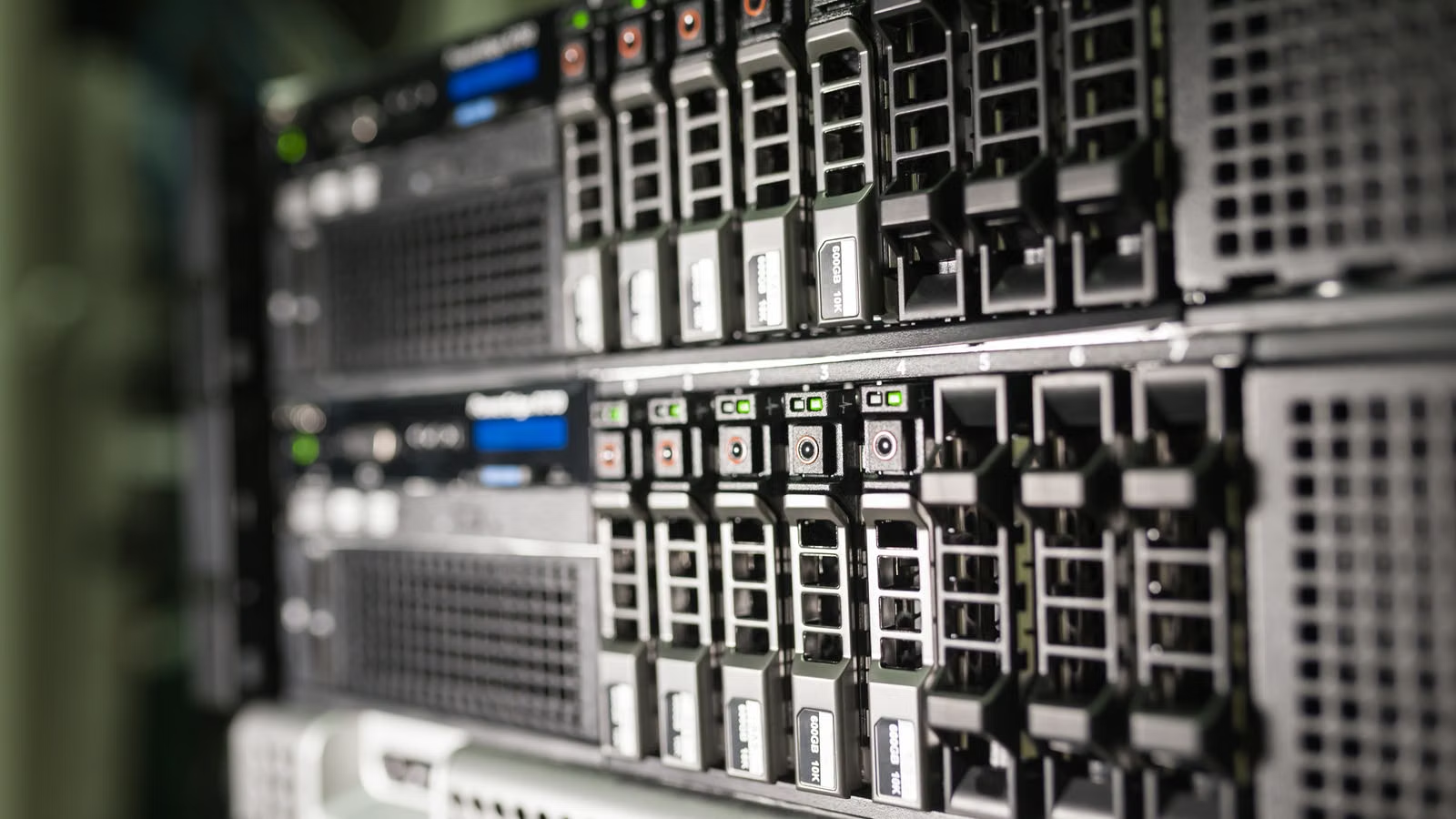
Both Western Digital and Seagate are gaining HDD pricing power, but their strengths are different. Western Digital looks more like a “near-term profit realization” story, with clearer improvement in nearline HDD demand, gross margin, and cash flow. Seagate looks more like a “technology platform premium” story, with stronger emphasis on HAMR, Mozaic 3+, and high-capacity hard drive roadmaps. When comparing WDC and STX, you should not only ask which company can raise prices more. You also need to look at nearline HDD supply and demand, long-term contract coverage, customer structure, gross margin, free cash flow, and the mass-production pace of high-capacity technologies.
Key Takeaways
- HDD pricing power comes from supply-demand gaps, long-term contracts, capacity allocation, and product mix upgrades.
- AI inference, cloud storage, cold data, and archival demand are tightening nearline HDD supply.
- Western Digital currently has stronger gross margin, making its near-term profit realization more visible.
- Seagate has a more aggressive HAMR roadmap, with long-term high-capacity drive upside.
- Long-term contracts are not risk-free; pricing mechanisms, customer concentration, and delivery schedules still matter.
- Both WDC and STX carry cycle risks, and stock prices may already reflect strong demand expectations.
Why Has HDD Pricing Power Become an Important Investment Topic Again?

HDD pricing power is back in focus because AI data centers have pushed nearline HDDs from a traditional hardware cycle category into the role of “capacity infrastructure.” Training data, inference logs, RAG databases, backup, archival data, and cold data all need to be stored for long periods. When cloud customers buy in large volumes and the supply side has not expanded aggressively for years, Western Digital and Seagate have a better chance of turning demand strength into pricing, long-term contracts, and cash flow.
In the past, when investors discussed HDDs, they often focused on PCs, consumer drives, NAS products, and enterprise refresh cycles. This cycle is different. What matters most for WDC and STX is not whether consumers buy another external hard drive. The key question is whether hyperscalers, cloud service providers, and AI data centers are willing to lock in tens of exabytes, or even more, of storage capacity in advance.
TrendForce’s view on nearline HDD shortages noted that the massive amount of data generated by AI is tightening global data center storage infrastructure, with nearline HDD lead times extending from a few weeks to more than 52 weeks. This matters because longer lead times mean customers are no longer purchasing only quarter by quarter. Instead, they are entering earlier capacity planning and supply allocation discussions.
You can break HDD pricing power into several layers:
| Source of Pricing Power | Impact on HDD Makers | What Investors Should Watch |
|---|---|---|
| AI data growth | Raises long-term nearline HDD demand | Cloud purchasing and exabyte shipments |
| Concentrated supply | Main players are WD, Seagate, and Toshiba | Industry expansion pace and inventory levels |
| High-capacity products | Higher single-drive capacity increases replacement value | Progress of 30TB, 36TB, and 40TB products |
| Long-term contracts | Improves revenue and order visibility | 2026, 2027, and 2028 contract coverage |
| Cost discipline | Makes price increases more likely to flow into gross margin | Non-GAAP gross margin and free cash flow |
HDD pricing power is not simply about “the more shortage, the better.” What really matters is whether customers are willing to pay more for supply certainty, and whether vendors can control capacity, inventory, and capital expenditure so that price increases become gross margin and free cash flow instead of being consumed by overexpansion.
From an investment perspective, HDD pricing power should eventually show up in three indicators. First, average selling prices and the share of high-capacity drives should rise. Second, gross margin should continue to expand. Third, free cash flow should be strong enough to support debt reduction, dividends, buybacks, and investment in next-generation technologies. Only when these three factors improve together can pricing power be considered a real financial improvement rather than a short-term headline.
Summary: HDD pricing power is back in focus not because consumer hard drives are suddenly popular, but because AI data centers have turned nearline HDDs into a long-term capacity foundation. Western Digital and Seagate benefit from industry concentration, long-term customer contracts, high-capacity products, and disciplined supply. Ordinary investors should not only watch price-hike headlines. They should focus on order visibility, gross margin, free cash flow, and capacity discipline. Only when these indicators improve together does pricing power truly translate into enterprise value.
Nearline HDD Demand: Who Benefits More from AI Data Centers, Western Digital or Seagate?

Both Western Digital and Seagate benefit from AI data center demand for nearline HDDs, but in different ways. Western Digital emphasizes cloud customers, UltraSMR, ePMR, and mature delivery capability, which makes its near-term earnings leverage more direct. Seagate emphasizes HAMR, Mozaic 3+, and higher areal density, which gives it a stronger long-term technology narrative. If you are looking at the next two to four quarters, WDC’s profit realization is clearer. If you are looking at a two- to three-year high-capacity technology migration, STX’s platform upside deserves closer attention.
The core value of nearline HDDs is low-cost storage per terabyte for massive datasets. AI does not only consume GPUs. It continuously creates data: training checkpoints, inference results, user interaction logs, image and video materials, synthetic data, enterprise knowledge bases, and backup data. SSDs are suitable for hot data and high-frequency read-write workloads, while HDDs are more suitable for cold data, warm data, and long-term archival storage.
In WD’s fiscal third-quarter 2026 results, management emphasized that almost every type of AI workload creates data that needs to be stored persistently, and that HDDs remain one of the most cost-efficient storage media. This explains why Western Digital looks more like a “capacity foundation” company in the AI storage chain rather than a traditional PC peripheral company.
Seagate’s messaging is more focused on technology roadmaps. Seagate Exos M 36TB, based on the HAMR-enabled Mozaic 3+ platform, offers sample capacities of up to 36TB and emphasizes higher storage density, lower cost per terabyte, and lower power consumption per terabyte within the same data center footprint. For cloud service providers, this is not just about buying larger drives. It can also reduce rack space, power, cooling, and maintenance costs.
| Dimension | Western Digital WDC | Seagate STX | Meaning for Pricing Power |
|---|---|---|---|
| Demand source | Cloud customers, AI data, nearline capacity | Cloud customers, AI factories, long-term data retention | Both benefit |
| Product roadmap | ePMR, UltraSMR, HAMR transition | HAMR, Mozaic 3+, Exos M | Seagate has a stronger long-term technology narrative |
| Near-term realization | Gross margin and cash flow have improved clearly | Cash flow recovery is strong, technology upgrade is accelerating | WDC is more visible in the short term |
| Customer value | Stable delivery and low-cost capacity | High density and TCO improvement | Different routes, same target |
It is important to note that AI storage demand does not benefit all HDDs equally. The biggest beneficiaries are high-capacity nearline HDDs, not low-capacity consumer drives. Price increases in ordinary NAS or PC hard drives may reflect spillover from broader supply-demand tightness, but the real driver of WDC and STX profit leverage remains large-capacity drive purchasing by cloud and enterprise customers.
Summary: Western Digital and Seagate are both benefiting from AI data center demand for nearline HDDs, but Western Digital is more about “demand landing plus financial realization,” while Seagate is more about “HAMR technology upgrade plus high-capacity density.” If you care about near-term earnings, WDC’s gross margin, cloud customer orders, and UltraSMR delivery matter more. If you care about long-term competitiveness, STX’s Mozaic 3+, 36TB and higher-capacity drives, mass production, and customer adoption deserve more attention.
Long-Term Contracts and Capacity Allocation: Who Can Turn Shortages into Real Bargaining Power?
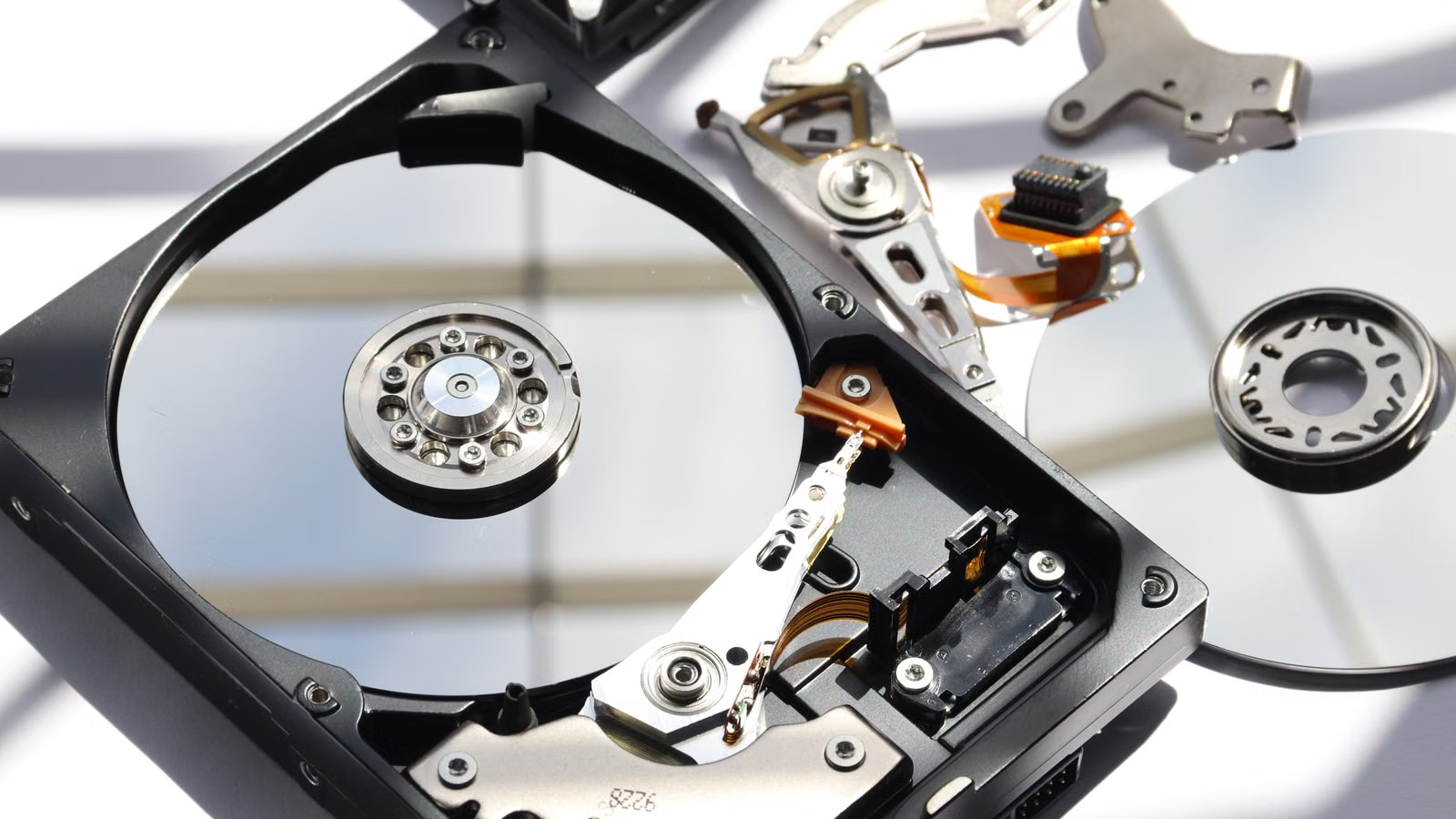
Long-term contracts are critical for judging HDD pricing power because they determine whether a short-term shortage can become medium- to long-term revenue visibility. Both Western Digital and Seagate are strengthening long-term supply arrangements with large customers, but investors need to separate three things: whether capacity is locked in, whether pricing is protected, and whether cash flow can be realized on schedule. Only when all three conditions are present does a long-term contract become real bargaining power rather than just a queue of orders.
In traditional HDD cycles, demand improves, manufacturers expand capacity, customer inventories rise, and prices later fall. This AI data center cycle has changed the timing. Cloud customers worry that they may not secure enough capacity in the future, so they negotiate long-term agreements earlier. Suppliers are also reluctant to expand blindly. Instead, they improve earnings quality through capacity allocation, customer prioritization, and pricing mechanisms.
TrendForce’s coverage of Seagate’s Q3 guidance noted that tight nearline HDD supply is an industry-wide phenomenon, with massive AI-generated data continuing to pressure data center storage infrastructure. For Seagate, this means mass-capacity products are not just part of a short-term restocking cycle. They are part of cloud customers’ long-term infrastructure planning.
Western Digital’s long-term contract story centers on cloud customers and visibility for high-capacity HDDs. The market is watching its 2026 capacity allocation, long-term agreements extending into 2027 and 2028, and firm purchase orders from top customers. Seagate’s long-term contract story centers on nearline capacity allocation, HAMR adoption, and early validation of high-capacity drives by cloud service providers.
To evaluate contract quality, investors can ask five questions:
- Does the agreement include clear capacity commitments, or only purchase intentions?
- Does it include minimum pricing protection, price-adjustment mechanisms, or additional fee arrangements?
- Does the agreement extend into 2027 or 2028, or only cover one fiscal year?
- Is the customer base overly concentrated among a few hyperscalers?
- Can the contract improve inventory, prepayments, cash flow, and capital expenditure discipline?
For investors, long-term contracts are both a positive factor and a source of risk. They can improve visibility, but if customer concentration becomes too high, large customers may regain bargaining power in the next cycle. If AI data center construction slows, delivery timing and pricing realization may still be affected even when supply agreements exist.
Summary: Long-term contracts can strengthen the HDD pricing power of Western Digital and Seagate, but long-term contracts alone are not a complete safety margin. The real questions are capacity commitments, pricing mechanisms, delivery schedules, and customer structure. Western Digital’s advantage lies in current cloud demand and profit visibility from capacity allocation. Seagate’s advantage lies in longer-term nearline allocation and HAMR-linked high-capacity roadmaps. When judging pricing power, you should focus on whether long-term contracts translate into gross margin and free cash flow, not only on phrases such as “capacity sold out.”
Financial Comparison: Who Is Stronger in Gross Margin, Free Cash Flow, and Shareholder Returns?
Based on the latest financial performance, Western Digital has stronger gross margin, while Seagate also shows impressive free cash flow and shareholder returns. In fiscal third quarter 2026, WDC reported revenue of $3.337 billion, non-GAAP gross margin of 50.5%, and free cash flow of $978 million. STX reported revenue of $3.112 billion, non-GAAP gross margin of 47.0%, and free cash flow of $953 million. Gross margin better reflects current pricing power, while cash flow better reflects the cycle safety margin.
| Metric | Western Digital WDC | Seagate STX | Interpretation |
|---|---|---|---|
| Quarterly revenue | $3.337 billion | $3.112 billion | WDC slightly higher |
| Non-GAAP gross margin | 50.5% | 47.0% | WDC currently stronger |
| Operating cash flow | $1.12 billion | $1.10 billion | Similar |
| Free cash flow | $978 million | $953 million | Similar |
| Shareholder returns | Raised quarterly dividend to $0.15 | Returned $191 million through dividends and buybacks | STX has a more established return rhythm |
| Debt actions | Emphasized balance sheet improvement | Repaid about $641 million of debt | STX’s deleveraging is more explicit |
Seagate’s fiscal third-quarter 2026 results showed that the company not only generated nearly $1 billion in free cash flow, but also repaid about $641 million of debt and returned $191 million to shareholders through dividends and buybacks. This indicates that Seagate is not only a technology story; its cash flow recovery is already visible in the financial statements.
Western Digital’s advantage is its particularly strong gross margin. WD’s Q3 FY26 non-GAAP gross margin reached 50.5%, and the company guided for non-GAAP gross margin of 51% to 52% in the following quarter. For an HDD manufacturer, gross margin above 50% is meaningful because it shows that price increases, product mix upgrades, supply discipline, and customer demand are all working in the same direction.
Financial analysis should also consider business structure. After Western Digital completed the separation of its Flash business, it became closer to a pure HDD company. Its sale of part of its Sandisk stake also reflects a direction of lowering debt and focusing more clearly on HDDs. This makes WDC’s investment logic cleaner: if you buy WDC, you are mainly betting on HDDs, AI storage, and the high-capacity data center drive cycle.
This is also where trading cost awareness becomes relevant. When researching volatile U.S. stocks such as WDC and STX, you need to consider not only earnings and valuation, but also actual trading costs. U.S. stock trading costs may include more than commissions; they may also include platform fees, external institution fees, transaction activity fees, and other charges. If the relevant services are available in your region, you can review Biya U.S. stock trading fees. Biya charges $0 commission for U.S. stock trading, while platform fees, external institution fees, and other costs are subject to the fee schedule and order page display.
Summary: From a financial perspective, Western Digital currently looks more like a company whose pricing power has already been reflected in gross margin, while Seagate looks like a company driven by cash flow recovery, shareholder returns, and technology upgrades. WDC’s non-GAAP gross margin is ahead, suggesting stronger near-term pricing and product mix performance. STX’s free cash flow, debt reduction, and shareholder returns also show improved operating quality. A more reliable way to judge pricing power is to connect it to gross margin, free cash flow, and balance sheet strength, rather than focusing only on revenue growth or stock price movements.
Technology Roadmap: Which Has More Long-Term Premium, UltraSMR/ePMR or HAMR?
Technology roadmaps determine long-term pricing power. Western Digital leans toward ePMR, UltraSMR, and a smoother transition path, with advantages in customer migration, delivery stability, and execution visibility. Seagate is more committed to HAMR and Mozaic 3+, with advantages in higher areal density and stronger long-term TCO narratives. In the short term, WD’s mature roadmap is easier to monetize. In the long term, if Seagate can meet customer requirements for HAMR yield, reliability, and mass-production cost, its technology premium may become more meaningful.
WD 40TB UltraSMR ePMR HDDs have entered validation with two hyperscale customers, with mass production planned for the second half of 2026. WD is also advancing HAMR qualification and has described a roadmap that extends ePMR to 60TB and HAMR to 100TB by 2029. This dual-roadmap strategy is customer-friendly because cloud providers do not need to absorb a forced technology migration all at once.
Western Digital’s earlier 32TB UltraSMR HDD also shows its roadmap characteristics: it increases capacity through ePMR, OptiNAND, UltraSMR, and multi-platter platforms, rather than immediately pushing all customers into HAMR. For large cloud customers, reliability, compatibility, and stable supply are sometimes more important than the headline of “highest capacity.”
Seagate’s roadmap is more aggressive. HAMR uses heat-assisted magnetic recording to improve areal density, with the goal of continuing to raise single-drive capacity. Mozaic 3+ emphasizes a 10-disk design, 3.6TB per platter, and higher storage capacity within the same data center footprint. If customer validation goes smoothly, Seagate may be able to use higher capacity, lower power per terabyte, and reduced rack space to capture a stronger premium in high-end products.
| Technology Roadmap | Representative Company | Short-Term Advantage | Long-Term Opportunity | Main Risk |
|---|---|---|---|---|
| ePMR | Western Digital | Mature and stable delivery | Can extend to higher capacity | Capacity improvement slope may be limited |
| UltraSMR | Western Digital | Raises capacity per drive | Suitable for cold data and cloud storage | Writing scenarios have limitations |
| HAMR | Seagate and WD | High technical barrier | High areal density and TCO advantages | Yield, reliability, and cost |
| Mozaic 3+ | Seagate | Clear technology narrative | High-end nearline premium | Customer adoption timing is uncertain |
Technology leadership does not automatically equal pricing power. Customers are willing to pay for technology only when they see stable delivery, predictable failure rates, low migration cost, and lower total cost of ownership. For ordinary investors, the key is not only “how many TB,” but also mass-production timing, customer validation, gross margin, warranty cost, and capital expenditure.
Summary: Western Digital’s roadmap is more like an “incremental upgrade” path, with advantages in near-term delivery and customer migration stability. Seagate’s roadmap is more like a “platform leap,” with advantages in high-capacity density and long-term technology premium. To judge which company has stronger HDD pricing power, you need to define your time horizon. Over the next few quarters, WD’s UltraSMR/ePMR realization is clearer. Over the next few years, if Seagate’s HAMR/Mozaic 3+ scales smoothly, it may gain stronger pricing power in high-end products.
Investment View: Who Has Stronger HDD Pricing Power, Western Digital or Seagate?
If you focus only on current gross margin, near-term earnings, and financial realization, Western Digital shows stronger HDD pricing power. If you focus on HAMR technology, long-term capacity density, and high-capacity drive migration after 2027, Seagate has more visible medium- to long-term upside. A more balanced conclusion is that both WDC and STX have pricing power, but the sources are different and suit different investment frameworks.
For short-term earnings investors, Western Digital is easier to track. You can focus on next-quarter revenue guidance, non-GAAP gross margin, cloud customer demand, and 40TB UltraSMR progress. If WDC’s gross margin continues to rise, it suggests that pricing power is still being realized.
For medium-term trend investors, both Seagate and Western Digital deserve attention. The key is not one quarter of earnings, but whether nearline HDD supply remains tight, whether AI data center capital expenditure continues, whether long-term contracts extend into 2027 and 2028, and whether HDD lead times remain elevated.
For technology-roadmap investors, Seagate offers more imagination. If HAMR and Mozaic 3+ scale successfully, STX may gain a stronger premium in high-capacity enterprise drives. But this logic also comes with execution risk: technology validation, yield, cost, warranty, and customer adoption timing can all affect financial realization.
You can use the following framework:
| Decision Dimension | More Favorable to Western Digital | More Favorable to Seagate | What to Track |
|---|---|---|---|
| Current gross margin | Yes | Slightly weaker | Non-GAAP gross margin |
| Cash flow quality | Strong | Strong | FCF, deleveraging, shareholder returns |
| Technology premium | UltraSMR/ePMR | HAMR/Mozaic 3+ | Mass production and customer validation |
| Business focus | More HDD-focused after the spin-off | Storage remains the core business | Revenue structure |
| Cycle risk | Still faces downside after capacity lock-in | Faces risk of slower technology adoption | Inventory, lead time, ASP |
Risks should not be ignored. AI data center purchasing may slow temporarily. Hyperscalers may adjust after placing advance orders. QLC SSD cost declines may replace HDDs in some scenarios. If HDD suppliers expand capacity too aggressively, the next pricing cycle could weaken. And if stock prices already reflect strong demand, better-than-expected earnings may not always lead to further gains.
If you also follow WDC, STX, MU, SNDK, semiconductor equipment, cloud computing ETFs, and AI infrastructure, you can use Biya U.S. stock search to track related tickers and combine financial reports, valuations, and trading costs in your portfolio review. Stock trading involves volatility risk. Public market data and platform rules should always be checked against actual disclosures, order pages, and local regulatory requirements.
Summary: Western Digital currently looks more like a “profit-realization pricing power” company, while Seagate looks more like a “technology-platform pricing power” company. If you value near-term gross margin, order visibility, and cash flow, WDC’s advantage is more direct. If you value HAMR, high-capacity drives, and long-term TCO improvement, STX has stronger upside potential. The two companies should not be judged with a simple “which one is stronger” answer. The key is to first define your time horizon: near-term earnings, medium-term supply-demand tightness, or long-term technology migration.
The pricing power analysis of WDC and STX is essentially a breakdown of the AI infrastructure value chain. GPUs provide compute, HBM provides bandwidth, networking equipment handles data transmission, and HDDs and SSDs store the growing volume of data. When building exposure to U.S. stocks and Hong Kong stocks, you can evaluate storage, semiconductors, cloud services, ETFs, and cash management within the same framework. If the relevant services are available in your region, you can use Biya to record multi-asset trades, monitor U.S. and Hong Kong stock tickers, and check fee structures through order details. Service availability depends on your location, identity verification results, platform rules, and applicable laws and regulations. Public market analysis does not constitute investment advice. Before trading, you should fully understand the volatility of the security, fee structure, and account rules.
FAQ
Which Company Benefits More from AI Nearline HDD Demand, Western Digital or Seagate?
Both Western Digital and Seagate benefit, but in different ways. Western Digital is more tied to current cloud demand, UltraSMR/ePMR delivery, and gross margin realization. Seagate is more tied to HAMR, Mozaic 3+, and high-capacity density. Investors should compare nearline HDD shipments, gross margin, free cash flow, and long-term contract coverage.
Does HDD Pricing Power Mean WDC and STX Stocks Will Definitely Rise?
HDD pricing power does not mean WDC and STX stocks will definitely rise. Pricing power can improve revenue, gross margin, and cash flow, but share prices are also affected by valuation, market expectations, interest rates, AI capital expenditure, and investor style. If strong demand has already been priced in, earnings growth may still come with volatility.
Why Do Nearline HDD Long-Term Contracts Matter to Ordinary Investors?
Nearline HDD long-term contracts can improve revenue visibility for Western Digital and Seagate, but they do not fully remove cycle risk. Investors should look at whether contracts include clear capacity commitments, pricing mechanisms, delivery schedules, and payment arrangements, while also watching whether customer concentration is too high among a few hyperscalers.
Can HAMR Technology Give Seagate Stronger Pricing Power?
HAMR could strengthen Seagate’s pricing power in high-capacity HDDs, but only if customer validation, yield, reliability, and mass-production costs meet expectations. Technology leadership becomes a real financial advantage only when it turns into scaled shipments, lower cost per terabyte, and higher gross margin.
Could SSDs Weaken Long-Term HDD Pricing Power?
SSDs may reduce some HDD demand in high-performance hot-data workloads, but large-scale cold data, archival storage, backup, and low-cost capacity storage still depend on HDDs. Investors should watch the cost decline of QLC SSDs, changes in data center tiered storage architecture, and whether cloud customers adjust their HDD-to-SSD mix.
How Can Ordinary Investors Track Changes in HDD Pricing Power?
Ordinary investors can track WDC and STX nearline HDD shipments, ASP, non-GAAP gross margin, free cash flow, inventory levels, and long-term contract disclosures. They should also follow TrendForce, IDC, company earnings calls, cloud capital expenditure, and QLC SSD substitution trends, rather than making decisions based only on a single price-increase headline.
*This article is provided for general information purposes and does not constitute legal, tax or other professional advice from BiyaPay or its subsidiaries and its affiliates, and it is not intended as a substitute for obtaining advice from a financial advisor or any other professional.
We make no representations, warranties or warranties, express or implied, as to the accuracy, completeness or timeliness of the contents of this publication.
Related Blogs of

Why Does AI Compute Growth Drive Storage Demand? The Difference Between Training, Inference, and Data Retention


What Is the Difference Between DRAM Contract Price and Spot Price? Which Indicator Should Investors Watch?


AI Storage Supply Chain Map: Chips, HDDs, SSDs, Packaging Equipment, and Enterprise Storage Systems


Is SMIC 0981.HK a Memory Chip Stock? The Relationship Between Foundry Manufacturing and the Memory Supply Chain

Choose Country or Region to Read Local Blog
 Australia
 Austria
 Belgium
 Canada
 Cyprus
 Czech Republic
 Denmark
 Estonia
 Finland
 France
 Germany
 Greece
 Hong Kong
 India
India Indonesia
 Ireland
 Italy
Italy Japan
Japan Latvia
 Lithuania
 Luxembourg
 Malaysia
 Malta
Malta Morocco
 Nepal
Nepal Netherlands
 New Zealand
 Norway
 Pakistan
 Philippines
 Poland
 Portugal
 Romania
 Singapore
 Slovakia
 Slovenia
 South Africa
 South Korea
 Spain
Spain Sweden
 Thailand
 The United States
 Turkey
 United Arab Emirates
 United Kingdom
 Vietnam
Contact Us




BIYA GLOBAL LLC is registered with the Financial Crimes Enforcement Network (FinCEN), an agency under the U.S. Department of the Treasury, as a Money Services Business (MSB), with registration number 31000218637349, and regulated by the Financial Crimes Enforcement Network (FinCEN).
BIYA GLOBAL LIMITED is a registered Financial Service Provider (FSP) in New Zealand, with registration number FSP1007221, and is also a registered member of the Financial Services Complaints Limited (FSCL), an independent dispute resolution scheme in New Zealand.