Is SMIC 0981.HK a Memory Chip Stock? The Relationship Between Foundry Manufacturing and the Memory Supply Chain




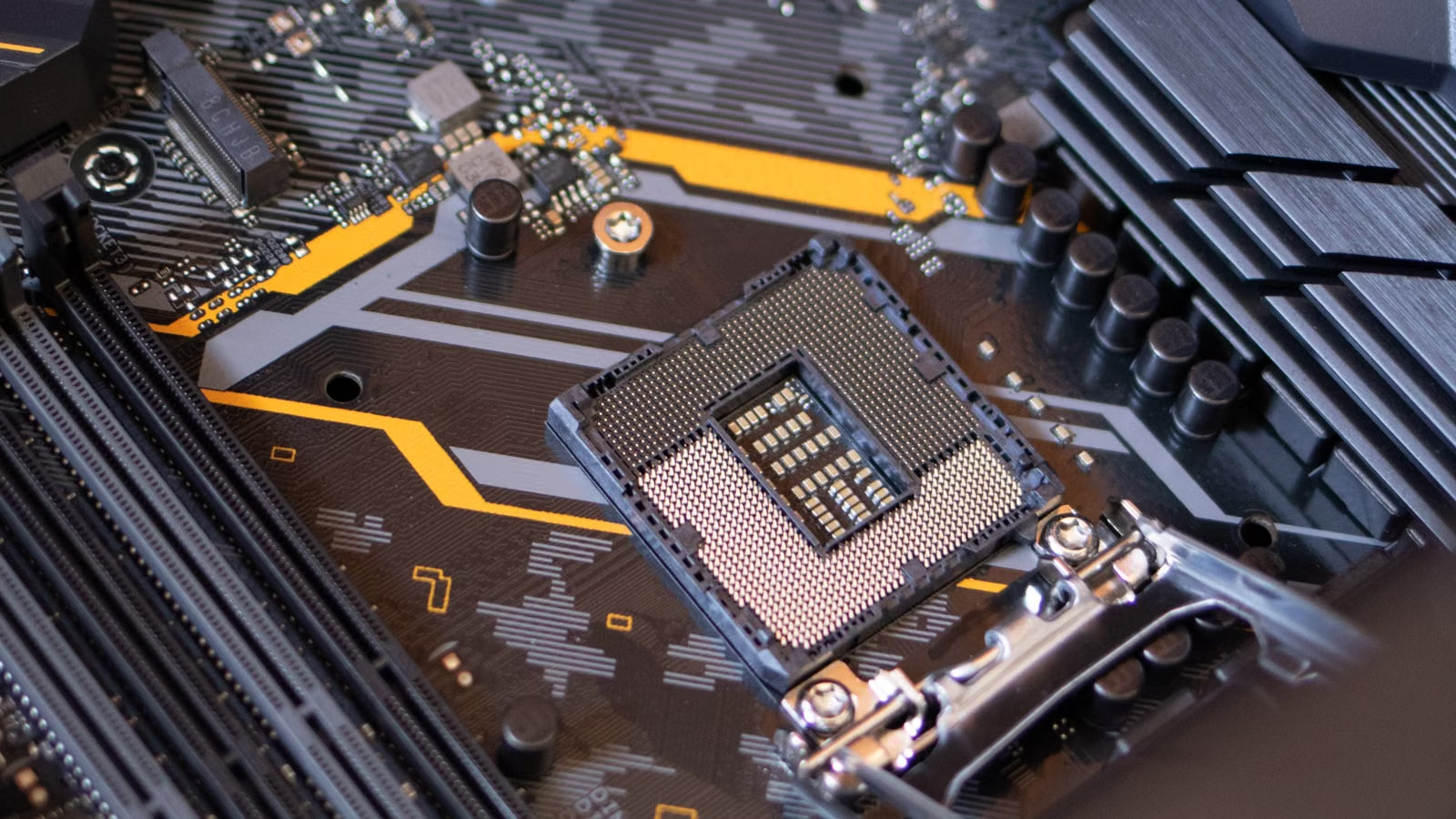
SMIC 0981.HK is not a typical memory chip stock. A more accurate classification is that it is a foundry stock. SMIC does not sell DRAM, NAND, or HBM under its own brand. Instead, it provides wafer manufacturing and process platform services for customers. Its relationship with the memory supply chain mainly lies in embedded non-volatile memory, standalone non-volatile memory platforms, and the indirect impact that memory prices, AI demand, and end-market inventory changes may have on customer orders. When analyzing 0981.HK, you should not focus only on “memory price increases,” but also on capacity utilization, gross margin, capital expenditure, and application mix.
Key Takeaways
- SMIC is not a typical memory chip stock, but a foundry stock.
- Its platforms cover embedded and standalone non-volatile memory.
- DRAM, NAND, and HBM themes affect 0981.HK mostly indirectly.
- Memory price increases may affect customer costs and order timing.
- To assess 0981.HK, watch utilization, margins, capex, and customer mix.
Is SMIC 0981.HK Really a Memory Chip Stock?
SMIC 0981.HK should not be simply defined as a memory chip stock. It is related to the memory supply chain, but its core identity is that of a foundry, not a DRAM, NAND, or HBM product company. A more precise view is that SMIC is one of the leading pure-play foundries in mainland China. Some of its process platforms involve embedded non-volatile memory and standalone non-volatile memory, so it has memory-related exposure, but it does not mainly generate revenue by selling self-branded memory chips.
SMIC has both Hong Kong stock code 0981.HK and A-share code 688981. In its 2025 annual report, the company disclosed that its mass-production platforms include logic IC, power/analog, high-voltage display driver, embedded non-volatile memory, standalone non-volatile memory, mixed-signal/RF, CMOS image sensors, and other technologies. This shows that SMIC does not serve only one chip category, but provides manufacturing platforms for different design companies.
The market often links SMIC with the “memory chip concept” for several reasons. First, the company does have process platforms related to non-volatile memory. Second, MCU, automotive electronics, industrial control, and security chips on mature nodes may require embedded storage. Third, after AI drives tight supply in HBM and DRAM, memory prices can affect the costs and order timing of smartphone, automotive, and consumer electronics customers. Fourth, investors often mix the broader “domestic semiconductor” theme with “domestic memory substitution.”
| Company Type | Representative Companies | Directly Sells Memory Chips? | Difference from SMIC |
|---|---|---|---|
| DRAM / HBM manufacturers | SK Hynix, Samsung, Micron | Yes | Directly produce and sell memory products |
| NAND manufacturers | YMTC, Kioxia, etc. | Yes | Directly sell NAND Flash products |
| Foundries | SMIC, TSMC | Usually no | Manufacture chips based on customer designs |
| Packaging and advanced packaging | ASE, Amkor, etc. | No | Provide packaging and testing services |
| Semiconductor equipment companies | ASML, Lam Research, etc. | No | Provide manufacturing or packaging equipment |
Therefore, the right label for 0981.HK should be “foundry + domestic substitution + mature nodes + semiconductor cycle,” rather than “pure memory chip stock.” If you are focused on HBM price increases, DRAM contract prices, or the NAND Flash cycle, SMIC is not the most direct stock to watch. If you are focused on domestic wafer manufacturing capability, mature-node supply and demand, automotive electronics, IoT, display drivers, and MCU foundry demand, SMIC is much more relevant.
Summary: SMIC is not a typical memory chip stock, but a foundry stock. It is related to memory because its process platforms cover embedded and standalone non-volatile memory, and because customer demand can be affected by memory cycles. However, it is not an HBM, DRAM, or NAND branded manufacturer, so investors should not directly apply the logic of Micron, SK Hynix, Samsung, or YMTC to SMIC. To analyze 0981.HK, start from the foundry business model, then evaluate its indirect connection to the memory supply chain.
What Is the Difference Between Foundry Manufacturing and Memory Chip Production?

The biggest difference between foundry manufacturing and memory chip production is the business model. A foundry mainly manufactures chips based on customer designs, and its revenue comes from wafer manufacturing services, capacity utilization, and process platform capability. A memory chip company usually owns its own products, capacity planning, sales system, and pricing cycle. Its revenue is directly affected by DRAM, NAND, and HBM shipment volume and pricing. SMIC is in the manufacturing services segment, not in the standardized memory product pricing segment.
The core of the foundry model is “customers design, the foundry manufactures.” Chip design companies may develop MCUs, CIS, RF chips, display drivers, analog chips, power management ICs, edge AI chips, or security chips, but they do not necessarily own fabs. Foundries provide process platforms, wafer manufacturing, masks, design services, IP support, reliability verification, and mass-production capacity. For SMIC, the key indicators are capacity utilization, wafer shipments, average selling price, gross margin, capital expenditure, and customer structure.
Memory chip companies operate differently. DRAM, NAND, and HBM are often standardized or semi-standardized products. Customers care more about capacity, speed, power consumption, reliability, generation upgrades, and supply stability. Memory manufacturers’ profits are highly cyclical: when demand rises, prices and margins may improve quickly; when supply is excessive, pricing and inventory pressure can also increase significantly. Lam Research’s distinction between memory, foundry, and logic markets is useful here: memory usually refers to DRAM and NAND, while foundry refers to the market of manufacturing different types of chips for external customers.
| Comparison | Foundry | Memory Chip Company |
|---|---|---|
| Business model | Manufactures based on customer designs | Produces and sells own memory products |
| Representative products | Logic, analog, MCU, CIS, display drivers | DRAM, NAND, HBM |
| Revenue drivers | Wafer shipments, utilization, process platforms | Memory prices, shipment volume, product generation |
| Customer relationship | Chip design companies and system companies | Server, smartphone, PC, and automotive customers |
| Cycle characteristics | Affected by end demand and capex | More directly affected by supply-demand and inventory cycles |
| SMIC’s position | Belongs to this category | Does not belong to this category |
This does not mean foundry manufacturing and memory are completely unrelated. Many logic chips also need memory cells. For example, MCUs need embedded Flash or eNVM to store programs; automotive and industrial chips need reliable storage for configuration data; security chips need non-volatile memory to store keys or parameters. This type of “embedded memory” is not a standalone DRAM or NAND product, but it is part of chip functionality and requires the foundry to provide the corresponding process platform.
Summary: A foundry earns money from manufacturing services, capacity utilization, and process platform value. A memory chip company earns money from products such as DRAM, NAND, and HBM. SMIC’s core identity is foundry, so it is not a pure memory stock. Its memory relevance comes from embedded storage in customer chips, standalone non-volatile memory foundry platforms, and the impact of memory cycles on end-customer orders. Only by distinguishing the business models can investors avoid misclassifying SMIC as a memory product manufacturer.
What Are SMIC’s Real Connections to the Memory Supply Chain?
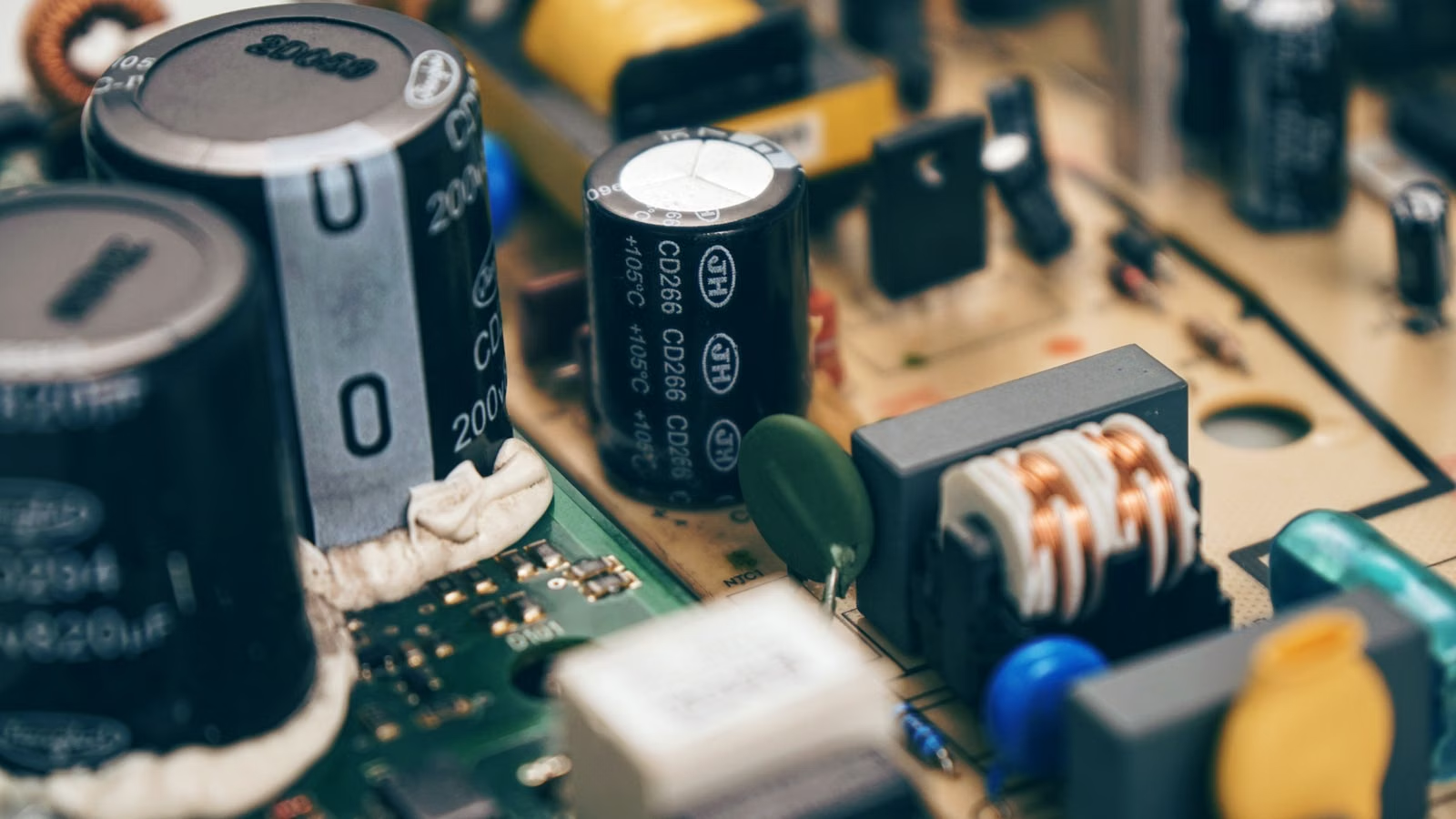
SMIC has three real connections to the memory supply chain. First, embedded non-volatile memory process platforms. Second, standalone non-volatile memory-related foundry capabilities. Third, the indirect impact of memory price increases or shortages on customer orders in smartphones, automotive electronics, consumer electronics, and IoT. These three links show that SMIC is “related to memory,” but they also show that it is not equivalent to a branded memory chip manufacturer.
Embedded non-volatile memory, commonly known as eNVM, is usually integrated inside logic chips. MCUs, smart card chips, security chips, automotive electronics chips, and industrial control chips need internal storage for programs, parameters, calibration values, or keys. It is not sold like standalone DRAM, nor is it used in SSDs like high-capacity NAND. It is part of chip functionality. The “0.18μm eNVM for Automotive Electronics” R&D project disclosed in SMIC’s annual report points to reliability verification, PDK, IP, and mass-production introduction for automotive electronics and industrial applications.
Standalone non-volatile memory is closer to an independent memory chip, but SMIC’s role is still foundry service. In other words, customers can design and manufacture certain non-volatile memory chips based on SMIC’s platform, but this does not mean SMIC sells NAND, NOR, or EEPROM under its own brand. When reading its financial reports, you should focus on “platform capability” and “customer orders,” not treat the company as a memory product seller.
Memory cycles also affect SMIC through a more practical channel: customer orders. When AI demand pushes up HBM, server DRAM, or even some traditional DRAM and NAND prices, smartphone, automotive, and consumer electronics customers may face higher component costs and supply shortages. If SMIC’s customers worry about insufficient memory supply, they may delay orders for other chips to avoid purchasing parts for end products that cannot be fully assembled. Reuters’ report on memory shortages affecting customer orders mentioned that concerns over memory supply once caused customers to hold back some non-memory chip orders.
| Connection | Technical or Business Meaning | Direct Memory Business? | Impact on 0981.HK |
|---|---|---|---|
| Embedded non-volatile memory | Built-in storage for MCU, automotive, industrial chips | Partly related | Raises the value of mature-node platforms |
| Standalone non-volatile memory | Customers design memory chips and SMIC manufactures them | Related, but not self-branded | Depends on customer orders and platform competitiveness |
| Memory price increases | DRAM / NAND costs rise | Indirect | May affect end-customer order timing |
| Memory shortages | Incomplete terminal BOMs | Indirect | May delay non-memory chip procurement |
| AI memory demand | Tight HBM and server memory supply | Indirect | Transmits through supply-chain pressure |
From an investment perspective, these three connections have different strengths. Embedded non-volatile memory is a more stable and trackable technology platform. Standalone non-volatile memory depends on customer orders and process competitiveness. Memory price increases and shortages are more cyclical shocks: they may bring positive market sentiment, but they may also pressure downstream demand. In low-end smartphones, consumer electronics, and automotive supply chains, rising memory costs are not always positive for a foundry.
Summary: SMIC’s relationship with the memory supply chain is real, but it is not as simple as “SMIC produces HBM” or “SMIC directly benefits from DRAM price increases.” Its links include eNVM process platforms, standalone non-volatile memory foundry capabilities, and the impact of memory prices and supply on customer orders. For 0981.HK, the memory concept should be understood as supply-chain relevance, not direct product revenue logic.
How Far Is SMIC 0981.HK from AI Memory and HBM?
AI memory and HBM affect SMIC only indirectly. The HBM mainline is more directly linked to SK Hynix, Samsung, Micron, advanced packaging, GPUs / ASICs, and the AI server supply chain. SMIC is more likely to be indirectly affected through domestic AI chips, edge AI, supporting power management, display drivers, MCUs, analog chips, connectivity chips, and mature-node demand. If you directly equate HBM price increases with SMIC profit growth, you may overstate the strength of this link.
The core value of HBM lies in high bandwidth, low power consumption, and near-compute interconnection. Micron’s high-bandwidth memory product positioning emphasizes high-performance and high-bandwidth workloads. The direct beneficiaries of this market are usually HBM memory manufacturers, advanced packaging capacity providers, GPU / ASIC companies, silicon interposer suppliers, and packaging equipment supply chains. SMIC is not an HBM manufacturer and is not a major HBM advanced packaging service provider, so it should not be placed in the most direct beneficiary layer.
The more relevant path for SMIC is that AI drives demand for a range of non-HBM chips. Domestic AI chips need wafer manufacturing support. Edge AI devices require MCUs, sensors, CIS, connectivity chips, and power management chips. AI servers, automotive electronics, and industrial equipment also need a large number of mature-node supporting chips. SMIC’s mature-node and specialty process platforms may win orders in these areas, but this is not the same logic as HBM memory pricing.
| AI / HBM Transmission Path | Direct Beneficiaries | Relationship with SMIC | Strength |
|---|---|---|---|
| HBM3E / HBM4 shipments | Memory manufacturers | Very indirect | Weak |
| CoWoS / advanced packaging expansion | Foundries, OSATs, equipment makers | Indirect | Medium to weak |
| Domestic AI chip manufacturing | Design companies, foundries | Potentially related | Medium |
| Power management, analog, MCU | Mature-node foundry | More related | Medium to strong |
| Smartphone and consumer electronics recovery | Foundry customer orders | More related | Medium to strong |
| Memory price increases pressuring terminal costs | Smartphone and automotive customers | Indirectly negative | Needs monitoring |
Demand growth also needs to translate into profit. Reuters’ report on SMIC’s 2026 first-quarter results showed that revenue rose 11.5% year over year to about USD 2.5 billion, but profit came in below market expectations. This indicates that even when demand is strong, depreciation, costs, expenses, pricing, and capacity ramp-up can still affect profit realization. Reuters also reported that SMIC planned to expand wafer capacity to meet demand, but depreciation from new equipment could also increase cost pressure.
Summary: AI memory and HBM do affect SMIC, but through a long transmission chain. The most direct HBM logic belongs to memory manufacturers, the GPU supply chain, and advanced packaging. SMIC is more likely to benefit from domestic AI chips, edge AI, analog, power management, MCU, display driver, and mature-node supporting demand. When judging 0981.HK, you need to break “AI demand” down into specific chip types and process platforms, rather than directly mapping HBM price increases to company profits.
How to Read SMIC’s Memory-Related Upside and Risks from Financial Reports
To assess SMIC’s memory-related upside, the key question is not whether it produces DRAM or NAND, but wafer shipments, capacity utilization, gross margin, capital expenditure, application mix, and mature-node demand. SMIC’s financial reporting usually classifies revenue by terminal applications and foundry business, rather than treating DRAM, NAND, or HBM as core revenue categories. Therefore, memory affects 0981.HK more through customer orders, cost cycles, and the value of mature-node platforms.
SMIC’s 2025 annual report disclosed wafer sales applications including smartphones, computers and tablets, consumer electronics, connectivity and IoT, and industrial and automotive. This structure shows that its customer demand is more closely tied to end electronics and chip design companies than to a single memory product price. If smartphone customers adjust product launch schedules because of rising memory costs, related chip orders may be affected. If automotive, industrial, and IoT demand remains stable, mature-node platforms may achieve better utilization.
Another key financial indicator is capacity utilization. Foundry is a heavy-asset industry with high fixed costs, so line utilization has a major impact on gross margin. When demand is strong and capacity utilization improves, revenue and gross margin may improve. When new capacity is ramping, depreciation rises, or customer orders fluctuate, gross margin may come under pressure. In its 2025 annual report outlook, SMIC stated that it expected 2026 revenue growth to exceed the average growth of the same-market industry, while capital expenditure was expected to be roughly flat compared with 2025. This means expansion and depreciation remain important factors to watch.
| Indicator | Positive Signal | Risk Signal | Relationship with Memory Supply Chain |
|---|---|---|---|
| Wafer shipments | Shipments grow, orders remain stable | Customers wait or inventory is high | Reflects downstream chip demand |
| Capacity utilization | Utilization improves | New capacity ramps slowly | Determines foundry cycle strength |
| Gross margin | Pricing and product mix improve | Depreciation, cost, and pricing pressure | Memory shortages may affect customer costs |
| Capital expenditure | Supports long-term capacity | Short-term depreciation rises | Determines mature-node supply |
| Application mix | Industrial, automotive, IoT remain stable | Smartphones and consumer electronics weaken | Memory price increases affect terminal demand |
| External restrictions | Domestic substitution demand rises | Equipment and technology constraints | Affects expansion and process iteration |
Memory cycles may bring both market attention and operating pressure. If AI demand tightens HBM, DRAM, and NAND supply, the semiconductor sector may receive more attention. But if smartphone, PC, and automotive customers delay final product production or chip procurement because memory costs rise, SMIC may face indirect pressure instead. Reuters’ report on Samsung raising memory prices showed that memory shortages and price increases had affected the broader electronics supply chain. Breakingviews’ analysis of AI-driven cost pressure on phones and cars also emphasized that tight supply of basic memory can increase cost pressure for lower-tech end products.
Summary: SMIC’s memory-related upside cannot be measured directly by DRAM or HBM prices. A more effective financial framework is to use wafer shipments and utilization to judge order strength, gross margin and depreciation to judge profit realization, application mix to judge customer demand, and capital expenditure to judge long-term capacity. Memory price increases may increase attention on the semiconductor sector, but they may also pressure end-customer costs. For 0981.HK, the memory cycle is an indirect variable, while foundry operating indicators are the core variables.
How Should Ordinary Investors Add 0981.HK to a Semiconductor Watchlist?
Ordinary investors are better off placing SMIC in a “foundry + domestic substitution + mature nodes + semiconductor cycle” watchlist, rather than a “pure memory chip” watchlist. A more practical framework has four steps: first look at application mix, then process platforms, then financial indicators, and finally external constraints and trading costs. This helps prevent short-term HBM, DRAM, or NAND price increases from being misread as direct earnings sensitivity for SMIC.
First, look at application mix. SMIC’s customers cover smartphones, consumer electronics, connectivity and IoT, industrial and automotive markets. Different terminals affect foundry demand differently. The smartphone supply chain is more affected by inventory, pricing, and replacement cycles. Industrial and automotive markets care more about supply stability and certification cycles. IoT and connectivity chips are more influenced by mature-node capacity and cost structures.
Second, look at process platforms. SMIC’s key value is not only advanced nodes, but also mature-node specialty processes such as eNVM, BCD, power management, analog, display drivers, MCU, and CIS. For many terminal devices, mature nodes are not “outdated”; they are more suitable for cost, reliability, and long-term supply requirements.
Third, look at operating indicators. Revenue growth is only the starting point. Gross margin, capacity utilization, capital expenditure, depreciation, inventory, cash flow, and customer orders are more important. A foundry’s profit elasticity often comes from higher utilization and better product mix, not from a single industry concept.
Before tracking 0981.HK, you can check these eight questions:
- Which end applications are driving SMIC’s current revenue growth?
- Is capacity utilization continuing to improve?
- Is gross margin being pressured by depreciation and new capacity ramp-up?
- Are eNVM, BCD, MCU, CIS, and other specialty platforms making progress?
- Are smartphone and consumer electronics customers affected by memory price increases?
- Are industrial, automotive, and IoT customers generating stable orders?
- Can capital expenditure convert into effective capacity?
- Is the valuation gap between Hong Kong-listed 0981.HK and A-share 688981 reasonable?
If you are also following SMIC, Hong Kong chip stocks, U.S. semiconductor equipment stocks, memory chip stocks, and AI ETFs, you need to consider not only industry logic but also trading markets, pricing currencies, exchange rates, liquidity, and fee structures. For cross-market comparison, Biya can be used for multi-asset market tracking and trading management. When watching U.S. semiconductor names, U.S. stock information search can help you compare overseas chip companies. If U.S. dollars and Hong Kong dollars are involved, real-time exchange rates should also be included in cost calculations. U.S. stock trading commission is USD 0, while platform fees, external institutional fees, and other charges should be checked against the fee center and order page. Availability of related services depends on the user’s location, identity verification results, platform rules, and applicable laws and regulations.
Summary: SMIC is better placed in a foundry and domestic semiconductor watchlist, not a pure memory watchlist. You can evaluate 0981.HK with a four-step framework: application mix, process platforms, financial indicators, and external constraints. Memory cycles affect customer costs and order timing, but they are not SMIC’s most direct revenue source. What truly determines SMIC’s fundamentals is capacity utilization, gross margin, capital expenditure efficiency, customer structure, and mature-node platform competitiveness.
If you are tracking SMIC 0981.HK, Hong Kong technology stocks, A-share semiconductor ETFs, U.S. memory stocks, semiconductor equipment companies, and AI ETFs at the same time, what you need to manage is not only “who benefits more from memory price increases,” but also trading hours, pricing currencies, exchange rates, fee structures, and portfolio concentration across different markets. Biya is a global multi-asset trading wallet that supports U.S. stocks, Hong Kong stocks, and digital asset management. If related services are available in your region, you can further check U.S. stock trading fees. Biya charges USD 0 commission for U.S. stock trading, while platform fees, external institutional fees, and other fees should be checked against the fee center and order page. Public market information, trading rules, and fee structures are only for understanding the market and do not constitute investment advice. Semiconductor stocks can be volatile, so before trading, investors should fully understand order types, liquidity risks, and their own risk tolerance.
FAQ
Is SMIC 0981.HK a DRAM or NAND company?
SMIC 0981.HK is not a DRAM or NAND company. It is a foundry that mainly provides wafer manufacturing and process platform services for customers. It does not sell DRAM, NAND, or HBM under its own brand. Its relationship with memory mainly lies in eNVM platforms, non-volatile memory foundry services, and customer order impact.
What is SMIC’s embedded non-volatile memory used for?
SMIC’s embedded non-volatile memory is mainly used in MCUs, automotive electronics, industrial control, and security chips. It can store programs, parameters, configuration data, or identity information inside logic chips. It is not a standalone memory module or SSD, but part of a chip function platform.
Does an HBM price increase directly benefit SMIC 0981.HK?
An HBM price increase affects SMIC 0981.HK mostly indirectly. The direct beneficiaries are usually HBM memory manufacturers, advanced packaging companies, and the AI GPU supply chain. For SMIC, investors should focus more on domestic AI chips, mature-node orders, customer demand, capacity utilization, and gross margin improvement.
What is the difference between SMIC and YMTC?
SMIC is mainly a foundry, while YMTC mainly focuses on NAND Flash memory products. Both companies are part of China’s semiconductor supply chain, but their business models differ. SMIC provides manufacturing services, while YMTC sells memory products. Investors should evaluate foundry cycles and memory product cycles separately.
What financial indicators matter when investing in SMIC 0981.HK?
When evaluating SMIC 0981.HK, key indicators include revenue growth, gross margin, capacity utilization, wafer shipments, capital expenditure, depreciation pressure, application mix, and customer inventory changes. Looking only at the “memory chip concept” is not enough, because the core logic of 0981.HK remains foundry manufacturing.
What is the difference between SMIC A-share 688981 and Hong Kong stock 0981.HK?
SMIC A-share 688981 and Hong Kong stock 0981.HK refer to the same company, but they trade in different markets. They may differ in pricing currency, trading hours, liquidity, valuation level, investor structure, and transaction costs. When comparing AH shares, investors should consider real-time prices, exchange rates, and account rules.
*This article is provided for general information purposes and does not constitute legal, tax or other professional advice from BiyaPay or its subsidiaries and its affiliates, and it is not intended as a substitute for obtaining advice from a financial advisor or any other professional.
We make no representations, warranties or warranties, express or implied, as to the accuracy, completeness or timeliness of the contents of this publication.
Related Blogs of

How Do AI Servers Drive Storage Demand? The Roles of HBM, Server DRAM, Enterprise SSDs, and HDDs


Why Does AI Compute Growth Drive Storage Demand? The Difference Between Training, Inference, and Data Retention


AI Storage Supply Chain Map: Chips, HDDs, SSDs, Packaging Equipment, and Enterprise Storage Systems


Why Is HDD Supply and Demand Tightening? AI Data Centers, Long-Term Agreements, and Western Digital/Seagate Pricing Power

Choose Country or Region to Read Local Blog
 Australia
 Austria
 Belgium
 Canada
 Cyprus
 Czech Republic
 Denmark
 Estonia
 Finland
 France
 Germany
 Greece
 Hong Kong
 India
India Indonesia
 Ireland
 Italy
Italy Japan
Japan Latvia
 Lithuania
 Luxembourg
 Malaysia
 Malta
Malta Morocco
 Nepal
Nepal Netherlands
 New Zealand
 Norway
 Pakistan
 Philippines
 Poland
 Portugal
 Romania
 Singapore
 Slovakia
 Slovenia
 South Africa
 South Korea
 Spain
Spain Sweden
 Thailand
 The United States
 Turkey
 United Arab Emirates
 United Kingdom
 Vietnam
Contact Us




BIYA GLOBAL LLC is registered with the Financial Crimes Enforcement Network (FinCEN), an agency under the U.S. Department of the Treasury, as a Money Services Business (MSB), with registration number 31000218637349, and regulated by the Financial Crimes Enforcement Network (FinCEN).
BIYA GLOBAL LIMITED is a registered Financial Service Provider (FSP) in New Zealand, with registration number FSP1007221, and is also a registered member of the Financial Services Complaints Limited (FSCL), an independent dispute resolution scheme in New Zealand.