
Why Does AI Compute Growth Drive Storage Demand? The Difference Between Training, Inference, and Data Retention





AI compute growth does not only mean more GPUs, AI accelerators, and servers. It also expands storage demand at the same time. Training requires continuous reading of massive datasets, checkpoint writing, and model version retention. Inference requires loading model weights, maintaining KV cache, accessing vector databases, and storing user context. Data retention involves raw datasets, cleaned data, logs, generated content, audit records, and backups. When evaluating AI infrastructure investment, you should not only look at GPU shipments. You also need to assess whether HBM, DRAM, enterprise SSDs, nearline HDDs, object storage, and data platforms can support real workloads.
Key Takeaways
- AI compute growth expands storage demand across training, inference, and data retention.
- Training emphasizes high-throughput reads, checkpoint writing, and GPU utilization.
- Inference emphasizes model weights, KV cache, low-latency access, and high concurrency.
- Data retention focuses on capacity, cost, tiered storage, log retention, and governance.
- HBM, DRAM, SSDs, and HDDs benefit through different mechanisms and should not be grouped together.
- To judge AI storage demand, focus on workloads rather than concept hype.
Why Does AI Compute Growth Drive Not Only GPUs, but Also Storage?
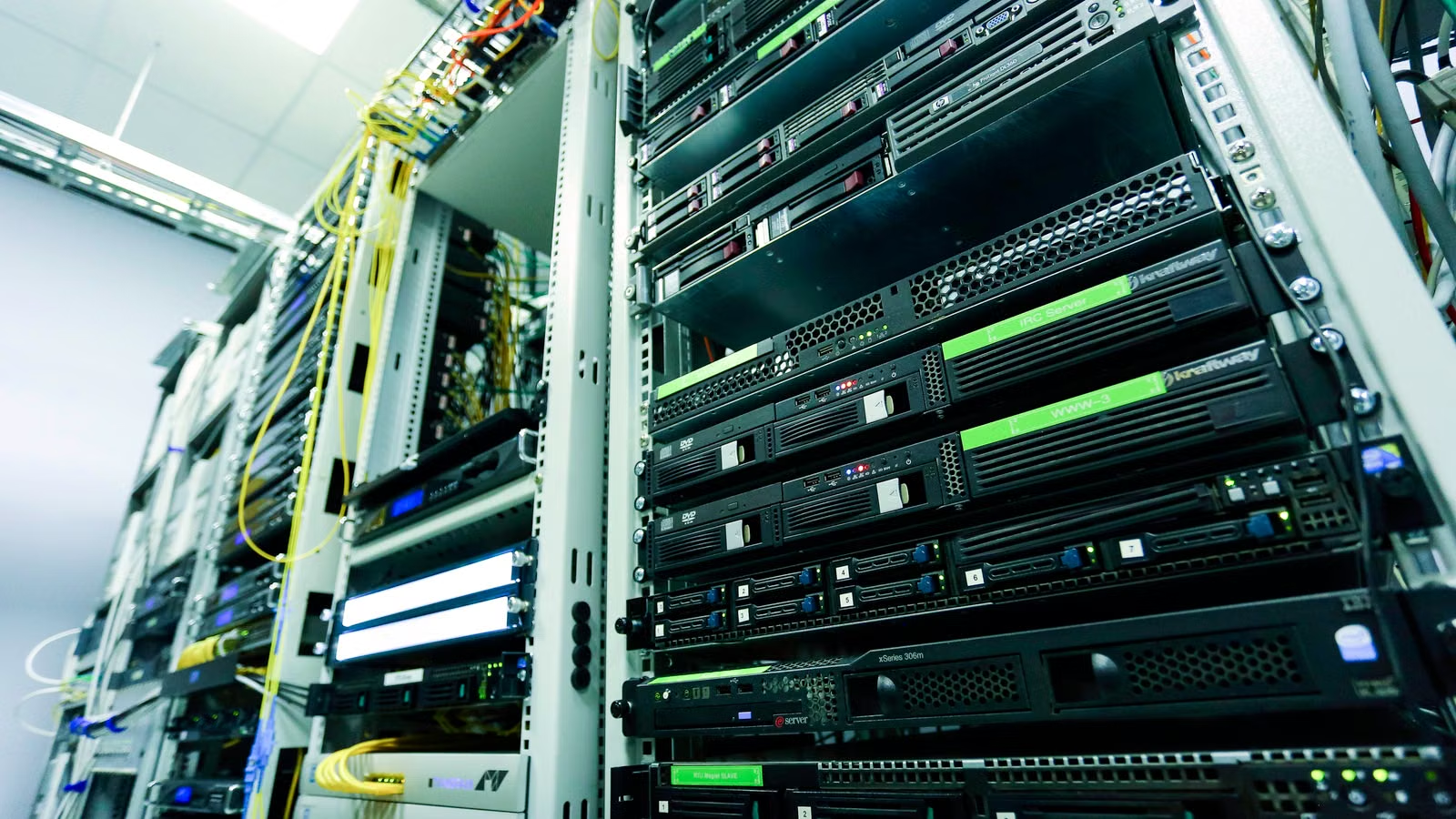
AI compute growth drives storage demand because an AI system is not only about computation. It also needs to continuously move, temporarily store, write, and preserve data. The more GPUs there are, the more the data pipeline must avoid slowing down training. The larger the model, the more weights, context, and intermediate states need to be handled. The more widely AI applications are adopted, the more inference logs, user interactions, and generated content must be stored. AI infrastructure is therefore not just “GPU expansion,” but a coordinated expansion of compute, memory, networking, and storage.
A complete AI system usually includes data collection, data cleaning, training, fine-tuning, evaluation, deployment, inference, logging, and data retention. During training, data must be continuously moved from data lakes, object storage, SSDs, or parallel file systems into GPUs. During inference, model weights must be read quickly, context must be processed, and retrieval systems must be accessed. After a business application goes live, user requests, model outputs, feedback data, and audit records must also be stored. When discussing storage scaling for AI training and inferencing, NVIDIA emphasizes that capacity, performance, networking hardware, and data transfer protocols should be planned together, rather than added only after GPUs are deployed.
The relationship among compute, memory, and storage can be understood in three layers:
| Layer | Typical Components | Main Function | Common Bottleneck |
|---|---|---|---|
| Compute | GPU, TPU, AI accelerator, ASIC | Executes matrix computation and model inference | Insufficient compute, high power consumption |
| Memory | HBM, GDDR, DDR5, LPDDR, CXL memory | Stores model weights, intermediate states, and cache | Insufficient capacity or bandwidth |
| Storage | NVMe SSD, enterprise SSD, object storage, nearline HDD | Stores training data, checkpoints, logs, and archives | Insufficient throughput, high latency, high cost |
GPUs are fast, but that does not mean the whole system is fast. If training data cannot reach the GPU in time, the GPU waits. If checkpoint writing is too slow, training is interrupted. If inference context cannot stay in the right storage tier, user wait time increases. The larger the AI cluster, the more easily a bottleneck in one component is amplified. In the past, many companies treated storage as a cost center. In AI workloads, however, storage has become infrastructure that affects GPU utilization, inference throughput, data governance, and long-term cost.
AI compute growth drives storage demand because AI workloads create hard requirements for both “data entering the compute system” and “compute results being retained over time.” Training requires high-throughput reads and continuous writes. Inference requires low-latency access and context management. Data retention requires capacity, cost control, and governance capabilities. Expanding GPUs while ignoring storage may leave expensive compute waiting for data, or make inference costs rise quickly under high concurrency. To evaluate whether AI infrastructure is healthy, you need to look not only at GPU counts, but also at whether HBM, DRAM, SSDs, HDDs, networking, and data platforms can match compute growth.
Why Does AI Training Require So Much Storage?
AI training requires a large amount of storage because model training does not read data only once. It repeatedly reads, shuffles, batches, preprocesses, and writes results. The larger the dataset, the more training epochs there are, and the more frequent checkpoints become, the more important storage throughput, concurrent reads and writes, and network bandwidth are. The core question in training is not “can the data be stored,” but “can the storage system continuously, reliably, and at high throughput deliver data to GPUs.”
Training data usually exists in many forms: raw text, images, video, code, speech, sensor data, and enterprise documents. After cleaning, it may become cleaned data, tokenized data, feature data, and training batches. When explaining how AI model training interacts with storage, Dell divides the process into three key stages: loading training data, preprocessing data, and training the model on GPUs. Each stage accesses storage, but the access pattern is different.
Another training-stage storage need that is often underestimated is checkpointing. Large model training takes a long time and is expensive, so results cannot be saved only after training is complete. Systems usually need to periodically write model weights, optimizer states, and recovery points for failure recovery, experiment comparison, model version management, and continued training. SNIA’s AI storage material notes that training uses batches of data to update model weights and periodically writes checkpoint data for recovery. The larger and more frequent the checkpoint, the greater the pressure on SSDs, parallel file systems, and networks.
Storage demand in training can be divided into four categories:
| Training Stage | Storage Need | Key Metric | Common Medium |
|---|---|---|---|
| Data reads | Repeatedly reading training datasets and sample batches | Throughput, concurrent reads, data loading speed | NVMe SSD, object storage, parallel file system |
| Data preprocessing | Cleaning, splitting, tokenizing, augmentation | Mixed read/write performance, CPU/GPU coordination | SSD, cache layer, data lake |
| Checkpoint writing | Saving model weights and recovery points | Write speed, reliability, recovery time | Enterprise SSD, parallel file system |
| Experiment retention | Saving versions, parameters, logs, and evaluation results | Capacity, traceability, cost | Object storage, HDD, archival storage |
To reduce data movement bottlenecks, AI training is also driving storage architecture upgrades. NVIDIA’s GPUDirect Storage can create a direct data path between local or remote storage and GPU memory, reducing the impact of CPU staging on data movement. This reflects a broader trend: as GPUs become faster, the traditional “storage—CPU—memory—GPU” data path can become a bottleneck, and training systems need data to enter accelerators more directly and efficiently.
AI training drives storage demand not only because training datasets are becoming larger, but also because the training process continuously reads data, writes checkpoints, saves model weights, and retains experiment versions. The larger the compute cluster, the less acceptable it is for GPUs to be slowed down by data loading. The longer the training run, the more important checkpointing and version management become. Enterprise SSDs, parallel file systems, high-speed networks, object storage, and data lakes all become part of the training pipeline. The most important training-stage question is not “is there enough capacity,” but “can the storage system keep GPUs waiting less, reduce training interruptions, and make experiments reproducible.”
Why Does AI Inference Also Drive Storage and Memory Demand?

AI inference also drives storage and memory demand because inference is not a lightweight task. Every user request requires loading model weights, processing input context, generating output, and maintaining intermediate states. The more users there are, the longer the context is, the larger the model becomes, and the higher concurrency rises, the more pressure appears on HBM, DRAM, SSDs, vector databases, and caching systems. Training is the model-building phase; inference is the continuous workload after AI applications operate at scale.
IBM explains AI inference as the process of using a trained AI model to handle new data and requests. It may look like a simple process of “input a question, receive an answer,” but internally the system goes through prompt input, prefill, decode, token generation, and response output. Model weights must be loaded, input context must be processed, and output tokens must be generated step by step. Once user numbers increase, inference shifts from a single-computation problem to a continuous service problem.
One of the most important storage variables in inference is KV cache. KV cache stores the key/value intermediate states generated when a Transformer model processes context. It reduces repeated computation, but it also consumes a large amount of memory. In a discussion of large-scale LLM inference, NVIDIA notes that loading Llama 3 70B and Llama 4 Scout 109B in FP16 requires about 140GB and 218GB of memory, while a single user with a 128k-token context can consume around 40GB of KV cache for Llama 3 70B. This memory requirement grows linearly with the number of users.
KV cache turns inference from a “compute problem” into a “memory and storage tiering problem.” Ideally, the hottest cache stays in HBM. When HBM is insufficient, part of the cache may be placed in CPU DRAM, CXL memory, NVMe SSDs, or remote storage. NVIDIA Dynamo notes that KV Cache offloading can support longer context, reduce GPU memory usage, improve concurrency, and reduce repeated computation. This kind of technology shows that the inference-side bottleneck is not only GPU compute, but also cache capacity, access latency, and cost structure.
Inference is further amplified by RAG and AI agents. RAG needs access to enterprise documents, vector databases, search indexes, and external knowledge bases. AI agents also record plans, tool-call results, task states, and historical context. The closer an inference service gets to real business workflows, the more distributed its accessed data becomes, and the more the storage system must support low latency, high concurrency, permission control, and continuous updates at the same time.
| Inference Need | Typical Scenario | Main Pressure | Related Storage Layer |
|---|---|---|---|
| Model weight loading | Large model deployment and elastic scaling | Capacity, read speed | HBM, DRAM, SSD |
| KV cache | Long context, multi-turn dialogue, high concurrency | HBM capacity, cache hit rate | HBM, DRAM, CXL, NVMe SSD |
| RAG retrieval | Enterprise knowledge base, customer service, search augmentation | Low latency, index updates | Vector database, SSD, object storage |
| Agent state | Tool calls, task planning, context memory | State management, persistence | Database, object storage, logging system |
| User logs | Quality evaluation, risk control, retraining | Writes, retention, governance | Object storage, HDD, archival storage |
Inference does not mean storage demand declines after training is finished. On the contrary, when AI applications enter large-scale user service, model weights, KV cache, long context, multi-turn dialogue, RAG retrieval, and agent states continuously consume HBM, DRAM, SSD, and data platform resources. Training leans toward high throughput and large-scale writes, while inference leans toward low latency, high concurrency, and context management. As AI applications become more widely adopted, inference-side storage demand is likely to keep growing, especially as long context, enterprise knowledge bases, and multi-agent workflows become more common.
Why Is Data Retention the Third Main Driver of AI Storage Demand?
Data retention is one of the most underestimated parts of AI storage demand because AI systems do not only consume old data; they continuously create new data. Training generates checkpoints, model versions, and evaluation results. Inference generates user requests, model outputs, feedback data, and logs. Enterprise deployment also requires auditing, backups, permission management, and compliance retention. The more compute there is and the more frequently AI runs, the larger the amount of data that needs to be retained over the long term.
The AI data lifecycle usually includes raw data, clean data, training data, model weights, checkpoints, inference logs, generated content, audit records, and backups. Training data retention mainly supports model training, reproducibility, version management, and retraining. Inference data retention mainly supports user experience optimization, quality evaluation, security auditing, and business analysis. Both types of data need to be stored, but their access frequency, value density, and compliance requirements differ.
When explaining AI storage, IBM emphasizes that AI storage must balance large-scale data, high performance, low latency, and controlled access. This is important because AI data should not all be placed on high-speed SSDs, nor should it all be placed on low-cost HDDs. Different data should be tiered based on access frequency, latency requirements, cost, and governance needs.
| Data Type | Access Frequency | Main Use | Suitable Storage Tier |
|---|---|---|---|
| Hot data | Very high | Current training batches, online inference context, real-time indexes | HBM, DRAM, NVMe SSD |
| Warm data | Medium | Recent checkpoints, commonly used corpora, vector indexes | Enterprise SSD, object storage |
| Cold data | Low | Historical corpora, archived logs, backups, low-frequency content | Nearline HDD, object storage, archive |
| Governance data | Accessed as needed | Auditing, traceability, permissions, compliance records | Object storage, immutable snapshots, backup systems |
Enterprises store AI data not only to train more models later, but also to reproduce results, diagnose problems, protect data, and meet governance requirements. Dell’s content on AI workload cyber-resilience notes that training and inference datasets may be distributed across multiple storage systems and dynamically evolve throughout the AI lifecycle, making AI datasets protection important for integrity and availability. For enterprises, losing model versions, training sample sources, or inference logs may affect issue diagnosis, compliance audits, and business continuity.
Data retention also brings cost constraints. Hot data requires low latency and high performance, but not all data deserves to occupy expensive SSD capacity over the long term. Historical logs, backups, video corpora, and low-frequency content are better suited to lower-cost capacity tiers. Western Digital said in its fiscal third quarter of 2026 that almost everything from training and inference to agentic AI and physical AI generates data that must be retained persistently and cost-effectively, making HDDs an important capacity foundation in the AI data retention chain.
Data retention is the third major driver of AI storage demand, and it is the part most easily obscured by the “GPU narrative.” Training and inference continuously generate data. Enterprises must also keep model versions, checkpoints, logs, generated content, audit records, and backups. Different data has different value, access frequency, and cost constraints, so AI storage is moving toward a tiered architecture: high-performance SSDs handle hot data, object storage and enterprise SSDs support warm data, and nearline HDDs and archival systems provide large-capacity long-term retention. Security and governance determine whether this data can be reused reliably.
Which Storage Hardware and Industry Segments Benefit from AI Compute Growth?
AI compute growth does not drive only one kind of storage hardware. It drives the entire storage hierarchy. HBM and DRAM solve the bandwidth and latency problems closest to the GPU. Enterprise SSDs support training throughput, checkpoints, RAG, and inference caching. HDDs and object storage provide large-capacity, low-cost, long-term retention. Different storage hardware benefits from different parts of the AI workload, and related companies and stocks should not be treated as the same type of AI demand.
HBM and DRAM are the highest-value storage layers closest to the GPU. Large model training requires high-bandwidth memory to support massive matrix computation, and inference services also require efficient access to model weights, activations, and cache. Micron says its AI memory and storage portfolio covers HBM, SSDs, LPDDR, data centers, and edge AI scenarios, showing that AI-driven storage demand is not limited to a single product. At COMPUTEX 2026, Micron also said that HBM4 36GB 12H can improve LLM inference throughput under certain conditions, showing a direct connection between high-bandwidth memory and token generation efficiency.
Enterprise SSDs sit between GPUs, data pipelines, and inference services. Training requires fast data reads and checkpoint writes. Inference requires access to vector databases, RAG data, model files, and KV cache tiering. Data engineering must process continuously growing datasets. NVMe SSDs, PCIe Gen5/Gen6 SSDs, QLC enterprise SSDs, NVMe-oF, and GPUDirect Storage are all evolving around the goal of being faster, more stable, and closer to GPUs. Micron’s description of the AI data center also includes both AI training and inference as application areas for memory and storage solutions.
HDDs and object storage are more like the capacity foundation. AI training data, video corpora, inference logs, backups, and historical versions do not always require millisecond-level access, but they do need to be stored over the long term in a low-cost and manageable way. Seagate reported revenue of $3.11 billion for its fiscal third quarter of 2026 and disclosed a non-GAAP gross margin of 47.0%, reflecting support from nearline HDD and data center demand.
| Storage Segment | Main Function | AI Workload | Benefit Logic |
|---|---|---|---|
| HBM | High bandwidth and low latency close to GPUs | Training, inference, long context | Larger models and more token generation |
| DDR5/DRAM | CPU-side memory, cache, system data | Inference services, data processing | More concurrency and context management |
| Enterprise SSD | High throughput, low latency, random reads/writes | Training data, checkpoints, RAG, KV offload | More pressure on data pipelines and cache |
| Object storage | Elastic capacity, data lakes, governance | Raw corpora, cleaned data, logs | Longer AI data lifecycle |
| Nearline HDD | Low-cost capacity and long-term retention | Backup, archive, historical training data | More long-term AI data retention |
AI compute growth drives the full storage hierarchy, not just a single piece of hardware. HBM and DRAM solve bandwidth problems closest to the GPU. Enterprise SSDs support training throughput, checkpoints, RAG, and inference cache. Object storage and HDDs solve large-scale data retention. When analyzing the AI storage supply chain, you need to map “training, inference, and retention” to “memory, SSDs, HDDs, and data platforms.” Different companies, products, and stocks benefit from different parts of the chain, so not all storage demand should be treated as the same AI theme.
How Can You Tell Whether AI Storage Demand Is Real Growth or Short-Term Inventory Volatility?
To judge whether AI storage demand is real growth, you should not only look at whether the AI theme is hot or whether GPU shipments are high. You need to see whether training, inference, and data retention workloads are growing together. If training dataset size, inference token volume, concurrent users, context length, RAG calls, log retention, and cloud capital expenditure are all increasing, storage demand is more likely to be real. If the growth is only channel restocking or short-term supply grabbing, price volatility may reverse more quickly.
First, look at workloads. On the training side, watch dataset size, GPU utilization, checkpoint frequency, and data read throughput. On the inference side, watch tokens per second, TTFT, KV cache, batch size, and concurrency. On the retention side, watch data growth, log retention periods, backup strategies, and governance needs. NVIDIA’s long-context inference optimization notes that as KV cache grows, cache hit rate, latency, and HBM usage are all affected, showing that real inference workloads directly change memory and storage demand.
Second, look at whether procurement and pricing confirm each other. Real demand usually appears in enterprise SSD orders, nearline HDD shipments, HBM and DRAM pricing, supplier backlog, long-term contracts, and cloud capital expenditure. If there is only a single-quarter price increase but inventories are also rising quickly, it may be restocking. If workload growth, long-term procurement, and product upgrades all appear together, the credibility of real demand is higher.
Third, look at cost constraints. AI storage demand is not unlimited. Enterprises must choose among performance, cost, power consumption, compliance, and manageability. KV cache compression, tiered storage, hot/cold data separation, model quantization, data deduplication, and selective retention are all ways to control cost. NVIDIA Research’s discussion of KV cache compression also shows that compression methods can ease memory pressure in long-context inference, but real deployment still faces production infrastructure challenges.
| Assessment Dimension | Real Demand Signal | Short-Term Volatility Signal |
|---|---|---|
| Training | Larger datasets, higher GPU utilization, more checkpoints | Demand weakens after a one-time project purchase |
| Inference | More tokens, higher concurrency, longer context | Short-term test traffic without long-term service |
| Data retention | More logs, backups, audits, and governance needs | Temporary data accumulation followed by rapid cleanup |
| Procurement | Long-term contracts, sustained orders, product upgrades | Channel restocking, duplicate orders |
| Pricing | Tight supply for high-end products with visible orders | Prices rise too fast while inventories recover |
| Cost | Tiered storage and optimization technologies progress together | Budget pressure delays procurement |
If you follow AI storage-related stocks or ETFs, trading costs should also be included in actual return assessment. U.S. stock trading costs may include not only commissions, but also platform fees, external agency fees, transaction activity fees, order execution differences, and settlement-related costs. Taking U.S. stock trading fees as an example, Biya charges $0 commission for U.S. stock trading, while platform fees, external agency fees, and other charges are subject to the fee center and order page. Availability of relevant services depends on the user’s location, identity verification results, platform rules, and applicable laws and regulations. Before trading, investors should still review the order page, account statements, and local regulatory requirements.
To judge AI storage demand, you need to see whether workloads, procurement, pricing, inventory, and cost confirm one another. Real growth will continue to appear in training data, inference tokens, long context, RAG calls, log retention, enterprise SSDs, nearline HDDs, and data center capital expenditure. Short-term inventory volatility may show up as prices rising first, channel restocking, inventory recovery, and then order slowdown. The long-term direction of AI storage demand matters, but industry and investment judgments depend more on timing: which demand has entered production, which demand is still in pilot projects, and which demand has already been reflected in prices and valuations.
If you continuously follow AI infrastructure, storage chips, enterprise SSDs, HDDs, semiconductor ETFs, and related U.S. and Hong Kong stocks, you can use Biya to track multi-asset quotes, trading records, and account activity. Judging AI compute and storage demand is not a one-time conclusion. Training, inference, data retention, cloud capital expenditure, and enterprise orders all keep changing. You can also combine U.S. stock information with your own monitoring of related companies and industry changes, while confirming service availability based on your location, identity verification results, platform rules, and applicable laws and regulations. Public market information and fee structures are for reference only and do not constitute investment advice. Before trading, investors should fully understand order types, fee structures, volatility risks, and their own risk tolerance.
FAQ
Why Does AI Compute Growth Increase Storage Demand?
AI compute growth increases storage demand because training, inference, and data retention all rely on reading, temporarily storing, writing, and retaining data over time. After GPU capacity increases, if data cannot enter the compute system in time, GPU utilization will decline. Storage is therefore part of AI infrastructure.
What Is the Difference Between AI Training and AI Inference Storage Demand?
AI training emphasizes high-throughput reads, checkpoint writing, and distributed data pipelines. AI inference emphasizes model weight loading, KV cache, low-latency access, and high-concurrency context management. Both require storage, but their bottleneck metrics are different.
Why Does KV Cache Affect AI Inference Storage Demand?
KV cache stores intermediate states generated when a model processes context. Long context, multi-turn conversations, and high-concurrency users all make KV cache grow. If HBM is insufficient, the system may use DRAM, CXL memory, or SSDs as tiered cache layers.
Why Can’t AI Data Retention Use Only High-Speed SSDs?
AI data retention cannot rely only on high-speed SSDs because not all data requires low-latency access. Hot training data and online inference need high-speed storage, while historical corpora, logs, backups, and archives are better suited to lower-cost high-capacity storage such as object storage and nearline HDDs.
How Can Ordinary Investors Judge Whether AI Storage Demand Is Real?
Ordinary investors can observe training dataset size, inference token volume, enterprise SSD orders, nearline HDD demand, memory prices, inventory, and cloud capital expenditure. If multiple indicators rise together, the credibility of real demand is higher.
Does AI Storage Demand Growth Mean Related Stocks Will Definitely Rise?
AI storage demand growth does not mean related stocks will definitely rise. Share prices are also affected by valuation, inventory, pricing cycles, competition, customer concentration, and market expectations. Before trading, investors should consider earnings, orders, fee structures, and their own risk tolerance.
*This article is provided for general information purposes and does not constitute legal, tax or other professional advice from BiyaPay or its subsidiaries and its affiliates, and it is not intended as a substitute for obtaining advice from a financial advisor or any other professional.
We make no representations, warranties or warranties, express or implied, as to the accuracy, completeness or timeliness of the contents of this publication.
Related Blogs of

Crypto Exchange Fees Comparison: Trading Fees, Spreads, and Withdrawals


Choosing a Stock Trading App: Beginner Checklist



Choose Country or Region to Read Local Blog
 Australia
 Austria
 Belgium
 Canada
 Cyprus
 Czech Republic
 Denmark
 Estonia
 Finland
 France
 Germany
 Greece
 Hong Kong
 India
India Indonesia
 Ireland
 Italy
Italy Japan
Japan Latvia
 Lithuania
 Luxembourg
 Malaysia
 Malta
Malta Morocco
 Nepal
Nepal Netherlands
 New Zealand
 Norway
 Pakistan
 Philippines
 Poland
 Portugal
 Romania
 Singapore
 Slovakia
 Slovenia
 South Africa
 South Korea
 Spain
Spain Sweden
 Thailand
 United States
 Turkey
 United Arab Emirates
 United Kingdom
 Vietnam