What Is the AI Storage Sector? Understanding GPU, HBM, and Data Center Hard Drives




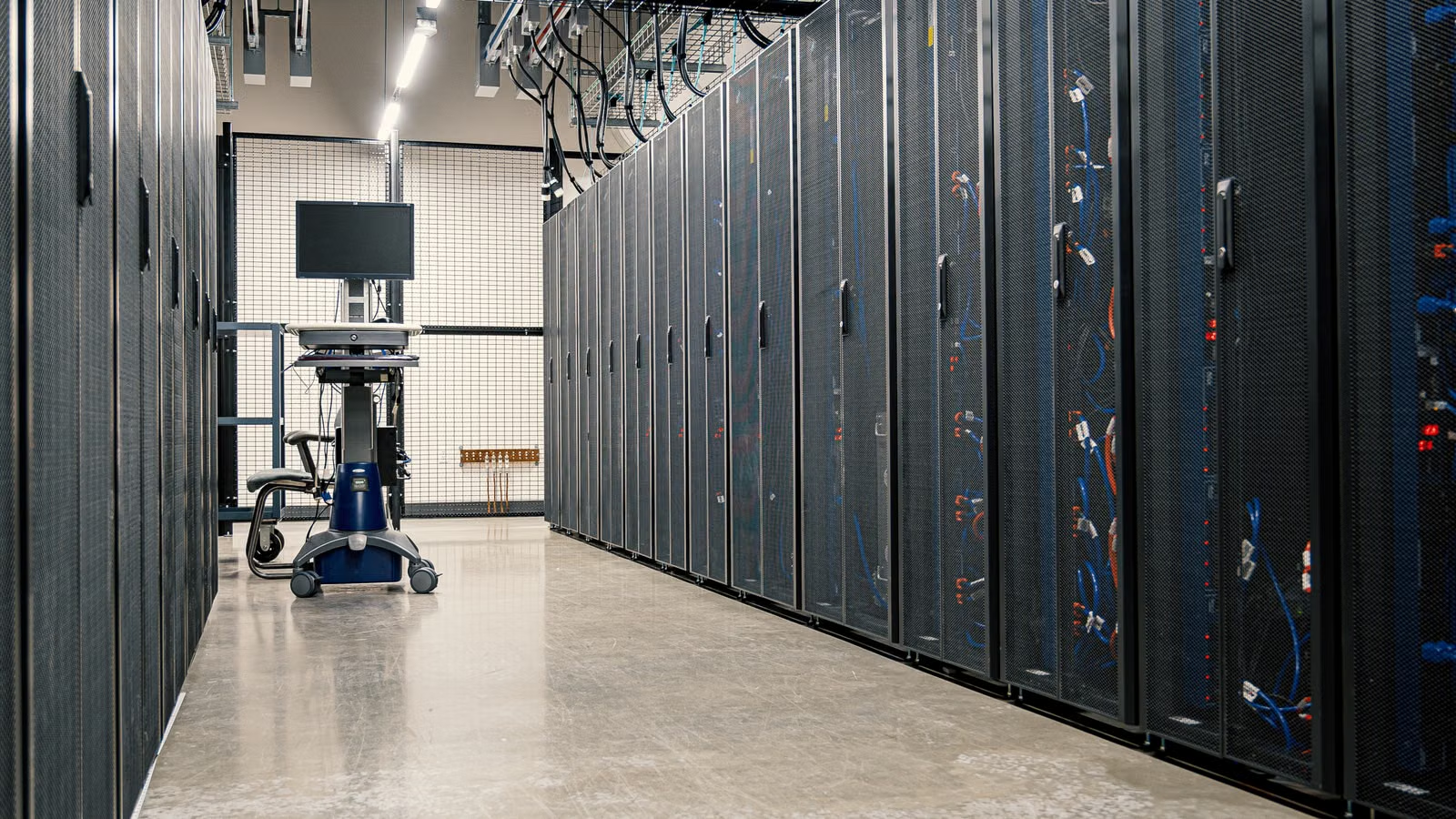
The AI storage sector is not just a “hard drive theme.” It is a full data infrastructure chain responsible for data throughput, caching, long-term storage, and cost optimization inside AI data centers. You can think of it as the critical data layer beyond GPUs: HBM keeps GPUs supplied with data, DRAM supports server scheduling, SSDs handle high-speed access, and HDDs provide large-capacity, lower-cost storage. For individual investors, the key to understanding AI storage is not memorizing a list of stocks, but understanding the demand logic, pricing cycles, and valuation risks behind each technology layer.
Key Takeaways
- The AI storage sector covers HBM, DRAM, NAND, SSDs, HDDs, and storage systems.
- GPUs handle computation, while HBM delivers high-bandwidth data to AI accelerators.
- SSDs focus on low latency and hot data, while HDDs focus on capacity and long-term storage.
- Storage stocks benefit from AI demand but remain exposed to DRAM, NAND, and HDD cycles.
- To evaluate AI storage opportunities, watch technology position, customer orders, margins, and valuation.
What Exactly Is the AI Storage Sector?

The AI storage sector refers to storage hardware and systems that benefit from AI training, inference, data lakes, vector search, and cloud data center expansion. It does not only include traditional hard drives, nor does it only include memory chips. Instead, it spans from HBM near the GPU to server DRAM, enterprise SSDs, nearline HDDs, storage controllers, and cloud storage software.
AI Storage Is Not a Single Product
In an AI data center, data moves across different layers of speed and cost. The closer a data layer is to the GPU, the more it emphasizes bandwidth and low latency. The closer it is to archive and data lake use cases, the more it emphasizes capacity, reliability, and cost per unit.
| Storage Layer | Representative Technology | Main Role | Key Focus |
|---|---|---|---|
| GPU-side memory | HBM, GDDR | Supplies high-speed data to GPUs | Bandwidth, capacity, packaging |
| System memory | DRAM, DDR5, LPDDR | Server scheduling and caching | Capacity, power, pricing |
| High-speed storage | NAND, NVMe SSDs | Hot data, model loading, caching | Latency, IOPS, endurance |
| High-capacity storage | Nearline HDDs, object storage | Data lakes, training data, archives | Cost per TB, reliability |
| Storage systems | Controllers, storage servers, software | Data management and orchestration | Networking, scalability, TCO |
The easiest distinction to misunderstand is memory versus storage. Memory usually refers to data actively used during computation, such as HBM and DRAM. Storage usually refers to data that is saved, read, and managed over time, such as SSDs and HDDs. In capital market narratives, however, AI memory, AI storage, and AI data center storage are often discussed within the same broader framework.
Why AI Has Renewed Market Interest in Storage
As AI models grow larger, the bottleneck is no longer only computing power. It is also data movement. GPUs are expensive. If data cannot be supplied fast enough, GPUs wait, and compute utilization falls. Multimodal models, video generation, RAG, enterprise knowledge bases, and long-context inference all create higher requirements for data reading, caching, and storage.
When introducing the Blackwell Ultra GPU, NVIDIA highlighted that a single GPU can be equipped with up to 288GB of HBM3E and deliver 8TB/s of memory bandwidth. This shows that the performance of AI accelerators is increasingly dependent on high-bandwidth memory, not just the number of compute cores.
From an investment analysis perspective, the core point is not that “all storage companies will rise.” Different companies sit at different layers. HBM companies are more closely tied to GPU upgrade cycles. Enterprise SSD companies are more exposed to inference and cloud data center expansion. HDD companies are more linked to large-capacity data storage and cost optimization.
Summary: The AI storage sector can be understood as the data layer of AI infrastructure. It includes HBM and DRAM memory, NAND, SSD, and HDD storage, as well as controllers, servers, and cloud storage systems. To judge whether a company truly benefits from AI storage, do not simply look for “memory” or “storage” in its name. Instead, identify whether it solves a bandwidth, latency, capacity, power, or total cost of ownership problem. Layers closer to GPUs usually have higher technical barriers and pricing elasticity, while capacity-focused layers depend more on cost advantage and large-scale delivery.
From GPU to HBM: Why AI Compute Needs High-Bandwidth Memory
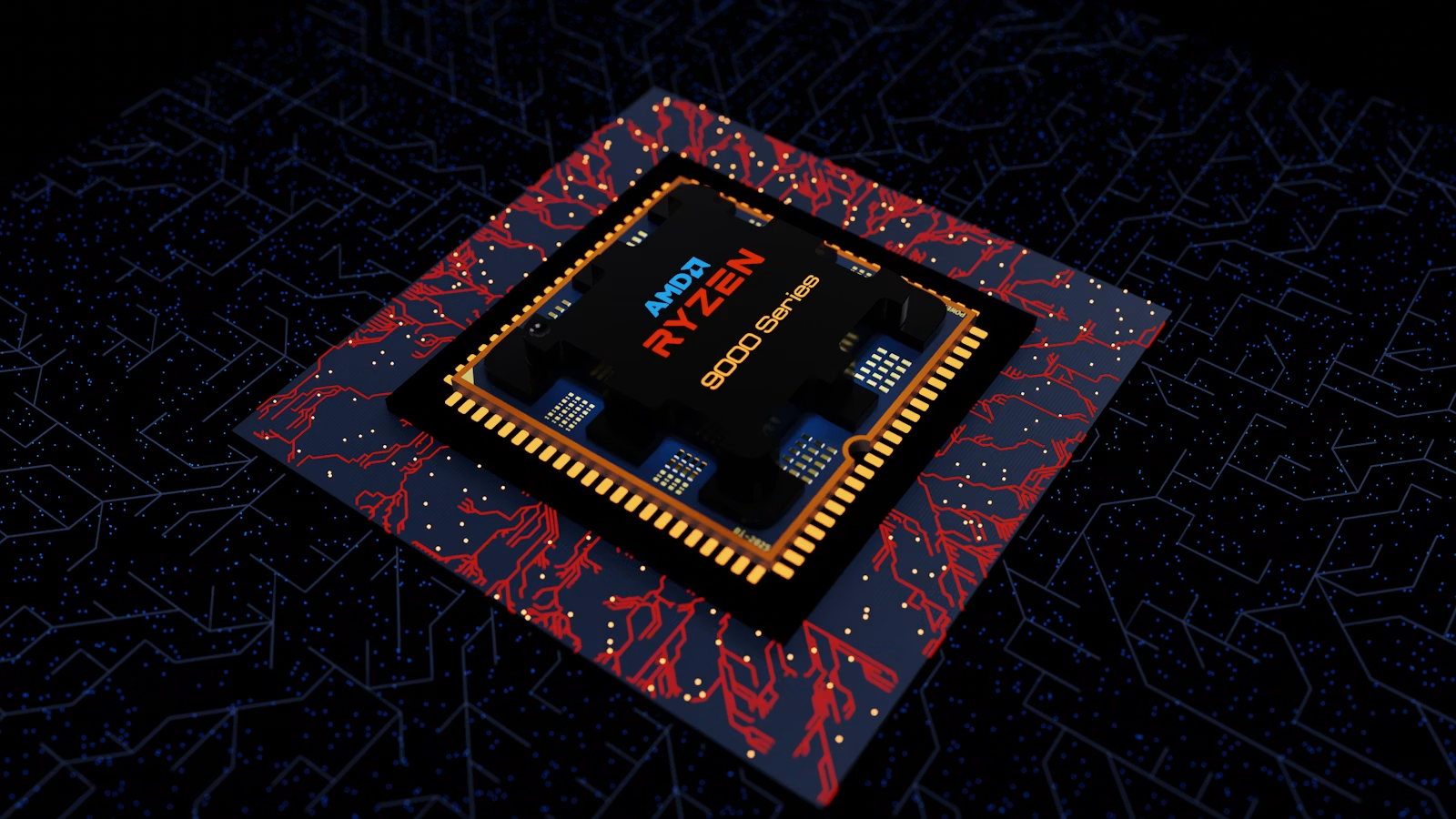
GPUs perform large-scale parallel computing, while HBM supplies data at high speed close to the GPU. Large-model training and inference are not only about “faster computation.” Parameters, activations, cache data, and intermediate results must continuously enter the compute units. The value of HBM lies in higher bandwidth, shorter data travel distance, and better energy efficiency. It is the AI storage layer closest to compute.
GPUs Compute, HBM Supplies Data
You can imagine an AI server as a factory. The GPU is the production line. HBM is the high-speed warehouse placed right next to it. If materials are delivered too slowly, even the most advanced production line sits idle. HBM stacks DRAM dies, uses a very wide interface, and relies on advanced packaging to place higher bandwidth near the GPU, reducing the data movement bottleneck.
| Component | Role in an AI System | Typical Bottleneck |
|---|---|---|
| GPU / AI accelerator | Matrix computation and model inference | Compute, power, interconnect |
| HBM | High-speed data supply to GPUs | Capacity, packaging, yield |
| System DRAM | Server scheduling and caching | Capacity, pricing cycle |
| SSD | Model loading and hot data access | Latency, IOPS, endurance |
| HDD | Large-scale dataset storage | Capacity, cost per TB |
HBM has become a core keyword in the AI storage sector because each generation of AI accelerator upgrades often requires more HBM capacity and higher memory bandwidth. The JESD270-4 HBM4 standard released by JEDEC focuses on improving bandwidth, energy efficiency, and stack capacity, closely matching the needs of AI and high-performance computing.
Why HBM Became a Main Theme in Storage Stocks
HBM receives strong market attention because it connects AI chips, advanced packaging, memory chips, and large customer orders at the same time. The Samsung HBM4 disclosed by Samsung has entered mass production and emphasizes 11.7Gbps transfer speed, with the potential to reach 13Gbps. The SK hynix HBM4 showcased by SK hynix targets next-generation AI data center server platforms and highlights higher I/O count, bandwidth, and energy efficiency.
For investors, the key point is that HBM is not simply a traditional DRAM pricing story. It is tied to NVIDIA, AMD, custom AI ASICs, advanced packaging, and hyperscaler capital expenditure. The long-term technical collaboration between NVIDIA and SK hynix also shows that high-bandwidth memory has become a foundational component of AI factory infrastructure.
The Limits Behind the HBM Growth Story
HBM has clear advantages, but its risks are also significant:
- Advanced packaging and yield can affect delivery speed.
- Capacity expansion takes time, so short-term supply cannot be released quickly.
- Customer concentration is high, and order timing can affect revenue volatility.
- Stock prices may price in several years of optimistic expectations in advance.
- HBM is still part of the memory industry and cannot fully escape cyclical risk.
Summary: HBM is the AI storage layer closest to the GPU, which is why the market often treats it as an “AI compute bottleneck.” Its investment appeal comes from high bandwidth, high unit value, tight supply, and long-term orders from major customers. Its risks come from capacity ramp-up, customer concentration, technology shifts, and valuation expectations priced in too early. When analyzing HBM companies, do not only look at “strong AI demand.” Also track HBM revenue mix, yield, long-term supply agreements, capital expenditure, and margin changes.
What Do DRAM, NAND, SSDs, and HDDs Do in AI Data Centers?

DRAM, NAND, SSDs, and HDDs are not simple substitutes for one another. They work together across layers of speed, capacity, and cost. DRAM handles runtime data scheduling. NAND is the underlying flash memory in SSDs. SSDs handle low-latency access and hot data. HDDs handle massive long-term storage. The larger an AI data center becomes, the more important this layered architecture is.
DRAM and System Memory: Keeping Servers Running Smoothly
DRAM sits closer to the server system layer. CPU servers, GPU servers, inference nodes, and data preprocessing systems all need sufficient system memory to schedule tasks. Compared with HBM, DRAM is not packaged right next to the GPU, but it covers a broader range of servers and is more exposed to demand from data centers, PCs, smartphones, and other end markets.
As AI inference moves into production, long context, concurrent requests, and cache management all increase system memory requirements. For investors, the key DRAM indicators are ASP, bit shipments, inventory levels, data center revenue mix, and gross margin—not just the AI narrative.
NAND and Enterprise SSDs: Solving Low-Latency Access
NAND is the flash memory component, while an SSD is a product built from NAND, controllers, and firmware. AI data centers use SSDs for model weight loading, training data preprocessing, checkpoints, hot data caching, and low-latency reads in inference systems.
The Micron 9650 SSD is designed for AI inference and training workloads and highlights the performance of PCIe Gen6 data center SSDs. In its COMPUTEX 2026 materials, the Micron 6600 ION reaches up to 245TB in capacity, emphasizing density and energy efficiency. This shows that SSDs in AI storage are not merely “faster hard drives.” They are part of inference, training, and high-density data center architecture.
HDDs and Nearline Storage: The Capacity Foundation of AI Data Lakes
HDDs are slower than SSDs, but they remain critical for large capacity, lower cost, and long-term storage. AI model training requires massive raw datasets. Enterprise RAG systems need long-term document and multimodal data accumulation. Video analytics and robotics data also continue to build up over time. Not all data needs to sit on expensive SSDs. Cold data, warm data, archives, and large-scale object storage often still fit HDDs.
When discussing the relationship between HDDs and AI storage, Western Digital emphasized that HDDs still provide a cost-effective capacity foundation. Its AI Storage Infrastructure materials also place capacity and TCO at the center of long-term AI data growth. Seagate’s Seagate 32TB Exos, SkyHawk AI, and IronWolf Pro products also reflect the role of high-capacity HDD upgrades in AI data growth.
| Technology | Strength | Limitation | AI Use Case |
|---|---|---|---|
| DRAM | Fast scheduling and broad system use | Cyclical, price volatility | Server memory, caching |
| NAND / SSD | Low latency, high IOPS | Higher cost per unit than HDDs | Hot data, inference, checkpoints |
| HDD | Low cost per TB, high capacity | Higher latency, lower speed | Data lakes, archives, training data |
| Storage systems | Unified hot and cold data orchestration | Depends on software and network architecture | Cloud storage, object storage, RAG |
Summary: AI data centers do not replace HDDs entirely with SSDs, nor can HBM alone complete all data movement. A better framework is layering: HBM solves bandwidth near the GPU, DRAM supports system scheduling, SSDs handle low-latency hot data, and HDDs provide long-term large-scale capacity. When analyzing the AI storage sector, first identify which layer a company belongs to, then assess the demand drivers and price cycle of that layer. Different segments can all benefit, but the timing, margin elasticity, and risks are not the same.
Which Companies and Supply Chain Segments Make Up the AI Storage Sector?
The AI storage sector can be understood across three layers: upstream chips, midstream devices and systems, and downstream cloud customers. Upstream includes HBM, DRAM, NAND, and advanced packaging. Midstream includes SSDs, HDDs, controllers, and storage servers. Downstream includes hyperscalers, AI cloud platforms, large model companies, and enterprise data centers. Whether a company benefits depends on where it has bargaining power in the chain.
Upstream: Memory Chips and Advanced Packaging
The most watched upstream segments are HBM, DRAM, and NAND. SK hynix, Samsung, and Micron are key players in HBM and DRAM competition, while Kioxia, SanDisk, Micron, and Samsung are more involved in NAND and SSD supply chains. The barrier to HBM is not only the memory chip itself, but also advanced packaging, logic base dies, testing, yield, and joint validation with GPU vendors.
The advantage of this layer is high elasticity. When AI accelerators upgrade, cloud companies compete for capacity, and long-term supply agreements increase, prices and margins may improve. The weakness is also cyclicality. If capacity expands too quickly, inventories rise, or customers delay procurement, earnings leverage can reverse.
Midstream: SSDs, HDDs, Controllers, and Storage Servers
Midstream companies are closer to product delivery. Enterprise SSD vendors benefit from inference, training, and high-density data centers. HDD vendors benefit from nearline drives, object storage, and massive data lakes. Controller and networking chip companies participate in SSDs, servers, switching, and data transmission.
This layer is better judged by use case rather than concept. For enterprise SSDs, the key questions are performance, capacity, endurance, and platform compatibility. For HDDs, the key questions are capacity roadmap, shipment mix, unit cost, and data center customer demand. For storage servers and system companies, the key issues are orders, gross margin, supply chain, and customer concentration.
Downstream: Cloud Providers and AI Companies Set Demand Timing
AI storage demand is ultimately paid for by downstream customers. Cloud provider capital expenditure, AI cloud expansion, large model training and inference demand, and enterprise private AI deployment all influence upstream orders. Micron’s strategic agreement with Anthropic covers memory, storage architecture, supply collaboration, and enterprise AI applications, showing that large model companies are becoming more directly involved in selecting underlying storage architecture.
| Supply Chain Position | Representative Direction | Revenue Driver | Main Risk |
|---|---|---|---|
| Upstream chips | HBM, DRAM, NAND | AI chip upgrades, pricing | Capacity, yield, cycle reversal |
| Midstream products | SSDs, HDDs, controllers | Data center orders, capacity upgrades | Price competition, customer concentration |
| Systems layer | Storage servers, software | Cloud storage and enterprise AI deployment | Project timing, gross margin |
| Downstream customers | Cloud providers, AI companies | Training and inference demand | Capex slowdown |
If you follow AI storage companies in U.S. equities, you can add names such as MU, WDC, STX, MRVL, AVGO, PSTG, and NTAP to your watchlist, then use financial reports to separate real business exposure from market narrative. When using U.S. stock search to track these names, do not only look at price moves. Compare business segments, financial indicators, and valuation in the same framework.
Summary: The AI storage sector is not a homogeneous basket of stocks. It is a multi-layer supply chain. Upstream chip companies are more affected by pricing, capacity, and advanced packaging. Midstream SSD, HDD, and controller companies are more affected by data center orders and product mix. Downstream cloud and large model companies determine procurement timing. When analyzing companies in this sector, ask three questions first: Which storage layer does it sell into? Who are its customers? Is the revenue improvement coming from real orders or market expectations? This is more reliable than simply chasing the AI label.
Why Is the AI Storage Sector Attracting Capital Market Attention?
The AI storage sector is attracting attention because the market has realized that AI infrastructure bottlenecks are spreading from GPUs to memory, networking, storage, power, and data centers. The more training and inference scale, the more data is created, and the more complex storage demand becomes. Capital markets are not simply buying “hard drives.” They are pricing long-term AI data growth, supply-demand tightness, and infrastructure bottleneck revaluation.
First Driver: AI Data Center Expansion Creates Real Demand
AI model training requires large datasets, checkpoints, and continuous reading. Inference requires low latency, model loading, KV cache, and hot data access. RAG requires vector databases, enterprise document libraries, and hot-cold data tiering. As AI moves from experiment to production, data does not disappear. It accumulates, and storage demand shifts from one-time procurement to continuous expansion.
SanDisk, Western Digital, and Seagate have all received market attention in 2026 due to AI storage demand. Reuters’ coverage of SanDisk also noted that AI systems’ need for data storage is helping tighten flash memory supply and demand.
Second Driver: The Market Is Moving from “Buying Compute” to “Buying Bottlenecks”
The earliest AI investment theme focused on GPUs and cloud compute. It later expanded to networking, liquid cooling, power, and then further to HBM, enterprise SSDs, nearline HDDs, and data center storage systems. This expansion is logical: once one part of the stack becomes scarce, capital looks for the next bottleneck.
To judge whether an AI storage rally is healthy, watch these signals:
- Whether hyperscaler capital expenditure continues to grow;
- Whether HBM has long-term supply agreements and clear capacity plans;
- Whether DRAM and NAND prices are in an upcycle;
- Whether enterprise SSD shipments and capacity mix are improving;
- Whether nearline HDD average capacity and data center revenue are rising;
- Whether inventory, gross margin, and cash flow are improving together.
Third Driver: Storage Is Still a Highly Cyclical Industry
Strong AI demand does not mean the storage industry rises forever. DRAM, NAND, and HDDs all have clear cyclical characteristics. Upcycles usually feature strong demand, low inventory, rising prices, and improving margins. Downcycles can bring capacity release, oversupply, price declines, and earnings pressure.
This is why AI storage stocks often move sharply. The market prices in future orders and price increases early. But once inventory, capital expenditure, or customer demand changes, stock prices can also adjust quickly.
Summary: The AI storage sector is attracting attention because AI data center expansion creates real demand for capacity, bandwidth, and low latency, while the market is also reassessing infrastructure bottlenecks beyond GPUs. But storage has never been a linear-growth industry. It is influenced by price cycles, inventory, capacity expansion, customer orders, and valuation expectations. When following this theme, acknowledge both the long-term certainty of data growth and the short-term uncertainty of stock volatility. AI demand should not be treated as a risk-free upward path.
How Can Individual Investors Understand AI Storage Opportunities and Risks?
For individual investors, the most practical approach is to divide AI storage exposure into three categories: high-beta HBM/DRAM companies, data center SSD/HDD companies, and semiconductor or AI infrastructure ETFs. Then use financial reports to validate the narrative, including data center revenue, ASP, margins, inventory, capital expenditure, and customer concentration, instead of relying only on concept-driven enthusiasm.
First, Separate Three Types of Exposure
| Investment Exposure | Representative Direction | Key Indicators | Main Risk |
|---|---|---|---|
| HBM / DRAM | High-bandwidth memory, system memory | HBM revenue, ASP, margin | High valuation, customer concentration |
| SSD / HDD | Enterprise SSDs, nearline HDDs | Data center revenue, capacity shipments | Pricing cycle, demand timing |
| ETF / Infrastructure | Semiconductor, AI, cloud ETFs | Holdings, weightings, expense ratio | Impure exposure, diluted upside |
If you are new to this sector, you do not need to study every company from the start. A more reasonable sequence is to first understand the AI infrastructure framework, then select the segments you can understand, and then track earnings and valuation. For smaller portfolios, ETFs or diversified watchlists are often easier for risk control than concentrating on one single theme.
Which Financial Metrics Matter Most?
For AI storage companies, total revenue alone is not enough. The key question is whether the business mix is genuinely shifting toward data centers and AI:
- Is data center revenue growing?
- Is HBM revenue or high-end DRAM mix increasing?
- Are DRAM ASP and NAND ASP improving?
- Is gross margin recovering with the price cycle?
- Is capex expanding too quickly?
- Are inventory days declining?
- Is customer concentration too high?
- Are long-term supply agreements clear?
- Are enterprise SSD or nearline HDD shipments improving?
These metrics help distinguish an “AI narrative” from actual financial delivery. If a stock has already risen sharply but revenue and margins have not improved meaningfully, expectations may be overheated.
Beyond Technology Logic, Watch Real Trading Costs
If you follow AI storage companies in U.S. equities, trading decisions involve not only sector direction but also costs, order types, and account rules. U.S. stock trading costs may include more than commissions. They can also include platform fees, external agency fees, transaction activity fees, and fractional share-related fees.
Biya charges 0 USD commission for U.S. stock trading. Platform fees, external agency fees, and other costs are subject to the U.S. stock trading fees and the order page display. Service availability depends on the user’s location, identity verification results, platform rules, and applicable laws and regulations. Popular AI-related stocks can be volatile, so before trading, review order types, fee structure, execution rules, and your own risk tolerance.
Key Risks in the AI Storage Sector
The most common risks in AI storage include:
- A downturn in memory pricing cycles;
- Slower AI capital expenditure;
- Delayed procurement or order cuts from major customers;
- Faster release of HBM or SSD capacity;
- Changes in technology routes;
- Geopolitical policy and export controls;
- Valuations pricing in too much optimism in advance.
For individual investors, the easiest mistake is to equate “correct industry trend” with “worth buying at any price.” Industry trend and entry price are two different things. Long-term AI storage demand may be strong, but short-term stock prices can still fluctuate sharply because of valuation, earnings, and market liquidity.
Summary: Understanding the AI storage sector is not about predicting which stock must rise. It is about building a tracking framework. First, understand what HBM, DRAM, SSDs, HDDs, and system-level storage each solve. Second, check whether earnings confirm data center revenue, margin, and order growth. Third, evaluate whether valuation has already priced in too much of the future. Fourth, include trading costs, account rules, and position sizing in your decision. This helps you avoid being drawn in by the AI concept while overlooking the storage cycle and market volatility.
If you follow AI storage, GPUs, semiconductor ETFs, U.S. tech stocks, and cross-market fund allocation at the same time, you can use the Biya App to record watchlists, trading bills, exchange-rate costs, and multi-asset allocation changes. Biya is a global multi-asset trading wallet that supports U.S. stocks, Hong Kong stocks, and digital asset trading scenarios. If you need to track MU, WDC, STX, NVDA, AMD, or related ETFs from one entry point, you can also use Biya to compare prices, bills, and account costs. The content above only introduces public market information, industry chain logic, and fee structures, and does not constitute investment advice. Before making any trade, consider local regulatory requirements, platform rules, fee details, and your personal risk tolerance.
FAQ
What Is the Difference Between the AI Storage Sector and the Semiconductor Memory Sector?
The AI storage sector focuses more on demand from AI training, inference, cloud data centers, and large model applications. The semiconductor memory sector is broader and also includes smartphones, PCs, automobiles, and consumer electronics. The two overlap, but AI storage focuses more on HBM, enterprise SSDs, nearline HDDs, and data center storage systems.
Why Does HBM Receive More AI Market Attention Than Regular DRAM?
HBM is closer to the GPU, has higher bandwidth, and is better suited for large-model training and high-throughput inference. Regular DRAM mainly serves as system memory and covers a wider range of use cases. HBM has higher technical barriers and unit value, but also greater risks in capacity, packaging, customer concentration, and valuation volatility.
Why Do AI Data Centers Still Need HDDs?
AI data centers still need HDDs because large volumes of training data, video data, logs, archives, and object storage care more about capacity cost. SSDs are better for hot data and low-latency tasks, while HDDs are better for long-term storage and large-scale data lakes. The two are usually complementary layers, not simple substitutes.
Should Investors Only Look at U.S. Stocks for AI Storage Exposure?
AI storage exposure is not limited to U.S. stocks. HBM, DRAM, NAND, SSD, HDD, packaging, equipment, and materials companies are distributed across the United States, South Korea, Japan, Taiwan, and other markets. Individual investors can also observe the theme through semiconductor ETFs, AI infrastructure ETFs, or cloud computing ETFs, but should check holdings, weights, and expense ratios carefully.
How Can Beginners Tell Whether the AI Storage Sector Is Overheated?
Beginners can look at valuation increases, earnings delivery, inventory levels, gross margins, DRAM/NAND prices, customer orders, and capital expenditure. If stock prices rise much faster than revenue and profit improvement, the market may have already priced in too much optimism, increasing the risk of volatility.
Is the AI Storage Sector Better for Long-Term Holding or Tactical Trading?
Whether the AI storage sector is suitable for long-term holding depends on an investor’s risk tolerance, research depth, and entry price. AI data growth is a long-term trend, but storage is highly cyclical. Long-term investors still need to track supply and demand, pricing, customer capital expenditure, fee structures, and local regulatory requirements.
*This article is provided for general information purposes and does not constitute legal, tax or other professional advice from BiyaPay or its subsidiaries and its affiliates, and it is not intended as a substitute for obtaining advice from a financial advisor or any other professional.
We make no representations, warranties or warranties, express or implied, as to the accuracy, completeness or timeliness of the contents of this publication.
Related Blogs of

What Is the Difference Between HBM3E and HBM4? What Do They Mean for Micron and AI Servers?


What Is the Relationship Between ASMPT 0522.HK and HBM? The Role of Advanced Packaging Equipment in the AI Memory Supply Chain


Why Is HDD Supply and Demand Tightening? AI Data Centers, Long-Term Agreements, and Western Digital/Seagate Pricing Power


What Are NOR Flash, SLC NAND, and EEPROM? Why They Help Explain Hong Kong-Listed Memory-Related Stocks

Choose Country or Region to Read Local Blog
 Australia
 Austria
 Belgium
 Canada
 Cyprus
 Czech Republic
 Denmark
 Estonia
 Finland
 France
 Germany
 Greece
 Hong Kong
 India
India Indonesia
 Ireland
 Italy
Italy Japan
Japan Latvia
 Lithuania
 Luxembourg
 Malaysia
 Malta
Malta Morocco
 Nepal
Nepal Netherlands
 New Zealand
 Norway
 Pakistan
 Philippines
 Poland
 Portugal
 Romania
 Singapore
 Slovakia
 Slovenia
 South Africa
 South Korea
 Spain
Spain Sweden
 Thailand
 The United States
 Turkey
 United Arab Emirates
 United Kingdom
 Vietnam
Contact Us




BIYA GLOBAL LLC is registered with the Financial Crimes Enforcement Network (FinCEN), an agency under the U.S. Department of the Treasury, as a Money Services Business (MSB), with registration number 31000218637349, and regulated by the Financial Crimes Enforcement Network (FinCEN).
BIYA GLOBAL LIMITED is a registered Financial Service Provider (FSP) in New Zealand, with registration number FSP1007221, and is also a registered member of the Financial Services Complaints Limited (FSCL), an independent dispute resolution scheme in New Zealand.