What Will Drive SpaceX’s Future Growth? Starlink, Lunar Missions, Mars Plans, and AI Infrastructure




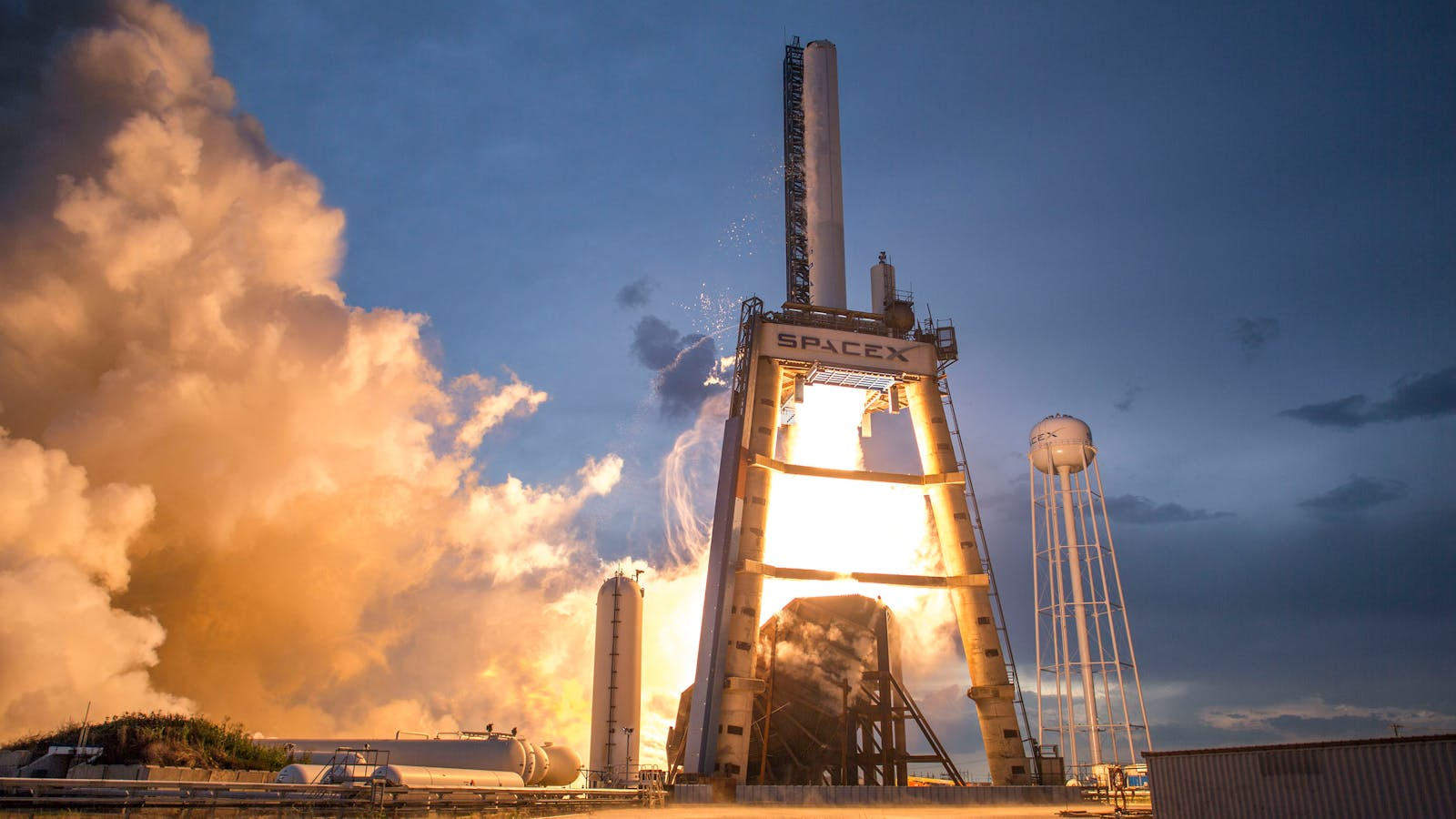
SpaceX’s future growth cannot be judged only by the number of rocket launches or the story of Mars. The more important questions are whether Starlink can continue expanding its cash flow, whether Starship can further reduce the cost of reaching orbit, whether NASA and defense contracts can provide medium-term certainty, and whether Mars plans and AI space infrastructure can move from long-term vision to real markets. If you follow SpaceX, Starlink, SpaceX IPO topics, or the investment logic behind commercial space, you need to separate confirmed revenue, technical milestones, and long-term narratives.
Key Takeaways
- Starlink is SpaceX’s closest business line to scaled revenue today.
- Starship determines the cost foundation for satellite deployment, lunar missions, and Mars plans.
- Lunar missions are more like government orders and deep-space technology validation.
- Mars plans are not a near-term revenue driver, but they support the long-term technology roadmap.
- AI space infrastructure has major upside potential, but its commercial viability still needs validation.
- To assess SpaceX’s growth, separate cash flow, technology execution, and long-term narratives.
SpaceX’s Underlying Growth Logic: From Rocket Company to Space Infrastructure Platform
SpaceX’s growth logic is not simply about launching more rockets. It is about using low-cost launch capability to connect satellite internet, government missions, deep-space transport, and future computing infrastructure. You can view SpaceX as a space infrastructure platform: rockets provide access to space, Starlink commercializes global connectivity, Starship expands transport capacity, and lunar and Mars missions validate long-term capabilities.
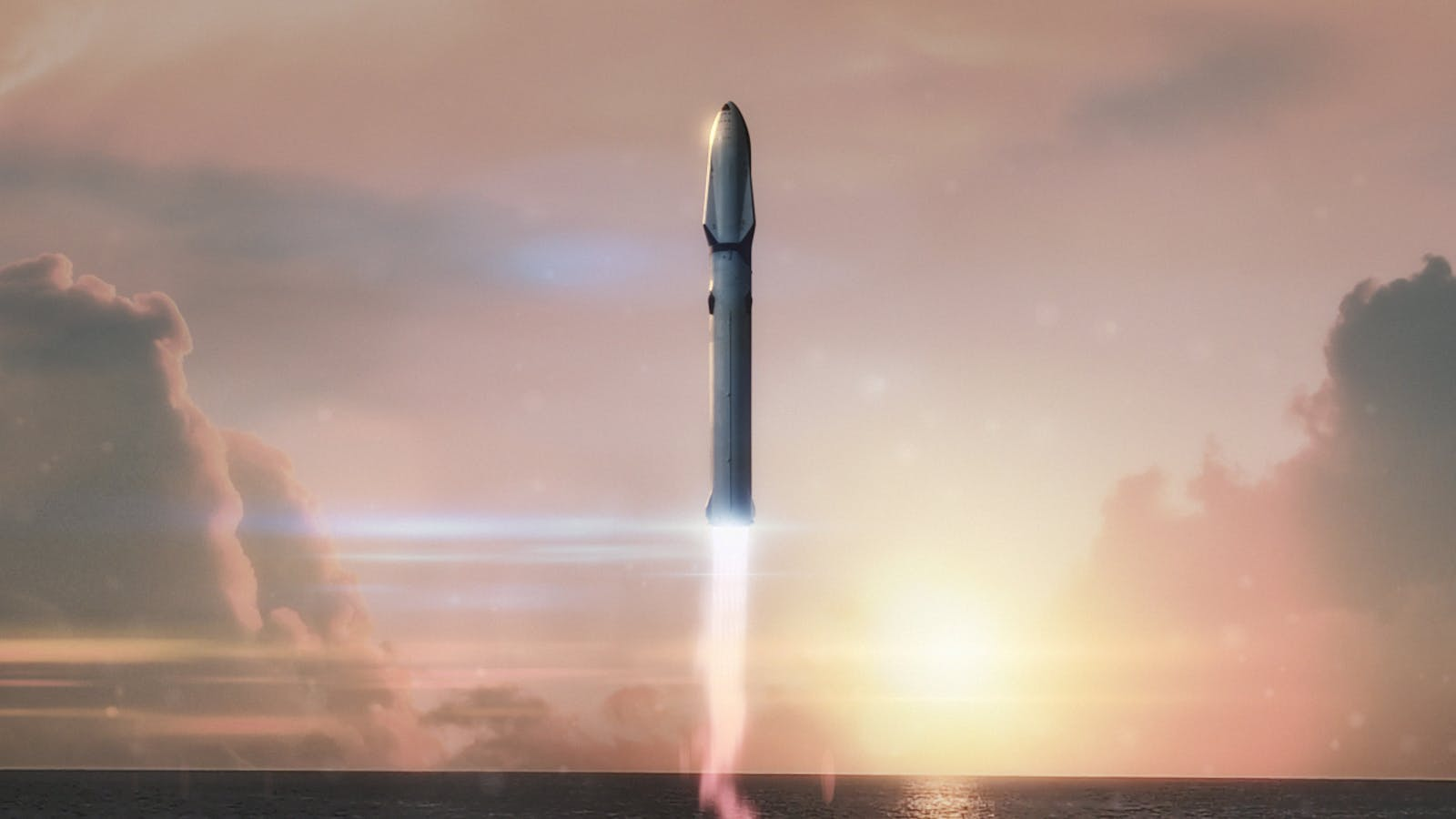
SpaceX’s public narrative has evolved from “reducing launch costs” to “controlling key infrastructure in the space economy.” In its SEC S-1 filing, SpaceX places rockets, satellite networks, AI-related investments, and long-term space infrastructure within the same growth framework. This means the market is no longer focused only on Falcon 9 launch reliability, but on whether each business line can form a compound growth engine.
| Growth Layer | Representative Businesses | Revenue Visibility | Key Metrics to Watch |
|---|---|---|---|
| Current cash flow | Starlink, commercial launches | Relatively high | User base, ARPU, launch frequency |
| Medium-term expansion | Starship, NASA, defense networks | Medium | Reusability, contract delivery, regulatory approvals |
| Long-term narrative | Mars plans, space AI data centers | Relatively low | Technology validation, customer contracts, cost model |
What makes SpaceX unique is that it is not a single-point business. Falcon 9 proved the commercial value of reusable rockets; Starlink converted launch capability into a global communications network; if Starship achieves stable reuse, it could provide the cost foundation for heavier and larger satellites, lunar cargo, Mars transport, and space data centers. This “launch—deployment—operation—data” loop is what differentiates SpaceX from traditional aerospace contractors.
However, you also need to distinguish between certainty and imagination. Starlink users, commercial launch orders, NASA contracts, and defense communications contracts are more observable growth sources. Mars cities, space AI data centers, and industrialization in orbit are still long-term options. They can support valuation narratives, but they should not be treated as stable revenue.
Section Summary: SpaceX’s future growth depends on converting low-cost access to orbit into sustainable commercial networks. In the short term, the focus is Starlink and launch services; in the medium term, it is Starship, NASA, and defense contracts; in the long term, it is Mars and AI infrastructure. When analyzing SpaceX, you should not judge it only by the scale of its vision. You should ask whether each growth line has real customers, verifiable technical milestones, and a sustainable unit economics model.
Starlink Is the Most Realistic Growth Engine: From Satellite Broadband to a Global Connectivity Network
Starlink is SpaceX’s most realistic growth engine because it has already moved from a technology project to a subscription business serving users and enterprise customers worldwide. Compared with Mars plans and space AI data centers, Starlink’s revenue, user growth, service coverage, and enterprise use cases are easier to quantify and are closer to the cash flow sources investors care about.

According to the Starlink 2025 Progress Report, Starlink added more than 4.6 million active customers in 2025 and expanded into 35 new countries, territories, and markets. This type of data shows that Starlink’s growth is not limited to technology enthusiasts. It comes from broader needs such as home broadband in remote areas, mobile connectivity, enterprise networks, maritime and aviation use cases, and disaster-response communications.
| Starlink Growth Scenario | User Need | Commercial Model | Main Limitation |
|---|---|---|---|
| Home broadband | High-speed internet in remote areas | Monthly subscription | Pricing, capacity, regulation |
| Enterprise connectivity | Ships, energy, logistics, agriculture | Enterprise plans | Customer acquisition and service stability |
| Aviation and maritime | Connectivity for aircraft, cruise ships, and commercial vessels | B2B contracts | Installation cycle and bandwidth assurance |
| Direct to Cell | Satellite connectivity for mobile phones | Carrier partnerships | Spectrum, bandwidth, licensing |
Starlink’s value is not only about the number of users. The user mix matters more. If new users mainly come from lower-priced residential plans, revenue growth may face ARPU pressure. If enterprise, aviation, maritime, government, and emergency communications account for a larger share, revenue quality may improve. When evaluating Starlink’s growth, do not look only at “how many users”; also look at “which users are willing to pay higher prices.”
Direct to Cell is Starlink’s second growth curve. It allows ordinary LTE phones to connect directly to satellites in specific scenarios without necessarily requiring additional terminals. As the Starlink Network Update continues to emphasize improvements in speed, latency, and capacity, satellite internet is evolving from a “home broadband alternative” into a “global communications supplement layer.” If carrier partnerships progress smoothly, Starlink may enter a much larger mobile communications market.
But the risks are equally clear. Starlink must deal with telecom regulation in different countries, spectrum coordination, astronomical observation concerns, orbital debris risks, and competitors. Amazon Kuiper, AST SpaceMobile, OneWeb, and others are entering low-Earth-orbit communications from different angles. Starlink has a strong first-mover advantage, but that does not mean its future pricing power and market share will face no pressure.
Section Summary: Starlink is SpaceX’s most visible and verifiable growth source today. You can focus on four indicators: whether active customers continue growing, whether ARPU remains stable, whether enterprise and government customers account for a larger share, and whether Direct to Cell moves from technical demonstration to scaled carrier partnerships. As long as Starlink can convert global coverage into stable subscription revenue, it will remain the most realistic growth driver in the SpaceX story.
Starship Determines the Growth Ceiling: Low-Cost Access to Orbit, Heavy-Lift Transport, and Scaled Deployment
Starship determines SpaceX’s growth ceiling because it affects whether future businesses can reach space at lower cost and higher frequency. Next-generation Starlink satellites, lunar missions, Mars transport, space data centers, and large defense networks all require stronger transport capacity and a more controllable cost structure.
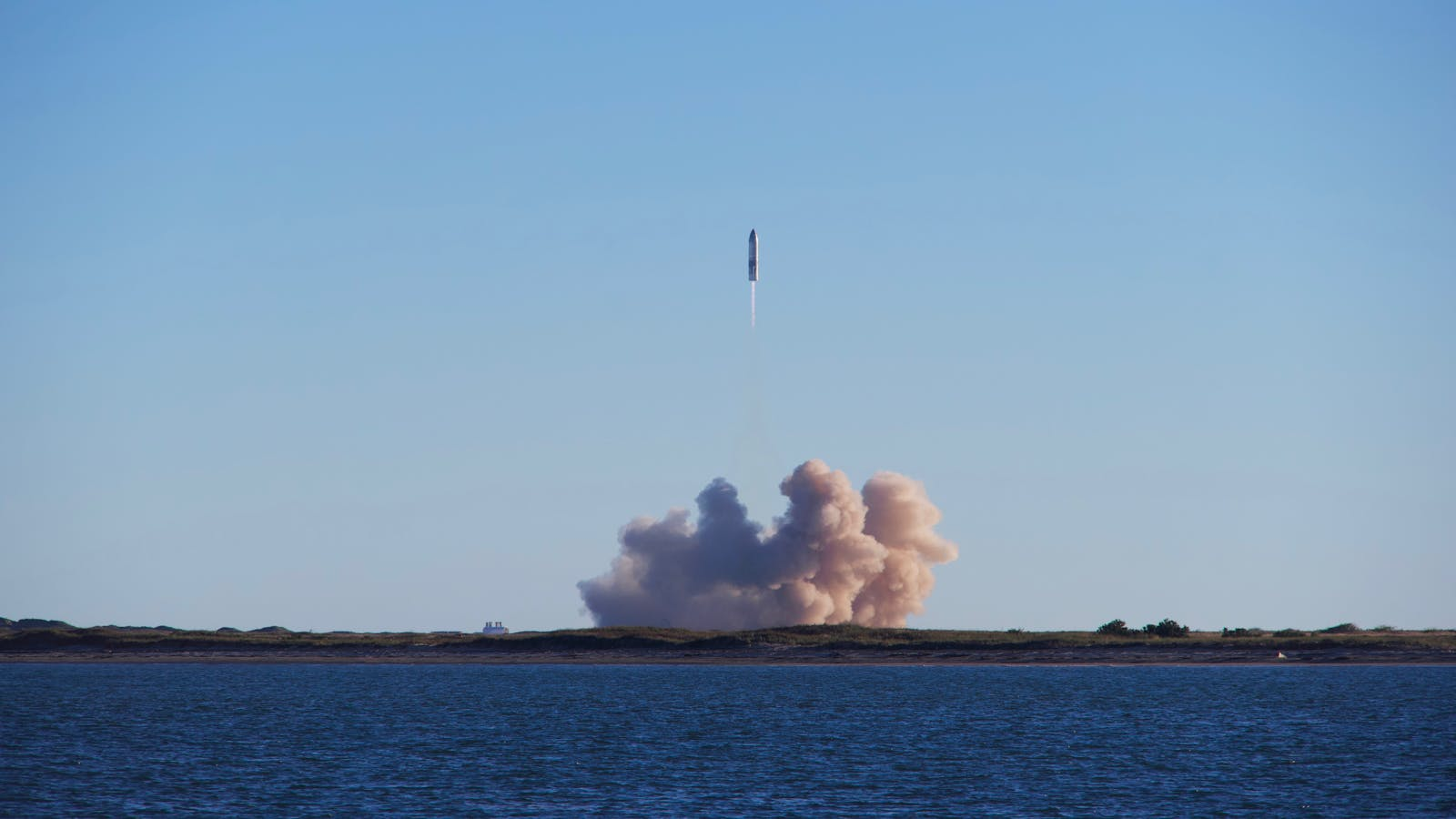
SpaceX positions Starship as a fully reusable transportation system designed to carry people and cargo to Earth orbit, the Moon, Mars, and beyond. Its commercial significance is not merely that the rocket is larger. It may reshape the cost per kilogram to orbit, satellite deployment efficiency, and the frequency of deep-space missions.
Starship directly affects SpaceX’s growth in four ways:
- Higher payload capacity: It can deploy larger, heavier, and higher-capacity satellites in a single launch.
- Lower marginal cost: If full reuse is achieved, the launch cost structure could be rewritten.
- Higher launch frequency: Frequent launches can support Starlink expansion and rapid satellite replenishment.
- Deep-space mission access: Orbital refueling and heavy-lift capacity are prerequisites for lunar and Mars missions.
Starship is especially important to Starlink. To continuously increase bandwidth, reduce latency, and cover more regions, Starlink needs to keep launching new satellites and replacing aging ones. If it mainly relies on Falcon 9, deployment capacity will be limited by per-launch payload and launch cadence. If Starship enters stable operation, SpaceX can deploy next-generation satellites in larger batches, improving network capacity and unit efficiency.
However, Starship is still in the validation stage. Reuters’ report on Starship’s 12th test flight showed progress such as simulated satellite deployment and controlled splashdown, but the Super Heavy booster still did not complete a controlled landing. These results suggest that Starship is moving forward, but it still has a long way to go before becoming a scalable, reusable, commercially reliable system.
The biggest challenge for Starship is not one or two successful test flights, but long-term stable reuse. It must solve engine reliability, heat shielding, booster recovery, launch site cadence, regulatory approvals, orbital refueling, and mission safety. For SpaceX, Starship’s success would unlock the company’s growth ceiling. If delays become severe, Starlink expansion, lunar missions, and AI space infrastructure would all face cost and schedule pressure.
Section Summary: Starship is the “cost switch” for SpaceX’s future growth. Once it achieves stable reuse, Starlink can expand faster, lunar missions can gain a transport foundation, Mars plans can have a realistic path, and space AI infrastructure can begin to discuss cost models. But before Starship becomes reusable, high-frequency, and consistently approved by regulators, it remains a key variable with both high potential and high execution risk.
Lunar Missions and Government Contracts: Where Medium-Term Growth Certainty Comes From
Lunar missions and government contracts are important medium-term growth sources for SpaceX because they are closer to real payments than Mars plans and can validate deep-space capabilities better than ordinary commercial launches. NASA, the U.S. Space Force, and other government customers provide not only revenue, but also technical certification, long-term cooperation, and strategic use cases.
NASA’s Artemis III mission has been adjusted to a 2027 launch, with a focus on testing rendezvous and docking between Orion and commercial spacecraft. For SpaceX, the key value of lunar missions is not a single moon-landing headline, but whether Starship HLS can validate crewed deep-space architecture, safety systems, and mission coordination.
| Growth Source | Significance for SpaceX | Revenue Attribute | Main Risk |
|---|---|---|---|
| NASA Artemis HLS | Validates crewed lunar surface transport | Contract revenue | Schedule, safety, technical milestones |
| Lunar cargo | Delivers equipment, supplies, and research payloads | Project revenue | Uncertain demand scale |
| Lunar surface infrastructure | Entry point for communications, energy, and logistics | Long-term opportunity | Immature business model |
| Defense communications network | Secure, low-latency, global coverage | Government contract | Delivery cycle and customer concentration |
SpaceX’s Mission: Moon explains Starship’s role in lunar missions, including sending large payloads to the lunar surface through orbital refueling. This shows that the lunar business is not just about a “lunar lander.” It also involves transport, resupply, communications, equipment deployment, and future lunar surface infrastructure. As long as NASA and commercial lunar activities continue, SpaceX has an opportunity to occupy an important position in the deep-space transport chain.
Government contracts also include defense communications. Reuters reported that the U.S. Space Force awarded SpaceX a $2.29 billion contract to build a secure, high-speed military space data network. This direction is closely tied to Starlink’s underlying capabilities: low-Earth-orbit constellations, low-latency connectivity, global coverage, and rapid deployment can all be translated into defense communications demand.
But government business also has limits. Fixed-price contracts may create cost-overrun pressure. Crewed missions must meet extremely high safety standards. Defense contracts may be affected by budget cycles, policy changes, and customer concentration. You should not simply treat government contracts as “risk-free revenue,” but they are indeed closer to verifiable growth than Mars cities or space data centers.
Section Summary: Lunar missions and government contracts are the medium-term bridge that can take SpaceX from low-Earth orbit to deep-space infrastructure. They can bring revenue while validating Starship, crewed systems, and space communications networks. For SpaceX’s growth quality, NASA milestones, HLS testing, defense contract delivery, and cost control matter more than simply announcing a grand vision.
Mars Plans and AI Infrastructure: Where the Long-Term Upside Lies
Mars plans and AI infrastructure are SpaceX’s most imaginative long-term growth directions, but neither should be treated as stable near-term revenue. Mars represents SpaceX’s ultimate technology roadmap, while AI space infrastructure represents a new commercial narrative. Together, they support long-term valuation imagination, but commercial viability still requires extensive validation.
In Mission: Mars, SpaceX emphasizes that building a self-sustaining city on Mars will require transporting large numbers of people and massive amounts of cargo. This goal explains why SpaceX must continue pursuing Starship, orbital refueling, heavy-lift transport, and high-frequency launches. Mars itself is unlikely to generate meaningful revenue in the short term, but it drives the current technology roadmap from the top down.
Mars plans have three layers of significance for SpaceX:
- Technology pull: They push heavy-lift rockets, life support, orbital refueling, and long-duration transport.
- Brand narrative: They strengthen the “multi-planetary civilization” vision and help attract capital and talent.
- Long-term market: They may extend into research, cargo, communications, energy, and habitation facilities.
AI infrastructure is another narrative that is closer to the capital markets. Reuters’ report on the SpaceX IPO filing noted that SpaceX’s future expectations include immature markets such as Mars missions and space AI data centers. The logic is that if SpaceX can send hardware into orbit at lower cost, and combine that with solar power, inter-satellite links, and global communications networks, space computing or edge data processing may become a new infrastructure category.
| Long-Term Direction | Potential Value | Required Preconditions | Main Uncertainty |
|---|---|---|---|
| Mars transport | Deep-space cargo and habitation foundation | Starship, orbital refueling, life support | Timeline and capital investment |
| Space data centers | New AI computing infrastructure | Low-cost launches, energy, cooling | Cost, maintenance, regulation |
| Satellite edge computing | Localized data processing and distribution | Inter-satellite links, computing modules | Customer demand and reliability |
| AI + communications network | Optimized Starlink network scheduling | Data scale, algorithms, terminals | Privacy and compliance |
You need to pay special attention to this point: AI space data centers sound attractive, but the business questions are far more complex than the concept. Space offers solar power advantages, but it also brings radiation, cooling, maintenance, orbital debris, launch loss, and recovery challenges. Ground-based data centers consume large amounts of power, but they are more mature in maintenance, expansion, compliance, and supply chains. Unless SpaceX can prove unit cost, reliability, and customer demand, this growth curve remains a high-risk long-term option.
Section Summary: Mars plans and AI infrastructure together form SpaceX’s long-term upside narrative. Mars gives Starship’s technology roadmap an ultimate destination, while AI data centers may allow SpaceX to enter the computing infrastructure story. But neither line should be treated as near-term revenue. You should view them as long-term options and watch for pilot projects, clear customers, real contracts, and disclosed cost models.
How Ordinary Followers Should Assess SpaceX’s Future Growth Quality
To assess SpaceX’s future growth quality, separate “commercialized revenue,” “technologies still being validated,” and “long-term visions.” Starlink, launch services, NASA, and defense contracts are closer to real cash flow. Starship is the key to cost and scale. Mars and AI space infrastructure are high-uncertainty long-term opportunities.
You can use the following checklist to judge whether SpaceX’s growth is healthy:
- Starlink: Active customers, ARPU, enterprise customers, Direct to Cell partnerships.
- Starship: Number of reuses, launch frequency, orbital refueling, regulatory approvals.
- Government business: NASA milestones, defense contract size, delivery cycle.
- AI infrastructure: Pilot projects, customer contracts, capital expenditure, and losses.
- Financial quality: Revenue structure, cash flow, margins, debt, and equity dilution.
- Risk boundaries: Regulation, accidents, competition, customer concentration, and technical delays.
If you follow SpaceX’s listing, hot IPOs, or potential future public market trading opportunities, you also need to include trading costs in your analysis. Hot IPOs or high-profile technology stocks may be highly volatile in the early trading period. Actual costs are not limited to share price changes. They may also include commissions, platform fees, external agency fees, trading activity fees, FX costs, and order rules. BiyaPay’s U.S. stock trading commission is $0, while platform fees, external agency fees, and other charges are subject to the fee center and order page. Service availability depends on the user’s location, identity verification result, platform rules, and applicable laws and regulations.
Where relevant services are available under applicable compliance conditions, you can use BiyaPay U.S. stock trading to learn about U.S. market information and fee structures. BiyaPay is a global multi-asset trading wallet that supports U.S. and Hong Kong stock trading, cryptocurrency trading, and conversion from USDT to major fiat currencies such as USD or HKD. If you also pay attention to overseas market information, funding routes, and pre-trade cost estimates, multi-currency conversion can help you understand exchange relationships between different currencies. Before any actual trade, the order page and applicable rules should prevail.
Section Summary: SpaceX’s growth quality cannot be judged by stories alone. A more practical approach is to separately observe Starlink users and revenue, Starship technology execution, NASA and defense contract delivery, and the costs and customer contracts of AI-related businesses. If you also follow future public market trading opportunities, you should understand order types, fee structures, volatility risks, and service availability conditions in advance. Public market information does not constitute investment advice, and any trading decision should be based on your own risk tolerance and compliance requirements.
SpaceX represents the intersection of commercial space, satellite internet, AI infrastructure, and global capital markets. If you continue following this type of technology asset, you need not only to study company fundamentals, but also to build awareness around information filtering, fee recognition, and funding arrangements. BiyaPay can serve as one tool for learning about multi-asset markets, cross-currency conversion, and U.S. and Hong Kong stock trading access. Where services are available under applicable conditions, you can also use web trading to view order information, trading rules, and related fees. Any popular asset may experience sharp price swings. Understanding fees, exchange rates, order rules, and risk boundaries in advance is more important than simply chasing market hype.
FAQ
What Will Mainly Drive SpaceX’s Future Growth?
SpaceX’s future growth will mainly come from Starlink, Starship, government contracts, and long-term space infrastructure. In the short term, the focus is Starlink and launch services. In the medium term, it is lunar missions and defense networks. Mars plans and AI space data centers are longer-term opportunities.
Why Is Starlink Important to SpaceX?
Starlink is important to SpaceX because it is the business line closest to scaled commercial revenue. To assess Starlink’s value, watch active users, ARPU, enterprise customers, Direct to Cell partnerships, and telecom regulatory progress in different countries.
How Will Starship Affect SpaceX’s Growth?
Starship will affect SpaceX’s cost structure, transport capacity, and mission boundaries. If Starship achieves stable reuse, SpaceX can deploy satellites faster, execute lunar missions, and explore Mars transport. If delays become serious, multiple growth paths will be affected.
Can SpaceX Lunar Missions Generate Revenue?
SpaceX lunar missions can generate government contract revenue, but their greater value is validating deep-space transport capability. NASA-related missions can improve technical credibility, while schedule, safety standards, and cost control will still affect commercial value.
Is SpaceX’s Mars Plan Realistic?
SpaceX’s Mars plan is a long-term vision and should not be treated as a stable near-term revenue source. More realistic indicators include Starship reuse, orbital refueling, life support systems, lunar mission validation, and sustained long-term capital investment.
Are SpaceX AI Data Centers Reliable?
SpaceX AI data centers remain a highly uncertain direction. Space computing may benefit from launch capability, solar power, and satellite networks, but cooling, maintenance, radiation, cost, regulation, and real customer demand still need to be validated.
*This article is provided for general information purposes and does not constitute legal, tax or other professional advice from BiyaPay or its subsidiaries and its affiliates, and it is not intended as a substitute for obtaining advice from a financial advisor or any other professional.
We make no representations, warranties or warranties, express or implied, as to the accuracy, completeness or timeliness of the contents of this publication.
Related Blogs of

How Important Is Starlink User Growth to SpaceX? An Analysis of Satellite Internet Revenue Logic


How Does SpaceX Make Money? Revenue Sources from Rocket Launches, Starlink, and Commercial Spaceflight

What Is SpaceX’s Moat? An Analysis of Reusable Rockets, Satellite Networks, and Scale Advantages

Why Are SpaceX Launch Costs So Low? How Reusable Rockets Are Changing the Commercial Space Industry

Choose Country or Region to Read Local Blog
 Australia
 Austria
 Belgium
 Canada
 Cyprus
 Czech Republic
 Denmark
 Estonia
 Finland
 France
 Germany
 Greece
 Hong Kong
 India
India Indonesia
 Ireland
 Italy
Italy Japan
Japan Latvia
 Lithuania
 Luxembourg
 Malaysia
 Malta
Malta Morocco
 Nepal
Nepal Netherlands
 New Zealand
 Norway
 Pakistan
 Philippines
 Poland
 Portugal
 Romania
 Singapore
 Slovakia
 Slovenia
 South Africa
 South Korea
 Spain
Spain Sweden
 Thailand
 The United States
 Turkey
 United Arab Emirates
 United Kingdom
 Vietnam
Contact Us




BIYA GLOBAL LLC is registered with the Financial Crimes Enforcement Network (FinCEN), an agency under the U.S. Department of the Treasury, as a Money Services Business (MSB), with registration number 31000218637349, and regulated by the Financial Crimes Enforcement Network (FinCEN).
BIYA GLOBAL LIMITED is a registered Financial Service Provider (FSP) in New Zealand, with registration number FSP1007221, and is also a registered member of the Financial Services Complaints Limited (FSCL), an independent dispute resolution scheme in New Zealand.