Why Are SpaceX Launch Costs So Low? How Reusable Rockets Are Changing the Commercial Space Industry




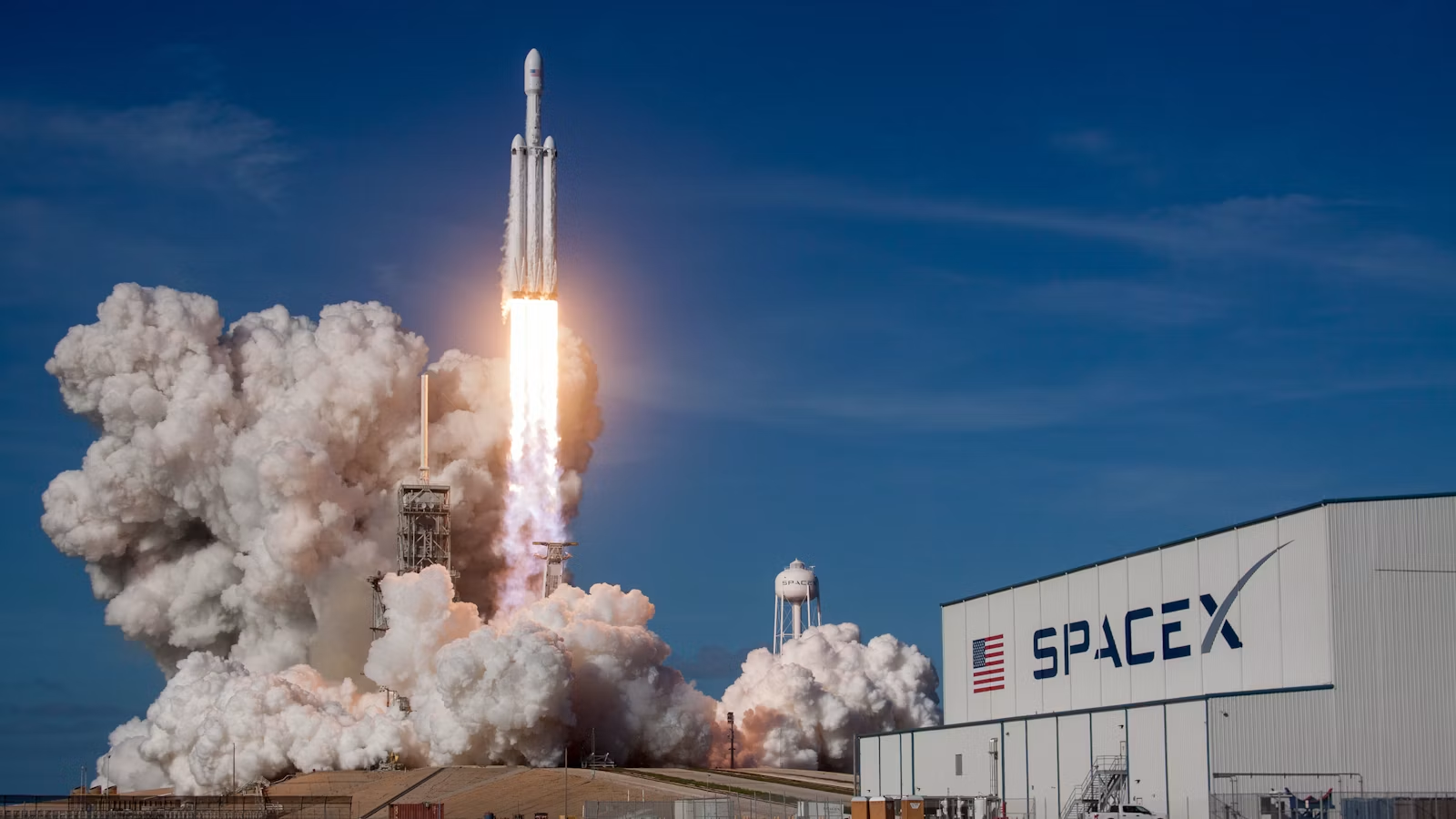
SpaceX’s launch costs are low not because a single component is cheap, but because it combines reusable rockets, vertically integrated manufacturing, high-frequency launches, standardized operations, and internal Starlink demand into one cost system. If you follow SpaceX, commercial space, Starship, or future public market opportunities, you need to understand the real logic behind “low launch costs”: reuse reduces hardware loss, economies of scale spread fixed costs, rideshare launches lower the barrier for small satellites to reach orbit, and Starship may push the low-cost logic into the next stage.
Key Takeaways
- SpaceX’s cost advantage comes from rocket reuse, manufacturing systems, and high-frequency operations.
- Falcon 9 recovers its first-stage booster, reducing the one-time loss of expensive hardware.
- Starlink provides internal launch demand, helping spread the cost of the launch system.
- Rideshare launches lower the barrier for small satellites to reach orbit and expand the commercial space customer base.
- If Starship achieves full reuse, it may further reduce heavy-lift launch costs.
- The cost advantage is still affected by reliability, regulation, maintenance, and competitive pressure.
Why Are SpaceX Launch Costs So Low: Not a Single Technology, but a System
The fundamental reason SpaceX launch costs are low is that it places rocket reuse, vertical integration, high launch frequency, and internal satellite demand within the same system. Reusable rockets are only the most visible part. The real cost advantage comes from “building quickly, flying often, recovering rockets, flying them again, and having large internal launch demand.”
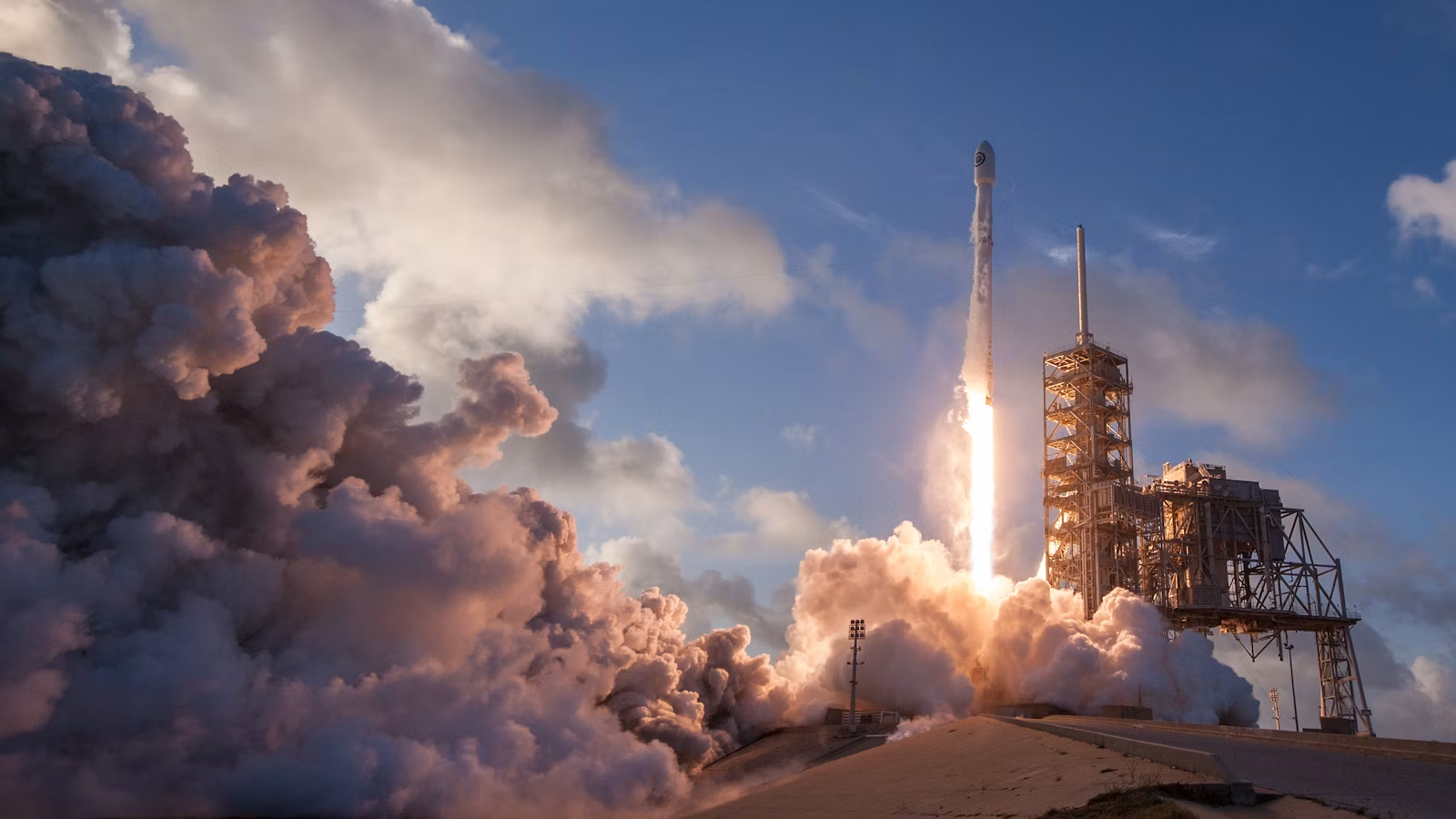
In the traditional space model, rockets were mostly disposable products. After a mission was completed, the first stage, engines, structural components, and many expensive pieces of hardware were discarded. SpaceX changed this by bringing the most expensive part of the rocket back to Earth, then inspecting, refurbishing, certifying, and flying it again. Falcon 9 is described as reducing the cost of access to space by reusing the most expensive parts of the rocket.
| Source of Cost Advantage | Specific Form | Impact on Launch Cost |
|---|---|---|
| First-stage reuse | Recovering and reusing the most expensive components | Reduces hardware loss per mission |
| Vertical integration | In-house engines, software, rockets, and some systems | Reduces outsourcing and coordination costs |
| High launch frequency | Higher mission density and faster turnaround | Spreads facility and team costs |
| Internal Starlink demand | SpaceX’s own satellite constellation requires continuous launches | Improves utilization of production and launch systems |
| Standardized design | Falcon 9 supports multiple mission types | Reduces customization and testing costs |
You need to distinguish between three concepts: SpaceX’s internal cost, the external launch price, and the customer’s total mission budget. Internal cost refers to SpaceX’s actual cost of completing a launch. The external launch price is what customers see when buying launch services. The customer’s total budget may also include insurance, satellite integration, orbital transfer, delay risk, ground systems, and regulatory compliance costs. Therefore, “SpaceX launch costs are low” does not mean every customer’s entire space project is cheap, but it does reduce the core barrier to reaching orbit.
This cost advantage is felt by the market because SpaceX does not keep low costs only inside the company. It converts them into industry changes through higher launch frequency, rideshare missions, and Starlink deployment. For large satellite customers, low cost means more launch windows. For small satellite companies, low cost means earlier business model validation. For SpaceX itself, low cost means faster Starlink network construction.
Section Summary: SpaceX’s low launch cost is not the miracle of a single rocket landing, but a long-term operating system. Reusable rockets reduce hardware loss, vertical integration reduces supply-chain friction, high launch frequency spreads fixed costs, and internal Starlink demand improves system utilization. When analyzing SpaceX’s cost advantage, you should not look only at whether a rocket can be recovered. You should also examine whether it can keep flying again, turn around quickly, remain safe, and convert low cost into more customers and stronger cash flow.
How Falcon 9 Changed the Cost Structure: First-Stage Recovery, Fairing Reuse, and Fast Turnaround
Falcon 9 changed the launch cost structure by turning the most expensive part of a traditional expendable rocket into a reusable asset. The first-stage booster, engines, some structural components, and fairings are no longer completely discarded after every mission. Instead, they enter a process of inspection, refurbishment, certification, and launch again.
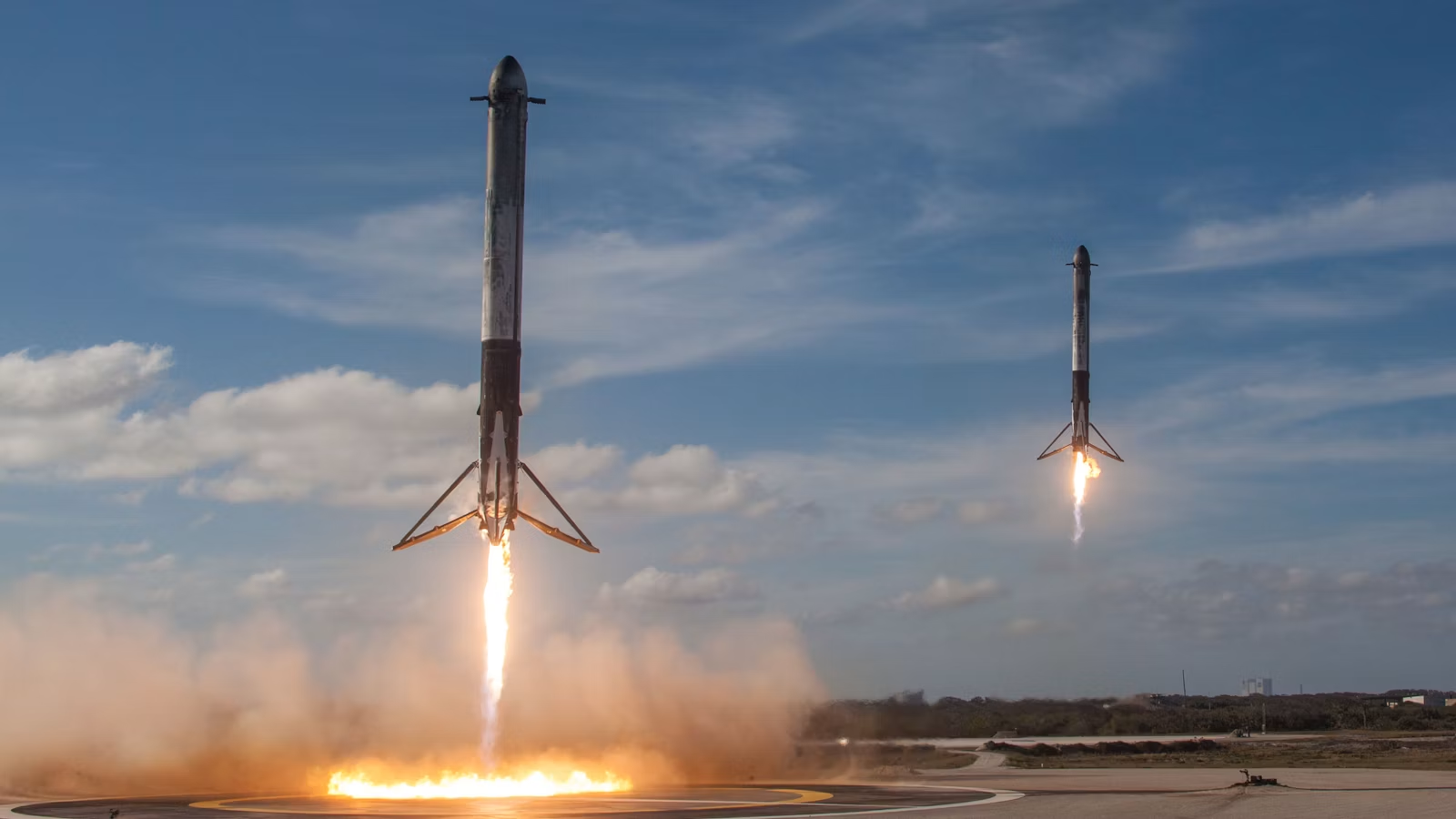
The first stage is the main focus of reuse because it contains engines, the propulsion system, structural components, control systems, and landing equipment. In traditional rockets, the first stage usually fell into the ocean or burned up after the ascent phase. Falcon 9 uses engine burns, grid fin control, and landing legs to return to land or an offshore drone ship. The more times it can be reused, the easier it becomes to spread the initial manufacturing cost.
| Falcon 9 Cost Component | Traditional Model | SpaceX Reuse Model | Cost Impact |
|---|---|---|---|
| First-stage booster | Discarded after launch | Returns to land or offshore platform | Saves the most expensive hardware |
| Engines | Consumed in a single mission | Fly again with the first stage | Increases engine lifecycle value |
| Fairing | Destroyed after separation | Recovered, inspected, and reused | Reduces non-propulsion hardware loss |
| Launch site | Used at low frequency | High-frequency mission turnaround | Spreads fixed facility costs |
| Mission process | More customized | Higher degree of standardization | Shortens preparation cycle |
However, a successful recovery does not immediately equal low cost. After a rocket returns, it still needs inspection, cleaning, component replacement, engine testing, structural assessment, and mission certification. If refurbishment costs are too high, some of the advantage from reuse is offset. Therefore, what truly matters is “low-maintenance reuse” and “fast turnaround,” not just images of a rocket landing.
Falcon 9’s advantage is that SpaceX has turned reuse from a technical demonstration into routine operations. Space.com reported that SpaceX completed 165 Falcon 9 orbital launches in 2025, with Starlink missions accounting for a large share. This high-frequency reflighting allows SpaceX to keep accumulating data, optimize refurbishment processes, and improve mission scheduling.
Fairing reuse also affects costs. The fairing is not the most expensive part of the rocket, but it is large and demanding to manufacture, and it was usually destroyed after separation in the past. By recovering fairings, SpaceX can further reduce loss per mission. Combined with launch site processes, drone ship recovery, mission control, and supply-chain standardization, Falcon 9’s cost advantage is not only a hardware advantage, but also an operating efficiency advantage.
Section Summary: Falcon 9’s cost advantage comes from first-stage booster reuse, longer engine lifecycle value, fairing recovery, and fast turnaround. A successful landing proves technical feasibility, but long-term reuse and high-frequency launches are what truly change the economic model. When judging whether Falcon 9 is low cost, you should look at reuse count, refurbishment cycle, mission reliability, and annual launch cadence, not just the image of a single launch.
High-Frequency Launches and Economies of Scale: How Starlink Helps Lower Per-Launch Costs
High-frequency launches can further expand SpaceX’s cost advantage because launch sites, manufacturing teams, mission control, recovery vessels, testing systems, and supply chains all carry fixed costs. The more launches SpaceX conducts, the more easily these fixed costs can be spread. Starlink provides SpaceX with continuous internal demand, meaning rockets do not only serve external customers but also serve SpaceX’s own satellite network.
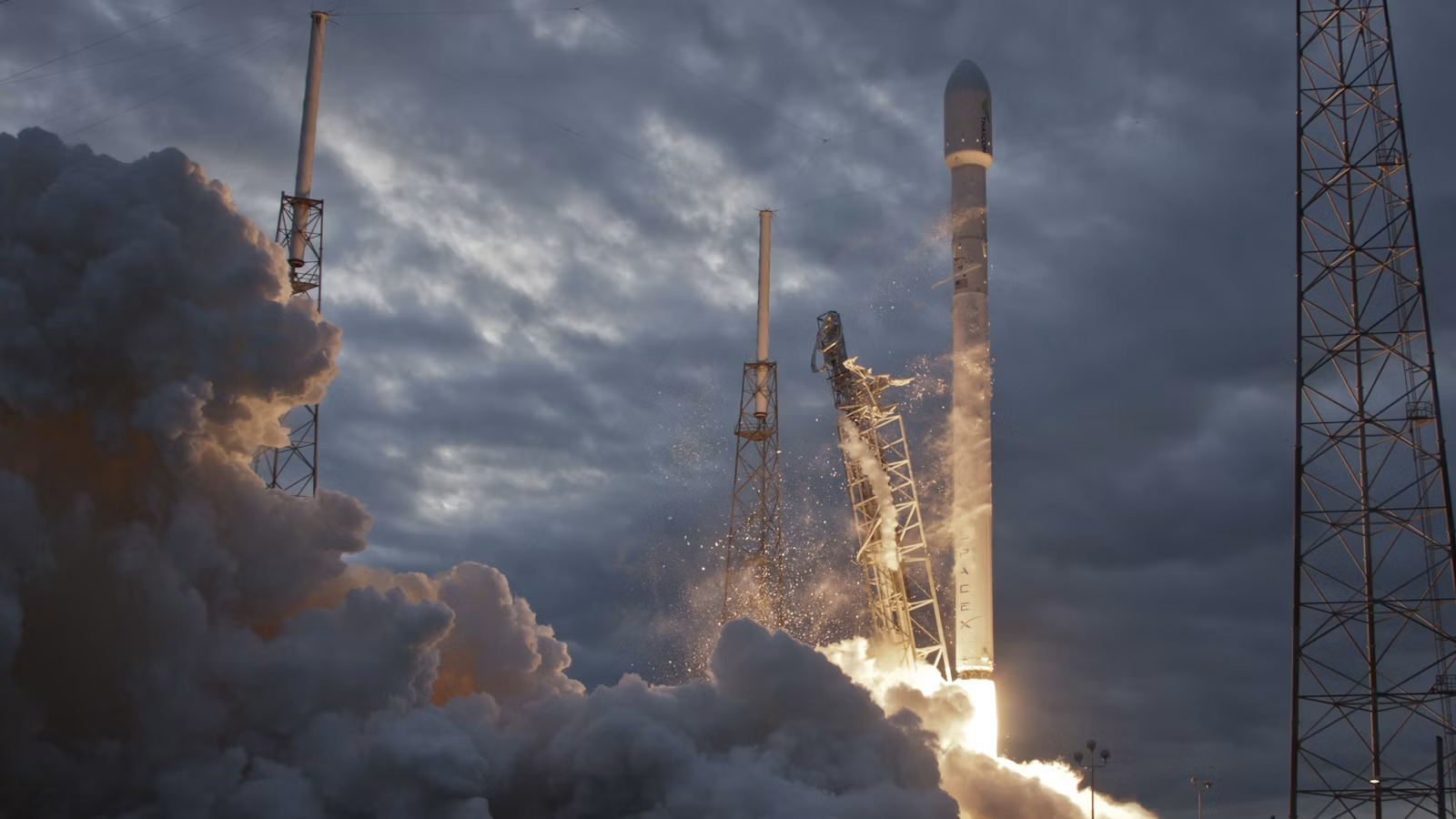
For many launch companies, the biggest issue is unstable orders. Rocket production lines, launch sites, and engineering teams require long-term investment, but external customer missions may not arrive consistently. SpaceX is different because Starlink needs continuous deployment of new satellites, replacement of older satellites, and upgrades to network capacity and coverage. This makes SpaceX one of its own largest sources of launch demand.
SpaceX’s commercial flywheel can be broken down into five steps:
- Starlink continuously needs to deploy and replenish satellites.
- High-frequency missions improve utilization of rockets, launch sites, and recovery systems.
- Repeated launches accumulate inspection, refurbishment, and scheduling experience.
- Faster turnaround helps spread fixed costs across each mission.
- Lower deployment costs further support Starlink network expansion and commercialization.
Reuters reported that the head of the FAA said SpaceX completed 170 launches and deployed about 2,500 satellites in 2025, while regulators also emphasized that higher frequency requires higher reliability. This information shows that high-frequency launch is both a source of SpaceX’s cost advantage and a source of regulatory and safety pressure.
The value of high-frequency launches is also that they put teams into a “batch operations” mode. Engineers can more easily identify repeated issues. Launch site teams become more familiar with the process. Supply chains can better forecast component needs. Recovery teams can continuously optimize drone ship operations and return schedules. Compared with a system that launches only a few times a year, a system that performs more than a hundred missions a year is closer to aviation or logistics than to traditional space projects.
But high frequency does not mean unlimited growth. Launch activities involve airspace, sea zones, weather, launch site capacity, public safety, environmental assessment, and accident investigations. Any major failure could cause launch pauses, higher insurance costs, and stronger regulatory scrutiny. Therefore, SpaceX’s cost advantage must be built on reliability and safety records.
Section Summary: Starlink is an important internal demand engine for SpaceX’s low-cost launch system. Continuous satellite deployment allows SpaceX to maintain high mission density. High-frequency launches then help spread fixed costs, train teams, optimize refurbishment processes, and improve launch site efficiency. This combination of “internal demand + reusable rockets + high-frequency operations” is difficult for other launch companies to replicate quickly. However, high-frequency launches must be based on safety, regulatory approvals, and reliability, otherwise the cost advantage can be weakened by accidents and delays.
How Rideshare Launches Lower the Barrier to Orbit: Why Small Satellite Customers Benefit Most
Rideshare launches allow small satellite customers to avoid buying an entire rocket and instead purchase launch capacity on Falcon 9 based on mass. For startups, universities, research institutions, Earth observation companies, and IoT satellite companies, this changes how budgets are allocated: more funding can go toward satellites, data services, and customer acquisition instead of being consumed entirely by launch costs.
SpaceX’s Rideshare service shows that the starting price for a sun-synchronous orbit rideshare mission is about $350,000 for 50 kg, with additional mass priced at around $7,000 per kg. This turns small satellite access to orbit into a more standardized commercial service and allows more small and midsize customers to validate satellite businesses at a lower entry cost.
| Customer Type | Previous Challenge | Change Brought by Rideshare | Remaining Limitations |
|---|---|---|---|
| Small satellite startups | Could not afford dedicated launches | Can buy launch space by mass | Limited orbit selection |
| Universities and research institutions | Limited budgets and unstable schedules | More standardized access to orbit | Mission integration still required |
| Earth observation companies | Need ongoing satellite replenishment | Can deploy in batches periodically | Orbit and timing must match |
| IoT satellite companies | High constellation deployment cost | Can deploy in batches | Possible follow-on orbital transfer costs |
| Commercial data companies | Long validation cycles | Faster in-orbit testing | Ground systems still needed |
Rideshare launches have changed the small satellite business model. In the past, many small satellite projects needed to wait for piggyback opportunities on larger missions, with unstable timing and often unsuitable orbits. Now, periodic rideshare missions allow customers to plan deployments more predictably. Earth observation companies can replenish satellites in batches, research institutions can validate payloads earlier, and startups can test product assumptions faster.
But low price does not mean no limits. Rideshare launches usually involve fixed orbits, fixed schedules, standardized interfaces, and shared launch conditions. Customers cannot fully customize orbit and launch window in the same way they might with a dedicated launch. If a satellite requires a precise orbit, it may need its own propulsion system or additional orbital transfer services. Therefore, rideshare is better suited to budget-sensitive customers with relatively standardized orbital requirements, not every mission type.
This type of low-cost access to orbit feeds back into commercial space demand. When small satellite companies can reach space more easily, markets such as Earth observation, weather data, maritime monitoring, IoT, research payloads, and commercial communications services become easier to develop. Launch is no longer an exclusive resource reserved for a small number of large satellite operators and government agencies. It becomes more like an infrastructure entry point for the broader space data industry.
Section Summary: SpaceX’s low-cost launches have most directly changed the small satellite market. The rideshare model lowers the financial barrier and gives more small and midsize customers the opportunity to reach orbit and validate business models. It does not mean full customization, and it does not eliminate satellite manufacturing, orbital transfer, or ground operations costs. But it helps commercial space expand from a small number of expensive projects into more frequent, smaller-scale, data-driven commercial scenarios.
How Reusable Rockets Are Changing Commercial Space Competition
Reusable rockets are changing the commercial space industry by moving launch from a scarce, expensive, low-frequency project service toward a higher-frequency, more standardized transport service that looks more like infrastructure. SpaceX has proven that reuse is not only an engineering concept, but also a commercial competitive strategy.
| Industry Change | Commercial Space in the Past | Change Brought by SpaceX |
|---|---|---|
| Launch frequency | Few launch opportunities and long schedules | High-frequency launch becomes a competitive advantage |
| Customer structure | Mainly governments and large satellite operators | More small satellites, startups, and commercial constellations |
| Cost perception | Rockets consumed once | Reuse introduces lifecycle cost thinking |
| Competition | Mainly launch capacity and reliability | Price, frequency, reuse, and service all matter |
| Industry chain | Launch is the bottleneck | Data, communications, remote sensing, and space services expand |
Low-cost launch expands downstream markets. When Earth observation companies can deploy satellites more cheaply, data refresh rates may improve. When communications companies can replenish satellites faster, network coverage may improve. When research institutions can test payloads at lower cost, innovation cycles shorten. Lower launch costs benefit not only launch companies, but also reprice the entire space services market.
Competitors have also been forced to respond to SpaceX’s cost and frequency pressure. Blue Origin, Rocket Lab, ULA, European launch systems, and other commercial space companies are all rethinking reuse, launch cadence, and customer service in different ways. Reuters reported that Blue Origin’s New Glenn reached orbit on its first flight, but its booster did not complete an offshore landing, showing how difficult it is to catch up in reusable rocket capability.
Low cost can also create industry dependence risks. If many customers rely on SpaceX’s prices, cadence, and launch windows, market efficiency improves, but supply concentration also rises. If SpaceX faces a launch pause, regulatory review, launch site congestion, or schedule changes, many customers’ satellite deployment plans could be affected. Low cost is not without trade-offs. It may shift the industry bottleneck from “launch is too expensive” to “launch capacity is too concentrated.”
From an industry perspective, reusable rockets make commercial space look more like an infrastructure industry. Customers no longer ask only “can this be launched?” They also ask “how soon, at what price, whether replenishment can be scheduled regularly, and whether follow-on services are available.” This pushes commercial space away from one-off mission contracts and toward competition in long-term transport capacity, data services, communications networks, and in-orbit operations.
Section Summary: Reusable rockets have changed the rules of commercial space competition. In the past, launch was mostly expensive, low-frequency, and highly customized project service. Now, frequency, price, reuse capability, mission standardization, and customer service all matter as competitive factors. SpaceX’s advantage has expanded the customer base and pressured competitors. But the industry also needs to watch the scheduling, supply, and policy risks that can come from overreliance on a single launch provider.
Where Starship Could Take the Low-Cost Logic Next
If Starship achieves full reuse and high-frequency launch, it may push SpaceX’s low-cost logic beyond Falcon 9’s first-stage reuse into two-stage full reuse, heavy-lift transport, and larger-scale space infrastructure. But Starship is still in the testing and validation stage, so its technical potential should not be treated as a fully realized commercial cost advantage.
According to SpaceX’s positioning of Starship, it is a fully reusable heavy-lift transportation system designed to carry people and cargo to Earth orbit, the Moon, Mars, and beyond. Reuters has also noted that Starship’s rapid reusability is viewed as key to reducing launch costs and supporting high-frequency missions.
| Comparison Dimension | Falcon 9 | Starship |
|---|---|---|
| Reuse goal | Mainly reuses first-stage booster and fairing | Targets full reuse of both stages |
| Transport role | Medium-to-large commercial launches and Starlink deployment | Super-heavy payloads, lunar missions, Mars, and space infrastructure |
| Cost logic | Mature reuse and high-frequency launches reduce cost | Full reuse and larger payloads further spread cost |
| Maturity | Routine commercial operations | Still in testing and validation |
| Main risks | Maintenance, scheduling, mission reliability | Heat shielding, orbital refueling, regulation, and rapid reuse |
Starship’s cost potential is greater because it is trying to solve two problems at the same time: larger payloads and deeper reuse. If a rocket can carry more cargo and both stages can fly again quickly, the cost per kilogram to orbit could theoretically fall further. Next-generation Starlink satellites, lunar cargo, space station modules, in-orbit manufacturing, and future space data centers could all recalculate their economics as a result.
But you also need to recognize the practical limits. Starship still needs to solve heat shielding, reentry control, booster recovery, fast refurbishment, orbital refueling, safety certification, and launch site construction. Reuters’ overview of Starship test flights shows that the project has gone through explosions, controlled splashdowns, booster catch attempts, simulated satellite deployments, and other stages of validation. It is making progress, but it is not yet a fully mature commercial launch system.
If Starship succeeds, the commercial space cost curve may change again. SpaceX could deploy high-capacity Starlink satellites faster, pursue lunar and deep-space transport missions, and support larger orbital infrastructure. But before full reuse, high-frequency operations, and regulatory approvals are all achieved, Starship should still be viewed as a high-potential, high-execution-difficulty variable.
If you follow SpaceX, commercial space, or future public market opportunities, you also need to separate business cost advantages from trading costs. Hot technology stocks or IPOs may experience significant volatility in the early trading period. Actual trading costs may include not only share price changes, but also commissions, platform fees, external agency fees, trading activity fees, FX costs, and order rules. BiyaPay’s U.S. stock trading commission is $0, while platform fees, external agency fees, and other charges are subject to the fee center and order page. Service availability depends on the user’s location, identity verification result, platform rules, and applicable laws and regulations.
Section Summary: Starship is the key variable for the next stage of SpaceX’s launch cost reduction, but it is still moving from testing toward commercialization. Falcon 9 has already proved that partial reuse and high-frequency launches can change the launch market. Starship is attempting to prove whether full reuse and heavy-lift transport can open a larger space infrastructure market. To judge whether SpaceX’s cost advantage is sustainable, you should look at reuse depth, launch frequency, reliability, regulatory approvals, internal Starlink demand, and how quickly competitors catch up.
The discussion around SpaceX launch costs connects commercial space, satellite internet, Starlink, Starship, and global capital markets. If you continue following this type of technology asset, you need not only to study the company’s technology roadmap, but also to build awareness around market information filtering, fee recognition, and funding arrangements. BiyaPay is a global multi-asset trading wallet that supports U.S. and Hong Kong stock trading, cryptocurrency trading, and conversion from USDT to major fiat currencies such as USD or HKD. Where services are available under applicable conditions, you can use U.S. stock trading to learn about market information and fee structures, use multi-currency conversion to understand exchange relationships between different currencies, and use web trading to view order information, trading rules, and related fees. Any popular asset may experience significant volatility. Understanding fees, exchange rates, order rules, and risk boundaries in advance is more important than simply chasing market hype. The above content only introduces public market information, business logic, and fee structures, and does not constitute investment advice.
FAQ
What Is the Core Reason SpaceX Launch Costs Are Low?
The core reason SpaceX launch costs are low is the combined effect of reusable rockets, vertical integration, high-frequency launches, standardized manufacturing, and internal Starlink demand. Rocket reuse is important, but the real advantage comes from the full manufacturing and operating system.
How Does Falcon 9’s Reusable Rocket Save Costs?
Falcon 9 mainly saves costs by recovering its first-stage booster and reusing fairings. This reduces the one-time loss of expensive hardware, but recovered components still require inspection, refurbishment, safety certification, and mission adaptation.
What Customers Are SpaceX Rideshare Launches Suitable For?
SpaceX rideshare launches are suitable for small satellite startups, research institutions, Earth observation companies, and IoT satellite customers. They lower the barrier to orbit, but orbit selection, launch timing, payload interfaces, and follow-on orbital transfers still have limitations.
Will Starship Further Reduce Launch Costs?
If Starship achieves full reuse and high-frequency launch, it may further reduce heavy-lift launch costs. However, it is still in the testing and validation stage, and heat shielding, orbital refueling, rapid reuse, and regulatory approvals still need continued observation.
Why Does Commercial Space Value Reusable Rockets?
Commercial space values reusable rockets because reuse can reduce hardware loss, increase launch frequency, expand the customer base, and push launch services from low-frequency project work toward a more standardized space infrastructure industry.
*This article is provided for general information purposes and does not constitute legal, tax or other professional advice from BiyaPay or its subsidiaries and its affiliates, and it is not intended as a substitute for obtaining advice from a financial advisor or any other professional.
We make no representations, warranties or warranties, express or implied, as to the accuracy, completeness or timeliness of the contents of this publication.
Related Blogs of

What Is the Relationship Between SpaceX and NASA? How Important Are Government Contracts to Company Revenue?


How Important Is Starlink User Growth to SpaceX? An Analysis of Satellite Internet Revenue Logic


What’s the Difference Between Falcon 9, Starship, and Starlink? Understanding SpaceX’s Three Major Business Lines


What Is SpaceX’s Moat? An Analysis of Reusable Rockets, Satellite Networks, and Scale Advantages
Choose Country or Region to Read Local Blog
 Australia
 Austria
 Belgium
 Canada
 Cyprus
 Czech Republic
 Denmark
 Estonia
 Finland
 France
 Germany
 Greece
 Hong Kong
 India
India Indonesia
 Ireland
 Italy
Italy Japan
Japan Latvia
 Lithuania
 Luxembourg
 Malaysia
 Malta
Malta Morocco
 Nepal
Nepal Netherlands
 New Zealand
 Norway
 Pakistan
 Philippines
 Poland
 Portugal
 Romania
 Singapore
 Slovakia
 Slovenia
 South Africa
 South Korea
 Spain
Spain Sweden
 Thailand
 The United States
 Turkey
 United Arab Emirates
 United Kingdom
 Vietnam
Contact Us




BIYA GLOBAL LLC is registered with the Financial Crimes Enforcement Network (FinCEN), an agency under the U.S. Department of the Treasury, as a Money Services Business (MSB), with registration number 31000218637349, and regulated by the Financial Crimes Enforcement Network (FinCEN).
BIYA GLOBAL LIMITED is a registered Financial Service Provider (FSP) in New Zealand, with registration number FSP1007221, and is also a registered member of the Financial Services Complaints Limited (FSCL), an independent dispute resolution scheme in New Zealand.