
How Important Is Starlink User Growth to SpaceX? An Analysis of Satellite Internet Revenue Logic





Starlink user growth is extremely important to SpaceX because it allows SpaceX to move beyond relying mainly on rocket launch contracts and build subscription revenue that is closer to a communications network platform. When evaluating Starlink’s value, you should not only look at user growth. You also need to look at ARPU, the share of enterprise customers, aviation and maritime use cases, Direct to Cell progress, network capacity, and regulatory approvals. If user growth can turn into stable cash flow, it can in turn support Starship, next-generation satellite deployment, and SpaceX’s long-term commercialization narrative.
Key Takeaways
- Starlink user growth is a core variable in SpaceX’s revenue expansion.
- User numbers should be assessed together with ARPU, plan structure, and customer type.
- Enterprise, aviation, and maritime customers determine Starlink’s revenue quality.
- Direct to Cell may expand Starlink’s user boundaries.
- Network capacity, spectrum regulation, and competition may limit growth speed.
- When following SpaceX, you also need to understand trading costs and risk boundaries.
Why Starlink User Growth Is a Core Variable for SpaceX
Starlink user growth matters because it pushes SpaceX from a project-based launch company toward recurring subscription revenue and global communications infrastructure. Launch services are usually charged by mission, while Starlink can generate monthly fees, enterprise service fees, and industry customer contract revenue. This changes SpaceX’s revenue structure, cash flow stability, and capital market narrative.
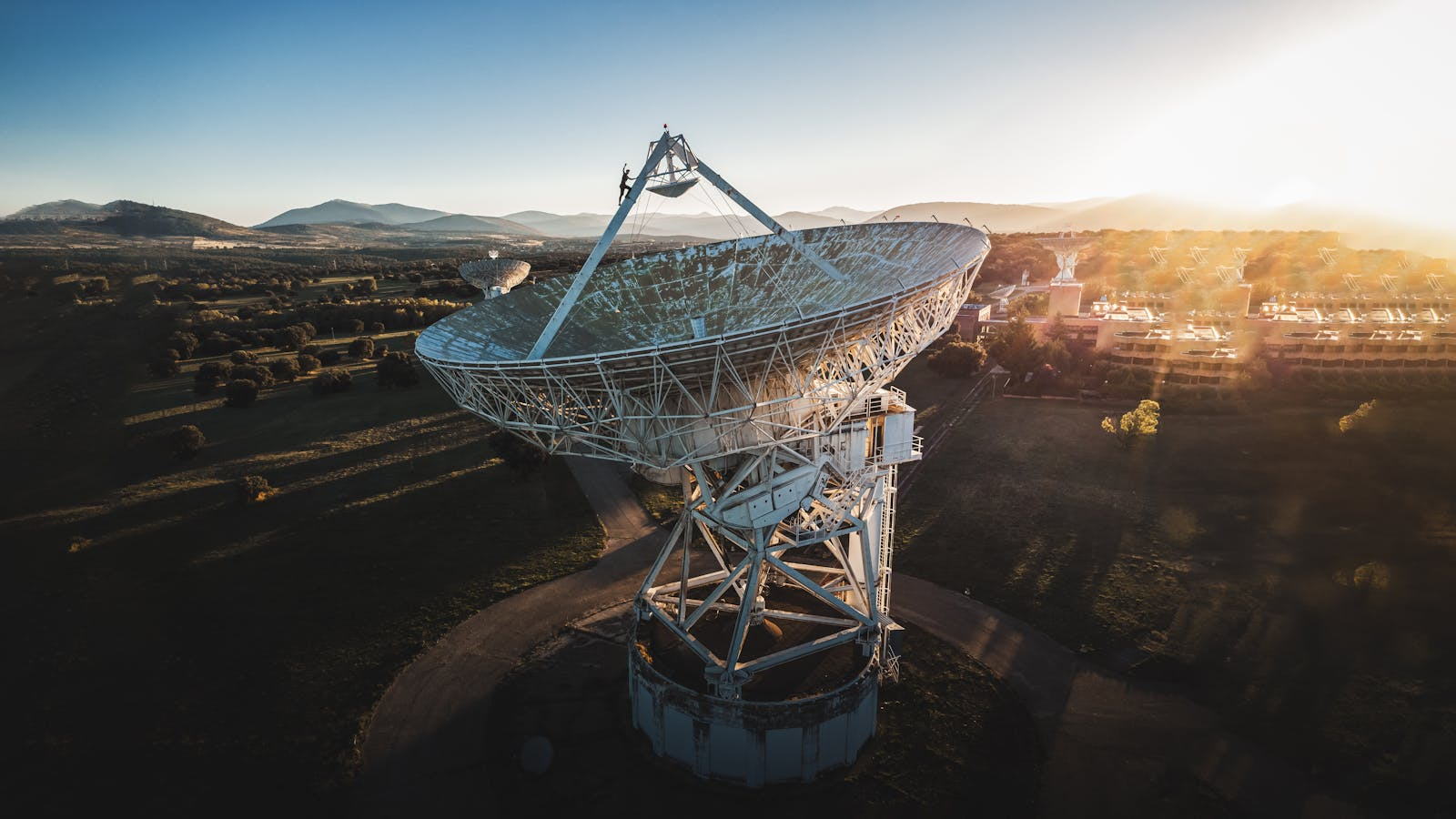
According to the Starlink 2025 Progress Report, Starlink added more than 4.6 million active customers in 2025 and expanded into 35 new countries, territories, and markets. This figure shows that Starlink is no longer just an early-stage technology product. It is forming real demand across more countries and vertical industries.
| Observation Dimension | Impact of User Growth | Significance for SpaceX |
|---|---|---|
| Revenue structure | Higher share of subscription revenue | Reduces reliance on one-off launch orders |
| Cash flow | Monthly fees and enterprise contracts are more stable | Supports satellite deployment and Starship R&D |
| Valuation logic | Shifts from aerospace contractor to network platform | Expands long-term commercial imagination |
| Strategic position | Broader global low-Earth-orbit coverage | Strengthens bargaining power in defense, aviation, and maritime sectors |
Traditional commercial launch revenue is more project-based: customers place orders, rockets are launched, missions are completed, and then the company must keep finding the next batch of customers. Starlink is different. It serves residential users, enterprise customers, airlines, fleets, governments, and emergency communications use cases, giving its revenue greater continuity. If user numbers continue to grow, SpaceX can turn its launch capability into a long-term network asset.
Reuters previously cited people familiar with the matter as saying that SpaceX generated about $8 billion in profit in the previous year, with revenue of around $15 billion to $16 billion, and that Starlink was the main revenue driver. Although this is not a standalone audited Starlink report, it is enough to show why capital markets pay close attention to Starlink’s user count, revenue share, and profit potential.
However, user growth does not equal revenue quality. Expansion into lower-priced markets may increase user numbers, but it may also reduce average revenue per user. High-value enterprise customers may not be large in number, but they can contribute higher contract value and more stable revenue. What you truly need to watch is where new users come from, which plans they use, whether they stay long term, whether hardware subsidies are needed, and whether network capacity can support more users online at the same time.
Section Summary: Starlink user growth is the core variable in SpaceX’s business model transformation. It allows SpaceX to gradually gain the characteristics of a communications network platform instead of remaining a company that “launches once and gets paid once.” The faster user numbers grow, the easier it is for SpaceX to obtain recurring revenue and a stronger financing narrative. But user growth must be evaluated together with ARPU, enterprise customer share, terminal costs, network capacity, and regulatory access. Only when new users turn into stable, sustainable, and relatively high-margin revenue can Starlink user growth truly support SpaceX’s long-term value.
Where Starlink User Growth Comes From: Residential Broadband, Enterprise Connectivity, Aviation and Maritime, and Satellite-to-Phone
Starlink user growth does not come from a single source. Residential broadband provides basic scale, while remote areas and underserved broadband markets contribute many new users. Enterprise connectivity, aviation, maritime, and government customers provide higher-value scenarios. Direct to Cell may expand the user boundary from “people who buy satellite terminals” to “mobile phone users who access satellite networks through carriers.”

| Growth Scenario | Target Users | Revenue Characteristics | Growth Key |
|---|---|---|---|
| Residential broadband | Rural households and suburban users | Monthly subscription | Coverage, pricing, installation experience |
| Enterprise connectivity | Energy, logistics, agriculture, mining | Higher customer value | Stability, SLA, terminal deployment |
| Aviation and maritime | Airlines, cruise ships, commercial vessels | B2B contracts | Bandwidth, certification, long-term customers |
| Direct to Cell | Mobile phone users and telecom carriers | Carrier partnerships | Spectrum, terminal compatibility, regulatory approvals |
Residential users are the foundation of Starlink’s user growth. For many households in remote areas, islands, mountains, farms, and broadband-deficient regions, low-Earth-orbit satellite internet may be faster and more flexible than laying fiber. Starlink’s Roam service also makes it easier to access the internet during travel, RV use, temporary work, and cross-region mobility, further expanding its user scope.
But residential broadband is not necessarily the highest-margin revenue source. Residential users are more price-sensitive, and some regions may require lower monthly fees or hardware discounts to expand coverage. If user growth in a market mainly comes from low-priced plans, revenue growth may lag user growth. Therefore, residential users solve the scale problem, but not the entire revenue quality problem.
Enterprise, aviation, and maritime use cases better demonstrate Starlink’s commercial value. Starlink’s aviation internet service emphasizes high speed, low latency, and continuous in-flight connectivity. These scenarios require higher stability and service quality and are more likely to form long-term contracts. Reuters reported that American Airlines plans to install Starlink Wi-Fi on more than 500 narrow-body aircraft starting in the first quarter of 2027, while Starlink has already established partnerships with multiple airlines. This shows that aviation customers are becoming part of Starlink’s high-value B2B growth.
Direct to Cell may change Starlink’s user boundary. Starlink’s Mobile service emphasizes that existing LTE phones can connect to the satellite network in areas with a clear view of the sky. Its significance lies in lowering the terminal barrier: users may not need to buy a traditional satellite internet terminal and may instead obtain satellite texting, data, or emergency connectivity through carrier plans. Of course, this path depends on spectrum, carrier partnerships, phone compatibility, and regulatory approvals in each country.
Section Summary: Starlink user growth comes from multiple layers: residential broadband brings the basic user scale, Roam and mobile use cases expand usage boundaries, enterprise, aviation, maritime, and government customers improve revenue quality, and Direct to Cell may bring Starlink into the broader mobile communications market. You should not view Starlink only as a home broadband product. It is closer to a low-Earth-orbit communications network platform. What truly affects SpaceX’s value is not just the number of new users, but whether these users come from high-value, sustainable, low-churn scenarios.
How Starlink User Numbers Become Revenue: Subscriptions, Hardware, Plan Structure, and ARPU
Starlink’s revenue logic is not simply “more users always mean higher revenue.” User numbers, plan pricing, hardware terminals, enterprise contracts, regional pricing, and network capacity all matter. User growth only truly improves SpaceX’s revenue quality when it turns into stable subscriptions, reasonable ARPU, lower churn, and higher-value customers.

| Revenue Source | Corresponding Users | Sustainability | Variables to Watch |
|---|---|---|---|
| Monthly subscription | Residential, Roam, enterprise users | Relatively strong | ARPU, churn rate, regional pricing |
| Hardware terminals | New installation users | One-time | Subsidies, inventory, terminal cost |
| Enterprise plans | Commercial, industrial, government customers | Relatively strong | Contract length, service level |
| Aviation and maritime | Airlines, cruise ships, fleets | Medium to high | Installation scale, customer concentration |
| Government and defense | Military and emergency communications | Medium to high | Budget cycles, policy risk |
Subscription revenue is Starlink’s most important revenue source. Residential users pay monthly fees, enterprise and mobile scenarios pay for higher-tier plans, and aviation and maritime customers may pay through long-term contracts. This model is closer to recurring revenue than one-off launch missions and is more capable of supporting long-term valuation logic.
ARPU explains revenue quality better than user count alone. If user numbers grow quickly but mainly come from low-priced regions or promotional plans, revenue growth may not keep pace with user growth. If new users come from aviation, maritime, enterprise dedicated connections, and government customers, even a smaller number of users may contribute higher revenue. When evaluating Starlink user growth, you should focus on user mix rather than only the headline total.
Hardware terminals are also a key variable. Starlink users usually need terminal equipment, and hardware pricing affects the installation barrier. If hardware prices are lowered to accelerate expansion, short-term user growth may improve, but profit may be affected by subsidies, inventory, and production costs. Lower terminal costs help expand the market, but excessive terminal subsidies weaken the economic value of new users.
SpaceX’s S-1 filing with the SEC gave the outside world a more systematic view of the relationship between its connectivity business, space business, and other growth directions. For Starlink, revenue quality depends not only on user numbers, but also on whether the connectivity business can cover satellite manufacturing, launches, ground networks, terminal subsidies, and continued R&D investment.
Section Summary: Starlink user numbers only have long-term value for SpaceX when they turn into high-quality revenue. You need to observe monthly subscriptions, hardware terminals, enterprise plans, aviation and maritime contracts, government use cases, and ARPU changes at the same time. User numbers may grow quickly, but if ARPU declines, hardware subsidies are too high, network congestion becomes severe, or churn rises, revenue quality will be weakened. Conversely, if more new users come from enterprise, mobile, aviation, maritime, and government scenarios, Starlink will provide stronger support for SpaceX’s profit and valuation.
Starlink and SpaceX’s Commercial Flywheel: How User Growth Feeds Back Into Launches, Satellites, and Starship
Starlink user growth reinforces SpaceX’s commercial flywheel: more users bring more subscription and enterprise revenue, revenue supports more satellite manufacturing, launches, and ground network buildout, more satellites improve speed, capacity, and coverage, and better service attracts more users. If Starship achieves stable reuse, this flywheel may accelerate further.
The relationship between Starlink and SpaceX is not simply “a satellite internet business under a rocket company.” SpaceX has launch capability, satellite manufacturing capability, and network operations capability, allowing Starlink to form an internal demand loop. Other satellite companies may need to buy launch services from external rocket companies, while SpaceX can use its own Falcon 9 and future Starship to support constellation deployment.
This flywheel can be broken down into five steps:
- User growth increases residential subscriptions, enterprise contracts, and industry revenue.
- Revenue supports satellite manufacturing, launch services, and ground networks.
- More satellites improve network capacity, speed, latency, and coverage.
- Better service attracts more residential users and B2B customers.
- If Starship achieves stable reuse, it may reduce the deployment cost of next-generation satellites.
Starlink’s network performance directly affects user growth. According to the Starlink Network Update, Starlink’s median latency during peak hours for U.S. customers has fallen to about 25.7 milliseconds. Low latency and high capacity are key advantages of low-Earth-orbit satellite internet compared with traditional geostationary satellite services, and they also affect adoption in enterprise, aviation, and real-time communications scenarios.
Starship is especially important for Starlink’s next stage. Next-generation Starlink satellites may be heavier and higher-capacity, requiring greater launch capability. If Starship can achieve stable reuse, SpaceX can deploy next-generation satellites at lower cost and higher frequency. If Starship is delayed, Starlink’s capacity expansion, terminal experience, and Direct to Cell deployment speed will all be affected.
User growth also strengthens SpaceX’s value in government and emergency communications. A large-scale low-Earth-orbit network does not only serve individual users. It can also serve disaster relief, military communications, offshore operations, and cross-region low-latency networks. The larger the user base, the wider the network coverage, and the more operational experience SpaceX accumulates, the stronger its bargaining power with government and enterprise customers.
Section Summary: Starlink user growth is not an isolated metric. It is the core input into SpaceX’s commercial flywheel. User growth brings revenue, revenue supports more satellites and launches, more satellites improve service quality, and better service quality drives further user growth. This flywheel also feeds back into Starship because once the next-generation rocket reduces deployment costs, Starlink’s network expansion speed and economics may improve further. When analyzing SpaceX, you should view Starlink as the hub connecting revenue, launch capability, satellite manufacturing, and long-term infrastructure.
Starlink User Growth Bottlenecks: Capacity, Regulation, Competition, and Service Quality
Starlink user growth will not rise in an unlimited straight line. Its main bottlenecks come from network capacity, spectrum and licensing regulation, regional pricing, service quality, competitors, and orbital safety pressure. Even if global demand for connectivity is large, Starlink must solve three questions: whether it can enter a market, whether it can serve users reliably, and whether it can remain price-competitive.
| Risk Type | Specific Manifestation | Impact on User Growth |
|---|---|---|
| Capacity constraints | Lower speeds in popular regions, waitlists | Limits new users and satisfaction |
| Regulatory approvals | National licenses, spectrum, data compliance | Determines whether new markets can be entered |
| Competitive pressure | Amazon, OneWeb, AST, and others entering | Affects pricing and enterprise customers |
| Service quality | Latency, weather impact, installation, after-sales service | Affects retention and reputation |
| Orbital risk | Debris and astronomy concerns | Increases long-term regulatory pressure |
Capacity is the first bottleneck. Satellite count, ground stations, spectrum resources, user density, and terminal experience jointly determine service quality. If user growth in a region is too fast, it may cause speed declines, congestion, waitlists, or plan restrictions. Starlink must continue launching satellites, optimizing inter-satellite links, and improving ground network capability to maintain user growth and satisfaction.
Regulation and spectrum are the second bottleneck. Low-Earth-orbit satellite internet cannot enter every market simply because the technology works. Each country and region has telecom licenses, spectrum allocation, data compliance, and national security requirements. Reuters reported that the EU is discussing future mobile satellite spectrum allocation, and Starlink and Amazon may receive some room to participate, while European companies may also retain a larger share. This shows that spectrum and policy directly affect Starlink’s expansion boundaries.
Competition is shifting from traditional satellite broadband to satellite-to-phone and enterprise connectivity. Reuters reported that Amazon’s acquisition of Globalstar was intended to strengthen satellite connectivity capabilities and challenge Starlink. Although Starlink currently has a first-mover advantage and constellation scale advantage, Amazon, AST SpaceMobile, OneWeb, traditional telecom operators, and regional satellite projects will create pressure in different scenarios.
Service quality determines user retention. After a new user installs the system, what really affects renewal is speed, latency, stability, weather impact, terminal failure rate, and after-sales response. If user growth relies on one-time promotions but lacks stable service support, churn may rise later. For enterprise customers, SLA, fault response, and long-term availability matter more than speed alone.
Section Summary: The upper limit of Starlink user growth does not depend only on how many people globally need internet access. It also depends on whether SpaceX can solve capacity, regulation, spectrum, competition, and service quality issues. Market demand can drive new users, but regulatory approvals determine whether Starlink can enter new markets, network capacity determines whether it can support more users, the competitive landscape determines pricing pressure, and service experience determines retention. When analyzing Starlink growth, you should look at both growth speed and growth constraints, instead of simply extrapolating early high growth in a straight line.
How Ordinary Followers Should Assess the Real Value of Starlink User Growth to SpaceX
To assess the value of Starlink user growth, you should look at user numbers, ARPU, the share of enterprise customers, network capacity, regulatory coverage, capital expenditure, and feedback into SpaceX’s other businesses, rather than only looking at headlines about new users. Truly valuable growth should improve revenue quality, strengthen cash flow, and support SpaceX’s launch, satellite, and Starship systems.
You can use the following indicators to judge whether Starlink user growth is healthy:
- Active customers: Whether growth continues and whether more markets are entered.
- ARPU: Whether pricing differs meaningfully across residential, Roam, enterprise, aviation, and maritime users.
- Customer mix: Share of high-value B2B, aviation, maritime, and government customers.
- Network quality: Speed, latency, capacity, availability, and after-sales experience.
- Capital expenditure: Pressure from satellite manufacturing, launches, ground stations, and terminal subsidies.
- Competitive risk: Changes involving Amazon, AST, telecom operators, and regional regulation.
- Business feedback: Whether Starlink supports Starship and next-generation infrastructure.
If you follow SpaceX, Starlink, or possible future public market opportunities, you also need to understand trading costs. Hot IPOs or high-profile technology stocks may experience significant volatility in the early trading period. Actual costs are not limited to share price changes. They may also include commissions, platform fees, external agency fees, trading activity fees, FX costs, and order rules. BiyaPay’s U.S. stock trading commission is $0, while platform fees, external agency fees, and other charges are subject to the fee center and order page. Service availability depends on the user’s location, identity verification result, platform rules, and applicable laws and regulations.
Where services are available under applicable conditions, you can use BiyaPay U.S. stock trading to learn about U.S. market information and fee structures. BiyaPay is a global multi-asset trading wallet that supports U.S. and Hong Kong stock trading, cryptocurrency trading, and conversion from USDT to major fiat currencies such as USD or HKD. If you also pay attention to overseas market information, funding routes, and pre-trade costs, multi-currency conversion can help you understand exchange relationships between different currencies. Before any actual trade, the order page and applicable rules should prevail.
Section Summary: The real value of Starlink user growth comes from revenue quality, customer mix, network capability, and support for SpaceX’s commercial flywheel. More users are not always better. The key questions are whether new users can contribute sustainable revenue, whether they require excessive subsidies, whether they cause network congestion, and whether they strengthen enterprise and government use cases. When following SpaceX, you should treat Starlink as a core variable connecting the connectivity business, cash flow, launch demand, and long-term valuation narrative. If you also follow future trading opportunities, you should understand costs, volatility, and compliance boundaries in advance.
The discussion around SpaceX and Starlink ultimately connects satellite internet, commercial space, global communications, and capital markets. If you continue to follow this type of technology asset, you should not only look at user growth and business models, but also build awareness around information filtering, fee recognition, and funding arrangements. BiyaPay can serve as one tool for learning about multi-asset markets, cross-currency conversion, and U.S. and Hong Kong stock trading access. Where services are available under applicable conditions, you can also use web trading to view order information, trading rules, and related fees. Any popular asset may experience significant volatility. Understanding fees, exchange rates, order rules, and risk boundaries in advance is more important than simply chasing market hype. The above content only introduces public market information, business logic, and fee structures, and does not constitute investment advice.
FAQ
Why Does Starlink User Growth Affect SpaceX’s Valuation?
Starlink user growth affects SpaceX’s valuation because it relates to subscription revenue, cash flow, and the platform narrative. However, valuation should not be based only on user count. It should also consider ARPU, profit margin, capital expenditure, customer mix, and competitive risk.
Does Starlink User Growth Equal Revenue Growth?
Starlink user growth does not fully equal revenue growth. Revenue quality also depends on plan pricing, hardware subsidies, regional pricing, customer type, and churn rate. If many low-priced users are added, revenue growth may still be lower than user growth.
Why Are Starlink Enterprise Customers More Important?
Starlink enterprise customers are more important because aviation, maritime, energy, logistics, and government customers usually have higher spending per account and longer contract cycles. However, these customers also place higher demands on service stability, regulatory approvals, installation efficiency, and long-term delivery capability.
Will Direct to Cell Change Starlink’s Growth?
Direct to Cell may expand Starlink’s growth boundary. It allows existing LTE phones to connect to the satellite network in specific scenarios, but implementation still depends on spectrum resources, carrier partnerships, terminal compatibility, and regulatory approvals in each country.
What Are the Main Risks Facing Starlink Growth?
Starlink growth mainly faces pressure from capacity, spectrum regulation, terminal costs, service quality, competitors, and orbital safety. After user numbers grow quickly, if speed, latency, or after-sales experience declines, retention and reputation may both be affected.
How Should Trading Costs Be Viewed When Following SpaceX?
When following SpaceX-related public market opportunities, you should compare commissions, platform fees, external agency fees, FX costs, and order rules at the same time. Fees should be based on platform statements, order pages, and local regulatory requirements, not only on “zero commission” messaging.
*This article is provided for general information purposes and does not constitute legal, tax or other professional advice from BiyaPay or its subsidiaries and its affiliates, and it is not intended as a substitute for obtaining advice from a financial advisor or any other professional.
We make no representations, warranties or warranties, express or implied, as to the accuracy, completeness or timeliness of the contents of this publication.
Related Blogs of

MACD Crypto Trading Strategy: Settings, Signals, and Risk Management


Wire Transfer Requirements: Sender and Beneficiary Details Checklist




Choose Country or Region to Read Local Blog
 Australia
 Austria
 Belgium
 Canada
 Cyprus
 Czech Republic
 Denmark
 Estonia
 Finland
 France
 Germany
 Greece
 Hong Kong
 India
India Indonesia
 Ireland
 Italy
Italy Japan
Japan Latvia
 Lithuania
 Luxembourg
 Malaysia
 Malta
Malta Morocco
 Nepal
Nepal Netherlands
 New Zealand
 Norway
 Pakistan
 Philippines
 Poland
 Portugal
 Romania
 Singapore
 Slovakia
 Slovenia
 South Africa
 South Korea
 Spain
Spain Sweden
 Thailand
 United States
 Turkey
 United Arab Emirates
 United Kingdom
 Vietnam