How Does SpaceX Make Money? Revenue Sources from Rocket Launches, Starlink, and Commercial Spaceflight





SpaceX’s business model is not simply “making money by launching rockets.” You should see it more as a commercial space company supported by reusable rockets, satellite internet, government space contracts, and future deep-space transportation. Rocket launches are its foundational capability, Starlink is a growth engine closer to a subscription-based internet service, and contracts with NASA, the military, and intelligence agencies provide high-barrier revenue. To understand SpaceX, you need to look at its revenue sources, cost structure, technological progress, and regulatory risks at the same time.
Key Takeaways
- SpaceX’s revenue mainly comes from Starlink, rocket launches, and government contracts.
- Falcon 9’s reusability is the foundation of SpaceX’s cost advantage.
- Starlink turns one-time launch capability into recurring subscription revenue.
- NASA and defense contracts increase revenue scale but also create policy dependence.
- Starship is a future variable, not yet a mature revenue source.
- To assess SpaceX’s value, you need to consider growth, costs, and regulatory risks together.
What Is SpaceX’s Business Model? Start with Its Revenue Structure and Commercial Logic
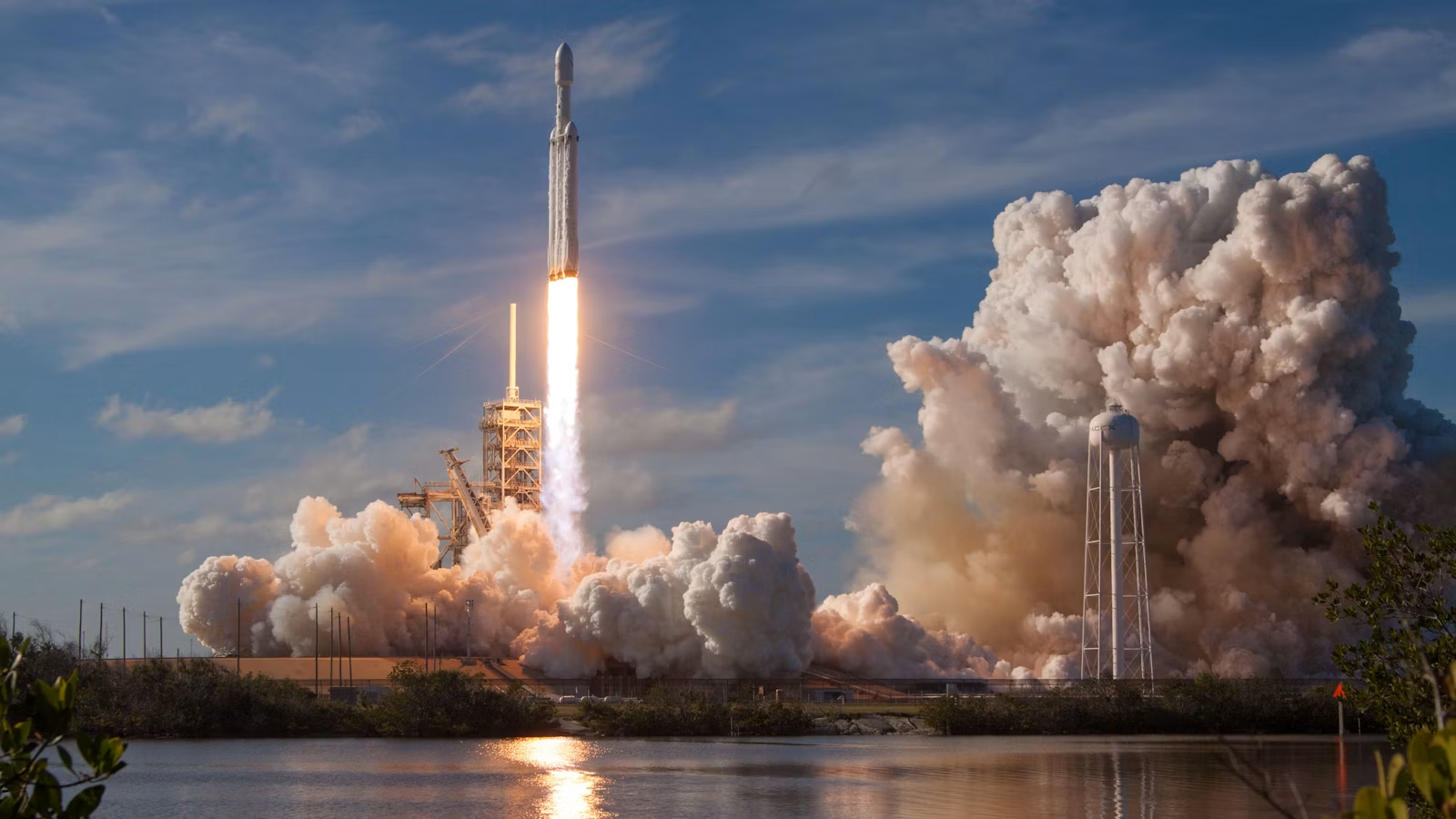
SpaceX’s business model can be summarized in three points: it uses reusable rockets to reduce the cost of reaching space, uses Starlink to turn satellite networks into a recurring paid service, and obtains large contracts from NASA, the military, and commercial customers. You should not see SpaceX only as a “rocket launch company.” It is more like a combination of space infrastructure, a satellite communication network, and a government contractor.
Based on public information, SpaceX remains a private company, so its detailed financial data is not as transparent as that of a listed company. Reports on SpaceX’s business and finances show that Starlink, reusable rockets, government contracts, and commercial space missions together form its core revenue framework. In other words, SpaceX’s business model is not based on a single monetization path, but on multiple businesses reinforcing one another.
SpaceX Is Not Just a Rocket Company
Traditional aerospace companies often rely on government projects, one-time launches, or spacecraft manufacturing fees. SpaceX is different because it first turned Falcon 9 into a high-frequency launch vehicle, and then used that launch capability to deploy its own Starlink constellation. As a result, rockets are not only transportation tools for external customers, but also the infrastructure for SpaceX’s own network.
SpaceX’s revenue can be divided into several categories:
| Revenue Source | Representative Business | Revenue Type | What You Should Watch |
|---|---|---|---|
| Rocket launches | Falcon 9, Falcon Heavy | Project-based revenue | Launch frequency, customer type, launch contract value |
| Satellite internet | Starlink | Hardware terminals + monthly fees + enterprise services | User scale, countries covered, ARPU, network capacity |
| Government contracts | NASA, U.S. military, intelligence agencies | Long-term or project-based contracts | Contract size, delivery progress, policy dependence |
| Future business | Starship, lunar and Mars missions | R&D investment and potential revenue | Technical maturity, regulatory approval, commercial demand |
This table helps you quickly understand that SpaceX’s current cash flow, growth engine, and future upside are not on the same layer. Rocket launches are more like the chassis, Starlink is the growth business, and Starship is the long-term option.
Why Low-Cost Launches Are the Foundation of the Business Model
SpaceX’s core moat is not simply that it can build rockets, but that it can send payloads into orbit more frequently, at lower cost, and with greater operational stability. The reusable design of Falcon 9 allows SpaceX to reuse the most expensive part of the first stage, thereby reducing launch costs. Once this capability becomes stable, it serves three goals at the same time: launching satellites for commercial customers, executing government missions, and deploying SpaceX’s own Starlink satellites.
So, when you ask how SpaceX makes money, you should not only ask “how much does each launch cost?” The more important question is whether reusable rockets give SpaceX a cost-curve advantage in commercial spaceflight. If the answer is yes, then launch services are not just a revenue item, but also the infrastructure behind Starlink and the future commercialization of Starship.
Chapter Summary: SpaceX’s business model is not limited to rocket launches. It builds low-cost access to space through reusable rockets, then extends that capability into Starlink, government space contracts, commercial satellite customers, and future deep-space missions. You can understand it as a platform-like company that uses rocket capability to support satellite internet and commercial space services. The more diversified its revenue structure becomes, the greater SpaceX’s commercial potential may be. But when analyzing it, you should distinguish between current revenue, growth businesses, and long-term visions.
How Does the Rocket Launch Business Make Money? Falcon 9, Falcon Heavy, and Commercial Customers
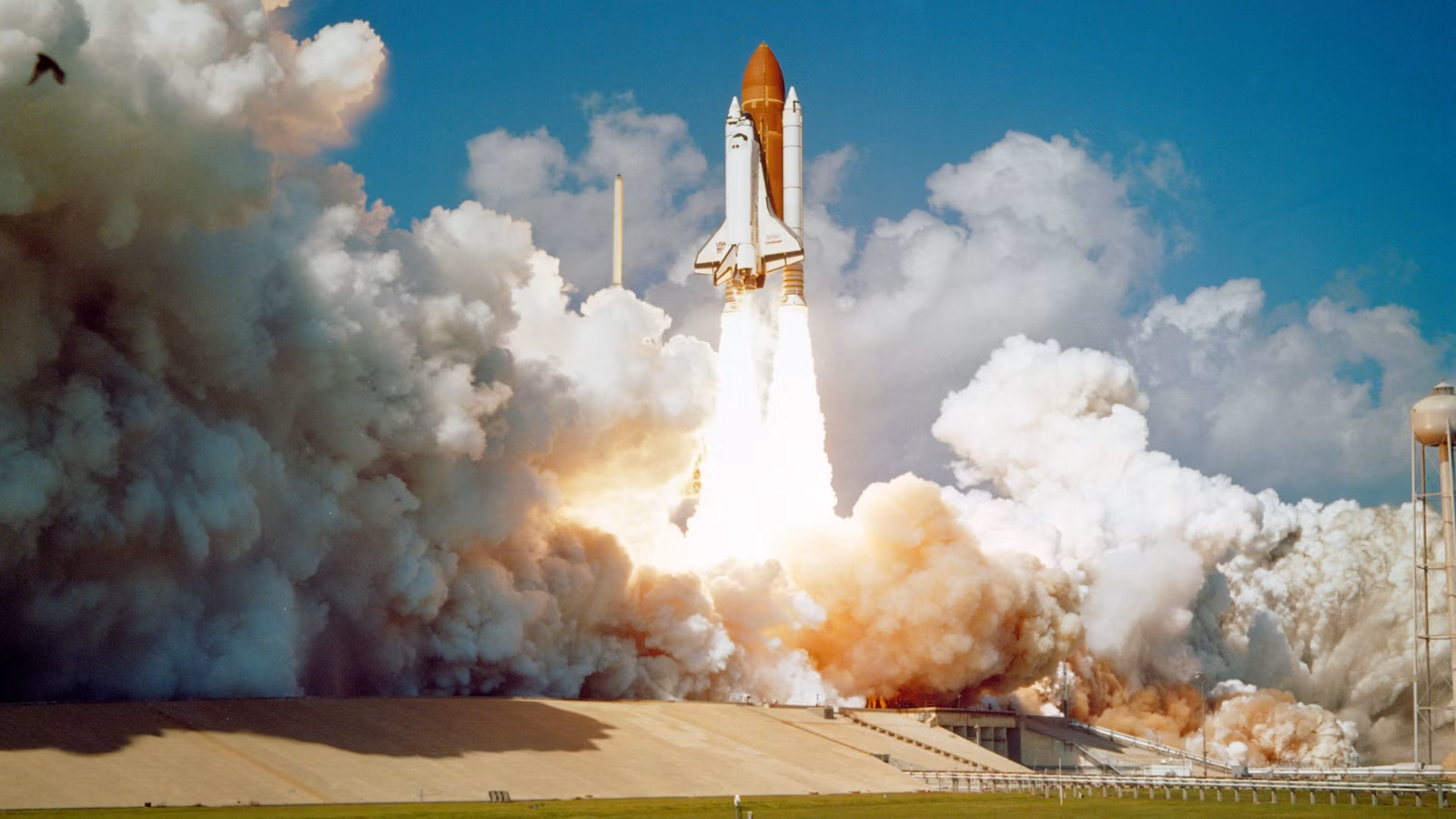
SpaceX’s rocket launch business mainly earns money by providing orbital transportation services to commercial satellite companies, government agencies, research institutions, and small satellite customers. Customers are not paying to “watch a rocket take off”; they are paying to safely deliver satellites, spacecraft, probes, or other payloads to designated orbits. Falcon 9’s high launch frequency and reusability are the most important competitive advantages of this business.
Who Are the Customers for Launch Services?
SpaceX’s launch customers can generally be divided into four categories. The first category is commercial satellite companies, such as operators of communications, remote sensing, navigation, and internet satellites. The second category is government customers, including NASA, the U.S. Department of Defense, and national security-related agencies. The third category is international customers, such as space agencies or commercial satellite projects from other countries. The fourth category is small satellite customers, which usually do not need an entire rocket and instead enter orbit through rideshare launches.
The common structure of launch revenue can be viewed as follows:
| Launch Type | Typical Customers | Revenue Features | Pricing Factors |
|---|---|---|---|
| Dedicated launch | Large commercial satellites, government missions | Relatively high contract value per mission | Orbit altitude, payload mass, mission complexity |
| Rideshare launch | Small satellite companies, universities, research institutions | Lower price per customer, but more customers | Payload weight, orbit, launch window |
| Human spaceflight | NASA, commercial spaceflight customers | High certification requirements, high mission value | Safety standards, spacecraft systems, crew support |
| Deep-space missions | NASA, scientific missions | Long cycles, complex contracts | Technical difficulty, delay risk, budget changes |
As you can see, rocket launch services do not have one uniform “standard price.” Different orbits, payloads, launch windows, safety requirements, and insurance needs all affect contract value.
Rideshare Launches Expand the Customer Base
SpaceX’s SmallSat Rideshare Program brings small satellite customers into its commercialization system. For many small companies, research institutions, and university teams, buying a dedicated launch mission is too expensive. Rideshare launches allow them to share launch costs based on mass, orbit, and mission window. This not only lowers the entry threshold for customers, but also improves Falcon 9’s launch utilization.
This model benefits SpaceX in two ways: first, it increases mission frequency and keeps the launch system operating continuously; second, it expands the customer base and makes more small commercial space companies dependent on SpaceX’s launch capability. In the long run, this strengthens SpaceX’s network effect in low Earth orbit commercial transportation.
How Reusability Affects Profit Potential
Falcon 9’s reusability does not mean every launch is necessarily highly profitable. Actual profit still depends on mission pricing, recovery conditions, refurbishment costs, launch-site arrangements, insurance requirements, and customer contract terms. But from a business logic perspective, if the same first-stage booster can execute multiple missions, SpaceX can spread R&D, manufacturing, and operating costs across more launches.
This is also why SpaceX’s launch business has special value for Starlink. External customer launches generate revenue, while internal Starlink launches reduce network deployment costs. In other words, the launch business can both “sell services” and “serve internal growth.”
Chapter Summary: The rocket launch business is SpaceX’s cash-flow foundation and the underlying capability that differentiates it from traditional satellite internet companies. Falcon 9, Falcon Heavy, and rideshare launches allow SpaceX to serve commercial, research, government, and small satellite customers at the same time. When analyzing this business, you should not only look at single-launch pricing, but also launch frequency, reusable booster stability, customer structure, and internal Starlink deployment needs. The more stable the launch capability, the more obvious SpaceX’s cost advantage becomes across its other businesses.
Why Is Starlink SpaceX’s Core Revenue Engine?
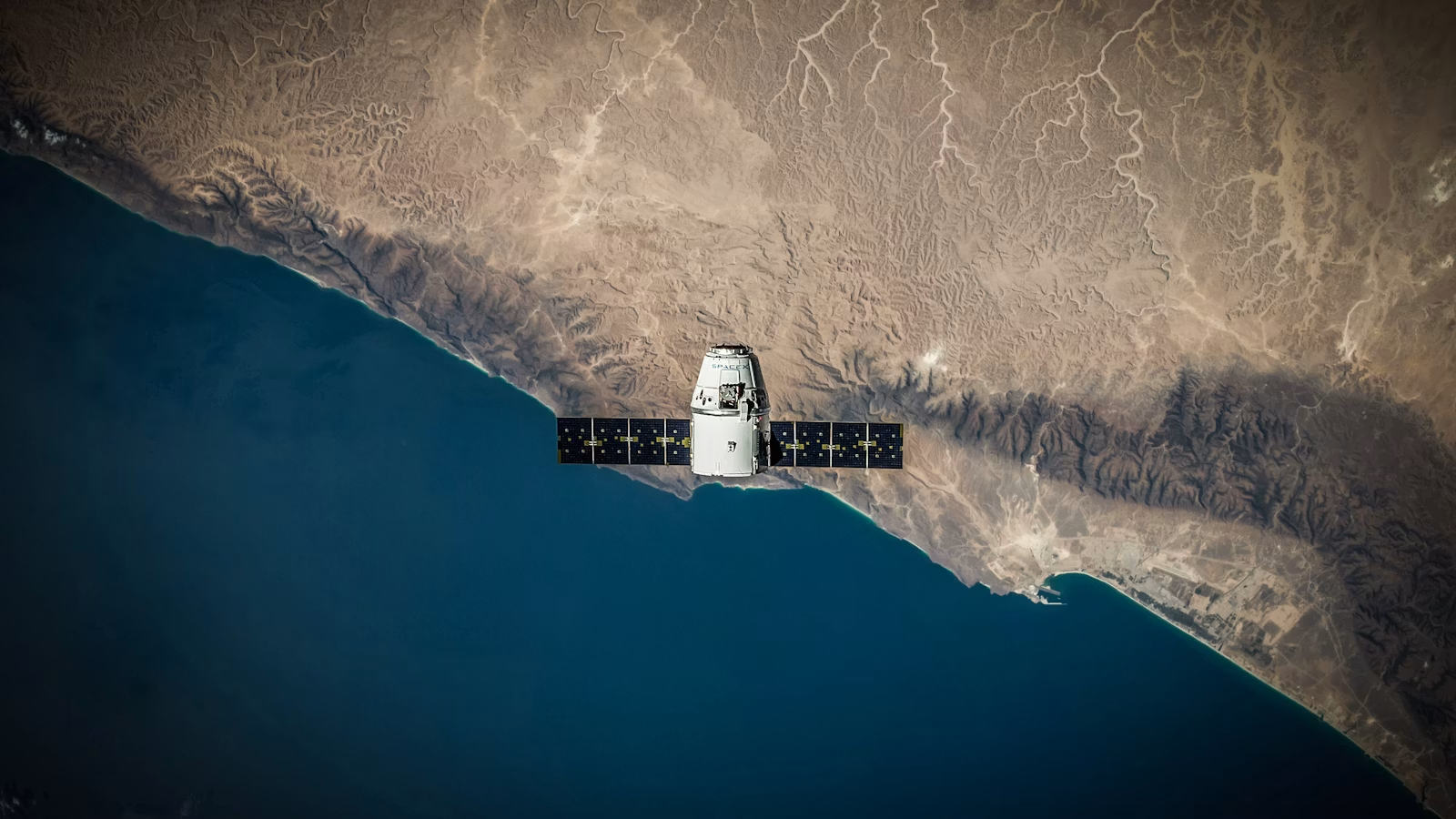
Starlink is SpaceX’s most important growth engine because it turns one-time rocket launch capability into a recurring satellite internet service. Launch revenue is usually charged by project, while Starlink is more like a communications and internet subscription business: users buy terminal equipment and then pay monthly fees, while enterprise, aviation, maritime, and government customers may contribute higher-value service revenue.
Starlink Revenue Is Not Just Home Broadband
Many people understand Starlink as “broadband for remote areas,” which is only partly correct. Residential users are indeed an important foundation for Starlink’s expansion, especially in areas where traditional fiber or mobile networks have weak coverage. But Starlink’s greater commercial value lies in high-value scenarios, such as maritime communications, aviation Wi-Fi, mining and energy facilities, emergency communications, enterprise connectivity, and government communications.
The Starlink 2025 Progress Report mentioned that Starlink added more than 4.6 million active customers in 2025 and expanded into more countries and regions. As the user base expands, Starlink’s revenue structure may gradually shift from early-stage “terminal sales + user acquisition” toward “recurring monthly fees + premium plans + enterprise contracts.”
Starlink’s main revenue scenarios can be viewed as follows:
| Starlink Scenario | Typical Users | Revenue Model | Growth Logic |
|---|---|---|---|
| Home broadband | Remote households, small-town users | Terminal equipment + monthly fee | Wider coverage, replacement for weak networks |
| Enterprise connectivity | Energy, mining, logistics, rescue organizations | Enterprise plans | High demand for stable connectivity and mobile coverage |
| Aviation Wi-Fi | Airlines | Equipment deployment + service contracts | Cabin connectivity upgrades and customer experience competition |
| Maritime communications | Cruise ships, merchant ships, ocean-going fleets | Premium mobile network services | Ongoing demand for offshore connectivity |
| Government communications | Government agencies, military, emergency departments | Customized contracts | Battlefield, disaster, and remote-area communication needs |
Starlink Is More Like an Internet Service Than a One-Time Space Project
Launch revenue usually comes from a single mission; once the project ends, the revenue ends too. Starlink is different. It is closer to a subscription business. As long as users continue using the network, SpaceX can generate ongoing cash flow. For any commercial space company, this type of revenue quality matters because aerospace R&D, satellite manufacturing, and launch deployment all require long-term capital investment.
However, Starlink’s growth cannot be judged only by user count. You also need to look at average revenue per user, terminal equipment cost, satellite depreciation, ground station construction, customer service costs, spectrum limitations, and pricing differences across markets. The larger the user base, the more important network capacity management becomes. If users become too concentrated in some regions, service quality may be affected; if low-income markets account for a larger share, ARPU may also decline.
Aviation and Maritime Scenarios Raise the Revenue Ceiling
Starlink’s premium scenarios are raising its revenue ceiling. For example, American Airlines plans to install Starlink Wi-Fi on more than 500 narrow-body aircraft starting in 2027. This type of aviation partnership shows that Starlink is not only home broadband, but is also entering aircraft cabins, route networks, and enterprise service systems.
Aviation, cruise ships, ocean-going fleets, military communications, and emergency rescue share one common feature: traditional ground networks are difficult to cover, customers require higher stability and mobility, and they may be more willing to accept higher prices. For SpaceX, these scenarios may contribute higher unit revenue than ordinary home broadband.
Chapter Summary: Starlink is the key to SpaceX’s transition from project-based revenue to recurring revenue. It relies on Falcon 9 launch capability to deploy satellites quickly, then charges service fees across residential, enterprise, maritime, aviation, and government scenarios. When judging Starlink’s value, you should not only look at user growth, but also observe ARPU, terminal costs, network capacity, spectrum regulation, and penetration into high-value customers. The more mature Starlink becomes, the more SpaceX’s revenue structure resembles that of a communications infrastructure company.
What Revenue Do Government Contracts, NASA, and Defense Business Bring to SpaceX?
SpaceX’s government contracts can bring high-value, long-cycle revenue and technical endorsement, but they also increase dependence on policy, budgets, and geopolitics. NASA contracts help SpaceX enter human spaceflight, cargo resupply, and lunar missions, while contracts with the U.S. military and intelligence agencies bring launch services, satellite communications, and Starshield into defense applications. These revenues are important, but they should not be understood simply as “stable and risk-free.”
NASA Contracts Provide Technical Certification and Long-Term Missions
NASA’s significance to SpaceX is not only as a customer, but also as a certification system. Human spaceflight, International Space Station resupply, commercial crew flights, lunar landing systems, and other projects all require high-threshold safety standards and long-term delivery capabilities. After SpaceX participated in the NASA Artemis human landing system, Starship was also included in the lunar mission narrative.
The commercial value of NASA contracts mainly appears in three areas: first, the contract amounts are usually large; second, technical certification can improve SpaceX’s credibility in commercial markets; third, mission experience can feed back into spacecraft, launch, and life-support system development.
Defense and Intelligence Contracts Improve Revenue Stability
U.S. defense and intelligence agencies are also important customers for SpaceX. Reuters previously reported that SpaceX’s Starshield business involved satellite network projects related to U.S. intelligence agencies. Other reports show that the U.S. Space Force awarded SpaceX a US$2.29 billion military space data network contract to build a space data network backbone prototype.
Government and defense businesses can be divided into several categories:
| Government Revenue Source | Representative Projects | Commercial Value | Main Risks |
|---|---|---|---|
| NASA missions | Human spaceflight, cargo, lunar landing systems | Technical endorsement, long-term contracts | Mission delays, budget changes |
| Defense launches | Military satellites, classified payloads | High-barrier launch revenue | Strict review, high confidentiality requirements |
| Starshield | Military satellite networks | Customized high-value services | Geopolitical sensitivity |
| Military communications | Starlink, Starshield terminals | Recurring service fees | Pricing disputes, customer dependence |
Government Customers Are Also a Concentration Risk
Government customers have strong payment capacity, long contract cycles, and high technical barriers, all of which are advantages. But government business also has another side: budget cycles may change, regulatory reviews may become stricter, war and geopolitics can amplify public opinion risks, and fixed-price contracts may face cost overruns. If one category of government customers accounts for too much of SpaceX’s revenue, revenue stability may also be affected by the policy environment.
Therefore, when analyzing SpaceX’s government business, you cannot only look at the words “large contract.” You also need to see whether the contract has been confirmed, how long the delivery cycle is, whether it involves sensitive use cases, whether it depends on a single customer, and whether political changes may cause repricing or adjustment.
Chapter Summary: Government contracts are a high-value part of SpaceX’s revenue structure. NASA provides technical endorsement for human spaceflight and lunar missions, while the military and intelligence agencies bring Starlink, Starshield, and launch capability into defense communication networks. These businesses can increase revenue scale and market barriers, but they also bring budget, delivery, regulatory, and geopolitical risks. You should view government contracts as an important advantage, not as a revenue guarantee with no volatility.
How Will Starship, Lunar Missions, and Mars Plans Affect SpaceX’s Future Revenue?
Starship is currently more like SpaceX’s future commercialization platform than a mature revenue source. Its goal is to reduce the unit cost of reaching space through a fully reusable, super-heavy-lift system. If Starship succeeds, it may support large-scale Starlink deployment, NASA lunar missions, large commercial payloads, future in-orbit infrastructure, and even Mars transportation. If progress is delayed, it could also affect SpaceX’s cost curve and long-term expectations.
Starship Is Still in the R&D and Validation Stage
Starship is designed as a super-heavy, fully reusable transportation system intended to carry people and cargo to Earth orbit, the Moon, Mars, and beyond. Its long-term vision is enormous, but commercial analysis must distinguish between “vision” and “current revenue.”
A more cautious judgment is that Starship is a key variable in SpaceX’s future revenue upside, but Mars transportation, lunar bases, or space manufacturing should not be treated as already mature revenue sources. Starship still needs more flight tests, mission validation, regulatory approvals, and confirmation of customer demand.
What Commercial Opportunities Could Starship Open?
Starship’s potential revenue directions can be divided into five categories:
| Commercialization Direction | Current Maturity | Revenue Impact | Main Uncertainty |
|---|---|---|---|
| Large-scale Starlink deployment | Medium to high | Lower satellite deployment costs and increase network capacity | Launch frequency, orbital deployment efficiency |
| NASA lunar missions | Medium | Government contracts and technical certification | Timeline, mission validation, budget arrangements |
| Large commercial payloads | Medium to low | Expand the range of customers SpaceX can serve | Whether market demand is sufficient |
| In-orbit infrastructure | Low | Potential future platform revenue | Business model not yet mature |
| Mars transportation | Low | Long-term vision and brand narrative | Technology, funding, regulation, and demand are highly uncertain |
The most realistic value of Starship for SpaceX may not be “making money from Mars” immediately, but lowering the deployment cost of next-generation Starlink satellites. Greater payload capacity means more or heavier satellites can be deployed in a single launch, improving network capacity and unit cost.
Starship’s Success or Failure Will Affect the Valuation Logic
If Starship progresses smoothly, SpaceX’s commercial story may expand from “low-Earth-orbit satellites and launch services” to “deep-space transportation and space infrastructure.” If progress is delayed, it may affect Starlink expansion, NASA Artemis timelines, and investor expectations in the short term. Especially when the market prices long-term vision into valuation early, technical delays become an important risk.
Chapter Summary: Starship is the most important variable in SpaceX’s long-term growth story, but it is not yet a mature cash-flow source. Its value lies in the possibility of further reducing launch costs, supporting Starlink expansion, undertaking lunar missions, and opening future space infrastructure opportunities. When analyzing Starship, you should avoid treating long-term visions as real current revenue. A more reasonable approach is to view it as a long-term option tied to technology, costs, and valuation.
What Risks Affect SpaceX’s Ability to Make Money? Costs, Competition, Regulation, and Trading Cost Awareness
SpaceX has strong earning potential, but its risks are also concentrated in several key areas: whether Starlink user growth can translate into profits, whether launch frequency is constrained by regulation, whether Starship can mature as planned, whether government customers create revenue concentration, and whether competition in commercial spaceflight will push prices down. When looking at SpaceX, you need to consider growth, costs, regulation, and customer structure together.
Starlink Is Growing Fast, but Costs Are Also High
Starlink user growth can generate revenue, but satellite internet is not a pure software business. It requires launching satellites, manufacturing terminals, building ground stations, maintaining network capacity, and dealing with spectrum approvals and market access in different countries. More users mean more revenue, but network congestion, terminal subsidies, and expansion into lower-priced markets may also compress margins.
You can use a simple framework to analyze Starlink:
| Metric to Watch | Why It Matters | Potential Risk |
|---|---|---|
| Active users | Determines subscription revenue scale | Growth slowdown |
| ARPU | Determines value per user | Lower-priced markets may drag down average revenue |
| Terminal cost | Affects customer acquisition cost | Excessive subsidies |
| Satellite capacity | Determines service quality | Dense user regions may cause congestion |
| Market access | Determines country coverage | Spectrum and regulatory restrictions |
Launch Services Are Affected by Competition and Regulation
SpaceX leads the launch market, but competitors have not stopped catching up. Blue Origin, Rocket Lab, ULA, Ariane 6, Amazon Kuiper, and others create competition across different areas. At the same time, SpaceX cannot launch as many times as it wants without constraints. Launch-site capacity, environmental review, FAA licensing, orbital safety, and accident investigations all affect launch cadence. Regarding SpaceX’s high launch frequency goals, the FAA’s assessment of launch frequency also shows that regulatory capacity itself becomes part of the scaling process for commercial spaceflight.
From Company Value to Trading Costs: Do Not Only Look at the Popular Company Narrative
If you follow SpaceX, commercial spaceflight, or future popular IPOs, you cannot only look at company stories and valuations. You also need to understand trading costs and order rules. In the early stages after a popular company goes public, price volatility may be high, and actual trading costs may include not only commissions but also platform fees, external agency fees, trading activity fees, and fractional share order fees.
Subject to the laws and regulations of your location, identity verification, and platform rules, you can use BiyaPay to learn about U.S. stocks, Hong Kong stocks, and multi-asset trading access, or use U.S. stock market information to check relevant market data. BiyaPay charges US$0 commission for U.S. stock trading, while platform fees, external agency fees, and other costs should be based on the fee center and order page. Whether relevant services are available depends on the user’s location, identity verification result, platform rules, and applicable laws and regulations. Public market information, trading rules, and fee structures are for informational reference only and do not constitute investment advice.
Chapter Summary: SpaceX’s earning power comes from technological leadership, Starlink subscription revenue, high-frequency launches, and government contracts, but these advantages do not mean there are no risks. You need to observe Starlink’s profit quality, launch regulation, Starship progress, dependence on government customers, and competitive dynamics at the same time. If you follow future public market opportunities related to SpaceX or commercial space companies, you should also include trading rules, order types, fee structures, and local compliance requirements in your assessment, rather than being driven only by popular narratives.
After Following SpaceX, What Else Should Ordinary Investors Look At?
Understanding how SpaceX makes money is only the first step. You also need to break its business model into verifiable indicators: whether Starlink user growth is healthy, whether the launch business maintains high frequency, whether government contracts continue to materialize, whether Starship moves from testing to stable missions, and whether costs and regulation remain controllable. Only by separating these questions can you avoid being distracted by words like “Mars,” “IPO,” and “trillion-dollar valuation.”
Ordinary investors can use this basic checklist:
| Evaluation Dimension | Key Question | Common Mistake |
|---|---|---|
| Revenue structure | How are the shares of Starlink, launches, and government contracts changing? | Looking only at total revenue, not sources |
| Cost structure | Are terminal, satellite, launch, and R&D costs falling? | Treating user growth as profit growth |
| Technical progress | Is Starship stable, and does reusability remain effective? | Treating vision as realized revenue |
| Regulatory environment | Are launch licenses, spectrum, and international access smooth? | Ignoring approvals and policy constraints |
| Market trading | If public trading becomes relevant, what are the costs and risks? | Looking only at stock price popularity, not order costs |
If relevant services are available in your region, you can also use web trading to understand U.S. stock trading pages and order displays, or use multi-currency conversion to first understand different currency paths, fee structures, and fund-flow arrangements. BiyaPay supports the conversion of USDT into major fiat currencies such as U.S. dollars or Hong Kong dollars, and supports U.S. stock, Hong Kong stock, and cryptocurrency trading. Specific functions, fees, and availability should be based on platform rules, billing details, and local regulatory requirements. When following popular aerospace companies, the rational approach is not to rush into a judgment, but first to understand how the company makes money, how trading is charged, and how risks are borne.
FAQ
What Are SpaceX’s Main Revenue Sources Right Now?
SpaceX’s main revenue comes from Starlink, rocket launch services, and government contracts. Starlink is the most closely watched growth segment, launch services provide cash flow and foundational capability, and NASA and defense contracts provide high-barrier project revenue. Specific financial details should still be based on official disclosures and authoritative reporting.
Why Can Starlink Become SpaceX’s Growth Engine?
Starlink can become a growth engine because it turns one-time launch capability into recurring subscription revenue. Home broadband, aviation, maritime, enterprise, and government communications can all contribute revenue, but user growth, ARPU, terminal costs, network capacity, and regulatory limits still need to be monitored.
Is the Falcon 9 Launch Business Still Important to SpaceX?
Falcon 9 remains important because it is the foundation of SpaceX’s launch revenue and Starlink deployment capability. It serves external customers while also helping SpaceX build its own satellite network. When evaluating this business, you should look at launch frequency, customer structure, reusable booster stability, and mission pricing.
What Commercial Value Do SpaceX Government Contracts Have?
The value of SpaceX government contracts lies in their high contract amounts, long-term nature, and technical endorsement. NASA, military, and intelligence customers can strengthen revenue barriers, but they also bring risks related to budget changes, delivery delays, regulatory review, and geopolitics. They should not be viewed simply as risk-free revenue.
Is Starship Already Making Money for SpaceX?
Starship is currently more of an R&D project and future commercialization platform, not a mature revenue source. If Starship succeeds, it may lower large-scale launch costs and support Starlink expansion, NASA lunar missions, and large commercial payloads, but its timeline remains uncertain.
How Should Ordinary Investors Assess SpaceX’s Commercial Value?
Ordinary investors should look at Starlink user growth, launch business cash flow, government contracts, R&D costs, and regulatory risks together. Do not focus only on valuation or trending news. If public market trading is involved, decisions should also be based on platform rules, fee details, order pages, and local regulatory requirements.
*This article is provided for general information purposes and does not constitute legal, tax or other professional advice from BiyaPay or its subsidiaries and its affiliates, and it is not intended as a substitute for obtaining advice from a financial advisor or any other professional.
We make no representations, warranties or warranties, express or implied, as to the accuracy, completeness or timeliness of the contents of this publication.
Related Blogs of

What Will Drive SpaceX’s Future Growth? Starlink, Lunar Missions, Mars Plans, and AI Infrastructure


Why Is SpaceX’s Starship Important? How It Affects IPO Valuation and Long-Term Growth


Why Has SpaceX Become the Leader in Commercial Spaceflight? A Breakdown of Its Technology, Costs, and Launch Frequency


What Is SpaceX’s Moat? An Analysis of Reusable Rockets, Satellite Networks, and Scale Advantages

Choose Country or Region to Read Local Blog
 Australia
 Austria
 Belgium
 Canada
 Cyprus
 Czech Republic
 Denmark
 Estonia
 Finland
 France
 Germany
 Greece
 Hong Kong
 India
India Indonesia
 Ireland
 Italy
Italy Japan
Japan Latvia
 Lithuania
 Luxembourg
 Malaysia
 Malta
Malta Morocco
 Nepal
Nepal Netherlands
 New Zealand
 Norway
 Pakistan
 Philippines
 Poland
 Portugal
 Romania
 Singapore
 Slovakia
 Slovenia
 South Africa
 South Korea
 Spain
Spain Sweden
 Thailand
 The United States
 Turkey
 United Arab Emirates
 United Kingdom
 Vietnam
Contact Us




BIYA GLOBAL LLC is registered with the Financial Crimes Enforcement Network (FinCEN), an agency under the U.S. Department of the Treasury, as a Money Services Business (MSB), with registration number 31000218637349, and regulated by the Financial Crimes Enforcement Network (FinCEN).
BIYA GLOBAL LIMITED is a registered Financial Service Provider (FSP) in New Zealand, with registration number FSP1007221, and is also a registered member of the Financial Services Complaints Limited (FSCL), an independent dispute resolution scheme in New Zealand.