What Is SpaceX’s Moat? An Analysis of Reusable Rockets, Satellite Networks, and Scale Advantages




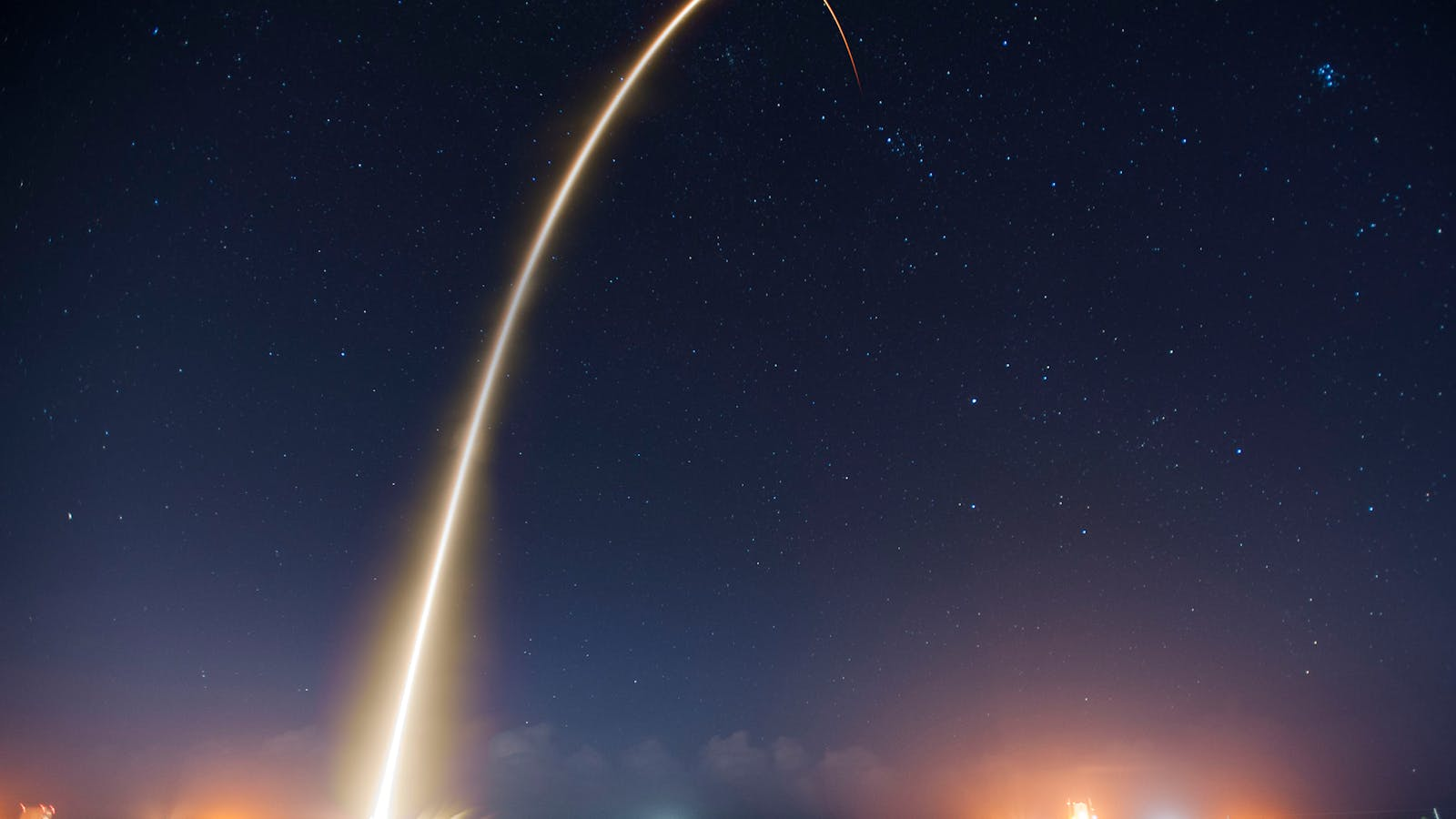
SpaceX’s moat is not as simple as “rockets can be recovered.” It is built from reusable rockets, reflight experience, high-frequency launches, internal demand from Starlink, NASA and commercial customer missions, and Starship’s long-term launch capacity. If you want to understand why SpaceX is difficult to replicate, you should not only look at a single launch price or one successful test. You need to look at how it connects technology, cost, demand, trust, and scale advantages into a self-reinforcing system.
Key Takeaways
- SpaceX’s moat comes from technology, cost, frequency, and demand loops.
- Falcon 9 reuse turns rockets from consumables into operating assets.
- Starlink is both an internal customer and a long-term growth flywheel.
- High-frequency launches create barriers in engineering data, supply chain, and delivery.
- NASA missions improve SpaceX’s reliability and market trust.
- Starship has huge potential, but still faces technical and regulatory uncertainty.
What Exactly Is SpaceX’s Moat?
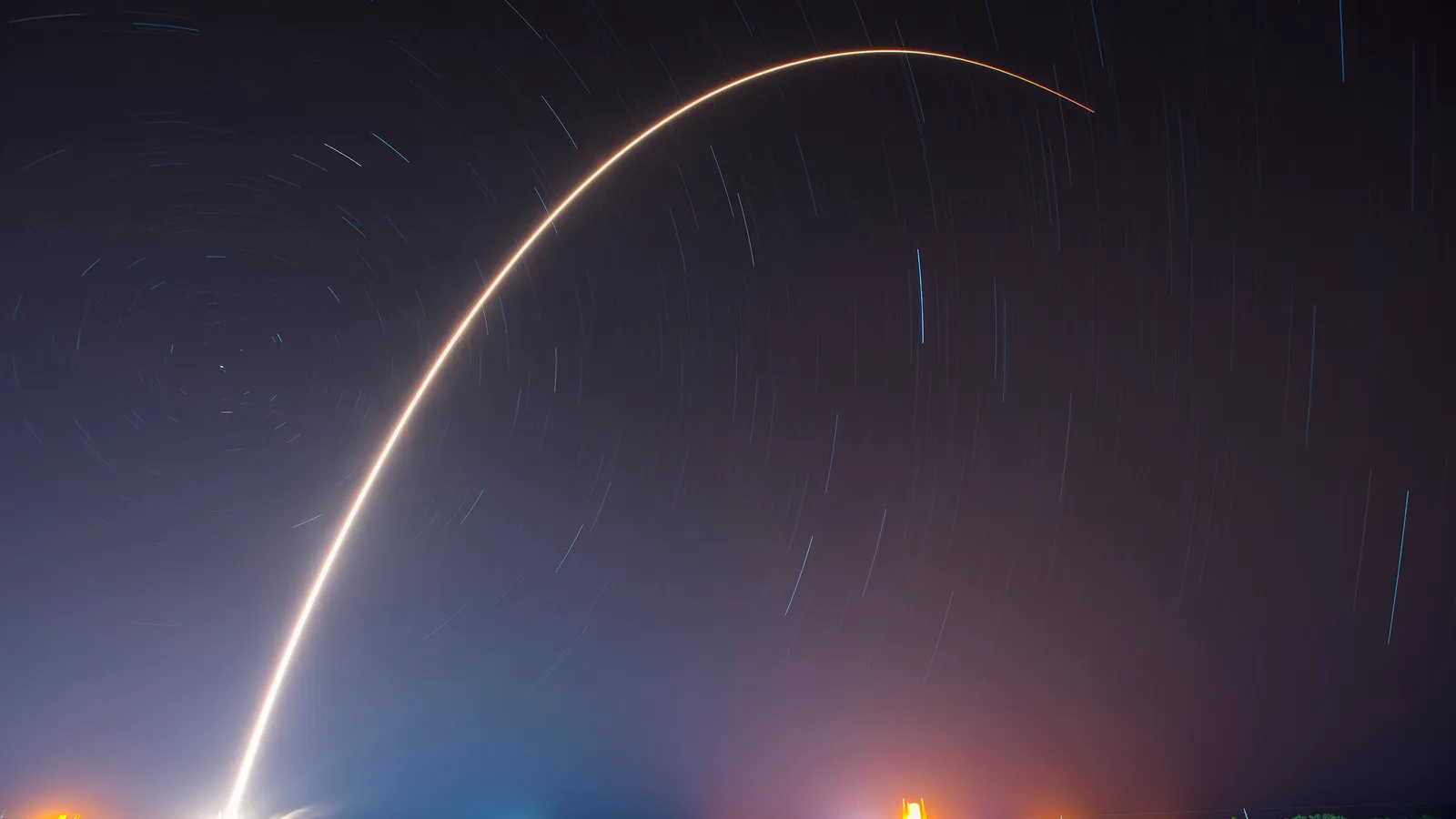
SpaceX’s moat is essentially a “system-based moat.” It does not rely on one patent, one rocket model, or one government contract. Instead, it puts rocket reuse, vertical manufacturing, launch frequency, satellite networks, government missions, and commercial customer demand into the same operating system. The more this system runs, the more data it accumulates, the easier it becomes to amortize costs, the stronger customer trust becomes, and the harder it is for latecomers to catch up.
Falcon 9 is defined by SpaceX as a reusable, two-stage rocket designed to safely and reliably carry people and payloads into Earth orbit. This definition shows that reusability is only the entry point. The real barrier lies in the inspection, maintenance, reflight, launch-site turnaround, and customer acceptance systems that SpaceX has built around reuse.
| Moat layer | Core capability | Why it is hard to replicate | Commercial result |
|---|---|---|---|
| Technology moat | Reusable rockets, reflight, flight data | Requires long-term testing and failure-driven iteration | Lowers unit launch cost |
| Cost moat | Hardware reuse, vertical integration | Requires manufacturing systems and process control | Strengthens pricing and scheduling advantages |
| Frequency moat | High-frequency launches and fast turnaround | Requires coordination across launch sites, teams, and supply chains | Improves delivery certainty |
| Demand moat | Internal Starlink launch demand | Requires an owned satellite network business | Stabilizes mission supply |
| Trust moat | NASA, commercial, and government customers | Requires high-standard mission certification | Improves market acceptance |
This point is critical: many companies can set “reusable rockets” as a goal, but it is much harder to immediately replicate SpaceX’s number of reflights, mission density, supply chain rhythm, and customer trust. Commercial spaceflight is not a laboratory technology race. It is a long-term engineering operations race. The company that can launch, recover, re-fly, and deliver consistently is closer to becoming a true infrastructure company.
Summary: SpaceX’s moat cannot be summed up simply as “rockets can be recovered.” Reusable rockets create cost advantages, cost advantages support high-frequency launches, high-frequency launches accumulate data and trust, and Starlink provides long-term internal demand. This system-based moat is harder to replicate than a single technical breakthrough, because latecomers must not only build similar rockets, but also go through extensive mission validation, customer education, process refinement, and regulatory approval. SpaceX’s core lead lies in turning technical breakthroughs into sustainable operating capability.
Why Are Reusable Rockets SpaceX’s Most Fundamental Technology Moat?
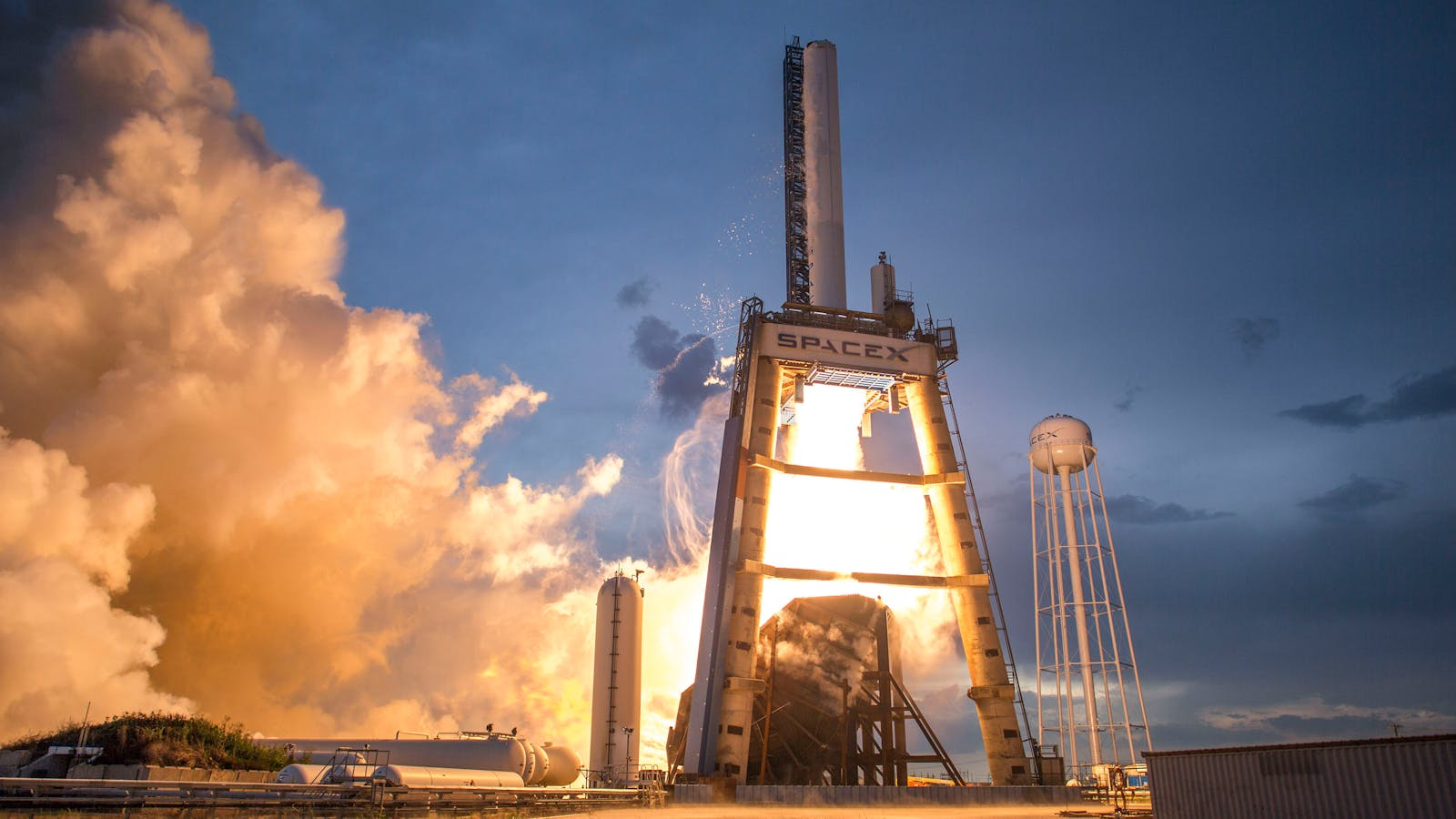
Reusable rockets are the foundation of SpaceX’s moat because they directly change the asset nature of rockets. Traditional expendable rockets are more like high-cost consumables, with major hardware discarded after launch. Falcon 9’s first-stage boosters and fairings can be recovered, inspected, maintained, and reflown, making rockets closer to operating assets rather than one-time project costs.
The SpaceX Falcon Payload User’s Guide shows that by the end of 2024, the Falcon family had completed more than 430 launches. As of February 2025, Falcon first-stage boosters had been reflown more than 384 times, and fairing halves had been reflown on 307 missions. The significance of these figures is not that they “look impressive,” but that they show SpaceX has pushed reuse from concept validation into scaled operations.
| Reuse stage | Value to SpaceX | Pressure on competitors |
|---|---|---|
| First-stage booster recovery | Reuses the most expensive core hardware | Requires stable recovery and landing control |
| Fairing recovery | Reduces launch consumable costs | Requires ocean recovery and refurbishment processes |
| Reflight inspection | Builds a hardware health assessment system | Requires long-term data accumulation |
| Maintenance and refurbishment | Improves turnaround efficiency | Requires manufacturing and quality-control capability |
| Customer acceptance | Brings reflown hardware into commercial missions | Requires mission records and trust-building |
What matters more than “successful recovery” is reflight experience. Every recovery, teardown, inspection, maintenance cycle, and reflight helps SpaceX better understand the real-world performance of engines, structures, thermal protection, control systems, and ground operations. This data cannot be obtained through simulation alone. It is accumulated through real missions again and again.
So the difficulty of reusable rockets is not just whether they can land back. The harder questions are: after landing, how do you judge whether they can fly again, which components need replacement, whether maintenance costs are controllable, whether customers are willing to accept reflown hardware, and how regulators and insurers assess mission risk. SpaceX’s lead lies in making these questions part of standard operations.
Summary: Reusable rockets are SpaceX’s foundational technology moat, but the truly hard-to-replicate parts are reflight experience, maintenance processes, quality control, and mission data. Even if competitors design recoverable rockets, they still need a large number of launches, failures, fixes, reflights, and customer validations to build comparable reliability. SpaceX’s accumulated reflight record gives it first-mover advantages in cost, scheduling, engineering judgment, and market trust.
How Does Launch Frequency Amplify SpaceX’s Scale Advantage?
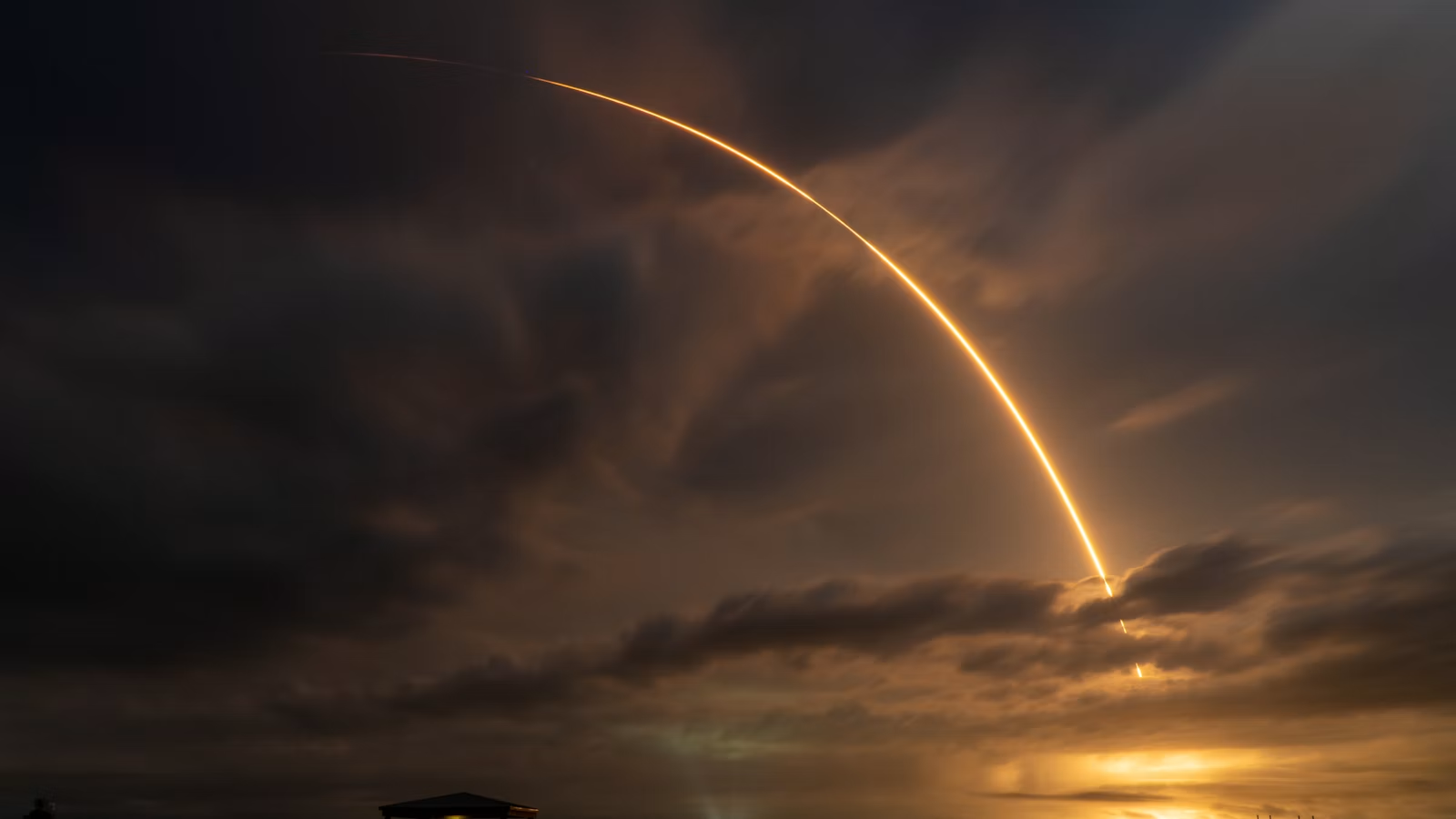
Launch frequency amplifies SpaceX’s scale advantage because every mission trains teams, validates hardware, optimizes processes, stabilizes supply chains, and increases customer trust. Companies with low launch frequency find it hard to build the same steep engineering learning curve. SpaceX’s advantage is not simply that it flies more often; it is that “flying more” becomes “learning faster, fixing faster, and delivering more reliably.”
BryceTech-related statistics show that SpaceX completed 165 orbital launches in 2025, accounting for about 51% of global orbital launches and launching 85% of the world’s satellites that year. This scale means SpaceX is not just an important participant in the commercial launch market, but one of the dominant providers of low Earth orbit transportation.
High-frequency launches create several compound advantages:
- The more launches there are, the more skilled the teams become and the easier it is to standardize processes.
- The more launches there are, the more stable the supply chain becomes, and the more predictable inventory and capacity become.
- The more launches there are, the more data SpaceX has on reflown hardware, and the more mature maintenance decisions become.
- The more launches there are, the easier it is for commercial customers to trust scheduling and delivery.
- The more launches there are, the easier it is for Starlink deployment to maintain its lead.
Scale advantages also support cost advantages in return. Rocket manufacturing, engine production, launch-site operations, ocean recovery, mission control, and customer integration can all be continuously optimized through high-frequency missions. For commercial customers, schedule certainty is often as important as price. A launch provider with low prices but unstable schedules is not necessarily attractive. A provider with competitive pricing, high launch frequency, and a stable mission record is much more likely to become a long-term partner.
However, high-frequency launch does not mean there are no limits. Launch-site capacity, airspace closures, environmental assessments, safety reviews, accident investigations, and licensing approvals can all affect cadence. U.S. FAA Starship-Super Heavy documents continue to involve launch licenses, airspace closures, environmental assessments, and launch cadence adjustments. This shows that as commercial spaceflight moves closer to infrastructure, public constraints become more important.
Summary: SpaceX’s launch frequency is the result of its technology moat being amplified, and it is also the source of its scale advantage. High-frequency launches give SpaceX more flight data, a stronger supply chain, more experienced teams, and greater customer trust. They turn “reusable rockets” from a technical advantage into a commercial advantage. But the larger the scale, the more important regulatory, safety, environmental, and launch-site resource constraints become. Sustainable high-frequency launch is not just about flying quickly. It is about flying steadily for the long term within safety and compliance frameworks.
Why Does Starlink Give SpaceX a Demand Moat?
Starlink is the core of SpaceX’s demand moat because it is both an internal customer and a growth flywheel. Many launch companies rely on external customer schedules, while SpaceX owns its own low Earth orbit satellite internet network. Starlink requires continuous satellite deployment, capacity replenishment, and network upgrades, which means SpaceX does not need to rely entirely on external orders to maintain a large number of launch missions.
The Starlink 2025 Progress Report shows that Starlink added more than 4.6 million active customers in 2025 and expanded into more than 35 countries, regions, or markets. This figure shows that Starlink is no longer just a technology demonstration. It is expanding across home broadband, remote-area connectivity, aviation, maritime, enterprise communications, and emergency use cases.
| Comparison dimension | Traditional launch provider | SpaceX + Starlink |
|---|---|---|
| Demand source | External customer orders | External orders + owned satellite network |
| Revenue characteristics | Mostly one-time project revenue | Launch revenue + communications service revenue |
| Launch cadence | Heavily affected by customer schedules | Starlink provides a continuous mission pool |
| Business extension | Weaker relationship after launch | Network operations create long-term user relationships |
| Strategic barrier | Launch capacity competition | Competition in capacity, network, and user scale |
Starlink’s importance lies in extending one-time launch capability into long-term service capability. SpaceX is not only “sending satellites into space.” It also uses the satellite network to connect end users, enterprise customers, airlines, and maritime scenarios. In this way, rocket launches are no longer just project revenue. They become infrastructure for expanding a communications network.
If SpaceX, Starlink, or the commercial spaceflight theme leads you to pay closer attention to the U.S. stock market, you also need to include trading costs in your judgment. Popular tech stocks or IPOs may experience significant volatility in their early trading stages, and trading costs often include more than commissions. They may also include platform fees, external institutional fees, trading activity fees, and other charges. BiyaPay charges 0 USD commission for U.S. stock trading, while platform fees, external institutional fees, and other charges are subject to the fee center and order page. BiyaPay’s U.S. stock trading platform fee is 0.005 USD per share, with a minimum of 0.99 USD per order and a maximum of 1% of the transaction value. External institutional fees and trading activity fees are 0.00396 USD per share. For fractional-share orders with less than one share executed, only 1% of the total transaction amount is charged as the platform fee, capped at 1 USD. Availability of relevant services depends on the user’s location, identity verification results, platform rules, and applicable laws and regulations.
Starlink also brings new risks. The increase in low Earth orbit satellites involves spectrum coordination, orbital congestion, satellite deorbiting, impact on astronomical observations, and communications service access in different countries. The closer Starlink gets to becoming global communications infrastructure, the more SpaceX must face regulatory, public safety, and international market constraints beyond technology.
Summary: Starlink is the most important demand layer in SpaceX’s moat. It allows SpaceX to avoid relying completely on external launch customers, continuously generate launch missions through its own satellite network, and extend one-time launch capability into communications service revenue. This loop gives Falcon 9’s high launch frequency a stronger foundation and gives Starship’s future heavy-lift capacity more application scenarios. But Starlink’s infrastructure nature also means higher regulatory complexity. Spectrum, orbital safety, and service access will all affect its long-term space.
How Do NASA, Government Missions, and Commercial Customers Strengthen SpaceX’s Trust Moat?
NASA, government missions, and commercial customers strengthen SpaceX’s trust moat. The space industry is not an ordinary consumer market. Customers will not choose a launch provider only because the price is low. Satellite value, mission windows, insurance arrangements, orbital requirements, and safety standards are all high, so long-term mission records, certification systems, and high-standard customer endorsements are very important.
NASA’s Commercial Crew Program aims to provide safe, reliable, and cost-effective crew transportation to and from the International Space Station through partnerships with the U.S. private sector. Dragon’s participation in commercial crew missions shows that SpaceX is not merely a low-cost launch provider. It can also enter crewed spaceflight missions with higher safety standards.
Government and commercial customer trust in SpaceX can be divided into several layers:
- NASA missions raise safety, redundancy, and reliability requirements.
- Crewed and cargo missions prove SpaceX can manage complex missions.
- Commercial satellite customers validate launch scheduling, cost, and delivery capability.
- Defense and security-related missions increase experience with complex mission requirements.
- Once reflown hardware is accepted by more customers, the market education cost continues to fall.
The value of a trust moat is that it reduces customers’ willingness to switch. When commercial satellite customers choose a launch provider, they look at mission success rates, launch windows, orbital capability, insurance arrangements, and post-launch service coordination. Government customers care even more about long-term reliability, mission safety, and compliance processes. SpaceX’s advantage is not “winning trust” once, but continuously proving itself through many missions.
This also explains why reusable rockets and high-frequency launches reinforce one another. Reuse lowers costs, but only when customers accept reflown hardware can cost advantages more easily become commercial advantages. High-frequency launches accumulate experience, but only when mission records are stable enough will customers be willing to put critical payloads on SpaceX rockets. Technology, scale, and trust must all hold together.
Summary: SpaceX’s trust moat comes from high-standard mission validation. Reusable rockets reduce costs, high-frequency launches accumulate experience, and NASA, government, and commercial customers continuously validate these capabilities in the market. The space industry has extremely high reliability requirements, so trust is not built through publicity. It is built through long-term mission records, certification systems, and repeated customer choices. For latecomers, technological catch-up is only the first step. Winning customer trust and high-standard mission validation is often harder.
Will Starship Further Deepen SpaceX’s Moat?
Starship may further deepen SpaceX’s moat, but it is still a high-potential future variable that needs validation. Falcon 9 and Starlink are already-formed core advantages. Starship may expand SpaceX’s capabilities from low Earth orbit launch and satellite networks into heavy-lift transportation, lunar missions, deep-space transportation, and larger-scale space infrastructure.
Starship is positioned by SpaceX as a fully reusable heavy-lift launch system, with the goal of carrying more than 100 tons of payload to orbit in its fully reusable configuration. If this goal matures, SpaceX may gain new scale advantages in mass-to-orbit, next-generation Starlink, lunar missions, and large space infrastructure.
| Potential advantage | Meaning for SpaceX | Still needs validation |
|---|---|---|
| Larger launch capacity | Supports next-generation Starlink and large space infrastructure | Reliable orbital insertion and reflight |
| Full reuse | Further lowers the cost of launching large mass to orbit | Fast turnaround and maintenance processes |
| Lunar and deep-space missions | Expands roles in NASA, Artemis, and deep-space transportation | Orbital refueling, mission safety, regulatory approval |
NASA’s Artemis III mission architecture mentions that related missions will test commercial landers from SpaceX and Blue Origin. This shows that Starship HLS remains an important variable in NASA’s lunar mission system, but it also shows that it still needs to pass more key validations, especially in docking, mission safety, landing systems, and long-term operations.
So when analyzing Starship, you should avoid two extremes: ignoring its potential to be disruptive, or treating the vision as already-realized profit. If Starship matures, it may further deepen SpaceX’s moat. But if reuse, refueling, launch licenses, high-frequency operations, or mission safety progress falls short of expectations, it may also affect market judgments about SpaceX’s long-term potential.
Summary: If Starship matures, it may expand SpaceX’s moat from low Earth orbit launch and satellite networks into heavy-lift transportation, lunar missions, and larger-scale space infrastructure. But when judging SpaceX, Falcon 9 and Starlink should be viewed as validated advantages, while Starship should be viewed as a high-potential future variable that still needs validation. What truly matters is not whether a single test is impressive, but whether Starship can enter a stable operating stage that is reusable, turn-around capable, regulatory-approved, and commercially deliverable.
What Factors Could Weaken SpaceX’s Moat?
SpaceX’s moat is deep, but it is not absolutely safe. Technical accidents, regulatory restrictions, Starlink compliance pressure, Starship delays, intensifying competition, and changes in capital market expectations could all weaken the market’s view of SpaceX. The more SpaceX relies on high-frequency launches and infrastructure-like operations, the more important safety, compliance, and long-term stability become.
| Risk type | Possible impact | What to watch |
|---|---|---|
| Technical risk | Launch accidents, grounding investigations, customer delays | Mission success rate, reflight reliability |
| Regulatory risk | Launch licenses, airspace closures, environmental assessments | FAA documents, launch-site expansion progress |
| Starlink risk | Spectrum, orbital safety, service access | National market approvals, satellite deorbiting mechanisms |
| Starship risk | Test delays, rising costs | Reuse, refueling, mission validation |
| Competitive risk | Specific markets being divided | Blue Origin, Rocket Lab, national space systems |
Technical risk is especially important. The rocket industry has little tolerance for failure. One major accident can lead to groundings, investigations, customer delays, higher insurance costs, and tighter regulation. The more SpaceX’s advantage depends on high-frequency launches, the more it must continue to prove reliability.
Competitive risk also cannot be ignored. Blue Origin, Rocket Lab, national space systems, and new entrants may not replicate Falcon 9 in the short term, but they may take share in small satellites, government missions, lunar missions, national security launches, and specific orbital services. SpaceX’s moat is strong, but the commercial spaceflight market is not without alternatives.
If you follow SpaceX’s moat and extend that interest to global technology assets, you can use the U.S. stock search tool to understand related market information, rather than equating a popular company story directly with a trading opportunity. Relevant content only introduces public market information, trading rules, and fee structures, and does not constitute investment advice. Before trading, you should refer to platform rules, order pages, account statements, and local regulatory requirements.
Summary: SpaceX’s moat is deep because of system coordination, but its risks also come from system complexity. Reusable rockets, high-frequency launches, Starlink, government missions, and Starship together create advantages, but they also bring safety, regulatory, capital expenditure, and execution pressure. The key to analyzing SpaceX is distinguishing between “moats already formed” and “moats that may deepen in the future.” The validated advantages are mainly Falcon 9, reflight experience, launch frequency, and Starlink. The still-to-be-validated capabilities are mainly Starship full reusability, orbital refueling, and larger-scale mission commercialization.
From SpaceX’s Moat to Observing Global Technology Assets
SpaceX’s moat attracts attention because it represents the convergence of commercial spaceflight, satellite internet, the low Earth orbit economy, and global technology infrastructure. If you follow this type of theme, a reasonable path is not to first judge whether you can trade a certain trending opportunity, but to first understand the industry logic, then review market information, trading rules, fee structures, and service eligibility. For users who meet the relevant service eligibility conditions, BiyaPay can serve as an entry point for learning about a multi-asset trading wallet, U.S. and Hong Kong stock trading, cryptocurrency trading, major fiat currency exchange, and remittance, deposit, and withdrawal capabilities. Users already observing the U.S. stock market can also use web trading to view orders, fees, and trading rules. Popular IPOs or technology stocks may experience significant price volatility in their early trading stages. Before trading, you should fully understand order types, fee structures, and risks, and should not make impulsive decisions based on SpaceX, Starlink, or commercial spaceflight narratives.
FAQ
What Capabilities Mainly Make Up SpaceX’s Moat?
SpaceX’s moat mainly comes from reusable rockets, high-frequency launches, the Starlink satellite network, government missions, and scale advantages. These capabilities reinforce one another, so you should not judge SpaceX only by one technology or one Starship test result.
Why Is Falcon 9 Reuse Hard for Competitors to Copy?
Falcon 9 reuse is hard to copy because the challenge is not only rocket recovery, but also reflight data, maintenance processes, supply chains, customer trust, and long-term mission records. Even if competitors complete recovery, they still need time to accumulate reliability.
How Does Starlink Strengthen SpaceX’s Long-Term Moat?
Starlink strengthens SpaceX’s moat through internal launch demand and communications service revenue. It gives SpaceX launch capacity, a satellite network, and end users at the same time, but also brings pressure around spectrum coordination, orbital safety, and international market access.
Will Starship Change SpaceX’s Moat After It Matures?
Starship may deepen SpaceX’s moat after it matures, especially in heavy-lift launch, lunar missions, and large-scale satellite deployment. However, full reuse, orbital refueling, high-frequency operations, and regulatory approval still require continued validation.
How Can Ordinary Readers Judge the Strength of SpaceX’s Moat?
Ordinary readers can look at reflight count, annual launch frequency, Starlink customer growth, NASA partnerships, mission success rates, regulatory progress, and competitive changes. Looking only at valuation, social media hype, or a single launch is not enough.
*This article is provided for general information purposes and does not constitute legal, tax or other professional advice from BiyaPay or its subsidiaries and its affiliates, and it is not intended as a substitute for obtaining advice from a financial advisor or any other professional.
We make no representations, warranties or warranties, express or implied, as to the accuracy, completeness or timeliness of the contents of this publication.
Related Blogs of

How to Evaluate Google’s AI Investment Returns: Search, Cloud, and CAPEX Pressure


SK Hynix U.S. Listing: SKHY Ticker, IPO Price, and How to Buy the Stock


Why Do AI Stocks Fall After Strong Earnings? Understanding Expectation Gaps and “Sell the News”


Alphabet Earnings Preview: Will AI Search Weigh on Advertising or Drive Google Cloud Growth?

Choose Country or Region to Read Local Blog
 Australia
 Austria
 Belgium
 Canada
 Cyprus
 Czech Republic
 Denmark
 Estonia
 Finland
 France
 Germany
 Greece
 Hong Kong
 India
India Indonesia
 Ireland
 Italy
Italy Japan
Japan Latvia
 Lithuania
 Luxembourg
 Malaysia
 Malta
Malta Morocco
 Nepal
Nepal Netherlands
 New Zealand
 Norway
 Pakistan
 Philippines
 Poland
 Portugal
 Romania
 Singapore
 Slovakia
 Slovenia
 South Africa
 South Korea
 Spain
Spain Sweden
 Thailand
 The United States
 Turkey
 United Arab Emirates
 United Kingdom
 Vietnam
Contact Us




BIYA GLOBAL LLC is registered with the Financial Crimes Enforcement Network (FinCEN), an agency under the U.S. Department of the Treasury, as a Money Services Business (MSB), with registration number 31000218637349, and regulated by the Financial Crimes Enforcement Network (FinCEN).
BIYA GLOBAL LIMITED is a registered Financial Service Provider (FSP) in New Zealand, with registration number FSP1007221, and is also a registered member of the Financial Services Complaints Limited (FSCL), an independent dispute resolution scheme in New Zealand.