What’s the Difference Between Falcon 9, Starship, and Starlink? Understanding SpaceX’s Three Major Business Lines




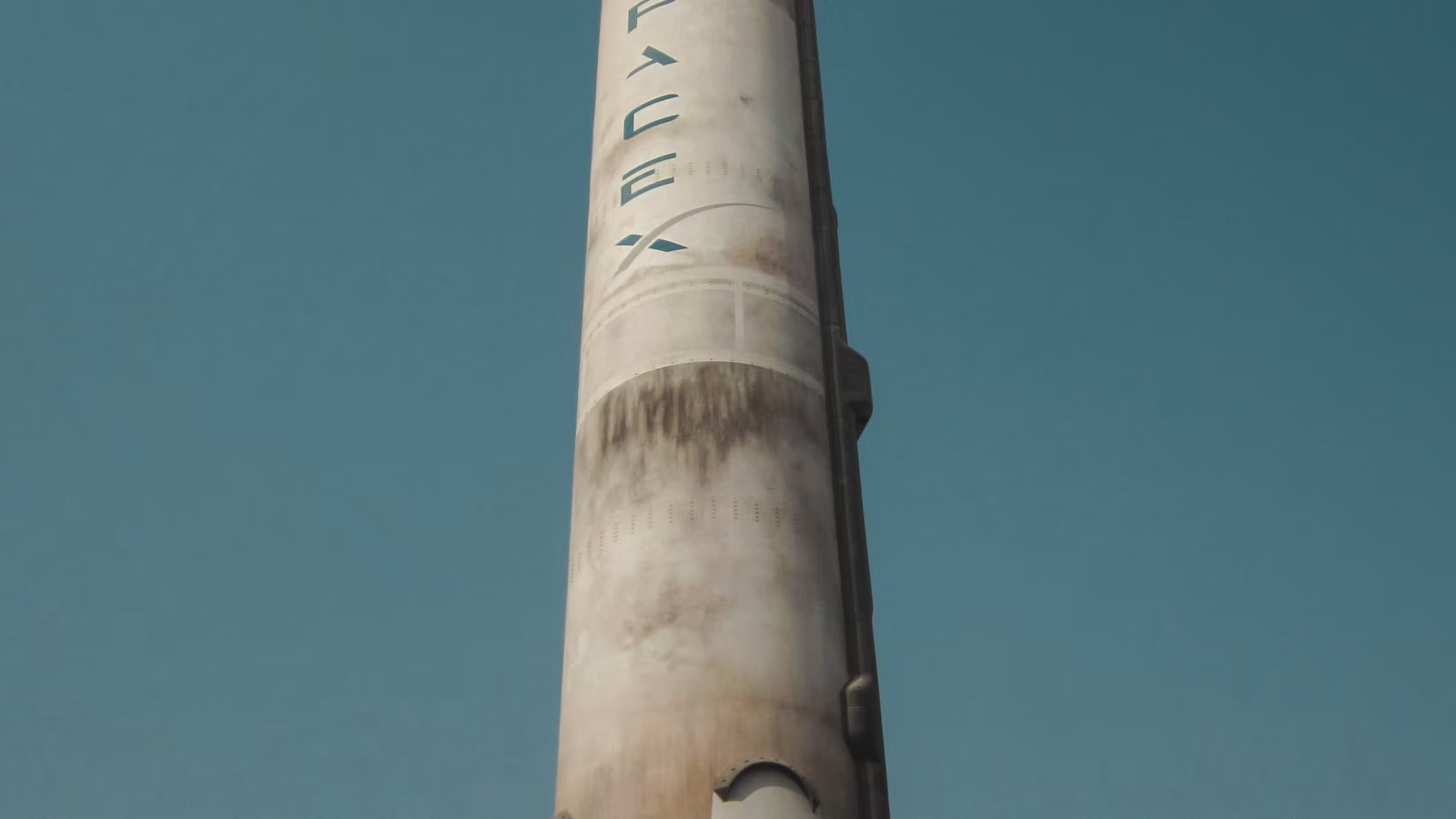
Falcon 9, Starship, and Starlink are not three products of the same type. Falcon 9 is SpaceX’s most mature reusable rocket today, Starship is a next-generation heavy-lift fully reusable transport system, and Starlink is an internet service powered by low-Earth orbit satellites. To understand SpaceX, you should not only look at rocket launch footage. You also need to understand the relationship between launch capability, satellite deployment, user subscriptions, government contracts, and long-term technical risks.
Key Takeaways
- Falcon 9 is SpaceX’s main vehicle for commercial launches today.
- Starship is a next-generation heavy-lift platform still in testing.
- Starlink is a satellite internet business that charges end users.
- The three business lines are not isolated products; they support one another.
- To assess SpaceX, distinguish mature businesses from future variables.
Falcon 9, Starship, and Starlink Are Not the Same Type of Product. What Are the Core Differences?
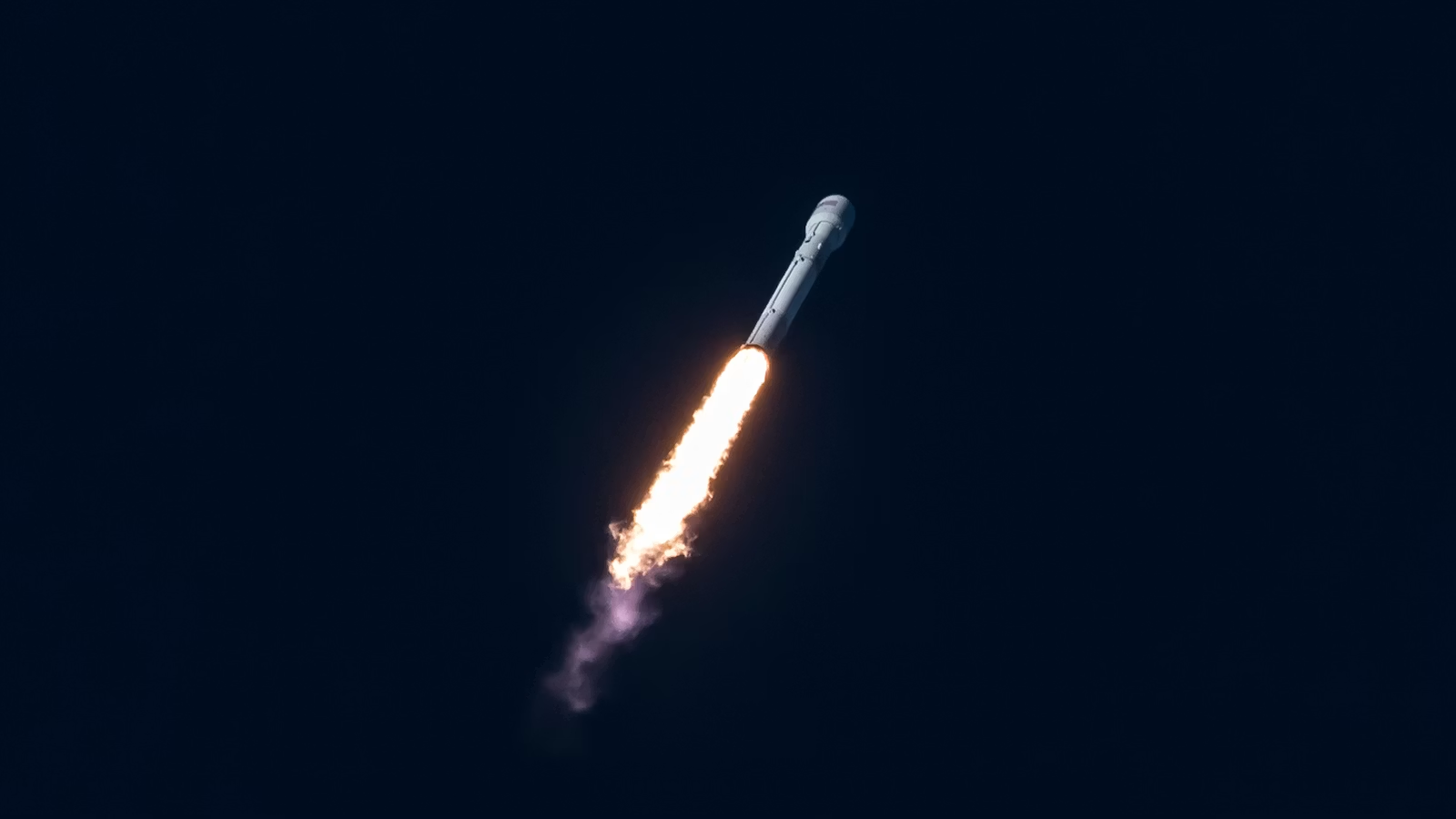
Falcon 9 and Starship are both SpaceX space transportation systems, but they serve different roles; Starlink is not a rocket, but a satellite internet service. In simple terms, Falcon 9 is responsible for “sending things up,” Starship aims to “send more things up with greater lift capacity and higher reusability,” while Starlink turns “the satellite network into a paid internet service.”
One-Sentence Explanation of the Three Business Lines
Falcon 9 is a reusable two-stage rocket designed and manufactured by SpaceX, built to reliably carry people and payloads into Earth orbit. It has already handled a large number of commercial satellite missions, NASA missions, International Space Station resupply flights, crewed spaceflight missions, and Starlink satellite launches. It is currently the system through which SpaceX can most consistently deliver commercial value.
Starship is SpaceX’s next-generation heavy-lift launch system, consisting of the Super Heavy booster and the Starship spacecraft. SpaceX positions it as a system designed to carry more than 100 tonnes to orbit in a fully reusable configuration, while supporting missions to Earth orbit, the Moon, Mars, and beyond. It has major upside potential, but its commercial maturity cannot yet be compared with Falcon 9.
Starlink is a low-Earth orbit satellite internet service. Through its satellite constellation, user terminals, gateway stations, and subscription plans, it provides connectivity for homes, businesses, aviation, maritime users, mobile scenarios, and some government use cases. It is closer to a communications service and subscription business than a one-time launch service.
Why Do Many People Confuse the Three?
The confusion mainly comes from SpaceX’s vertical integration. Starlink satellites are often launched by Falcon 9, and larger, heavier next-generation Starlink satellites may rely on Starship in the future to improve deployment efficiency. As a result, readers often see news such as “Falcon 9 launches Starlink” or “Starship tests Starlink simulated payload deployment,” and then discuss rockets, satellites, and internet services at the same level.
A more accurate way to understand the structure is this: Falcon 9 and Starship are transportation infrastructure, while Starlink is a commercial network built on top of that infrastructure. The former determines whether SpaceX can enter orbit frequently and at lower cost, while the latter determines whether SpaceX can turn orbital capability into recurring revenue.
| Comparison Dimension | Falcon 9 | Starship | Starlink |
|---|---|---|---|
| Category | Reusable two-stage rocket | Fully reusable heavy-lift transport system | Low-Earth orbit satellite internet service |
| Current Stage | Mature commercial operation | Testing, iteration, and mission validation | Global commercial expansion |
| Core Customers | Commercial satellites, NASA, government agencies | NASA, Starlink, future deep-space missions | Homes, businesses, aviation, maritime, government |
| Revenue Logic | Launch services and mission contracts | Future cost reduction, capacity expansion, new missions | User terminals, subscriptions, enterprise services |
| Main Risks | Launch delays, reuse failures, competition | Technical validation, regulation, reliability | Licenses, capacity, terminal costs, competition |
Summary: The biggest difference between Falcon 9, Starship, and Starlink is not their names, but their roles. Falcon 9 is SpaceX’s most mature launch vehicle today, Starship is a future heavy-lift platform still being validated, and Starlink is a satellite internet business aimed at end users. Once you understand this structure, SpaceX news becomes easier to interpret: Falcon 9 launch frequency reflects current execution capability, Starship test flights reflect future technical variables, and Starlink user growth and coverage expansion reflect commercial capability. The three are connected, but they should not be treated as the same type of product.
What Is Falcon 9? Why Is It SpaceX’s Most Important Launch Workhorse Today?
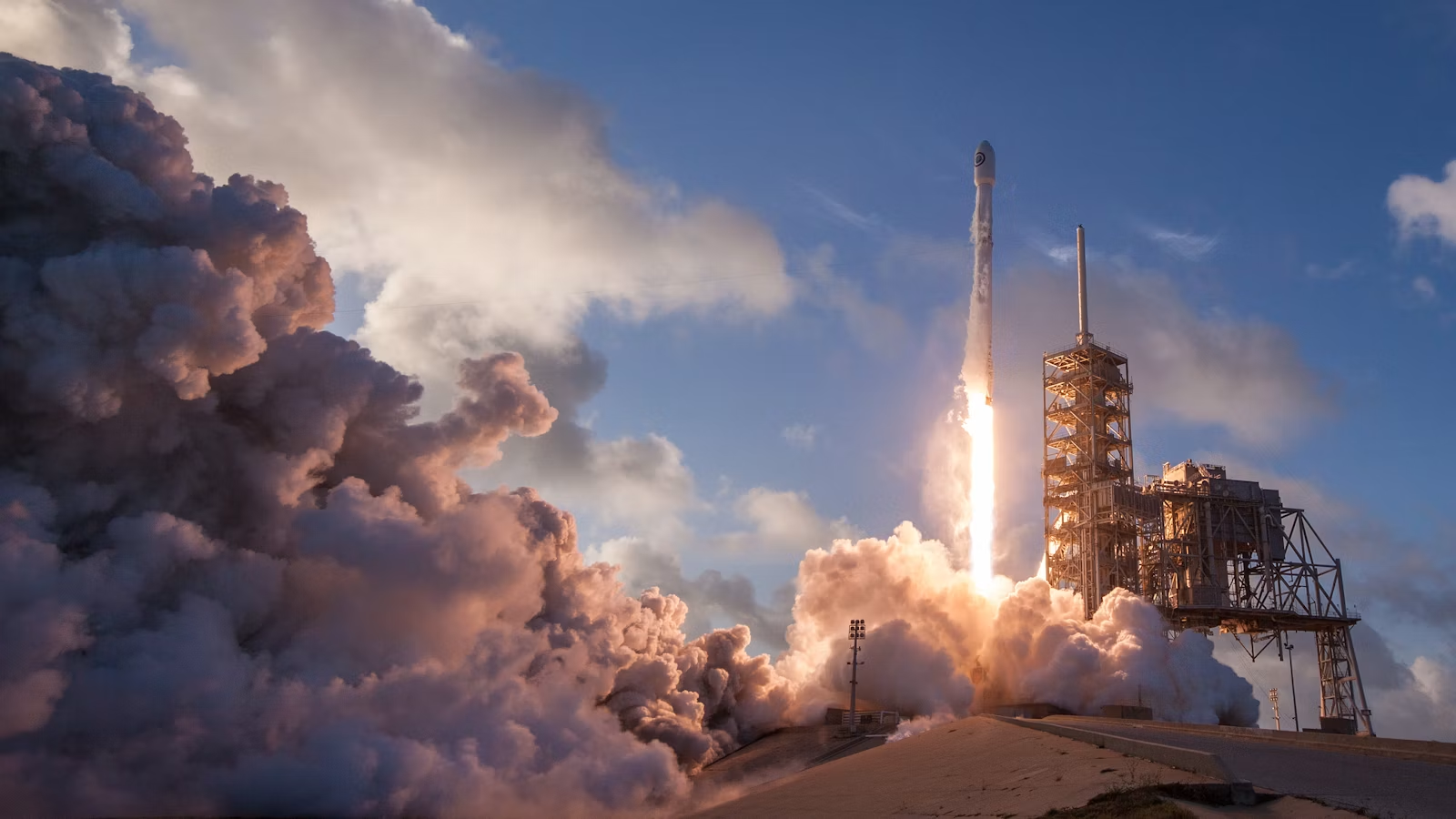
Falcon 9’s core value lies in maturity, reusability, and high launch frequency. It is not SpaceX’s most ambitious future vision, but it is the company’s most stable commercial execution tool today. Whether for commercial satellites, crewed spaceflight, International Space Station missions, or Starlink satellite replenishment, Falcon 9 is the foundation of SpaceX’s current business flywheel.
Falcon 9’s Technical Positioning: A Reusable Two-Stage Rocket
The key point about Falcon 9 is not simply that “the rocket can fly,” but that “the rocket can fly repeatedly.” In traditional launch models, a rocket’s first stage was often discarded after a mission. Through first-stage recovery and reuse, SpaceX gradually turned the rocket from a disposable product into a reusable transportation tool. This directly affects launch cost, launch cadence, and customer confidence.
From a business perspective, reusability has three meanings. First, launch frequency can be higher. Second, maturity and mission experience can continue to accumulate. Third, SpaceX can use its own rockets to deploy its own Starlink satellites, reducing dependence on external launch capacity. This is also the most direct connection between Falcon 9 and Starlink.
Falcon 9’s Business Role: Commercial Launches, Government Missions, and Starlink Deployment
Falcon 9 has a broad range of mission types and should not be understood only as “the rocket that launches Starlink.” Its commercial value comes from consistently executing several types of missions:
- Commercial satellite launches: providing orbital launch services for communications, remote sensing, research, and enterprise customers.
- NASA missions: including cargo, crewed spaceflight, and International Space Station-related missions.
- Government and defense missions: handling certain high-value launch contracts with strong reliability requirements.
- Starlink deployment: continuously replenishing and expanding SpaceX’s own low-Earth orbit satellite network.
- Brand trust: high launch frequency makes it easier for customers, regulators, and capital markets to assess execution capability.
| How to Evaluate Falcon 9 | What to Watch |
|---|---|
| Launch frequency | Whether it can maintain a high cadence with fewer delays |
| Reuse capability | Whether first stages can be recovered and reused safely multiple times |
| Customer mix | The share of commercial, NASA, government, and internal Starlink missions |
| Mission stability | Whether major accidents, delays, or regulatory restrictions occur |
| Commercial value | Whether it can continue generating launch revenue and internal deployment capacity |
Falcon 9’s Limits: Mature, But Not the End State
Falcon 9 is highly mature, but it is not SpaceX’s final form. The reason is that Falcon 9 remains a partially reusable system; its second stage is not fully reusable. Meanwhile, next-generation Starlink satellites, lunar missions, Mars missions, and larger space infrastructure may require greater payload capacity and lower unit transport costs.
This is where Starship’s strategic role comes in. Starship is not simply a “bigger rocket” designed to replace Falcon 9; it is an attempt to push SpaceX’s transport capability to a higher ceiling. However, until Starship can reliably carry out commercial missions, Falcon 9 remains SpaceX’s most verifiable, measurable, and revenue-supporting launch workhorse.
Summary: Falcon 9 is important because of its certainty. SpaceX has a huge future story, but Falcon 9 is still what supports its current commercial operations. It turned reusable rockets from a concept into high-frequency launch capability, while allowing SpaceX to serve external customers and its internal Starlink constellation at the same time. To evaluate Falcon 9, do not focus only on whether a single launch looks impressive. Look instead at launch cadence, reuse record, customer mix, mission reliability, and regulatory impact. It represents SpaceX’s engineering capability that has already been proven.
What Is Starship? Why Does It Define SpaceX’s Long-Term Upside?
Starship is SpaceX’s next-generation transportation system designed for larger payloads, higher reusability, and more distant missions. Its importance is not limited to the rocket itself. If it becomes commercially mature, it could change the cost structure of Starlink deployment, NASA lunar missions, deep-space exploration, and large-scale space infrastructure.
Starship’s Positioning: Fully Reusable, Super Heavy-Lift, and Built for Future Missions
Starship consists of the Super Heavy booster and the Starship spacecraft, with the goal of full-system reuse. Falcon 9 has already shown that first-stage recovery can significantly alter launch economics, while Starship aims to expand reuse to a more complete transportation system.
This means Starship’s value is not only that it can “carry more,” but that it may carry more “more frequently, at a lower unit cost, and in a way better suited for large-scale deployment.” For Starlink, greater lift capacity may support larger batches, larger satellites, or higher-capacity satellite deployment. For NASA, the lunar version of Starship is directly related to the NASA Human Landing System. For SpaceX’s long-term vision, it is a key tool for the Moon, Mars, and orbital infrastructure.
Starship’s Recent Progress: Test Success Does Not Equal Commercial Maturity
Starship news can easily trigger emotional reactions: one success may be interpreted as “already mature,” while one explosion may be interpreted as “project failure.” A more reasonable view is that Starship is still in a phase of intensive flight testing and engineering iteration.
SpaceX’s disclosed twelfth Starship flight test shows that on May 22, 2026, Starship lifted off from Starbase for a flight test of a new version. The significance of such tests lies in verifying the booster, upper stage, heat shield, payload deployment, engine relight, reentry control, and data return, rather than proving that it can already operate commercially with Falcon 9-like stability.
Reuters’ overview of Starship’s test history also shows that the project consists of repeated failures, partial successes, and key milestones. For analytical readers, the key is not simply whether “it exploded or not,” but whether each test validated new system capabilities.
Starship’s Key Missions: Starlink, Artemis, and Deep-Space Transport
Starship’s core applications can be divided into three categories:
- Starlink expansion: providing larger-scale deployment capacity for the next-generation low-Earth orbit satellite network.
- Lunar missions: supporting NASA Artemis-related lunar landing and cargo capabilities.
- Deep-space transport: supporting SpaceX’s long-term narrative around the Moon, Mars, and a broader space economy.
| Starship Application | Meaning for SpaceX | Current Evaluation Focus |
|---|---|---|
| Starlink deployment | Lowering unit deployment cost and expanding network capacity | Whether it can reliably carry out payload missions |
| Artemis lunar missions | Securing high-value government contracts and technical validation | HLS progress, docking, refueling, life support |
| Mars and deep space | Supporting long-term vision and brand narrative | Whether the technical path is gradually validated |
| Commercial launch | Serving larger payloads and new mission types | Reusability, reliability, launch permits |
Starship also has one important variable that cannot be ignored: regulation. The FAA’s Starship/Super Heavy project involves launch activity at Boca Chica, environmental review, airspace closures, and license modifications. In other words, Starship’s commercialization speed depends not only on the engineering team, but also on environmental, airspace, safety, and launch frequency approvals.
Summary: Starship is the core of SpaceX’s long-term upside, but it is not yet a fully mature cash cow. When analyzing Starship, do not rely only on launch-event narratives or single test-flight footage. Watch whether it can steadily achieve reusability, payload deployment, orbital refueling, reentry control, mission reliability, and regulatory approval. Falcon 9 represents what SpaceX has already delivered; Starship represents whether SpaceX can further reduce costs, expand capacity, and enter larger mission markets. Its potential is large, but its risks are concentrated as well.
What Is Starlink? Why Is It the SpaceX Business Line Ordinary Users Understand Most Easily?
Starlink is SpaceX’s low-Earth orbit satellite internet business, providing broadband connectivity for homes, businesses, aviation, maritime users, mobile scenarios, and some government users. Compared with Falcon 9 and Starship, Starlink is closer to a subscription service that ordinary users understand, and it is easier for capital markets to view as a source of recurring revenue.
Starlink’s Product Logic: Low-Earth Orbit Satellites + User Terminals + Subscription Service
Starlink’s basic logic is not complicated: low-Earth orbit satellites form a network above Earth, users connect to the satellites through terminals, and then access the internet. Low-Earth orbit satellites are closer to the ground, so they can theoretically deliver lower latency than traditional geostationary satellites, making them suitable for remote areas, mobile scenarios, and regions with insufficient infrastructure.
Starlink’s value lies not in a single satellite, but in the “constellation network.” A single satellite has limited coverage; only continuous deployment, replenishment, and upgrades can form a stable service. This brings the discussion back to Falcon 9 and Starship: without high-frequency launch capacity, Starlink would struggle to maintain a large-scale low-Earth orbit network; without ongoing users and subscription revenue, satellite deployment would also struggle to form a commercial flywheel.
Starlink’s Market Expansion: From Home Broadband to Aviation, Maritime, and Enterprise Connectivity
Many people first understand Starlink as an “internet tool for remote areas.” That view is correct, but incomplete. Starlink availability now covers more than 150 countries, territories, and markets, while its service scenarios have expanded from home broadband to RVs, ships, aircraft, enterprise sites, disaster communications, and government projects.
The Starlink 2025 Progress Report says that Starlink added more than 4.6 million active customers in 2025 and expanded into 35 new countries, territories, and markets. This shows that Starlink is moving from a technology project toward a global communications service network, rather than remaining simply a company that “launches many satellites.”
| Starlink Scenario | User Need | Main Limitations |
|---|---|---|
| Home broadband | Remote areas, lack of fiber or cable networks | Terminal cost, weather, capacity |
| Enterprise connectivity | Construction sites, mines, farms, temporary sites | Stability, service level, cost |
| Aviation Wi-Fi | High-speed in-flight connectivity | Airline partnerships, equipment deployment, regulation |
| Maritime communications | Long-distance connectivity for ships | Plan pricing, coverage, equipment |
| Government and emergency response | Disaster zones, conflict areas, remote communications | Policy, compliance, geopolitical risk |
Starlink’s Risks and Limits: Regulation, Capacity, Competition, and Space Safety
Starlink is not a business that grows simply by “launching more satellites.” It needs communications licenses in different countries and regions, while user adoption is affected by terminal equipment and subscription pricing. Network capacity may also come under pressure in high-density areas. As the number of satellites increases, astronomical observation, space debris, collision avoidance, and spectrum coordination will become long-term issues.
On the commercial side, Starlink also faces competition from terrestrial fiber, 5G fixed wireless access, traditional satellite operators, and local telecom companies. It has advantages in remote areas, but it may not always be the best choice in cities and mature communications markets. To evaluate Starlink, look at coverage, customer quality, subscription pricing, terminal cost, network capacity, and regulatory progress.
Summary: Starlink is the SpaceX business line ordinary users understand most easily because it charges users directly. Falcon 9 and Starship are more like upstream infrastructure, while Starlink turns space capability into internet connectivity, user terminals, and subscription revenue. Its growth potential comes from global coverage, low-Earth orbit networking, enterprise scenarios, and mobile connectivity. Its risks come from local licenses, network capacity, terminal costs, competition, and space safety. To understand SpaceX’s commercialization, Starlink is a core business line that cannot be ignored.
How Do the Three Business Lines Support One Another? Understanding SpaceX’s Commercial Flywheel
SpaceX’s core is not that it owns three isolated businesses, but that it has built a mutually reinforcing flywheel: Falcon 9 provides stable launch capability today, Starlink absorbs launch capacity and generates recurring revenue, and if Starship matures, it may further reduce large-scale deployment costs and open markets for lunar, deep-space, and larger payload missions.
Falcon 9 Provides Execution Capability, Starlink Provides Internal Demand
Traditional launch companies mainly rely on external customers, and their orders can be cyclical. What makes SpaceX different is that it has Starlink as a major internal customer. Starlink needs continuous launches, replenishment, upgrades, and satellite replacement, while Falcon 9 can continuously provide launch capability. This structure means SpaceX is not only “selling launch services,” but also turning launch capability into part of its own network expansion.
This also explains why Falcon 9 should not be evaluated only through external commercial launch pricing. Its strategic value to Starlink also matters. Every Starlink deployment is essentially SpaceX turning upstream rocket capability into downstream communications assets.
Starlink Contributes Commercialization, Starship Provides Future Flexibility
Starlink’s commercial significance lies in recurring revenue. Launch businesses usually charge by mission, while Starlink is closer to a subscription model, with growth potential across user numbers, plan pricing, enterprise services, and aviation and maritime connectivity. Reuters’ reporting on SpaceX financial signals has stated that Starlink is one of SpaceX’s important revenue sources. Since SpaceX’s financial disclosure practices may change with listing plans, regulation, and market conditions, related figures should be based on formal disclosures and authoritative reporting.
Starship’s role is more about future flexibility. If it can achieve stable reuse, carry out real payload missions, and improve Starlink satellite deployment efficiency, it may change SpaceX’s unit cost structure. But if test flights are delayed, regulatory approvals are limited, or reuse validation falls short of expectations, that upside will also be discounted.
| Flywheel Link | Related Business Line | Role |
|---|---|---|
| Current launch capability | Falcon 9 | Executes commercial, government, and Starlink launches |
| Recurring revenue entry point | Starlink | Turns orbital networks into communications services |
| Future cost-reduction variable | Starship | Increases lift capacity and supports larger-scale deployment |
| High-value contracts | NASA and government customers | Provides funding, validation, and mission pull |
| External constraints | Regulation, safety, competition | Determines expansion speed and risk boundaries |
From Business Understanding to Trading Costs: Do Not Focus Only on the Story
When SpaceX, Starlink, AI infrastructure, the space industry chain, or popular IPOs become market focal points, retail investors often focus only on valuation, listing timing, ticker symbols, and first-day price moves. But once a company enters public market trading, trading costs and order rules also matter. U.S. stock trading costs usually include not only commissions, but also platform fees, external agency fees, trading activity fees, fractional share order fees, and foreign exchange costs.
If you follow SpaceX-related U.S. stock market themes, you can first use BiyaPay U.S. stock market information to understand different stocks and market information, then assess availability based on your location, identity verification results, and platform eligibility rules. BiyaPay charges 0 USD commission for U.S. stock trading, while platform fees, external agency fees, and other charges are subject to the fee center and order page. Popular IPOs may experience significant price volatility in early trading, so you should fully understand order types, fee structures, and risks before trading.
Summary: SpaceX’s commercial flywheel can be understood as “Falcon 9 supports the present, Starlink supports commercialization, and Starship supports the future.” Falcon 9 gives SpaceX the execution capability to enter orbit frequently. Starlink turns that capability into a user-facing communications service. Starship attempts to further lower costs, expand lift capacity, and open new mission boundaries. For ordinary readers, rocket footage alone is not enough, and user growth numbers alone are not enough either. What matters is whether these three business lines can form a stable, sustainable, and regulated commercial cycle.
How Should Ordinary Readers Evaluate the Value and Risks of SpaceX’s Three Business Lines?
Ordinary readers should not judge SpaceX only by rocket launch videos or Starlink user growth. Instead, separate “mature business,” “growing business,” and “high-risk future project.” Falcon 9 should be assessed by launch cadence and reuse capability, Starlink by users, coverage, and profit quality, and Starship by testing progress and commercial implementation.
Evaluating Falcon 9: Focus on Verifiable Execution Capability
Falcon 9 is the easiest business line to verify with facts. Whether it launches on schedule, whether it is successfully reused, whether it serves high-value customers, and whether major incidents occur can all be observed through public mission records and customer contracts.
To evaluate Falcon 9, watch these indicators:
- Whether the annual launch cadence remains stable;
- First-stage reuse count and recovery success rate;
- The mix of NASA, commercial, government, and Starlink missions;
- Launch delays, accident investigations, and regulatory impact;
- Whether competition in the external launch market intensifies.
Evaluating Starlink: Focus on User Quality and Network Economics
Starlink’s user count matters, but it is not the only indicator. More important questions include where users come from, how plans are priced, whether terminal equipment is subsidized, how large the enterprise, aviation, and maritime customer share is, and whether network capacity can keep up with user growth. Low-price expansion can bring scale, but it may also lower average revenue. Higher-priced enterprise services may generate better margins, but they require stronger service guarantees.
To evaluate Starlink, watch:
- Whether coverage continues to expand across countries, territories, and markets;
- The share of home, enterprise, aviation, maritime, and government scenarios;
- Terminal equipment pricing and subsidy strategy;
- User retention, network congestion, and service quality;
- Competition with local telecom operators and traditional satellite companies.
Evaluating Starship: Focus on Technical Milestones, Not Just Vision
Starship has the greatest upside and the highest evaluation difficulty. Ordinary readers should not look only at labels such as “the most powerful rocket” or “the Mars vision.” Instead, watch whether it reaches real engineering milestones. For example, can it reliably complete orbital-class missions? Can it deploy real payloads? Can both the booster and spacecraft be reused? Can it complete orbital refueling? Can it support NASA lunar missions? Can it obtain licenses for higher launch frequency?
| Business Line | Maturity | Main Focus | Main Risks |
|---|---|---|---|
| Falcon 9 | High | Launch frequency, reuse, customer mix | Accidents, competition, regulation |
| Starlink | Medium-high | User growth, coverage, pricing, enterprise scenarios | Capacity, licenses, terminal costs |
| Starship | Still being validated | Test milestones, reuse, real payloads, NASA missions | Technical failure, approval delays |
If you study SpaceX as a future U.S. stock or IPO-related theme, you also need to separate business analysis from trading rules. Understanding Falcon 9, Starship, and Starlink can help you understand the company; actual trading still requires reviewing the prospectus, financial data, risk factors, platform rules, and account-level costs. Users who meet relevant service eligibility requirements can use the BiyaPay App or the U.S. stock trading entry to learn more about U.S. stock trading fee structures. Service availability depends on user location, identity verification results, platform rules, and applicable laws and regulations.
Summary: The most practical way for ordinary readers to understand SpaceX is to place the three business lines into a maturity framework. Falcon 9 represents proven launch capability, Starlink represents a commercial revenue entry point that is scaling up, and Starship represents a long-term technical variable that still needs validation. From this perspective, SpaceX is neither simply a rocket company nor an ordinary internet company. It is an integrated commercial space company connecting launches, satellites, communications services, and government missions. To evaluate its value, you need to look at technology, commercialization, regulation, and market cycles together.
If you follow SpaceX, Starlink, the space industry chain, or future popular IPOs, it is more prudent to understand the business lines first and then understand trading costs. BiyaPay is a global multi-asset trading wallet that supports U.S. stocks, Hong Kong stocks, and cryptocurrency trading, as well as USDT conversion into major fiat currencies such as USD or HKD. BiyaPay charges 0 USD commission for U.S. stock trading. The platform fee is 0.005 USD per share, with a minimum of 0.99 USD per order and a maximum of 1% of the transaction value. External agency fees and trading activity fees are 0.00396 USD per share. For fractional share orders with fewer than one share executed, only a platform fee of 1% of the total transaction amount is charged, capped at 1 USD. Before trading, always refer to the fee center, order page, local regulatory requirements, and your own risk tolerance. This content does not constitute investment advice.
FAQ
Are Falcon 9 and Starship Both SpaceX Rockets?
Yes, but they have different roles. Falcon 9 is a mature reusable two-stage rocket mainly used for current commercial launches and Starlink deployment. Starship is a heavy-lift fully reusable system still being validated, with the goal of supporting larger payloads and more distant missions.
Why Is Starlink Considered a SpaceX Business Line?
Starlink is SpaceX’s satellite internet business. It relies on SpaceX launch capability to deploy low-Earth orbit satellites, then provides connectivity services to homes, businesses, aviation, maritime users, and other customers. Its revenue logic is closer to subscriptions and communications services.
Will Starship Replace Falcon 9 Once It Becomes Mature?
It should not be understood as a simple direct replacement in the short term. Falcon 9 is already mature and continues to execute missions, while Starship still needs to validate reliability, reuse, regulatory approval, and commercial payload capability. The two may operate in parallel for a long period.
How Should Retail Investors View SpaceX IPO Hype?
Retail investors should first separate business facts from market narratives, then pay attention to the prospectus, financial data, risk factors, order rules, and fee structures. Popular IPOs can experience significant early volatility, so trading decisions should not be based only on Starship or Starlink hype.
Is Starlink Suitable for Users in Every Country?
Not necessarily. Starlink availability depends on local communications licenses, coverage area, plan rules, terminal equipment, and network capacity. Users should refer to Starlink availability, local regulatory requirements, and actual billing details.
What Are the Most Important Metrics for SpaceX’s Three Business Lines?
The most important approach is to evaluate maturity by business line. For Falcon 9, look at launches and reuse. For Starlink, look at users and network economics. For Starship, look at test milestones and commercial implementation. A single news event is not enough to fully evaluate SpaceX’s value.
*This article is provided for general information purposes and does not constitute legal, tax or other professional advice from BiyaPay or its subsidiaries and its affiliates, and it is not intended as a substitute for obtaining advice from a financial advisor or any other professional.
We make no representations, warranties or warranties, express or implied, as to the accuracy, completeness or timeliness of the contents of this publication.
Related Blogs of

What Is the Relationship Between SpaceX and NASA? How Important Are Government Contracts to Company Revenue?


How Does SpaceX Make Money? Revenue Sources from Rocket Launches, Starlink, and Commercial Spaceflight


What Is SpaceX’s Moat? An Analysis of Reusable Rockets, Satellite Networks, and Scale Advantages

How Important Is Starlink User Growth to SpaceX? An Analysis of Satellite Internet Revenue Logic
Choose Country or Region to Read Local Blog
 Australia
 Austria
 Belgium
 Canada
 Cyprus
 Czech Republic
 Denmark
 Estonia
 Finland
 France
 Germany
 Greece
 Hong Kong
 India
India Indonesia
 Ireland
 Italy
Italy Japan
Japan Latvia
 Lithuania
 Luxembourg
 Malaysia
 Malta
Malta Morocco
 Nepal
Nepal Netherlands
 New Zealand
 Norway
 Pakistan
 Philippines
 Poland
 Portugal
 Romania
 Singapore
 Slovakia
 Slovenia
 South Africa
 South Korea
 Spain
Spain Sweden
 Thailand
 The United States
 Turkey
 United Arab Emirates
 United Kingdom
 Vietnam
Contact Us




BIYA GLOBAL LLC is registered with the Financial Crimes Enforcement Network (FinCEN), an agency under the U.S. Department of the Treasury, as a Money Services Business (MSB), with registration number 31000218637349, and regulated by the Financial Crimes Enforcement Network (FinCEN).
BIYA GLOBAL LIMITED is a registered Financial Service Provider (FSP) in New Zealand, with registration number FSP1007221, and is also a registered member of the Financial Services Complaints Limited (FSCL), an independent dispute resolution scheme in New Zealand.