
Why Are Enterprise AI Budgets Shifting From Software to Hardware? The Beneficiary Logic Behind Nvidia, Dell, and Micron





Enterprise AI spending is tilting toward hardware not because software has lost value, but because AI projects are moving from low-cost experimentation into training, inference, and production deployment. At that stage, GPUs, servers, networking, HBM, DRAM, and high-speed storage determine whether AI systems can run reliably at scale. Nvidia controls the core computing platform, Dell turns chips into deployable enterprise systems, and Micron captures rising demand for memory bandwidth and capacity. The three companies represent the platform, system, and critical-component layers of the AI hardware value chain.
Key Takeaways
- Enterprise AI is moving from experimentation to production, making hardware the first capacity bottleneck.
- Supply constraints in GPUs, HBM, and servers are pushing enterprises to buy earlier.
- Nvidia covers computing, networking, systems, and the software ecosystem.
- Dell directly benefits from enterprise AI servers and private AI deployment.
- Micron has greater earnings elasticity, but memory-cycle risk is also more visible.
Why Are Enterprise AI Budgets Moving From Software Subscriptions to Hardware Infrastructure?
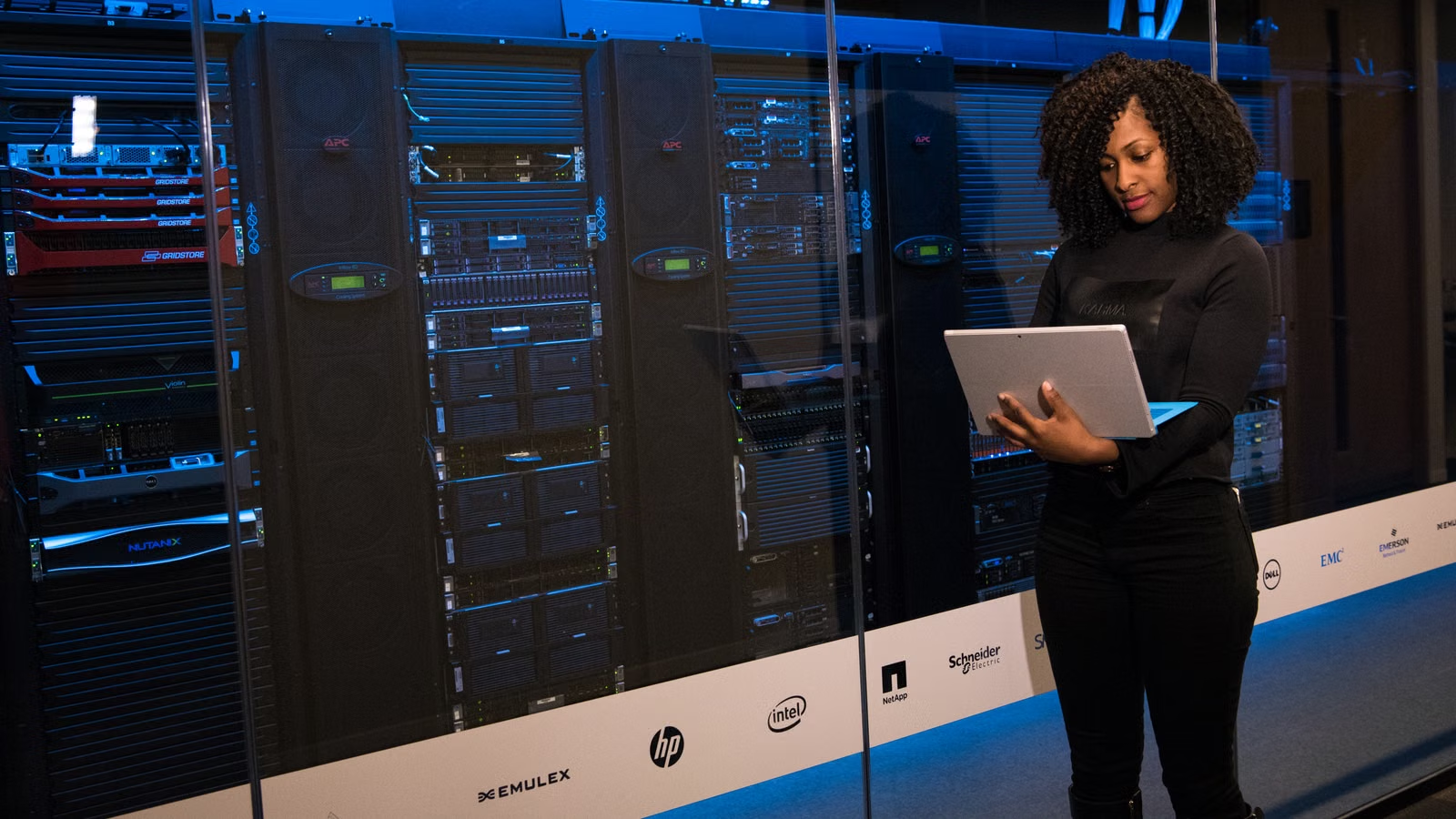
The main reason enterprises are raising hardware budgets is that AI has moved beyond buying small amounts of model API usage and office assistants. It is becoming a production system that requires sustained compute, low latency, and data-security controls. Software still determines what AI can do, but without enough GPU, memory, storage, and network capacity, models cannot run at enterprise scale. Budget reallocation usually first affects deferrable software expansion, not core systems that are already deployed.
How Does the Cost Structure Change When AI Projects Enter Production?
In the proof-of-concept stage, spending is usually concentrated on model APIs, cloud trial credits, and a small number of AI SaaS seats. The project size is relatively small, and business departments can launch pilots quickly. Once AI moves into production, companies must simultaneously solve concurrency, inference latency, model updates, data governance, access controls, and business continuity. The spending structure changes accordingly.
Enterprise AI usually goes through three stages:
- Experimentation: buying model APIs, AI assistants, and small-scale cloud resources;
- Deployment: adding GPU instances, data platforms, security systems, and network capacity;
- Scaling: building AI server clusters, private AI, inference platforms, and high-speed storage.
IDC’s global AI infrastructure data shows that spending reached $318 billion in 2025, more than doubling from $153 billion in 2024. Servers accounted for 97.6% of AI infrastructure spending in the fourth quarter of 2025. IDC expects spending to reach $487 billion in 2026, up about 53% year over year. This shows that the current budget growth is not mainly going into ordinary office software, but into accelerated computing, high-performance networking, and data center systems.
Why Do Supply Constraints Raise the Priority of Hardware Purchases?
Hardware and software have different procurement timelines. A software license can often be signed one quarter later, but advanced GPUs, HBM, server racks, and data center power need to be locked in earlier. If key components are in short supply or rising in price, missing the procurement window can delay the entire AI project.
IBM’s July investor letter offered a direct signal: some customers shifted quarterly capital expenditure toward servers, storage, and memory in late June to secure equipment before supply constraints and potential price increases worsened. IBM also said that several large transactions did not close on the original schedule, showing that higher hardware priority had already affected the timing of some software contracts.
| AI Project Stage | Main Spending Area | Budget Feature | Main Beneficiary Layer |
|---|---|---|---|
| Proof of concept | Model APIs, AI SaaS | Smaller size, faster approval | Software and public cloud |
| Initial deployment | GPU cloud instances, data platforms | Project-based spending | NVDA, cloud providers |
| Production expansion | AI servers, networking, memory | Capital-intensive | NVDA, DELL, MU |
| Large-scale inference | Compute, HBM, SSDs, power | Continuous expansion | Full hardware chain |
| Private AI | On-premise servers and storage | Data control focused | DELL, NVDA, MU |
Budget reallocation also has limits. Enterprises will not stop paying for databases, security, ERP, or subscriptions already embedded in business workflows simply because they are buying servers. The categories more likely to be delayed are new seats, non-core modules, digital optimization projects, and AI software purchases whose return has not yet been proven.
Summary: Enterprise AI budgets are tilting toward hardware because the cost structure changes once projects move from testing to production. When models must run in high-concurrency, low-latency, and regulated environments, GPUs, HBM, servers, networking, storage, and power become unavoidable foundations. Supply tightness further strengthens early procurement needs, making enterprises more willing to delay deferrable software projects than miss delivery windows for critical hardware. Software demand has not disappeared, but new software contracts will depend more on the real application returns generated after infrastructure buildout.
Why Is Nvidia the Core Beneficiary of Enterprise AI Hardware Spending?
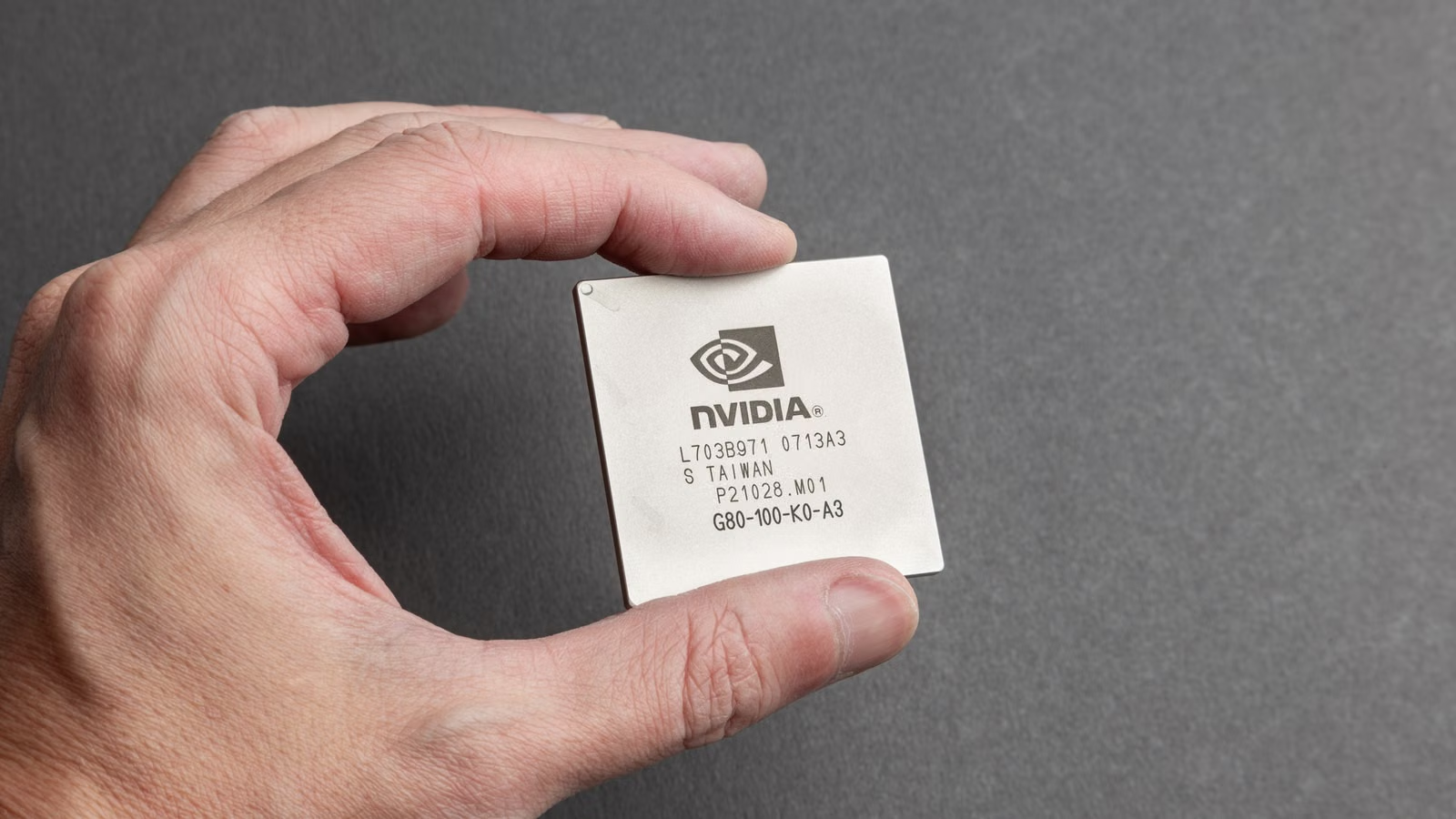
Nvidia’s beneficiary logic is not limited to GPU sales. It comes from a platform made up of compute chips, high-speed interconnects, networking equipment, storage acceleration, and software tools. When enterprises add an AI cluster, Nvidia can capture demand across accelerated computing, NVLink, InfiniBand or Ethernet, and enterprise software. Compared with a single-chip supplier, Nvidia covers more layers of infrastructure value and has higher customer switching costs.
How Does Nvidia Increase the Value of Each AI Cluster From GPUs to Networking?
Nvidia’s fiscal 2027 first-quarter results showed revenue of $81.6 billion, up 85% year over year. Data center revenue reached $75.2 billion, up 92%. Data center compute revenue was $60.4 billion, while networking revenue was $14.8 billion, with networking growing 199% year over year, much faster than compute.
The rapid growth in networking revenue shows that AI system competition is expanding from single-GPU performance to full-cluster efficiency. As the number of GPUs increases, data transfer between chips, model parallelism, storage access, and failure recovery all become bottlenecks. Enterprises are not buying isolated processors; they are buying AI factories that can continuously produce tokens, support model training, and run large-scale inference.
Nvidia’s value coverage includes:
- Blackwell and Rubin GPUs with supporting CPUs;
- NVLink, InfiniBand, and Spectrum-X Ethernet;
- BlueField data processing units and storage acceleration;
- HGX, DGX, and rack-scale system architectures;
- CUDA, inference tools, and enterprise software.
The Vera Rubin platform further integrates GPUs, CPUs, NVLink, DPUs, Ethernet, and storage systems into a multi-rack architecture, reflecting how AI infrastructure is shifting from purchasing separate chips to purchasing complete systems that work together.
Why Does Enterprise Inference Growth Expand Nvidia’s Opportunity?
Training is usually led by a small number of cloud providers and large model companies. Inference, however, can spread across finance, manufacturing, healthcare, e-commerce, government, and many other industries. As AI agents enter production, each user request may trigger multiple model calls, database retrievals, and tool executions. Inference workloads are more continuous and more focused on cost per token.
Nvidia’s production-ready Dynamo 1.0 is designed to coordinate GPUs, memory, and request traffic across clusters. This shows that Nvidia is tying software optimization to hardware sales: customers are not only buying compute power, but also relying on software to raise GPU utilization and reduce inference cost.
For traditional enterprises, NVIDIA AI Enterprise provides model development, GPU orchestration, infrastructure management, and commercial support. This allows Nvidia to cover deployment paths from public cloud to on-premise data centers.
| Value Layer | Main Product or Capability | How Enterprise Spending Transmits |
|---|---|---|
| Accelerated computing | GPUs, CPUs | More training and inference capacity |
| Cluster interconnect | NVLink, InfiniBand | Larger GPU clusters raise networking demand |
| Data processing | BlueField | Reduces CPU and network burden |
| System platform | HGX, DGX, rack systems | Shortens cluster deployment time |
| Software ecosystem | CUDA, Dynamo, AI Enterprise | Improves utilization and customer stickiness |
Nvidia’s risks mainly come from export restrictions, the concentration of capital expenditure among a small number of cloud customers, customer-developed accelerators, product-transition execution, and insufficient data center power. Even if industry spending keeps growing, revenue growth, gross margin, and market expectations will still determine share-price performance.
Summary: Nvidia is the core beneficiary of the hardware budget shift because its revenue opportunity spans GPUs, networking, data processing, rack-scale systems, and the software ecosystem, rather than being limited to a single chip. Training expansion directly increases compute demand, while inference and AI agent adoption raise the importance of networking, memory management, and software optimization. Nvidia’s platform moat is stronger than that of most system and component vendors, but export rules, customer concentration, custom chips, and high growth expectations can amplify the impact of guidance changes on valuation.
How Does Dell Benefit From Enterprise AI Servers and Private AI Deployment?
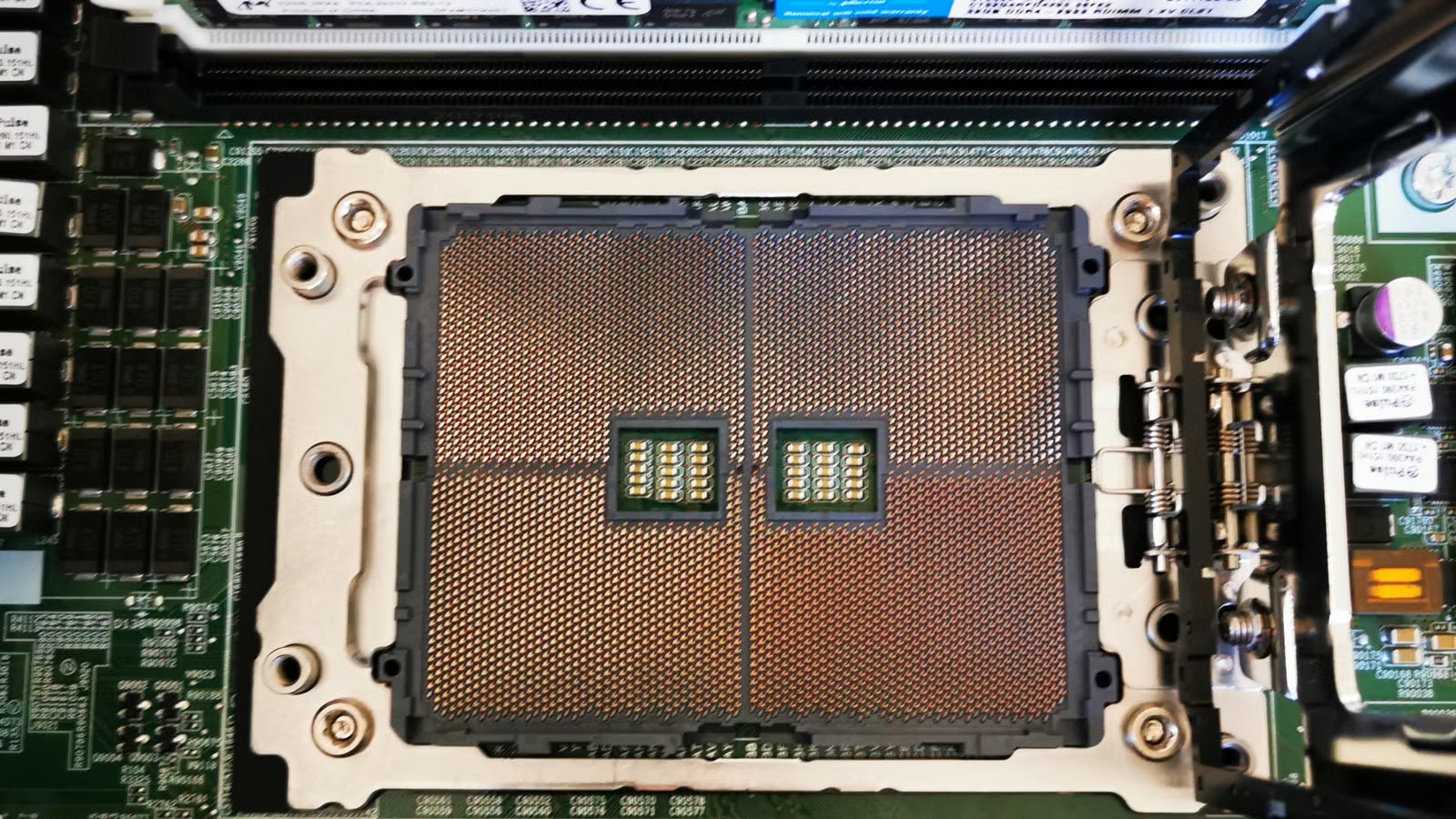
Dell’s core value is not designing GPUs. It is integrating GPUs, CPUs, memory, storage, networking, liquid cooling, and services into complete systems that enterprises can buy, deploy, and maintain. Many companies do not have the capability to design complex AI clusters themselves, and they may not want all sensitive data to move into public clouds. This allows Dell to capture demand from private AI, hybrid cloud, and industry data center buildouts.
Why Have AI Servers Become Dell’s Main Growth Driver?
Dell’s fiscal 2027 first-quarter results showed revenue of $43.8 billion, up 88% year over year. The company received $24.4 billion in AI orders and recognized $16.1 billion in AI-optimized server revenue, up 757%. Infrastructure Solutions Group revenue reached $29.0 billion, up 181%, and the company raised its full-year AI server revenue expectation to about $60 billion.
These orders come from several types of customers:
- Cloud computing and AI service providers building large clusters;
- Financial, healthcare, and manufacturing enterprises deploying private AI;
- Government and sovereign AI projects building local compute capacity;
- Traditional server refresh cycles that now include GPUs and high-speed networking;
- Growth in AI data volume driving storage and operations services.
Dell does not capture all the technical premium of GPUs, but it can use supply chain, system validation, enterprise channels, and service capabilities to turn chips from companies such as Nvidia into delivered revenue.
Why Does Private AI Strengthen Dell’s System Integration Value?
Dell AI Factory with NVIDIA integrates PowerEdge servers, PowerScale storage, networking, Nvidia accelerators, and software into customizable solutions across desktops, edge environments, and data centers. Enterprises do not need to select every component from scratch; they can use validated architectures to reduce deployment complexity.
Private AI demand usually comes from four needs:
- Financial, healthcare, and government data cannot freely leave internal environments;
- Manufacturing and retail scenarios need low-latency local inference;
- When utilization is consistently high, local capacity may make long-term costs easier to control;
- Enterprises need unified management across hardware, security, models, and the data lifecycle.
Dell’s enterprise deployment cases cover research, healthcare, and sovereign compute scenarios. This shows that Dell’s opportunity is not limited to hyperscale cloud providers; it also comes from traditional enterprises embedding AI into real business processes.
Why Doesn’t High AI Server Revenue Necessarily Translate Into Equivalent Profit Growth?
In AI servers, GPUs and high-end memory account for a high share of system value, and system vendors need to buy these core components from upstream suppliers. As a result, rapid revenue growth does not necessarily mean profit margins rise at the same pace. Dell’s first-quarter Infrastructure Solutions Group operating margin was about 10.5%, so you still need to watch whether product mix, pricing, and storage services can improve overall earnings quality.
| Beneficiary Area | Growth Logic | Main Limitation |
|---|---|---|
| AI-optimized servers | Enterprises and cloud customers expand clusters | Core components account for high value share |
| Storage | Model and enterprise data volumes rise | Growth may lag server revenue |
| Networking and liquid cooling | GPU density and power consumption increase | Competitive landscape is broad |
| Deployment services | System complexity rises | Revenue recognition cycle may be longer |
| Private AI | Data security and cost-control needs | Enterprise approval cycles can be slow |
When tracking earnings-driven volatility in NVDA, DELL, and MU, trading costs should also be part of risk management. According to Biya’s U.S. stock trading fees, U.S. stock trading commission is $0, the platform fee is $0.005 per share, with a minimum of $0.99 per order and a cap of 1% of trade value. External institution fees and trading activity fees are $0.00396 per share. For fractional-share orders below one full share, the platform fee is 1% of transaction value, capped at $1. The more frequently you split orders, the more important the per-order minimum becomes. Actual fees should be based on the fee center and the order screen.
Summary: Dell is an important bridge between AI chips and enterprise infrastructure orders. Through supply chain, system integration, storage, enterprise sales, and deployment services, it turns GPUs into private AI and hybrid cloud systems that can actually run. AI server orders can improve revenue visibility, but the earnings elasticity of system hardware is usually lower than that of core chips and scarce memory. To assess DELL’s growth quality, you should monitor AI server revenue, infrastructure margin, storage growth, operating cash flow, and key component supply at the same time.
Why Can Micron Gain Greater Earnings Elasticity From AI Memory and Storage Demand?
Micron’s beneficiary logic comes from the fact that each AI server requires far more memory capacity and bandwidth than a traditional server. The larger the model parameters, context length, and inference concurrency, the more GPUs need HBM to feed data quickly, and the more servers need DRAM and high-speed SSDs. Advanced memory takes time to expand. When demand exceeds supply, revenue and profit can be lifted by both volume growth and price increases.
Why Has HBM Become a Key Bottleneck in AI Computing?
GPUs perform the calculations, but model parameters and intermediate results must continuously flow into the compute units. If memory bandwidth is insufficient, GPUs wait for data and expensive compute capacity is underutilized. HBM reduces this bottleneck through higher bandwidth and tighter packaging, making it increasingly valuable in high-end training and inference systems.
Micron’s AI product opportunity has three layers:
- HBM: serving high-end GPUs and AI accelerators;
- Server DRAM and SOCAMM: expanding CPU and system memory capacity;
- Data center SSDs: storing training data, model weights, and inference caches.
Micron’s March 2026 HBM4 production progress showed that its 36GB 12-high HBM4 had entered high-volume production and was designed for Nvidia’s Vera Rubin platform. Advanced packaging, yield, and power-efficiency requirements make expansion harder, giving suppliers that can deliver reliably stronger pricing power.
How Do the Latest Results Reflect AI Data Center Demand?
Micron’s fiscal 2026 third-quarter results showed revenue of $41.46 billion, compared with $23.86 billion in the previous quarter. Cloud Memory Business Unit revenue was $13.77 billion, and Core Data Center Business Unit revenue was $11.52 billion. Together, the two data center-related businesses exceeded $25 billion. Adjusted free cash flow reached $18.3 billion, while quarterly net capital expenditure was about $7.1 billion.
Revenue growth came from several factors working together:
- HBM and high-end DRAM improved product mix;
- AI servers required higher memory capacity per system;
- Data center SSD revenue exceeded $5 billion and more than doubled sequentially;
- Tight memory and storage supply pushed up average selling prices;
- Multi-year customer agreements improved visibility for part of demand.
Micron’s Computex 2026 product update also showcased high-capacity products such as 256GB DDR5 RDIMMs. Enterprise inference, long context windows, and agent workflows do not only increase HBM demand; they also raise requirements for general server memory and data storage capacity.
| AI Workload Change | Hardware Need | Micron Beneficiary Product |
|---|---|---|
| Larger model parameters | Higher memory bandwidth | HBM |
| Longer context length | Greater memory capacity | HBM, DRAM |
| Higher inference concurrency | Faster data access | HBM, SSD |
| Continued enterprise data accumulation | More storage space | Data center SSD |
| Private AI deployment | Local server capacity | DDR5, SOCAMM, SSD |
Micron is also the company among the three with the most visible cyclical risk. High prices encourage industry expansion, and once new capacity comes online, supply pressure can reappear. HBM improves product differentiation and contract visibility, but it cannot fully eliminate memory pricing, inventory, and capital expenditure cycles.
Summary: Micron benefits from the “memory wall” and “data wall” in AI infrastructure. As GPU performance continues to improve, HBM bandwidth, server DRAM capacity, and SSD access speed become important limits on system efficiency. When supply is tight, Micron can benefit from volume growth, product mix improvement, and pricing gains at the same time, giving it higher earnings elasticity than a typical system vendor. However, capacity expansion, yield, customer concentration, and memory price reversals can also amplify downside volatility. To judge MU’s sustainability, you need to watch HBM shipments, average selling prices, data center revenue, and industry supply.
Who Benefits More: NVDA, DELL, or MU — and How Long Can the Hardware Spending Cycle Last?
There is no fixed ranking that applies to all phases. Nvidia has the strongest platform moat and the broadest value coverage. Dell is most sensitive to enterprise AI server delivery and private AI adoption. Micron has the greatest profit elasticity to memory supply-demand tightness and price changes. Whether the hardware cycle continues ultimately depends on inference usage, enterprise return on investment, power capacity, and whether new supply remains balanced.
Which Company Benefits Most at Different AI Buildout Stages?
| AI Spending Scenario | NVDA | DELL | MU |
|---|---|---|---|
| Large-model training expansion | Core compute and networking benefit | Captures some system orders | HBM demand rises |
| Large-scale inference growth | Software and networking value rises | Enterprise deployment opportunities increase | HBM, DRAM, SSD benefit |
| Private AI adoption | Provides the core platform | Most direct relative beneficiary | Benefits as system capacity rises |
| Supply tightness worsens | Maintains platform pricing power | Faces cost and delivery pressure | Higher pricing and profit elasticity |
| AI capex slows | Growth slows but ecosystem provides buffer | Orders become more sensitive | Cyclical pressure is more visible |
The training phase usually benefits Nvidia and HBM the most. When enterprise private AI becomes more common, Dell’s channel, service, and system integration value becomes more important. If memory supply remains tight, Micron’s earnings change may be the most visible. Conversely, when cloud-provider capital expenditure slows or hardware supply expands quickly, MU and DELL are usually more cycle-sensitive than NVDA, which has a stronger software ecosystem.
You can use six groups of indicators to assess whether the hardware cycle is still expanding:
- Cloud-provider and sovereign AI capital expenditure;
- GPU, HBM, and server delivery timelines;
- Data center power and liquid-cooling buildout progress;
- The share of enterprise AI projects entering production;
- Inference call volume and cost per token;
- Orders, gross margin, and free cash flow at the three companies.
When using Biya’s U.S. stock information tool to track NVDA, DELL, and MU, it is not enough to compare share-price performance. A more useful approach is to put Nvidia’s data center compute and networking revenue, Dell’s AI server orders and margins, and Micron’s HBM shipments and average selling prices into the same watchlist. This helps separate industry demand expansion, supply tightness, and changing market expectations.
The biggest risk to hardware spending is not that software regains all the budget. It is that AI applications fail to generate revenue that matches infrastructure investment. If enterprises find that model utilization is too low, inference costs are too high, or business returns are limited, capital expenditure may peak before long-term AI demand does. Power, export restrictions, and data sovereignty rules can also reshape growth across regions.
Summary: NVDA, DELL, and MU represent the platform, system, and critical-component layers of the AI hardware chain. NVDA has the strongest long-term moat and broadest value coverage. DELL best reflects the pace of enterprise deployment and private AI buildout. MU is most sensitive to memory scarcity and price increases. For the hardware cycle to continue, inference usage, production projects, and real business returns need to keep growing. If capital expenditure slows, supply is released quickly, or power constraints worsen, the three companies will be affected in different ways and to different degrees.
When you need to compare Nvidia, Dell, and Micron over time, you can use Biya to view U.S. stock market data and track earnings dates, data center revenue, AI server orders, HBM progress, capital expenditure, and free cash flow in one framework. Risk assessment should not rely only on “which company benefits more.” It should also consider valuation, portfolio concentration, order type, and actual trading costs. Before trading after you download Biya, you should refer to the fees and order information shown in your account. Biya charges $0 commission for U.S. stock trading, while platform fees, external institution fees, and other charges are subject to the fee center and the order screen. Service availability depends on the user’s location, identity verification result, platform rules, and applicable laws and regulations. The analysis above is based only on public market information and company business structures. It does not constitute investment advice.
FAQ
Why Doesn’t Rising Enterprise AI Spending Benefit All Software Companies?
Not necessarily, because new budgets may mainly flow into GPUs, servers, networking, and memory rather than all software categories. Databases, security, and core business systems are usually more resilient, while new seats, marketing tools, and experimental AI software are more likely to face budget pressure.
What Is the Difference Between Buying AI Servers and Using Cloud GPUs?
On-premise servers emphasize data control, low latency, and stable capacity, while cloud GPUs emphasize fast launch and elastic scaling. Enterprises need to compare utilization, capital expenditure, maintenance cost, data sovereignty, and workload volatility. Hybrid deployment is often more common than a single approach.
Does Nvidia’s Data Center Revenue Growth Mainly Come From GPUs?
GPUs remain the largest source, but high-speed networking, DPUs, rack systems, and software are becoming more important. As clusters grow, chip interconnect and inference orchestration directly affect GPU utilization, so investors should track both data center compute revenue and networking revenue.
Can Dell’s AI Server Orders Be Treated Directly as Future Revenue?
Not entirely. Orders can still be affected by supply, delivery schedules, customer financing, and configuration changes. Even if revenue is recognized smoothly, a high share of GPU value may limit system-level margins. Growth quality should also be judged by infrastructure operating profit and cash flow.
Can Micron’s HBM Demand Growth Eliminate Memory Industry Cycle Risk?
No. HBM can improve product mix, technical differentiation, and order visibility, but high prices still encourage industry expansion. Future supply growth, customer inventory adjustments, or slower GPU demand could again affect memory pricing, capacity utilization, and free cash flow.
How Should Individual Investors Compare the Risks of NVDA, DELL, and MU?
You can compare them through platform competitiveness, server order quality, and the memory pricing cycle. NVDA is more affected by technology roadmap and valuation. DELL is more affected by orders, supply, and system margins. MU is most sensitive to supply-demand balance, average selling prices, and capital expenditure.
*This article is provided for general information purposes and does not constitute legal, tax or other professional advice from BiyaPay or its subsidiaries and its affiliates, and it is not intended as a substitute for obtaining advice from a financial advisor or any other professional.
We make no representations, warranties or warranties, express or implied, as to the accuracy, completeness or timeliness of the contents of this publication.
Related Blogs of

Crypto-Related Stocks vs Digital Assets: What Investors Actually Own


US to Portugal Online Money Transfer Limits: Per-Transaction Caps Explained


Choosing a Stock Trading App: Beginner Checklist


International Wire Transfer Time: What Affects Delivery?

Choose Country or Region to Read Local Blog
 Australia
 Austria
 Belgium
 Canada
 Cyprus
 Czech Republic
 Denmark
 Estonia
 Finland
 France
 Germany
 Greece
 Hong Kong
 India
India Indonesia
 Ireland
 Italy
Italy Japan
Japan Latvia
 Lithuania
 Luxembourg
 Malaysia
 Malta
Malta Morocco
 Nepal
Nepal Netherlands
 New Zealand
 Norway
 Pakistan
 Philippines
 Poland
 Portugal
 Romania
 Singapore
 Slovakia
 Slovenia
 South Africa
 South Korea
 Spain
Spain Sweden
 Thailand
 United States
 Turkey
 United Arab Emirates
 United Kingdom
 Vietnam