
ASML Q2 2026 Earnings Analysis: What Signals Did Orders, EUV Demand, and Full-Year Guidance Release?




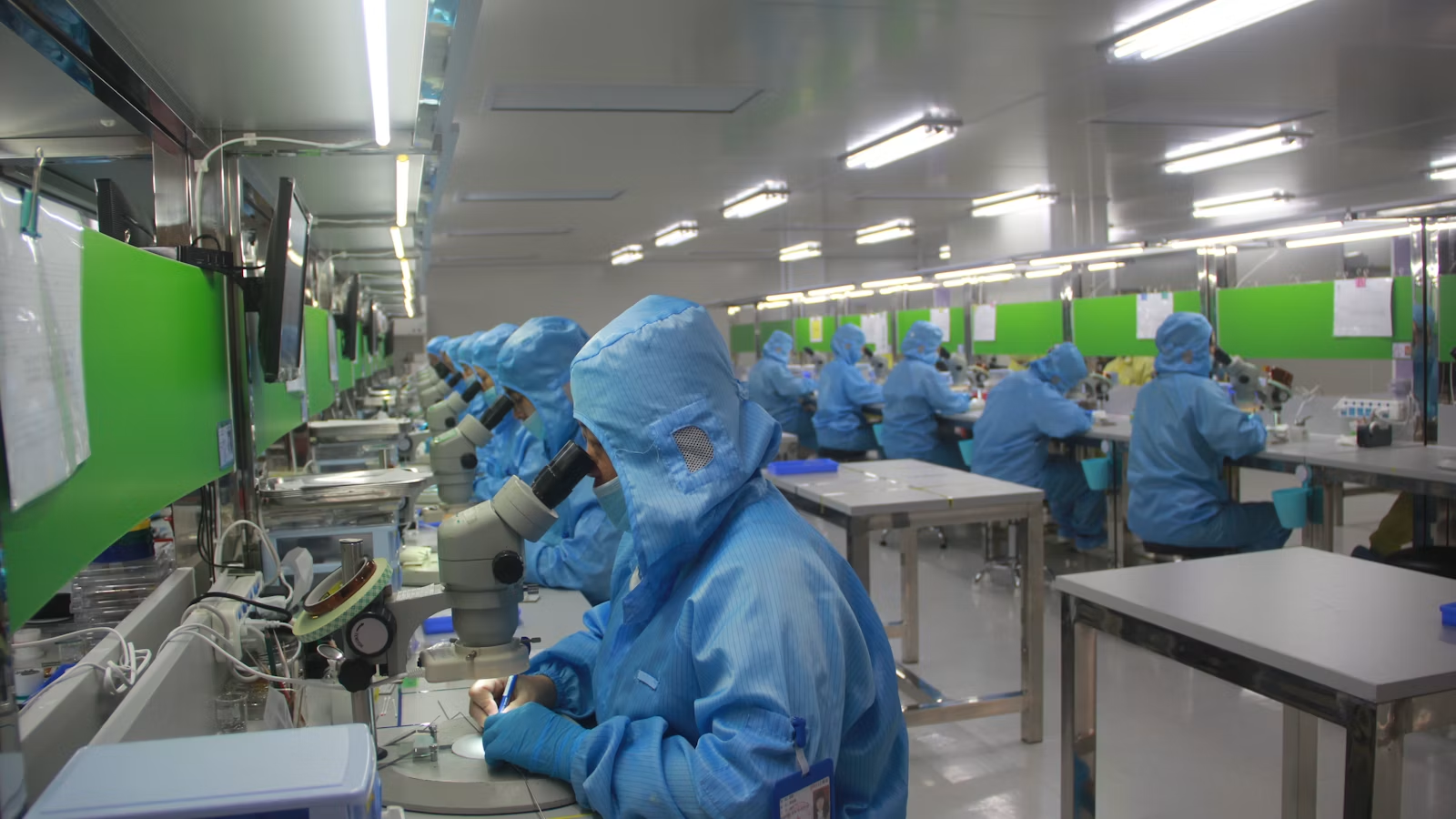
The core signal from ASML’s Q2 2026 earnings is that AI-related advanced logic and memory demand is moving from the chip design layer into the semiconductor manufacturing equipment layer. Orders, EUV capacity, gross margin, and full-year guidance all improved at the same time. For investors, the key question is not simply whether quarterly profit looked strong, but whether ASML can turn customers’ long-term expansion plans into equipment deliveries, service revenue, and cash flow across 2026–2028.
Key Takeaways
- ASML’s Q2 revenue, gross margin, and net profit all exceeded prior company guidance.
- Strong orders suggest clearer expansion plans from advanced logic and DRAM customers.
- EUV remains the core valuation driver for ASML, with Low NA still the revenue backbone.
- High NA has entered an important validation phase, but near-term revenue contribution remains limited.
- China still contributes revenue, but export controls weigh on valuation certainty.
- Positive earnings do not guarantee a one-way share price move; valuation and execution still matter.
What Was the Most Important Signal in ASML’s Q2 2026 Earnings?
The most important signal in ASML’s Q2 2026 earnings was the simultaneous improvement in revenue, gross margin, order visibility, and full-year guidance. Investors should not focus only on EPS or net profit. The better framework is to assess three points together: whether equipment deliveries are accelerating, whether customers are willing to place orders earlier, and whether service and upgrade revenue can support a higher gross margin. If all three are present, ASML’s earnings become much more useful as a signal for the semiconductor equipment cycle.
In its July 15, 2026 earnings release, ASML reported Q2 total net sales of €9.326 billion, compared with €8.767 billion in Q1. Gross margin rose from 53.0% in Q1 to 54.0% in Q2. Net income increased from €2.757 billion to €2.918 billion, while basic EPS reached €7.59. More importantly, Installed Base Management sales reached €2.762 billion, showing that customers are not only buying new equipment but also improving the productivity of already installed systems.
| Metric | Q1 2026 | Q2 2026 | Key Interpretation |
|---|---|---|---|
| Total net sales | €8.767 billion | €9.326 billion | Revenue continued to grow sequentially |
| Gross margin | 53.0% | 54.0% | Product mix and upgrade activity supported profitability |
| Net income | €2.757 billion | €2.918 billion | Earnings power remained high |
| New lithography systems sold | 67 units | 86 units | Equipment delivery pace accelerated |
| Installed Base Management | €2.488 billion | €2.762 billion | Service, upgrade, and productivity demand remained strong |
These figures show that ASML’s growth was not driven only by one-off system sales. As AI chips, advanced logic, DRAM, and HBM demand increase, customers need both new tools and higher productivity from existing installed equipment. For semiconductor equipment stocks, service and upgrade revenue is often underestimated because it can provide more resilience when the equipment cycle fluctuates.
Summary: The first conclusion from ASML’s Q2 earnings is that performance exceeded guidance. The second conclusion is that demand visibility is getting longer. Revenue growth, gross margin improvement, and strong Installed Base Management together suggest that customers are not merely restocking inventory; they are improving production efficiency and preparing for long-term capacity expansion. When reading ASML’s earnings, investors should not only ask how much the company earned this quarter. They should ask whether profit came from system deliveries, service upgrades, or orders that lock in future capacity. That distinction directly affects the quality of future revenue and valuation stability.
What Demand Signal Did ASML’s Orders and Backlog Release?
ASML’s order signal shows that advanced-node customers have clearer capacity plans for 2027 and even 2028. Strong orders do not mean revenue will be recognized immediately, but they indicate that foundries, memory makers, advanced logic customers, and AI-related supply chains are willing to lock in critical equipment ahead of time. For investors, orders are more useful than single-quarter revenue in assessing medium- to long-term demand because ASML’s delivery, installation, and revenue recognition cycle is inherently long.
ASML management emphasized that order momentum in the first half of the year was very strong and that long-term customer visibility was better than before. Public information indicates that ASML has nearly received enough EUV orders to meet 2027 demand and has already received substantial EUV orders for 2028. Reuters also noted in its report on ASML’s capacity expansion that the company plans to increase EUV capacity in 2027 and 2028 to ease lithography bottlenecks created by AI chip demand.
The order signal should be read in four layers:
- Customer commitment: Downstream customers are willing to lock in key equipment for expansion over the next two years.
- Equipment scarcity: EUV lithography systems are not standardized general-purpose tools; capacity expansion requires supply chain coordination.
- Revenue lag: Orders take time to convert into delivery, installation, acceptance, and revenue recognition.
- Cycle risk: If customer capital expenditure is delayed, orders may also be postponed or rescheduled.
ASML is not a typical equipment company. EUV lithography systems occupy a scarce position in advanced logic and advanced memory manufacturing. If customers believe AI servers, GPUs, HBM, and advanced-node demand will remain strong, they have an incentive to discuss capacity arrangements with ASML earlier. The meaning of orders is not only “how many machines were purchased,” but also what customers believe about future wafer capacity, node migration, and capital expenditure.
However, investors should avoid one common misunderstanding: strong orders do not remove share price risk. ASML still needs enough critical components, supplier capacity, engineering installation teams, and customer fab readiness to convert orders into revenue. If the market has already priced in high growth expectations, even a modest delivery delay can still lead to share price volatility.
Summary: The value of order data lies in observing ASML’s demand visibility, not in directly predicting short-term share price performance. Early locking of EUV orders for 2027 and 2028 shows that advanced logic, DRAM, and AI-related customers have greater confidence in future capacity needs. But orders are only the starting point. Investors still need to watch ASML’s supply chain expansion, customer fab construction progress, delivery cadence, and revenue recognition. Orders can be treated as a leading signal for an improving equipment cycle, but not as guaranteed profit realization.
Why Has EUV Demand Become the Core Variable in ASML’s Earnings?
EUV is the core variable in ASML’s earnings because advanced logic, AI accelerators, DRAM, and HBM are all increasing lithography intensity. The more advanced a chip process becomes, the more wafer fabs rely on higher-resolution lithography equipment to create smaller and denser circuit patterns. When assessing ASML’s long-term growth, the key question is not whether EUV is a popular theme, but whether Low NA EUV shipments, High NA EUV adoption, and customer advanced-node expansion are moving forward together.
From a technical perspective, EUV lithography uses a 13.5-nanometer wavelength, far shorter than DUV light sources, helping fabs produce finer patterns at advanced nodes. ASML’s product portfolio includes not only EUV, but also DUV, metrology, inspection, computational lithography, and customer support. Even so, the part of ASML’s valuation that is most sensitive to market expectations is usually EUV.
| Dimension | Low NA EUV | High NA EUV | What Investors Should Watch |
|---|---|---|---|
| Current revenue contribution | Higher | Still in adoption phase | Low NA remains the near-term revenue driver |
| Technical use | Advanced logic and DRAM production | More advanced-node validation | High NA reflects the long-term roadmap |
| Customer decision | Capacity expansion and node migration | Process adoption and cost trade-off | Adoption pace matters |
| Risk | Capacity and delivery bottlenecks | Cost, yield, and ecosystem maturity | Avoid premature linear extrapolation |
ASML expects to deliver around 65 Low NA EUV systems in 2026 and plans to increase capacity by about 30% in 2027. This shows that Low NA EUV remains the main source of earnings contribution. High NA EUV, by contrast, represents the next stage of the technology roadmap. ASML’s TWINSCAN EXE:5000 is the first-generation 0.55 NA High NA EUV system. In theory, it can improve single-exposure capability and transistor density, but adoption cost, yield learning curves, and customer process schedules mean it will not immediately become the main revenue driver at scale.
In addition, Intel’s use of High NA tools to manufacture some advanced products is an important milestone. Still, investors should interpret it as a signal of technological maturity rather than an immediate boost to ASML’s overall revenue. The significance of High NA lies in whether the next generation of advanced nodes is willing to accept a higher-cost and more complex lithography path.
Summary: EUV demand is the valuation anchor for ASML. Low NA EUV determines revenue execution in 2026–2027, while High NA EUV shapes the longer-term technology narrative. AI chips, HPC, advanced logic, DRAM, and HBM can jointly increase lithography intensity, but that demand chain does not mean all growth will immediately become profit. Investors need to distinguish between deliverable Low NA orders today, High NA technology that is still being adopted, and revenue contribution that emerges only after customers reach stable high-volume manufacturing yields.
How Optimistic Is ASML’s Upgraded Full-Year Guidance for 2026?
ASML’s upgraded full-year guidance indicates that management sees stronger-than-expected demand, delivery capability, and gross margin in the second half of 2026. The optimism mainly comes from three areas: AI-related advanced logic expansion, DRAM/HBM capacity increases by memory customers, and stronger service and upgrade activity that supports gross margin. But higher guidance also raises the execution bar. If future revenue, gross margin, or order pace falls below market expectations, share price volatility could increase.
ASML raised its 2026 full-year sales outlook to €43 billion–€45 billion and lifted its gross margin outlook to 54%–56%. Q3 sales guidance was set at €11 billion–€12 billion, with a gross margin range of 55%–57%. This means the company is confident not only in system sales, but also in higher-margin service, upgrade, and installed base management activities.
| Business Line | 2026 Signal | Revenue Impact | Key Risk |
|---|---|---|---|
| EUV | Low NA shipments accelerating | Supports core growth | Capacity and delivery bottlenecks |
| DUV | Immersion DUV demand recovering | Supplements non-EUV revenue | Export policy impact |
| Metrology and inspection | Complex nodes require more process control | Broadens product mix | Customer adoption pace |
| Installed base | Upgrade and service demand strengthening | Improves gross margin | Depends on customer utilization |
The logic behind the guidance upgrade is straightforward: customers are trying to raise advanced manufacturing capacity as quickly as possible. In logic chips, 5nm, 4nm, and 3nm still require capacity expansion, 2nm is accelerating, and 1.4nm is moving into earlier-stage planning. In memory, tight DDR and HBM supply has increased customer willingness to expand capacity, while advanced DRAM nodes also require more lithography steps.
The gross margin upgrade is also important. For equipment companies, gross margin is not determined only by selling price. It is also shaped by product mix, capacity utilization, upgrade revenue, and supply chain costs. Many ASML upgrades are software-driven, allowing customers to improve productivity with relatively limited downtime. That is attractive to customers and supportive of ASML’s profitability.
Still, optimistic guidance does not eliminate risk. ASML’s earnings materials also list a range of forward-looking risks, including customer demand, order conversion, supply chain capacity, export controls, macro conditions, and geopolitics. In other words, management sees stronger demand, but that does not guarantee every order will be delivered and recognized as revenue according to the original schedule.
Summary: The upgraded full-year guidance is the most direct positive signal in ASML’s Q2 earnings. It suggests that 2026 is not just about one strong quarter, but about higher expectations for full-year revenue and gross margin. However, investors should not focus only on the word “upgrade.” They should examine whether the upgrade comes from EUV, DUV, service upgrades, or temporary product mix effects. Higher guidance creates higher expectations. Any future delivery delay, gross margin decline, or change in customer capital expenditure could become a trigger for market repricing.
How Will China Exposure, Export Controls, and Geopolitical Risk Affect ASML?
China remains important to ASML, but it is also a source of valuation risk. Management expects Chinese customers to account for around 20% of 2026 sales, meaning China demand still supports DUV, mature-node production, and some logic expansion. At the same time, sales of advanced EUV and some high-end DUV systems are restricted by export controls. Policy changes can affect orders, deliveries, customer structure, and the valuation multiple that the market assigns to ASML.
ASML’s China business should not be viewed as simply positive or negative. Demand for mature nodes and mainstream logic remains present. Chinese customers continue to purchase equipment for power semiconductors, industrial applications, smartphones, domestic AI-related supply chains, and general computing needs. On the other hand, high-end models within DUV lithography systems, like EUV tools, can be affected by export licenses, Dutch policy, U.S. policy, and customer screening.
The main risks can be divided into four categories:
- License risk: Some equipment exports require approval, and changes in approval processes can affect delivery timing.
- Product mix risk: With high-end EUV restricted, China sales depend more on DUV and service.
- Policy escalation risk: The U.S. and the Netherlands may further tighten export rules for advanced equipment.
- Valuation discount risk: The market may demand a higher risk premium for geopolitical uncertainty.
Reuters previously reported that U.S. lawmakers proposed additional restrictions on chipmaking equipment sales to China, and proposed export restrictions remain an ongoing variable for ASML. Even if China revenue grows in absolute terms, investors will still focus on the sustainability of that revenue and whether future policy changes could delay orders.
At the same time, a lower China revenue share is not necessarily negative. If ASML’s total sales rise and China’s percentage share declines while absolute China revenue still grows, it may simply mean that demand from advanced logic and memory customers in other regions is stronger. The real warning sign would be a combination of high regional concentration, restricted access for certain equipment categories, delayed customer orders, and overly full valuation expectations.
Summary: China exposure is a dual variable for ASML. On one side, it supports mature-node, DUV, and service demand. On the other, export controls restrict high-end product sales and increase uncertainty around order visibility. When assessing ASML, investors should separate China exposure into three parts: revenue contribution, product mix, and policy risk. In semiconductor equipment, geopolitical policy often affects valuation multiples, not just quarterly revenue.
What Does ASML’s Earnings Report Mean for Semiconductor Equipment Stocks and the AI Supply Chain?
ASML’s earnings show that AI capital expenditure is moving from GPUs and cloud data centers into wafer manufacturing, advanced process nodes, DRAM/HBM, and equipment capacity. This is a positive signal for semiconductor equipment stocks, but it does not mean every related stock will rise in sync. Investors need to distinguish each company’s position in the value chain: ASML benefits from lithography bottlenecks, TSMC benefits from advanced foundry demand, memory makers benefit from HBM and DRAM supply-demand dynamics, while Nvidia and other AI chip companies sit closer to end demand.
The semiconductor industry combines high growth with strong cyclicality. When AI demand rises, capital expenditure can travel through the chain of cloud providers, chip designers, foundries, memory companies, and equipment/materials suppliers. But when end demand, financing conditions, or customer budgets change, equipment orders can also be delayed. Therefore, ASML’s strong earnings are better viewed as a leading signal of equipment-cycle improvement rather than a guarantee that the entire supply chain will rise without risk.
| Object to Watch | ASML Earnings Signal | Possible Benefit Path | Main Risk |
|---|---|---|---|
| ASML | EUV orders and upgraded guidance | Lithography bottleneck value rises | Valuation and delivery pressure |
| TSMC | Advanced-node expansion | 3nm and 2nm demand transmission | Customer concentration and capex |
| Memory makers | DRAM/HBM demand strengthening | Advanced-node migration | Overly fast supply expansion |
| Equipment stocks | Capital expenditure recovery | Process control, deposition, etching demand | Significant company-level divergence |
| AI chip stocks | End demand remains strong | GPU and accelerator orders | High valuation and competition changes |
If you translate ASML’s earnings into a U.S. stock watchlist, actual trading costs also matter alongside share price movements. U.S. stock trading costs may include not only commissions, but also platform fees, external agency fees, trading activity fees, and other charges shown on the order page. For example, Biya supports multi-asset trading across U.S. stocks, Hong Kong stocks, and digital assets. Its U.S. stock trading fee information states that U.S. stock commissions are $0, while platform fees, external agency fees, and other charges are subject to the fee center and order page. Service availability depends on the user’s location, identity verification result, platform rules, and applicable laws and regulations.
For ordinary investors, a more disciplined tracking approach is not to chase post-earnings price moves, but to build an indicator framework: whether ASML orders remain strong, whether EUV shipments meet expectations, whether gross margin stays high, whether China exposure remains stable, and whether customer capital expenditure continues to rise. If you need to quickly check related U.S. stock tickers, industry companies, and market information, U.S. stock information search can be one daily monitoring entry point, alongside company earnings reports and risk disclosures.
Summary: ASML’s Q2 earnings validate that AI demand is transmitting into semiconductor manufacturing equipment. However, the report is better used as a cycle observation signal than as a standalone trading instruction. AI chip demand, advanced-node expansion, DRAM/HBM supply-demand dynamics, EUV capacity, and export controls will jointly affect ASML and related supply chain stocks. Investors can follow upcoming earnings from ASML, TSMC, Nvidia, Micron, Applied Materials, Lam Research, and other companies, but any trading judgment should also consider valuation, fees, liquidity, and policy risk. This is not investment advice.
If you follow ASML, TSMC, Nvidia, Micron, or other semiconductor equipment stocks, earnings analysis is only the first step. Before making decisions, it is more practical to compare company fundamentals, industry cycles, valuation levels, trading fees, and local compliance requirements in the same framework. Biya can be used for multi-asset market monitoring and U.S. stock trading cost checks. Before placing an order, users should review the order page and fee information to confirm platform fees, external agency fees, and applicable rules. Semiconductor stocks can be affected by AI capital expenditure, export controls, customer orders, and market sentiment at the same time, so short-term volatility may be significant. Any buy or sell decision should be based on personal risk tolerance, account rules, and local regulatory requirements.
FAQ
What Are the Most Important Metrics in ASML’s Q2 2026 Earnings?
The most important metrics in ASML’s Q2 2026 earnings are order visibility, EUV demand, full-year guidance, and gross margin. Quarterly net income matters, but it is not enough to judge the long-term trend. The signal becomes more durable when orders, EUV shipments, and service upgrade activity strengthen at the same time.
What Does ASML’s Full-Year Guidance Upgrade Mean for Its Stock Price?
ASML’s full-year guidance upgrade is generally a positive signal, but it does not mean the stock will definitely rise. Share price performance also depends on prior market expectations, valuation, future quarterly execution, customer capital expenditure, and geopolitical policy risk. Positive earnings may already be priced in when valuation is high.
Why Is ASML’s EUV Demand Related to AI Chips?
ASML’s EUV demand is related to AI chips because AI accelerators, advanced logic, DRAM, and HBM all require more advanced wafer manufacturing processes. As process nodes become more advanced, lithography intensity increases, which raises demand for EUV, DUV, metrology, and inspection equipment.
Will High NA EUV Immediately Contribute to ASML’s Revenue?
High NA EUV is more of a technology validation signal in the near term and should not be viewed as an immediate large-scale revenue source. Its revenue contribution depends on customer adoption timing, yield, cost effectiveness, and high-volume manufacturing schedules. Low NA EUV remains the more important earnings variable for ASML today.
How Should Ordinary Investors Track ASML’s Future Earnings?
Ordinary investors can track ASML’s orders, EUV shipments, gross margin, Installed Base Management revenue, China exposure, and full-year guidance changes. If they also monitor trading opportunities, they should review platform fees, order rules, and their own risk tolerance before making decisions.
*This article is provided for general information purposes and does not constitute legal, tax or other professional advice from BiyaPay or its subsidiaries and its affiliates, and it is not intended as a substitute for obtaining advice from a financial advisor or any other professional.
We make no representations, warranties or warranties, express or implied, as to the accuracy, completeness or timeliness of the contents of this publication.
Related Blogs of

Wire Transfer Requirements: Sender and Beneficiary Details Checklist


Crypto to Bank Account: Steps, Fees and Settlement Options



Choose Country or Region to Read Local Blog
 Australia
 Austria
 Belgium
 Canada
 Cyprus
 Czech Republic
 Denmark
 Estonia
 Finland
 France
 Germany
 Greece
 Hong Kong
 India
India Indonesia
 Ireland
 Italy
Italy Japan
Japan Latvia
 Lithuania
 Luxembourg
 Malaysia
 Malta
Malta Morocco
 Nepal
Nepal Netherlands
 New Zealand
 Norway
 Pakistan
 Philippines
 Poland
 Portugal
 Romania
 Singapore
 Slovakia
 Slovenia
 South Africa
 South Korea
 Spain
Spain Sweden
 Thailand
 United States
 Turkey
 United Arab Emirates
 United Kingdom
 Vietnam