
What Does ASML’s Guidance Upgrade Mean for TSMC, Nvidia, and U.S. Semiconductor Equipment Stocks?




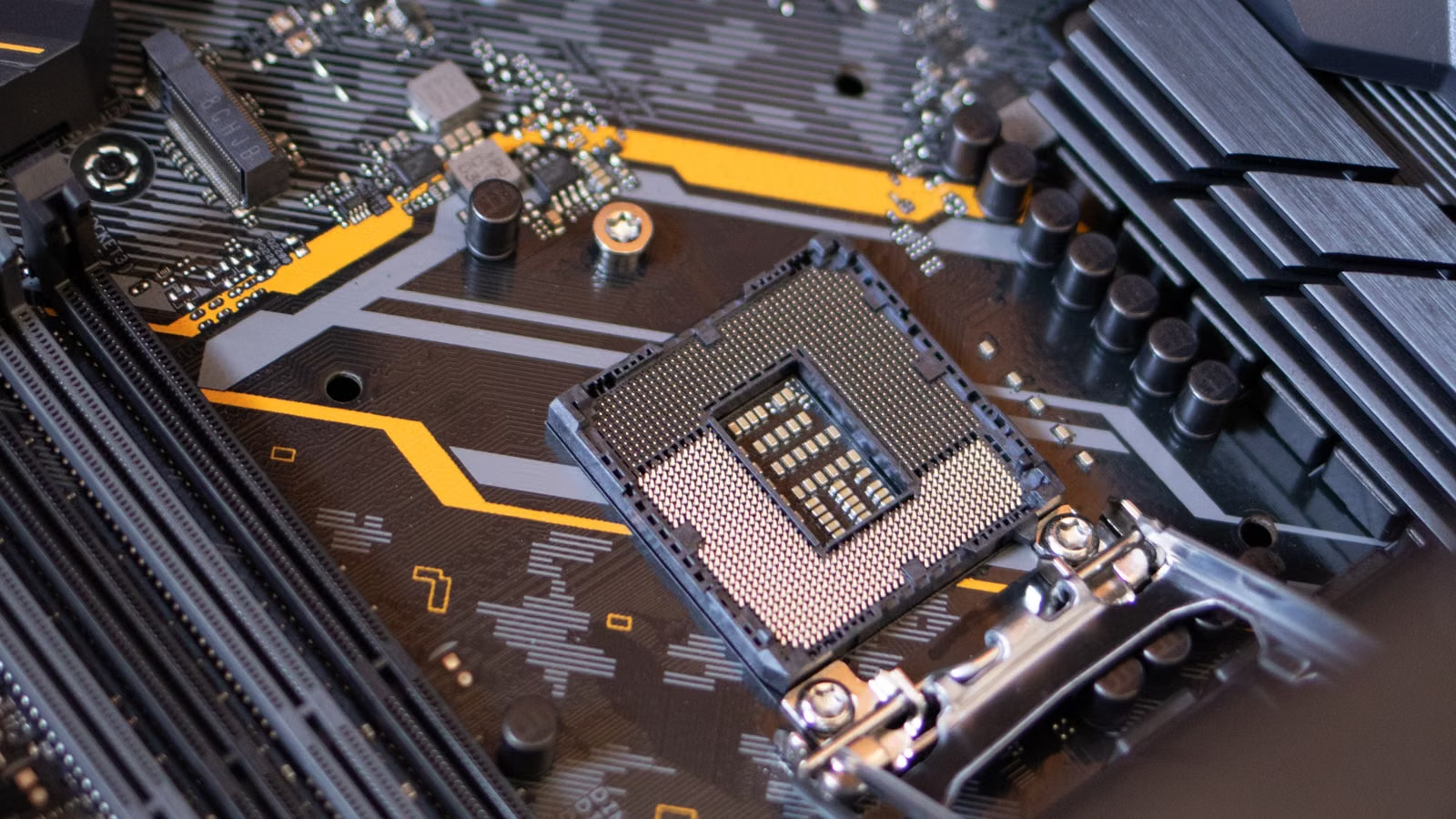
The core significance of ASML’s upgraded 2026 guidance is not simply that “ASML is getting stronger.” It shows that AI capital expenditure is spreading from end-market GPU demand into advanced process nodes, EUV lithography, foundry manufacturing, HBM/DRAM, and U.S. semiconductor equipment stocks. For investors, the real question is whether this transmission chain can continue to deliver, which parts of the chain benefit most directly, and which stocks have already priced in the good news.
Key Takeaways
- ASML’s guidance upgrade confirms that advanced process equipment demand remains strong.
- TSMC has the most direct benefit path, but capex pressure is also rising.
- Nvidia’s benefit path is more indirect; data center demand remains the core variable.
- U.S. equipment stocks may benefit from the capex cycle, but divergence across segments will be clear.
- EUV, CoWoS, HBM, and process control are the key transmission nodes.
- Risks come from good news being priced in early, doubts over AI investment returns, and export controls.
Why Does ASML’s Guidance Upgrade Affect the Whole Semiconductor Supply Chain?

ASML’s guidance upgrade affects TSMC, Nvidia, and U.S. equipment stocks because ASML sits at a bottleneck position in advanced process capacity expansion. When ASML raises its revenue and gross margin outlook, it usually means customer expansion demand, EUV orders, advanced logic demand, and memory equipment demand are stronger than previously expected. However, this is not a signal that all semiconductor stocks will benefit equally. It is a window into how demand is spreading across the supply chain.
According to ASML’s Q2 2026 earnings, the company reported Q2 total net sales of €9.3 billion, a gross margin of 54.0%, and net income of €2.9 billion. ASML expects Q3 2026 total net sales of €11 billion–€12 billion, with a gross margin of 55%–57%, and raised its 2026 total net sales guidance to €43 billion–€45 billion. More importantly, management clearly stated that AI-related investment and advances in AI technology are driving demand for advanced logic and memory chips, while customers are accelerating capacity expansion plans.
This type of guidance upgrade matters because ASML’s equipment orders usually lead the final release of foundry capacity. Stronger demand for EUV, DUV, metrology, inspection, and Installed Base Management means customers are not only buying new tools but also upgrading installed equipment to improve existing production efficiency. For the supply chain, this confirms that AI demand is no longer just reflected in Nvidia GPU orders. It has also entered wafer manufacturing and capital expenditure planning.
| Supply Chain Position | Representative Companies | Meaning of ASML’s Guidance Upgrade | Main Risks |
|---|---|---|---|
| Lithography equipment | ASML | Stronger EUV/DUV demand | Delivery and policy risks |
| Foundry manufacturing | TSMC | Greater pressure to expand advanced nodes | Capex and capacity absorption |
| AI chips | Nvidia | End demand still supports upstream expansion | High valuation and customer budgets |
| U.S. equipment stocks | AMAT/LRCX/KLAC | Improved expectations for the equipment cycle | Segment-level divergence |
| Memory chain | Micron/SK hynix/Samsung | Stronger HBM/DRAM equipment demand | Supply expansion risk |
The supply chain transmission path can be understood as follows: cloud providers and AI model companies increase capital expenditure, which drives demand for Nvidia GPUs and AI accelerators; Nvidia then relies on TSMC’s advanced process nodes, advanced packaging, and HBM supply chain to deliver products; after TSMC, memory makers, and other fabs expand capacity, equipment orders for ASML, Applied Materials, Lam Research, KLA, and other suppliers rise as well.
But investors should also recognize that the longer the transmission chain, the more variables are involved. ASML’s guidance upgrade indicates strong momentum in advanced manufacturing, but it does not mean the share prices of Nvidia, TSMC, AMAT, LRCX, and KLAC will all move up in sync. Each company sits at a different point in the supply chain, with different timing of benefits, profit sensitivity, valuation pressure, and policy risks.
Summary :The supply chain significance of ASML’s guidance upgrade is that it confirms AI demand is spreading into advanced manufacturing. Investors should not treat it simply as company-specific good news for ASML. Instead, it should be viewed as a linked signal across advanced process nodes, EUV lithography, foundry manufacturing, HBM/DRAM, and equipment capex. The useful question is not “Should investors buy equipment stocks because ASML raised guidance?” but rather whether demand sources, manufacturing bottlenecks, equipment orders, and valuation expectations can be verified step by step. Only when multiple nodes in the chain improve at the same time does the supply chain benefit become more reliable.
What Does ASML’s Guidance Upgrade Mean for TSMC?

For TSMC, ASML’s guidance upgrade is broadly positive because it shows that advanced-node customers are still locking in EUV and related equipment capacity ahead of time. But this does not mean TSMC has no pressure. TSMC must convert AI chip demand into stable revenue from 3nm, 2nm, advanced packaging, and overseas capacity while managing depreciation, costs, and return-on-investment pressure from high capex.
According to TSMC’s Q2 2026 results, the company reported Q2 net revenue of $40.2 billion and guided Q3 net revenue to $44.6 billion–$45.8 billion. Q2 gross margin was 67.7%, while Q3 gross margin guidance was 65.0%–67.0%. Meanwhile, market reports indicate that TSMC raised its 2026 capital expenditure outlook to $60 billion–$64 billion, mainly to meet demand for AI, high-performance computing, and advanced process nodes.
TSMC is one of the most direct read-through beneficiaries of ASML’s guidance upgrade. The reason is straightforward: AI accelerators, HPC chips, mobile processors, and advanced logic chips are highly dependent on advanced nodes. The further process nodes advance, the more they depend on EUV lithography and related process control equipment. ASML’s orders and capacity expansion indirectly validate multi-year expansion plans by customers such as TSMC.
| Dimension to Watch | Positive Signal for TSMC | Risk to Watch |
|---|---|---|
| EUV demand | Clearer advanced-node expansion | Equipment delivery cadence |
| AI chip orders | Strong data center demand | Customer concentration |
| Capex | Long-term growth confidence | Depreciation and return pressure |
| Advanced packaging | Strong CoWoS demand | Packaging capacity bottlenecks |
| Overseas expansion | Customer localization needs | Cost and execution complexity |
However, TSMC’s pressure is also rising. AP reported that TSMC will add $100 billion for U.S. production expansion, bringing its total U.S. investment commitment to $265 billion, while raising annual capex expectations to $60 billion–$64 billion. High capex shows strong demand, but it also means future depreciation, overseas fab costs, utilization rates, and capital returns will become key concerns for the market.
TSMC’s share price cannot be directly equated with ASML’s guidance. ASML’s upgraded guidance validates the demand side, but TSMC still faces CoWoS advanced packaging bottlenecks, overseas fab costs, currency fluctuations, customer concentration, and margin pressure. Especially when the market is already highly focused on the AI theme, TSMC may still experience short-term volatility even when its earnings are strong, if investor expectations have become too high.
Summary :TSMC is one of the most direct companies to read through from ASML’s guidance upgrade. ASML’s strong orders and capacity expansion show that advanced process demand remains strong, and TSMC is at the center of AI chip manufacturing and advanced-node expansion. But investment judgment on TSMC should not look only at demand. It also needs to consider capex returns, overseas capacity costs, advanced packaging bottlenecks, and customer concentration. For investors, ASML’s guidance is a demand validation signal for TSMC, not a standalone buy-or-sell conclusion. The real question is whether TSMC can convert high capex into high utilization, strong gross margins, and sustainable cash flow.
What Does ASML’s Guidance Upgrade Mean for Nvidia?

For Nvidia, ASML’s guidance upgrade is an indirect positive because it confirms that the AI chip manufacturing side is expanding capacity for future GPU and AI accelerator demand. But Nvidia’s core variables remain data center revenue, Blackwell/Rubin product cycles, customer capex, and supply chain bottlenecks—not ASML’s earnings themselves. ASML’s guidance is more like a supply chain confirmation than a direct disclosure of Nvidia orders and profit.
According to NVIDIA’s Q1 FY2027 results, the company reported quarterly revenue of $81.6 billion, up 85% year over year. Data center revenue reached $75.2 billion, up 92% year over year. Nvidia said growth was driven by demand for the Blackwell architecture. This shows that AI demand remains strong, but it also means the market has already formed extremely high growth expectations for Nvidia.
ASML’s guidance can validate Nvidia’s demand chain because Nvidia’s AI GPUs are not standalone products. They depend on TSMC advanced process nodes, CoWoS advanced packaging, HBM memory, networking equipment, full system integration, power infrastructure, and data center construction. ASML’s EUV expansion shows that the wafer manufacturing side is preparing for larger-scale AI chip capacity, which can reduce market concerns about lithography bottlenecks.
Five variables Nvidia investors should track together:
- Whether data center revenue growth remains high.
- Whether Blackwell/Rubin supply cadence meets market expectations.
- Whether TSMC 3nm/2nm and CoWoS capacity ramp smoothly.
- Whether HBM supply, memory pricing, and advanced DRAM expansion remain aligned.
- Whether cloud provider AI capex can translate into revenue and profit returns.
Nvidia’s real bottlenecks are not limited to wafer manufacturing. HBM, CoWoS, data center power, server systems, networking interconnects, and customer deployment speed can all affect delivery. Even if ASML expands capacity smoothly, it cannot solve all of Nvidia’s supply constraints by itself. Conversely, if cloud providers begin to question the return on AI investment, Nvidia’s valuation may be more sensitive than ASML’s because Nvidia sits closer to end-market AI spending and customer budgets.
This is why ASML’s guidance upgrade cannot be directly translated into a guaranteed increase in Nvidia’s share price. ASML reflects manufacturing-side expansion willingness, while Nvidia reflects AI compute demand realization. The two are related, but they are not the same variable. Nvidia’s share price ultimately depends on its own data center revenue, gross margin, customer concentration, product iteration, and regulatory risk.
Summary :For Nvidia, the significance of ASML’s guidance upgrade is that it validates continued expansion across the AI supply chain, rather than directly changing Nvidia’s financial model. Nvidia’s share price remains more sensitive to data center revenue, Blackwell shipments, HBM/CoWoS supply, and cloud provider capex. Investors can treat ASML’s earnings as an indirect signal of Nvidia’s supply chain strength, but not as a substitute for analyzing Nvidia’s own orders, margins, and customer budgets. If ASML, TSMC, HBM, and CoWoS all improve together, Nvidia’s supply chain becomes smoother; if end-market AI investment returns are questioned, manufacturing-side expansion cannot fully offset valuation pressure.
How Will U.S. Semiconductor Equipment Stocks Be Affected? The Transmission Logic for AMAT, LRCX, and KLAC
ASML’s guidance upgrade is broadly positive for U.S. semiconductor equipment stocks, but it will not benefit all of them equally. Applied Materials, Lam Research, and KLA correspond to different parts of the manufacturing process, including deposition, etching, process control, and inspection. If fab capex expansion continues, these companies may benefit. But if the market simply trades “equipment stocks up,” it may overlook segment-level divergence and valuation risk.
ASML is the lithography bottleneck, while U.S. equipment stocks are more distributed across materials engineering, thin-film deposition, etching, ion implantation, cleaning, inspection, metrology, and process control. As TSMC, memory makers, and advanced logic customers raise capex, demand for non-lithography equipment can also increase. When 3nm, 2nm, High NA EUV, HBM, and advanced packaging advance, manufacturing complexity rises, and equipment demand usually does not remain limited to lithography.
| Company | Main Segment | Potential Benefit From ASML’s Guidance Upgrade | Risk |
|---|---|---|---|
| Applied Materials | Deposition, materials engineering, packaging | Broad capex diffusion | Order mix divergence |
| Lam Research | Etching, deposition, memory equipment | DRAM/HBM expansion | Memory cycle volatility |
| KLA | Inspection, metrology, process control | Higher advanced-node complexity | High valuation and order sensitivity |
| ASML | EUV/DUV lithography | Bottleneck value in advanced nodes | Delivery and export controls |
Applied Materials has a broad benefit path. Applied Materials covers materials engineering, deposition, etching, ion implantation, process control, and advanced packaging. If advanced logic, DRAM, HBM, and advanced packaging all expand at the same time, AMAT’s exposure is broader than that of a company tied to a single step. But a wide product portfolio does not automatically mean the strongest share price sensitivity. The market will still look at order mix, customer capex allocation, and margin changes.
Lam Research is more exposed to etching, deposition, and memory equipment. Lam Research equipment is closely linked to key steps in 3D NAND, DRAM, and advanced processes. If ASML’s guidance upgrade reflects stronger advanced memory and HBM-related expansion, Lam’s memory equipment outlook may improve. But the memory cycle is highly volatile. If HBM or DRAM supply expands too quickly, equipment orders could become volatile again.
KLA’s benefit path comes from process control. KLA inspection, metrology, and defect control tools are increasingly important in advanced nodes. The more complex the process, the more frequently fabs need inspection and yield management. EUV, High NA, advanced packaging, and 3nm/2nm production all increase the importance of process control. However, high-quality equipment names such as KLA often trade at premium valuations, and their share prices can also be sensitive to order slowdowns and capex revisions.
Summary :ASML’s guidance upgrade is an “industry demand improvement signal” for U.S. semiconductor equipment stocks, not a guarantee that all equipment stocks will rise together. AMAT, LRCX, and KLAC each benefit through different manufacturing steps: materials engineering and deposition, etching and memory, process control and inspection. When judging U.S. equipment stocks, investors should combine fab capex, order structure, end demand, and valuation level, rather than looking only at ASML’s guidance. The key question is whether non-lithography equipment orders can also improve after ASML’s lithography bottleneck begins to ease.
Which Supply Chain Nodes Are Most Worth Tracking? EUV, CoWoS, HBM, and Process Control
After ASML’s guidance upgrade, the most important thing to track is not a single stock, but four supply chain nodes: EUV lithography, CoWoS/advanced packaging, HBM/advanced DRAM, and process control/inspection. These nodes determine whether AI chip orders can become deliverable systems, and whether the benefits for TSMC, Nvidia, and U.S. equipment stocks can be sustained.
EUV is the bottleneck for advanced process nodes. ASML’s EUV lithography systems determine the pace of migration for advanced logic and advanced DRAM nodes. ASML’s guidance upgrade and EUV capacity expansion show that fabs have strong demand for advanced processes. High NA EUV is a longer-term variable, while Low NA EUV remains the near-term focus because large-scale revenue and capacity expansion are still mainly tied to production-ready Low NA systems.
CoWoS and HBM are bottlenecks for AI chip delivery. Nvidia’s AI accelerators require not only wafer manufacturing, but also advanced packaging and HBM support. TSMC’s 3DFabric technology covers advanced packaging and 3D integration, which are important for turning AI chips from wafers into deliverable systems. If CoWoS capacity is insufficient, even strong GPU design and wafer demand can be constrained at final delivery.
HBM links Nvidia, Micron, SK hynix, Samsung, and equipment suppliers. Micron’s HBM3E product introduction emphasizes that high-bandwidth memory is designed for AI and high-performance computing workloads. HBM expansion affects not only memory company revenue, but also DRAM equipment, testing, packaging, and materials demand. If HBM supply tightness continues, expectations for the memory equipment chain may improve; if expansion becomes too aggressive, pricing and inventory volatility could return.
Process control determines advanced-node yield. The more complex chip manufacturing becomes, the more important inspection, metrology, and defect control become. 3nm, 2nm, multi-layer EUV exposure, and advanced packaging all raise the difficulty of yield management. Companies such as KLA may benefit from rising complexity, but that benefit still needs to be verified through their own orders and customer capex.
Supply chain tracking indicators can be divided into six categories:
- ASML EUV orders, shipment volume, and capacity expansion.
- TSMC 2nm/3nm revenue mix, CoWoS capacity, and capex.
- Nvidia data center revenue and Blackwell/Rubin shipment cadence.
- HBM supply, pricing, expansion pace, and memory maker capex.
- AMAT, LRCX, and KLAC orders and backlog changes.
- Cloud provider AI capex and actual revenue returns.
Summary :After ASML’s guidance upgrade, supply chain tracking should shift from “which stock will rise” to “which bottleneck is easing.” EUV determines advanced-node capacity, CoWoS and HBM determine AI GPU delivery, and process control determines yield and capacity ramp. Only when these nodes improve together can the positive impact on ASML, TSMC, Nvidia, and U.S. equipment stocks continue to transmit. If any node experiences overexpansion, delivery delays, or weaker-than-expected investment returns, semiconductor supply chain stocks may diverge.
How Can Ordinary Investors Use ASML’s Guidance to Assess Semiconductor Stock Opportunities and Risks?
Ordinary investors should avoid treating “ASML raised guidance” as equivalent to “TSMC, Nvidia, and equipment stocks will all rise.” A more disciplined approach is to build a transmission framework: first look at demand sources, then manufacturing bottlenecks, then equipment orders, and finally valuation and trading costs. The positive signal is more reliable only when demand, orders, capacity, and valuation expectations are aligned.
A semiconductor supply chain framework can be built across five levels. First, watch whether cloud providers and AI customers continue to raise capex. Second, watch Nvidia data center revenue and Blackwell/Rubin supply. Third, watch TSMC 2nm/3nm, CoWoS, capex, and gross margin. Fourth, watch ASML EUV/DUV orders and U.S. equipment stock orders and backlog. Fifth, assess whether valuations have already priced in the good news.
| Assessment Layer | Indicators to Watch | Positive Signal | Risk Signal |
|---|---|---|---|
| Demand source | Cloud capex, AI orders | Continued upward revisions | Investment returns questioned |
| Chip design | Nvidia data center revenue | Blackwell ramp | Customer budget slowdown |
| Foundry | TSMC capex, 2nm/3nm | High utilization | Depreciation and cost pressure |
| Equipment chain | ASML/AMAT/LRCX/KLAC orders | Backlog improvement | Order delays |
| Trading layer | Valuation, fees, liquidity | Expectation gap remains | Good news priced in early |
Signals that opportunities are improving include simultaneous guidance upgrades from ASML, TSMC, and Nvidia; synchronized improvement in EUV, HBM, CoWoS, and process control orders; AI capex broadening from a few cloud providers to sovereign AI, enterprise AI, and more industry customers; and U.S. equipment company earnings showing their own order improvement rather than merely following ASML.
Signals that risks are rising include weaker share price reactions after good earnings news, suggesting expectations may already be full; cloud providers slowing AI capex or the market questioning investment returns; overexpansion in HBM, CoWoS, or EUV; and export controls affecting Nvidia, ASML, or China-related business for equipment companies.
If you follow U.S. semiconductor equipment stocks as trading opportunities, trading costs also matter alongside company fundamentals. U.S. stock trading costs may include not only commissions, but also platform fees, external agency fees, trading activity fees, and other charges shown on the order page. For example, Biya supports multi-asset trading across U.S. stocks, Hong Kong stocks, and digital assets. Its U.S. stock trading fees state that U.S. stock commission is $0, while platform fees, external agency fees, and other charges are subject to the fee center and order page. Service availability depends on the user’s location, identity verification results, platform rules, and applicable laws and regulations.
Summary :ASML’s guidance is an important signal for judging the semiconductor supply chain cycle, but it is not a direct trading instruction. Ordinary investors are better served by verifying the chain step by step: “AI demand—Nvidia—TSMC—ASML—U.S. equipment stocks—valuation and fees.” Only when demand, orders, capacity, gross margin, and valuation expectations align does the supply chain benefit become more reliable. Otherwise, strong earnings can still become a source of volatility under high valuations. Investors need to track company fundamentals, supply chain bottlenecks, trading costs, and personal risk tolerance together.
If you follow U.S. semiconductor supply chain companies such as ASML, TSMC, Nvidia, Applied Materials, Lam Research, KLA, and Micron, Biya can be used to monitor U.S. stock quotes, review trading costs, and check related stock information. Semiconductor stocks can be highly volatile, so before trading, investors should review not only earnings and valuation, but also platform fees, external agency fees, order types, and fees shown on the order page. You can use U.S. stock information search to track related names, then decide whether to trade based on your account conditions, local regulatory requirements, and risk tolerance. Public earnings and supply chain analysis does not constitute investment advice, and actual service availability is subject to platform rules, identity verification results, and applicable laws and regulations.
FAQ
Is ASML’s Guidance Upgrade Positive for TSMC?
ASML’s guidance upgrade is broadly positive for TSMC because it confirms that advanced process and EUV demand remain strong. TSMC sits at the center of AI chip manufacturing, but it still faces pressure from high capex, advanced packaging bottlenecks, overseas expansion costs, and customer concentration.
What Does ASML’s Guidance Upgrade Mean for Nvidia’s Share Price?
ASML’s guidance upgrade is an indirect positive for Nvidia because it suggests stronger manufacturing-side expansion and better visibility for the AI chip supply chain. However, Nvidia’s share price depends more directly on data center revenue, Blackwell supply, HBM/CoWoS availability, and cloud customer budgets.
Will U.S. Semiconductor Equipment Stocks Benefit at the Same Time?
U.S. semiconductor equipment stocks will not benefit equally. AMAT, LRCX, and KLAC correspond to different segments such as materials engineering, etching, memory equipment, inspection, and process control. Their degree of benefit depends on customer capex allocation, order mix, and each company’s valuation.
What Is the Link Between ASML’s Guidance and AI Chip Demand?
ASML’s guidance upgrade indicates stronger demand for advanced manufacturing equipment, indirectly confirming that AI chip and advanced memory expansion is still progressing. AI chips require advanced process nodes, EUV, CoWoS, HBM, and process control, making ASML an important leading indicator on the manufacturing side.
How Can Ordinary Investors Track Semiconductor Supply Chain Risk?
Ordinary investors can track ASML orders, TSMC capex, Nvidia data center revenue, HBM/CoWoS supply, U.S. equipment stock orders, and valuation changes. If actual trading is involved, they should also review fee structures, order rules, and applicable requirements in their location.
What Costs Should Investors Watch When Trading Semiconductor Equipment Stocks?
When trading semiconductor equipment stocks, investors should look beyond share price volatility and review commissions, platform fees, external agency fees, trading activity fees, order types, and applicable local rules. Actual costs should be based on the platform’s fee center, order page, and account statements, not only on the headline commission.
*This article is provided for general information purposes and does not constitute legal, tax or other professional advice from BiyaPay or its subsidiaries and its affiliates, and it is not intended as a substitute for obtaining advice from a financial advisor or any other professional.
We make no representations, warranties or warranties, express or implied, as to the accuracy, completeness or timeliness of the contents of this publication.
Related Blogs of

Crypto-Related Stocks vs Digital Assets: What Investors Actually Own


International Money Transfers: Methods, Requirements, and Costs


Choosing a Stock Trading App: Beginner Checklist


International Wire Transfer Time: What Affects Delivery?

Choose Country or Region to Read Local Blog
 Australia
 Austria
 Belgium
 Canada
 Cyprus
 Czech Republic
 Denmark
 Estonia
 Finland
 France
 Germany
 Greece
 Hong Kong
 India
India Indonesia
 Ireland
 Italy
Italy Japan
Japan Latvia
 Lithuania
 Luxembourg
 Malaysia
 Malta
Malta Morocco
 Nepal
Nepal Netherlands
 New Zealand
 Norway
 Pakistan
 Philippines
 Poland
 Portugal
 Romania
 Singapore
 Slovakia
 Slovenia
 South Africa
 South Korea
 Spain
Spain Sweden
 Thailand
 United States
 Turkey
 United Arab Emirates
 United Kingdom
 Vietnam