
Which AI Hardware Stocks Benefit More Under IBM’s Warning? Comparing the Sensitivity of NVDA, DELL, MU, and HPE




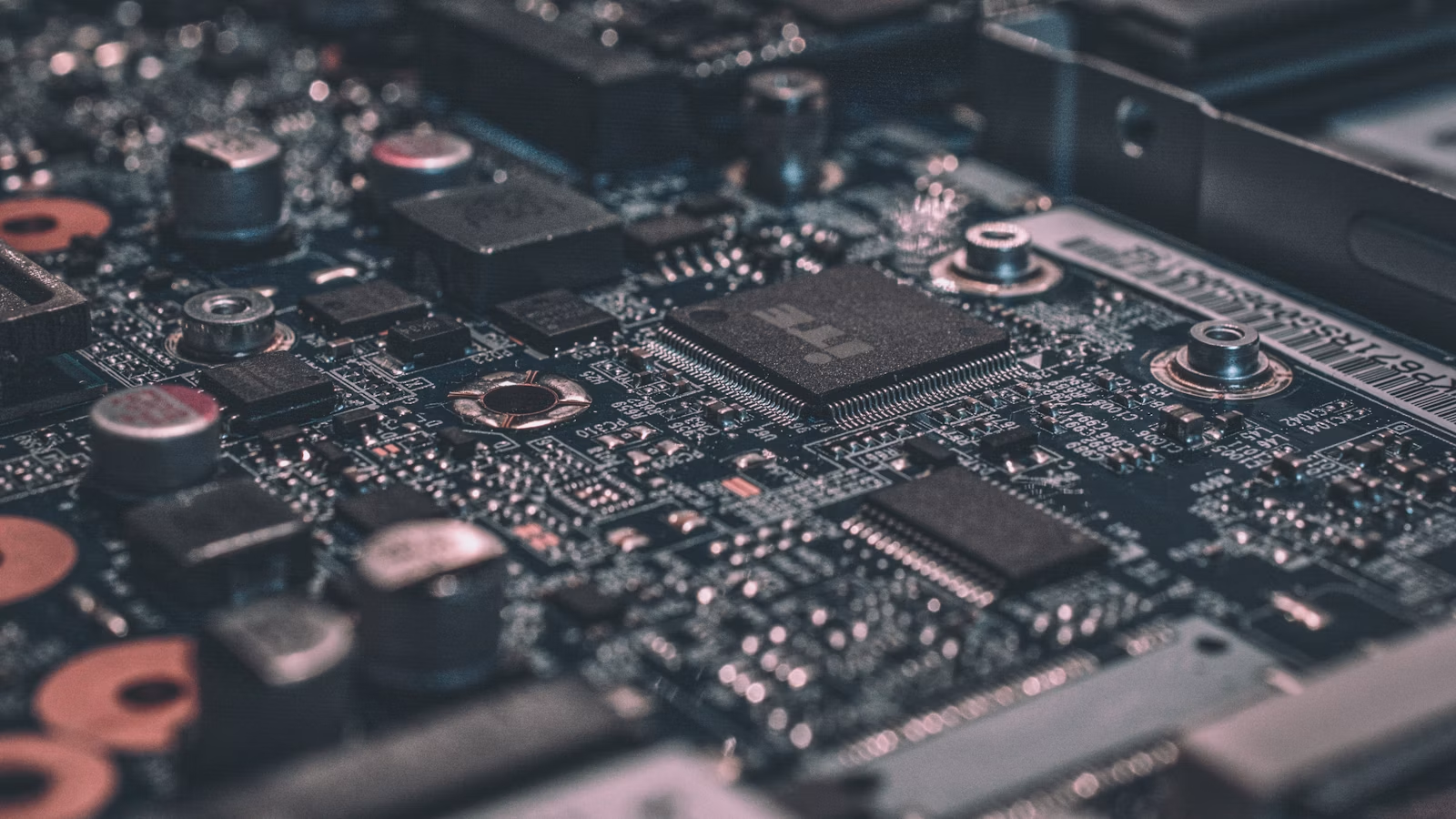
The core signal from IBM’s warning is not that enterprise IT budgets are shrinking, but that customers are prioritizing limited spending toward servers, storage, memory, and AI infrastructure. If ranked by direct sensitivity to enterprise AI hardware budget reallocation, NVDA usually ranks first, MU second, DELL third, and HPE fourth. NVDA controls the core platform, MU benefits from memory tightness, while DELL and HPE depend more on AI servers, networking, storage, and the pace of enterprise private AI deployment.
Key Takeaways
- IBM’s warning reflects a shift in enterprise IT budget priorities toward infrastructure.
- NVDA covers GPUs, networking, systems, and software ecosystems, giving it the highest sensitivity.
- MU has stronger earnings elasticity from tight HBM, DRAM, and SSD supply.
- DELL more directly reflects AI server orders and enterprise delivery cycles.
- HPE benefits from a combined portfolio of servers, networking, storage, and hybrid cloud.
What AI Hardware Stock Signal Did IBM’s Warning Really Send?
The most important signal from IBM’s warning is that enterprise customers are reordering IT budgets, moving longer-lead-time, supply-constrained, and more price-sensitive servers, storage, and memory ahead of some software contracts. This creates a short-term sentiment catalyst for AI hardware stocks and also suggests that enterprise AI has moved beyond software trials and model API purchases into compute, data center, and private AI infrastructure buildout.
Why Are IBM Customers Prioritizing Servers, Storage, and Memory?
IBM’s July investor letter said that some customers shifted quarterly capital expenditure toward servers, storage, and memory in late June to secure equipment before supply constraints and potential price increases. IBM also said that several large transactions did not close as originally planned, showing that higher hardware purchasing priority has already affected the timing of some software and system deals.
There are four reasons behind this shift. First, once AI projects move into production, hardware delivery determines the pace of deployment. Second, GPUs, HBM, servers, networking, and storage remain supply constrained. Third, software contracts can often be signed later, but critical hardware capacity is much harder to obtain at short notice. Fourth, enterprises increasingly care about inference latency, cost per token, data security, and compute reliability.
Therefore, budget reallocation does not mean “software has no value.” It means AI spending is moving downward from the application layer into the infrastructure layer. Enterprises still need databases, security, workflows, and management software, but incremental budgets are prioritizing compute, memory, storage, and networking bottlenecks.
Which Hardware Layers Are Most Likely to Absorb the Budget Shift?
The AI hardware chain can be divided into five layers: GPUs and accelerated computing, HBM and server memory, AI-optimized servers, network interconnects, and data center storage and operations services. The servers, storage, and memory mentioned in IBM’s warning directly map to the core businesses of DELL, HPE, and MU, while also reinforcing NVDA’s value in GPUs and high-speed interconnects.
IDC’s global AI infrastructure data shows that global AI infrastructure spending reached $318 billion in 2025, with servers accounting for 97.6% of AI infrastructure spending in the fourth quarter of 2025. IDC also expects related spending to reach $487 billion in 2026, up about 53% year over year. This shows that the main battlefield for AI budget expansion has clearly shifted toward hardware and data centers.
| IBM Warning Signal | Meaning for the AI Hardware Chain | Most Sensitive Companies |
|---|---|---|
| Customers shift toward server procurement | AI server priority rises | DELL, HPE |
| Customers shift toward memory procurement | HBM, DRAM, and SSD supply tightens | MU |
| Supply-constrained infrastructure | GPU and high-end networking pricing power strengthens | NVDA |
| Delayed software mega-deals | Hardware replaces part of incremental software budgets | NVDA, DELL, MU, HPE |
| Data center upgrades | Networking, storage, and operations demand rises | HPE, DELL, NVDA |
Summary: The most important part of IBM’s warning is not one company’s earnings volatility, but a change in the order of enterprise AI spending. Customers are no longer only buying AI software, model APIs, or office assistants. They are prioritizing GPUs, servers, HBM, DRAM, SSDs, networking, and data center capacity. For NVDA, DELL, MU, and HPE, this budget migration transmits through different paths: NVDA benefits from platforms and interconnects, MU benefits from memory scarcity, and DELL and HPE benefit from enterprise servers, storage, networking, and private AI deployment. However, the four companies differ meaningfully in margin profile, order visibility, and cyclical risk.
How Should You Rank the Beneficiary Sensitivity of NVDA, DELL, MU, and HPE?
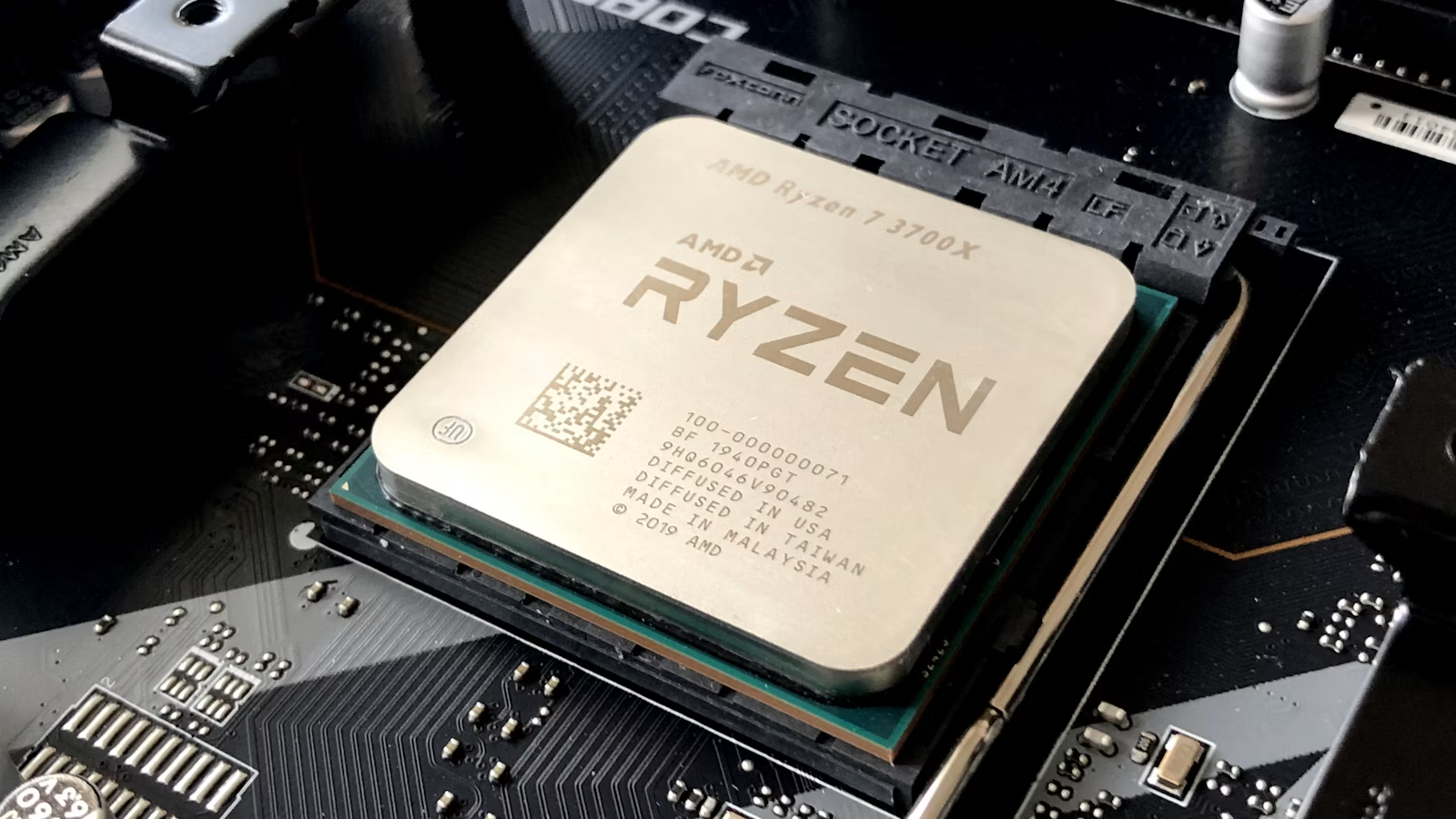
If ranked by direct benefit and value capture from enterprise AI hardware budget reallocation, NVDA usually ranks first, MU second, DELL third, and HPE fourth. NVDA controls core computing, networking, and software ecosystems; MU is more sensitive to memory supply-demand and pricing changes; DELL and HPE depend more on system orders, enterprise channels, delivery cycles, and system-level margins.
What Dimensions Should Sensitivity Be Measured By?
To judge which AI hardware stock benefits more, revenue growth alone is not enough. High AI server revenue does not necessarily mean high margins. Rising HBM prices do not mean cyclical risk has disappeared. Networking revenue growth also needs to be evaluated based on whether it comes from sustainable enterprise data center upgrades.
Six dimensions can be used for comparison:
- Budget directness: whether incremental enterprise AI spending flows directly into the company’s core products;
- Value capture: whether the company can capture higher margins and pricing power;
- Supply-demand elasticity: whether revenue and profit are magnified when supply is tight;
- Order visibility: whether orders, backlog, or long-term agreements support future revenue;
- Customer concentration risk: whether the company depends on a small number of cloud providers or large enterprise customers;
- Cyclical downside risk: whether revenue and profit fall quickly when AI capex slows.
NVIDIA’s fiscal 2027 first-quarter data center revenue reached $75.2 billion, up 92% year over year. Data center compute revenue was $60.4 billion, while networking revenue was $14.8 billion. This structure shows that NVDA’s benefit does not only come from GPUs, but also from high-speed interconnects and system platforms.
Dell’s fiscal 2027 first-quarter AI server data showed that the company received $24.4 billion in AI orders, recognized $16.1 billion in AI-optimized server revenue, and raised its full-year AI server revenue expectation to about $60 billion. DELL’s sensitivity is more tied to orders and delivery.
HPE’s fiscal 2026 second-quarter results showed Networking revenue of $2.7 billion, up 148.2% year over year; Cloud & AI revenue of $7.7 billion, up 22.9%; and Server revenue within Cloud & AI of $5.5 billion, up 32.7%. HPE’s defining feature is a more diversified mix across servers, networking, storage, and hybrid cloud.
| Company | Main Beneficiary Area | Sensitivity Type | Strength | Main Limitation |
|---|---|---|---|---|
| NVDA | GPUs, networking, systems, software | Highest platform sensitivity | Strong value capture, high ecosystem moat | High valuation, customer concentration, export restrictions |
| MU | HBM, DRAM, SSDs | Pricing and supply-demand elasticity | High earnings elasticity | Memory cycles and expansion risk |
| DELL | AI servers, storage, services | Order and delivery sensitivity | Strong enterprise channels, large order scale | System margin pressure |
| HPE | Servers, networking, storage, hybrid cloud | Portfolio sensitivity | Broader networking and enterprise infrastructure exposure | Less pure AI exposure than NVDA/MU |
Why Does MU Rank Ahead of DELL?
MU ranks ahead of DELL not because its revenue scale is necessarily larger, but because in a tight memory cycle, changes in HBM, DRAM, and SSD prices can directly amplify profit. System vendors usually need to purchase GPUs, memory, and networking equipment from upstream suppliers. Revenue can expand quickly, but margins are vulnerable to upstream cost pressure. MU, by contrast, has more direct exposure to tight supply, average selling prices, and product mix improvement.
Summary: NVDA, MU, DELL, and HPE are not the same type of AI hardware stock. NVDA is closer to an AI infrastructure platform, with the most direct benefit and strongest value capture. MU is a high-elasticity beneficiary of memory scarcity and price increases. DELL reflects how fast AI server orders are turning into delivered systems. HPE combines servers, storage, networking, and hybrid cloud. To judge who benefits more, do not only compare revenue growth. Compare gross margin, backlog, free cash flow, customer concentration, and downside sensitivity if AI spending slows.
Why Is NVDA Still the Core AI Hardware Beneficiary Under IBM’s Warning?

NVDA is the core AI hardware beneficiary under IBM’s warning because when enterprises increase AI infrastructure budgets, they usually do not only buy GPUs. They also need high-speed networking, interconnects, system architecture, storage acceleration, and software tools. Nvidia covers multiple critical value layers of AI clusters, allowing it to capture a larger share of enterprise AI infrastructure expansion than a single server, storage, or memory supplier.
Why Is GPU Demand Only the First Layer of NVDA’s Beneficiary Logic?
GPUs are central to AI training and inference, but large-scale AI cluster performance is not determined by GPUs alone. As model parameters, inference requests, and AI agent workflows increase, chip-to-chip communication, storage access, and task scheduling all become important. Enterprises are buying AI factories, not isolated chips.
NVDA’s multi-layer value includes:
- GPUs and accelerated computing platforms;
- NVLink, InfiniBand, Spectrum-X, and other high-speed interconnects;
- BlueField DPUs and storage acceleration;
- HGX, DGX, and rack-scale systems;
- CUDA, AI Enterprise, Dynamo, and other software ecosystems.
The NVIDIA Vera Rubin platform integrates CPUs, GPUs, NVLink, DPUs, Ethernet, and storage systems into a multi-rack architecture, showing that AI infrastructure competition is shifting from single-chip performance to system-level coordination. For enterprise customers, a complete platform can shorten deployment time and reduce tuning complexity.
NVDA Covers Cloud AI, Enterprise AI, and Sovereign AI
Cloud providers need GPU clusters for training, inference, and AI cloud rental. Enterprise customers care more about private AI, industry models, data security, and hybrid cloud deployment. Sovereign AI projects emphasize local compute capacity, data control, and government support. NVDA’s platform can enter all three types of demand.
NVIDIA Dynamo 1.0 is already in production and is designed to improve generative AI and agentic AI inference efficiency on Blackwell GPUs. The higher inference usage becomes, the more important GPU utilization, network scheduling, and software optimization become, expanding NVDA’s software value beyond hardware.
| NVDA Value Layer | Beneficiary Logic | Key Metric to Watch |
|---|---|---|
| GPUs | Training and inference compute demand grows | Data center compute revenue |
| Networking | Large-scale cluster interconnect demand rises | Data center networking revenue |
| Systems | Customers need complete rack-scale solutions | DGX, HGX, rack-system progress |
| Software | Improves utilization and customer stickiness | CUDA, AI Enterprise, Dynamo |
| Ecosystem | Developer base and switching costs | Customer mix and platform adoption |
NVDA’s main risks are also clear: advanced-chip export restrictions, concentrated cloud-provider capex, customer-developed ASICs or AI accelerators, product-transition execution risk, power and liquid-cooling bottlenecks, and high valuation sensitivity to slower growth. In other words, NVDA is the most direct beneficiary, but that does not mean it has the lowest volatility.
Summary: NVDA has the highest sensitivity under IBM’s warning because the more enterprise budgets tilt toward servers, memory, and data centers, the more important GPUs, networking, and system platforms become. Nvidia’s advantage is not a single hardware product, but a full ecosystem made up of computing, interconnects, systems, and software. This platform attribute allows NVDA to capture more AI infrastructure value, but high expectations also amplify risk: if cloud capex slows, export restrictions expand, customer custom chips advance, or data center buildout hits constraints, valuation volatility may be more intense than the change in fundamentals.
Which Benefits More From Enterprise AI Servers and Private AI Deployment: DELL or HPE?
If you only look at AI server orders and revenue elasticity, DELL is usually more sensitive. If you look at the broader enterprise infrastructure portfolio, networking, storage, and hybrid cloud capabilities, HPE’s beneficiary logic is more diversified. IBM’s warning emphasizes customers shifting toward servers, storage, and memory, which is positive for both companies. But DELL is more like an AI server delivery agent, while HPE is more like an enterprise infrastructure portfolio platform.
DELL’s Strength: AI Server Orders and Supply Chain Execution
DELL’s core value is not designing GPUs. It is integrating GPUs, CPUs, memory, storage, networking, liquid cooling, and services into systems that enterprises can buy, deploy, and maintain. Many companies do not have the ability to design large AI clusters themselves, and they may not want to place all sensitive data in public clouds. This creates opportunities for DELL in private AI and hybrid cloud buildouts.
From the financial data, DELL’s AI sensitivity is already clear. First-quarter revenue reached $43.8 billion, up 88% year over year. Infrastructure Solutions Group revenue was $29.0 billion, up 181%. AI-optimized server revenue was $16.1 billion, up 757%. These figures show that DELL is directly capturing AI server expansion from enterprise and cloud customers.
However, the earnings elasticity of a system vendor does not always match its revenue elasticity. GPUs and high-end memory account for a large share of AI server value, and DELL needs to buy key components from upstream suppliers. When orders grow quickly, revenue can expand significantly, but margins still depend on pricing, configuration, supply-chain efficiency, and incremental revenue from storage and services.
HPE’s Strength: Servers, Networking, Storage, and Hybrid Cloud Portfolio
HPE’s AI sensitivity is not as pure as NVDA or MU, and not as directly tied to AI server revenue as DELL. Its advantage lies in portfolio breadth. It covers servers, storage, networking, financing services, and hybrid cloud management, making it relevant to enterprise data center modernization and private AI scenarios.
HPE’s second-quarter data showed strong Networking revenue growth, with clear expansion in data center networking as well. Networking is especially important for AI clusters: the more GPUs there are, the more important east-west traffic, low-latency interconnects, data center switching, and security policies become. If enterprise AI expands from server procurement to network upgrades, HPE’s portfolio value becomes more prominent.
HPE Private Cloud AI focuses on enterprise private AI and hybrid cloud deployment, showing that HPE is not merely selling servers. It aims to build complete solutions through compute, storage, networking, and management platforms. This path may not deliver the same explosive growth as a single AI server revenue line, but it may produce a more balanced revenue structure as enterprises continue upgrading data centers.
| Comparison Dimension | DELL | HPE |
|---|---|---|
| AI server order sensitivity | Higher | High |
| Enterprise networking exposure | Medium | Higher |
| Storage and hybrid cloud portfolio | High | High |
| Business purity | More AI-server oriented | More diversified |
| Margin focus | ISG margin | Networking and Cloud & AI margin |
| Risk type | Component costs, order concentration | Integration execution, portfolio complexity |
If IBM’s warning mainly means that enterprises are temporarily rushing to buy servers, DELL’s stock and earnings sensitivity may be more direct. If the trend spreads into enterprise network upgrades, private AI, hybrid cloud management, and data center modernization, HPE’s portfolio advantage becomes more important.
Summary: Both DELL and HPE can benefit from enterprise AI infrastructure procurement, but through different paths. DELL more directly reflects AI server orders, supply-chain delivery, and system revenue growth, making it useful for tracking whether enterprises and cloud customers are still accelerating server purchases. HPE’s strength lies in servers, networking, storage, and hybrid cloud, making it useful for tracking whether enterprise data center upgrades are expanding from single-server purchases into networking and management platforms. Their shared risks include system margin pressure, component costs, and project delivery cycles. The difference is that DELL is more “pure AI server,” while HPE is more “enterprise infrastructure portfolio.”
Why Is MU a Higher-Earnings-Elasticity but Higher-Cycle-Risk AI Hardware Stock?
MU’s beneficiary logic comes from rapidly rising demand for HBM, DRAM, and data center SSDs in AI servers. Each AI server requires far more memory bandwidth and capacity than a traditional server. When supply is tight, Micron may benefit at the same time from shipment growth, product mix improvement, and higher average selling prices. But the memory industry is highly cyclical, and price declines can reappear after capacity expansion.
Why Has HBM Become a Key Bottleneck in AI Servers?
GPUs perform the calculations, but model parameters and intermediate results must continuously flow into the compute units. If memory bandwidth is insufficient, GPUs wait for data, leaving expensive compute capacity underutilized. HBM reduces this bottleneck through high bandwidth and advanced packaging, so its value continues to rise in high-end training and inference systems.
Micron’s March 2026 HBM4 production progress showed that its 36GB 12-high HBM4 had entered high-volume production and was designed for Nvidia’s Vera Rubin platform. The same product portfolio also included PCIe Gen6 data center SSDs and SOCAMM2 modules. Advanced packaging, yield, and power-control requirements make expansion harder, giving suppliers that can deliver reliably stronger pricing power.
How Does MU’s Data Center Revenue Reflect AI Demand?
Micron’s fiscal 2026 third-quarter results showed revenue of $41.46 billion. Cloud Memory Business Unit revenue was $13.77 billion, while Core Data Center Business Unit revenue was $11.52 billion. Together, these two data center-related businesses exceeded $25 billion. Adjusted free cash flow reached $18.3 billion, and quarterly net capital expenditure was about $7.1 billion.
Revenue growth came from multiple factors: HBM and high-end DRAM improved product mix, AI servers required more memory per system, data center SSD demand increased, tight supply pushed up average selling prices, and multi-year customer agreements improved visibility for part of demand. Micron’s Computex 2026 product update also showcased high-capacity DDR5, SOCAMM, and storage products for AI and high-performance computing, showing that MU’s opportunity is not limited to HBM but also includes server memory and data center SSDs.
| AI Demand Change | Micron Beneficiary Product | Revenue/Profit Impact |
|---|---|---|
| GPU clusters expand | HBM | High-bandwidth memory demand rises |
| Inference concurrency rises | HBM, DRAM | Memory capacity and bandwidth increase |
| Enterprise data grows | SSD | Data center storage demand increases |
| Private AI deployment | DDR5, SSD | Local server capacity rises |
| Supply is tight | HBM, DRAM | ASP and margin elasticity improves |
MU’s risks should not be ignored. High prices encourage industry expansion. HBM yield and advanced packaging capacity affect delivery. Customer concentration may increase. DRAM and NAND prices may fall again after supply is released. Compared with NVDA, MU has a lower platform moat. Compared with DELL and HPE, MU has higher earnings elasticity, but also more visible cyclical volatility.
Summary: MU is the most typical cyclical-elasticity stock in the AI hardware chain. The denser AI servers become, the larger models get, and the more inference workloads grow, the stronger demand becomes for HBM, DRAM, and SSDs. When supply is tight, Micron may achieve higher earnings elasticity than system vendors. But once capacity is released, customer inventories adjust, or AI capex slows, memory prices and margins may fall quickly. Therefore, MU should not be judged only by the AI theme. You need to continuously track HBM shipments, average selling prices, data center revenue, capital expenditure, and supply-demand changes.
After IBM’s Warning, How Can You Tell Whether AI Hardware Stock Benefits Are a Short-Term Catalyst or a Long-Term Trend?
To judge whether IBM’s warning becomes a long-term AI hardware trend, the key is not short-term moves in the four stocks, but whether enterprise hardware orders, delivery timelines, data center expansion, inference usage, and cash flow continue to validate the thesis. If the issue is only quarter-end budget pull-forward, the impact may be short-lived. If inference and private AI keep expanding, the hardware-chain benefit cycle can last longer.
What Common Indicators Should You Track?
At the industry level, you need to watch AI infrastructure capex, GPU and HBM delivery timelines, data center power, liquid cooling and rack capacity, the share of enterprise AI projects moving from proof of concept to production, inference call volume, and cost per token. At the company level, you should focus on four sets of indicators:
- NVDA: data center compute revenue, networking revenue, gross margin, and data center customer mix;
- DELL: AI server orders, AI server revenue, ISG margin, and storage revenue;
- MU: HBM shipments, data center revenue, average selling prices, and capital expenditure;
- HPE: Cloud & AI revenue, Networking revenue, free cash flow, and margins.
| Scenario | NVDA | MU | DELL | HPE |
|---|---|---|---|---|
| AI compute remains scarce | Core beneficiary | Strong pricing elasticity | Orders grow | Networking and servers benefit |
| Enterprise private AI accelerates | Platform continues to benefit | Grows with server capacity | Clear beneficiary | Clear beneficiary |
| HBM supply tightens further | Indirect benefit | Most sensitive | Cost pressure rises | Cost pressure rises |
| Cloud-provider capex slows | Growth pressured | Pricing risk rises | Orders slow | Portfolio provides some buffer |
| Enterprise AI ROI disappoints | Valuation pressured | Cycle rolls over | Backlog conversion slows | Growth slows |
The real risk is that AI application revenue fails to justify hardware capital expenditure. If enterprises find that model utilization is too low, inference costs are too high, or business returns are limited, capex may peak before long-term AI demand does. Power, export controls, and data sovereignty rules may also change the regional distribution of demand.
When following high-volatility U.S. stocks such as NVDA, DELL, MU, and HPE, trading costs should also be part of risk management. According to Biya’s U.S. stock trading fees, U.S. stock trading commission is $0. The platform fee is $0.005 per share, with a minimum of $0.99 per order and a maximum of 1% of trade value. External institution fees and trading activity fees are $0.00396 per share. If you trade in batches or use fractional-share orders, you should check the per-order minimum fee, order type, and actual execution amount in advance. Final fees should be based on the order information shown in your account.
Summary: IBM’s warning can be viewed as a strong signal that enterprise IT budgets are shifting toward hardware, but whether it becomes a long-term trend still needs validation from orders, deliveries, and cash flow. NVDA is best used to track whether platform demand remains strong. MU is best used to track whether supply tightness persists. DELL and HPE are best used to track enterprise AI server and private AI deployment speed. Hardware-stock benefits do not rise in a straight line. The real determinant of sustainability is whether enterprises can turn heavy infrastructure spending into stable business returns.
When comparing the sensitivity of NVDA, DELL, MU, and HPE, you can use Biya to track U.S. stock market data, earnings-period volatility, and company fundamentals, while using U.S. stock information search to build your own watchlist. A more reasonable approach is not to trade only based on “who benefits more,” but to place data center revenue, AI server orders, HBM shipments, networking revenue, free cash flow, and valuation expectations into the same framework. Before trading after you download Biya, you should review order type, fee details, portfolio concentration, and your own risk tolerance. Service availability depends on user location, identity verification results, platform rules, and applicable laws and regulations. The content above only analyzes public market information and company business structures. It does not constitute investment advice.
FAQ
Why Could IBM’s Warning Benefit AI Hardware Stocks?
IBM’s warning could benefit AI hardware stocks because customers are prioritizing servers, storage, and memory, showing that enterprise budgets are tilting toward infrastructure. The strength of the benefit still depends on whether demand for GPUs, HBM, AI servers, networking, and storage continues, and whether related companies can convert orders into revenue, profit, and cash flow.
Which Is Most Sensitive to AI Hardware Budgets: NVDA, DELL, MU, or HPE?
By core value capture, NVDA is the most sensitive. By pricing and supply-demand elasticity, MU is more prominent. By enterprise server orders, DELL and HPE are more important. The ranking changes depending on whether you are looking at GPU platforms, memory pricing, system delivery, or enterprise networking and hybrid cloud buildout.
How Are DELL and HPE Different in Their AI Server Beneficiary Logic?
DELL is more focused on AI server orders, supply-chain execution, and system delivery, while HPE is more focused on a combined portfolio of servers, networking, storage, and hybrid cloud. When enterprise private AI adoption accelerates, both companies may benefit, but DELL has higher AI server purity, while HPE has broader enterprise infrastructure exposure.
Does MU’s HBM Growth Mean Memory Cycle Risk Has Disappeared?
No. HBM growth can improve Micron’s product mix, technical differentiation, and order visibility, but it cannot eliminate the supply-demand cycle of the memory industry. Investors still need to watch average selling prices, capacity expansion, customer inventory, capital expenditure, and data center demand changes.
How Can Individual Investors Track the Real Benefits for AI Hardware Stocks?
You can track NVDA’s data center compute and networking revenue, DELL’s AI server orders and ISG margin, MU’s HBM and data center revenue, and HPE’s Cloud & AI and Networking revenue. At the same time, you should combine gross margin, free cash flow, valuation expectations, and order conversion speed.
Does a Rise in AI Hardware Stocks Mean Enterprise Software Stocks Must Be Under Pressure?
Not necessarily. A rise in AI hardware stocks indicates that enterprises are increasing infrastructure spending, but core databases, security, ERP, and business software can still remain resilient. The categories more likely to be pressured are deferrable software expansion, non-core modules, and AI application projects whose returns have not yet been validated.
*This article is provided for general information purposes and does not constitute legal, tax or other professional advice from BiyaPay or its subsidiaries and its affiliates, and it is not intended as a substitute for obtaining advice from a financial advisor or any other professional.
We make no representations, warranties or warranties, express or implied, as to the accuracy, completeness or timeliness of the contents of this publication.
Related Blogs of

MACD Crypto Trading Strategy: Settings, Signals, and Risk Management


Choosing a Stock Trading App: Beginner Checklist


International Wire Transfer Time: What Affects Delivery?



Choose Country or Region to Read Local Blog
 Australia
 Austria
 Belgium
 Canada
 Cyprus
 Czech Republic
 Denmark
 Estonia
 Finland
 France
 Germany
 Greece
 Hong Kong
 India
India Indonesia
 Ireland
 Italy
Italy Japan
Japan Latvia
 Lithuania
 Luxembourg
 Malaysia
 Malta
Malta Morocco
 Nepal
Nepal Netherlands
 New Zealand
 Norway
 Pakistan
 Philippines
 Poland
 Portugal
 Romania
 Singapore
 Slovakia
 Slovenia
 South Africa
 South Korea
 Spain
Spain Sweden
 Thailand
 United States
 Turkey
 United Arab Emirates
 United Kingdom
 Vietnam