
Which Stocks Are Affected by AI Chip Export Controls? A Risk Breakdown of Nvidia, ASML, and TSMC





AI chip export controls do not only affect Nvidia. They can also transmit through the entire semiconductor chain, including GPUs, HBM, foundries, lithography equipment, EDA software, and data center customers. If you follow U.S. semiconductor stocks, European equipment names, Taiwan-listed chip companies, or Hong Kong chip concepts, you need to distinguish three types of risk: Nvidia’s product export licensing risk, ASML’s equipment and service restriction risk, and TSMC’s customer compliance and advanced-node order risk. Policy news may trigger short-term stock volatility, but what truly affects valuation is revenue exposure, substitution risk, customer mix, and whether non-China demand can offset the impact.
Key Takeaways
- AI chip controls now cover advanced GPUs, HBM, equipment, software, and end use.
- Nvidia faces the most direct risk, as licenses affect revenue, inventory, and margins.
- ASML’s risk centers on DUV tools, after-sales service, and China order visibility.
- TSMC mainly faces customer screening, end-use review, and compliance costs.
- To assess stock risk, compare China exposure, substitution risk, and valuation expectations.
What Parts of the AI Chip Supply Chain Do Export Controls Cover?
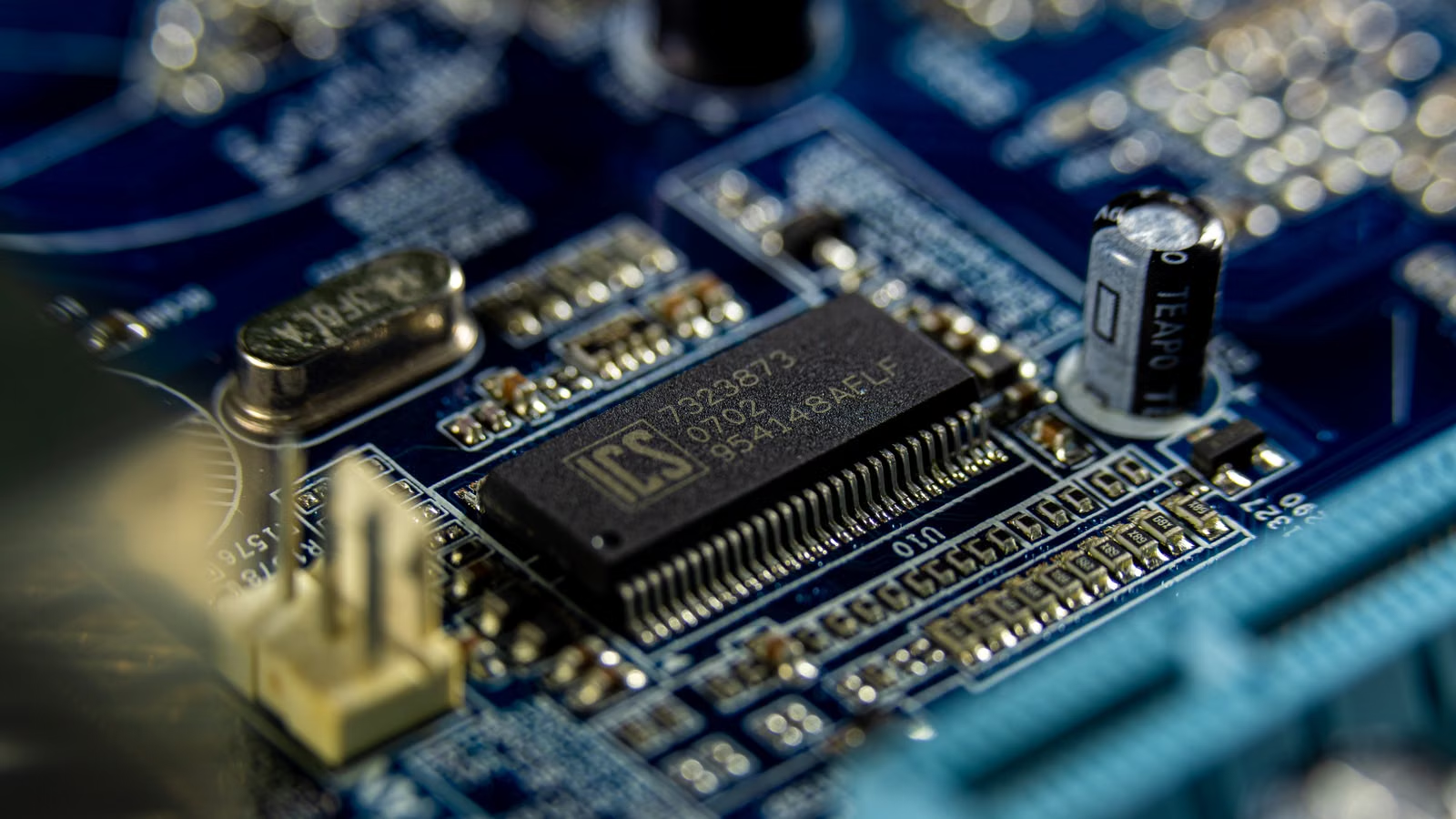
AI chip export controls are not simply about whether a company can sell chips. What matters is whether product performance, interconnect bandwidth, HBM memory, manufacturing equipment, software tools, end users, and end use trigger licensing requirements. In December 2024, the U.S. Bureau of Industry and Security strengthened restrictions on China’s advanced semiconductor capabilities. The rules covered advanced computing chips, semiconductor manufacturing equipment, software tools, HBM, and Entity List measures. At the same time, the Foreign Direct Product Rule can also bring certain foreign-made products under U.S. export control rules.
This means export controls can shift from “whether chips can be sold” to “how the entire supply chain is reorganized.” GPU companies may need to design lower-spec products, memory suppliers may face restrictions on shipping HBM to specific customers, equipment makers may encounter DUV tool and service licensing issues, and foundries need to identify customers, ultimate beneficial owners, and end-use scenarios.
| Control Layer | Main Targets | Representative Stocks | First Metrics Affected |
|---|---|---|---|
| Advanced computing chips | GPUs, AI accelerators | Nvidia, AMD | China revenue, inventory, gross margin |
| High-bandwidth memory | HBM, advanced packaging support | Micron, SK hynix, Samsung Electronics | Product mix, shipment approvals |
| Semiconductor equipment | EUV, DUV, deposition, etching, inspection | ASML, Applied Materials, Lam Research, KLA | China orders, service revenue |
| Foundry manufacturing | Advanced nodes, AI chip customers | TSMC, Samsung Electronics | Customer mix, capacity utilization |
| Software and technology | EDA, technical support, cloud services | Synopsys, Cadence, cloud providers | Licensing cost, customer coverage |
One important detail is that the impact of policy does not necessarily occur only inside China. Third-country transshipment, overseas subsidiaries, offshore data centers, and distributors may all become targets of review. For investors, the real risk is not the word “ban” in a headline. It is the approval timeline for export licenses, customer eligibility, order cancellations, inventory write-downs, and product roadmap adjustments.
Summary: AI chip export controls can affect chip design, HBM, equipment, foundries, software, and cloud services at the same time. Advanced GPU and AI accelerator companies are the first to be affected, followed by equipment and memory suppliers, then foundries and cloud computing customers. When judging the policy risk of a semiconductor stock, you should not only ask whether it sells into China. You also need to assess whether the product crosses control thresholds, whether U.S. technology is involved, whether the customer is restricted, and whether demand from other regions can offset the lost revenue.
Why Is Nvidia the Most Directly Exposed Stock Under Export Controls?
Nvidia is the most directly exposed stock under export controls because licensing decisions can immediately determine whether specific GPUs can be delivered, and then quickly affect revenue recognition, inventory value, purchase commitments, product design, and China market share. When you analyze Nvidia, the key question is not only “can it still sell to China?” You also need to ask which chip generation is involved, which customers are allowed, how large the shipment volume is, whether the revenue can be recognized, and whether redesign and compliance costs are pressuring gross margin.
From A100 and H100 to A800, H800, H20, and then H200, Nvidia’s China strategy has continuously adjusted around changing export thresholds. In January 2026, BIS changed Nvidia H200, AMD MI325X, and similar chips to a case-by-case review framework under its semiconductor export licensing policy, provided certain security conditions are met. This was not a full reopening. It shifted some products from being broadly restricted to being reviewed case by case under specific conditions.
The short-term financial impact has already appeared in the accounts. Nvidia disclosed in SEC filings that H20-related restrictions led to $4.5 billion in H20 inventory and purchase commitment charges. Its financial commentary also showed that the company made no Data Center Hopper shipments to China during the quarter, compared with $4.6 billion of related revenue in the same period a year earlier. Even though a small number of H200 AI chips began shipping to China in July 2026, that should not be interpreted as a full recovery of Nvidia’s China business.
| Event or Variable | Products Involved | Impact on Nvidia | What to Watch |
|---|---|---|---|
| H20 licensing requirement | China-specific GPU | Inventory charges, lower revenue | Inventory write-downs, gross margin |
| H200 case-by-case licensing | Hopper GPU | Limited China revenue recovery | License volume, actual shipments |
| Third-country transshipment review | Blackwell and later products | Channel contraction, higher compliance cost | Asian customer mix |
| China domestic substitution | Ascend, Cambricon, and others | Long-term share pressure | Cloud customer purchasing behavior |
| Product redesign | Lower-spec chips | Repeated R&D, delayed launch | New product timeline |
The longer-term risk lies in ecosystem migration. If Chinese customers shift toward domestic chips for a prolonged period because of policy uncertainty, software stacks, training frameworks, and inference deployment will gradually adapt to alternative platforms. Nvidia’s CUDA ecosystem remains powerful, but repeated policy changes force customers to build backup options. For the stock price, this type of risk is usually not reflected all at once. It slowly appears in valuation multiples, long-term revenue assumptions, and China market share.
Summary: Nvidia faces the most direct impact because export licenses can immediately change GPU delivery, revenue recognition, and inventory valuation. Limited H200 shipments are a marginal improvement, but they do not mean the China market has fully recovered. You need to separate license approval, actual shipment, customer eligibility, revenue recognition, and long-term ecosystem share. If you only see “exports resumed” and assume the risk is gone, you may overlook gross margin pressure, inventory charges, and long-term substitution by Chinese customers.
Why Is ASML’s Risk Concentrated in DUV, Equipment Service, and China Revenue Mix?
ASML’s core export control risk is not that EUV lithography tools suddenly lose access to China. It is whether restrictions on DUV tools, upgrades for existing tools, spare parts, and after-sales service may expand. EUV tools are used for the most advanced process nodes, and China access has been restricted for a long time, so the market has already priced in much of that risk. What truly drives stock volatility is how many DUV immersion tools can still be sold, whether installed tools can be maintained, and whether policy restrictions cut into service revenue.
ASML is unique because it is not an AI chip design company, but it is a key bottleneck for advanced-node capacity expansion. TSMC, Samsung, Intel, Micron, SK hynix, and others all need lithography tools to expand advanced logic chip capacity or HBM-related capacity. ASML reported €9.3 billion in total net sales in the second quarter of 2026 and raised its 2026 revenue outlook to €43 billion to €45 billion, showing that AI demand is still strongly supporting the global equipment cycle.
However, China exposure can still amplify valuation swings. In April 2026, a U.S. congressional plan to further restrict exports to China pushed the market to reprice ASML’s risk. The report noted that ASML expected China to account for about 20% of its 2026 sales, while investors focused on DUV equipment sales and China revenue. ASML’s 2025 annual report also shows that full-year revenue, DUV system sales, and customer mix remain closely tied to global capacity investment.
| Product or Service | Policy Sensitivity | Speed of Impact | Can Global AI Demand Offset It? |
|---|---|---|---|
| EUV lithography tools | High, but China has long been restricted | Lower incremental shock | Strong demand from advanced customers |
| DUV immersion tools | Medium to high | Medium-term | Depends on non-China capacity expansion |
| Mature-node DUV | Medium | Medium-term | Regional demand still exists |
| Installed base service | High uncertainty | Cumulative over time | Harder to fully replace |
| High-NA EUV | Low China exposure | Long-term | Driven by advanced-node customers |
When analyzing ASML, you should separate new equipment orders from Installed Base Management service revenue. New equipment is affected by orders and licenses, while service revenue is tied to maintenance, upgrades, spare parts, and software support for installed machines. If restrictions expand into the service layer, the impact may last longer than the loss of a few new tool orders.
Summary: ASML is not the most direct victim of chip sales restrictions, but it is the most sensitive equipment company on the manufacturing side. EUV restrictions have long been digested by the market. Newer risk is concentrated in DUV, tool upgrades, spare parts, and service revenue. Global AI-driven capacity expansion can partially offset China risk, but it cannot eliminate policy uncertainty. When assessing ASML, you should watch China revenue share, DUV orders, service revenue, EUV backlog, and customer expansion plans together.
Is TSMC Facing Order Risk or Customer Compliance Risk?
TSMC’s exposure to export controls is usually more indirect than Nvidia’s, but its compliance risk is more complex. You should not only ask whether TSMC directly sells AI chips to China. You need to look at whom it manufactures for, whether the chip specifications involve advanced computing, who ultimately controls the customer, and where the product ultimately goes. A foundry’s risk is not only losing orders. It also includes customer screening errors, unclear end use, investigation costs, and potential penalties.
TSMC’s advantage is a diversified customer base. Demand for advanced nodes comes from Nvidia, Apple, AMD, Broadcom, cloud ASIC customers, and others. Even if some Chinese design customers are restricted, U.S. cloud companies and global AI chip demand may still fill capacity. But that does not mean the risk can be ignored. In its 2025 20-F risk factors, TSMC said export controls and sanctions could affect customer demand, product supply, and operational arrangements.
The Sophgo case shows that foundries face a gap between “customer declarations” and “actual end use.” A chip manufactured by TSMC and later found in a Huawei AI processor triggered U.S. investigation concerns and market discussion around a potential fine of more than $1 billion. In January 2025, BIS added related entities to the Entity List, further highlighting the importance of customer due diligence.
| Risk Channel | Affected Business | Potential Consequence | Offset Factor |
|---|---|---|---|
| Customer export restrictions | Advanced-node orders | Order suspension or cancellation | Demand from other AI customers |
| End-user identification | Chinese design customers | Higher review cost | Diversified customer mix |
| Nanjing equipment license | Mature-node fab | Maintenance and upgrade constraints | Annual license approval |
| Compliance investigation | Entire company | Legal costs, reputational pressure | Stronger internal controls |
| Global capacity relocation | U.S., Japan, Europe fabs | Higher cost and depreciation | Customer commitments and subsidies |
The Nanjing fab reflects the equipment licensing issue for mature nodes. The U.S. has granted TSMC’s Nanjing fab a 2026 annual approval, allowing it to continue importing controlled U.S. equipment to maintain existing operations and delivery. The facility mainly involves mature nodes such as 16nm and is not TSMC’s most important advanced AI chip manufacturing base. You should understand that this type of license mainly affects operational continuity and maintenance efficiency, rather than immediately determining whether TSMC has advanced AI chip orders.
Summary: TSMC does not face a single product ban. It faces a combined risk involving customer compliance, end-use identification, equipment licensing, and global capacity cost. Strong advanced-node demand can partially offset order changes from restricted customers. But if customer screening failures or regulatory investigations occur, the impact may appear in fines, legal costs, customer adjustments, and valuation discounts. When assessing TSMC, focus on HPC revenue, advanced-node capacity utilization, customer concentration, and compliance developments.
How Should Investors Compare Nvidia, ASML, TSMC, and Other Related Stocks?
When comparing the impact of AI chip export controls, you should not only look at China revenue share. A better approach is to evaluate four dimensions at the same time: whether the policy directly restricts the company’s core products, whether customers have alternatives, whether non-China demand can offset the gap, and whether the current valuation already reflects policy risk. Nvidia and AMD face product licensing risk. ASML and U.S. equipment makers face equipment and service risk. TSMC faces customer compliance and capacity allocation risk. Chinese domestic chip stocks face both potential substitution demand and technology risk.
| Stock or Sector | Policy Directness | China Exposure | Substitution Risk | Main Metrics to Watch |
|---|---|---|---|---|
| Nvidia | High | Medium to high | Medium to high | Licenses, shipments, inventory, gross margin |
| AMD | High | Medium | High | MI series licensing, customer adoption |
| ASML | Medium to high | Relatively high | Low | DUV orders, service revenue |
| TSMC | Medium | Diversified | Low | HPC revenue, customer review |
| Applied Materials, Lam Research, KLA | Medium to high | Relatively high | Medium | China revenue, equipment licenses |
| Micron, SK hynix, Samsung | Medium | Medium | Medium | HBM licensing, product mix |
| Chinese AI chip stocks | Indirect beneficiary | Mainly domestic | High technology risk | Capacity, yield, software ecosystem |
You can use three scenarios to understand stock price reactions. The first is conditional easing, where some H200 and MI-series chips receive approval for shipment. Nvidia and AMD may then see expectations for revenue recovery, while domestic substitution stocks may face valuation pressure. The second is maintaining the current framework, where license volumes remain limited and global AI demand continues to support leading companies’ earnings. Stock performance would then depend more on financial execution. The third is further tightening, where restrictions expand to more GPUs, DUV tools, repair services, or third-country channels. In that case, earnings forecasts for equipment makers and chip designers would face greater pressure.
Trading cost also matters. Policy news often appears around earnings, hearings, regulatory announcements, or pre-market and after-hours headlines, and semiconductor stocks can move sharply in the short term. If you follow Nvidia, AMD, ASML ADR, TSMC ADR, or related ETFs, you need to consider not only directional views, but also order types, execution prices, and fee structures. Biya charges $0 commission for U.S. stock trading, while platform fees, external institutional fees, and other charges are subject to the U.S. stock trading fees and the order page. You can also use U.S. stock market information to track related stocks. Public market information and fee structures are for reference only and do not constitute investment advice.
To assess policy risk, focus on these signals:
- BIS final rules, effective dates, and license review standards;
- Export license approvals and actual shipment volumes;
- Company regional revenue, China customer orders, and inventory charges;
- DUV, EUV, HBM, CoWoS, and other supply chain bottlenecks;
- Whether management cuts guidance or changes product roadmaps;
- Whether valuation reflects a “policy discount” or an “easing premium.”
Summary: Nvidia and AMD face the most direct chip licensing risk. ASML and equipment stocks face order and service restriction risk. TSMC faces customer compliance and capacity cost risk. Memory suppliers and Chinese domestic chip stocks sit in the indirect impact zone. You should use scenario analysis instead of treating export controls as a simple negative for one company or a guaranteed positive for one sector. What ultimately affects investment outcomes is the combined effect of policy direction, earnings delivery, valuation, and actual trading costs.
If you follow trading opportunities created by AI chip export controls, it is useful to put policy news, company disclosures, and market prices into the same monitoring framework. You can use Biya to view U.S. stocks, Hong Kong stocks, cryptocurrencies, and other multi-asset market information, while cross-checking company announcements, regulatory filings, order pages, and fee details. Biya is a global multi-asset trading wallet. Service availability depends on user location, identity verification results, platform rules, and applicable laws and regulations. If the service is available in your region, you can also download the App to review trading rules, order displays, and fee information. The above content only introduces public market information, trading rules, and fee structures. It does not constitute investment advice.
FAQ
Do U.S. AI Chip Export Controls Apply to Overseas Subsidiaries of Chinese Companies?
They may apply. The key is not only where the company is registered, but also who the ultimate beneficial owner is, the parent company’s control relationship, where the chip is located, the end use, and whether third-country transshipment is involved. Overseas subsidiaries, data centers, and distributors may trigger licensing or enforcement risk if they are considered part of an evasion channel. The final judgment should follow BIS rules and local regulatory requirements.
Can Nvidia Immediately Recognize China Revenue After H200 Export Licenses Are Approved?
No. License approval is only a precondition for delivery. Revenue recognition still depends on customer eligibility, China import procedures, actual shipment, acceptance, payment arrangements, and accounting timing. Limited H200 shipments suggest a marginal policy change, but they do not mean Nvidia’s China data center business has fully returned to its pre-restriction state.
Are Repairs and Upgrades for ASML DUV Tools Already Delivered to China Restricted?
They may be restricted. Spare parts, software updates, technical support, and upgrade services for installed equipment may require licenses depending on the tool model, customer identity, use case, and Dutch and U.S. rules. For ASML, restrictions on after-sales service may have a more lasting impact than a single lost new tool order, so investors should monitor company disclosures and regulatory changes.
How Does TSMC Reduce Compliance Risk for AI Chip Customers?
TSMC needs to conduct customer due diligence, verify ultimate beneficial ownership, review chip specifications, collect end-use declarations, and monitor unusual orders. Complex supply chains can still make identification difficult, so compliance risk cannot be fully eliminated. Investors should watch regulatory investigations, customer suspensions, order reviews, and internal control disclosures.
Are Chinese AI Chip Stocks Guaranteed to Benefit from U.S. Export Controls?
No. Export controls may increase demand for domestic substitution, but Chinese AI chip companies still face challenges in advanced manufacturing, HBM supply, software ecosystems, yield, customer validation, and valuation volatility. The substitution theme is better viewed as a medium- to long-term industrial opportunity, not a guaranteed profit outcome.
Can Semiconductor ETFs Reduce Single-Stock Volatility from Export Controls?
Semiconductor ETFs can reduce the impact of a policy shock on a single company, but they cannot eliminate shared sector risks such as export controls, AI capital spending, valuation corrections, and semiconductor cyclicality. Before choosing an ETF, you should review its exposure to Nvidia, ASML, TSMC, equipment stocks, and memory stocks, and rely on the fund’s official holdings documents.
*This article is provided for general information purposes and does not constitute legal, tax or other professional advice from BiyaPay or its subsidiaries and its affiliates, and it is not intended as a substitute for obtaining advice from a financial advisor or any other professional.
We make no representations, warranties or warranties, express or implied, as to the accuracy, completeness or timeliness of the contents of this publication.
Related Blogs of

Wire Transfer Requirements: Sender and Beneficiary Details Checklist


US to Portugal Online Money Transfer Limits: Per-Transaction Caps Explained





Choose Country or Region to Read Local Blog
 Australia
 Austria
 Belgium
 Canada
 Cyprus
 Czech Republic
 Denmark
 Estonia
 Finland
 France
 Germany
 Greece
 Hong Kong
 India
India Indonesia
 Ireland
 Italy
Italy Japan
Japan Latvia
 Lithuania
 Luxembourg
 Malaysia
 Malta
Malta Morocco
 Nepal
Nepal Netherlands
 New Zealand
 Norway
 Pakistan
 Philippines
 Poland
 Portugal
 Romania
 Singapore
 Slovakia
 Slovenia
 South Africa
 South Korea
 Spain
Spain Sweden
 Thailand
 United States
 Turkey
 United Arab Emirates
 United Kingdom
 Vietnam