Could HBM Shift from Shortage to Oversupply? The Cycle Risks AI Memory Investors Must Watch





HBM is more likely to remain tight in the short term than to suddenly shift from shortage to broad oversupply. The real investment risk is not whether supply is tight today, but whether new capacity after 2027, AI GPU shipments, custom ASIC demand, cloud provider CAPEX, and HBM4 pricing weaken at the same time. HBM has long-term supply agreements, advanced packaging barriers, and customer qualification hurdles, making it more cycle-resistant than ordinary DRAM. But if capacity expansion grows faster than AI server demand, related memory stocks may enter a valuation reset first.
Key Takeaways
- HBM remains tight in the short term, with solid demand support in 2026–2027.
- Oversupply risk mainly comes from capacity expansion, slower demand, and pricing renegotiation.
- HBM is more cycle-resistant than ordinary DRAM, but it is not immune to cycles.
- Cloud provider CAPEX, AI GPU shipments, and ASIC demand are key variables.
- If HBM4 supply ramps faster than demand, profit expectations may be revalued.
- Investing in the HBM supply chain requires watching supply, pricing, customers, and valuation together.
Why the HBM Shortage Is Not Over Yet
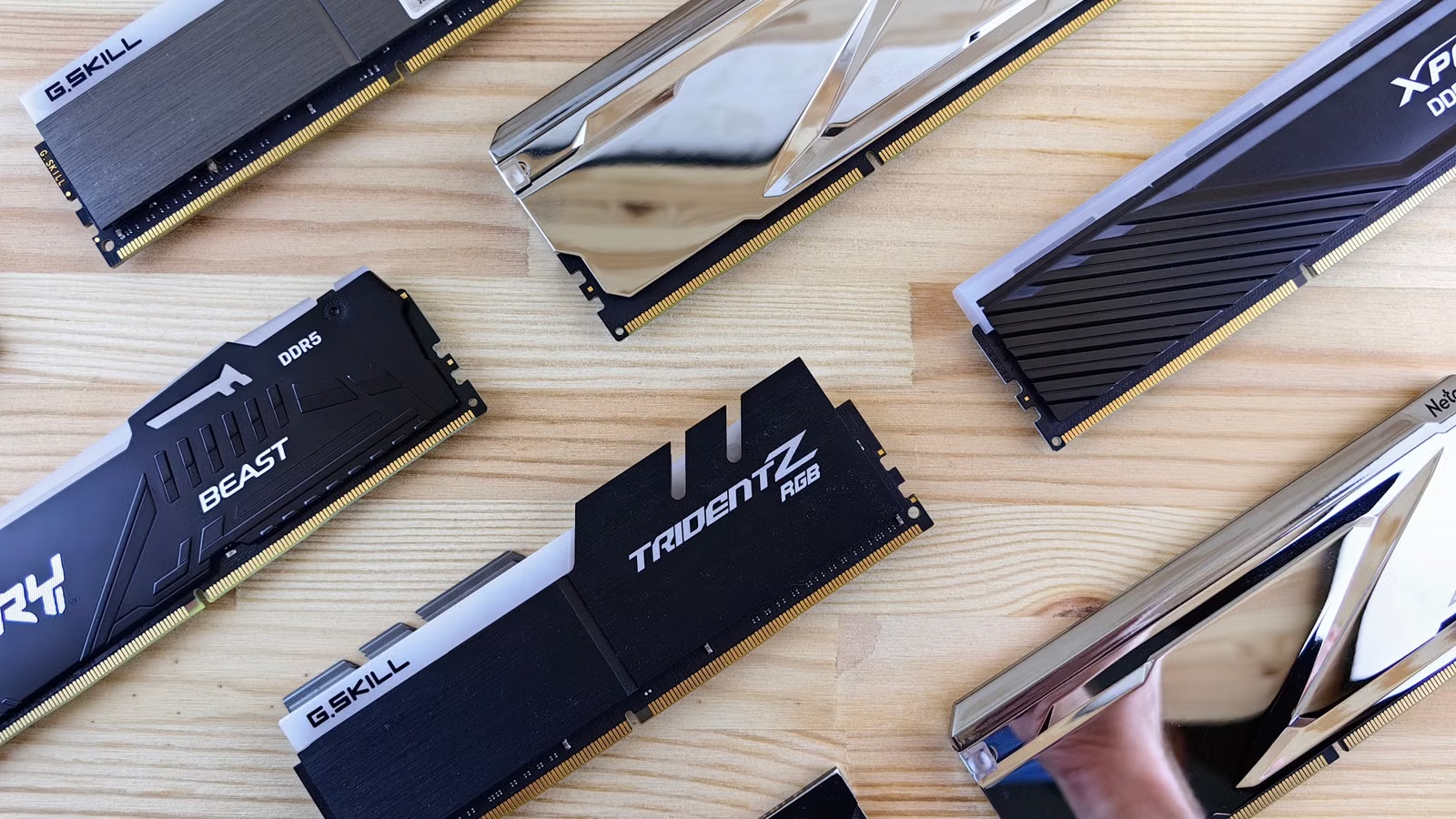
HBM is still closer to a structural shortage than imminent oversupply. AI GPUs, custom AI ASICs, training clusters, and inference servers are all consuming high-bandwidth memory, while HBM production is still constrained by yield, TSV, stacking processes, advanced packaging, and customer qualification. As long as demand for AI accelerators continues to grow, HBM supply will remain difficult to release quickly in the short term.
HBM solves the memory bandwidth bottleneck for AI accelerators, not just a capacity problem. Large model training requires high-speed movement of parameters, activations, and intermediate results across GPUs or ASICs. Long-context inference also increases pressure on KV cache capacity and bandwidth. NVIDIA’s latest results showed that Data Center revenue reached US$62.3 billion, up 75% year over year, and this kind of AI accelerator shipment growth directly drives HBM demand.
Supply also cannot be increased as quickly as ordinary DRAM. HBM requires more wafer input and can crowd out some ordinary DRAM capacity. Its manufacturing process involves TSV, stacking, testing, and advanced packaging, and yield issues in any of these steps can limit final shipments. HBM must also pass qualification from NVIDIA, AMD, cloud providers, and custom ASIC customers. Memory suppliers cannot create effective supply immediately simply by expanding capacity on their own.
The broader memory price environment also reinforces the sense of HBM tightness. Gartner expects global semiconductor revenue to exceed US$1.3 trillion in 2026, with DRAM and NAND Flash prices forecast to rise 125% and 234%, respectively, and meaningful price relief potentially delayed until late 2027. This shows that AI memory is not rising in isolation, but within a broader “memflation” environment.
| Comparison Dimension | HBM | Ordinary DRAM |
|---|---|---|
| Main customers | AI GPUs, AI ASICs, cloud providers | PCs, smartphones, servers, consumer electronics |
| Production complexity | High, involving stacking and packaging | More standardized |
| Customer qualification cycle | Long | Shorter |
| Price elasticity | High, but supported by agreements | More affected by spot and contract prices |
| How oversupply appears | Forward orders and pricing are revalued | Inventory and prices reverse quickly |
Micron’s FY2026 Q3 results also show that AI data centers have become a core driver of memory demand. The company reported US$41.46 billion in revenue, and its earnings materials noted that data center revenue exceeded US$25 billion, while data center SSD revenue exceeded US$5 billion. These data points show that high-end memory demand remains strong, but they also mean the market will ask more strictly whether future high growth can justify capacity expansion and valuation expectations.
Summary: The HBM shortage is not over yet, because demand is still supported by AI GPUs, custom ASICs, and cloud provider data center construction, while supply is constrained by wafers, stacking, yield, and advanced packaging. Short-term tightness does not mean there is no long-term oversupply risk, but the cycle logic of ordinary DRAM should not be directly applied to HBM. HBM risks are more likely to appear first in forward orders, price negotiations, customer volume commitments, and generation qualification, rather than in a sudden buildup of spot-market inventory.
Where HBM Oversupply Risk Will Show Up First

HBM oversupply risk usually does not first appear as a collapse in the spot market. It is more likely to show up as shorter forward supply agreements, slower price increases, fewer early customer volume commitments, and HBM4 qualification or ramp-up falling short of expectations. For investors, the earliest risk signal is not that HBM has become unsellable, but that suppliers’ pricing power is starting to weaken.
The biggest difference between HBM and ordinary DRAM is that customers usually lock in capacity in advance. In its FY2026 Q1 materials, Micron disclosed that it had completed pricing and volume agreements for its entire calendar-year 2026 HBM supply, including HBM4. These agreements improve order visibility and cushion short-term pricing volatility. But from the other side, investors must keep watching whether agreements are renewed, repriced, or shifted from multi-year commitments to shorter negotiation cycles.
The second early signal comes from HBM4. The transition from HBM3E to HBM4 is not only a product upgrade. It can also redistribute supplier share. If one company’s HBM4 qualification is delayed, revenue recognition may be pushed back. If several suppliers ramp successfully at the same time but AI accelerator demand does not grow in parallel, looser supply may show up earlier in price negotiations. TrendForce expects AI infrastructure deployment to support HBM demand growth in 2026–2027, but also notes that demand drivers may change across years. This means HBM is not a straight line without volatility.
The third signal is customer concentration. HBM is highly tied to a small number of AI GPU, ASIC, and hyperscaler customers. Procurement changes from NVIDIA, AMD, Broadcom’s custom ASIC customers, and cloud providers can all affect HBM orders. If a large project is delayed, the impact on supplier revenue and market share may be more visible than in ordinary DRAM.
| Early Signal | Normal State | Risk State | Stock Impact |
|---|---|---|---|
| Supply agreements | Multi-year volume commitments, clear pricing | Shorter contracts or renegotiation | Valuation reset |
| HBM4 qualification | Customer adoption on schedule | Delay or share change | Revenue expectation volatility |
| Price negotiations | Strong supplier pricing power | Slower price increases | Lower gross margin expectations |
| Customer procurement | Continued early volume commitments | Less prepayment or fewer locked orders | Lower order visibility |
| Advanced packaging | Capacity still tight | Capacity releases faster than demand | Higher oversupply risk |
Reuters reporting on SK hynix shows that the market still sees structural demand for AI-driven memory chips, and that supply may continue to lag demand beyond 2027. This means short-term oversupply is not the mainstream scenario. But strong expectations themselves increase sensitivity: if price increases, locked orders, or HBM4 share fall short of expectations, memory stocks may become volatile before actual supply-demand conditions deteriorate.
Summary: HBM oversupply risk does not begin with a sudden lack of buyers. It begins with changes in customer behavior and price negotiations. You should focus on whether supply agreements become shorter, whether HBM4 is adopted smoothly, whether price increases slow, whether customers reduce early volume commitments, and whether advanced packaging capacity shifts from bottleneck to surplus. If these signals appear together, HBM shipments may still grow, but margins and valuations may already be under pressure.
How Long Can AI Memory Demand Continue to Support HBM?

AI memory demand still has medium-term support, but it cannot be extrapolated infinitely. Model training, inference services, long context, agentic AI, and custom ASICs will continue to drive HBM demand. But if inference efficiency improves, model architectures are optimized, or cloud provider CAPEX slows, HBM required per unit of compute or per token could decline, and demand growth may move from “capacity grabbing” to “precise matching.”
Training and inference have different demand logic for HBM. Training relies more on large GPU clusters, high-bandwidth synchronization, and large-scale data movement. Inference cares more about throughput, latency, cost, and KV cache. Long-context models, multimodal models, and real-time agent services increase memory pressure, but quantization, cache optimization, sparsity, and heterogeneous memory architectures can also reduce HBM consumption per task.
Custom ASICs are another variable. In the past, HBM demand was mainly driven by NVIDIA GPUs. Now cloud providers and chip suppliers are also expanding custom AI accelerators. SK hynix’s 2026 outlook notes that HBM3E will remain central to the market, while HBM4 and general memory will form a medium- to long-term growth path, and the AI memory supercycle no longer depends on a single GPU route. This creates incremental demand for HBM, but it also changes supplier share and customer structure.
Cloud provider CAPEX sets the upper limit for demand. As long as cloud providers continue expanding AI data centers, HBM demand will remain strong. If cloud providers shift from securing capacity to optimizing utilization, HBM order growth may slow. Samsung said in its Q1 2026 results that its Memory Business posted record quarterly sales due to high-value AI demand and industry price increases, while server memory demand in the second half was still supported by hyperscalers, enterprise AI, and LLM services. This shows demand is still strong, but it also shows HBM is deeply tied to cloud provider investment cycles.
| Demand Factor | Impact on HBM | Durability Assessment |
|---|---|---|
| Large model training | Strong driver | Depends on frontier model competition |
| Inference traffic growth | Medium-to-strong driver | Depends on commercialization and call volume |
| Long-context applications | Increases memory pressure | Medium-term support |
| Custom AI ASICs | Adds new demand | Supplier divergence |
| Model efficiency gains | Reduces unit demand | Long-term risk |
| Cloud CAPEX slowdown | Lowers forward orders | Key risk |
The key question is not whether AI demand still exists, but whether AI demand growth can continue to exceed supply growth. If inference commercialization revenue is strong enough, cloud providers will keep buying AI accelerators and HBM. If AI service revenue grows more slowly than depreciation, power, chip, and maintenance costs, procurement will become more disciplined. For HBM investors, strong demand does not automatically mean valuation safety. Only demand that continues to beat expectations can support high margins and high valuations.
If you follow HBM, AI chips, or memory stocks, you also need to pay attention to actual trading costs in addition to industry trends. U.S. stock trading costs usually include more than commissions. They may also include platform fees, external institutional fees, and trading activity fees. Biya charges US$0 commission on U.S. stock trading, while platform fees, external institutional fees, and other charges are subject to U.S. stock trading fees and the order display. Service availability depends on the user’s location, identity verification result, platform rules, and applicable laws and regulations.
Summary: AI memory demand remains strong, but it should not be treated as infinite growth. Training, inference, long context, and ASICs will continue to support HBM. Model efficiency improvements, heterogeneous memory architectures, and cloud provider investment discipline may reduce demand growth. The real indicators to track are AI GPU and ASIC shipments, cloud provider CAPEX, inference commercialization revenue, and memory cost per token. If demand growth falls below capacity growth, HBM oversupply risk will rise meaningfully.
Could Expansion by the Three Major Memory Makers Create a New Oversupply Cycle?
Expansion by the three major memory makers does not necessarily create immediate HBM oversupply, but it does increase sensitivity to supply-demand mismatch after 2027. SK hynix, Samsung, and Micron are all increasing investments in HBM, DRAM, and advanced packaging. As long as demand continues to exceed expectations, expansion is necessary. But if cloud provider procurement slows, new capacity can amplify cycle volatility.
SK hynix’s advantage lies in HBM share, customer relationships, and mass-production experience. The company reported 52.5763 trillion won in revenue, 37.6103 trillion won in operating profit, and 40.3459 trillion won in net profit in Q1 2026, reflecting the powerful profit contribution from HBM and high-end DRAM. This leadership brings earnings elasticity, but it also brings high-base risk: if HBM4 share, customer commitments, or price increases fall short of expectations, the stock may become more sensitive.
Samsung’s key variable is the pace of catch-up. Its memory business has large scale, strong capital resources, and broad capacity. If HBM qualification and yield improvements proceed smoothly, effective industry supply will increase. If catch-up falls short, HBM market share divergence may continue. Reuters reported that Samsung planned to move up the start of production at its Yongin chip plant in South Korea to 2029 in response to memory demand from AI infrastructure, showing that long-term expansion is already underway.
Micron’s profile is defined by agreement support and growth elasticity. Its data center revenue, data center SSD revenue, and HBM demand are growing rapidly, while multi-year strategic customer agreements improve financial predictability. But high capital expenditure requires long-term pricing and demand to be realized. If HBM4, data center SSD, and server DRAM demand all remain strong, expansion can turn into revenue. If demand slows, expansion can become margin pressure.
Upstream equipment data also suggests future supply will continue to be released. SEMI expects global semiconductor manufacturing equipment sales to reach US$165.9 billion in 2026 and US$229.5 billion in 2028. Growth in equipment sales shows that the industry remains in an expansion cycle, so investors need to watch whether new HBM, DRAM, and advanced packaging capacity eventually exceeds real demand.
| Company | Strength | Main Risk | Signals to Track |
|---|---|---|---|
| SK hynix | HBM leadership and strong customer ties | High valuation and customer concentration | HBM4 share, customer commitments |
| Samsung | Strong capacity and capital resources | Catch-up pace and yield | HBM qualification, server memory mix |
| Micron | High data center revenue growth | Expansion returns and order durability | Strategic agreements, HBM revenue share |
Summary: Expansion by the three major memory makers is not inherently negative, because HBM and AI memory are genuinely tight today. But expansion makes the future cycle more sensitive. If AI server and ASIC demand continue to exceed expectations, new supply will ease shortages. If cloud provider CAPEX slows or HBM4 demand falls short, new capacity may become pricing and profit pressure. What matters is not whether companies are expanding, but whether expansion is faster than customer commitments and real shipment growth.
Three Scenarios for HBM Moving from Shortage to Oversupply
Whether HBM moves from shortage to oversupply depends on the relative speed of supply and demand. The most likely outcome is not a single conclusion, but three possible scenarios: continued shortage, temporary balance, and localized oversupply. Investors should not bet on only one direction. They need to watch HBM4 adoption, cloud provider procurement, ASIC ramp-up, and ordinary DRAM pricing together.
In a continued shortage scenario, AI GPU and custom ASIC shipments continue to exceed expectations, HBM4 capacity per system increases, advanced packaging remains a bottleneck, and long-term agreements continue to cover major capacity. In this case, HBM pricing and gross margins may remain strong, and leading suppliers’ valuations are more likely to hold.
In a temporary balance scenario, supply begins to improve, but demand still grows. Price increases slow, margins stay high but no longer expand continuously, leading suppliers retain share advantages, and lagging suppliers’ performance depends more on qualification and customer adoption. For stocks, this is usually a divergence phase rather than a synchronized industry sell-off.
In a localized oversupply scenario, some suppliers’ HBM4 qualification is slower than expected, creating structural inventory; cloud providers reduce early volume commitments and price negotiations weaken; ASIC or GPU projects are delayed, leaving some capacity underused. Localized oversupply does not necessarily mean an industry collapse, but it can still make the market lower profit and valuation assumptions.
| Scenario | Supply Condition | Demand Condition | Pricing Trend | Stock Market Reaction |
|---|---|---|---|---|
| Continued shortage | Expansion still cannot catch up | AI demand beats expectations | Prices remain strong | Leader valuations hold |
| Temporary balance | Supply improves | Demand still grows | Price increases slow | Stocks diverge |
| Localized oversupply | Some capacity ramps too quickly | Projects delayed or locked orders reduced | Pricing renegotiation | Valuation reset |
You also need to analyze HBM together with ordinary DRAM. HBM expansion can crowd out ordinary DRAM capacity, making ordinary memory tighter in the short term. But if future HBM capacity is released too quickly while ordinary DRAM pricing slows because end demand weakens, memory suppliers may face both product mix and pricing-cycle pressure. The more important HBM becomes, the more memory companies benefit from the AI premium. But the more the market prices HBM as “permanently short,” the greater the valuation pressure if the cycle turns.
Summary: HBM moving from shortage to oversupply does not have to be a synchronized industry reversal. It is more likely to first appear as temporary balance or localized oversupply. Leading suppliers may still maintain strong order visibility, while lagging suppliers, delayed products, or specific generation capacity may come under pressure first. Investors should avoid interpreting “HBM is still tight” as “all HBM stocks have no risk,” and they should not interpret “expansion” as “immediate oversupply.” The core task is to compare the pace of capacity expansion with the pace of customer commitments.
How Ordinary Investors Can Track HBM Cycle Risk
For ordinary investors, the most practical way to judge HBM oversupply risk is to build a quarterly checklist. The goal is not to predict monthly prices, but to consistently track HBM supply agreements, HBM4 qualification, AI GPU and ASIC shipments, cloud provider CAPEX, advanced packaging capacity, and memory supplier inventory. If several signals weaken at the same time, cycle risk rises meaningfully.
You can divide the indicators into six categories: supply agreements, technology generation, customer demand, cloud CAPEX, packaging bottlenecks, and financial indicators. A single news item can easily mislead. For example, “capacity expansion” may be a response to real demand, or it may become the source of future oversupply. “Price increases” may indicate that supply is still tight, or they may represent the final price hike before a cycle peak.
| Checklist Item | Healthy State | Risk State | Observation Frequency |
|---|---|---|---|
| Supply agreements | Multi-year locked volume | Shorter contracts or renegotiation | Earnings season |
| HBM4 qualification | Customer adoption on schedule | Delay or lower share | Earnings season |
| AI accelerator shipments | Continued growth | Project delays | Earnings season |
| Cloud CAPEX | Continues to be raised | Growth slows or guidance falls | Quarterly |
| Packaging capacity | Still a bottleneck | Loosens quickly | Semiannual |
| Inventory and gross margin | Low inventory, high margins | Inventory rises, margins peak | Quarterly |
The way you observe individual stocks and ETFs is also different. SK hynix, Micron, and Samsung have different levels of HBM cycle exposure. Semiconductor ETFs can reduce single-company risk, but they cannot eliminate the memory cycle. If an ETF is heavily weighted toward AI chips, HBM, foundries, and equipment, it will still be affected by HBM supply-demand expectations. When trading, you also need to consider valuation, volatility, fees, and your own risk tolerance.
If you follow Micron, Samsung, SK hynix ADRs, NVIDIA, AMD, Broadcom, or semiconductor ETFs, you can use U.S. stock information search to monitor basic market information for related names. Biya is a global multi-asset trading wallet that supports U.S. stocks, Hong Kong stocks, digital assets, and other asset classes. If the service is available in your region, you can also learn more about account and trading support through Biya.
Summary: HBM cycle risk cannot be judged from a single news item. Ordinary investors should build a quarterly checklist that combines supply agreements, HBM4 qualification, AI accelerator shipments, cloud provider CAPEX, advanced packaging capacity, and inventory/gross margin. As long as long-term agreements remain stable, AI accelerators continue ramping, and packaging remains tight, HBM oversupply risk is relatively low. If capacity comes online, customer locked orders fall, and price increases slow at the same time, valuation and profit expectations may need to be revised down.
Judging whether HBM will shift from shortage to oversupply requires more than hearing that “AI memory is still tight,” and expansion alone does not prove the cycle has peaked. You need to compare supply release with real demand growth, especially HBM4 qualification, cloud provider CAPEX, AI GPU and ASIC shipments, advanced packaging capacity, and memory supplier gross margins. If you want to track related U.S. stocks, Hong Kong stocks, and AI infrastructure names, you can also download the app to follow market information. The information above introduces public market data, industry logic, and fee structures only. It does not constitute investment advice. Before trading, you should fully understand order types, fee structures, account statements, and your own risk tolerance. Service availability depends on the user’s location, identity verification result, platform rules, and applicable laws and regulations.
FAQ
Could HBM Shift from Shortage to Oversupply in the Short Term?
HBM is unlikely to shift quickly from shortage to broad oversupply in the short term. AI accelerator demand, long-term supply agreements, advanced packaging, and customer qualification still limit effective supply. The main risk to watch is whether capacity release after 2027 matches demand growth.
What Are the Earliest Indicators of HBM Oversupply Risk?
The earliest HBM oversupply indicators include shorter supply agreements, weaker HBM4 price negotiations, fewer early customer volume commitments, AI GPU and ASIC shipments falling below expectations, and advanced packaging capacity becoming noticeably looser.
How Is HBM Cycle Risk Different from Ordinary DRAM Cycle Risk?
HBM cycle risk is more tied to customer agreements, technology generations, and AI accelerator demand. Ordinary DRAM is more affected by inventory, PCs, smartphones, and server contract prices. HBM is more cycle-resistant, but forward pricing and orders can still be revalued.
How Would Slower Cloud Provider CAPEX Affect HBM Demand?
Slower cloud provider CAPEX would lower expectations for future AI server and accelerator purchases, affecting incremental HBM demand. Existing signed agreements may provide a short-term buffer, but if multiple cloud providers delay projects at the same time, HBM pricing and valuations may come under pressure.
Will HBM4 Ramp-Up Cause HBM Prices to Fall?
HBM4 ramp-up does not necessarily cause prices to fall. The key factors are customer qualification, AI accelerator shipments, and the pace of supply release. If HBM4 supply grows faster than GPU and ASIC demand, price increases may slow or enter renegotiation.
Can Semiconductor ETFs Diversify HBM Oversupply Risk?
Semiconductor ETFs can diversify single HBM supplier risk, but they cannot eliminate industry-cycle risk. If an ETF is heavily exposed to AI chips, memory, foundries, and equipment, changes in HBM supply-demand expectations may still affect overall performance. Investors should review holdings, fees, and their own risk tolerance before trading.
*This article is provided for general information purposes and does not constitute legal, tax or other professional advice from BiyaPay or its subsidiaries and its affiliates, and it is not intended as a substitute for obtaining advice from a financial advisor or any other professional.
We make no representations, warranties or warranties, express or implied, as to the accuracy, completeness or timeliness of the contents of this publication.
Related Blogs of

What If AI ETF Holdings Are Too Concentrated? The Crowded-Trade Risks of SMH, SOXX, and Memory ETFs


What Are CoWoS Concept Stocks? An Investment Map of the Advanced Packaging Supply Chain


What Are AI Data Center Concept Stocks? Who Benefits Across Servers, Storage, Networking, and Power?

AI Infrastructure Investment Map: From GPU, HBM and CoWoS to Data Center Stocks

Choose Country or Region to Read Local Blog
 Australia
 Austria
 Belgium
 Canada
 Cyprus
 Czech Republic
 Denmark
 Estonia
 Finland
 France
 Germany
 Greece
 Hong Kong
 India
India Indonesia
 Ireland
 Italy
Italy Japan
Japan Latvia
 Lithuania
 Luxembourg
 Malaysia
 Malta
Malta Morocco
 Nepal
Nepal Netherlands
 New Zealand
 Norway
 Pakistan
 Philippines
 Poland
 Portugal
 Romania
 Singapore
 Slovakia
 Slovenia
 South Africa
 South Korea
 Spain
Spain Sweden
 Thailand
 The United States
 Turkey
 United Arab Emirates
 United Kingdom
 Vietnam
Contact Us




BIYA GLOBAL LLC is registered with the Financial Crimes Enforcement Network (FinCEN), an agency under the U.S. Department of the Treasury, as a Money Services Business (MSB), with registration number 31000218637349, and regulated by the Financial Crimes Enforcement Network (FinCEN).
BIYA GLOBAL LIMITED is a registered Financial Service Provider (FSP) in New Zealand, with registration number FSP1007221, and is also a registered member of the Financial Services Complaints Limited (FSCL), an independent dispute resolution scheme in New Zealand.