What Are AI Data Center Concept Stocks? Who Benefits Across Servers, Storage, Networking, and Power?




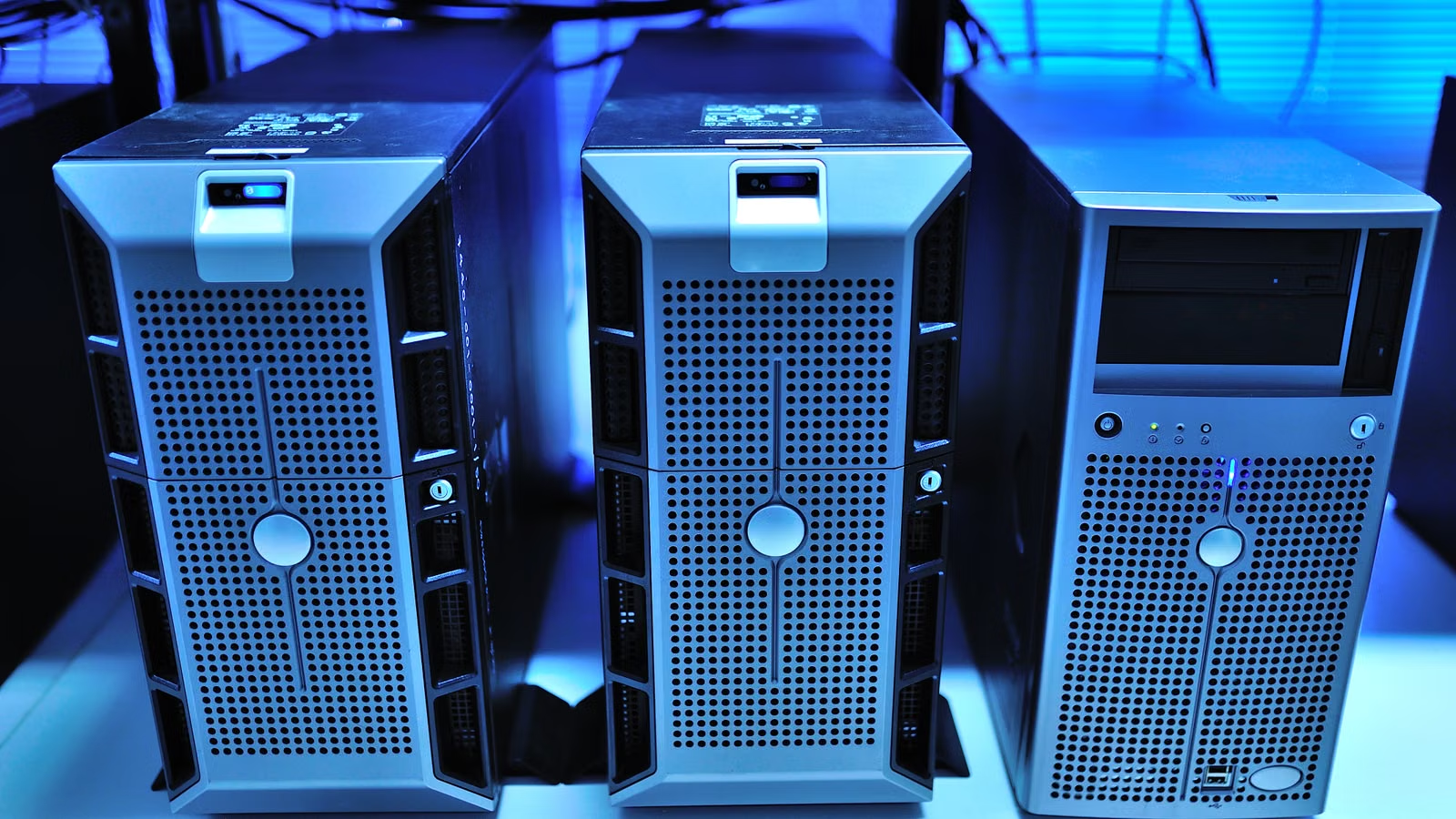
AI data center concept stocks are not just a chip theme. They form an infrastructure chain that extends from GPUs, AI servers, HBM, and enterprise SSDs to high-speed networking, power equipment, and liquid cooling systems. If you want to judge who truly benefits, focus on three questions: whether the company’s products enter data center construction, whether AI-related revenue is rising as a share of total revenue, and whether order growth can translate into profit and cash flow. Servers and compute are the most direct beneficiaries, storage and networking benefit from configuration upgrades, while power and cooling may have a longer construction cycle.
Key Takeaways
- AI data center investment is spreading from GPUs to systems, storage, networking, power, and liquid cooling.
- Server-chain revenue is highly elastic, but system vendors usually have lower margins than core chip companies.
- HBM, data center DRAM, and enterprise SSDs are key areas of AI storage upgrades.
- High-speed switches, optical modules, and interconnect chips affect GPU cluster utilization.
- Power access, distribution equipment, and liquid cooling are becoming expansion bottlenecks.
Which Parts of the Value Chain Do AI Data Center Concept Stocks Cover?
AI data center concept stocks mainly cover four core areas: servers and compute, storage, network interconnects, and power and cooling. To judge whether a company is truly benefiting, you should not only look for the word “AI” in headlines. You need to see whether its products are included in hyperscale data center capital expenditure, whether it has verifiable orders, and whether the related business can generate revenue and profit. In the short term, chips and servers are the most direct beneficiaries; in the medium term, storage and networking upgrades matter; in the long term, power, distribution, cooling, and engineering construction become important.
The core change in AI data centers is that compute demand has evolved from individual servers into entire “AI factories.” Large-model training requires a large number of GPUs or custom AI accelerators, while the growth of inference workloads drives demand for more servers, memory, storage, and networking equipment. Alphabet disclosed that its US$35.7 billion in capital expenditure in the first quarter of 2026 was mostly used to support technical infrastructure for AI opportunities, with roughly 60% allocated to servers and about 40% to data centers and networking equipment. Microsoft also stated in FY2026 Q3 that roughly two-thirds of its US$31.9 billion in capital expenditure was used for short-lived assets such as GPUs and CPUs.
You can divide the AI data center value chain into the following categories:
| Value Chain | Main Products | Benefit Logic | Representative Companies |
|---|---|---|---|
| Servers and compute | GPUs, CPUs, ASICs, AI servers | Most direct transmission from compute procurement | NVIDIA, AMD, Broadcom, Dell, Supermicro, HPE |
| Storage | HBM, DRAM, NAND, SSDs, HDDs | Rising model parameters and data scale | Micron, SK hynix, Samsung, Seagate, SanDisk |
| Network interconnects | Switches, optical modules, DSPs, connectors | Expansion of GPU cluster scale | Arista, Broadcom, Marvell, Credo, Coherent, Amphenol |
| Power and cooling | UPS, power distribution, transformers, liquid cooling | Higher rack power density and grid connection demand | Vertiv, Eaton, Schneider Electric, ABB, GE Vernova |
| Power and utilities | Generation, transmission, long-term power purchase agreements | Long-term increase in electricity demand | Constellation Energy, Vistra, NextEra, Quanta Services |
The closer a company is to GPUs, the stronger its AI revenue elasticity usually is, but valuation pressure and technology replacement risk may also be higher. The closer a company is to power, facilities, and engineering construction, the longer the order-conversion cycle may be, but the demand duration may also be longer. When researching this theme, it is better not to ask only “which concept stocks exist,” but to ask further: which layer does the company belong to? Does its revenue elasticity come from pricing, volume, orders, or engineering projects? Will margins improve, or will they be compressed by procurement costs?
When screening AI data center concept stocks, focus on these indicators:
- The share of AI or data center revenue in total revenue;
- Whether orders, backlog, and delivery cycles are disclosed;
- Whether customers are concentrated among a few cloud providers;
- Whether the product sits in a key bottleneck area;
- Whether gross margin, free cash flow, and inventory improve at the same time;
- Whether the current valuation already reflects years of expected growth.
Summary: AI data center concept stocks are not a simple list of names, but a capital expenditure transmission map. Servers and chips benefit first because cloud companies directly purchase compute; storage and networking benefit from higher per-server configurations and larger cluster scale; power, distribution, liquid cooling, and engineering companies benefit from long-term data center expansion. Companies worth tracking usually have clear products, orders, customers, and profit-conversion paths, rather than only an AI narrative.
Which AI Server and Compute Stocks Benefit Most Directly?
Servers and compute are the most direct beneficiaries of AI data center capital expenditure because GPUs, CPUs, ASICs, and system-level servers are the first products to reflect cloud provider spending. This layer can be divided into two groups. One group consists of companies with core chip and platform capabilities, usually with higher margins and stronger technical barriers. The other group consists of AI server system vendors, which may show greater order elasticity but also require closer attention to margins, inventory, and accounts receivable pressure.
Among chip companies, NVIDIA remains the most important representative of the AI data center theme. The company disclosed that its fiscal 2026 revenue reached US$215.9 billion, up 65% year over year, with data center revenue as the main growth driver. AMD participates through data center GPUs and server CPUs, while Broadcom benefits from both custom AI accelerators and AI networking chips. Broadcom said in fiscal 2026 Q2 that its AI semiconductor revenue reached US$10.8 billion, up 143% year over year, driven by custom AI accelerators and AI networking demand.
Server system vendors follow a different logic. Dell, Supermicro, and HPE integrate GPUs, CPUs, memory, storage, networking, power, and liquid cooling into deliverable systems. Dell disclosed that it received more than US$64 billion in AI-optimized server orders for the full fiscal year 2026 and entered the next fiscal year with US$43 billion in related backlog. These figures show strong demand, but you still need to assess delivery speed, gross margin, and cash flow because GPUs account for a high share of AI server costs. Revenue growth does not necessarily mean profit grows at the same pace.
The difference between chip companies and server vendors can be understood as follows:
| Dimension | Chip Design Companies | AI Server System Vendors |
|---|---|---|
| Revenue elasticity | High; driven by product generations and supply-demand balance | High; driven by orders and delivery pace |
| Gross margin | Usually higher | Usually lower |
| Technical barrier | Architecture, software ecosystem, advanced process nodes | Supply chain, system integration, delivery capability |
| Risk | Technology replacement, export restrictions, customer bargaining power | Inventory, accounts receivable, price competition |
| Key metrics | Data center revenue, product roadmap, gross margin | Orders, backlog, shipments, cash flow |
If you follow AI server concept stocks in the U.S. market, you can use Biya to check stock tickers, trading markets, and market movements. When researching cross-value-chain companies such as NVIDIA, Dell, Micron, Arista, and Vertiv, do not only watch price movements. Combine earnings, orders, and valuation changes to judge whether the market has already priced in future growth.
Summary: The server and compute chain benefits most directly from AI data center capital expenditure, but internal differences are significant. Chip companies such as NVIDIA, AMD, and Broadcom rely more on core product competitiveness and platform ecosystems, while system vendors such as Dell, Supermicro, and HPE rely more on delivery capability and order conversion. You should not only look at revenue growth, but also gross margin, inventory, cash flow, and customer concentration. Companies with high revenue elasticity usually also have greater valuation volatility.
Which Storage Stocks Benefit from AI Data Centers?
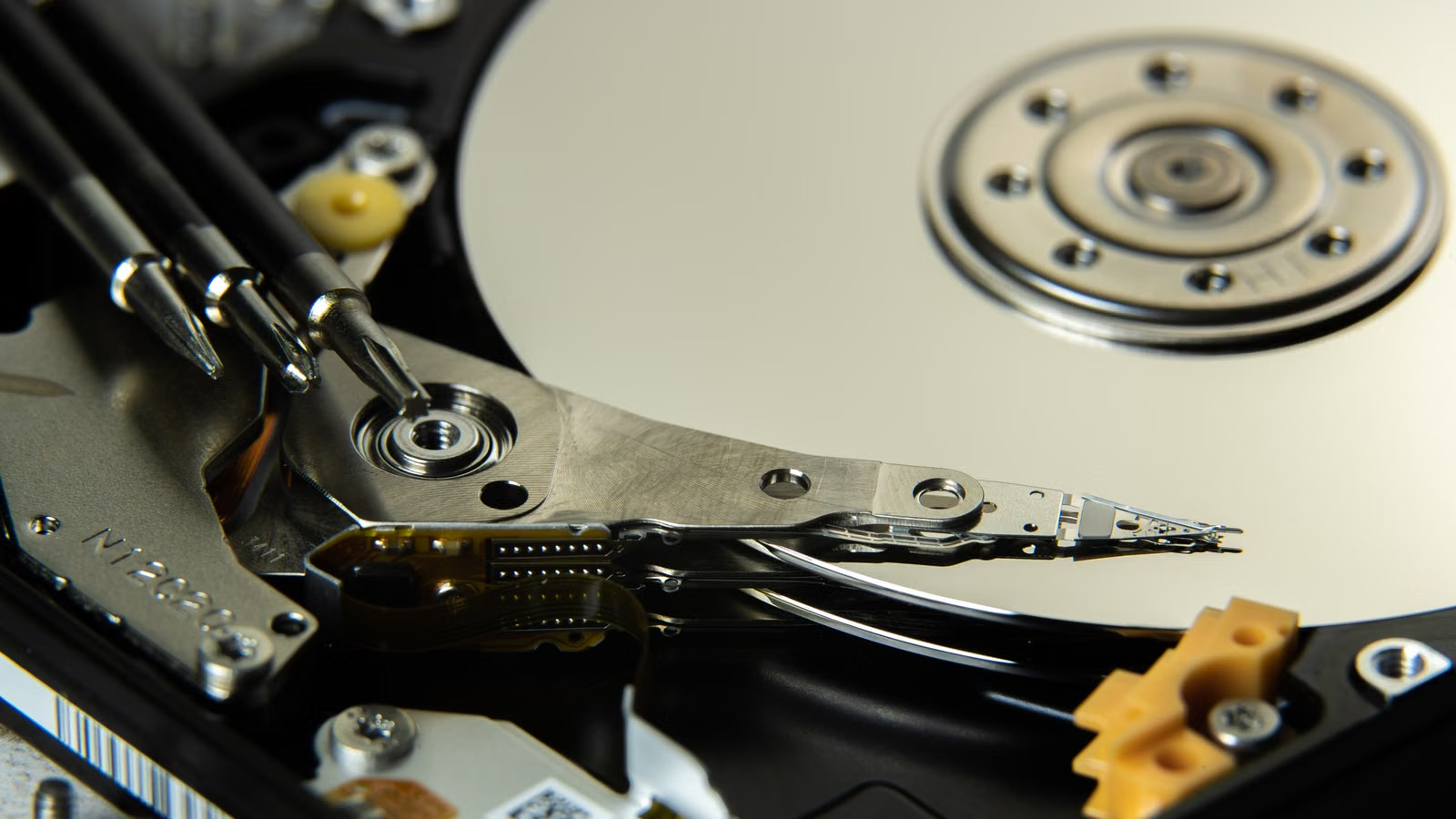
AI data center storage concept stocks mainly include suppliers of HBM, server DRAM, enterprise SSDs, NAND Flash, and high-capacity hard drives. Your analysis should focus on two layers. The first is high-bandwidth memory close to GPUs, which directly affects AI accelerator performance. The second is back-end data storage, used for training datasets, vector databases, inference caching, and cold data retention. HBM is the most direct beneficiary, but cyclicality should not be ignored.
HBM is the most watched product in the AI storage theme because it connects tightly with GPUs or AI accelerators through advanced packaging and provides high-bandwidth data access. Micron disclosed in fiscal 2026 Q3 that its data center revenue exceeded a US$25 billion annualized run rate, reflecting the pull from AI memory and data center storage. SK hynix also mentioned in its 2026 market outlook that industry institutions expect the HBM market size to continue growing rapidly, driven by AI GPUs and custom ASICs that require higher memory bandwidth.
Enterprise SSDs and high-capacity HDDs serve another type of demand. Training datasets, logs, model weights, vector databases, and inference caches continuously expand back-end storage requirements in data centers. NAND suppliers benefit from enterprise SSD demand, while HDD makers benefit from cloud cold data and nearline storage demand. Seagate reported US$3.11 billion in revenue in fiscal 2026 Q3, with significant improvement in gross margin and free cash flow, showing that high-capacity storage cycles are also being influenced by cloud and AI demand.
The challenge with storage stocks is that they combine structural growth with traditional semiconductor cyclicality. When HBM is in short supply, prices and profits may rise quickly. But once capacity expansion is released in clusters, DRAM and NAND prices may reverse. Therefore, when analyzing storage concept stocks, you need to watch both product mix and cycle indicators.
| Indicator | What It Tells You |
|---|---|
| HBM generation and customer qualification | Whether the company is in the high-value AI supply chain |
| Data center DRAM revenue share | The level of AI revenue exposure |
| Enterprise SSD revenue | Demand from inference and data storage |
| DRAM and NAND pricing | Where the earnings cycle stands |
| Capital expenditure and capacity | Future supply pressure |
| Inventory days | Whether supply-demand conditions may reverse |
Summary: Storage is an easily overlooked layer in AI data centers. GPUs determine compute speed, but HBM, DRAM, SSDs, and HDDs determine whether data can move efficiently and be stored over the long term. Micron, SK hynix, and Samsung are closer to high-bandwidth memory and storage chips, while Seagate, SanDisk, and similar companies reflect more of the high-capacity storage and NAND cycles. You need to understand both AI structural demand and the storage pricing cycle to avoid focusing only on growth while ignoring supply expansion at a cycle peak.
Which Networking and Optical Interconnect Stocks Benefit from AI Data Centers?
AI data center networking concept stocks mainly include suppliers of Ethernet switches, switching chips, optical modules, optical DSPs, high-speed connectors, and custom interconnect chips. As GPU clusters expand from thousands of cards to even larger scales, the bottleneck is no longer only whose chip is faster. It also depends on whether chips, servers, and racks can communicate with low latency and high bandwidth. If you focus only on GPUs and ignore networking, you may miss one of the fastest-growing value layers in AI infrastructure.
The core function of networking is to make large numbers of GPUs operate like one integrated system. During large-model training, parameter synchronization and data exchange are extremely frequent. As inference clusters expand, request scheduling, cache access, and cross-node communication also increase. Arista is an important high-speed data center Ethernet company, and it reported US$2.709 billion in revenue in the first quarter of 2026, up 35.1% year over year. Broadcom’s switching chips and custom interconnects also benefit from the expansion of AI clusters.
Marvell is more positioned around custom silicon, optical interconnects, and a data center semiconductor portfolio. The company reported US$2.42 billion in revenue in FY2027 Q1, with data center accounting for a high share of the business, reflecting demand from AI networking, optical products, and custom ASICs. In addition to these platform companies, Credo, Coherent, Lumentum, Amphenol, and others may also benefit from high-speed connectivity, optical modules, optical components, and connector demand.
The networking chain can be divided into three layers:
- Switching and routing layer: Ethernet switches, switching chips, network operating systems;
- Optical-electrical conversion layer: optical modules, optical DSPs, lasers, silicon photonics;
- Connectivity and cabling layer: high-speed cables, connectors, backplanes, and in-rack interconnects.
| Networking Segment | Why It Benefits | Main Risks |
|---|---|---|
| Ethernet switches | AI back-end network scale expands | Customer concentration, architecture shifts |
| Switching chips | Port speeds upgrade to 800G and 1.6T | Rapid technology iteration |
| Optical modules and DSPs | Demand rises for long-distance high-speed interconnects | Yield and pricing pressure |
| High-speed connectors | Rack density increases | Competition and customer qualification cycles |
| Custom interconnect chips | Cloud providers build more in-house systems | Project-based revenue volatility |
Trading costs also affect how you assess opportunities. AI data center concept stocks are spread across U.S. stocks, Korean stocks, European markets, and some Hong Kong-related companies. Different markets have different trading fees, exchange rates, minimum trading units, and external institutional charges. Biya charges US$0 commission for U.S. stock trading, while platform fees, external institutional fees, and other fees are subject to U.S. stock trading fees and the order page. Availability of related services depends on the user’s location, identity verification result, platform rules, and applicable laws and regulations.
Summary: Network interconnects determine whether an AI cluster can turn hardware compute into effective compute. The more servers there are, the more complex GPU-to-GPU data exchange becomes, and the more important high-speed switches, optical modules, DSPs, and connectors are. Networking stocks have strong AI relevance and a clear technology-upgrade path. Their risks include customer concentration, long product qualification cycles, and competition among Ethernet, InfiniBand, and custom networking architectures. Focus on data center revenue, port-speed upgrades, and customer structure.
Who Benefits from AI Data Center Power, Power Distribution, and Liquid Cooling?
Power, power distribution, and liquid cooling companies may be among the longest-cycle beneficiaries of AI data center construction. No matter who supplies the GPUs, a data center must solve power access, transformation, distribution, backup power, and heat dissipation. AI servers consume more power, rack density is higher, and traditional data center architecture is facing upgrade pressure. As a result, power distribution equipment, UPS systems, transformers, switchgear, liquid cooling, and engineering service providers may all benefit.
The IEA’s Energy and AI report expects global data center electricity consumption to rise to about 945 TWh by 2030, roughly doubling, with AI as a key driver. This explains why the market pays attention to Vertiv, Eaton, Schneider Electric, ABB, GE Vernova, Quanta Services, and some power generation and utility companies. Data centers do not only buy servers; they also compete for power capacity, transformers, switchgear, and grid-connection resources.
Vertiv is a representative company in power and cooling infrastructure. The company reported US$2.65 billion in net sales in the first quarter of 2026, up 30% year over year, and raised its full-year guidance. Eaton reported US$7.5 billion in sales in the first quarter of 2026, with its electrical businesses supported by data center and industrial demand. Schneider Electric has also emphasized that AI is changing data center design, especially high-density power and cooling systems.
The power chain can be divided into three categories:
| Type | Main Companies | Benefit Path | Key Considerations |
|---|---|---|---|
| Power distribution equipment | Eaton, Schneider, ABB, GE Vernova | Transformers, switchgear, UPS, busways | Delivery cycles and order conversion |
| Cooling and thermal management | Vertiv, Modine, Trane, Comfort Systems | Liquid cooling, CDUs, HVAC systems | Technology route and gross margin |
| Grid and generation | Constellation, Vistra, NextEra, Quanta | Electricity demand, power purchase agreements, transmission projects | Regulation, grid connection, capital expenditure |
Liquid cooling is another key direction. High-power GPU racks may reduce the efficiency of traditional air cooling, increasing the importance of cold-plate liquid cooling, CDUs, cooling towers, pumps, and heat exchangers. Liquid cooling is not just a single product; it is an entire system that spans racks, piping, cooling units, and maintenance services. When evaluating liquid-cooling concept stocks, look at whether the company has standardized products, whether it has entered large customer projects, and whether liquid-cooling revenue can move from small-scale pilots to sustainable orders.
Comparing the four main lines, servers and chips convert revenue the fastest; storage and networking benefit from per-server configuration upgrades; power and cooling have longer demand cycles but slower project cadence. Power generation and utilities are not pure AI concept stocks. They reflect long-term electricity demand, electricity prices, regulatory frameworks, and power purchase agreements.
Summary: Power and liquid cooling are critical as AI data centers move from “buying servers” to “building infrastructure.” Their AI purity may be lower than GPU and networking companies, but demand could last longer and cover a broader range of customers. You should distinguish between equipment companies, engineering companies, power generators, and utilities. Equipment and engineering companies benefit more directly from construction orders, while power generators and utilities are more affected by long-term electricity demand and regulatory frameworks.
Servers, Storage, Networking, or Power: Which Area Deserves More Attention?
There is no absolute winner among servers, storage, networking, and power. The key is what type of return driver you want to capture. If you want the most direct transmission from AI capital expenditure, servers and chips are the clearest path. If you want to track supply tightness and pricing elasticity, storage is more sensitive. If you want to follow the system bottleneck created by larger GPU clusters, network interconnects matter more. If you want to track long-cycle physical infrastructure, power and liquid cooling deserve attention.
A combined comparison looks like this:
| Main Theme | Revenue Conversion Speed | AI Relevance | Profit Characteristics | Core Risks |
|---|---|---|---|---|
| Chips and servers | Fast | High | High for chips, lower for systems | Technology replacement, valuation, export restrictions |
| Storage | Fast to medium | Medium to high | Strongly affected by pricing cycles | Capacity expansion, price declines, inventory |
| Network interconnects | Medium | High | Platform companies can be more stable | Customer concentration, architecture changes |
| Power and liquid cooling | Medium to slow | Medium | Project and service revenue combined | Construction delays, grid connection, delivery capability |
| Power generation and utilities | Slow | Low to medium | Relatively stable cash flow | Regulation, electricity prices, capital expenditure |
For ordinary investors, a more disciplined approach is not to bet on the hottest concept stock at once, but to build a value-chain watchlist. You can first divide the market into servers, storage, networking, and power, then track key earnings terms for leading companies in each area, such as data center revenue, AI orders, backlog, gross margin, capital expenditure, inventory, and free cash flow. When using U.S. stock information search to verify tickers and market information, you should also check the latest company disclosures instead of relying only on social media hype.
Compliance risk should not be ignored. Advanced AI chips, servers, and related technologies may be subject to export licenses, end-user checks, destination rules, and end-use restrictions. The U.S. BIS guidance on license requirements for advanced computing items, issued in May 2026, explains that the export, re-export, or transfer of certain advanced computing products still needs to be assessed based on entity location and applicable rules. For investors, these policies can affect chip shipments, customer structure, and company guidance.
Ultimately, you can choose your focus based on your research objective:
- Higher AI elasticity: focus on GPUs, ASICs, AI servers, and networking chips;
- Cycle recovery: focus on HBM, DRAM, NAND, and enterprise SSDs;
- Long-term construction: focus on power distribution, liquid cooling, engineering, and grid infrastructure;
- Risk diversification: research semiconductor, data center infrastructure, or power equipment ETFs;
- Trading cost awareness: compare commission, platform fees, exchange rates, and external institutional fees.
AI data center concept stocks are distributed across different exchanges and value-chain layers, so research should consider fundamentals, market valuation, and trading costs at the same time. If your region meets the relevant service availability conditions, you can use Biya to check U.S. stocks, Hong Kong stocks, and digital-asset-related market information, and confirm order types, fee structures, and risk notices before trading. Biya charges US$0 commission for U.S. stock trading, while platform fees, external institutional fees, and other fees are subject to the fee center and order page. Availability of related services depends on the user’s location, identity verification result, platform rules, and applicable laws and regulations; public market information and fee-structure descriptions do not constitute investment advice. For mobile access, you can also download the app to check available features.
Summary: Servers, storage, networking, and power each reflect a different AI data center benefit logic. Servers and chips are more direct, storage has stronger cycle sensitivity, networking reflects cluster-scale upgrades, and power and liquid cooling reflect long-term infrastructure bottlenecks. You do not need to decide which one is “best” in isolation. Instead, compare revenue conversion speed, AI relevance, margins, valuation, and policy risk. The key is to turn a concept-stock list into trackable earnings indicators and a clear risk checklist.
FAQ
How Are AI Data Center Concept Stocks Different from Ordinary Semiconductor Stocks?
AI data center concept stocks must have a clear link to data center construction or AI compute demand. Ordinary semiconductor stocks may be driven mainly by consumer electronics, autos, or industrial cycles, while AI data center companies usually involve GPUs, HBM, servers, networking, power, or liquid cooling. Check data center revenue, customer orders, and product usage.
Why Does AI Server Order Growth Not Always Lead to Profit Growth?
AI server order growth does not necessarily translate into profit growth because system vendors must procure high-value GPUs, memory, and networking components. Revenue may expand quickly, but gross margin, inventory, accounts receivable, and cash flow pressure may also rise. Assess orders, backlog, gross margin, and free cash flow together.
How Are Data Center Power Equipment Stocks Different from Utility Stocks?
Data center power equipment stocks mainly benefit from construction orders, such as UPS systems, transformers, switchgear, and liquid cooling equipment. Utility stocks benefit more from long-term electricity demand, power purchase agreements, and grid investment. The former usually has clearer order elasticity, while the latter is more affected by regulation, electricity prices, and capital expenditure.
How Can Ordinary Investors Judge AI Data Center Revenue Exposure?
Ordinary investors can review segment revenue, data center business growth, AI orders, customer concentration, and management guidance. It is not enough to see whether a company mentions AI. You also need to confirm whether the related business accounts for a meaningful share of revenue and whether growth can convert into profit and cash flow.
Can Investors Gain AI Data Center Exposure Without Buying Individual Stocks?
Yes. Investors can use semiconductor, cloud computing, data center infrastructure, power equipment, or digital infrastructure ETFs to gain diversified exposure. ETFs can reduce single-company risk, but you still need to check the latest holdings, expense ratio, top-ten concentration, and tracking scope to avoid products with weak links to AI data centers.
What Compliance Risks Do AI Data Center Concept Stocks Face?
AI data center concept stocks may face export controls, customer screening, end-use restrictions, and regional regulatory changes. Advanced AI chips, servers, and related technologies are especially sensitive. For cross-market trading and account services, rely on company disclosures, platform rules, billing details, and local regulatory requirements.
*This article is provided for general information purposes and does not constitute legal, tax or other professional advice from BiyaPay or its subsidiaries and its affiliates, and it is not intended as a substitute for obtaining advice from a financial advisor or any other professional.
We make no representations, warranties or warranties, express or implied, as to the accuracy, completeness or timeliness of the contents of this publication.
Related Blogs of

Which Stocks Are Affected by AI Chip Export Controls? A Risk Breakdown of Nvidia, ASML, and TSMC


What Are CoWoS Concept Stocks? An Investment Map of the Advanced Packaging Supply Chain


AI Infrastructure: Individual Stocks or ETFs? Comparing Risk, Upside, and Diversification


What If AI ETF Holdings Are Too Concentrated? The Crowded-Trade Risks of SMH, SOXX, and Memory ETFs

Choose Country or Region to Read Local Blog
 Australia
 Austria
 Belgium
 Canada
 Cyprus
 Czech Republic
 Denmark
 Estonia
 Finland
 France
 Germany
 Greece
 Hong Kong
 India
India Indonesia
 Ireland
 Italy
Italy Japan
Japan Latvia
 Lithuania
 Luxembourg
 Malaysia
 Malta
Malta Morocco
 Nepal
Nepal Netherlands
 New Zealand
 Norway
 Pakistan
 Philippines
 Poland
 Portugal
 Romania
 Singapore
 Slovakia
 Slovenia
 South Africa
 South Korea
 Spain
Spain Sweden
 Thailand
 The United States
 Turkey
 United Arab Emirates
 United Kingdom
 Vietnam
Contact Us




BIYA GLOBAL LLC is registered with the Financial Crimes Enforcement Network (FinCEN), an agency under the U.S. Department of the Treasury, as a Money Services Business (MSB), with registration number 31000218637349, and regulated by the Financial Crimes Enforcement Network (FinCEN).
BIYA GLOBAL LIMITED is a registered Financial Service Provider (FSP) in New Zealand, with registration number FSP1007221, and is also a registered member of the Financial Services Complaints Limited (FSCL), an independent dispute resolution scheme in New Zealand.