
AI Storage Supply Chain Overview: HBM, DRAM, NAND, SSD, HDD — Who Benefits Most?




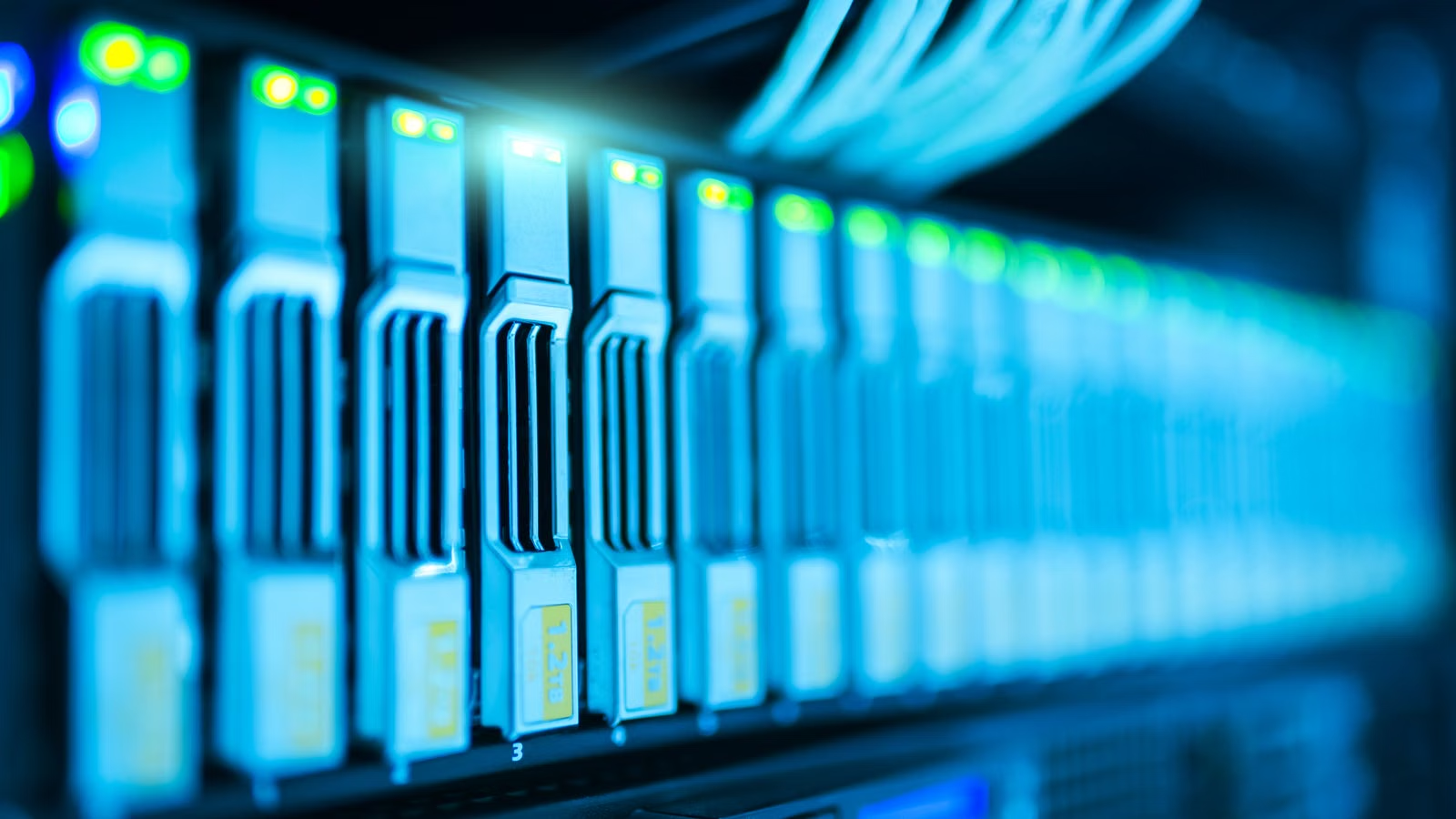
AI storage is not a single-chip theme. It is a layered system built around GPUs, servers, data centers, and the full data lifecycle. HBM benefits most directly from AI accelerator upgrades. Server DRAM benefits from larger memory capacity and inference concurrency. Enterprise SSDs and NAND benefit from model loading, RAG, vector databases, and high-frequency data access. HDDs continue to handle low-cost mass data storage. To judge who benefits most, you should not only look at the “AI” label. You also need to compare bandwidth, capacity, supply constraints, pricing power, and profit margins.
Key Takeaways
- HBM has the strongest revenue sensitivity in AI training and high-end inference.
- Server DRAM benefits more broadly, but its AI purity is lower than HBM.
- Enterprise SSDs are critical for RAG, vector databases, and inference expansion.
- NAND opportunities are concentrated in data center products, while consumer NAND benefits more indirectly.
- HDDs will not be fully replaced by SSDs and remain a low-cost option for massive cold data.
- Investment judgment should factor in supply discipline, product mix, valuation, and cycle position.
How Does the AI Storage Supply Chain Connect GPUs, Servers, and Data Centers?
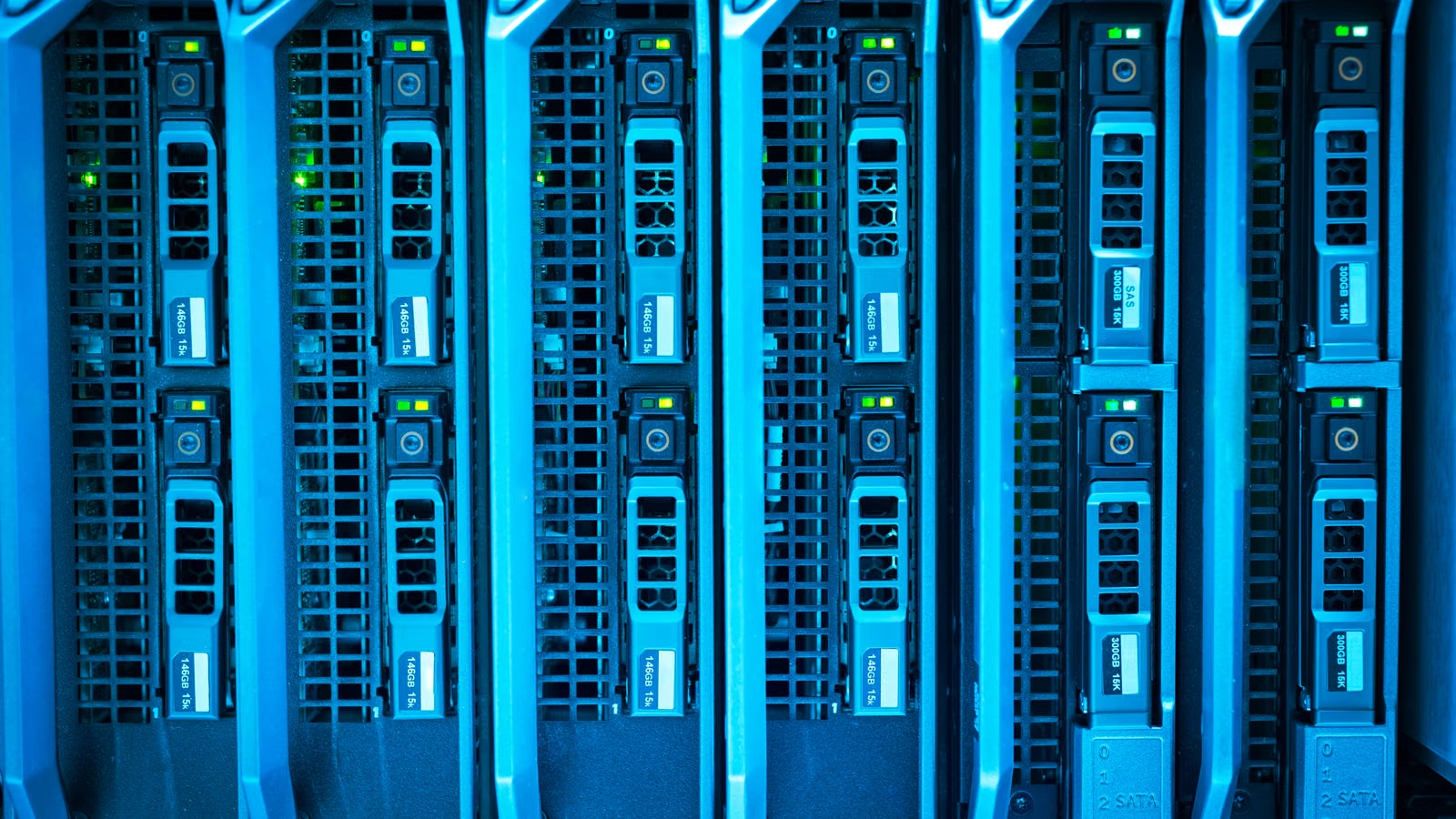
The core logic of the AI storage supply chain is simple: the closer storage is to compute, the higher the performance requirement; the farther it is from compute, the more important capacity and cost become. HBM sits close to the GPU and solves bandwidth bottlenecks. Server DRAM supports CPUs, operating systems, caching, and inference tasks. Enterprise SSDs handle model weights, checkpoints, vector databases, and frequently accessed data. HDDs store raw data, backups, archives, and low-frequency data. Therefore, HBM, DRAM, NAND, SSDs, and HDDs are not simple substitutes. They work together to support AI data movement.
During AI model training, data moves from data lakes, object storage, or enterprise storage systems into SSDs, then into server memory, and finally into GPUs and HBM. Inference is more complex. Long context windows, agents, multi-turn conversations, RAG retrieval, and user concurrency continuously generate new caches, logs, vector indexes, and context data. NVIDIA describes modern AI data centers as AI factories, meaning infrastructure that integrates compute, memory, storage, networking, and software scheduling to continuously produce intelligent outputs.
| Storage Product | Location | Core Role | AI Scenario | Benefit Profile |
|---|---|---|---|---|
| HBM | Near GPU or AI accelerator | High-bandwidth data exchange | Large model training, high-end inference | Most direct, high ASP, high technical barrier |
| Server DRAM | AI server motherboard | System memory, cache, CPU tasks | Inference scheduling, KV Cache, data preprocessing | Broad demand, still cyclical |
| Enterprise SSD | Servers and storage nodes | High-frequency data read/write | RAG, model loading, checkpoints | Strong inference expansion sensitivity |
| NAND | Core chip inside SSDs | Non-volatile storage | Enterprise SSDs, data center storage | Profit depends on product mix |
| HDD | Data center capacity layer | Massive low-cost storage | Data lakes, backups, archives | Strong capacity visibility, limited performance |
From a value chain perspective, upstream AI storage includes DRAM/NAND wafers, advanced packaging, testing, controllers, firmware, equipment, and materials. The midstream includes HBM, server memory modules, enterprise SSDs, and nearline HDDs. Downstream customers include GPU vendors, cloud service providers, AI model companies, and enterprise data centers. The closer a product is to the GPU, the more customer qualification and technology iteration matter. The closer a product is to the capacity layer, the more cost, reliability, power efficiency, and scaled supply matter.
Summary: The AI storage supply chain cannot be understood through narrow questions such as “Will HBM replace DRAM?” or “Will SSDs replace HDDs?” HBM solves the highest-bandwidth problem, DRAM solves server memory capacity, SSDs solve high-frequency data access, and HDDs solve massive low-cost storage. As AI infrastructure grows, data moves more frequently across these layers, allowing multiple storage segments to benefit. The difference is that HBM has the purest AI revenue exposure and the strongest pricing sensitivity; server DRAM has broader coverage; enterprise SSDs are closer to inference deployment; and HDDs benefit from long-term data accumulation.
Why Is HBM the Most Direct Beneficiary in the AI Storage Supply Chain?
HBM is currently the most direct beneficiary in the AI storage supply chain because large model training and high-end inference are first constrained by memory bandwidth and available capacity near the GPU. As GPU compute power rises, data must be delivered to compute units fast enough. Otherwise, expensive AI chips wait for memory, creating a “memory wall.” Therefore, the value of HBM is not only capacity, but also its ability to feed data to GPUs within a given amount of time.
The difference between HBM and ordinary DDR DRAM lies in structure and location. Ordinary DRAM usually exists as system memory, while HBM uses multi-layer DRAM stacking, TSVs, and advanced packaging to sit close to GPUs or AI ASICs. JEDEC’s HBM4 standard expands the interface to 2048-bit and positions bandwidth, channel count, power efficiency, and capacity as key upgrades for AI and HPC. Micron’s HBM4 materials also emphasize that higher bandwidth and larger capacity are important foundations for long-context, multimodal, and scientific computing workloads.
HBM has high margins not only because demand is strong, but also because supply is difficult. It requires advanced DRAM process technology, stacked packaging, thermal management, testing capability, and GPU customer qualification. Samsung’s information on HBM4 commercial shipments emphasizes that its HBM4 production depends on collaboration across DRAM, foundry, advanced packaging, and customers. SK hynix’s 2026 memory market outlook also notes that HBM3E will remain an important product in 2026, while HBM4 will gradually scale.
To judge whether an HBM company is truly benefiting, focus on six indicators:
- Whether it has entered the core supply chains of NVIDIA, AMD, Google, AWS, and other major customers;
- Whether its HBM3E, HBM4, and HBM4E production timeline is leading;
- Whether yield, stack height, and testing capability are stable;
- Whether HBM capacity per GPU is rising;
- Whether advanced packaging and substrate supply are sufficient;
- Whether HBM expansion translates into margin improvement, not just revenue growth.
However, HBM is not risk-free. Customer concentration is high, and qualification failure or delay can directly affect revenue. If Samsung, SK hynix, and Micron all accelerate capacity expansion at the same time, future pricing could also retreat. The investment logic of HBM is closer to a combination of high barriers, high sensitivity, and high execution risk.
Summary: HBM benefits the most because it directly determines whether AI accelerators can fully release their compute power. The more expensive GPUs become, the larger models grow, and the longer context windows get, the more valuable HBM bandwidth and capacity become. In the short term, HBM has the purest AI revenue exposure in storage. In the medium term, company differences come from customer qualification, yield, packaging capability, and generation transitions. In the long term, new capacity, technology substitution, and customer bargaining power may still weaken excess profits. Investors should not only look at HBM market growth, but also who can turn technical advantage into sustained orders and margins.
Why Does Ordinary DRAM Also Benefit from AI Server Expansion?
Ordinary DRAM also benefits from AI because AI servers are not only made of GPUs and HBM. CPU scheduling, operating systems, network communication, data preprocessing, inference cache, databases, and multi-model concurrency all require large amounts of server DRAM. Compared with HBM, ordinary DRAM has lower AI purity, but broader demand coverage. If AI data centers expand from training clusters to inference clusters, server DDR5, RDIMM, MRDIMM, and CXL memory expansion will all receive stronger demand support.
Inference is an important source of demand for ordinary DRAM. After large models are deployed, enterprises do not only run a single training task. They continuously process user requests, context windows, tool calls, vector retrieval, and result caching. Long-context models create larger KV Cache requirements and occupy more memory resources. Multi-model concurrency increases system memory demand at both the single-server and cluster levels. NVIDIA’s introduction to Blackwell Ultra also links larger HBM3E capacity with long-context and high-concurrency inference. This trend will continue to spill over into server memory, storage, and networking layers.
Another benefit for DRAM comes from the supply side. As memory makers allocate more resources to HBM, effective supply growth for ordinary DRAM may become constrained. Micron’s fiscal 2026 Q3 materials state that AI system performance structurally depends on memory subsystem performance and capacity, while HBM generation upgrades can pressure non-HBM supply. This means HBM not only benefits itself, but may also affect traditional DRAM pricing through capacity allocation.
| Comparison Dimension | HBM | Server DRAM |
|---|---|---|
| Direct AI demand exposure | Extremely high, tied to GPUs/ASICs | High, tied to servers and inference clusters |
| Pricing sensitivity | Strong | Medium to strong |
| Customer concentration | High | More diversified |
| Technical barrier | Stacking, packaging, qualification | Process, capacity, modules, stability |
| Cycle risk | Possible price correction after expansion | More affected by PC, smartphone, and cloud capex cycles |
| Investment indicators | HBM generation and customer qualification | DDR5 pricing, server memory capacity, inventory |
But the cyclicality of ordinary DRAM cannot be ignored. PCs, smartphones, and consumer electronics still affect overall DRAM supply and demand. Different products can also diverge. DDR4, DDR5, high-capacity server modules, and mobile LPDDR may follow different pricing paths. AI can lift the demand baseline, but it cannot fully eliminate the cyclical nature of the memory industry.
Summary: Server DRAM is a “broader but slightly less pure” beneficiary in the AI storage supply chain. It is not as directly tied to each GPU as HBM, but AI inference, long context, agents, databases, data preprocessing, and cloud server expansion all increase system memory demand. HBM expansion may also indirectly reduce supply flexibility for ordinary DRAM, supporting pricing and margins. The key risk is that if terminal demand weakens or suppliers expand too aggressively, ordinary DRAM can still enter a price downcycle.
How Do NAND and Enterprise SSDs Benefit from AI Inference and Data Growth?
The AI opportunity for NAND and enterprise SSDs mainly comes from the data layer, not GPU compute itself. Model training requires high-speed dataset reads and checkpoint saves. Inference requires fast model weight loading, vector database access, and enterprise knowledge base calls. RAG and agent applications continuously generate indexes, caches, logs, and intermediate states. Therefore, enterprise SSDs are closer to AI infrastructure than consumer SSDs, and NAND benefits depend more on product mix than on shipment volume alone.
During AI training, SSDs provide stable throughput for GPU clusters and prevent data loading from slowing training. During inference, SSDs play a more detailed role: model weights, vector databases, knowledge bases, conversation records, and context data may all be read frequently. Kioxia’s GP Series Super High IOPS SSD targets GPU-initiated AI workloads and emphasizes using high-performance flash to expand GPU-accessible memory space. NVIDIA’s CMX context memory storage platform also shows that long-context and agentic AI are pushing the storage layer closer to the inference memory system.
For enterprise SSDs, the key is not simply “the bigger the capacity, the better.” The real requirement is a combination of capacity, latency, IOPS, endurance, power consumption, and reliability. RAG, vector databases, and inference caches care more about random read/write performance, tail latency, and sustained performance. Training checkpoints and large-scale data processing care more about throughput and stable writes. Samsung’s GTC 2026 showcase mentioned HBM4, SOCAMM2, and PCIe SSDs together, reflecting that AI infrastructure is expanding from a single accelerator to system-level coordination across memory, storage, and compute.
| AI Scenario | Storage Demand | More Relevant Product |
|---|---|---|
| Large model training | Dataset reads, checkpoint writes | High-throughput enterprise SSD |
| Large model inference | Model weight loading, service switching | Low-latency NVMe SSD |
| RAG applications | Vector search, knowledge base access | High-IOPS SSD |
| Agent workflows | Context, logs, intermediate states | SSD + DRAM tiering |
| Data lakes | Large capacity, low-cost storage | SSD + HDD hybrid |
| Edge AI | Local models and caching | High-reliability SSD |
The benefits for NAND makers and SSD vendors are not exactly the same. Rising NAND chip prices improve wafer manufacturer revenue, but if supply expands too fast, prices can fall again. Enterprise SSD vendors with controllers, firmware, cloud customer qualification, high-capacity design, and long-term supply agreements usually have stronger margin sensitivity. Marvell’s discussion of GPU-initiated storage also shows that AI storage is moving from CPU-initiated reads toward data path optimization closer to the GPU.
Summary: The core opportunity for NAND and enterprise SSDs is not consumer electronics, but AI inference, RAG, vector databases, and data center storage upgrades. Training workloads need throughput, inference workloads need low latency and high IOPS, while long-context and agent applications require more complex memory-storage tiering. Enterprise SSDs are a more visible beneficiary as AI applications scale, but NAND still has typical industry cycle risk. When evaluating related companies, focus on data center SSD revenue mix, customer qualification, controller and firmware capability, rather than total NAND shipment volume alone.
Why Will HDDs Still Benefit, and Which AI Storage Categories Deserve the Most Attention?
HDDs will still benefit from AI because AI data centers need not only high-speed access, but also low-cost storage for massive data volumes. SSDs are suitable for high-frequency reads, low latency, and high-IOPS tasks. HDDs are more suitable for raw training data, historical datasets, backups, archives, logs, and low-frequency data access. The more data AI generates, the larger long-term capacity demand becomes, and the more visible the strategic value of nearline HDDs.
Many people assume that all AI-era data will move to SSDs, but real data centers place greater emphasis on tiered storage. Hot data, model weights, and vector indexes sit on SSDs. Warm data may move between SSDs and object storage. Cold data, backups, and historical training sets are better suited to high-capacity HDDs. Seagate’s 30TB Exos M connects HAMR, high capacity, and AI data center capacity demand, showing that HDDs remain an important choice for cost-sensitive data layers.
The five AI storage categories should be ranked by “direct benefit, margin sensitivity, long-term capacity, and cycle risk,” rather than by a single absolute ranking:
| Storage Type | Short-Term AI Sensitivity | Long-Term Potential | Main Advantage | Main Risk |
|---|---|---|---|---|
| HBM | Highest | High | High bandwidth, high ASP, strong technical barrier | Customer concentration, price correction after expansion |
| Server DRAM | High | Medium to high | Broad AI server and inference demand | Consumer electronics cycle impact |
| Enterprise SSD | Medium to high | High | Strong RAG, inference, and data access demand | Excess NAND supply |
| NAND | Medium | Medium to high | Improved data center product mix | Pricing cycle volatility |
| HDD | Medium | Stable | Low cost per TB, visible capacity demand | Not suitable for hot-data performance needs |
If the conclusion must be compressed into one sentence: HBM is the most direct AI storage beneficiary, server DRAM is the broader beneficiary, enterprise SSDs are a key beneficiary of inference and RAG expansion, and HDDs benefit from long-term mass data storage. NAND sits between “chip supply” and “enterprise SSD product upgrade,” and whether it fully benefits depends on pricing, capacity, and product mix.
If you are following market opportunities in companies such as Micron, Seagate, Western Digital, Samsung, and SK hynix, you should look beyond industry growth and also consider trading costs and order execution. When using Biya to monitor related US and Hong Kong stocks, you can compare company earnings, memory pricing, order structure, and valuation together. Biya charges $0 commission for US stock trading, while platform fees, external institutional fees, and other charges are subject to US stock trading fees and the order display. Public market analysis does not constitute investment advice. Service availability depends on user location, identity verification results, platform rules, and applicable laws and regulations.
Summary: The final ranking of AI storage beneficiaries depends on your analytical lens. For short-term revenue sensitivity, HBM is the strongest. For server buildout breadth, DRAM is more stable. For inference and RAG deployment, enterprise SSDs deserve more attention. For long-term storage of massive data, HDDs still have a clear role. The real mistake is treating all companies labeled “AI storage” as the same type of asset. The memory industry has both AI-driven growth and risks from capital expenditure, inventory, pricing, and cycle reversal. Investment judgment should consider product generation, customer qualification, average selling price, gross margin, inventory days, and valuation position at the same time.
If you are tracking the AI storage supply chain, you can divide companies into three groups. The first group includes core HBM and DRAM vendors such as SK hynix, Samsung, and Micron. The second group includes enterprise SSD, NAND, and controller-related companies such as Kioxia, Sandisk, Western Digital, and Marvell. The third group includes HDD capacity-layer companies such as Seagate and Western Digital. You can use US stock information search to track basic information on related names, then combine it with the latest earnings reports, product releases, memory prices, and cloud capex trends. Users who meet the applicable service conditions can also download the App to review order fees and risk disclosures before trading. Strong industry growth does not mean stock prices will rise with certainty. Any trade should be based on your own capital plan and risk tolerance.
FAQ
Will HBM3E demand decline after HBM4 enters mass production?
Not immediately. HBM3E and HBM4 are likely to coexist for some time because different GPUs, ASICs, and cloud customer platforms have their own qualification cycles. HBM4 share gains will depend on next-generation AI chip shipments, yield, pricing, and customer upgrade speed.
Will AI server expansion definitely push up DRAM prices?
Not necessarily, but it can support demand. AI servers increase demand for DDR5, high-capacity modules, and server memory, while HBM expansion may also affect ordinary DRAM supply. Final pricing still depends on new capacity, PC and smartphone demand, inventory, and supplier discipline.
Which benefits more from AI, enterprise SSDs or consumer SSDs?
Enterprise SSDs benefit more directly from AI. They serve model training, RAG, vector databases, checkpoints, and inference caches, with higher requirements for low latency, high IOPS, reliability, and endurance. Consumer SSD demand is still mainly affected by PC and end-device cycles.
Why do AI data centers still need HDDs?
AI data centers still need HDDs to store massive low-frequency data. SSDs are suitable for high-frequency access and low-latency tasks, while HDDs are suitable for raw data, historical training sets, backups, archives, and log retention. Tiered storage helps balance performance, capacity, and cost.
How can retail investors judge whether AI storage stocks are overheating?
Investors should track average selling prices, inventory days, capital expenditure, customer prepayments, gross margins, and valuation changes. If prices rise quickly while the industry expands capacity aggressively, future supply releases may trigger a cycle reversal. The latest earnings reports and company disclosures should be used as the main reference.
What are the main investment risks in AI storage stocks?
Key risks include slower AI capital expenditure, falling memory prices, excessive capacity expansion, customer concentration, product qualification delays, and technology iteration. Risk exposure differs by company. Before trading, investors should review platform rules, billing details, company disclosures, and local regulatory requirements.
*This article is provided for general information purposes and does not constitute legal, tax or other professional advice from BiyaPay or its subsidiaries and its affiliates, and it is not intended as a substitute for obtaining advice from a financial advisor or any other professional.
We make no representations, warranties or warranties, express or implied, as to the accuracy, completeness or timeliness of the contents of this publication.
Related Blogs of

US to Portugal Online Money Transfer Limits: Per-Transaction Caps Explained


Online Bank-to-Bank Transfers: Account Linking, Steps, and Limits




Choose Country or Region to Read Local Blog
 Australia
 Austria
 Belgium
 Canada
 Cyprus
 Czech Republic
 Denmark
 Estonia
 Finland
 France
 Germany
 Greece
 Hong Kong
 India
India Indonesia
 Ireland
 Italy
Italy Japan
Japan Latvia
 Lithuania
 Luxembourg
 Malaysia
 Malta
Malta Morocco
 Nepal
Nepal Netherlands
 New Zealand
 Norway
 Pakistan
 Philippines
 Poland
 Portugal
 Romania
 Singapore
 Slovakia
 Slovenia
 South Africa
 South Korea
 Spain
Spain Sweden
 Thailand
 United States
 Turkey
 United Arab Emirates
 United Kingdom
 Vietnam