
Which Storage Chip Concept Stocks Are There in 2026? Classification of Related U.S. and Hong Kong Companies




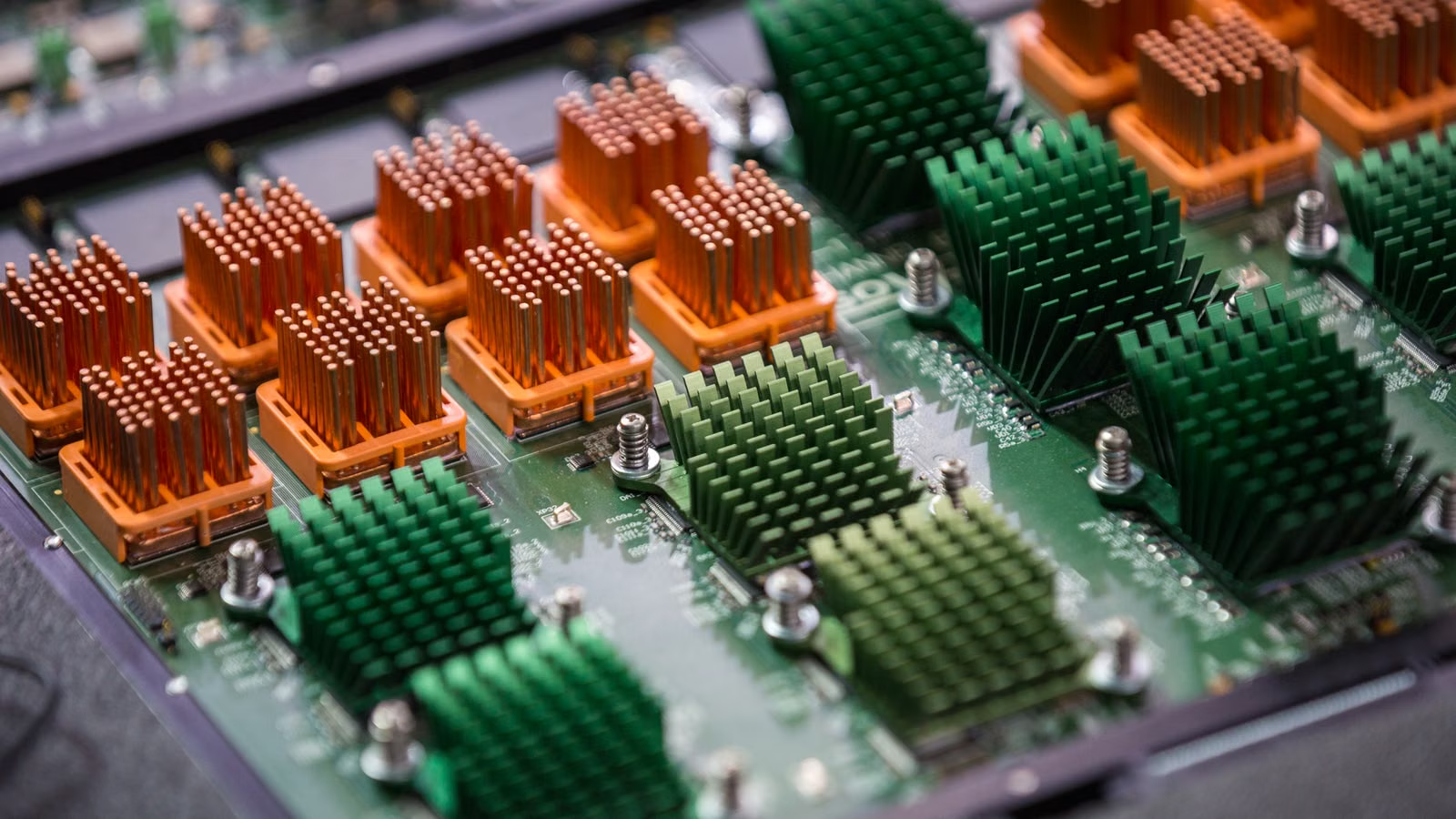
When looking at storage chip concept stocks in 2026, you should not simply screen for the word “semiconductor.” You first need to distinguish DRAM, HBM, NAND Flash, NOR Flash, EEPROM, enterprise SSDs, nearline HDDs, SSD controllers, foundry platforms, and advanced packaging equipment. In the U.S. market, the more direct storage chip names are concentrated around Micron and SanDisk, while Seagate, Western Digital, Silicon Motion, Rambus, Pure Storage, and NetApp belong to different parts of the broader storage value chain. In Hong Kong, there are fewer global-scale DRAM, NAND, or HBM manufacturers. Related companies are more often tied to non-volatile memory, mature-node foundry platforms, and advanced packaging equipment.
Key Takeaways
- Storage chip stocks should first be divided into DRAM, HBM, NAND, and related equipment.
- Core U.S. names are more concentrated around Micron, SanDisk, WDC, and STX.
- Hong Kong stocks are more exposed to non-volatile memory, foundry, packaging, and equipment.
- AI data centers are lifting demand for HBM, enterprise SSDs, and nearline HDDs.
- Opportunity analysis should focus on revenue mix, margin, inventory, expansion, and customer concentration.
- Concept exposure does not mean low risk; the storage industry remains highly cyclical.
How Should Storage Chip Concept Stocks Be Classified in 2026? Start by Separating “Real Storage” From Related Value Chains
Storage chip concept stocks are not a single stock pool. They are part of a value chain built around data storage, reading, caching, transmission, and management. True storage chip companies mainly produce DRAM, HBM, NAND Flash, NOR Flash, EEPROM, SLC NAND, eNVM, and similar products. Storage-related companies may instead produce HDDs, SSD controllers, memory interface chips, foundry services, advanced packaging equipment, or enterprise storage systems. To judge whether a company has high “storage purity,” the key is not its market label, but its revenue source and technical position.
The reason this theme has regained attention in 2026 is that the memory cycle and AI infrastructure cycle are heating up at the same time. Gartner forecasts worldwide semiconductor revenue to grow 64% in 2026, with memory revenue expected to triple, and it highlights sharp price increases in DRAM and NAND Flash as a driver of “memflation.” This shows that storage chips are no longer just components within the smartphone, PC, and consumer electronics cycle. They are becoming critical bottlenecks in AI servers, cloud data centers, and enterprise data infrastructure.
You can classify storage chip concept stocks into five categories:
| Category | Representative Products | Direct Storage Chip Exposure? | U.S. / Hong Kong Examples | Core Driver |
|---|---|---|---|---|
| DRAM / HBM | Server memory, high-bandwidth memory | Yes | MU; SK hynix and Samsung as global references | AI training, GPU-adjacent bandwidth |
| NAND Flash | Flash memory, enterprise SSDs | Yes | SNDK, MU | AI inference, data center SSDs |
| HDD Capacity Storage | Nearline HDDs | No, but highly related | STX, WDC | Cloud data centers, data lakes |
| Controllers / Interfaces | SSD controllers, DDR5 RCDs | Indirect | SIMO, RMBS | SSD performance, server memory modules |
| Hong Kong Related Chain | eNVM, NOR, foundry, packaging equipment | Partly direct, partly indirect | 1385.HK, 1347.HK, 0981.HK, 0522.HK | Localization, mature nodes, advanced packaging |
True storage chip stocks usually see their financials more directly affected by pricing and shipments of DRAM, HBM, NAND, NOR, EEPROM, and related products. For example, Micron’s revenue is affected by DRAM, NAND, HBM, and data center SSD demand. SanDisk, after its separation, is more focused on NAND Flash and SSDs. Related value-chain companies benefit in more indirect ways. Seagate and Western Digital are mainly affected by AI data lake and cloud storage capacity demand. ASMPT is exposed to advanced packaging and HBM-related equipment demand. Hua Hong Semiconductor and SMIC are more connected to eNVM and standalone NVM manufacturing platforms.
Summary: When screening storage chip concept stocks in 2026, the first step is not to memorize stock tickers. It is to separate “direct storage chip companies” from “storage-related value-chain companies.” DRAM, HBM, NAND, NOR, and EEPROM are closer to the storage chip core. HDDs, SSD controllers, memory interface chips, foundry platforms, advanced packaging equipment, and enterprise storage systems belong to the related value chain. Only after you identify whether a company’s revenue truly comes from storage chips can you properly assess AI data center demand, pricing cycles, gross margin, and inventory changes.
Core U.S. Storage Chip Companies: Micron, SanDisk, and the NAND / HBM Theme
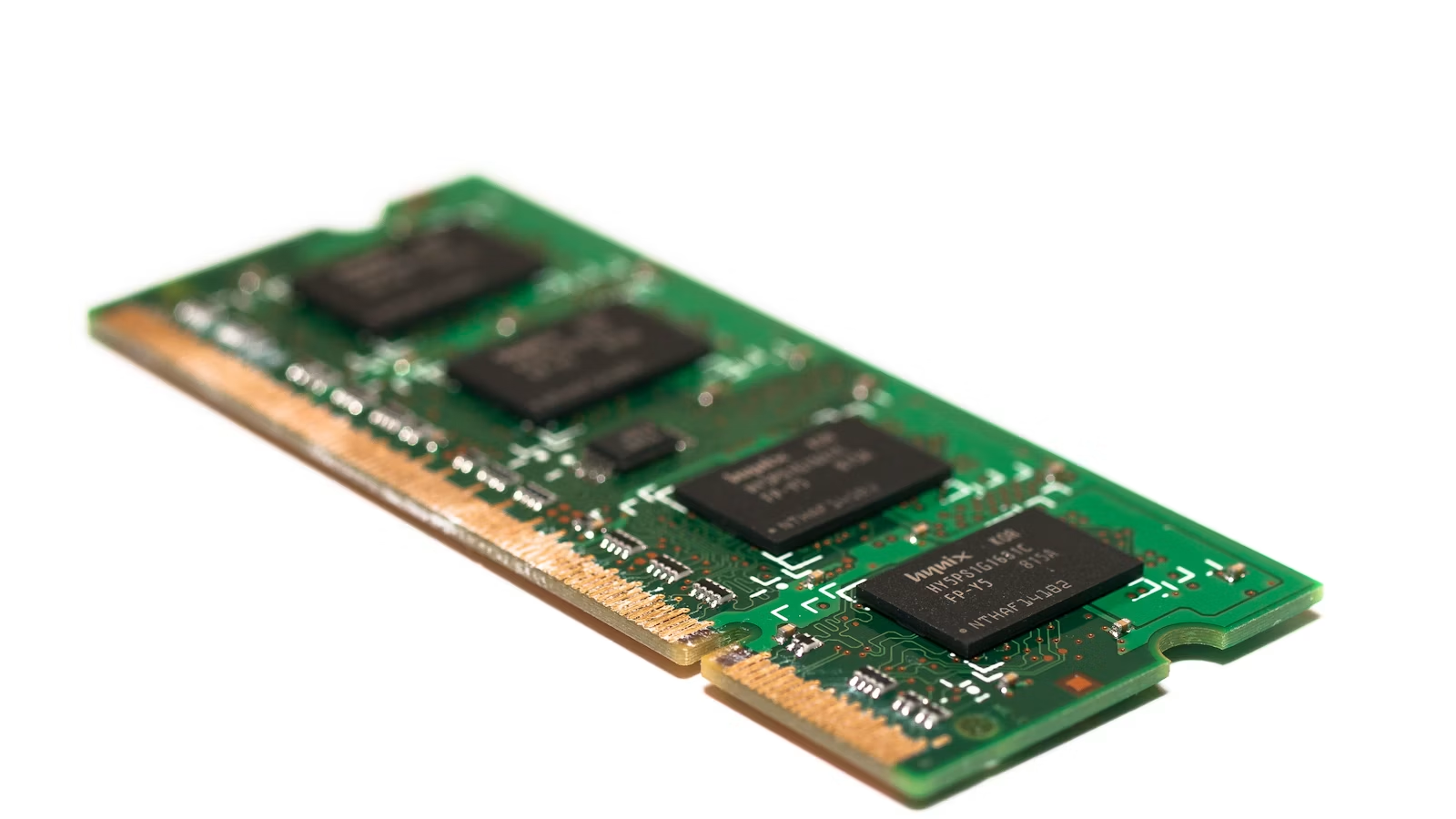
In the U.S. market, the companies closest to the “storage chip core” are mainly Micron and SanDisk. Micron covers DRAM, HBM, NAND, and data center SSDs, making it the most direct U.S.-listed representative of the AI memory theme. SanDisk, after its separation from Western Digital, has become a more focused NAND Flash and enterprise SSD company. Their key variables are AI data center demand, memory pricing, supply expansion, customer commitments, and gross margin trends.
Micron MU: A Comprehensive Representative of DRAM, HBM, NAND, and Data Center SSDs
Micron is the most direct storage chip concept stock in the U.S. market. It covers DRAM, NAND, HBM, and SSDs, so it is not just a “traditional memory stock.” It is also an important lens for observing AI memory, server memory, data center SSDs, and HBM supply tightness. Micron’s fiscal 2026 third-quarter materials noted that data center SSD revenue exceeded $5 billion and that industry demand for DRAM and NAND continued to significantly outpace supply. This directly explains why the market is paying renewed attention to MU.
When analyzing MU, the key is not only revenue growth. You should focus on three lines: whether HBM supply remains tight, whether DRAM and NAND average selling prices continue to improve, and whether data center revenue continues to increase as a share of total revenue. HBM sits closer to the GPU, has higher technical barriers and stricter customer qualification requirements, and may have stronger earnings leverage than ordinary DRAM. But it is also exposed to yield, packaging capacity, customer concentration, and expansion timing.
SanDisk SNDK: Higher NAND Flash and Enterprise SSD Purity After the WDC Separation
SanDisk is a company that needs to be tracked separately in the 2026 U.S. storage chip watchlist. SanDisk completed its separation from Western Digital in 2025 and began trading on Nasdaq under the ticker SNDK, with a business focus on flash memory, NAND, and SSDs. After the separation, WDC became more focused on HDD capacity storage, while SNDK became a more suitable standalone reference for NAND Flash and enterprise SSD exposure.
SanDisk’s earnings leverage comes from NAND pricing and data center SSD demand. SanDisk’s fiscal 2026 third-quarter results showed quarterly revenue of $5.95 billion, up 97% sequentially, with Datacenter revenue up 233%. This suggests that AI inference, cloud data centers, and higher-value customer mix are already changing the financial profile of NAND and SSD companies.
| Company | Ticker | Core Products | AI-Related Logic | Key Indicators to Watch |
|---|---|---|---|---|
| Micron | MU | DRAM, HBM, NAND, SSDs | AI memory, HBM, data center SSDs | Data center revenue, HBM supply, gross margin |
| SanDisk | SNDK | NAND Flash, enterprise SSDs | AI inference, data center storage | Data center revenue, NAND ASP, inventory |
| Samsung | Korea-listed reference | DRAM, NAND, HBM | Global memory cycle reference | HBM qualification, memory pricing |
| SK hynix | Korea-listed reference | HBM, DRAM, NAND | HBM leadership reference | HBM3E/HBM4, expansion plans |
Summary: The most direct U.S. storage chip theme is Micron and SanDisk. Micron is a comprehensive memory leader and is suitable for tracking the broader HBM, DRAM, NAND, and data center SSD cycle. SanDisk has higher NAND and SSD purity after its separation and is more directly affected by AI inference, data center storage, and NAND pricing. You should not apply the same framework to both just because they are both associated with “AI storage.” MU is more tied to the combined HBM and DRAM/NAND cycle, while SNDK is more tied to NAND Flash, enterprise SSDs, and data center customer mix.
U.S. Storage-Related Companies: HDDs, Controllers, Interface Chips, and Enterprise Storage Systems
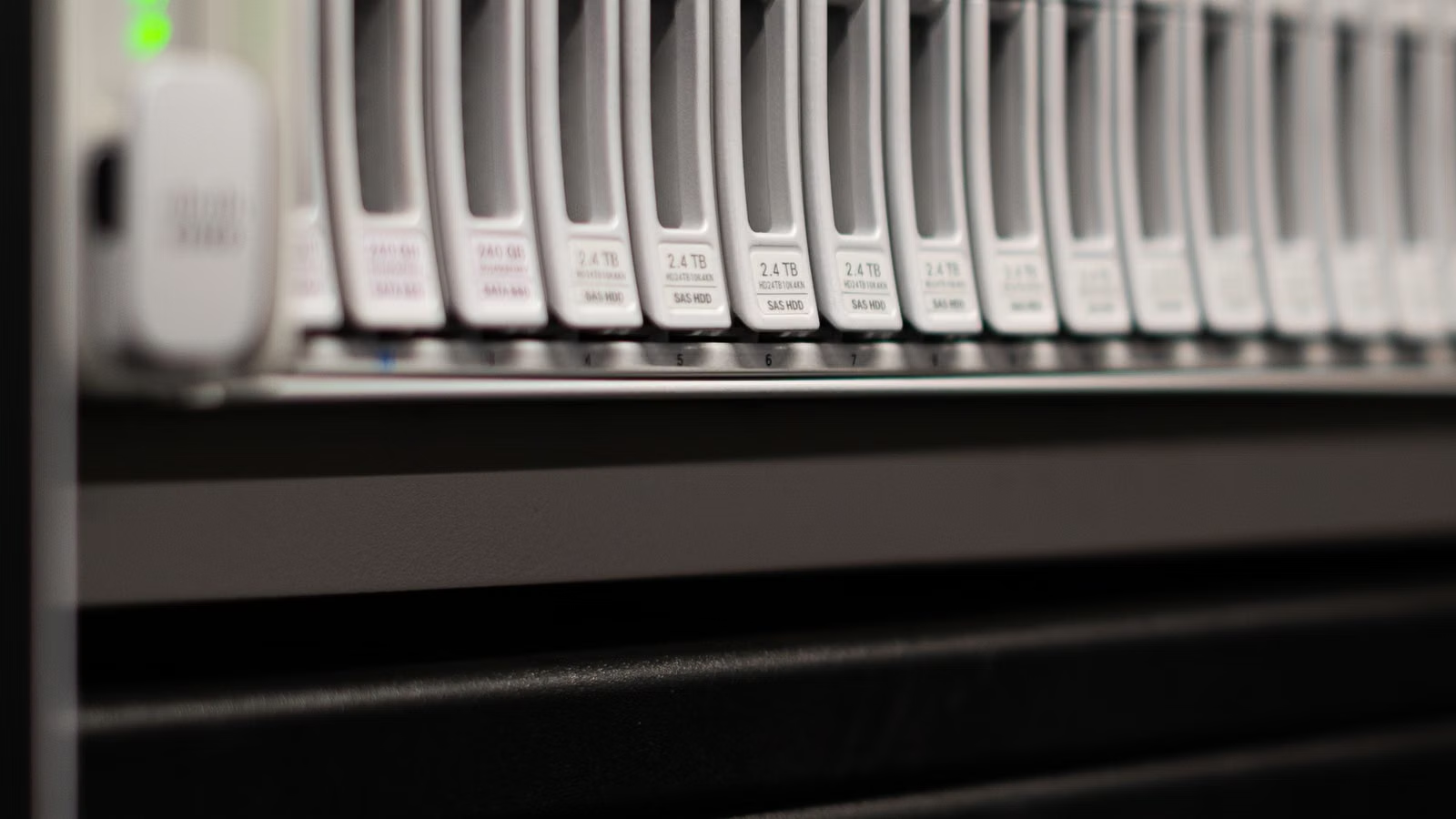
Seagate, Western Digital, Silicon Motion, Rambus, Pure Storage, and NetApp are not all storage chip manufacturers, but they are important companies in the U.S. storage value chain. Seagate and Western Digital are more focused on HDDs and nearline capacity storage. Silicon Motion and Rambus are more exposed to SSD controllers, memory interface chips, and IP. Pure Storage and NetApp are more tied to enterprise storage systems, AI data platforms, and data management. They can be included in a watchlist, but they should be marked as “indirect beneficiaries.”
Seagate STX and Western Digital WDC: Not Chip Stocks, but Beneficiaries of Large-Capacity Storage
Seagate and Western Digital are not centered on DRAM, NAND, or HBM. Their core exposure is large-capacity storage. AI training corpora, videos, images, logs, backups, archives, and data lakes cannot all sit on high-cost SSDs. Nearline HDDs remain the low-cost capacity foundation. Seagate’s fiscal 2026 third-quarter results reported revenue of $3.11 billion, non-GAAP gross margin of 47.0%, and free cash flow of $953 million, showing that large-capacity storage demand has meaningfully improved its earnings quality.
After the SanDisk separation, Western Digital’s business became more concentrated in HDDs and data center capacity storage. WD’s fiscal 2026 third-quarter results showed revenue of $3.337 billion, up 45% year over year, and non-GAAP gross margin of 50.5%. Companies like these are better classified as “AI data center capacity storage” than as storage chip manufacturers.
Silicon Motion SIMO and Rambus RMBS: Indirect Beneficiaries Through Controllers and Interfaces
Silicon Motion is not a NAND producer, but it is an important company in the SSD controller value chain. SSD controllers affect read/write performance, power consumption, reliability, interface standards, and data center compatibility. Silicon Motion’s first-quarter 2026 materials refer to PCIe Gen5 SSD controllers for enterprise, data center, and AI use cases, showing that its benefit comes from SSD performance upgrades rather than NAND pricing itself.
Rambus is more tied to memory interface chips and silicon IP. AI servers using DDR5 RDIMMs, MRDIMMs, HBM, GDDR, PCIe, and CXL need higher data transfer capability. Rambus’s 2026 investor materials mention DDR5 memory interface chipsets, HBM4E memory interface IP, and related security IP, making the company more suitable for classification as an indirect beneficiary of memory interfaces and IP.
Pure Storage PSTG and NetApp NTAP: Enterprise Storage Systems, Not Storage Chips
Pure Storage and NetApp are more accurately classified as enterprise storage system companies, not storage chip stocks. Their value comes from all-flash arrays, subscription services, data protection, AI-ready data platforms, RAG data management, and enterprise deployment. Pure Storage’s fiscal 2026 third-quarter results showed revenue of $964.5 million, up 16% year over year, and subscription services revenue of $429.7 million. This shows that system-layer companies follow a more subscription-driven and enterprise data platform logic.
| Company | Ticker | Storage Chip Manufacturer? | More Accurate Classification | What to Watch |
|---|---|---|---|---|
| Seagate | STX | No | HDD / nearline capacity storage | Cloud customer orders, gross margin, FCF |
| Western Digital | WDC | No | HDD / data center capacity | Cloud revenue, nearline shipments |
| Silicon Motion | SIMO | No | SSD controller | PCIe Gen5, enterprise SSD controllers |
| Rambus | RMBS | No | Memory interface chips / IP | DDR5, HBM IP, server memory modules |
| Pure Storage | PSTG | No | Enterprise storage systems | Subscription revenue, RPO, AI data platform |
| NetApp | NTAP | No | Enterprise data management | RAG, object storage, enterprise deployment |
Summary: U.S. storage-related companies need to be separated carefully. STX and WDC are capacity storage companies, affected by cloud storage, nearline HDDs, and data lake demand. SIMO and RMBS are controller, interface chip, and IP companies, affected by SSD, DDR5, HBM, and AI server architecture upgrades. PSTG and NTAP are enterprise storage system companies, affected by enterprise AI data platforms, subscription services, and data governance. They can all belong in a “storage concept stock watchlist,” but they should not all be called storage chip manufacturers. Clear classification leads to better risk judgment.
Hong Kong Storage Chip-Related Companies: Few Direct Names, More Foundry, Embedded Storage, and Advanced Packaging Exposure
Hong Kong has relatively few companies that directly correspond to global DRAM, NAND, or HBM manufacturers such as Micron, SK hynix, and Samsung. Most related companies sit elsewhere in the storage value chain. Typical examples include Shanghai Fudan’s non-volatile memory products, Hua Hong Semiconductor and SMIC’s embedded non-volatile memory and standalone non-volatile memory process platforms, and ASMPT’s advanced packaging equipment. When studying Hong Kong storage concept stocks, you should be especially careful not to equate “semiconductor-related” with “storage chip manufacturer.”
Shanghai Fudan 1385.HK: Non-Volatile Memory and Specialty Chip Platforms
Shanghai Fudan is one of the Hong Kong-listed companies relatively closer to the storage chip core. Its business is not large-scale DRAM, HBM, or high-capacity NAND. It is more focused on EEPROM, NOR Flash, SLC NAND, and high-reliability memory. Shanghai Fudan’s interim materials state that its memory chip product lines include EEPROM memory, NOR Flash memory, and SLC NAND Flash memory. These products are more commonly used in industrial, automotive, communications, security, smart metering, and high-reliability scenarios.
This means you should not apply Micron’s HBM logic directly to Shanghai Fudan. Shanghai Fudan is better analyzed through product mix, customer qualification, gross margin stability, localization progress, and inventory changes, rather than through the pricing logic of commodity DRAM or NAND alone.
Hua Hong Semiconductor 1347.HK and SMIC 0981.HK: Storage-Related Process Platforms, Not Storage Manufacturers
Hua Hong Semiconductor is a specialty process foundry. Its connection to storage comes mainly from embedded non-volatile memory and standalone non-volatile memory platforms. Hua Hong lists NOR Flash and EEPROM among its standalone non-volatile memory foundry products. This shows that the company is indeed connected to storage chip manufacturing, but it does not sell commodity DRAM or NAND as a storage brand.
SMIC is also a manufacturing platform, not a storage chip brand. SMIC’s 2025 annual report states that its mass-production platforms include embedded non-volatile memory and standalone non-volatile memory technologies. When analyzing SMIC’s storage exposure, you should focus on mature process nodes, customer structure, capacity utilization, and process platforms, rather than treating it as a substitute for MU or SNDK.
ASMPT 0522.HK: Advanced Packaging Equipment and the HBM / AI Hardware Chain
ASMPT is not a storage chip company, but it is an important equipment company in the HBM, advanced packaging, and AI hardware chain. ASMPT’s 2025 results noted that its TCB business grew about 146% year over year in 2025, and that its TCB TAM was revised upward from about $760 million in 2025 to $1.6 billion in 2028, driven by advanced logic and HBM applications. It is suitable as a reference for HBM packaging equipment momentum, but not as a storage chip manufacturer.
| Hong Kong Company | Ticker | Relationship With Storage Chips | Exposure Strength | Key Indicators |
|---|---|---|---|---|
| Shanghai Fudan | 1385.HK | EEPROM, NOR, SLC NAND and other non-volatile memory | Relatively direct | Product mix, gross margin, customer qualification |
| Hua Hong Semiconductor | 1347.HK | eNVM and standalone NVM process platforms | Indirect but relatively close | Capacity utilization, specialty process demand |
| SMIC | 0981.HK | eNVM and standalone NVM foundry platforms | Indirect | Mature nodes, customer structure |
| ASMPT | 0522.HK | Advanced packaging equipment related to HBM / AI | Indirect | TCB, AP revenue, orders |
| Lenovo Group | 0992.HK | AI servers and end-market demand | Downstream related | Servers, storage procurement costs |
Summary: The correct way to understand Hong Kong storage chip concept stocks is through value-chain mapping, not by copying the logic of U.S. storage manufacturers. Shanghai Fudan is relatively closer to the storage chip core, but its products are more focused on non-volatile and high-reliability applications. Hua Hong and SMIC are storage-related manufacturing platforms, with logic tied to foundry services and mature process nodes. ASMPT is an advanced packaging equipment company, driven by HBM and AI hardware demand. Lenovo is more exposed to downstream server and terminal demand. When looking at Hong Kong stocks, it is best to label each company as direct, indirect, or downstream exposure.
How Should Ordinary Investors Compare U.S. and Hong Kong Storage Chip Concept Stocks?
Comparing U.S. and Hong Kong storage chip concept stocks requires more than looking at share-price gains or labels such as “AI,” “semiconductor,” or “storage.” You need to evaluate business purity, revenue exposure, financial sensitivity, technical position, customer structure, valuation, liquidity, and policy risk. U.S. stocks are more suitable for tracking the global memory cycle and AI data center orders. Hong Kong stocks are more suitable for tracking localization, mature process nodes, advanced packaging, and supporting value-chain roles.
The advantage of the U.S. market is clearer business boundaries. MU and SNDK are closer to the storage chip core. STX and WDC are closer to capacity storage. SIMO and RMBS are controller and interface chip names. PSTG and NTAP sit at the system layer. Hong Kong’s chain is more dispersed. Shanghai Fudan is more focused on non-volatile memory. Hua Hong and SMIC are manufacturing platforms. ASMPT is advanced packaging equipment. If you put all of them into one comparison table, you should compare their paths of benefit, not just valuation multiples.
| Comparison Dimension | U.S. Storage Chip / Related Stocks | Hong Kong Storage-Related Stocks | What to Judge |
|---|---|---|---|
| Business Purity | MU and SNDK are relatively high | 1385.HK is relatively high; others are mostly related-chain names | Revenue structure |
| AI Exposure | HBM, SSD, HDD, and system-layer exposure are clearer | More indirect through packaging, foundry, and server chains | Orders and customers |
| Financial Sensitivity | Storage prices directly affect gross margin | Affected by capacity utilization and product mix | Margin and inventory |
| Valuation Volatility | Higher sensitivity and higher volatility | May have valuation discounts and liquidity differences | Risk tolerance |
| Trading Costs | U.S. stock fees, FX, taxes | Hong Kong stock fees, FX, stamp duty | Actual order cost |
If you are watching both U.S. and Hong Kong storage chip concept stocks, you should not look only at price movements before trading. You should also consider commissions, platform fees, external agency fees, exchange rates, taxes, and costs displayed on the order page. Through Biya, you can monitor U.S. stocks, Hong Kong stocks, and crypto markets, and place MU, SNDK, STX, WDC, 1385.HK, 1347.HK, 0981.HK, and 0522.HK into different watch groups. Biya charges $0 commission for U.S. stock trading, while platform fees, external agency fees, and other charges are subject to U.S. stock trading fees and the order page display.
Trading costs do not only affect short-term trading. For volatile storage chip concept stocks, frequent rebalancing can make platform fees, exchange rates, external charges, and taxes matter more to real returns. Whether related services are available depends on the user’s location, identity verification result, platform rules, and applicable laws and regulations. Public market information, trading rules, and fee structures can support decision preparation, but they do not constitute investment advice.
Summary: The difference between U.S. and Hong Kong storage chip concept stocks is that U.S. names more directly reflect DRAM, HBM, NAND, HDD, and enterprise storage system cycles, while Hong Kong names more often reflect non-volatile memory, manufacturing platforms, advanced packaging equipment, and downstream server chains. You should compare business purity and revenue exposure first, then look at gross margin, inventory, customer structure, valuation, and liquidity. On the trading side, fees, exchange rates, taxes, and local regulatory requirements should also be included, rather than relying only on theme popularity or ranking by price gains.
What Indicators and Risks Should You Track for Storage Chip Concept Stocks in 2026?
In 2026, the most important thing is not memorizing every storage chip stock ticker. It is continuously tracking industry pricing, supply expansion, AI data center orders, inventory, gross margin, and customer concentration. The storage industry is highly cyclical. Even when AI demand is strong, stocks may still fluctuate because of capacity expansion, peaking prices, customer order cuts, or excessive valuations. Your goal should not be to predict every move, but to identify whether industry strength is truly flowing into financial results.
You can divide the key indicators into six groups:
- Pricing indicators: contract and spot prices for DRAM, NAND, HBM, SSDs, and HDDs.
- Revenue indicators: data center revenue, enterprise SSD revenue, nearline HDD shipments, and subscription revenue.
- Profitability indicators: gross margin, operating margin, free cash flow, and inventory days.
- Supply indicators: capital expenditure, expansion plans, yield, packaging capacity, and customer commitments.
- Demand indicators: cloud capex, AI server shipments, RAG adoption, and inference workloads.
- Market indicators: valuation multiples, share-price gains, analyst expectations, and trading liquidity.
| Indicator | Meaning | Related Company Type |
|---|---|---|
| DRAM / NAND Pricing | Shows whether the memory cycle is still rising | MU, SNDK, Samsung, SK hynix |
| HBM Supply and Qualification | Shows high-end AI memory leverage | MU, SK hynix, Samsung, ASMPT |
| Enterprise SSD Revenue | Shows AI inference and data center storage demand | MU, SNDK, SIMO |
| Nearline HDD Shipments | Shows cloud data lake and capacity demand | STX, WDC |
| eNVM / NOR / EEPROM | Shows Hong Kong storage-related purity | 1385.HK, 1347.HK, 0981.HK |
| AP / TCB Orders | Shows HBM packaging equipment momentum | 0522.HK |
Risks need to be tracked at the same time. The first risk is price cyclicality: rising storage prices encourage expansion, and once supply is released faster than demand, inventory and gross margins may come under pressure. The second risk is customer concentration: changes in hyperscaler order timing can affect expectations for HBM, SSDs, HDDs, and system-layer companies. The third risk is technology substitution: the cost division between SSDs and HDDs, HBM generation transitions, and PCIe standard upgrades can all change the competitive landscape. The fourth risk is valuation: popular concept stocks may price in several years of growth in advance.
If you plan to build a 2026 storage chip concept stock watchlist, it is better to divide U.S. and Hong Kong names into five groups: direct storage chips, capacity storage, controller and interface chips, foundry and packaging, and system layer. Do not rank companies only by theme popularity. You can also use U.S. stock information search to organize related U.S.-listed stocks first, then review them alongside company earnings, industry pricing, and risk events. If related services are available in your region, you can also download the App to further understand available markets, account rules, and order displays.
Summary: In 2026, tracking storage chip concept stocks should begin with DRAM, NAND, and HBM pricing and supply-demand trends, then move to whether company financials are delivering, and finally to whether valuations remain reasonable. For U.S. stocks, key names include MU, SNDK, STX, WDC, SIMO, RMBS, PSTG, and NTAP. For Hong Kong stocks, 1385.HK, 1347.HK, 0981.HK, and 0522.HK should be classified by business relevance. Storage chips have a long-term AI infrastructure logic, but short-term performance will still be affected by price cycles, capacity expansion, inventory, customer concentration, and market sentiment.
When you begin researching storage chip concept stocks, it is useful to record companies by layer: which ones are true DRAM/HBM/NAND companies, which ones provide HDD capacity storage, which ones make controllers and interface chips, and which Hong Kong names are tied to foundry or packaging equipment. Biya is a global multi-asset trading wallet that supports U.S. stocks, Hong Kong stocks, and crypto trading, as well as the exchange of USDT into major fiat currencies such as USD or HKD. For investors watching international markets, it can help place storage-related names across different markets into one observation framework and support pre-trade checks on fee structures, order displays, and account rules. Whether related services are available depends on the user’s location, identity verification result, platform rules, and applicable laws and regulations. Public market information does not constitute investment advice.
FAQ
What Are the Main U.S. Storage Chip Concept Stocks in 2026?
The more direct U.S. storage chip names in 2026 include Micron and SanDisk, while related value-chain companies include Seagate, Western Digital, Silicon Motion, Rambus, Pure Storage, and NetApp. They correspond to DRAM/HBM, NAND, HDDs, controllers, interface chips, and enterprise storage systems, with very different levels of business purity.
How Should Hong Kong Storage Chip Concept Stocks Be Classified in 2026?
Hong Kong storage chip concept stocks are better classified into non-volatile memory, foundry platforms, advanced packaging equipment, and downstream server chains. Shanghai Fudan is closer to the storage chip core, Hua Hong and SMIC are more manufacturing-platform oriented, ASMPT is tied to advanced packaging equipment, and Lenovo is more downstream demand-side exposure.
What Is the Difference Between Storage Chip Concept Stocks and AI Storage Stocks?
Storage chip concept stocks focus more on chip-level products such as DRAM, HBM, NAND, NOR, and EEPROM. AI storage stocks cover a broader range, including HDDs, SSDs, storage systems, data platforms, and enterprise AI data management. The former is more product-oriented, while the latter reflects broader AI infrastructure demand.
How Can Ordinary Investors Judge the Business Purity of Storage Chip Stocks?
Business purity should be judged by revenue structure, product disclosures, customer types, and the source of gross margin. If revenue mainly comes from DRAM, HBM, NAND, NOR, or EEPROM, business purity is higher. If revenue comes from foundry, equipment, systems, or servers, the company is better classified as part of the related value chain.
Why Do Storage Chip Concept Stocks Still Have Cyclical Risk?
Storage chip prices are strongly affected by supply-demand cycles. AI demand can lift demand for HBM, DRAM, and NAND, but high profits also encourage expansion. Once demand slows or new supply is released, inventory, average selling prices, and gross margins may come under pressure, increasing stock volatility.
What Costs Should Investors Watch When Trading U.S. and Hong Kong Storage Concept Stocks?
When trading U.S. and Hong Kong storage concept stocks, investors should pay attention to commissions, platform fees, external agency fees, exchange rates, taxes, Hong Kong stamp duty, and costs shown on the order page. Platform rules differ, so trading decisions should be based on fee disclosures, billing details, and local regulatory requirements.
*This article is provided for general information purposes and does not constitute legal, tax or other professional advice from BiyaPay or its subsidiaries and its affiliates, and it is not intended as a substitute for obtaining advice from a financial advisor or any other professional.
We make no representations, warranties or warranties, express or implied, as to the accuracy, completeness or timeliness of the contents of this publication.
Related Blogs of

International Money Transfers: Methods, Requirements, and Costs


Choosing a Stock Trading App: Beginner Checklist


MACD Crypto Trading Strategy: Settings, Signals, and Risk Management


International Wire Transfer Time: What Affects Delivery?

Choose Country or Region to Read Local Blog
 Australia
 Austria
 Belgium
 Canada
 Cyprus
 Czech Republic
 Denmark
 Estonia
 Finland
 France
 Germany
 Greece
 Hong Kong
 India
India Indonesia
 Ireland
 Italy
Italy Japan
Japan Latvia
 Lithuania
 Luxembourg
 Malaysia
 Malta
Malta Morocco
 Nepal
Nepal Netherlands
 New Zealand
 Norway
 Pakistan
 Philippines
 Poland
 Portugal
 Romania
 Singapore
 Slovakia
 Slovenia
 South Africa
 South Korea
 Spain
Spain Sweden
 Thailand
 United States
 Turkey
 United Arab Emirates
 United Kingdom
 Vietnam