What Is Cold Data? Why AI Still Needs Long-Term Storage After Training and Inference




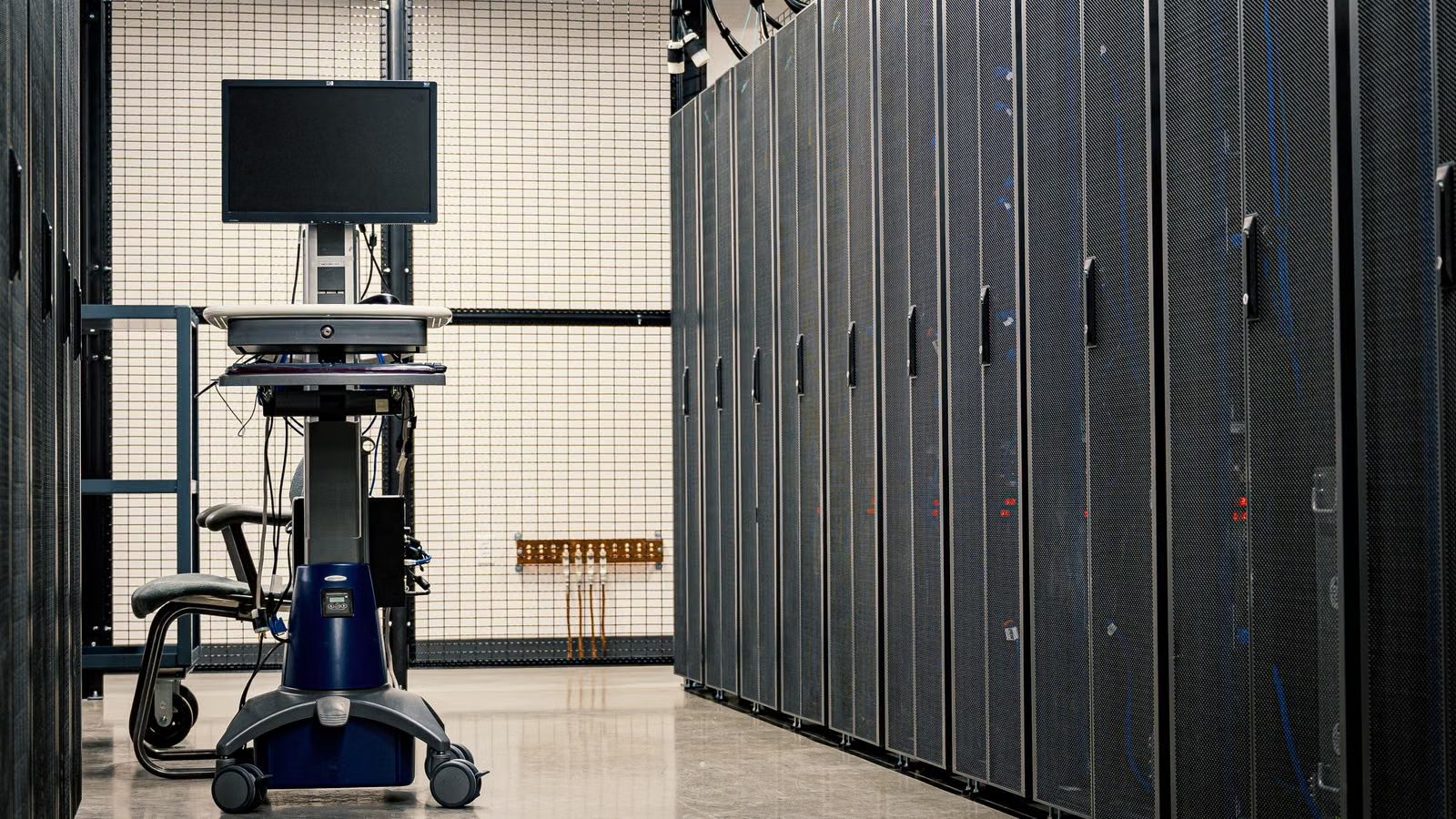
Cold data refers to data that is rarely accessed but still needs to be retained. For AI, the end of model training does not mean the end of the data lifecycle, and deploying inference does not mean data only flows in one direction. You may still need raw training datasets, cleaned data records, model checkpoints, inference logs, user feedback, compliance evidence, and historical versions for reproducibility, retraining, auditing, disaster recovery, and quality tracing. The value of HDDs becomes clearer in this type of large-capacity, low-access, cost-sensitive long-term storage scenario.
Key Takeaways
- Cold data is not useless data; it is low-access data that still needs to be retained.
- Post-training AI data supports reproducibility, fine-tuning, auditing, and recovery.
- AI inference continuously generates logs, feedback, and edge cases, expanding storage pools.
- HDDs fit large-capacity nearline storage, not ultra-low-latency compute paths.
- Cold data only saves money when tiering, lifecycle rules, and retrieval costs are managed.
- To assess HDD demand, look at cloud capex, supply cycles, and technology substitution risks.
What Cold Data Means: Low-Frequency Does Not Mean Low-Value
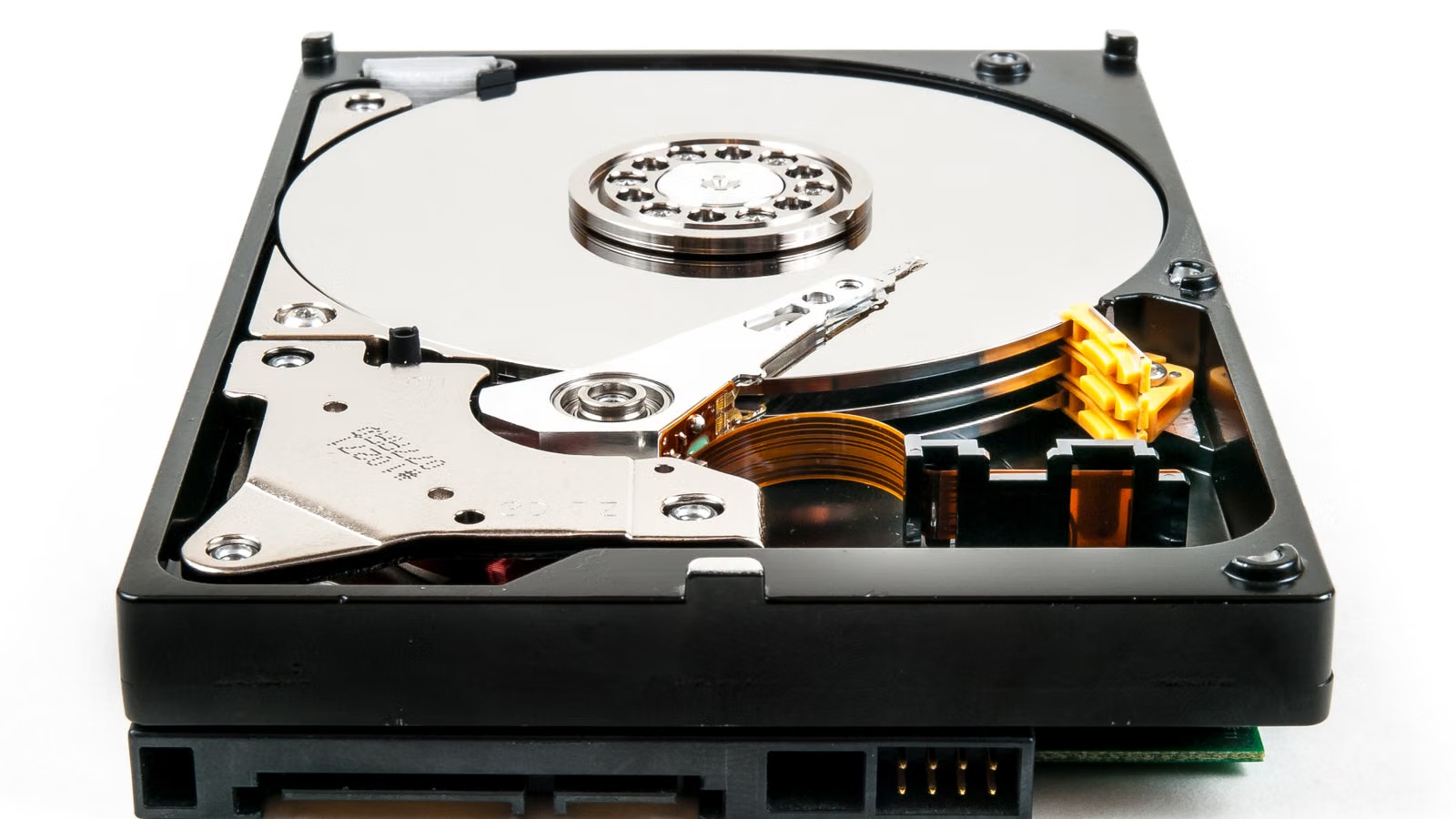
Cold data is data you do not access often, but still cannot delete casually. The key criteria are not whether the file is important in a general sense, but how often it is accessed, how quickly it must be restored, how long it must be retained, and whether it may be reused. Historical training samples, compliance records, older model versions, backup snapshots, and archived inference logs may rarely be read, but when you need to investigate an incident, retrain a model, or respond to an audit, they must still be recoverable. Supermicro’s explanation of cold data storage also emphasizes that it is designed for data accessed infrequently but retained for future reference, compliance, historical records, or backup.
The Difference Between Hot, Warm, Cold, and Archive Data
You can think of data in four layers: hot data supports real-time business, warm data supports recent analysis, cold data supports long-term retention, and archive data supports extremely infrequent retrieval. In an AI system, vector databases, online features, and real-time monitoring metrics are closer to hot data. Inference logs from recent weeks or A/B testing results may be warm data. Training snapshots, historical corpora, and compliance traces from several months ago gradually become cold data.
| Data Type | Access Frequency | Common AI Scenarios | Storage Priority |
|---|---|---|---|
| Hot data | Seconds to minutes | Online inference, real-time retrieval, feature services | Low latency, high IOPS |
| Warm data | Days to weeks | Recent analysis, model evaluation, operational debugging | Balance between cost and performance |
| Cold data | Months to years | Historical training sets, log archives, backups | Low cost per unit of capacity |
| Archive data | Years or longer | Compliance retention, legal evidence, disaster recovery copies | Long-term durability and recoverability |
Which AI Data Becomes Cold Data
AI data does not disappear once training is complete. Raw corpora, cleaned datasets, label versions, model parameters, checkpoints, evaluation results, online feedback, failure cases, and user interaction records can all move from hot data to warm data, and then into the cold data layer. WEKA’s discussion of storage across the AI lifecycle also treats data collection, centralized storage, training, inference, and lifecycle management as one continuous process rather than a single computation task.
Why Infrequent Access Does Not Mean No Value
The value of cold data usually appears after the fact. If model performance suddenly drops, you need to review the training data version. If users complain about abnormal results, you need the inference logs from that moment. If regulators or enterprise customers ask about data provenance, you need data lineage. If the model needs fine-tuning for a new scenario, you may need to sample from older datasets again. Cold data may not create obvious daily value, but it reduces the risk of failed reproduction, compliance gaps, and ineffective disaster recovery.
Summary: Cold data is not valueless data. It is data whose access frequency has declined but that still needs to be retained. In AI systems, deciding whether a dataset belongs in the cold layer should not depend only on whether it was recently read. You also need to consider whether it supports model reproducibility, audit trails, disaster recovery, retraining, and long-term analysis. Hot data solves real-time response needs, warm data supports recent operations, and cold data preserves the long-term memory of the system. A mature data architecture places data with different temperatures into different storage layers based on cost, performance, and recovery requirements, instead of keeping everything on expensive high-performance storage or deleting data simply because it has not been used recently.
Why Data Still Matters After AI Training Ends

After AI training ends, data still cannot be deleted carelessly because it supports reproducibility, fine-tuning, auditing, rollback, and recovery. A model is not permanently stable after one training run. Training data, cleaning rules, label standards, parameter versions, and evaluation results all shape model behavior. If these data assets are missing, it becomes difficult to identify whether later performance problems come from data drift, code changes, sample contamination, or training configuration errors. IBM’s explanation of AI storage also notes that AI storage must manage large volumes of unstructured data needed to train and run AI infrastructure, including images, audio, video, and sensor data.
Training Data Supports Reproducibility, Fine-Tuning, and Retraining
When you train a model, the final weights are not the only valuable output. The raw data, cleaning scripts, filtering rules, annotation versions, feature engineering, and evaluation sets are also critical. Future model training often does not start from zero. It may add new data to older datasets, fix incorrect samples, adjust weights, or rebuild benchmarks. Without older data, model reproducibility declines sharply.
Common long-term AI training data includes:
- Raw datasets and cleaned datasets;
- Data sources, licenses, copyright records, and collection timestamps;
- Label versions, annotation standards, and quality checks;
- Training configurations, hyperparameters, code versions, and environment details;
- Model checkpoints, final weights, and intermediate evaluation results;
- Failed training jobs, abnormal samples, and debugging logs.
Model Checkpoints and Version Data Affect Recovery
Large-scale model training is expensive and time-consuming. Checkpoints act as recovery anchors when training is interrupted. Even after training is complete, older checkpoints can help compare model capabilities at different stages, roll back to a more stable version, or analyze why a training run became overfitted later. Large-scale AI training increasingly looks like distributed systems engineering, where hardware failures and storage I/O bottlenecks can affect recovery and stability. That makes checkpoint and log retention more important, not less.
Audit, Copyright, Compliance, and Security Require Traceability
Training data is increasingly subject to copyright, privacy, security, and sector-specific regulatory requirements. If an enterprise cannot explain what data was used, how it was processed, and which data was deleted or excluded, it becomes harder to complete customer audits or internal governance reviews. In this context, cold data is not warehouse clutter. It is part of the evidence chain for model governance. It helps answer questions such as: Did the model use restricted data? Was a certain output related to a specific dataset? Did a deletion request actually flow into later training pipelines?
Summary: After AI training ends, data remains part of the model asset. What you retain is not a pile of static files, but the context needed for reproducibility, version comparison, recovery, compliance explanation, and later fine-tuning. If training data, checkpoints, logs, and evaluation results are deleted too early, storage costs may fall in the short term, but debugging costs, retraining costs, and compliance risks may rise later. The right approach is not to keep everything forever, but to build lifecycle rules: which data must be retained long term, which data should be kept temporarily, which data can be anonymized and archived, and which data should be deleted after expiration.
Why AI Inference Creates More Cold Data Over Time

After AI inference goes live, cold data does not shrink. It usually grows. The reason is simple: inference is not the end point of a model, but a new data-generation stage. Every request, response, tool call, retrieval result, user feedback signal, failure case, and safety intervention can create new data. When these records are first generated, they may be used for monitoring and debugging. Later, their access frequency declines, but they may still be needed for quality evaluation, retraining, compliance review, and product analysis. At that point, they move into the cold data layer.
Inference Logs Are Raw Material for Product Optimization and Model Evaluation
Production inference logs often include request types, latency, error codes, model versions, call chains, retrieved documents, user feedback, and safety policy hits. You may not read old logs every day, but when the model hallucinates, latency rises, answer quality drops, or costs become abnormal, logs become the basis for investigation. GMI Cloud’s analysis of data management during AI inference also emphasizes that inference involves input processing, model execution, output management, and downstream data handling, rather than a simple request-and-response process.
Failure Cases and Edge Samples Enter the Retraining Pool
The most valuable data for model improvement often comes from online failures. Examples include wrong answers after repeated follow-ups, failed tool calls, irrelevant retrieval results, false positives or false negatives in safety systems, and poor handling of edge cases. These samples may start as warm data, then enter sample libraries, evaluation sets, or safety training datasets. Once their access frequency declines but their long-term value remains, they become cold data.
| Inference Data | Initial Use | Use After Becoming Cold | Common Storage Layer |
|---|---|---|---|
| Request and response logs | Monitoring, debugging | Quality review, audit | Warm layer / cold layer |
| User feedback | Product optimization | Training sample selection | Warm layer / cold layer |
| Retrieval records | RAG hit analysis | Knowledge base evaluation | Object storage / nearline storage |
| Safety intervention records | Risk monitoring | Compliance evidence | Cold layer / archive |
| Failure cases | Model correction | Benchmark expansion | Cold layer |
Agents, Long Context, and Enterprise Knowledge Bases Increase Retention Pressure
Agent applications call tools, read files, generate intermediate states, and may preserve context across multi-step tasks. Long-context models and enterprise RAG systems also create more retrieval, citation, and permission records. Western Digital’s discussion of AI storage architecture offers a useful framing: flash handles the immediate moment, while HDD handles the lifecycle. Applied to inference, this means SSDs are better for real-time paths, while HDDs are better for long-term retention of data generated after inference.
Summary: AI inference turns a model from a data-consuming system into a continuously data-producing system. Request logs, user feedback, retrieval records, failure samples, and safety audit records all accumulate as user scale and call frequency grow. Not all of this data belongs on high-performance SSD storage, but it also cannot be discarded casually. The real question is which data must support real-time monitoring, which data supports recent analysis, which data requires long-term retention, and which data can be anonymized and archived. The larger the inference workload, the more cold data becomes an essential layer of AI infrastructure.
Why HDDs Still Fit AI Cold Data and Nearline Storage
HDDs still fit AI cold data because they offer clear advantages in large capacity, low cost per unit of capacity, and nearline storage. SSDs are better for high-frequency access, low-latency inference, vector search, and fast reads during training. HDDs are better for massive training datasets, historical logs, backups, object storage, and data lakes with lower access frequency. In simple terms, SSDs are for speed, while HDDs are for capacity, retention, and cost control.
The Core Advantage of HDDs Is Cost per Unit of Capacity
AI storage is not defined by a single performance metric. Training requires high throughput, and inference requires low latency, but long-term retention also depends on cost per TB, rack density, power consumption, maintainability, and supply stability. When Seagate launched its 30TB drives for AI data center demand in 2025, it directly connected high-capacity nearline HDDs with the storage requirements of data center AI workloads. This shows that HDDs remain an important part of large-scale storage infrastructure.
Nearline HDDs Fit Low-Frequency but Online Recoverable Data
Nearline storage sits between hot storage and offline archives. It does not aim for the ultra-low latency of memory, HBM, or NVMe SSDs, but it still needs data to remain recoverable and accessible within a practical timeframe. In cloud data lakes, object storage, backup clusters, and historical log systems, HDDs often serve this role. Western Digital has also positioned itself as a storage infrastructure provider for the AI data economy, emphasizing the continued impact of large-scale data retention on storage architecture.
SSDs, QLC SSDs, Tape, and Cloud Archives Each Have Their Place
| Storage Medium | Suitable Scenarios | Strengths | Limitations |
|---|---|---|---|
| NVMe SSD | Training cache, real-time inference, vector search | Low latency, high IOPS | High cost per unit of capacity |
| QLC SSD | Read-heavy, higher-performance cold layer | Balance between capacity and performance | Write endurance and cost need evaluation |
| HDD | Nearline object storage, log archives, retained training sets | Large capacity, lower cost | Weaker random performance than SSD |
| Tape | Very long-term offline archive | Low cost, suitable for deep archive | Slow recovery, complex management |
| Cloud archive | Compliance retention, off-site disaster recovery | Elastic, less operational burden | Retrieval fees and minimum retention periods matter |
AWS S3 Glacier Flexible Retrieval provides retrieval in minutes to hours, while Deep Archive is designed for longer-term, low-frequency access. Google Cloud Nearline, Coldline, and Archive use minimum storage durations and retrieval fees to distinguish different degrees of coldness. Behind these cloud services, the logic is the same: users need to tier data based on access frequency and recovery time.
Summary: HDDs have not been fully replaced by SSDs because AI infrastructure needs more than speed. It also needs long-term, massive, recoverable, and cost-controlled capacity pools. Training and real-time inference rely more on SSDs, GPU memory, and high-speed networks, but cold data, nearline object storage, historical logs, backups, and retained model versions depend more on cost per TB and scalable deployment. The value of HDDs cannot be dismissed by saying “SSDs are faster.” The real question belongs to the data lifecycle: hot data needs speed, cold data needs stability, and archive data needs low cost plus recoverability.
How to Judge the Cost, Performance, and Risk of Long-Term Cold Data Storage
To judge whether long-term cold data storage is cost-effective, you cannot look only at the price per TB. You also need to consider retrieval fees, minimum retention periods, deletion costs, recovery time objectives, redundancy design, cross-region replication, data governance, and operational complexity. Many cold storage solutions look cheap on the surface, but if data is frequently retrieved, moved across regions, stored repeatedly, or poorly managed, total cost may not be low. The key is to first define how long the data can remain unused, how quickly it must be restored, and why it must be retained.
Do Not Look Only at the Cost per TB
Cloud archive tiers usually trade lower static storage costs for higher access costs or longer recovery times. Azure Blob Storage Cool, Cold, and Archive tiers distinguish between online cold tiers and offline archive tiers. Cold is suitable for rarely accessed data that still needs fast retrieval, while Archive is designed for hour-level recovery requirements. Google Cloud Archive storage also has minimum storage duration rules, showing that low pricing often comes with usage conditions.
When evaluating a cold data solution, you should review at least eight metrics:
- Monthly storage cost per TB;
- Data retrieval fees and request fees;
- Minimum retention period and early deletion costs;
- Recovery time objective, or RTO;
- Recovery point objective, or RPO;
- Replication, erasure coding, and cross-region redundancy;
- Encryption, permissions, and audit capabilities;
- Automated lifecycle migration and deletion rules.
Reliability Comes from System Design, Not a Single Drive
HDDs are mechanical devices, so individual drive failures are expected at scale. A real storage system does not depend on a single drive never failing. It uses RAID, erasure coding, multiple replicas, health checks, hot spares, snapshots, off-site replication, and periodic migration to maintain availability. The more important the cold data is, the more dangerous it is to store it in a single medium, single data center, or single account. For AI enterprises, once training data and inference logs become compliance evidence or model assets, they must be included in data governance and backup systems.
Lifecycle Rules Determine Whether Cold Data Actually Saves Money
Cold data management does not end when files are moved to a lower-cost tier. You need automatic tiering rules: data not accessed for 30 days moves to a warm layer, data not accessed for 90 days moves to a cold layer, data older than 180 days moves to archive, and data past its compliance window is deleted or anonymized. AWS documentation on minimum retention periods for Glacier storage classes is a reminder that cold storage often has minimum billing periods, and deleting too early may also create costs. This is why enterprises need to design lifecycle rules based on actual access patterns and retention periods.
Summary: Whether cold data saves money depends on total cost of ownership, not on a single price quote. You need to calculate capacity cost, retrieval cost, deletion cost, recovery time, redundancy cost, and management cost together. This is especially important in AI scenarios, where training data and inference logs are large, long-lived, and subject to complex governance requirements. Without clear tiering, cold data can fill expensive storage. If you chase low prices too aggressively, recovery may become slow, costly, or unreliable when the data is actually needed. A mature strategy uses lifecycle rules to manage hot, warm, cold, and archive layers automatically.
How Cold Data Affects HDDs, Cloud Providers, and AI Infrastructure
Cold data affects the HDD value chain because AI is stretching storage demand from “capacity needed for one training run” into “capacity needed for continuous inference and long-term retention.” If you only focus on GPUs, HBM, or high-speed SSDs, you may miss the capacity demand in the second half of the data lifecycle. Training sets, model versions, inference logs, enterprise knowledge bases, and compliance archives continue to grow, supporting long-term demand for nearline HDDs, object storage, cloud archives, and data center capacity planning. At the same time, investors still need to account for supply cycles, technology substitution, and pricing volatility.
The AI Data Flywheel Extends the Storage Demand Cycle
The more AI applications are deployed, the more data they generate. The more data they generate, the more future training, evaluation, and optimization rely on historical data. This is the data flywheel. HDDs do not serve the fastest compute stage in that flywheel, but they do absorb the expanding pool of historical data. Western Digital’s discussion of AI storage demand also points out that beyond AI data center construction, data growth itself can extend storage demand. This aligns closely with the logic of cold data.
Nearline HDD Supply, Cloud Capex, and Long-Term Agreements Matter
For investors tracking the HDD value chain, three types of variables matter. First, whether cloud provider capital expenditure and data center expansion remain strong. Second, whether shipments, pricing, and margins for high-capacity nearline HDDs improve. Third, whether Seagate, Western Digital, and other suppliers can execute their high-capacity technology roadmaps. Market discussion around long-term supply agreements for SSDs and HDDs suggests that major customers are paying closer attention to storage supply stability. However, such signals still need to be checked against company earnings, order cycles, and industry inventory conditions, and should not be treated as guaranteed growth.
| Indicator | What It Suggests | Risk to Watch |
|---|---|---|
| Nearline HDD shipments | Cloud and AI capacity demand | Customer concentration, order volatility |
| Average drive capacity | Adoption of high-capacity drives | Technology transition delays |
| Gross margin changes | Supply-demand balance and product mix | Reversal in pricing cycle |
| Cloud capex | Data center expansion intensity | Slower AI investment cycle |
| Long-term supply agreements | Demand for supply stability | Contract pricing and execution opacity |
| Falling SSD costs | Substitution pressure | QLC SSDs entering the cold layer |
Trading Costs Also Belong in the Research Framework
If you research HDDs, AI data centers, or storage-related U.S. stocks, you should not only look at the industry narrative. You also need to review earnings, valuation, industry cycles, and transaction costs. U.S. stock trading costs may include more than commissions, such as platform fees, external institutional fees, transaction activity fees, and other charges. Biya charges 0 USD in U.S. stock trading commissions, while platform fees, external institutional fees, and other charges are subject to the Biya U.S. stock trading fee structure and the order screen. You can also use Biya to track multi-asset markets including U.S. stocks, Hong Kong stocks, and digital assets. Availability of related services depends on your location, identity verification result, platform rules, and applicable laws and regulations.
Summary: Cold data brings HDDs back into the AI infrastructure discussion. GPUs and HBM address compute bottlenecks, SSDs address high-speed access, and HDDs carry the long-term capacity pool. When evaluating the HDD value chain, you should look at AI inference, cloud capex, and data retention on the demand side, as well as high-capacity technology roadmaps, pricing power, and inventory cycles on the supply side. More importantly, investment analysis should go beyond the simple idea that “AI needs storage.” You need to identify who benefits, when they benefit, how much profit leverage exists, and where substitution risk may appear.
If you follow AI infrastructure, HDDs, nearline storage, and related U.S. stock opportunities, cold data can serve as a useful entry point for understanding the storage value chain. It connects training, inference, logs, compliance, cloud capex, and HDD shipments into one framework, instead of focusing only on short-term stock price moves. You can combine company earnings, industry news, pricing cycles, and Biya U.S. stock information to monitor changes in Seagate, Western Digital, cloud providers, and data center hardware companies. If related services are available in your region and you meet applicable requirements, you can also download App to explore multi-asset market information and trading features. This content discusses public market information, industry logic, and fee structures only. It does not constitute investment advice. Before trading, you should fully understand order types, fee details, and your own risk tolerance.
FAQ
Does AI Cold Data Always Need HDD Storage?
No, AI cold data does not always need HDD storage. HDDs are suitable for large-capacity, low-access, cost-sensitive data, while high-frequency reads, real-time retrieval, vector databases, and low-latency inference paths may be better served by SSDs, object storage, or hybrid architectures. The right choice depends on access frequency, recovery time, and budget.
How Long Should AI Training Data Be Stored?
There is no universal retention period for AI training data. You should decide based on model reproducibility needs, copyright audits, customer contracts, industry regulations, retraining frequency, and internal data governance rules. For privacy, compliance, or account-related data, local laws and company retention policies should apply.
Why Can Cold Data Storage Become Expensive?
Cold data storage can become expensive when you only look at static capacity pricing and ignore retrieval fees, request fees, cross-region transfer fees, minimum retention periods, and duplicate copies. If data is retrieved frequently or lifecycle rules are unclear, a low-cost cold tier may no longer be the right choice.
Are AI Inference Logs Considered Cold Data?
AI inference logs are usually not cold data at first. They often start as hot or warm data used for monitoring, debugging, quality evaluation, and safety analysis. They become cold data only when access frequency declines but they still need to be retained for auditing, retraining, or historical analysis.
How Can Investors Track HDD Demand from AI?
Investors can track nearline HDD shipments, high-capacity drive roadmaps, cloud provider capital expenditure, AI inference demand, supplier gross margins, and long-term supply agreements. These indicators should not be used alone. They need to be assessed together with valuation, inventory cycles, competition, and market risk.
Can Enterprises Delete AI Cold Data Directly?
Enterprises should not delete AI cold data simply because it has not been used recently. You should first confirm whether it supports model reproducibility, user dispute resolution, compliance audits, disaster recovery, or retraining. Data classification, anonymization, archiving, and scheduled deletion can reduce cost without losing necessary control.
*This article is provided for general information purposes and does not constitute legal, tax or other professional advice from BiyaPay or its subsidiaries and its affiliates, and it is not intended as a substitute for obtaining advice from a financial advisor or any other professional.
We make no representations, warranties or warranties, express or implied, as to the accuracy, completeness or timeliness of the contents of this publication.
Related Blogs of

Are There HBM Concept Stocks in Hong Kong? A Breakdown of Related Companies and Their Real Business Boundaries


Has the Memory Supercycle Really Arrived? The Difference Between AI Demand and the Traditional Cycle


Enterprise SSD vs Consumer SSD: Price, Endurance, Use Cases, and Related Companies


What Is the Difference Between HBM Stocks and GPU Stocks?

Choose Country or Region to Read Local Blog
 Australia
 Austria
 Belgium
 Canada
 Cyprus
 Czech Republic
 Denmark
 Estonia
 Finland
 France
 Germany
 Greece
 Hong Kong
 India
India Indonesia
 Ireland
 Italy
Italy Japan
Japan Latvia
 Lithuania
 Luxembourg
 Malaysia
 Malta
Malta Morocco
 Nepal
Nepal Netherlands
 New Zealand
 Norway
 Pakistan
 Philippines
 Poland
 Portugal
 Romania
 Singapore
 Slovakia
 Slovenia
 South Africa
 South Korea
 Spain
Spain Sweden
 Thailand
 The United States
 Turkey
 United Arab Emirates
 United Kingdom
 Vietnam
Contact Us




BIYA GLOBAL LLC is registered with the Financial Crimes Enforcement Network (FinCEN), an agency under the U.S. Department of the Treasury, as a Money Services Business (MSB), with registration number 31000218637349, and regulated by the Financial Crimes Enforcement Network (FinCEN).
BIYA GLOBAL LIMITED is a registered Financial Service Provider (FSP) in New Zealand, with registration number FSP1007221, and is also a registered member of the Financial Services Complaints Limited (FSCL), an independent dispute resolution scheme in New Zealand.