
Are There HBM Concept Stocks in Hong Kong? A Breakdown of Related Companies and Their Real Business Boundaries




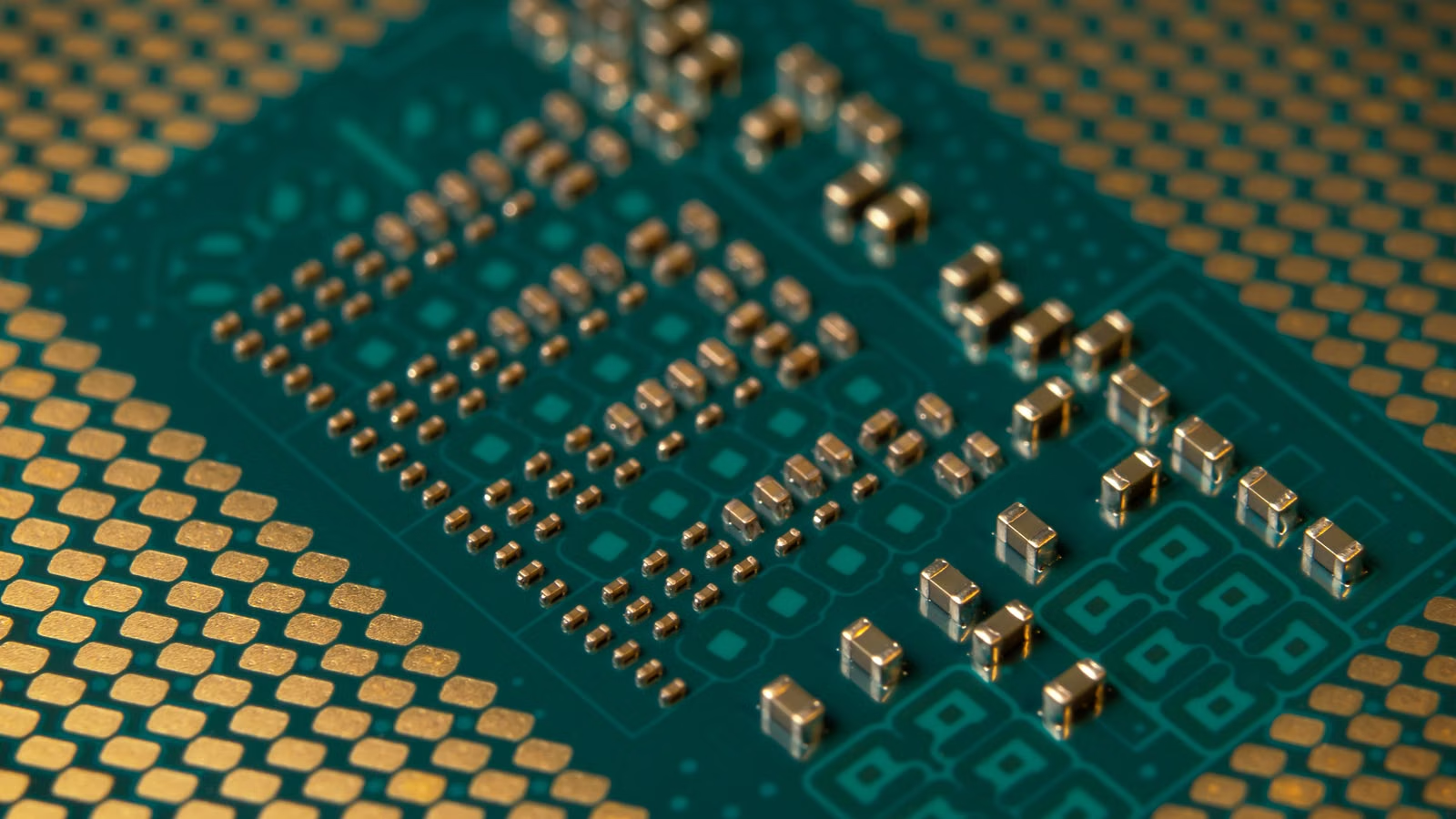
Hong Kong does have HBM-related stocks, but you should not simply label every “semiconductor stock,” “storage stock,” or “AI chip stock” as an HBM concept stock. Strictly speaking, Hong Kong currently lacks pure-play companies comparable to SK hynix, Samsung, or Micron that directly manufacture HBM DRAM chips. A more accurate view is this: ASMPT is closer to the advanced packaging equipment chain, Montage Technology is closer to memory interconnect, GigaDevice is closer to Flash and specialty DRAM, while Hua Hong Semiconductor, SMIC, and Shanghai Fudan are more indirect or boundary-level observation targets.
Key Takeaways
- Hong Kong lacks typical memory manufacturers that directly produce HBM chips.
- ASMPT’s core logic lies in TCB and advanced packaging equipment.
- Montage Technology is closer to server memory interconnect, not HBM manufacturing.
- GigaDevice is a memory chip design company, but it is not an HBM stock.
- Hua Hong, SMIC, and Shanghai Fudan should be understood as indirectly related.
- To judge HBM relevance, focus on revenue sources, orders, and value-chain position.
Are There Any Real HBM Concept Stocks in Hong Kong?

Hong Kong has HBM-related companies, but the phrase “real HBM concept stock” must be understood in layers. If you mean DRAM manufacturers that directly produce HBM chips, Hong Kong currently does not have a very pure equivalent. If you mean companies benefiting from HBM capacity expansion, AI server upgrades, advanced packaging, and memory bandwidth demand, ASMPT, Montage Technology, and GigaDevice can be included in the watchlist, but their relevance varies significantly.
HBM stands for High Bandwidth Memory. It is not ordinary NAND, nor is it a traditional hard drive. It is a high-performance DRAM solution designed for AI accelerators, HPC, GPUs, and ASICs. The JEDEC HBM4 standard raises the interface width to 2048-bit and pushes single-stack bandwidth toward 2TB/s. This shows that HBM’s core value is not “cheap capacity,” but extremely high bandwidth, lower power consumption, and near-compute deployment.
So when you screen Hong Kong-listed HBM-related stocks, the first question should be: where exactly is this company positioned in the value chain?
| Value Chain Layer | Direct HBM Exposure? | Hong Kong Representative | Real Relationship | Relevance |
|---|---|---|---|---|
| HBM chips | Yes | No typical pure-play stock yet | Direct HBM DRAM production | Strongest, but absent in Hong Kong |
| Advanced packaging equipment | No | ASMPT | TCB, chiplet, HBM packaging equipment | Strong |
| Memory interconnect | No | Montage Technology | Server memory interface and interconnect chips | Medium to strong |
| Memory chip design | No | GigaDevice | Flash, specialty DRAM, MCU | Medium |
| Specialty foundry | No | Hua Hong Semiconductor | eNVM, NOR, mature-node processes | Medium to weak |
| Wafer foundry | No | SMIC | Foundry demand and customer-cycle spillover | Medium to weak |
| Diversified chip design | No | Shanghai Fudan | NVM, FPGA, security identification chips | Medium to weak |
This is also where the Hong Kong HBM theme is most easily misunderstood. The market often puts “AI, storage, chips, domestic substitution, and advanced packaging” into the same thematic basket, but these keywords do not represent the same revenue structure. HBM manufacturers make money from high-end DRAM chips. Advanced packaging equipment companies make money from equipment orders. Memory interconnect chip companies benefit from server platform upgrades. Foundries earn revenue from customer production demand.
Summary: Hong Kong is not without HBM-related stocks, but you need to separate “direct HBM” from “HBM-related.” Real HBM chip manufacturing requires DRAM process technology, TSV, stacking, yield control, and certification from leading AI customers. Hong Kong currently lacks this type of pure-play company. A better framework for Hong Kong investors is to divide companies into three groups: strongly related, indirectly related, and boundary-level observation targets. ASMPT is tied to advanced packaging equipment, Montage Technology is tied to memory interconnect, GigaDevice is tied to the traditional memory chip cycle, while Hua Hong, SMIC, and Shanghai Fudan should be understood through weaker storage spillover logic. This approach prevents you from overlooking real business boundaries just because of a “concept stock” label.
ASMPT: The Strongest HBM Logic in Hong Kong Is Advanced Packaging Equipment
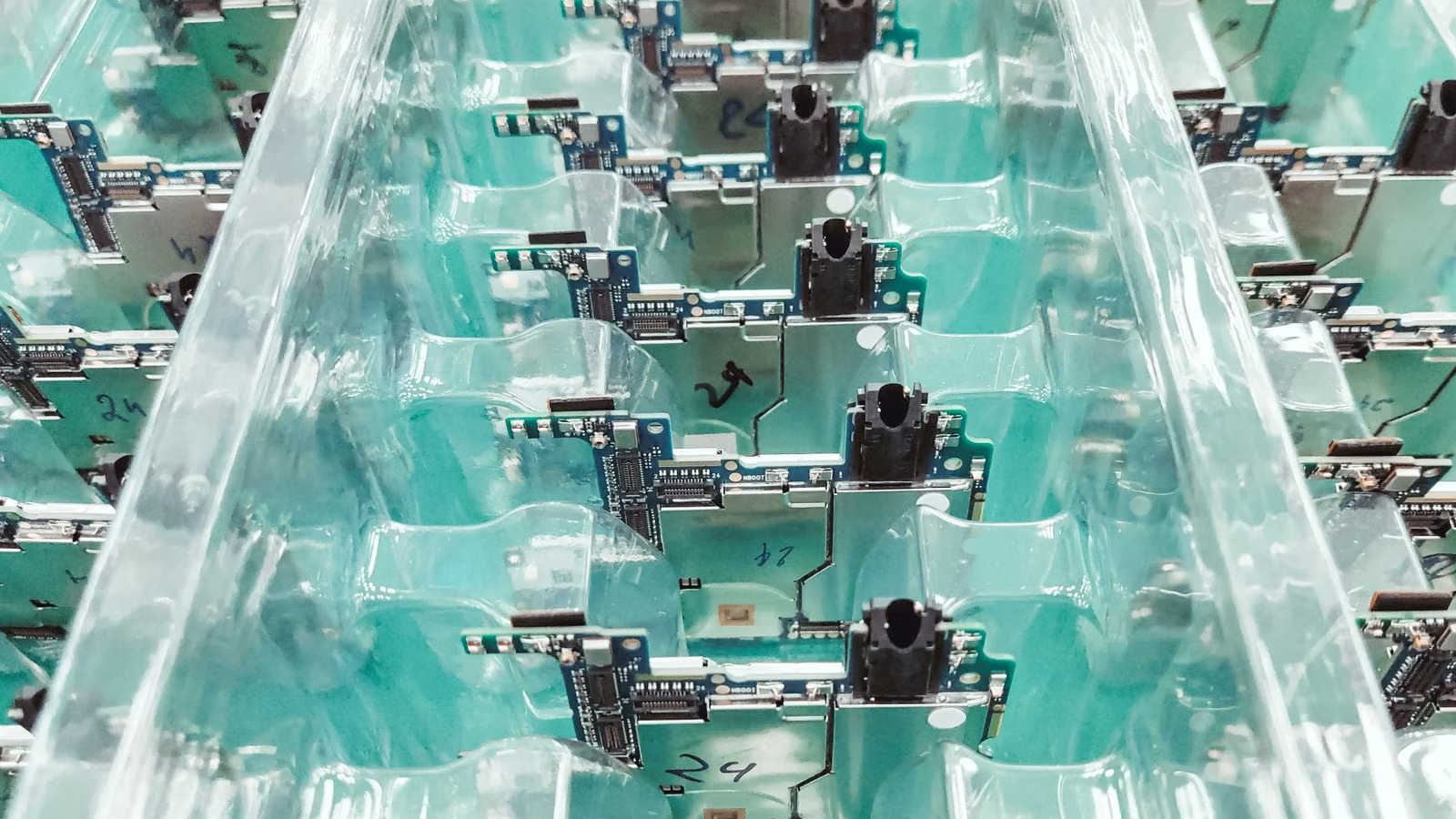
If you are looking for one of the most HBM-relevant companies in Hong Kong, ASMPT 0522.HK is usually a first-tier candidate. It is not an HBM chip manufacturer, nor is it a DRAM producer. Its relationship with HBM comes from advanced packaging equipment, especially TCB, chip-to-substrate, chip-to-wafer, HBM stacking, and AI chip packaging expansion.
ASMPT’s core value is not “producing memory chips,” but helping advanced packaging lines achieve denser and more precise chip interconnects. The company positions itself as a semiconductor and electronics manufacturing equipment supplier, and its semiconductor and electronics manufacturing solutions cover packaging, assembly, and electronics manufacturing processes. The stronger HBM demand becomes, the more complex AI GPUs, ASICs, chiplets, and 2.5D / 3D packaging become, and the higher the requirements for equipment precision, yield, and capacity.
ASMPT’s direct support for the HBM theme comes from its disclosed chip-to-substrate TCB tools orders. In related disclosures, the company clearly stated that the TCB market is driven by AI and HPC applications, and that its technology portfolio covers chip-on-wafer, chip-on-substrate, and HBM applications. Another technical area worth watching is AOR TCB technology, which aims to reduce contamination risk, improve bonding consistency, and help enhance advanced packaging yield.
You can think of ASMPT as an “equipment leverage” play in the HBM value chain. When HBM manufacturers and advanced packaging players expand capacity, equipment companies may benefit before end products fully ramp. But this also means ASMPT’s share price often prices in order expectations early. If future order momentum, customer validation, or revenue recognition falls short, valuation volatility may also be significant.
To evaluate ASMPT’s HBM relevance, focus on six signals:
- Whether it continues to disclose TCB, HBM, and AI chip packaging-related orders.
- Whether advanced packaging equipment accounts for a rising share of revenue.
- Whether customers come from OSATs, foundries, or IDMs.
- Whether equipment has entered mass production, not just sample validation.
- Whether TCB equipment improves gross margin and order quality.
- Whether the share price has already fully priced in HBM expansion expectations.
Two concepts must be separated here: ASMPT is not a “company that sells HBM.” It is a “company that may benefit from HBM packaging capex.” If you treat it as a memory chip stock, you may apply the wrong valuation logic. If you treat it as an advanced packaging equipment stock, you should pay more attention to orders, customer certification, delivery schedules, the share of semiconductor solutions revenue, and global advanced packaging capex.
Summary: ASMPT is one of the more HBM-relevant Hong Kong-listed names, but strong relevance does not mean identical business exposure. It does not produce HBM DRAM. It participates in the HBM ecosystem through TCB, advanced packaging, and AI chip packaging equipment. For investors, the key question is not “Is ASMPT an HBM company?” but “Can HBM and AI packaging expansion translate into ASMPT’s equipment orders, revenue, and profit?” If orders enter mass-production customers, advanced packaging revenue rises, and gross margin improves with product mix, the HBM logic becomes more solid. If the trade is driven only by thematic excitement, the risk is also higher.
Montage Technology and GigaDevice: One Focuses on Memory Interconnect, the Other on Memory Chip Design
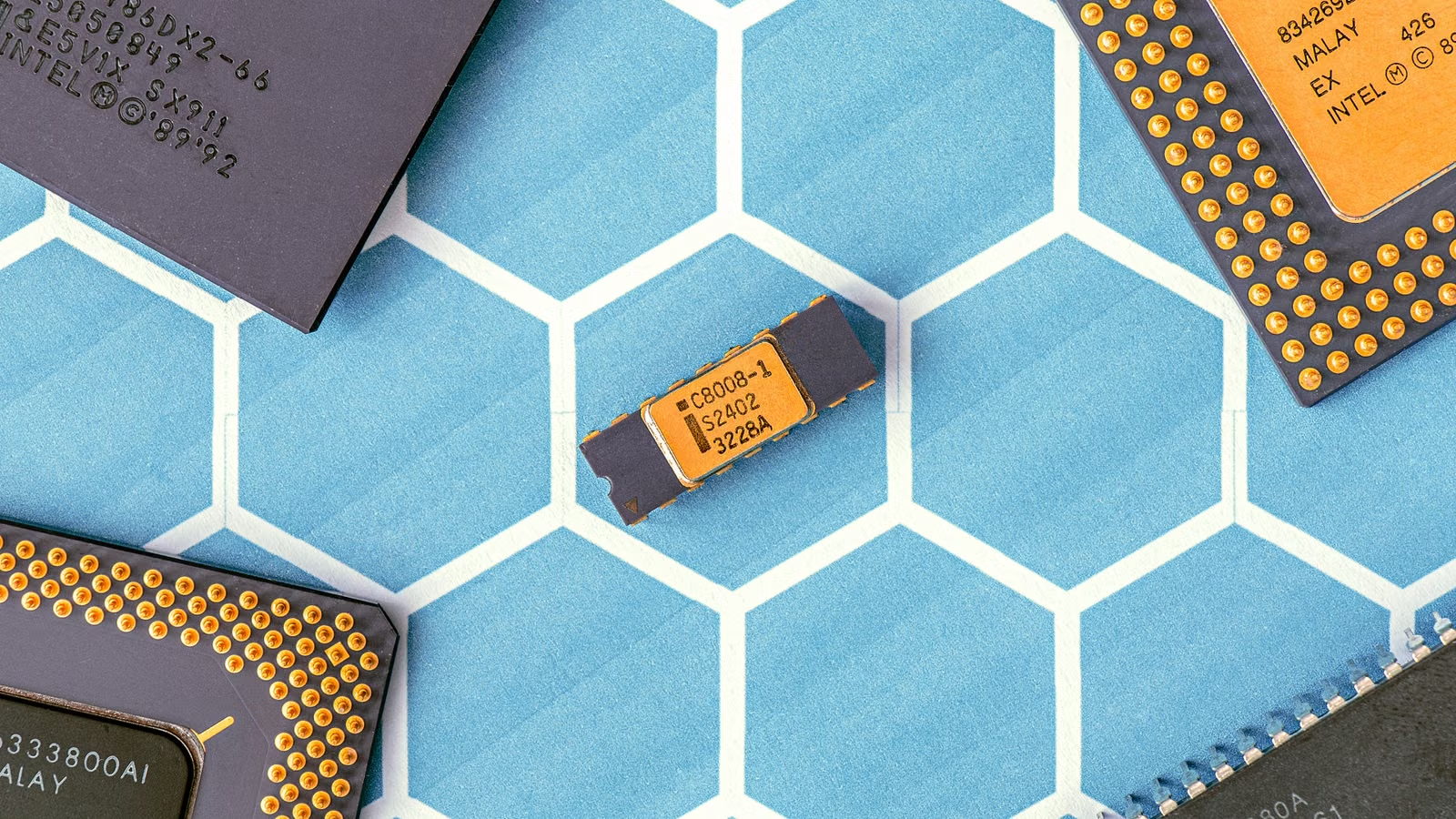
Montage Technology 6809.HK and GigaDevice 3986.HK can both be included in a Hong Kong-listed storage-related stock overview, but their relationships with HBM are completely different. Montage Technology is closer to server memory interconnect and AI data center bandwidth upgrades. GigaDevice is closer to Flash, specialty DRAM, MCU, and domestic memory chip design. Neither is an HBM chip manufacturer.
The keyword for Montage Technology is memory interconnect, not memory manufacturing. HKEX information for Montage Technology H Shares corresponds to stock code 6809. Reuters’ coverage of Montage Technology’s Hong Kong listing noted that the company supplies data center memory interface chips and that its products help AI computing networks move data faster between processors and memory. This logic is adjacent to HBM because the bottleneck in AI servers is often not only compute power, but also memory bandwidth, data movement, and interconnect efficiency.
However, this does not mean Montage Technology should be directly equated with an HBM manufacturer. It is better analyzed within the framework of DDR5, RCD, MRCD, MDB, CXL, PCIe, memory interface chips, and server platform upgrades. Its strength comes from data center memory ecosystem upgrades, not from manufacturing HBM stacks itself.
GigaDevice follows a different logic. In its Hong Kong listing information, the company disclosed a product portfolio covering Flash memory, specialty DRAM, MCU, analog ICs, and sensor chips. Reuters’ coverage of GigaDevice’s Hong Kong debut also described the company as a fabless chip design firm with a strong position in NOR Flash.
So while Montage Technology and GigaDevice both belong in the discussion of Hong Kong-listed storage-related stocks, they require different research frameworks:
| Dimension | Montage Technology 6809.HK | GigaDevice 3986.HK |
|---|---|---|
| Core label | Memory interconnect chips | Flash, specialty DRAM, MCU |
| Relationship with HBM | Adjacent to the memory bandwidth ecosystem | Related through storage-cycle spillover |
| HBM chip manufacturer? | No | No |
| Key areas to watch | DDR5, RCD, CXL, AI servers | NOR Flash, SLC NAND, specialty DRAM |
| Main catalysts | AI data center memory upgrades | Memory pricing, domestic substitution, demand recovery |
| Main risks | Customer concentration, product iteration, valuation | Cyclical volatility, inventory, intensified competition |
If you focus on the HBM theme, Montage Technology is usually more relevant than GigaDevice because it is closer to AI server memory bandwidth and interconnect efficiency. But if you focus on the overall Hong Kong storage chip universe, GigaDevice is also an important name because it represents Flash and specialty DRAM design capabilities. Their common ground is that both are influenced by AI, servers, domestic semiconductors, and the memory cycle. Their difference is that one is about “data movement,” while the other is about “storage products.”
Summary: Montage Technology and GigaDevice are not HBM chip manufacturers, but both are related to the Hong Kong storage theme. Montage Technology’s core business is server memory interconnect, so it is better analyzed through AI data centers, memory bandwidth, DDR5, CXL, and interface chip upgrades. GigaDevice’s core business is Flash, specialty DRAM, and MCU, so it is better analyzed through memory pricing, inventory cycles, consumer electronics, industrial control, automotive electronics, and domestic substitution. You can place Montage Technology in the HBM-adjacent ecosystem and GigaDevice in the memory cycle and chip design layer, rather than labeling both with the same HBM tag.
Hua Hong Semiconductor, SMIC, and Shanghai Fudan: Why Are They Only Indirectly Related?
Hua Hong Semiconductor 1347.HK, SMIC 0981.HK, and Shanghai Fudan 1385.HK can all be included in a Hong Kong semiconductor and storage-related watchlist, but they should not be directly defined as HBM concept stocks. Their links to the storage value chain mainly come from eNVM, NOR, wafer foundry services, NVM, FPGA, and customer-demand spillover. They are farther away from HBM chips and the core HBM packaging chain.
Hua Hong Semiconductor’s storage relevance mainly comes from its specialty process platform. The embedded/standalone non-volatile memory capabilities within the Hua Hong system are key to understanding its relationship with storage. eNVM, NOR Flash, and MCU-related embedded memory are indeed related to “storage,” but they are not HBM. Hua Hong is better analyzed through mature nodes, specialty processes, capacity utilization, ASP, gross margin, and customer structure, rather than through HBM chip production.
SMIC is similar. It is a wafer foundry, not a company that sells its own branded DRAM, NAND, or HBM. Reuters’ reporting on the impact of a memory shortage on customer orders shows that AI-driven memory supply tightness can affect ordering and inventory decisions among smartphone, automotive, and other customers. This indicates that the memory cycle can spill over into the foundry chain. But this is still an indirect impact, not direct HBM product revenue for SMIC.
Shanghai Fudan’s boundary requires even more caution. The company’s product system includes NVM, smart meter chips, security identification chips, and specific analog circuits, which shows its connection to non-volatile memory and diversified chip design. Its high-end FPGA direction may also overlap with industrial control, communications, and AI edge-computing scenarios. But the fact that FPGA can appear in HBM-related application scenarios does not mean the company is an HBM supplier.
| Company | Real Relationship with Storage | Distance from HBM | Better Research Framework |
|---|---|---|---|
| Hua Hong Semiconductor | eNVM, NOR, specialty process foundry | Relatively far | Mature nodes and embedded memory |
| SMIC | Wafer foundry and customer-demand spillover | Relatively far | Foundry cycle and domestic substitution |
| Shanghai Fudan | NVM, FPGA, diversified chip design | Relatively far | Non-volatile memory and programmable logic |
| ASMPT | TCB and advanced packaging equipment | Relatively close | HBM packaging capex |
| Montage Technology | Memory interface and interconnect chips | Moderately close | AI server memory bandwidth |
| GigaDevice | Flash and specialty DRAM | Medium | Memory chip cycle |
These three companies are often included in the HBM theme because capital markets tend to link “AI chip localization,” “semiconductor self-sufficiency,” “memory price increases,” and “advanced packaging” together. But in terms of business boundaries, Hua Hong, SMIC, and Shanghai Fudan are closer to underlying semiconductor platforms or boundary-level stocks in Hong Kong, rather than mainline HBM stocks.
Summary: Hua Hong Semiconductor, SMIC, and Shanghai Fudan can be used as supplementary observation targets for Hong Kong-listed storage-related stocks, but they should not be simply called HBM concept stocks. Hua Hong should be evaluated through eNVM, NOR, and specialty processes; SMIC through wafer foundry demand, capacity utilization, and customer orders; Shanghai Fudan through NVM, FPGA, and diversified chip design. Their common feature is that they are connected to semiconductor localization and some storage applications, but they are several value-chain layers away from HBM chips, TSV stacking, and core HBM packaging equipment. Placing them in the “indirectly related” layer is more accurate than directly attaching an HBM label.
How Can You Judge Whether a Hong Kong Stock Truly Benefits from HBM?
To judge whether a Hong Kong stock truly benefits from HBM, you should not only check whether the company appears on a concept-stock list. You need to examine where it sits in the value chain, whether revenue is verifiable, whether orders have entered mass production, whether customers are truly expanding capacity, and whether valuation has already priced in expectations. The closer a company is to HBM chips, packaging equipment, memory interconnect, and AI server demand, the stronger its relevance usually is.
You can assess this in five steps.
First, look at the value-chain position. If a company directly produces HBM chips, relevance is strongest. If it provides TCB, hybrid bonding, chiplet, or CoWoS-type equipment, relevance is also strong. If it makes DDR5, CXL, RCD, or MRCD memory interconnect products, it belongs to the adjacent ecosystem. If it makes NOR Flash, SLC NAND, or specialty DRAM, it is more related to the memory cycle. If it provides wafer foundry services, eNVM, or FPGA, it should be treated as indirectly related.
Second, look at revenue directness. Whether a theme can turn into revenue is the key distinction between real benefit and thematic speculation. You need to check whether company announcements and financial reports include clear references to HBM, TCB, AI, HPC, advanced packaging, memory interconnect, DDR5, CXL, and similar terms. You also need to determine whether these businesses are only technical demonstrations or have already entered orders, delivery, and revenue recognition.
Third, look at customer validation. The HBM value chain has high barriers. Having the right technical terms is not enough to scale. What matters is customer certification, mass-production adoption, repeat orders, and capacity expansion. Equipment companies should be assessed by whether major customers place follow-on orders. Interface chip companies should be assessed by server platform iterations. Memory chip companies should be assessed by prices, inventory, and downstream demand recovery.
Fourth, look at valuation. HBM is a hot theme, and stock prices often rise before earnings do. A strongly related company does not automatically mean low short-term buying risk. A weakly related company may also perform during a semiconductor cycle rebound. You need to separate “industrial logic” from “market price.”
Fifth, look at risk sources. The transition from HBM3E to HBM4, AI GPU shipment schedules, TSMC’s advanced packaging capacity, memory manufacturers’ capex, U.S. export controls, and domestic AI chip demand can all affect expectations for related companies.
| Scoring Dimension | High-Relevance Signal | Low-Relevance Signal |
|---|---|---|
| Value-chain position | Packaging equipment, memory interconnect, AI server core chain | General semiconductor or broad chip design |
| Revenue directness | Clear products, orders, and revenue contribution | Only conceptual descriptions |
| Customer validation | Mass production, repeat orders, leading customers | Samples or partnerships only |
| Cyclical leverage | Driven by HBM expansion and AI servers | Mainly driven by ordinary consumer electronics |
| Valuation risk | Earnings growth can support valuation | Stock price mainly driven by themes |
When you observe across markets, you also need to separate company research from trading costs. Many strongly HBM-related companies are not listed in Hong Kong, but in the U.S., South Korea, or Taiwan. If you track both Hong Kong and U.S. semiconductor companies, you should pay attention not only to share price volatility but also to fee structure. For example, Biya charges 0 USD commission for U.S. stock trading, while platform fees, external institutional fees, and other charges are subject to the U.S. stock trading fees and order page display. Availability of related services depends on the user’s location, identity verification results, platform rules, and applicable laws and regulations.
Summary: The most effective way to judge Hong Kong-listed HBM-related stocks is not to ask “Is it a concept stock?” but to ask five more specific questions: where is it positioned in the HBM value chain? Is revenue direct? Are orders verifiable? Are customers genuinely expanding capacity? Has valuation already priced in too much expectation? For equipment companies such as ASMPT, focus on TCB and advanced packaging orders. For Montage Technology, focus on memory interconnect and server platform upgrades. For GigaDevice, focus on the Flash and specialty DRAM cycle. For Hua Hong, SMIC, and Shanghai Fudan, focus on foundry services, NVM, FPGA, and customer demand. This framework helps turn thematic excitement into verifiable business variables.
How Should Ordinary Investors Track Hong Kong-Listed HBM-Related Stocks?
Ordinary investors can track Hong Kong-listed HBM-related companies using a three-layer framework: core chain, related chain, and boundary observation. The core chain focuses on ASMPT and Montage Technology. The related chain focuses on GigaDevice. Boundary observation includes Hua Hong Semiconductor, SMIC, and Shanghai Fudan. This approach is more robust than simply chasing concept stocks and makes it easier to control research errors.
The first layer is the strongly HBM-related chain. ASMPT follows the advanced packaging equipment logic. Key variables include TCB orders, HBM applications, AI chip packaging, and customer mass-production validation. Montage Technology follows the memory interconnect logic. Key variables include DDR5, RCD, CXL, AI server memory bandwidth, and data center platform upgrades.
The second layer is the memory-cycle-related chain. GigaDevice does not directly produce HBM, but it is an important memory chip design company. When observing it, you should focus on NOR Flash, SLC NAND, specialty DRAM, MCU, automotive electronics, industrial control, and inventory cycles, rather than treating it as an HBM manufacturer.
The third layer is the boundary-observation chain. Hua Hong Semiconductor, SMIC, and Shanghai Fudan are better understood through the broader Hong Kong semiconductor cycle. They may be affected by AI semiconductors, domestic substitution, mature nodes, NVM, FPGA, and customer demand, but they are farther away from the main HBM chain.
| Investor Type | Priority Names | Core Indicators | Main Risks |
|---|---|---|---|
| Theme-driven | ASMPT, Montage Technology | HBM, AI, advanced packaging catalysts | Overheated valuation |
| Fundamental | ASMPT, GigaDevice | Revenue, gross margin, orders | Slow earnings realization |
| Cyclical | GigaDevice, Hua Hong Semiconductor | Memory prices, inventory, capacity utilization | Cycle reversal |
| Conservative observer | SMIC, Hua Hong, Shanghai Fudan | Foundry demand, R&D, product mix | Weak HBM relevance |
| Cross-market | Hong Kong + U.S. semiconductors | Valuation, liquidity, fee structure | FX and market volatility |
You also need to continuously track several external variables: HBM3E / HBM4 mass-production schedules, capex from SK hynix, Samsung, and Micron, demand for HBM from NVIDIA, AMD, and ASIC vendors, TSMC’s CoWoS and advanced packaging capacity, domestic AI chip and server procurement, and changes in DRAM, NAND, and NOR Flash prices.
If you need to compare Hong Kong and U.S. semiconductor companies at the same time, you can first use U.S. stock information search to check basic information on U.S. stocks, then cross-check it with Hong Kong company announcements, financial reports, and industry news. Before trading, you should also understand order types, fee structures, exchange-rate changes, and liquidity risks. If your location meets the applicable service conditions, you can also download the App to further check supported services and the actual rules displayed in the platform.
Summary: Hong Kong-listed HBM-related stocks should not be screened with a single label. A layered framework works better. ASMPT leans toward advanced packaging equipment upside, Montage Technology toward memory interconnect and server bandwidth upgrades, GigaDevice toward the memory chip cycle, and Hua Hong Semiconductor, SMIC, and Shanghai Fudan toward semiconductor boundary observation. For ordinary investors, the point is not to find the name that “sounds most like HBM,” but to place each company back into its revenue structure, customer validation, value-chain position, and valuation risk. Any hot theme may bring high volatility. Before trading, you should consider company announcements, financial reports, fee structures, and your own risk tolerance, and you should not treat thematic popularity as a promise of returns.
If you follow Hong Kong-listed HBM-related companies, you will usually also follow U.S. AI chip stocks, memory manufacturers, advanced packaging companies, and the data center value chain. Biya is a global multi-asset trading wallet that supports U.S. stocks, Hong Kong stocks, and cryptocurrency trading, as well as USDT conversion into major fiat currencies such as USD and HKD. For cross-market investors, the more important task is to review company research, market tracking, fee structures, and trading rules within one consistent framework. Biya charges 0 USD commission for U.S. stock trading, while platform fees, external institutional fees, and other charges are subject to the fee center and order page display. Availability of related services depends on the user’s location, identity verification results, platform rules, and applicable laws and regulations. Public market information can only help you build a research framework and does not constitute investment advice.
FAQ
Are there any Hong Kong-listed companies that directly produce HBM?
Hong Kong currently lacks typical pure-play companies that directly produce HBM chips. HBM production is mainly dominated by leading global DRAM manufacturers. Hong Kong-listed companies are more commonly found in advanced packaging equipment, memory interconnect, memory chip design, wafer foundry services, and NVM-related areas.
Why is ASMPT considered an HBM-related Hong Kong stock?
ASMPT is considered HBM-related mainly because it is connected to TCB, advanced packaging, and AI chip packaging equipment. It does not produce HBM memory chips. Investors should focus on equipment orders, customer validation, advanced packaging revenue share, and valuation digestion.
Is Montage Technology a Hong Kong-listed HBM concept stock?
Montage Technology is not an HBM chip manufacturer, but it is part of the HBM-adjacent ecosystem. It is closer to server memory interfaces, memory interconnect, DDR5, CXL, and AI data center memory bandwidth upgrades, so it is better analyzed as a memory interconnect chip company.
What is the relationship between GigaDevice and HBM?
GigaDevice’s relationship with HBM mainly comes from storage-cycle spillover, not direct HBM production. Its core business is closer to Flash memory, specialty DRAM, MCU, and sensor chips, so it should be understood as a memory chip design company.
Are Hua Hong Semiconductor and SMIC HBM concept stocks?
Hua Hong Semiconductor and SMIC should not be directly classified as HBM concept stocks. Hua Hong is mainly related to eNVM, NOR, and specialty processes, while SMIC is mainly tied to wafer foundry services, customer demand, and capacity utilization. Both are relatively far from the main HBM chain.
How should ordinary investors screen Hong Kong-listed HBM-related stocks?
Ordinary investors can screen Hong Kong-listed HBM-related stocks by value-chain position, revenue directness, order validation, customer quality, and valuation risk. Before trading, decisions should be based on company announcements, financial reports, platform fee rules, and local regulatory requirements, not just concept labels.
*This article is provided for general information purposes and does not constitute legal, tax or other professional advice from BiyaPay or its subsidiaries and its affiliates, and it is not intended as a substitute for obtaining advice from a financial advisor or any other professional.
We make no representations, warranties or warranties, express or implied, as to the accuracy, completeness or timeliness of the contents of this publication.
Related Blogs of

US to Portugal Online Money Transfer Limits: Per-Transaction Caps Explained


Choosing a Stock Trading App: Beginner Checklist





Choose Country or Region to Read Local Blog
 Australia
 Austria
 Belgium
 Canada
 Cyprus
 Czech Republic
 Denmark
 Estonia
 Finland
 France
 Germany
 Greece
 Hong Kong
 India
India Indonesia
 Ireland
 Italy
Italy Japan
Japan Latvia
 Lithuania
 Luxembourg
 Malaysia
 Malta
Malta Morocco
 Nepal
Nepal Netherlands
 New Zealand
 Norway
 Pakistan
 Philippines
 Poland
 Portugal
 Romania
 Singapore
 Slovakia
 Slovenia
 South Africa
 South Korea
 Spain
Spain Sweden
 Thailand
 United States
 Turkey
 United Arab Emirates
 United Kingdom
 Vietnam