SanDisk SNDK vs Seagate STX: Who Benefits More from AI Data Growth, NAND Flash or HDD?




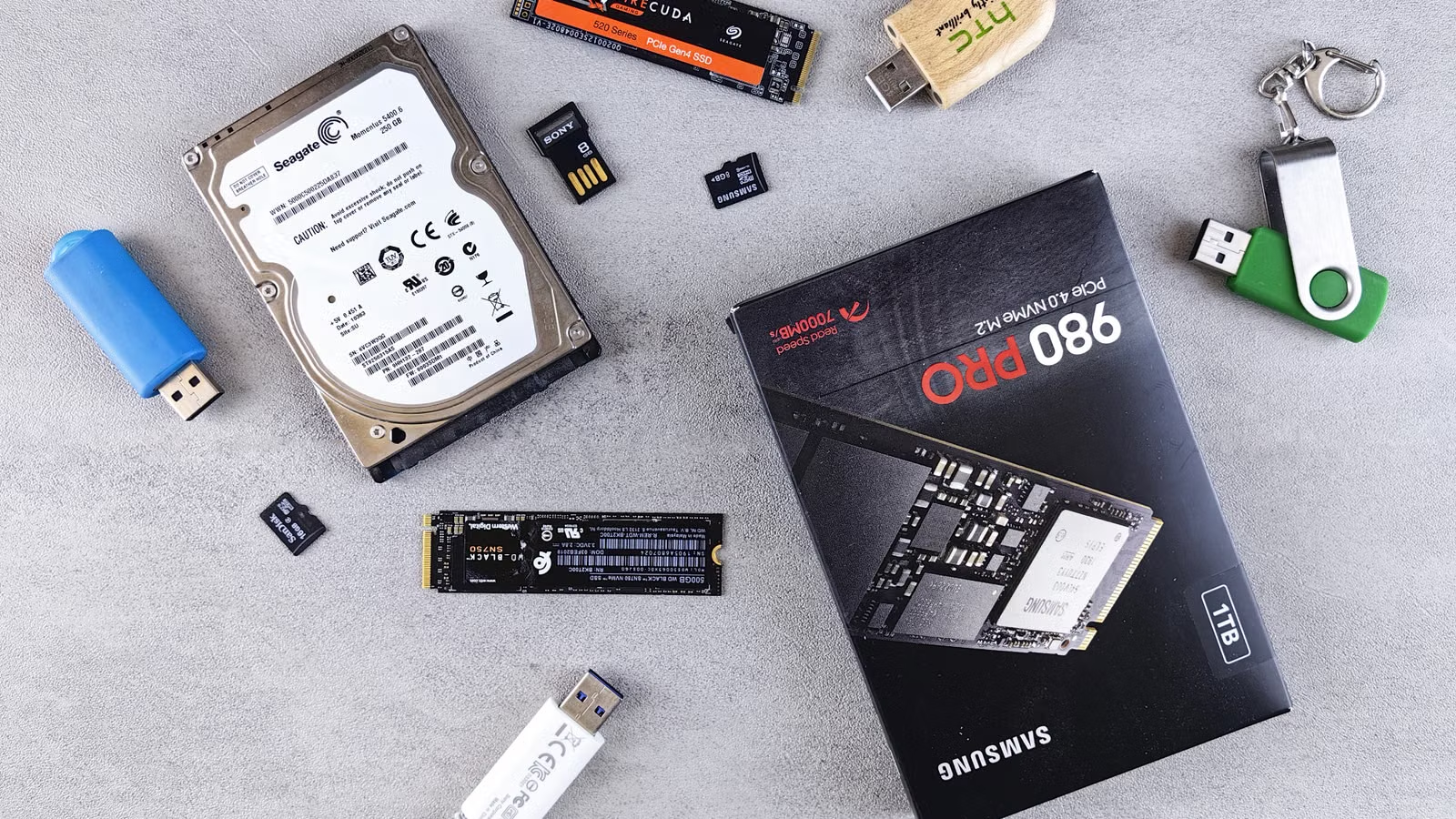
If you are comparing SanDisk SNDK and Seagate STX, the key question is not whether SSDs will fully replace HDDs, but where AI data growth creates value. SNDK benefits more from NAND Flash, enterprise SSDs, high-speed AI data reads, model loading, and inference caching. STX benefits more from nearline HDDs, HAMR, large-scale cloud storage, backup, and archival demand. The former is more tied to the performance layer and pricing leverage, while the latter is more tied to the capacity foundation and cash flow. For investors, the key is to distinguish whether you are betting on “fast read/write” AI data or “long-term storage” AI data.
Key Takeaways
- SNDK is closer to the high-speed AI data access layer, where enterprise SSDs are the key variable.
- STX is closer to the AI data capacity layer, where nearline HDDs support long-term storage demand.
- NAND Flash has stronger upside leverage, but pricing cycles and valuation volatility are also higher.
- HDD growth is slower, but its cost-per-TB, cash flow, and dividend logic are clearer.
- AI data centers are more likely to use SSD + HDD tiered storage rather than a single replacement model.
- To compare SNDK and STX, first separate the performance bottleneck from the capacity bottleneck.
Which Layer of AI Data Growth Do SNDK and STX Represent?
SNDK and STX both benefit from AI data growth, but one solves “data access speed,” while the other solves “data storage capacity.” SanDisk SNDK represents NAND Flash and enterprise SSDs, which are suitable for model loading, vector search, caching, training data preprocessing, and inference services. Seagate STX represents nearline HDDs and large-capacity storage, which are suitable for training data lakes, logs, backup, archival storage, and cold or warm data. You can think of SNDK as the performance layer in the AI data chain and STX as the capacity layer.
Sandisk completed its separation from Western Digital in 2025 and began trading independently on Nasdaq under SNDK. After the spin-off, SanDisk became more like a pure-play Flash storage company, with core assets including NAND Flash, enterprise SSDs, client SSDs, consumer storage, and embedded flash. AI demand does not pull SanDisk through GPUs or HBM, but through rising demand for high-speed storage in large model training, inference, and data processing.
Seagate’s core business is HDDs, especially nearline HDDs, Exos, HAMR, and the Mozaic platform. Seagate positions itself as a mass-capacity storage provider, emphasizing that large-scale AI deployment requires multiple storage solutions, with high-capacity hard drives still serving the underlying capacity layer. The more AI data grows, the greater the pressure on long-term storage, backup, and archiving, and the easier it becomes for STX’s capacity value to show up.
| Dimension | SanDisk SNDK | Seagate STX |
|---|---|---|
| AI data layer | High-speed access layer | Long-term capacity layer |
| Core products | NAND Flash, enterprise SSDs | Nearline HDDs, HAMR, Exos |
| Typical use cases | Model loading, caching, inference, data access | Data lakes, archives, backup, long-term retention |
| Investment keywords | Performance, NAND pricing, enterprise SSDs | Capacity, cost per TB, cash flow |
| Main risks | NAND cycle, customer demand, valuation volatility | Cloud procurement cycles, SSD substitution, HAMR ramp |
Summary: The difference between SNDK and STX is not about which one has an AI label, but where each company sits in the AI data chain. SNDK is closer to hot data and high-frequency access scenarios, where enterprise SSDs, QLC NAND, TLC NAND, and data center customer mix determine earnings leverage. STX is closer to long-term data accumulation, where nearline HDDs, HAMR, drive capacity, and cloud customer orders determine long-term value. If you care about AI inference, caching, model loading, and high-speed reads, SNDK benefits more directly. If you care about AI data lakes, backup, archiving, and low-cost capacity, STX has the clearer logic.
Why Does AI Data Growth Need Both NAND Flash and HDD?
AI data growth will not benefit only NAND Flash, nor will it benefit only HDDs. The reason is that AI data has a full lifecycle: collection, cleaning, preprocessing, training, inference, log generation, backup, and archiving. Different stages have different storage requirements. Hot data needs low latency, high IOPS, and high throughput, making it suitable for SSDs. Cold and warm data focuses more on low cost per TB and reliable long-term retention, making it suitable for HDDs. Therefore, AI data centers are more likely to adopt tiered storage rather than replace all demand with one storage medium.
The advantage of NAND Flash is speed. Enterprise SSDs are suitable for model loading, training data caching, vector databases, high-frequency queries, inference services, and data preprocessing. Sandisk’s enterprise SSD materials note that QLC flash memory is a capacity-optimized NAND technology designed to approach HDD cost per TB in certain scenarios. For AI data centers, this means SSDs are not only pursuing speed, but also evolving toward larger capacity and better cost efficiency.
The advantage of HDDs is capacity cost. In Data Storage for AI, Seagate emphasizes that AI workflows require multi-layer collaboration among hard drives, SSDs, GPUs, CPUs, HBM, and DRAM. Not all data needs to sit on SSDs, especially historical data, archived data, logs, backups, and low-frequency access data. For cloud providers, unit capacity cost, rack space, power consumption, and reliability are equally important.
| AI Data Stage | NAND / SSD Fit | HDD Fit | Core Reason |
|---|---|---|---|
| Data cleaning and preprocessing | High | Medium | Requires higher read/write throughput |
| Model training data loading | High | Medium | Hot data is accessed frequently |
| AI inference services | High | Low | Requires low latency and high IOPS |
| Inference logs and historical records | Medium | High | Large data volume, lower access frequency |
| Backup and archiving | Low | High | Cost per TB matters more |
| Long-term data lakes | Medium | High | SSDs handle caching, HDDs provide base capacity |
This tiered structure also explains why SNDK and STX can both benefit. As AI applications increase, the hot data layer needs more enterprise SSDs. At the same time, the scale of models, logs, datasets, and backups expands, increasing HDD capacity demand. The two are not simple substitutes. They serve different access frequencies, cost constraints, and performance requirements.
Summary: The core impact of AI data growth is that data centers become more dependent on multi-layer storage architectures. NAND Flash is suited for speed, low latency, high IOPS, and high-frequency access, while HDDs are suited for massive capacity, long-term storage, and cost control. SNDK’s opportunity comes from higher-value enterprise SSD and NAND demand during AI data processing. STX’s opportunity comes from data lakes, backup, archiving, and cloud capacity expansion after AI data accumulates. To judge who benefits more, you must first define whether you are comparing the “performance layer” or the “capacity layer.”
Why Does AI Data Growth Give SanDisk SNDK Stronger Earnings Leverage?
If you focus on short- to medium-term earnings leverage from AI data growth, SNDK is usually stronger. The reason is that NAND Flash and enterprise SSDs are more sensitive to tight supply, ASP increases, and changes in high-value customer mix. AI inference, model loading, vector databases, and data preprocessing all require faster storage. As enterprise SSD demand rises, it can directly improve SNDK’s revenue mix and gross margin. During an upcycle, NAND profit leverage is usually more pronounced than HDD profit leverage.
Sandisk’s latest earnings showed third-quarter revenue of US$5.95 billion, up 97% sequentially, with Datacenter revenue up 233%. The revenue beat was mainly driven by changes in high-value customer mix and stronger pricing. The company also guided for fourth-quarter revenue of US$7.75 billion to US$8.25 billion, showing that AI data center demand has already had a clear impact on its operating rhythm.
This leverage comes from two levels. The first is product mix improvement: enterprise SSDs have higher customer qualification standards, reliability requirements, and supply chain barriers than ordinary consumer storage. The second is the NAND pricing cycle: when supply and demand tighten, price increases in Flash chips and SSDs can quickly flow through to revenue and gross margin. Reuters also reported that AI data storage demand is driving demand for enterprise SSDs and Flash-memory chips, while also creating supply tightness and better pricing.
SNDK benefits from AI data growth through five main paths:
- Enterprise SSD demand increases, raising the share of data center customers;
- NAND Flash prices rise, amplifying revenue and gross margin leverage;
- QLC / TLC NAND enters higher-capacity data center scenarios;
- AI inference, caching, and vector search create high-frequency access demand;
- Long-term customer agreements improve revenue visibility and reduce some cyclical volatility.
However, SNDK’s strong leverage also means strong volatility. The NAND industry has a typical boom-bust cycle. When prices rise, profits can expand quickly; when supply expands or demand slows, profits can also fall quickly. Reuters also noted that Sandisk uses long-term contracts to improve the cyclicality of the traditional memory industry, but long-term agreements cannot fully eliminate pricing, inventory, and valuation risks.
Summary: SNDK is better analyzed through the lens of the “AI data performance layer” and “NAND cycle leverage.” The more frequently AI data is processed, the greater the value of enterprise SSDs, QLC NAND, TLC NAND, and data center Flash. The tighter NAND supply becomes, the more visible SNDK’s revenue and gross margin leverage will be. But this leverage is not risk-free. It depends on pricing cycles, customer orders, capacity discipline, and valuation expectations. If you are looking for high leverage within AI data growth, SNDK deserves closer attention. If you cannot tolerate volatility from a NAND cycle reversal, you need to lower expectations and manage position sensitivity.
Why Does AI Data Growth Still Support Seagate STX’s Long-Term Logic?
STX is not the core beneficiary of high-speed AI data access, but it is a key beneficiary of long-term AI data storage. AI training, inference, enterprise knowledge bases, multimodal content, video, logs, and backups all create long-term data accumulation. Much of this data does not need SSD-level performance, but it does need reliable, scalable, low-cost capacity. Nearline HDDs are designed for large-scale capacity demand in cloud and enterprise data centers, so the more AI data grows, the more visible STX’s capacity foundation becomes.
Seagate reported US$3.11 billion in revenue for fiscal third quarter 2026, with non-GAAP gross margin reaching 47.0% and free cash flow of US$953 million. For STX, these indicators suggest that nearline HDD supply and demand, pricing discipline, and the large-capacity product mix are improving. Unlike SNDK’s high-growth leverage, STX is more easily driven by cash flow, gross margin, and dividend characteristics.
HAMR and Mozaic are key technologies in STX’s long-term logic. In its fiscal 2026 first-quarter results, Seagate said its Mozaic HAMR products had been qualified by its five largest cloud customers, supporting new demand growth including AI applications. Seagate’s discussion of Mozaic 3+ also emphasizes that HAMR drives have begun scaling shipments and improving capacity density per drive.
| STX Benefit Driver | Impact on Earnings | Key Metrics to Track |
|---|---|---|
| Long-term AI data retention | Drives nearline HDD capacity demand | Nearline EB shipments |
| Cloud data center expansion | Supports major customer orders | Hyperscale procurement rhythm |
| HAMR production ramp | Improves capacity and cost advantage per drive | Mozaic / HAMR shipments |
| Pricing discipline | Improves gross margin | HDD ASP and gross margin |
| Free cash flow | Supports dividends and buybacks | FCF, dividends, debt changes |
STX’s risks are also clear. The advantage of HDDs is cost and capacity, not speed. If enterprise SSD costs continue to decline, some warm data scenarios may shift toward SSDs. Cloud procurement cycles, inventory digestion, HAMR yield, industry supply discipline, and enterprise IT spending volatility can all affect STX’s performance and valuation. Compared with SNDK, STX may have weaker upside explosiveness, but its cash flow and capacity logic are easier to track over time.
Summary: STX’s AI logic is not “faster,” but “larger, longer, and cheaper.” AI data centers need large amounts of high-speed SSD capacity, but they also need a low-cost, scalable capacity foundation for long-term storage. Nearline HDDs, HAMR, Mozaic, and cloud customer qualifications are the main supports for STX in the AI data growth cycle. If you believe AI data lakes, logs, backups, and archives will continue to expand, STX’s logic remains valid. But it should not be understood as a direct substitute for enterprise SSDs or NAND Flash.
From Financial Leverage, Cyclicality, and Risk, Which Deserves More Attention?
If you compare financial leverage, SNDK is stronger. If you compare cash flow and relative stability, STX deserves more attention. SNDK is more like a high-leverage NAND cycle stock, with revenue, gross margin, and valuation moving quickly with enterprise SSD demand, NAND ASP, and data center customer demand. STX is more like a capacity storage cash flow stock, with performance more dependent on nearline HDD orders, HAMR shipments, free cash flow, and cloud customer procurement rhythm. Both benefit from AI data growth, but their sources of risk are different.
SNDK’s advantage is explosive growth. Sandisk previously disclosed in its second-quarter results that Datacenter revenue grew 64% sequentially, driven mainly by AI infrastructure builders, semi-custom customers, and large-scale AI deployment. Datacenter revenue then continued to grow sharply in the third quarter, showing that the company is migrating from traditional consumer storage toward higher-value data center markets.
STX’s advantage is cash flow and shareholder return characteristics. After years of industry consolidation, the HDD market has stronger supply discipline. When large-capacity drive supply tightens, gross margin and free cash flow can improve noticeably. Seagate’s 30TB drives are aimed at AI storage demand in data centers, with the core goal of using higher capacity per drive to meet cloud providers’ needs for space, power, and capacity efficiency.
| Comparison Dimension | SNDK | STX |
|---|---|---|
| Earnings leverage | Stronger | More stable |
| Revenue drivers | NAND pricing, enterprise SSDs, data center customers | Nearline HDDs, cloud customers, HAMR |
| Gross margin drivers | Product mix and NAND ASP | Large-capacity drives, pricing discipline, utilization |
| Cash flow profile | Strong during upcycles, but cyclical | More visible, stronger dividend characteristics |
| Main risks | NAND downturn, high valuation, demand volatility | Slower cloud procurement, SSD substitution, HAMR progress |
If you plan to track SNDK, STX, or other AI storage-related U.S. stocks, you should not only look at earnings reports and stock prices. You should also include actual trading costs in your decision-making. U.S. stock trading costs often include more than commissions; they may also involve platform fees, external institution fees, transaction activity fees, order types, and FX changes. When using Biya to view related stocks, you should also pay attention to market quotes, order details, and fee structure. Biya charges US$0 commission for U.S. stock trading, while platform fees, external institution fees, and other charges are subject to the U.S. stock trading fees and the actual order page.
Summary: SNDK is more suitable for investors seeking high leverage from AI data growth, while STX is more suitable for investors focused on capacity demand, cash flow, and the storage hardware cycle. The key indicators for SNDK are NAND pricing, enterprise SSD shipments, Datacenter revenue, and gross margin. The key indicators for STX are nearline HDD shipments, HAMR production ramp, free cash flow, and cloud customer orders. Neither company should be evaluated only by the AI theme. Valuation, earnings guidance, supply-demand cycles, fees, and risk tolerance are equally important.
Final Judgment: Who Benefits More from AI Data Growth, NAND Flash or HDD?
If you compare AI data “high-speed processing and access,” NAND Flash benefits more, and SNDK has stronger leverage. If you compare AI data “long-term storage and capacity expansion,” HDD benefits more, and STX has clearer logic. AI data growth is not about one storage medium winning outright. It pushes SSDs and HDDs toward tiered coexistence. SSDs solve hot data speed, while HDDs solve cold and warm data capacity. To evaluate SNDK and STX, you should first decide whether you are focusing on the performance bottleneck or the capacity bottleneck.
From the performance layer, SNDK is more direct. AI inference, model loading, vector databases, data caching, and training data preprocessing all require high-performance enterprise SSDs. Sandisk’s AI lifecycle-oriented SN670 NVMe SSD uses UltraQLC and BiCS8 NAND, with capacities up to 122.88TB, positioning it for AI scenarios such as data ingestion, preparation, faster data lakes, and new content generation.
From the capacity layer, STX is clearer. AI-generated data does not disappear after training or inference. Enterprises and cloud providers still need to store datasets, model versions, logs, compliance records, backups, and archives. The low cost-per-TB advantage of HDDs keeps them suitable for large-scale long-term data accumulation. As HAMR increases capacity per drive, the lifecycle of HDDs in AI data centers can also be extended.
| Key Question | More SNDK-Related | More STX-Related |
|---|---|---|
| Who benefits more from high-speed AI reads/writes? | Yes | Less |
| Who benefits more from enterprise SSD demand? | Yes | No |
| Who benefits more from long-term data archiving? | Partially | Yes |
| Who benefits more from low-cost-per-TB storage? | No | Yes |
| Who has stronger earnings leverage? | Usually stronger | More stable |
| Who has stronger cash flow and dividend characteristics? | Not necessarily | Stronger |
The final judgment can be simplified: SNDK represents the “fast” side of AI data growth, while STX represents the “large” side. If you care more about AI data processing, inference caching, enterprise SSDs, and NAND pricing cycles, SNDK is the more direct beneficiary. If you care more about AI data accumulation, cloud storage capacity, backup and archiving, and nearline HDD cash flow, STX has the more stable logic. The two are not about one eliminating the other. They serve different layers of AI data centers together.
Summary: Both NAND Flash and HDDs can benefit from AI data growth, but in different ways. SNDK benefits more from enterprise SSDs, high-speed access, low latency, and rising NAND Flash prices, giving it stronger earnings leverage. STX benefits more from nearline HDDs, HAMR, large-capacity cloud storage, and long-term data retention, giving it a more stable capacity foundation. For ordinary investors, a more reasonable approach is not to simply choose “SSD or HDD,” but to place SNDK and STX into performance-layer and capacity-layer frameworks, then judge them alongside valuation, earnings reports, supply-demand cycles, and risk tolerance.
When comparing SNDK and STX, you can use U.S. stock information to track SNDK, STX, and other NAND Flash, HDD, AI data center, semiconductor, and storage-related stocks. If the relevant services are available in your region, you can also use Biya to monitor market quotes, orders, and multi-asset trading arrangements. For mobile use, Download App can support account, order, and asset tracking. The information above only discusses public market data, company financial reports, and fee structures. It does not constitute investment advice. Before trading, you should fully understand order types, fee structures, FX changes, tax requirements, and your own risk tolerance. Service availability depends on your location, identity verification result, platform rules, and applicable laws and regulations.
FAQ
Is SanDisk SNDK a Core AI Storage Stock?
Yes, SNDK is a core AI storage-related stock, but more accurately, it is a NAND Flash and enterprise SSD beneficiary. It mainly benefits from high-speed AI data reads, model loading, caching, inference, and data center SSD demand, rather than GPUs or HBM.
Will Seagate STX Be Replaced by Enterprise SSDs?
A full replacement is unlikely in the near term. SSDs are better suited for high-performance reads and writes, while HDDs are better suited for large-scale, low-cost capacity storage. AI data centers typically use tiered architectures, with SSDs handling hot data and HDDs storing cold and warm data, archives, and backups.
What Is the Difference Between NAND Flash and HDD in AI Data Centers?
NAND Flash emphasizes speed, low latency, and high IOPS, making it suitable for model loading, caching, and inference. HDDs emphasize capacity, cost per TB, and long-term retention, making them suitable for data lakes, logs, backup, and archiving. They serve different data layers.
What Metrics Should Investors Track When Comparing SNDK and STX?
For SNDK, investors should track NAND pricing, enterprise SSD shipments, Datacenter revenue, and gross margin. For STX, investors should track nearline HDD shipments, HAMR production ramp, free cash flow, and cloud customer orders. Any judgment should be based on original financial reports and risk disclosures.
Does AI Data Growth Always Push SNDK and STX Share Prices Higher?
No. AI data growth is an industry demand driver, but share prices are also affected by valuation, cycles, earnings guidance, supply-demand changes, and market expectations. Both SNDK and STX may benefit, but both may also fluctuate if cycles reverse or valuations become too high.
What Should Users Notice When Viewing SNDK and STX Through Biya?
When viewing SNDK and STX through Biya, users should pay attention to market quotes, fees, order types, and account eligibility. Specific fees are subject to the fee center and actual order page, while service availability depends on local rules, identity verification results, and applicable laws and regulations.
*This article is provided for general information purposes and does not constitute legal, tax or other professional advice from BiyaPay or its subsidiaries and its affiliates, and it is not intended as a substitute for obtaining advice from a financial advisor or any other professional.
We make no representations, warranties or warranties, express or implied, as to the accuracy, completeness or timeliness of the contents of this publication.
Related Blogs of

How to Read Pure Storage and NetApp Earnings? ARR, Cloud Revenue, Gross Margin, and Cash Flow Metrics


How Does NAND Price Increase Affect SanDisk? Enterprise SSDs, Consumer Storage, and Margin Leverage


How to Read NAND Contract Prices and Spot Prices? Why Enterprise SSDs and Consumer SSDs Do Not Move in Sync


How Is China’s Memory Supply Chain Different from Overseas Memory Leaders? A Comparison with Micron, SanDisk, Western Digital, and Seagate

Choose Country or Region to Read Local Blog
 Australia
 Austria
 Belgium
 Canada
 Cyprus
 Czech Republic
 Denmark
 Estonia
 Finland
 France
 Germany
 Greece
 Hong Kong
 India
India Indonesia
 Ireland
 Italy
Italy Japan
Japan Latvia
 Lithuania
 Luxembourg
 Malaysia
 Malta
Malta Morocco
 Nepal
Nepal Netherlands
 New Zealand
 Norway
 Pakistan
 Philippines
 Poland
 Portugal
 Romania
 Singapore
 Slovakia
 Slovenia
 South Africa
 South Korea
 Spain
Spain Sweden
 Thailand
 The United States
 Turkey
 United Arab Emirates
 United Kingdom
 Vietnam
Contact Us




BIYA GLOBAL LLC is registered with the Financial Crimes Enforcement Network (FinCEN), an agency under the U.S. Department of the Treasury, as a Money Services Business (MSB), with registration number 31000218637349, and regulated by the Financial Crimes Enforcement Network (FinCEN).
BIYA GLOBAL LIMITED is a registered Financial Service Provider (FSP) in New Zealand, with registration number FSP1007221, and is also a registered member of the Financial Services Complaints Limited (FSCL), an independent dispute resolution scheme in New Zealand.